

Here's what I wish someone had told me before my first trip.
Getting There
Tbilisi International Airport (TBS) is the main gateway. Direct flights from most European hubs, Istanbul, Vienna, Warsaw, Athens, Munich, Berlin, Paris. Low-cost carriers like Wizz Air and FlyDubai make it shockingly affordable.Quick Stats: Flying to Tbilisi
- Airport code: TBS (Tbilisi) or KUT (Kutaisi)
- Typical cost: €50–150 round trip from Europe
- Flight time: 3–5 hours from most European cities
- Airlines: Wizz Air, FlyDubai, Turkish Airlines, Lufthansa, LOT
- Bolt (Georgia's Uber equivalent): ~5-8 GEL ($2-3). Download the app before you land.
- Airport bus: 1 GEL to central Tbilisi. Runs until midnight.
- Taxi: Agree on a price before getting in. Should be 25-35 GEL max. Airport taxis will try 50-60, say no and walk to the Bolt pickup zone.
Pro tip
Get a Georgian SIM card at the airport. Magti or Beeline both have desks in arrivals. ~15 GEL ($5) for a SIM with 20GB+ data. You'll need it for Bolt, maps, and translation.
Where to Stay
Tbilisi's neighborhoods each have distinct vibes. For the full breakdown, see our complete guide to where to stay in Tbilisi. Here's the honest version: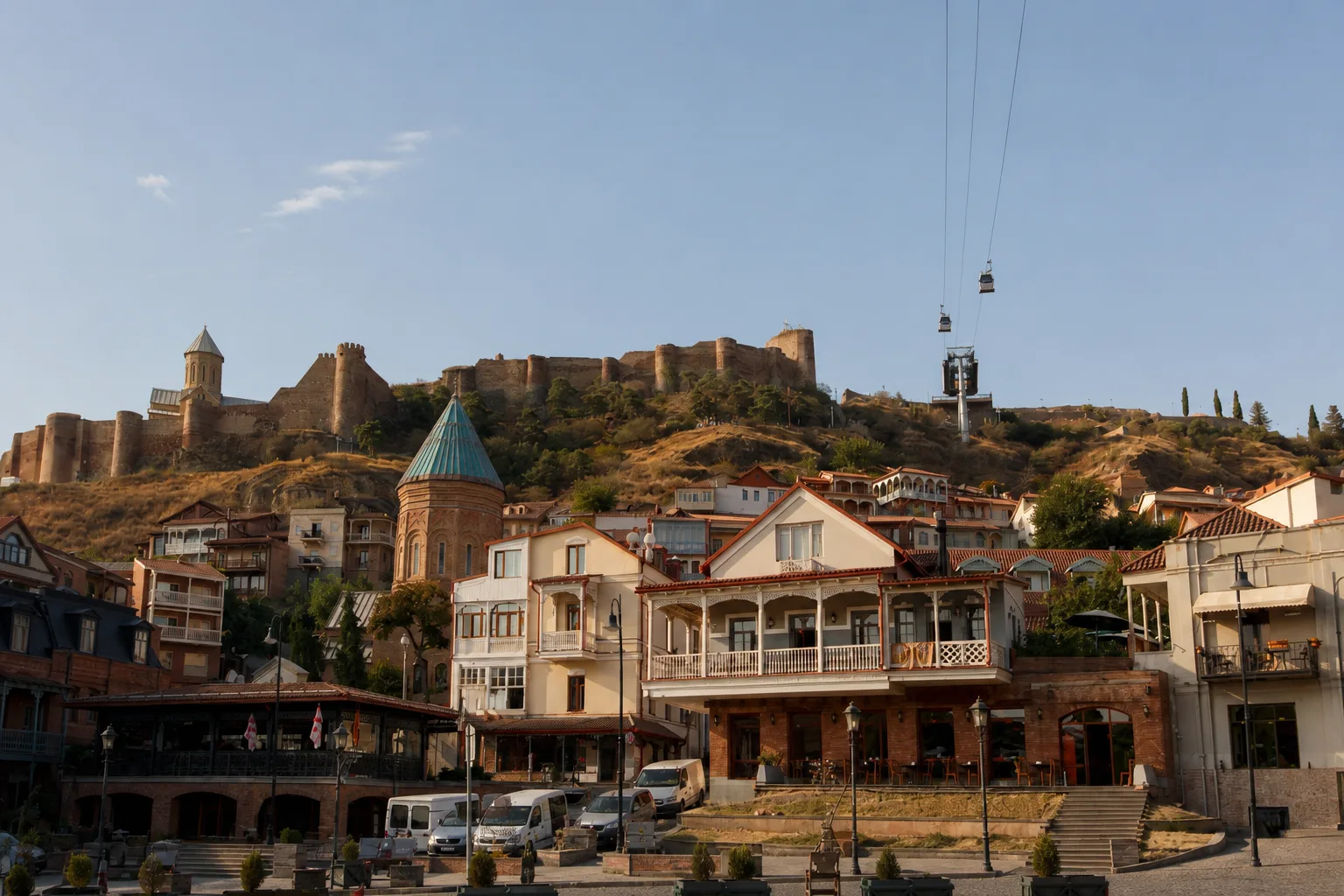
Old Town (best for first-timers)
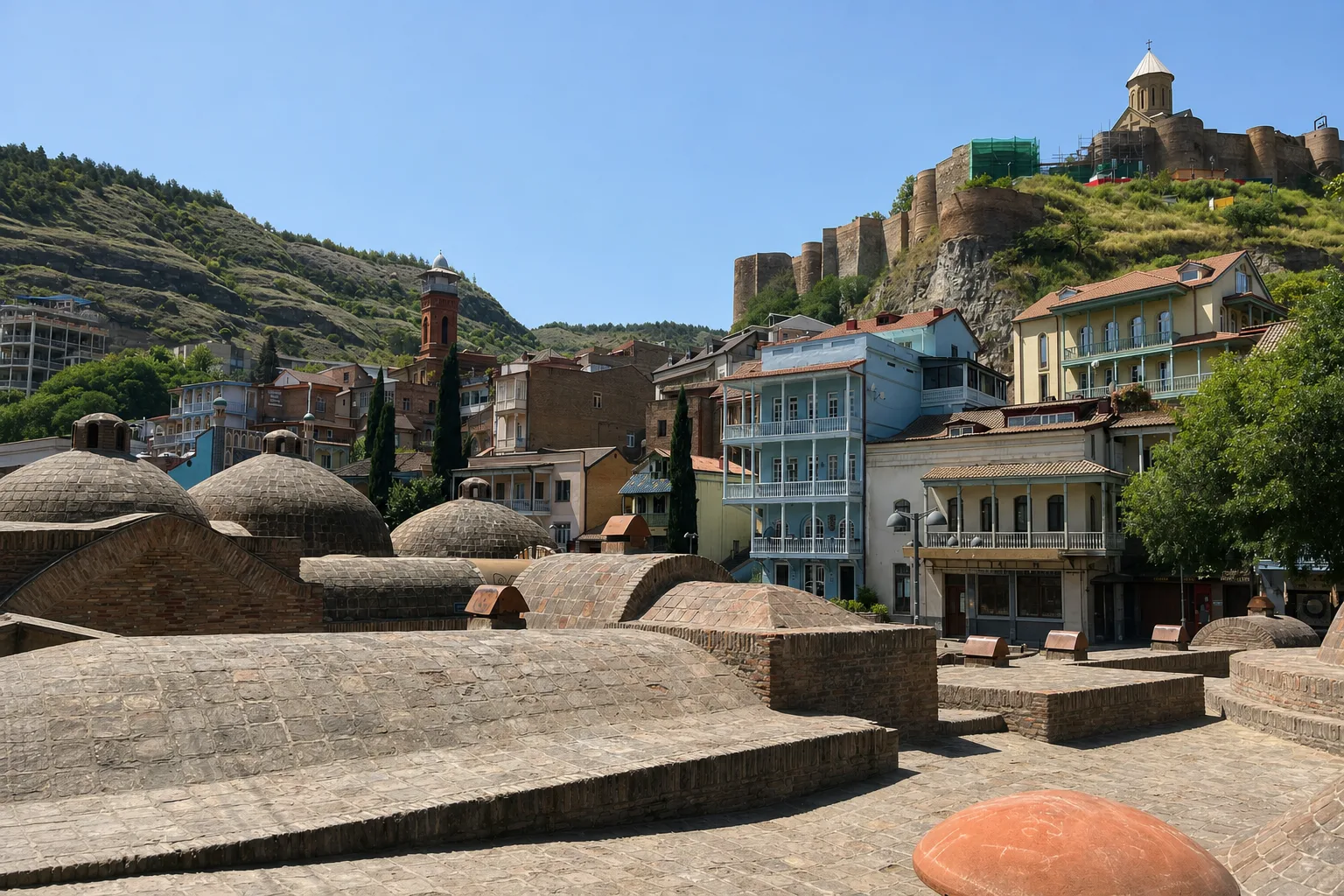
Cobblestone streets, sulfur baths, churches, restaurants everywhere. You're walking distance to every major sight. The trade-off: it's the most touristy area and some buildings look like they might collapse (they won't, probably). Stay here if: It's your first visit and you want to see everything on foot.Vera (my recommendation)
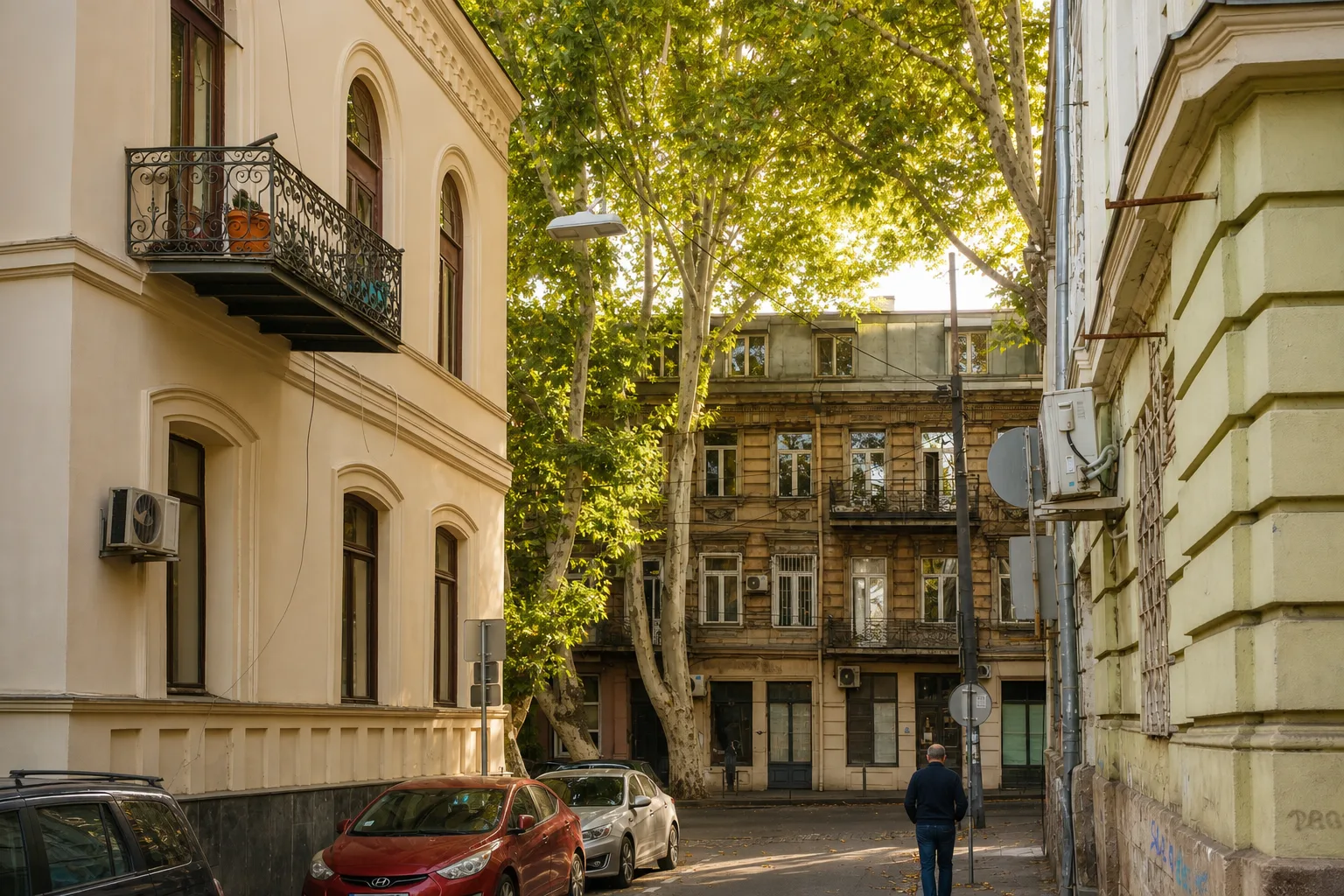
Vake (upscale, quiet)
Tree-lined boulevards, international restaurants, Vake Park. More residential and polished. This is where the embassies and expats are. It's removed from the old town action but very livable. Stay here if: You prefer comfort over atmosphere.Marjanishvili (hip, emerging)
The "Brooklyn of Tbilisi", gentrifying fast with art galleries, co-working spaces, and third-wave coffee. Raw and real. Great if you're a younger traveler or digital nomad. Stay here if: You want to feel like you live here, not visit.Accommodation Prices (per night, Feb 2026)
| Type | Old Town | Vera/Vake |
|---|---|---|
| Hostel dorm | $8–15 | $10–18 |
| Guesthouse/B&B | $20–40 | $25–50 |
| 3-star hotel | $40–80 | $50–90 |
| 4-star hotel | $80–150 | $90–160 |
| Airbnb (1BR) | $25–60 | $30–70 |
Getting Around
Tbilisi is walkable in the center but sprawls out quickly. Here's what works:- Bolt: Your best friend. Rides across the city are $2-4. Clean cars, cashless payment, no negotiating. Use it constantly.
- Metro: Two lines, modern stations, costs 1 GEL ($0.35). Get a MetroCard at any station, also works on buses.
- Walking: The old town, Vera, and Rustaveli Avenue are all walkable. Wear comfortable shoes, the streets are steep and uneven.
- Cable cars: The Rike Park to Narikala fortress cable car is great. Costs 2.5 GEL and gives you the best views of the city.
What to See (and What to Skip)
Don't Miss
You Can Skip
Chronicles of Georgia (Stonehenge), The big pillars on the outskirts. They look cool in photos but getting there is a hassle and there's nothing else around. Worth a Bolt ride only if you have spare time. Turtle Lake, Often recommended, rarely impressive. A small lake with a cable car ride. It's fine on a hot day but don't go out of your way. The Peace Bridge, Walk across it (it's pretty at night, lit up), but don't make it a "thing." It's a bridge.Where to Eat
Georgian food is one of the world's great cuisines. You genuinely cannot eat badly in Tbilisi. But here's how to eat *well*:The Essentials to Try
Khachapuri
Cheese bread. Get the Adjarian style (boat-shaped with egg and butter). You'll understand the hype immediately.
Khinkali
Soup dumplings. Hold by the top, bite a hole, drink the broth, eat the meat. Don't eat the top knot, it's your counter.
Pkhali
Walnut-paste vegetable balls (spinach, beet, or green bean). Light, flavorful, and everywhere.
Mtsvadi
Grilled meat skewers. Simple but perfect with tkemali (plum sauce).
Restaurant Picks
Shavi Lomi, Upscale Georgian with creative twists. In Vera. Book ahead. Their walnut-stuffed aubergine is spectacular. Expect $15-20 per person. Machakhela, Chain but consistently good and cheap. Great khachapuri and khinkali. There's one everywhere. $5-8 per person with wine. Cafe Littera, The fanciest option. In the Writer's House garden. Georgian fine dining with a beautiful courtyard. $30-50 per person. Special occasion place. Deserter Market (Desertirebis Bazari), Not a restaurant, but go here. It's a massive indoor market near the train station. Fresh cheese, spices, churchkhela, dried fruits. This is where Georgians shop.The Wine
Key things to know:Georgia is the oldest wine-producing country on Earth, 8,000 years of continuous winemaking. The local style produces "amber" wines that are unlike anything you've had.
- Saperavi: The main red grape. Bold, dark, slightly tannic. You'll like it.
- Rkatsiteli: The main white grape. Often made in qvevri (clay vessel) style.
- Amber wine: White wine fermented with its skins in qvevri. Looks orange, tastes complex. Try it even if you're a red-wine person.
- Wine is cheap: A great bottle in a restaurant is $8-15. A great bottle at a shop is $5-10.
For a deep dive, read our Complete Guide to Georgian Wine on Georgian Eats.
Money & Practical Tips
Quick Reference
Essential Georgian Phrases
The Stuff Nobody Tells You
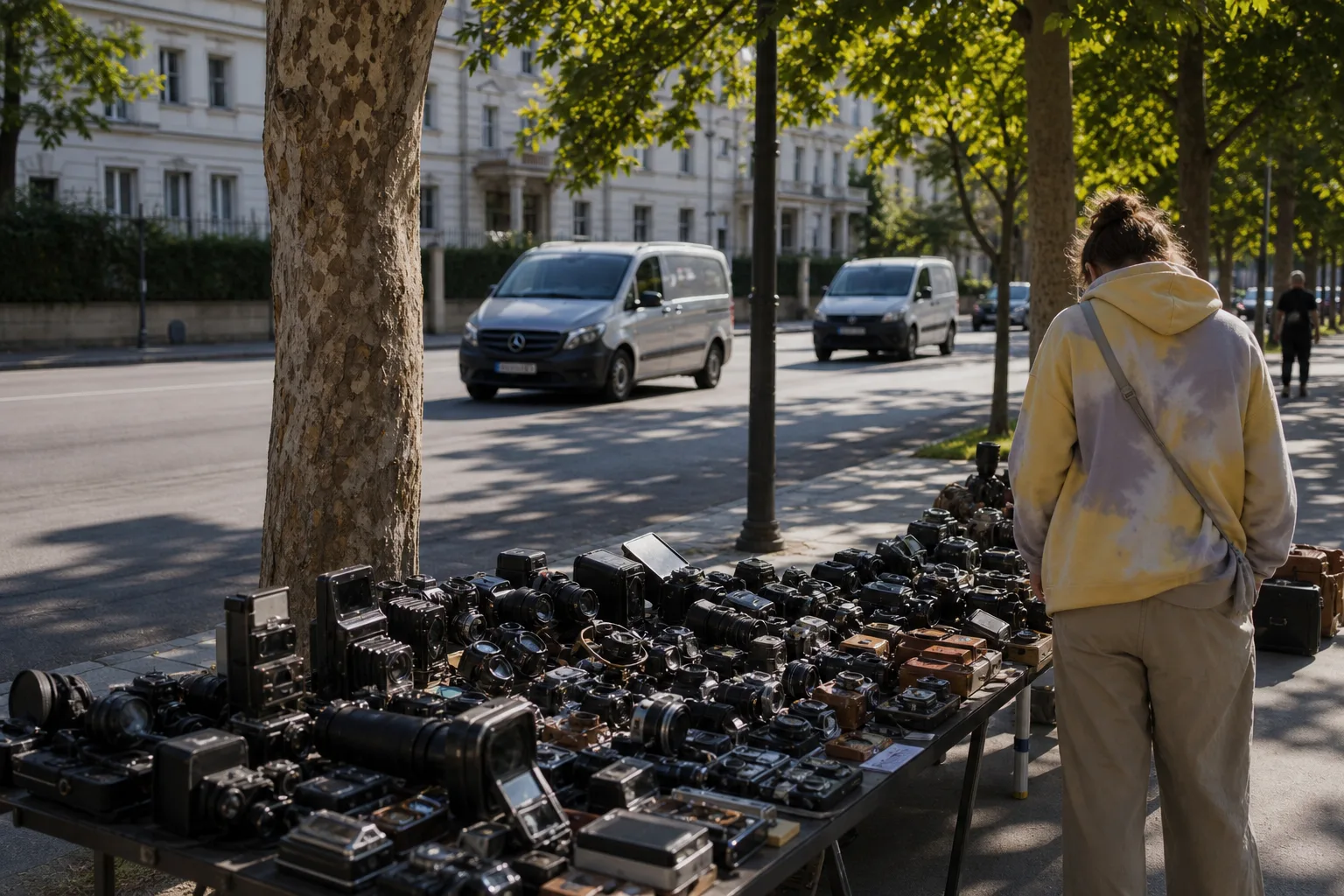
Dogs: Tbilisi has many stray dogs. They're almost all vaccinated (check for ear tags) and friendly. They're basically the city's communal pets. Don't be alarmed. Driving: Georgians drive aggressively. As a pedestrian, don't assume cars will stop at crosswalks. They might. They might not. Make eye contact with drivers. Internet: Fast and reliable. Most cafés have WiFi. Mobile data is dirt cheap (see SIM card tip above). Shopping: Tbilisi is not a shopping destination. The real shopping is at markets, Deserter Market for food, Dry Bridge for antiques.How Many Days?
See the main sights, eat the essentials, fall in love. You'll leave wanting more.
Add Mtskheta (ancient capital) + Sighnaghi (wine country). The ideal first visit.
Add Kazbegi (mountains), slow down, repeat restaurants, feel like a local.
Frequently Asked Questions
How many days do I need in Tbilisi?
Three days is the sweet spot, enough for the Old Town, sulfur baths, food scene, and a day trip to Mtskheta. If you want to explore more neighborhoods and take your time, four to five days is comfortable.
Is Tbilisi walkable?
The Old Town and city center are very walkable, though hilly. For getting between neighborhoods (Vake, Saburtalo, Marjanishvili), use the metro or Bolt. The cable car to Narikala Fortress saves a steep climb.
What should I eat first in Tbilisi?
Start with khinkali (soup dumplings) and khachapuri (cheese bread), the two iconic dishes. Then branch out to kharcho, lobio, and pkhali. Visit a traditional restaurant (like Shavi Lomi or Kakhelebi) rather than a tourist trap near the bridge.
Is Tbilisi safe at night?
Yes, Tbilisi is remarkably safe for a capital city. Walking around the Old Town and main neighborhoods at night is generally fine. The usual precautions apply, stay aware of your surroundings and avoid confrontations.
Do I need to speak Georgian or Russian?
Not really. English is widely spoken in tourist areas, hotels, and restaurants in Tbilisi, especially by younger Georgians. Learning a few basic phrases (gamarjoba, madloba) goes a long way and locals genuinely appreciate the effort.
Written by The Georgian Guide Team
We live in Tbilisi, walk these streets daily, and have shown dozens of first-time visitors around. This guide is based on years of lived experience, not a weekend trip.
Last updated: February 2026. Prices and details reflect current conditions.
Related Articles
10 Best Day Trips from Tbilisi
Tested and ranked, the best destinations within a few hours of the capital.
Is Georgia Safe?
The honest safety guide, crime, scams, driving, and what to actually worry about.
Things to Do in Tbilisi
The complete list, markets, museums, neighborhoods, nightlife, and hidden gems.