
Quick answer
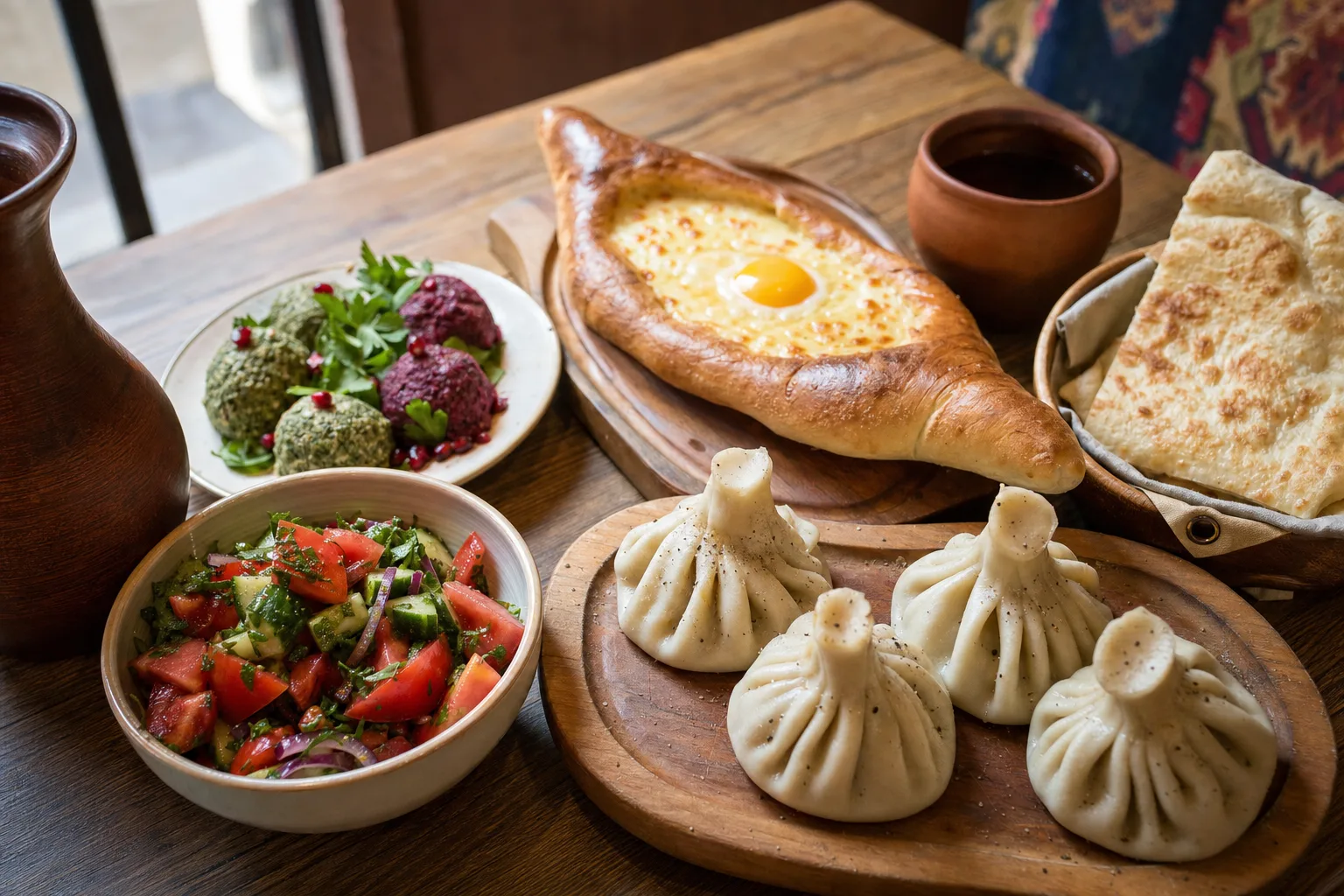
Order for the table, not for yourself: a khachapuri (cheese bread, 3 to 8 GEL from a bakery window), a plate of khinkali (twisted dumplings of spiced meat and broth, 1.50 to 3 GEL a piece), two or three cold starters built on walnut and herbs (pkhali, badrijani nigvzit, lobio), grilled mtsvadi if you eat meat, and a jug of house wine from about 5 GEL a glass. A mid-range dinner for two comes to 60 to 80 GEL (about $23 to 31). Every region cooks differently, the vegetable dishes are as serious as the meat, and nothing on the table is hot except the ajika on the side.
- Khinkali, per piece
- 1.50-3 GEL
- Bakery khachapuri
- 3-8 GEL
- Dinner for two
- 60-80 GEL
- Fasting days
- Wed and Fri
Georgian food is one of the reasons people extend their trip. It is a cuisine built on walnut, herbs, cheese and bread, cooked differently in every region, with a vegetable repertoire kept alive by the Orthodox fasting calendar and a wine culture older than any other. It is also cheap, generous and slow, and the rules of the table are not the ones you know. This page is the overview: what the dishes are, where they come from, how to order them and what they cost, checked in September 2026. For depth on the two famous ones, our khachapuri guide and khinkali guide take over; for where to eat in the capital, the Tbilisi restaurants guide.
The dishes to order first
Fourteen dishes cover a first week. Every restaurant with a Georgian menu has most of them; the regional ones are marked.
| Dish | What it is and where |
|---|---|
| Khachapuri | Cheese-filled bread, a different shape in every region. Where: a tone bakery window for the everyday round one; a restaurant for the Adjaruli boat. |
| Khinkali | Twisted dumplings of coarsely chopped spiced meat and its broth; also mushroom, potato or cheese. Where: dedicated khinkali houses in Tbilisi; Pasanauri on the Military Highway. |
| Mtsvadi | Cubes of pork or veal grilled on skewers, served with raw onion and pomegranate. Where: roadside grills, any traditional restaurant, every supra. |
| Lobio | Kidney beans stewed or mashed with coriander, walnut and garlic, in a clay pot with mchadi cornbread and pickles. Where: canteens and traditional kitchens everywhere. |
| Pkhali | Spinach, beetroot or cabbage minced with walnut, garlic and herbs, topped with pomegranate seeds. Where: the assorted plate on any cold-starter list. |
| Badrijani nigvzit | Fried aubergine slices rolled around walnut and garlic paste. Where: every restaurant, next to the pkhali. |
| Ajapsandali | Aubergine, tomato and pepper stewed with herbs; a summer dish. Where: traditional kitchens, June to October. |
| Chakapuli | Lamb or veal stewed with tarragon, unripe cherry plums and dry white wine. Where: spring, in Kakheti and Kartli kitchens; year-round in Tbilisi. |
| Shkmeruli | Fried chicken in a garlic and milk sauce, served in the ketsi it was cooked in. Where: Racha kitchens; Ghebi on Aghmashenebeli Avenue in Tbilisi, around the clock. |
| Satsivi | Poultry in a cold, spiced walnut sauce. Where: winter tables, above all New Year. |
| Kharcho | Beef soup with rice, cherry plum puree and walnut; the Megrelian version is a walnut stew over ghomi. Where: any traditional menu; Mapshalia in Tbilisi for the Megrelian one. |
| Elarji | Cornmeal porridge kneaded with sulguni until it stretches like mozzarella. Where: Megrelian restaurants. |
| Kubdari | Leavened bread filled with chunks of spiced lamb, kid or pork. Where: Svaneti, and Svan kitchens in Tbilisi. |
| Churchkhela | Walnuts or hazelnuts on a string, dipped in thickened grape must and dried. Where: markets and Kakheti roadsides; never the souvenir stalls. |
Khachapuri
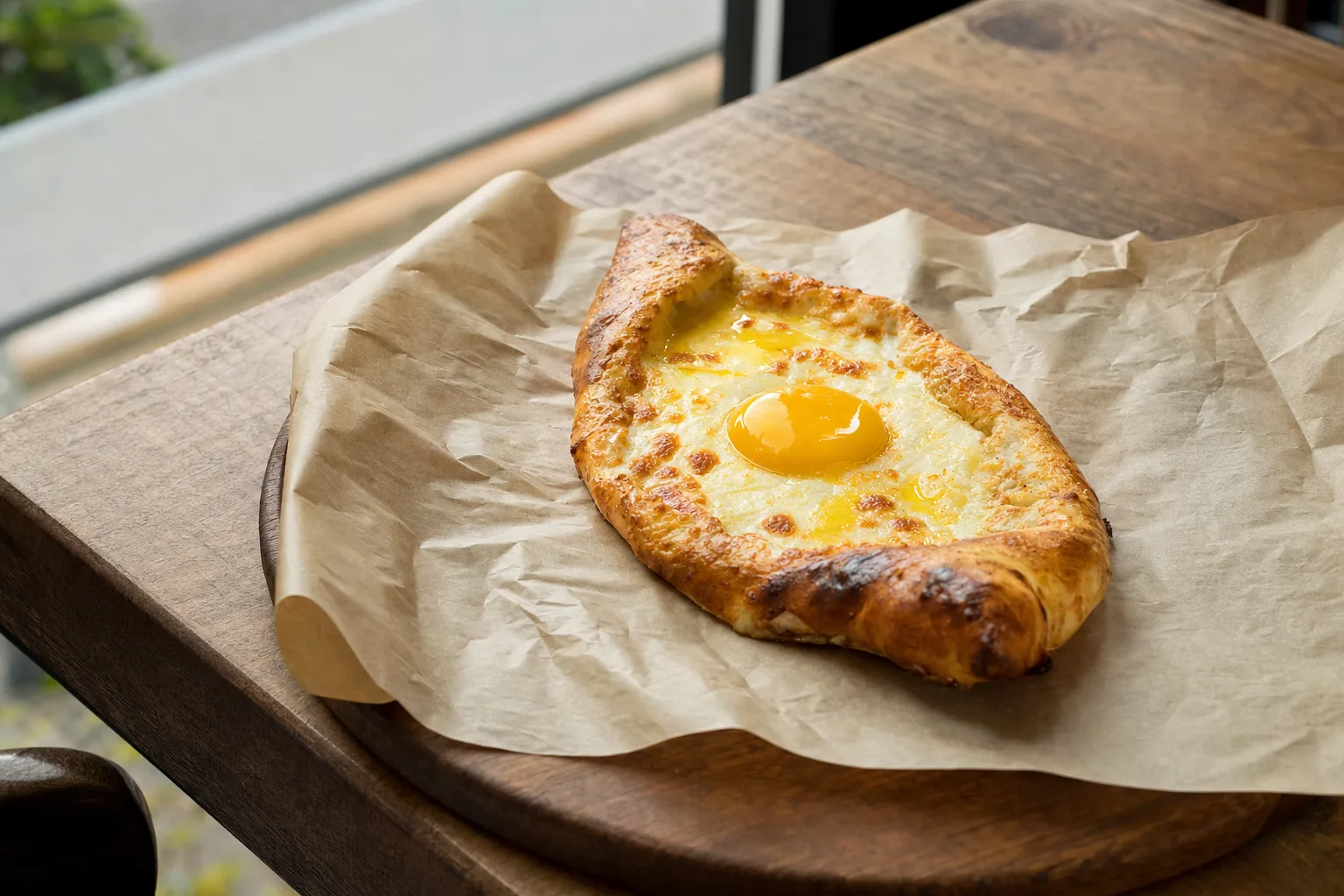
Ordering khachapuri in Georgia is like ordering pizza in Italy: you need to say which one. It is the national dish, added to the country's intangible cultural heritage list on 22 January 2019, and every region has its own shape. Imeruli, from Imereti, is the round one filled with salted white Imeretian cheese and the one Georgians eat most. Adjaruli, from the Black Sea coast, is the open boat with a raw egg yolk and a pat of butter dropped in at the table; the shape is said to be the boat, the yolk the sun. Megruli, from Samegrelo, is the Imeruli with a second layer of cheese melted on top. Penovani, from Samtskhe-Javakheti, is made with puff pastry and sold square from bakery windows. Achma, from Abkhazia, is layered like a lasagne without sauce. Guruli, the Christmas pie of Guria, is a crescent with boiled egg inside; the Ossetian khabizgina has potato with the cheese; and the Svans fill theirs with meat and call it kubdari.
Eat an Adjaruli the local way: tear the bread from the sides and use it to stir the yolk and butter into the cheese before it sets, then eat from the outside in. A bakery Adjaruli is 3 to 8 GEL; the large one at Retro in Tbilisi is about 20 GEL and feeds two. The dough should be thin and slightly chewy and the cheese should pull; a thick, bready one is a sign of a kitchen cooking for tourists. Our khachapuri guide goes through every regional type and where to find them.
Khinkali
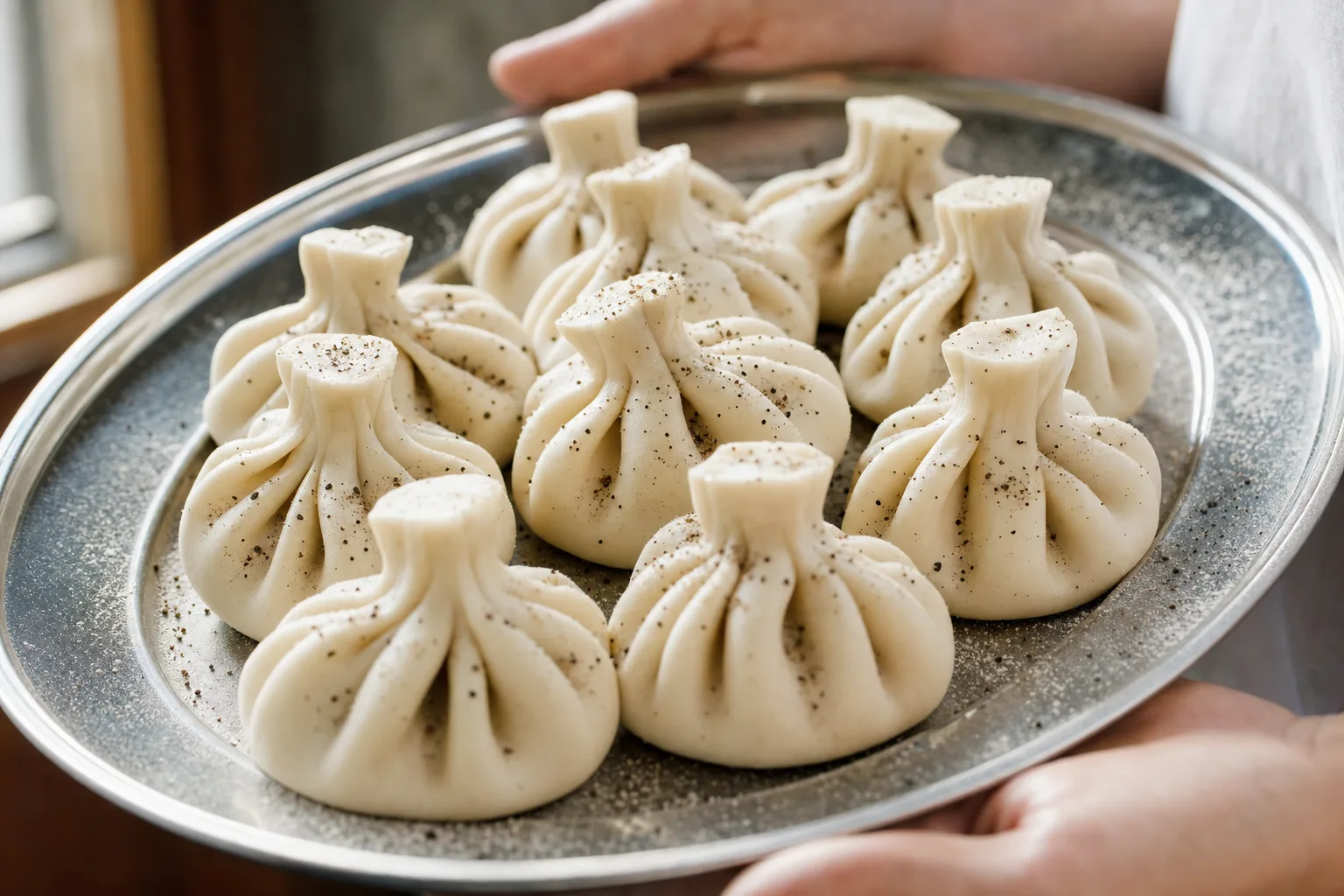
Khinkali come from the eastern mountains, Pshavi, Khevsureti, Mtiuleti and Khevi, where shepherds made them as a hot, portable meal for the winter. The original khevsuruli filling is coarsely chopped meat (lamb, beef or pork mixed), onion, chili, salt and cumin; the city version, kalakuri, adds coriander and parsley. Because the meat goes in raw, its juices are trapped inside during cooking, which is the whole point. Mushroom, potato and cheese fillings are standard, and the khinkali from the town of Pasanauri on the Georgian Military Highway are held to be the best in the country.

| Rule | What to do |
|---|---|
| Use your hands | Pick it up by the twisted knob. A fork pierces the dough and the broth runs onto the plate. |
| Bite, then sip | Turn it over, bite a small hole in the side, drink the broth, then eat the dumpling. |
| Leave the knob | The doughy top is not eaten. The pile of knobs on your plate is the score. |
| Black pepper only | Ground black pepper is on the table for this. No sauce. |
| Order by the five | Kitchens take five or more of one filling. Five to eight is a meal for one; do not order khachapuri as well. |
A khinkali is 1.50 to 3 GEL a piece in Tbilisi in 2026, the vegetarian fillings at the bottom of the range and lamb or aged cheese at the top. Klike's and Amo Rame in Sololaki, Cafe Daphna for late nights and Asi Khinkali for the biggest rooms are the capital's regulars; Pictograma and Khash-Khash serve the mountain styles. Our khinkali guide covers fillings, etiquette and the best kitchens in detail.
The vegetable dishes
Georgia is the easiest country in Europe to eat in without meat, and it is not a modern development. The Georgian Orthodox Church keeps the old fasting rules, no meat, dairy or eggs on Wednesdays and Fridays and through the four long fasts of the year, so every traditional kitchen has a class of dishes, samarkhvo, that are vegan by tradition. Pkhali is the one to start with: spinach, beetroot or cabbage minced with walnut, garlic, vinegar and herbs, formed into balls and topped with pomegranate seeds, usually served as a plate of three. Lobio is the bean dish, red kidney beans (a New World crop, in Georgia since the 1500s) cooked with coriander, walnut, garlic and marigold, served cold and mashed as lobio nigozit or hot in a clay pot with mchadi cornbread and pickles. Badrijani nigvzit is fried aubergine rolled around walnut paste; ajapsandali is the summer stew of aubergine, tomato and pepper; jonjoli is pickled bladdernut flowers, sharp and very Georgian; and the mushroom and potato khinkali are as ordinary as the meat ones. Kutaisi and Imereti are the heartland of this cooking, and the western tone bakeries sell lobiani, the bean-filled bread, next to the khachapuri.
The meat dishes
Mtsvadi is the grill: cubes of pork, veal or lamb on long flat skewers over embers, brought to the table with raw onion and pomegranate seeds and eaten with tkemali. It is the dish of the roadside and of every supra. Chakapuli is the spring stew, lamb or veal cooked with tarragon, unripe cherry plums, dry white wine and a handful of fresh herbs; it appears at Easter and stays on menus until the plums ripen. Shkmeruli, from the village of Shkmeri in Racha, is fried chicken finished in garlic and milk and served bubbling in its clay ketsi. Satsivi is poultry, usually turkey or chicken, served cold in a thick walnut sauce spiced with fenugreek, coriander and cinnamon, the centrepiece of the New Year table. Kharcho is a beef soup thickened with rice and soured with cherry plum, seasoned with the khmeli suneli spice mix and coriander; in Samegrelo it becomes a walnut stew served over ghomi. Kupati are coarse pork sausages from Samegrelo and Guria, chicken tabaka is a whole flattened chicken, fried and served with ajika, and khashlama is plain boiled beef or lamb, with khashi, the boiled-meat broth, the Kakhetian cure after a supra.

Ten regional kitchens
Georgian cuisine is a dozen regional cuisines that share a border, and the best versions of many dishes never reach Tbilisi menus intact. Use this table to know what to order where you are.
| Region | Signature dishes | Character |
|---|---|---|
| Kakheti | Mtsvadi, chakapuli, khashlama, chikhirtma (chicken soup), shoti bread, churchkhela, pelamushi | Wine country; meat-based, generous, the home of the supra |
| Samegrelo | Ghomi, elarji, gebzhalia (cheese rolls with mint), Megruli khachapuri, kupati, kharcho, chicken tabaka, sulguni, ajika | The most celebrated regional kitchen; cheese, corn and the only real heat |
| Imereti | Imeruli khachapuri, mchadi, pkhali, lobio, kuchmachi (livers with walnut and pomegranate), fried mushrooms | Walnut and vegetables; Kutaisi is its capital |
| Svaneti | Kubdari, chvishtari (mchadi with sulguni inside), tashmijabi (potato mashed with sulguni), barley soups | High mountain food, dense and warming |
| Racha and Lechkhumi | Shkmeruli, lori (smoked ham), lobiani with ham, lobio, square Rachuli khachapuri | Pork, beans and garlic |
| Adjara | Adjaruli khachapuri, borano (cheese fried in ghee), chirbuli (eggs with tomato and walnut) | Coastal; butter, dairy and Turkish influence |
| Khevi, Pshavi, Khevsureti, Tusheti | Khinkali, kotori (cottage-cheese bread), khavitsi (melted cheese), guda sheep cheese, dried meat | Shepherd food; dairy, dough and the original dumpling |
| Samtskhe-Javakheti | Goose soup, Meskhuri khinkali filled with goose, apokhti (dried meat), tenili cheese, tklapi, snails | Unlike the rest; goose, dried food and Ottoman echoes |
| Kartli | Jonjoli, chakapuli, bread soup, fruit and vegetables from the Mtkvari plain | Orchard country around Gori and Mtskheta |
| Guria | Satsivi, mchadi, kupati, badrijani nigvzit, Guruli Christmas pie | Poultry, cornbread and walnut, like Imereti with more sea air |
Bread, cheese and sauces
Bread comes from the tone, the round clay oven a baker leans into to slap dough onto its walls; the long, canoe-shaped shotis puri and the flatter tonis puri come out minutes later and are sold through a window for a lari or two. Mchadi is the cornbread of the west, eaten with lobio and cheese. Cheese is mostly two kinds: sulguni, the brined, elastic cheese of Samegrelo made from cow or buffalo milk, eaten fresh, smoked or fried, and Imeruli, the softer white cheese that fills most khachapuri. In the mountains you meet guda, a sheep's cheese from Tusheti that takes twenty days to make, and in Meskheti tenili, hand-pulled into threads.
| Sauce or spice | What it is | Best with |
|---|---|---|
| Tkemali | Cherry plum sauce, red or green, with garlic, pennyroyal, coriander, dill and chili; tart rather than sweet | Mtsvadi, fried potatoes, anything grilled |
| Ajika | Red pepper paste with garlic, coriander and utskho suneli, from Samegrelo and Abkhazia; the word is Abkhaz for salt | Meat, cheese, elarji; the one hot thing on the table |
| Bazhe | Ground walnut with garlic, fenugreek and marigold, thinned with water | Chicken, fish, aubergine |
| Satsebeli | Tomato and herb sauce, sometimes with walnut | Bread, mtsvadi, khinkali if you must |
| Tklapi | Sheets of dried plum or cherry puree from Samtskhe-Javakheti | Souring kharcho and stews; eaten as a snack |
| Utskho suneli and khmeli suneli | Blue fenugreek, and the dried mix built on it with coriander, marigold and savory | Everything; the taste that says Georgia |
Sweets
Georgian meals do not end with dessert, and restaurant dessert menus are short and often imported. The sweets are seasonal and come from the market. Churchkhela is the one you will see everywhere: walnuts or hazelnuts threaded on a string, dipped in tatara, grape must thickened with flour, and hung to dry into a candle shape; the Kakhetian method went onto the national heritage list in 2015, and it is made after the harvest and eaten at New Year and Christmas. Pelamushi is the same thickened grape juice set as a jelly and served with nuts, an autumn dish. Gozinaki is walnuts caramelised in honey, cut into diamonds for New Year. Tklapi, the fruit leather, is the snack children take to school. Buy churchkhela from a market or a Kakheti roadside rather than a souvenir stall, and press it: a fresh one bends, a stale one is stone.

Drinks
Wine first, because this is where it began: pottery from Gadachrili Gora south of Tbilisi carries wine residue from about 6000 BC, and much of the wine you drink at a family table still ferments in a buried clay qvevri. Order the dry amber whites made on their skins with the walnut dishes and a Saperavi red with the meat; at traditional restaurants house wine comes in a jug from a small producer from about 5 GEL a glass, and the Tbilisi wine bars pour from 6 to 15 GEL. Our wine culture guide explains the grapes and the qvevri. Chacha is what is left when the wine is made, the grape pomace distilled into a clear spirit: 40 percent in the commercial bottles, anything up to 85 percent from a home still, and it appears at the end of a supra or at a guesthouse breakfast. One is polite; our chacha guide has the rest.
The soft drink is lemonade, limonati, which here means a sweet carbonated drink in flavours rather than lemon: tarragon (tarkhuna, bright green) is the classic, and pear and cream are on every shelf. Mineral water is a national habit: Borjomi, from the spa town of the same name, is salty and strongly carbonated, and the spring in the town runs warm and faintly sulphurous, nothing like the bottle; Nabeghlavi is the other name on every menu. Georgian beer exists and is fine with khinkali, but if you only drink beer here you have missed the point of the country.
How restaurants work
| Custom | What it means for you |
|---|---|
| Order for the table | Nobody orders a plate for themselves. Choose a mix of cold starters, bread, one or two hot dishes and a salad, and everything goes in the middle. |
| Portions are large | Two people need three or four dishes, not four mains. Order less than you think and add. |
| Starters come first, and separately | Cold dishes arrive within minutes, hot dishes when they are ready, sometimes twenty or thirty minutes later. This is normal. |
| The table is yours | Nobody will bring the bill until you ask for it (angarishi, tu sheidzleba). A dinner is two hours. |
| Check the bill before tipping | Many Tbilisi bills print a service charge of 10 percent (sometimes 12 or 15) above the total, separately from the 18 percent VAT. If it is there, nothing more is expected; if not, about 10 percent in cash is polite. Our money guide covers it. |
| Smoking | Banned indoors under the tobacco control law since 2018, and mostly obeyed in Tbilisi. Terraces are where people smoke. |
| Menus are long | Ten pages is normal, not a warning sign; most dishes are variations on the same walnut, bean, cheese and dough. Ask what is fresh. |
| Bread arrives unasked | Shotis puri lands on the table and goes on the bill at a lari or two. Do not fill up on it. |
What it costs
Food prices in Georgia
| Item | Price | Notes |
|---|---|---|
| Khachapuri or lobiani from a tone bakery window | 3-8 GEL | About $1 to 3. The everyday Imeruli or a bean lobiani, eaten standing. |
| Adjaruli khachapuri in a restaurant | about 20 GEL | The large boat at Retro in Tbilisi, enough for two; a bakery one is a third of that. |
| Khinkali, per piece | 1.50-3 GEL | Vegetarian fillings at the bottom of the range, lamb and aged cheese at the top. Kitchens take orders of five or more of one filling. |
| Canteen lunch for one | under 20 GEL | A clay pot of lobio, a mchadi and a tarragon lemonade. Canteen mains run 10 to 15 GEL. |
| Canteen or bakery meal for two | about 40 GEL | About $15. |
| Mid-range Georgian dinner for two | 60-80 GEL | About $23 to 31: three dishes, bread and drinks. Alone, budget 30 to 45 GEL because portions are shared-size. |
| Top tables, dinner for two with wine | 150-200 GEL | About $58 to 77 at Cafe Littera, Barbarestan or Reserve. |
| Glass of wine | 5-15 GEL | House wine from a jug from about 5 GEL; the dedicated wine bars pour from 6 to 15. |
Prices checked September 2026. Ranges reflect season and operator.
At the National Bank's rate on 29 September 2026 (2.61 GEL to the dollar, 2.96 to the euro), 20 GEL is about $8 or 7 euros. Food is the part of a Georgian trip that costs least and delivers most; the top tables in Tbilisi are what a mid-range dinner costs in western Europe, and the canteens and bakeries have barely moved in years. Our travel budget guide puts the meals into a week.
Where to eat it
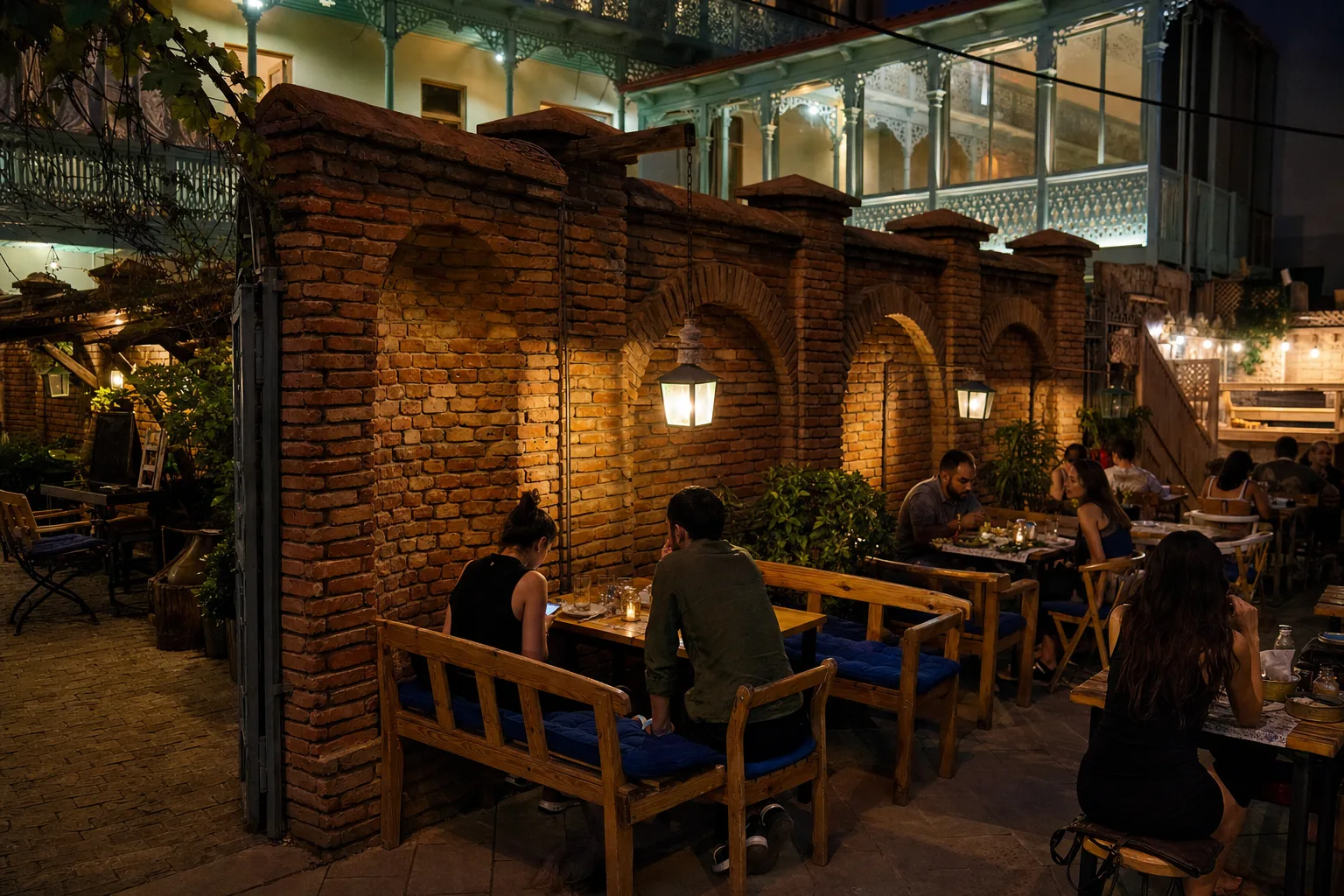
In Tbilisi the choice is deep. Shemomechama in Vera and Salobie Bia on Rustaveli do the whole classic menu well; Klike's and Amo Rame are the khinkali rooms; Mapshalia on Aghmashenebeli Avenue is the Megrelian canteen, Ghebi a few doors along the Rachan one, open around the clock; Retro is where the city goes for Adjaruli; Barbarestan cooks from a 19th-century cookbook and Cafe Littera in the Writers' House garden is the one dinner to book days ahead. For the cheapest and freshest food, eat at the Dezerter Bazaar by Station Square (daily 07:00 to 17:00, cash only, best before noon), where the cheese, churchkhela and bakery stalls make a lunch for a few lari. Our restaurants guide has addresses and hours for forty kitchens, and the street food guide covers the bakery windows.
Outside the capital, eat the region you are in. Kutaisi's Green Bazaar is the place for Imeretian cheese and lobiani hot from the bakeries around its edge; Telavi's covered bazaar in the morning has the Kakhetian cheese, churchkhela and walnuts; Batumi is where the Adjaruli was invented and where to eat it; Mestia is the only place to eat a kubdari made by a Svan; and Pasanauri, twenty minutes north of Ananuri on the Military Highway, is where half of Georgia stops for khinkali on the way to Kazbegi. A family guesthouse dinner in any of these places is 20 to 30 GEL a head and usually the best meal of the trip.
Mistakes
| Mistake | Do this instead |
|---|---|
| Ordering a main each | Order for the table: three or four dishes for two people, and add if it runs out. |
| Khachapuri and khinkali in one sitting | Both are dough. Georgians pick one; have the other tomorrow. |
| Eating only in the Old Town | Menus with photographs and staff on the pavement mean prices for tourists. Vera, Sololaki, Marjanishvili and the Aghmashenebeli canteens are better and cheaper. |
| A fork on the khinkali | Hands, knob, bite, sip. The broth is the dish. |
| Adding 10 percent on top of a service charge | Read the bill first. Many Tbilisi restaurants print the service charge. |
| Expecting a quick dinner | A Georgian dinner is two hours. In a hurry, go to a bakery window or a canteen. |
| Churchkhela from a souvenir stall | Buy it at a market or a Kakheti roadside, and only if it bends. |
| Skipping the amber wine | Skin-fermented qvevri white is the thing you cannot drink at home. Order a glass even if you do not like wine. |
Frequently asked questions
What is the national dish of Georgia?
Is Georgian food spicy?
Can vegetarians and vegans eat well in Georgia?
How much does a meal cost in Georgia?
Is it rude not to finish the food?
What should I drink with Georgian food?
Keep planning
Food & Wine
Khachapuri in Georgia: The Styles, Rules and Where to Eat
The regional khachapuri styles that matter, how Georgians eat them, what each one costs, and where to order without getting the tourist version.
18 min read
Food & Wine
Khinkali in Georgia: How to Eat Them and Where to Order
Georgian khinkali explained: kalakuri vs mtiuluri, how many to order per person, how to eat one without wearing the broth, and where to order them in Tbilisi.
17 min read
Food & Wine
Best Restaurants in Tbilisi 2026: Where We Actually Eat
Where to eat in Tbilisi in 2026: khinkali houses, canteens, regional kitchens, wine bars and splurges, with prices, addresses and hours checked September 2026.
17 min read