
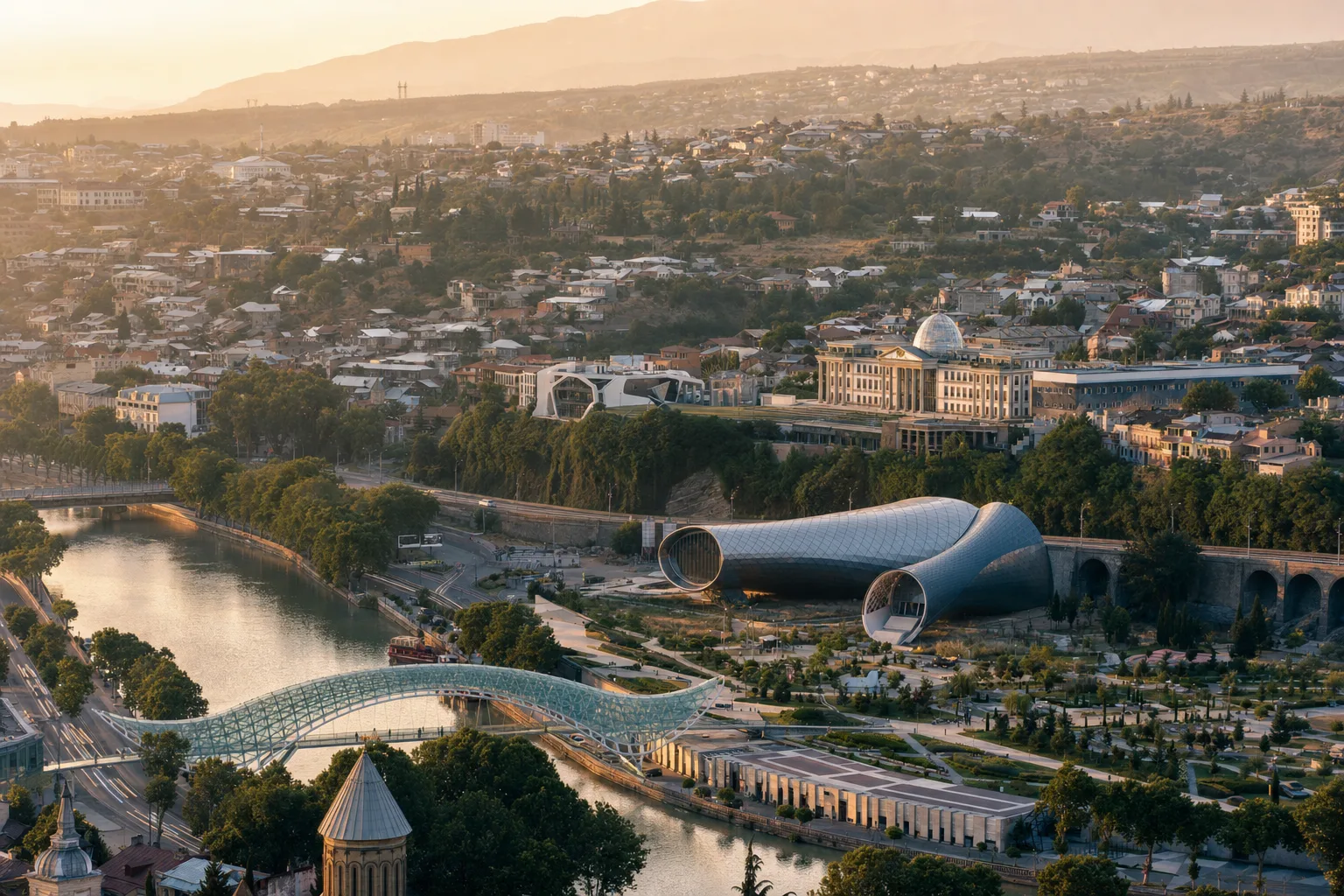
The city is easy once you know three things. It is compact, so the Old Town, Sololaki, Vera and Marjanishvili are all within a 30 to 40 minute walk of each other and the metro costs 1 GEL. It is cheap where it counts, so a Georgian dinner for two is 60 to 80 GEL (about $23 to 31) and a good guesthouse double 70 to 140 GEL. And it rewards leaving the postcard: the best restaurants, bars and cafes are a ten-minute walk from the tourist lanes, not in them. Conversions use the National Bank of Georgia rate for 22 September 2026, 2.61 GEL to the dollar.
Quick answer
Fly in, take bus 337 (1 GEL) or a Bolt (15 to 25 GEL) to the centre, and sleep in Sololaki or around Marjanishvili rather than the Old Town itself. Give it three days: one for the Old Town walk and the sulfur baths, one for Vera, Rustaveli and the markets, one for Mtskheta or Kazbegi. Book the private bath and the good restaurants a day or two ahead, pay by card, tip 10 percent unless a service charge is printed, and learn gamarjoba and madloba. Everything else is below.
- Airport bus
- 1 GEL
- Double room
- from 53 GEL
- Bath room
- from 130 GEL
- Days needed
- 3
Getting in
Tbilisi International Airport (TBS) is 17 km east of the centre. There are direct flights from London (British Airways daily from Heathrow, easyJet twice a week from Luton), Amsterdam, Paris, Munich, Vienna, Warsaw, Athens and, since June 2026, Copenhagen on Norwegian twice a week; from most other places you connect once, usually in Istanbul, where Turkish Airlines flies to Tbilisi five or six times a day and is the airline we fly ourselves. Wizz Air's cheap flights land at Kutaisi, about 230 km west, with a 30 GEL coach to Tbilisi that waits for every flight and takes 3.5 to 4 hours. Our flights guide compares the routes.
Most Western passports get a full year in Georgia without a visa, and since 1 January 2026 every tourist must hold health and accident insurance with at least 30,000 GEL of cover for the stay; the visa and entry guide has the rules and the insurance guide the policies. From the terminal, three options work, all within fifty metres of the arrivals doors:
Airport to the centre, September 2026
| Item | Price | Notes |
|---|---|---|
| Bus 337 | 1 GEL | Tap a bank card (about 1.50 GEL on a foreign card); 50 to 70 minutes to Freedom Square; runs until 23:00. Diverted while Rustaveli Avenue is rebuilt, so check the stop list |
| Bolt | 15-25 GEL | About $6 to 10 by day, 30 to 40 GEL after midnight or in rain. Book in the app; the pickup point is signed |
| GoTrip driver | 54 GEL | Per car, booked ahead, the driver waits in arrivals with your name. The one to choose at 03:00 with a family |
| Airport train | not running | The airport railway station has no trains in September 2026 |
Prices checked 22 September 2026. Ranges reflect season and operator.
Where to stay
The mistake most first-timers make is booking "central" without asking central to what. The areas are nothing alike, and all of the ones below are within a half-hour walk of the Old Town. Our where to stay guide compares eight of them with twenty named properties; this is the short version.
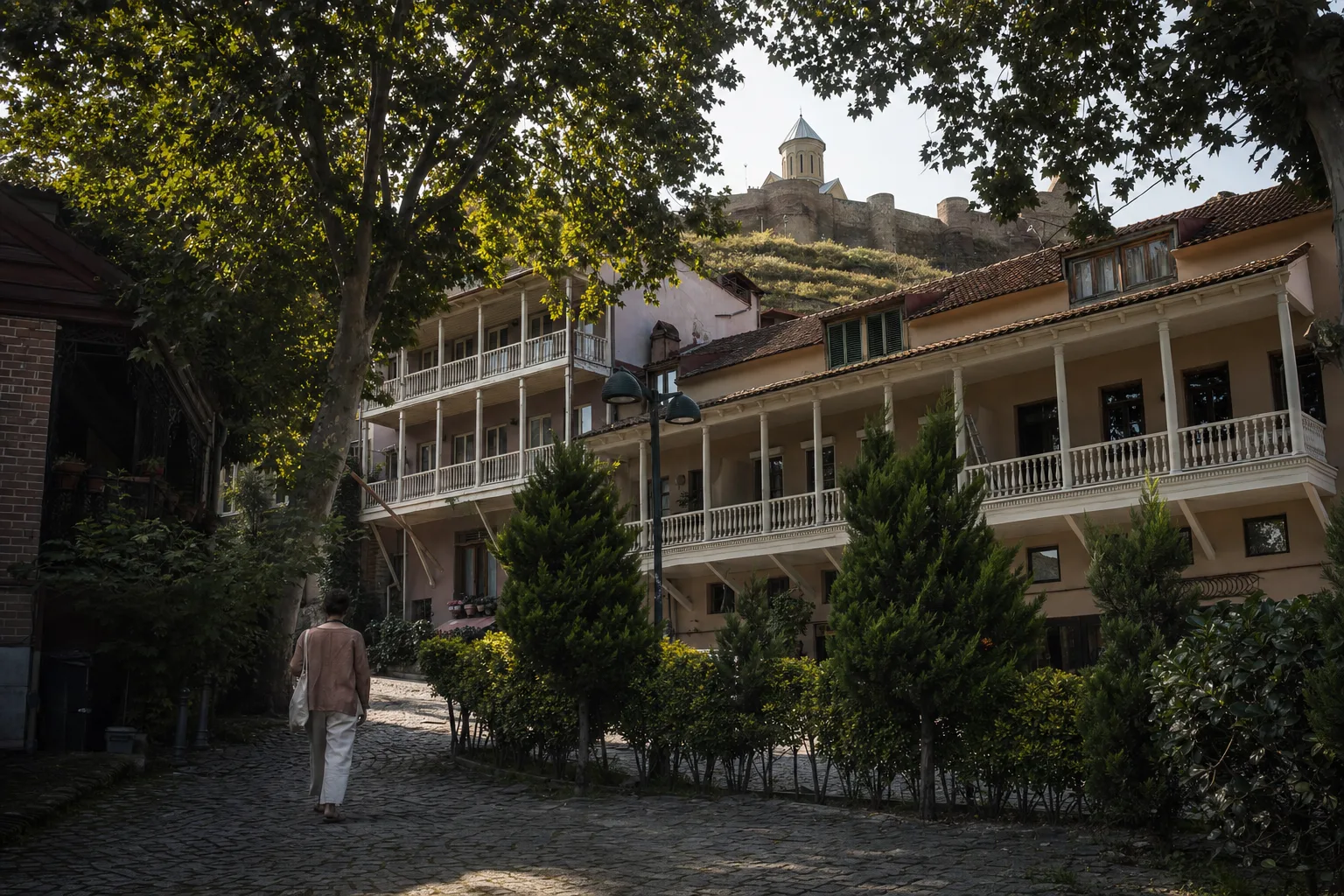
Old Town (Kala). The postcard: bath domes, carved balconies, the ridge with Narikala above. Everything on the walking tour is outside your door, and so are the laminated English menus. Fine for two or three nights on a first visit; the food is better elsewhere and the rooms are small and priced for the location.
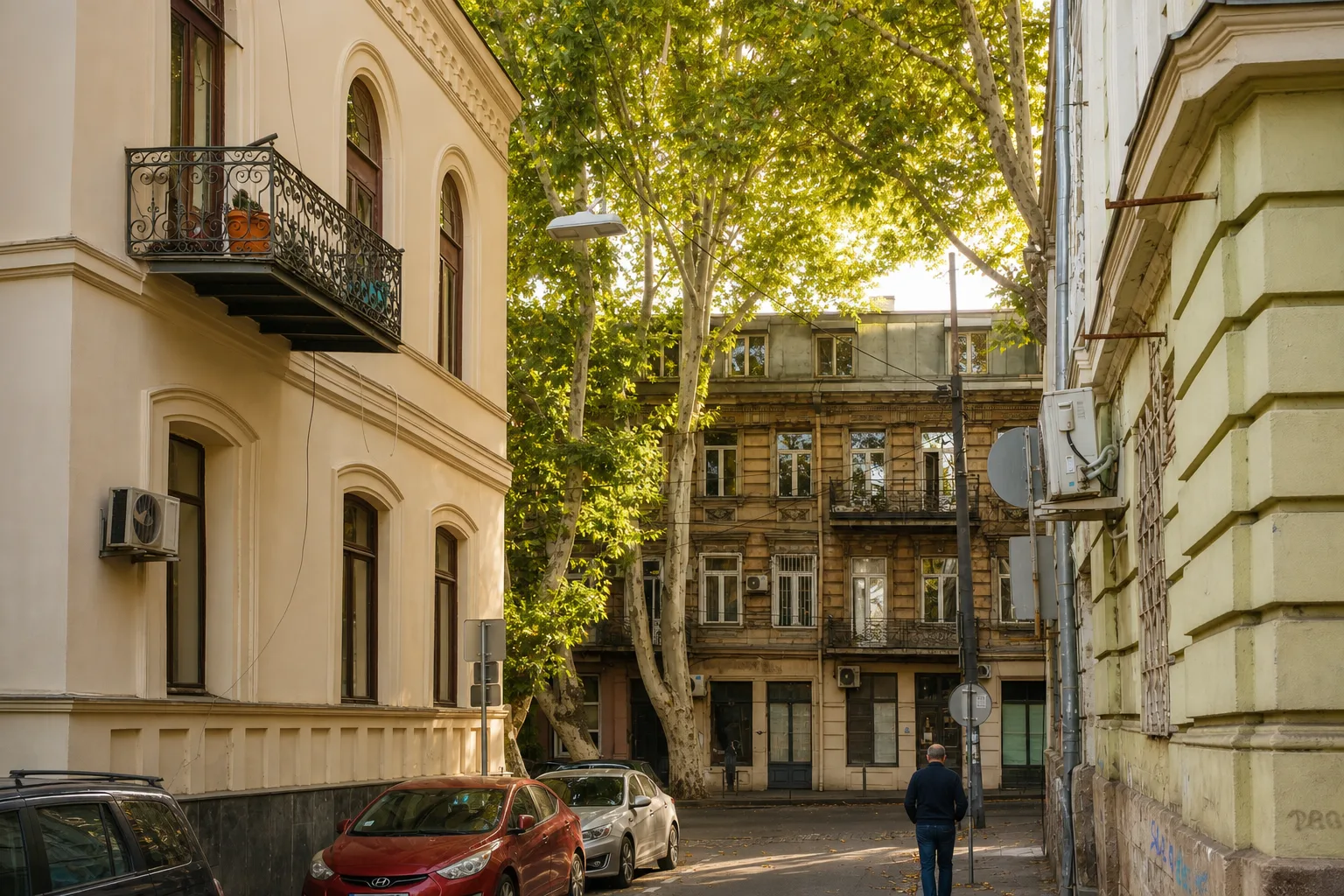
Sololaki. Directly behind Freedom Square, the 19th-century merchant quarter: painted stairwells, courtyards, the best khinkali houses and wine bars, a 13-minute walk to the Old Town. Our pick for a first visit. Vera is the leafy district north of Rustaveli where residents actually live, with the city's best coffee and a 20-minute walk to the sights; Marjanishvili and Chugureti, across the river, have the restaurants, the bars and Fabrika, the converted sewing factory at 8 Ninoshvili Street that fills every evening. Vake is the polished residential quarter with lifts, parks and modern flats, a Bolt ride from everything, and the right answer for a week or more with children. Avlabari, on the cliff opposite the Old Town, is a short walk over the Metekhi bridge and has the best-value small hotels.
What a double costs, weeknight 13 to 14 October 2026
| Item | Price | Notes |
|---|---|---|
| Guesthouse double, shared bathroom | 53 GEL | When in Tbilisi, Chugureti, scored 9.4; 59 GEL with a private bathroom |
| Guesthouse double, Sololaki | 70 GEL | Leon Rooms; the neighbourhood guesthouses run 70 to 140 |
| Small hotel double, Vera | 99 GEL | Hotel Pavo, deluxe double, scored 9.4 |
| Small hotel double, Old Town | 120-126 GEL | Cultural Crossing Hotel by Sioni Cathedral, scored 9.7 |
| Boutique hotel double, Avlabari | 212 GEL | Metekhi Boutique Hotel; 190 non-refundable |
| Design hotel double, Vera | 671-742 GEL | Stamba, in the former printing house on Kostava Street |
Prices checked 22 September 2026. Ranges reflect season and operator.
Getting around
Walk. The Old Town, Sololaki, Vera and Rustaveli are all on foot from each other, and the times below are from Liberty Square on level paths, so add a few minutes for the Sololaki and Avlabari hills. For anything further, the metro has two lines and 23 stations, runs 06:00 to midnight and costs 1 GEL a ride however far you go: tap a contactless bank card or phone at the gate (about 1.50 GEL on a foreign card), or buy a Metromoney card for 2 GEL at any cashier if you are staying a few days. Transfers to buses are free for 90 minutes. Bolt covers the rest: 4 to 7 GEL across the centre, 8 to 15 GEL across the city, fare shown before you book. Do not rent a car for the city itself; save it for the mountains.
Getting around, September 2026
| Item | Price | Notes |
|---|---|---|
| Metro or bus | 1 GEL | Bank card at the gate; Metromoney 2 GEL; 90-minute free transfers |
| Bolt, central ride | 4-7 GEL | About $2 to 3. Vake to the Old Town 8 to 15 |
| Rike Park to the Narikala ridge cable car | 2.50 GEL | Each way, Metromoney or bank card, about 10:00 to midnight in summer |
| Rustaveli to Mtatsminda cable car | 12 GEL | Mtatsminda Park Card only (2 GEL). The funicular from Chonkadze Street is also 12 |
| Vake Park to Turtle Lake cable car | 1 GEL | 10:00 to 22:00 |
| Liberty Square to Meidan on foot | 19 min | 1.4 km; Sololaki 13 min, Rustaveli metro 19 min |
Prices checked 22 September 2026. Ranges reflect season and operator.
What to see, and what to skip
The full list, with prices and hours, is our 25 things to do in Tbilisi. These are the ones that matter on a first visit.
The Old Town on foot. Start at Meidan, walk through the bath domes to the Leghvtakhevi gorge, then climb (or ride the 2.50 GEL cable car) to the ridge for the view. Narikala fortress itself is closed for restoration with no reopening date, but the viewpoint beside it and the Mother of Georgia statue are open, and the National Botanical Garden below is 4 GEL if you have an hour. Come down through Sioni Cathedral, Shardeni Street, the leaning clock tower (puppet show at 12:00 and 19:00) and Anchiskhati to the Bridge of Peace. Our walking tour is this route with timings; a free tip-based tour leaves Freedom Square daily at 12:00.
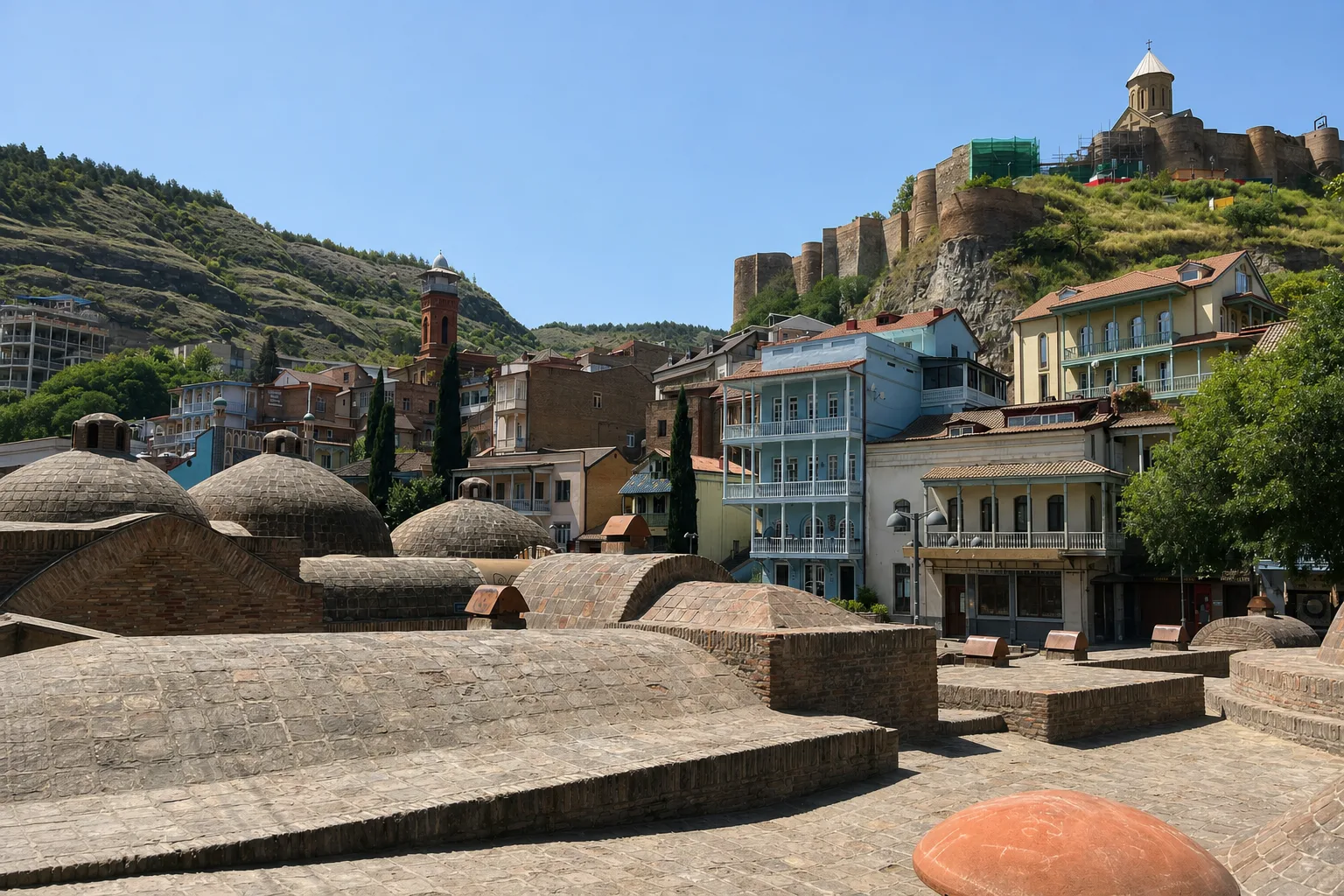
The sulfur baths. The reason the city exists (Tbilisi means "warm place"). Private rooms are priced per room per hour, not per person, from 130 GEL (about $50) at Chreli Abano, the blue-tiled one, or 150 GEL at Gulo's and the Royal Bath House; the public bath at Bath No. 5 is 6 to 10 GEL a person, gender-segregated and naked. Add a kisa scrub for 15 to 30 GEL in cash, book two hours rather than one, and skip it in high summer. The baths guide compares the houses.
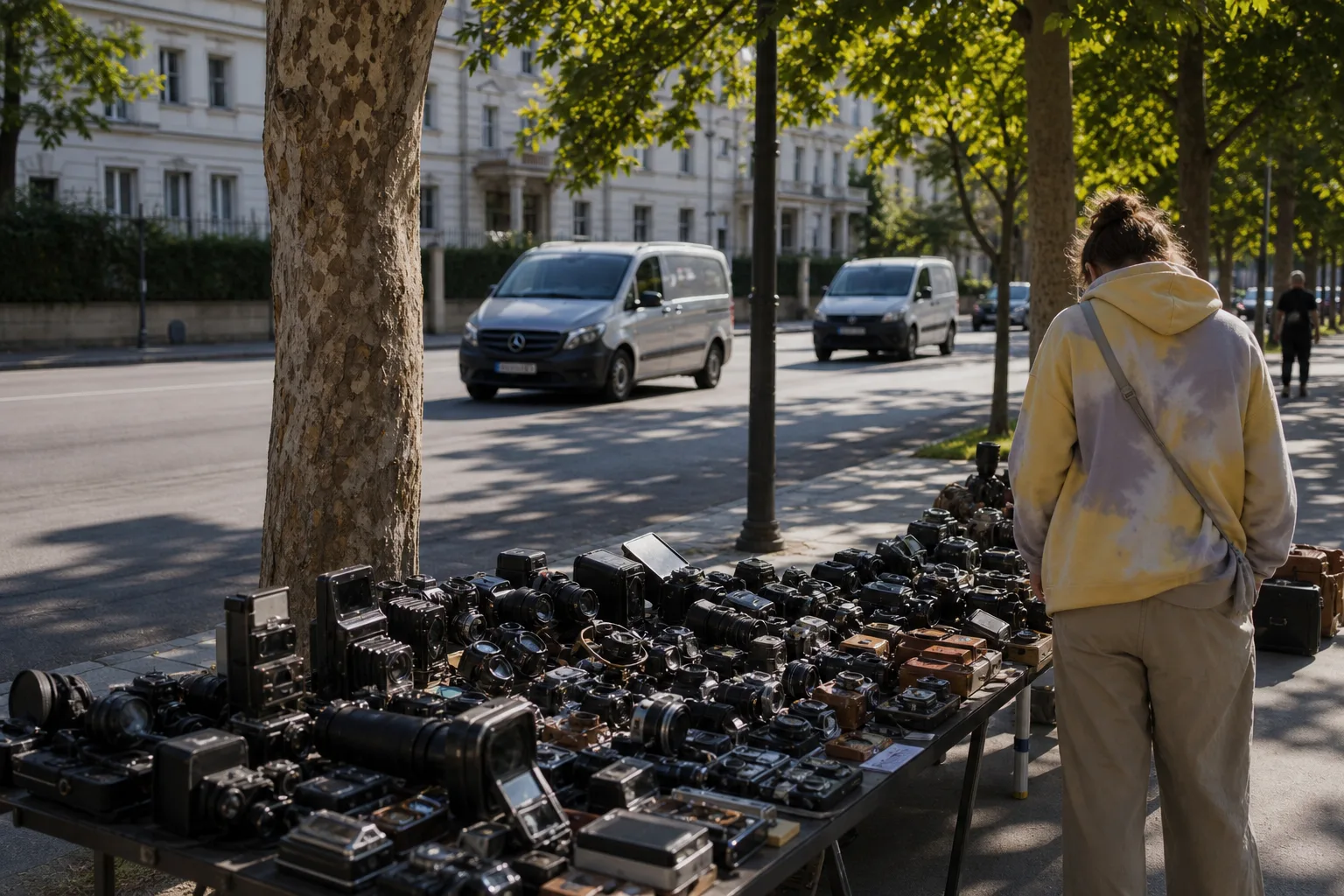
The markets. The Dry Bridge flea market (Soviet badges, cameras, paintings, glassware) is officially daily 10:00 to 17:00 and only really fills at weekends from about 11:00; bargain here, never over vegetables. The Dezerter Bazaar by Station Square is where the city buys its food, daily 07:00 to 17:00, best before noon, cash only: Svan salt, spice blends and churchkhela are the souvenirs worth carrying. The markets guide has prices.
Rustaveli Avenue and Vera. Walk from Freedom Square past the Parliament and the Opera to the Vera streets behind, where the roasteries are. The Georgian National Museum on Rustaveli, with the Soviet Occupation hall, now charges 40 GEL per a September 2026 price survey, so decide whether you want it; the churches are free. Sameba, the vast cathedral on the Avlabari hill, is worth the walk up: free, loan scarves and wrap skirts at the door, no photos inside. Fabrika in Chugureti is a drink in a courtyard rather than a sight, and a good one.
Skip, or save for a spare afternoon. The Chronicles of Georgia, the giant pillars above the Tbilisi Sea, photograph well and take a cross-city Bolt each way with nothing else around; the Mtskheta day tours that include them are the easy way. Turtle Lake is a 1 GEL cable car ride and a hot-day swim, not a destination. The Bridge of Peace is a bridge; walk across it at night when it is lit and move on.
Where to eat and drink
You cannot eat badly in Tbilisi, but you can eat expensively and blandly on the tourist lanes. The four dishes to start with are khachapuri (get the Adjaruli, the boat with the egg), khinkali (hold the knot, bite a hole, drink the broth, leave the knot on the plate), pkhali (walnut-paste vegetable pates) and mtsvadi (grilled pork or veal skewers with tkemali plum sauce). Our what to eat guide covers the rest of the menu.
For one classic Georgian dinner, book Shemomechama (Mtskheta Street 8, open 11:00 to midnight) or Salobie Bia on Rustaveli. For khinkali, Amo Rame or Klike's Khinkali, both in Sololaki, at 1.50 to 3 GEL a piece. For modern Georgian, Shavi Lomi on Zurab Kvlividze Street on the Marjanishvili side, where the city's food renaissance started, booked a day or two ahead. For the splurge, Cafe Littera in the Writers' House garden on Machabeli Street or Barbarestan on Aghmashenebeli Avenue, both booked a few days ahead. The restaurant guide has thirty more with addresses and hours.
What a meal costs, Tbilisi, September 2026
| Item | Price | Notes |
|---|---|---|
| Canteen or bakery meal for two | about 40 GEL | About $15. Lobio, mchadi, a salad, lemonade |
| Mid-range Georgian dinner for two | 60-80 GEL | About $23 to 31. Three dishes, bread, drinks; wine adds 25 to 60 a bottle |
| Top tables, dinner for two | 150-200 GEL | Littera, Barbarestan and similar |
| Khinkali | 1.50-3 GEL each | Five is a meal |
| Cappuccino | 9-12 GEL | Coffee LAB, OKRO and Shavi in Vera roast their own |
| Wine by the glass | 6-15 GEL | House wine from 5; a bar tasting 40 to 85 |
Prices checked 22 September 2026. Ranges reflect season and operator.
Day trips
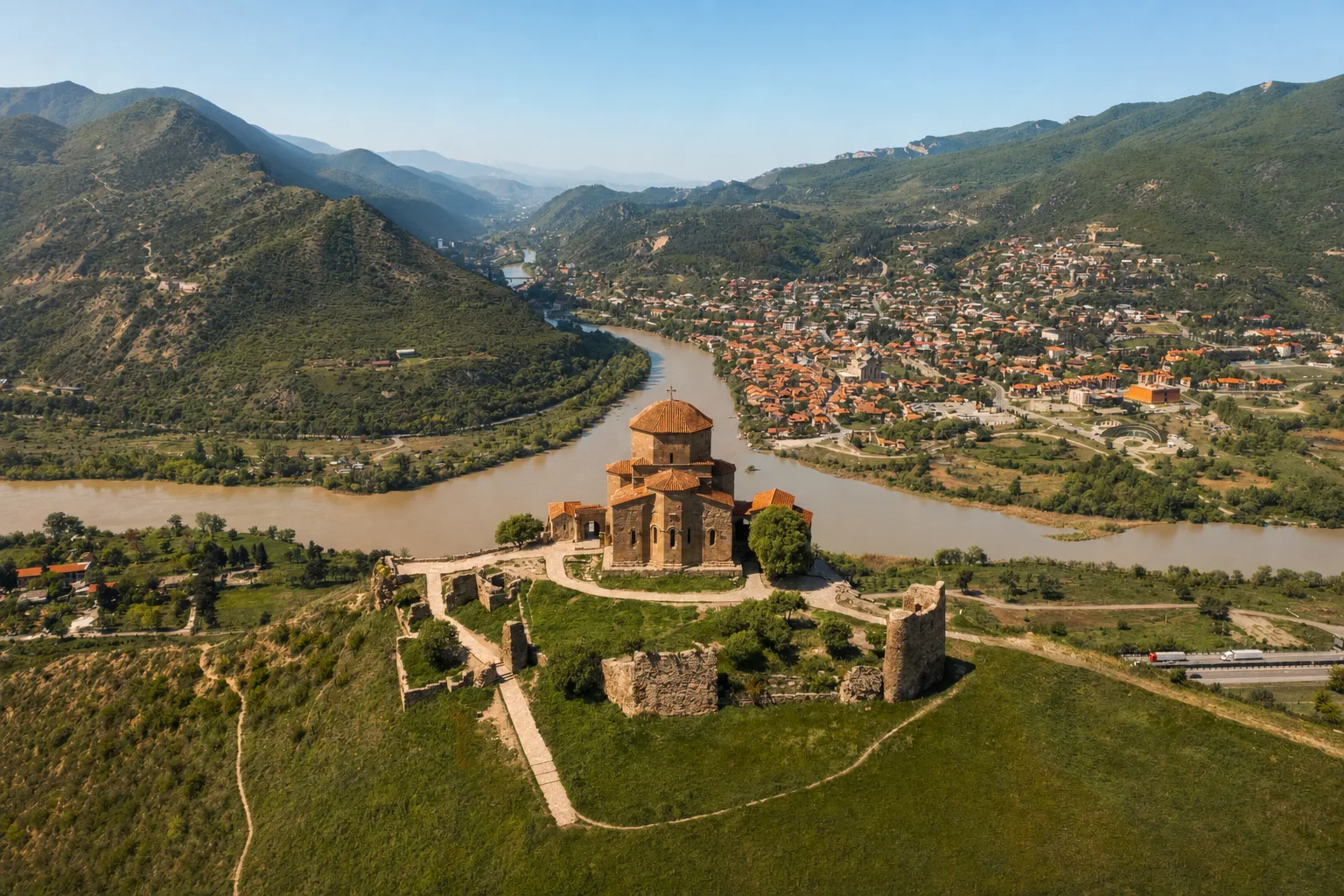
Three trips cover a first visit, and all three leave by marshrutka from Tbilisi's bus yards. Mtskheta, the old capital with Jvari on its hill and Svetitskhoveli cathedral, is 2 GEL and 25 to 35 minutes from Didube; go in the morning and be back for lunch. Kazbegi (Stepantsminda) and the Gergeti church under the mountain are 20 GEL and 3 to 3.5 hours each way from Didube on the Military Highway, so make it an overnight if you can. Sighnaghi and the Kakheti wine villages are 15 GEL and 2 to 2.5 hours from the Navtlughi yard at Samgori metro. A fixed-price GoTrip driver is 81 GEL per car to Mtskheta and 210 GEL to Kazbegi, stops included, read on 22 September 2026, and group day tours on GetYourGuide sell at $10 to 39 a person. The day trips guide ranks ten.
Money and practical
Quick reference, September 2026
| Item | Answer | Detail |
|---|---|---|
| Currency | lari (GEL) | 1 USD = 2.61 GEL, 1 EUR = 2.99 GEL at the National Bank rate for 22 September 2026. Lari is the only legal tender |
| Cards | everywhere | Visa, Mastercard, Apple Pay and Google Pay, including the metro. Carry lari for markets, marshrutkas and tips |
| ATMs | 0-6 GEL | Basisbank and Cartu charge nothing on foreign cards; Bank of Georgia and TBC about 3, Credo about 6. Decline the machine’s conversion |
| Tipping | 10% | Unless a service charge is printed. Round up Bolt fares if you like |
| Safety | high | Numbeo safety index 72.9 of 100 for Tbilisi; walking the central areas at night is fine. Traffic is the real hazard |
| Tap water | treated | The utility says it meets WHO standards; the weak point is old pipework, so many residents filter or buy bottled |
| Plugs | Type C and F | 220 V, the European two-pin |
| Weather | 32°C July | Average July high; December to February highs 7 to 8°C. May, June, September and October are the months to come |
Prices checked 22 September 2026. Ranges reflect season and operator.
Language. Georgian has its own alphabet and is unrelated to anything you know; English is common among younger people in the centre, Russian among older ones. Four words change every exchange: gamarjoba (hello), madloba (thank you), diakh and ara (yes and no), bodishi (sorry). The phrases guide has the rest with pronunciation, and the etiquette guide covers the supra, the toasts and the church dress code.
What nobody tells you
- The dogs are fine. Tbilisi has a lot of street dogs and most carry a numbered plastic ear tag, which means the dog has been neutered, vaccinated against rabies and returned to its street under the city's programme. They sleep in doorways and follow you for a block. Leave them be and they leave you be; the safety guide covers the trail dogs that are a different story.
- Cars do not stop. Zebra crossings are advisory. Wait for a gap or an underpass, and make eye contact before you step out. Georgia had 469 road deaths in 2025; as a pedestrian you are the soft part of that statistic.
- Dinner is late and the bars are later. Georgians eat at 20:00 or 21:00 and the classic places seat until midnight (Shemomechama does); the bars in Sololaki, Vera and around Fabrika go on well after that. The nightlife guide has the streets.
- Sunday is for churches, and churches have rules. Women cover their hair and wear a skirt (loan scarves and wraps are at the door of the big ones), men take hats off, nobody photographs where a sign says no. Liturgy runs Sunday mornings and the churches are at their most alive then.
- Shopping is the markets. Tbilisi is not a shopping city. The Dezerter Bazaar for food, the Dry Bridge for old things, a wine shop for the bottles you will carry home; our souvenirs guide says what to buy.
How many days
Three days covers the Old Town and the baths, Vera and the markets, and Mtskheta in a morning; you leave wanting more, which is the right way to leave. Five days adds an overnight in Sighnaghi and a slower second Tbilisi day for a tasting, Sameba and a second dinner at the place you liked. Seven days adds two nights in Kazbegi for the Military Highway and Gergeti; our 7-day itinerary is that trip day by day with prices, and the itinerary overview has the longer versions.
Frequently asked questions
How many days do I need in Tbilisi?
Is Tbilisi walkable?
Where should a first-time visitor stay in Tbilisi?
What should I eat first in Tbilisi?
Is Tbilisi safe at night?
Do I need Georgian or Russian in Tbilisi?
Keep planning

Destinations
Where to Stay in Tbilisi: Best Areas Compared (2026)
Best area to stay in Tbilisi for a first visit, food, families or a month: eight areas compared with room prices read on Booking.com in October 2026.
15 min read
Destinations
Tbilisi Old Town Walking Tour 2026: Self-Guided, 10 Stops
Self-guided Tbilisi Old Town walk in ten stops, Meidan to the Bridge of Peace: the baths, the gorge, the ridge above closed Narikala, Sioni and the clock tower.
12 min read
Travel
10 Best Day Trips from Tbilisi: Vans, Drivers, Tours (2026)
Ten day trips from Tbilisi ranked, Mtskheta to Kazbegi, with the van fare, driver price and tour price for each read in October 2026, and the two that work by train.
17 min read