
Quick answer
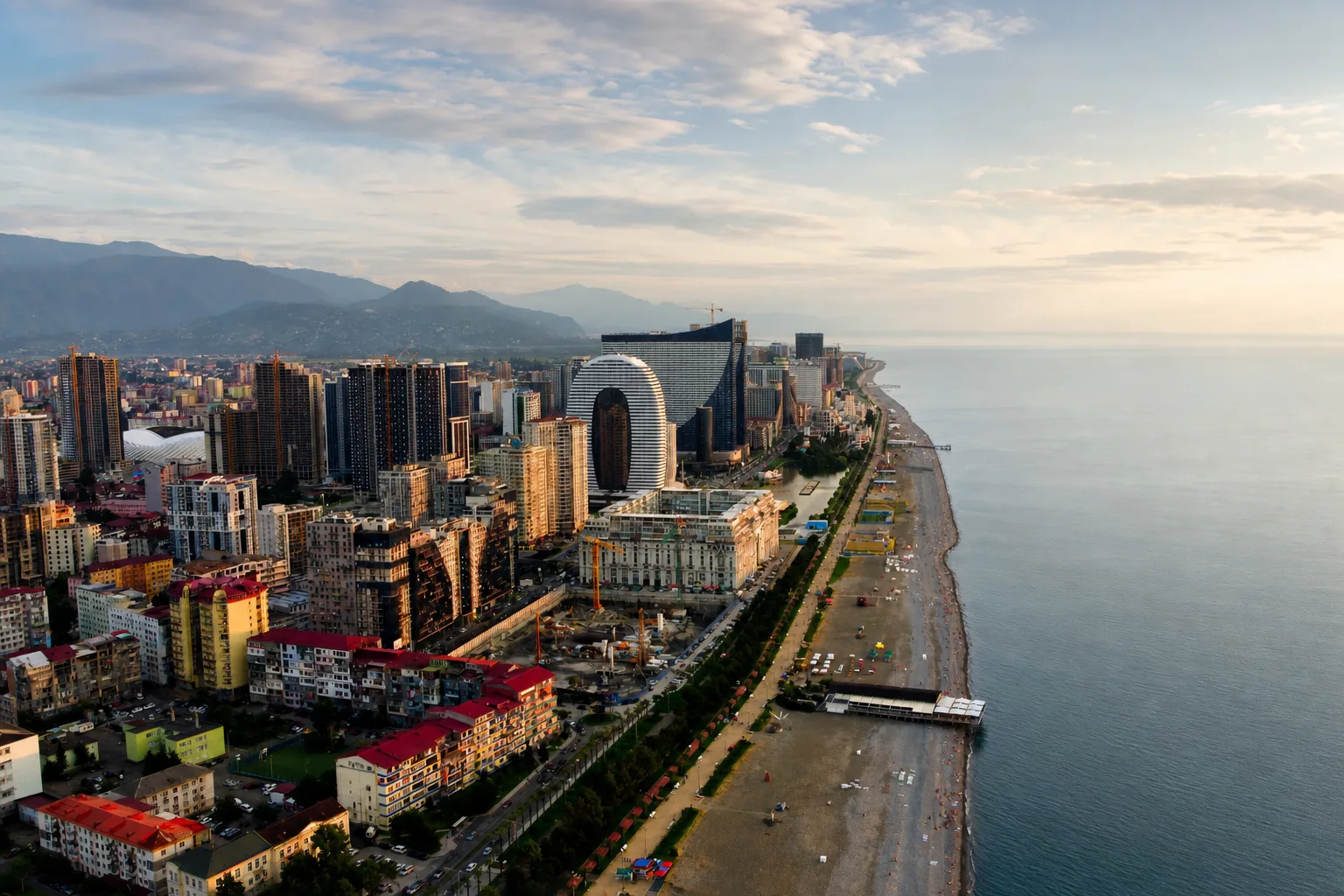
Batumi is a humid subtropical port of about 246,000 people on the Black Sea, 372 km west of Tbilisi and four hours away on the 36 GEL double-decker train. Give it two nights: the 7 km boulevard and the old town on day one, the Botanical Garden (25 GEL, 09:00 to 19:00) and a swim at Kvariati on day two, and a third day for the Makhuntseti waterfall if you have it. The beach is pebbles, the food is the richest in Georgia, and a studio in the old town was 80 GEL for a Saturday night in October when we checked. Skip it on a one-week trip; on ten days or more it is the contrast the mountains need.
- From Tbilisi
- 372 km
- Train
- 4 h, 36 GEL
- Botanical Garden
- 25 GEL
- Best months
- Jun, Sep
Batumi gets oversold and dismissed in equal measure. The oversellers talk about a Black Sea Riviera; the dismissers see casinos, half-finished towers and a pebble beach. Both are lazy. This is the capital of Adjara, an autonomous republic with its own mountains, its own dialect of the kitchen and a Muslim minority that gives the city a mosque as well as a cathedral. It was a small Ottoman harbour until the Russian Empire took it in 1878, boomed when the railway from Baku arrived in 1883 and the oil pipeline in 1907, and has spent the last twenty years being rebuilt in glass. Population 246,300 at the start of 2026, second in the country. Understand what it is and you will have a good time; expect the Mediterranean and you will be annoyed within the hour.
Is Batumi worth it
Yes, on a trip of ten days or more, and it is the reason our 14-day itinerary ends here with the morning train back. Batumi shows you the western Georgia the mountain pages never mention: palm trees and rain, tea and citrus on the hills, fish markets, a Turkish border twenty minutes down the road, acharuli khachapuri eaten where it was invented. It is also the easiest city in the country to enjoy with no plan at all, because the boulevard runs 7 km along the sea and everything else sits within a fifteen-minute walk of it.
No, on a week. If your Georgia is Tbilisi, Kazbegi and Kakheti, the coast is eight hours of travel for a city that needs two nights to make its case, and Kutaisi and its caves make a better western add-on. The people who leave Batumi disappointed are almost always the ones who gave it one night in July and stayed in a tower.
The city on foot
Start at the port end. The old town, a grid of two- and three-storey streets between the harbour and the boulevard, is where Batumi feels like a place rather than a project: Ottoman-era houses, the white minaret of Orta Jame, the city's one working mosque, the Piazza with its restaurant terraces around a marble mosaic, and Europe Square, where the new buildings are done in the old style and it takes a while to work out which is which. The Archaeological Museum (6 GEL, 10:00 to 18:00, closed Monday) holds the Greek finds from the Pichvnari necropolis up the coast, painted pottery, coins and gold going back to the 5th century BC, and is the thing to do on a wet afternoon.
Then the boulevard. Laid out in 1884 and now 7 km long, it is the city's living room: a strip of park, cycle path and pebble beach with cafes, playgrounds, sculpture and a lighthouse from 1882 at the port end. Walk it from late afternoon, when the light softens and the whole city comes out, and turn back at the Ferris wheel, where the Alphabetic Tower (a 130 m monument to the Georgian script, 15 GEL for the lift) and the moving Ali and Nino sculpture stand together. Bike stands in the park charge 5 to 8 GEL an hour. Beyond the Ferris wheel the new boulevard runs on for another few kilometres past the towers to the lagoon of the dancing fountains; it is fine on a bike and dull on foot.

What to see and what it costs
Sights, hours and tickets
| Sight | Price | Notes |
|---|---|---|
| Batumi Boulevard, the 7 km seafront park, and the beach | Free | Bike hire from the stands in the park 5 to 8 GEL an hour. Best from late afternoon. |
| Botanical Garden, Green Cape, 9 km north, 09:00 to 19:00 | 25 GEL | 10 GEL for residents. Half a day. Buses 10 and 10a from Gogebashvili Street. |
| Argo cable car from the port to Anuria hill, 11:00 to 20:30 | 30 GEL | Return fare; 10 GEL for children. Opened in 2013, it rises 250 m above the city; only worth it on a clear day. |
| Alphabetic Tower lift and bar, on the boulevard | 15 GEL | The lift alone. The bar at the top is glassed in; the free view from Sameba church is better. |
| Archaeological Museum, 10:00 to 18:00, closed Monday | 6 GEL | Greek finds from the Pichvnari necropolis, some from the 5th century BC. An hour, on a wet afternoon. |
| Gonio-Apsaros fortress, 15 km south, until 18:00 | 5 GEL | Roman walls, bus 16 from the centre. Combine with a swim at Kvariati. |
| Sameba (Holy Trinity) church on the hill above town, 10:00 to 18:00 in summer | Free | Bolt up about 10 GEL, 30 minutes; walk the 6 km back down through the villages. |
| Ali and Nino, the moving sculpture at the top of the boulevard | Free | The platform starts turning at 19:00 and the two figures slide together, merge and part again. |
Prices checked September 2026. Ranges reflect season and operator.
Two views compete for your afternoon. The Argo cable car, built in 2013, rises 250 m from the port to Anuria hill, 30 GEL return, 11:00 to 20:30; it is worth it only on a clear day. Sameba church on the hill above the city is free, quieter and, in our view, better: take a Bolt up (about 10 GEL, 30 minutes) and walk the 6 km back down through the villages with the skyline appearing through the trees. Skip the dolphinarium; the city has a resident pod of bottlenose dolphins that you can watch for nothing from the pier near Ali and Nino around sunset.
The Botanical Garden
The best single thing in the area, and the one to do first. The Batumi Botanical Garden covers 108 hectares of hills and ravines on the Green Cape, 9 km north of the city, and was opened on 3 November 1912 by the Russian botanist Andrei Krasnov, who had spent the 1880s collecting the plants of the wet subtropics. More than 2,000 species of trees and shrubs are laid out by region of origin, so you walk from Japan into the Himalaya into Mexico with the sea below you the whole way. Entry is 25 GEL for foreigners and 10 GEL for residents, open 09:00 to 19:00, with an upper and a lower entrance. Buses 10 and 10a run there along Gogebashvili Street for 1 GEL and stop at the lower gate. Allow two to three hours and bring water.
The beach
Pebbles, not sand, and it is better to know that before you pack. The city beach runs the length of the boulevard, is long and social and easy to fall onto from a cafe, and by August is packed and not especially clean. For actual swimming take bus 16 south for 15 minutes to Kvariati or Sarpi, where the hills come straight down to clear water and the pebbles are clean; or north to Mtsvane Kontskhi under the Botanical Garden for a dip. Sand is an hour north at Ureki, dark, magnetic and shallow, the beach for small children. The sea is 25 to 27 C from July to September and still about 25 C in mid-September. Our beaches guide ranks the whole coast.
Getting there
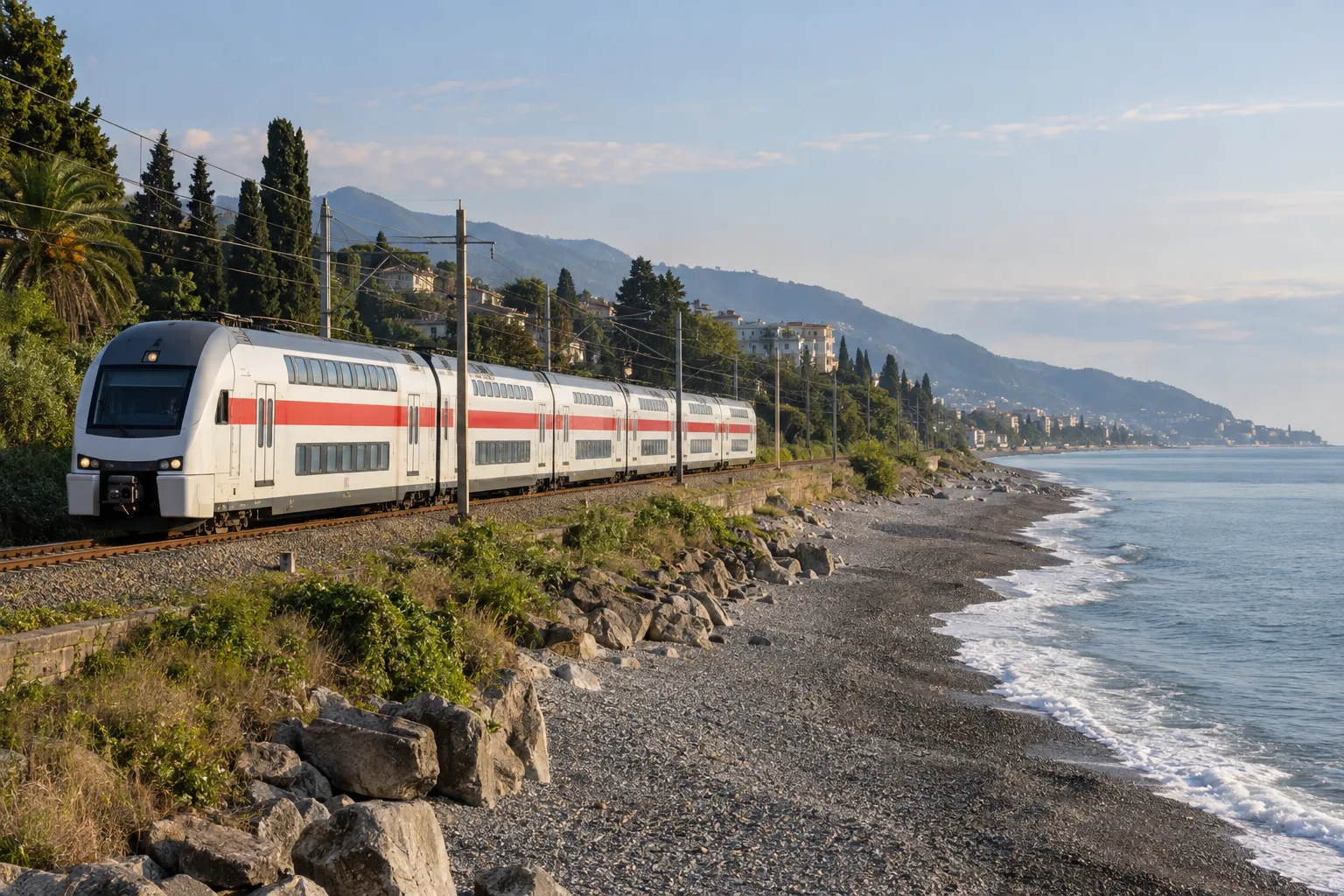
From Tbilisi the train wins. Since the Rikoti expressway opened in full in December 2025 the road is a little over five and a half hours, but the Swiss-built double-deckers do it in about four for 36 GEL and drop you at Batumi Central, 4 km north of the old town. Book on tkt.ge as soon as the 20-day window opens; the summer trains sell out. Our Tbilisi to Batumi page compares every option with the current timetable; the short version is below.
Ways in, one way
| Option | Price | Notes |
|---|---|---|
| Double-decker train from Tbilisi Central, 08:05 and 17:10 daily | 36 GEL | About 4 hours. 76 GEL first class. Sales open 20 days ahead on tkt.ge; extra departures in summer. |
| Metro Georgia coach from Ortachala, Tbilisi, nine a day | 45 GEL | About six hours on the Rikoti expressway, luggage underneath. Arrives at 11 Tsabadze Street. |
| Marshrutka from Didube, Tbilisi | 35 GEL | Roughly hourly from 07:15, 5 to 7 hours, no luggage hold to speak of. |
| GoTrip driver from Tbilisi, per car | 342 GEL | 372 km, about 5 h 40 min, stops at Gori or Kutaisi included in the price. |
| Georgian Airways flight from Tbilisi, four days a week | from 295 GEL | 45 minutes in the air. 09:00 out, 19:30 back, Tuesday, Thursday, Saturday and Sunday at the June 2026 launch. |
| Coach from Kutaisi Airport, timed to the Wizz Air flights | 30 GEL | About 2 hours. The same double-decker trains also call at the airport station for 36 GEL. |
| GoTrip driver from Kutaisi, per car | 212 GEL | 148 km, about 2.5 hours. |
Prices checked September 2026. Ranges reflect season and operator.
From Batumi's own airport, a few kilometres south of the centre, city buses 10 and 10a run in for under 1 GEL and a Bolt is 12 to 15 GEL. Flights from Istanbul and a handful of European cities land there in summer; for most Europeans the cheap way in is Wizz Air to Kutaisi and the 30 GEL coach, which is what our Kutaisi Airport page covers. Our Kutaisi Airport arrival helper works out when that minibus leaves for your flight and what a driver costs for your party.
Getting around
On foot in the old town and along the boulevard, by bike for the length of it, by bus for everything else. Batumi's buses take no cash: tap a contactless bank card on the reader when you board, about 1 GEL, or buy the local transport card at a Spar or Goodwill supermarket and pay 70 tetri a ride. Bus 16 runs south through Gonio and Kvariati to the Sarpi border, buses 10 and 10a north to the Botanical Garden, and both leave from the centre every few minutes in summer. Bolt works as it does in Tbilisi and costs a few lari across the centre. Vans to Kobuleti and the north coast leave from the car park beside the Church of the Holy Spirit; vans up the mountain road to Keda, Makhuntseti and Khulo leave from the old bus station. A car is only useful if you are driving on to Svaneti or Kutaisi; our rental guide covers the no-deposit cars from about 24 USD a day.
Where to stay
Where you sleep decides your opinion of the city. The old town, between the port and the Ferris wheel, is the right answer for a first visit: every restaurant and cafe is on foot, the beach is five minutes away and the buildings have some age to them. The seafront towers north of the wheel sell sea views and lifts to the beach, and the apartments in them are often good value in the shoulder months, but they feel the same inside whichever one you choose, and the new boulevard beyond them is 3 to 4 km from anywhere you want to eat. Booking.com and Airbnb both work well here; Batumi has more apartments than hotels. Prices roughly double in July and August and drop hard from October. Our where to stay in Batumi page compares the five areas with rooms priced for October and July.
What to eat
Adjara cooks with more butter, more cheese and more corn than the rest of Georgia, and Batumi is the place to eat it properly. Acharuli khachapuri, the boat of bread with the egg and the slab of butter dropped in at the table, was invented here; a bakery one is 3 to 8 GEL and a restaurant one two or three times that, and the local rule is to tear the bread from the sides and stir the middle before it sets. After that: borano, cheese melted in butter until it is more butter than cheese, eaten with cornbread; sinori, thin pastry rolled with nadughi curd and poured over with butter; and Black Sea fish, fried whole. Our what to eat guide covers the national dishes you will find here too.
The fish market is the meal to plan a day around: 2.5 km from the old town past the port on the Botanical Garden road, open 10:00 to 22:00. Choose your fish in the market hall, hand the bag to the kitchens next door, and they fry it while you wait; you eat at picnic tables by the water. It is loud, cheap and the most Batumi thing you will do. In town, the Piazza and the streets around it hold the restaurants; the guesthouse and family kitchens in Keda and Makhuntseti are where the mountain dishes are best, which is one more reason for the Upper Adjara day.

Day trips
Batumi is a base as much as a destination. The Botanical Garden and the coast south to the border are half days on a city bus; Upper Adjara is a full one. The Makhuntseti waterfall, 30 km inland on the Khulo road, is a tall fall with a swimming hole at its foot, a short trail from the road, with a hump-backed medieval stone bridge across the river on the other side and a second waterfall and arch bridge at Mirveti nearer the city; the Khulo vans from the old bus station take about an hour and cost 10 GEL, and there are wineries in the valley for a tasting on the way back. Mtirala National Park, 30 km north-east of the city, is rainforest in all but name (the name means the crying one, for the weather) and has been part of the Colchic Rainforests World Heritage site since 2021, with a 7 km loop from the park office at Chakvistavi to the Tsablnari waterfall. Both are easier with a driver or a tour, which is also how most people reach the Martvili canyon and Prometheus cave, a ten-hour day that starts in Samegrelo.
Day trips from Batumi
| Trip | Ticket | How |
|---|---|---|
| Botanical Garden and the Green Cape | 25 GEL | Bus 10 or 10a for 1 GEL, 25 minutes. The easy win; do it first. |
| Gonio fortress, Kvariati and Sarpi | 5 GEL | Bus 16 all the way to the Turkish border for about 1 GEL. Fortress, then the clearest water on the coast. |
| Makhuntseti waterfall and the Ottoman bridges, Upper Adjara | 10 GEL | Khulo vans from the old bus station every 30 minutes from 08:00, about an hour; ask to be dropped at Makhuntseti. A driver for the day was listed from 70 GEL a car round trip. |
| Mtirala National Park, the wettest forest in the country | Free | 30 km, about an hour; Bolt 35 to 45 GEL one way to the park office at Chakvistavi, then the easy 7 km loop to the Tsablnari waterfall. |
| Kobuleti, Petra fortress and Tsikhisdziri | 3 GEL | Vans from the car park beside the Church of the Holy Spirit, about an hour. Kobuleti Museum closed Monday. |
| Martvili canyon and Prometheus cave | from $55 | Ten hours with a tour; the site tickets (40 GEL each, boats extra) are on top. Too far for a van day. |
Prices checked September 2026. Ranges reflect season and operator.

Evenings
Batumi is better after dark, when the towers light up and the boulevard fills. The routine that works: a walk from the port to the Ferris wheel from about 18:30, Ali and Nino turning at 19:00, a drink somewhere on the seafront, a late dinner, and a walk back. In summer the dancing fountains on the lagoon of the new boulevard run to music from 20:30. The sky bars are the tourist version of the view; the one in the Alphabetic Tower costs 15 GEL in the lift alone and is glassed in, while the open terrace on top of the Radisson Blu costs nothing but a drink. The casinos are part of the scenery whether you go in or not, and the clubs and beach bars run from June to September. It is not a big-night city; Tbilisi is, and people who want that should not come here for it.
When to visit
Batumi is the wettest city in Georgia: about 2.4 metres of rain a year on the 1981 to 2010 normals, with November the wettest month at over 300 mm and May the driest at about 84 mm. It rarely gets cold, but from November to March it is grey, damp and quiet, with hotel prices at their floor and half the seafront closed. July and August are the resort season: sea at 25 to 27 C, humidity to match, every room booked and the fountains, clubs and beach bars running. June and September are the months we would choose. The sea is warm enough, the boulevard is full without being packed, and the trains and rooms are easier to get. Our summer guide and autumn guide cover the rest of the country in the same months.
Costs
What two nights in Batumi cost, per person for two
| Item | Price | Notes |
|---|---|---|
| Train from Tbilisi and back, second class | 72 GEL | About $28. The 45 GEL coach each way if the train is sold out. |
| Studio apartment on the old boulevard, one night | 80 GEL | Apartment in Batumi MGZAVREBI for Saturday 10 October, read on Booking.com today. |
| Hotel with breakfast in the old town, one night | 256-348 GEL | Old Batumi Hotel 256, Hampton by Hilton 295 plus 53 taxes, the same Saturday. |
| Botanical Garden, cable car and museum | 61 GEL | 25 plus 30 plus 6. |
| Three days of meals | 150-250 GEL | A bakery acharuli 3 to 8 GEL, a Georgian dinner for two 60 to 80 GEL, a fish-market lunch is priced by the kilo. |
| Buses, a few Bolts and a bike for a day | 30-40 GEL | Buses about 1 GEL with a contactless card, 70 tetri with the local card. |
Prices checked September 2026. Ranges reflect season and operator.
Batumi is cheap by any coastal standard and no longer the bargain the old blog posts promise. Rooms, not food, are where the money goes: a Saturday in October costs 80 GEL in a good old-town studio and 256 GEL and up in a hotel with breakfast, and the same rooms cost about double in August. Everything else is a few lari. For the country-wide picture see how much Georgia costs, and run your own numbers in our trip budget calculator.
Three plans
| Trip | What to do |
|---|---|
| One full day | Old town and the Archaeological Museum in the morning, fish-market lunch, the boulevard from late afternoon to Ali and Nino at 19:00, dinner on the Piazza. Enough to see the city, not enough to like it. |
| Two nights | Day one as above. Day two the Botanical Garden from 09:00, a swim at Mtsvane Kontskhi or, on bus 16, at Kvariati with Gonio fortress on the way, the cable car or Sameba at sunset. The plan for most people. |
| Three nights | Add Upper Adjara: the Makhuntseti waterfall and bridges by van or driver, lunch in a family kitchen near Keda, back for the fountains. Or Mtirala's forest loop if it is dry. The version that explains why people come back. |
Mistakes
| Mistake | Do this instead |
|---|---|
| Expecting a sand beach | It is pebbles. Bring sandals, swim at Kvariati, or go north to Ureki for sand. |
| Staying on the new boulevard to save money | The old-town studios cost the same and you can walk to dinner. Distance kills the evenings here. |
| One night in August | Two nights minimum, and June or September if the dates are yours to choose. |
| Only doing the city | The Botanical Garden and Upper Adjara are the best of it. Give them a day each. |
| Arriving without a train ticket | The double-deckers sell out in summer. Book on tkt.ge when sales open 20 days ahead, or take the 45 GEL coach. |
| Paying the cable car on a hazy day | 30 GEL for a view of cloud. Sameba church is free and the walk down is the better outing. |
| Trying to pay a bus in cash | There is no cash. Tap a contactless bank card, about 1 GEL. |
Frequently asked questions
How many days do you need in Batumi?
Is Batumi worth visiting if you do not care about beaches?
Are the beaches in Batumi actually good?
Should you stay in the old town or the towers?
How do you get from Tbilisi to Batumi?
When is the best time to visit Batumi?
Keep planning
Practical Info
Tbilisi to Batumi 2026: Train, Bus, Driver or Flight
Tbilisi to Batumi in 2026: the 4-hour train for 36 GEL and its autumn timetable, 45 GEL coaches from Ortachala, Didube vans, fixed-price drivers and the flight.
13 min read

Destinations
Best Beaches in Georgia 2026: Batumi, Kobuleti, Ureki
Georgia's Black Sea beaches: Batumi's pebbles, Kvariati and Sarpi, Kobuleti's sand, Ureki's magnetic sand, sea temperatures, bus fares and where to stay.
13 min read

Road Trips
Tbilisi to Batumi Road Trip 2026: Route, Stops, Costs
Driving Tbilisi to Batumi in 2026: the finished Rikoti expressway, a three-day route via Gori, Uplistsikhe and Kutaisi, entry fees, fuel, rental rules, stays.
15 min read