Georgia adopted Christianity in 327 AD — nearly two centuries before most of Europe figured it out. The country has been building churches ever since, and the result is one of the densest concentrations of medieval religious architecture anywhere on Earth.
The numbers are staggering. Thousands of churches and monasteries dot this country the size of West Virginia. Some sit on mountaintops that take hours to reach. Others hide in caves carved from sandstone cliffs. A few balanced on rock pillars that shouldn't support anything, let alone a church.
But here's the thing most travel guides skip: knowing which churches to visit is only half the story. Understanding what you're looking at — why this dome is shaped differently from that one, why the frescoes matter, what the monks were actually doing up there — transforms a photo-op checklist into something genuinely moving.
A Very Quick History (So the Buildings Make Sense)
You don't need a PhD in art history, but five minutes of context will change how you see every church in Georgia. The architecture tells the story of the country itself.
4th–6th centuries: Georgia converts. The earliest churches are simple basilicas — rectangular halls with stone columns and wooden roofs. Think functional, not ornate. The country was still figuring out Christianity and fending off Persians. Bolnisi Sioni (478 AD) is the oldest surviving example, and it looks exactly like what it is: a new religion's first serious building.
6th–7th centuries: The Jvari era. Georgian architects invent their signature form — the centrally-planned cross-dome church. Jvari Monastery (590s) above Mtskheta is the template that influenced everything after it. The proportions are perfect. The execution is confident. This is where Georgian architecture finds its voice.
10th–13th centuries: The Golden Age. Under kings like David the Builder and Queen Tamar, Georgia becomes the most powerful kingdom in the Caucasus. Money pours into church building. Gelati Monastery, Alaverdi Cathedral, Bagrati Cathedral — these are statements of empire. Grand scale, elaborate stone carving, exquisite frescoes, mosaic work imported from Constantinople.
13th–18th centuries: Mongol invasions, Persian raids, Ottoman pressure. Church building slows. The focus shifts to survival — fortress-monasteries, cave complexes, hidden mountain retreats. What gets built is smaller but often more desperate and therefore more moving.
19th–20th centuries: Russian Empire, then Soviet Union. The Soviets closed monasteries, demolished some churches, turned others into barns or warehouses. The revival since independence in 1991 has been extraordinary — monks returning to ruins, frescoes being restored, communities rebuilding.
The Cross-Dome Church
Georgia's architectural signature is the cross-dome (or "cross-in-square") plan. Imagine a Greek cross from above, with a dome over the central intersection. Unlike Byzantine churches that emphasise interior space, Georgian churches often look more impressive from outside — the stone carving, the proportions against the landscape. Once you recognise this shape, you'll see it everywhere.
The 12 You Absolutely Should Not Miss
Georgia has thousands of churches. These twelve represent the best of different eras, regions, and architectural styles. I've ranked them by how essential they are, not by age or fame.
| Church / Monastery | Built | Region | Why It Matters | Entry |
|---|---|---|---|---|
| Gergeti Trinity Church | 14th c. | Kazbegi | Georgia's most iconic image — church vs mountain | Free |
| Gelati Monastery | 1106 | Kutaisi | UNESCO. Best-preserved Golden Age complex | Free |
| Jvari Monastery | 590s | Mtskheta | Template for all Georgian church architecture | Free |
| Svetitskhoveli Cathedral | 1010–1029 | Mtskheta | Georgia's spiritual centre, UNESCO | Free |
| David Gareja | 6th c. | Kakheti border | Desert cave monastery with border controversy | Free |
| Vardzia | 1185 | Samtskhe-Javakheti | Massive cave city — 600+ rooms in a cliff | 15 GEL |
| Alaverdi Cathedral | 11th c. | Kakheti | Tallest medieval cathedral in Georgia, active winery | Free |
| Bodbe Monastery | 9th c. | Kakheti | Burial place of St. Nino, stunning gardens | Free |
| Motsameta Monastery | 11th c. | Kutaisi | Tiny monastery on a cliff above a canyon | Free |
| Nekresi Monastery | 4th–7th c. | Kakheti | Oldest church layers in Georgia, Alazani views | 3 GEL |
| Katskhi Pillar | 7th c. / rebuilt | Chiatura | Church on a 40m natural limestone pillar | Free (no climbing) |
| Ananuri Fortress | 16th–17th c. | Military Highway | Fortress-church over turquoise reservoir | Free |
Gergeti Trinity Church
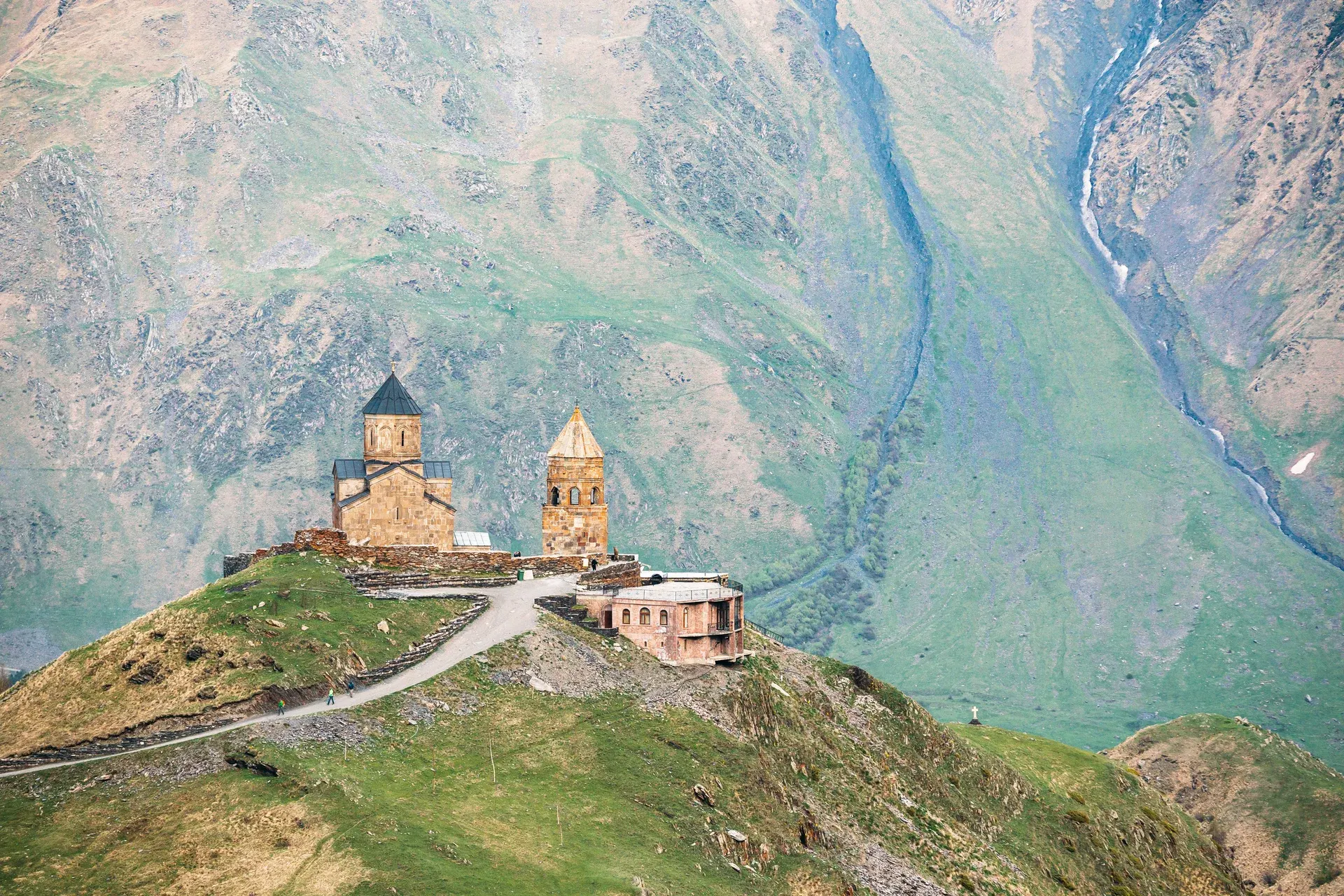
You've seen the photo. The lone church on a hilltop, snow-covered Mount Kazbek looming behind it, clouds swirling below. Gergeti Trinity Church is the single most photographed building in Georgia, and it earns every click.
The church itself, built in the 14th century, is modest by Georgian standards — a classic cross-dome structure with little decoration. That's the point. The architecture doesn't compete with the landscape; it submits to it. At 2,170 metres elevation, the church was built here partly as a refuge. When invaders threatened Tbilisi, Georgia's most precious relics — including the cross of St. Nino — were carried up this mountain for safekeeping.
The reality of visiting: it takes about 30 minutes to drive up a rough road from Stepantsminda (formerly Kazbegi), or 1.5 hours to hike the trail. Go early morning or late afternoon. By midday in summer, tour buses disgorge crowds that completely change the atmosphere. The interior is dark and simple — wooden iconostasis, candle smoke, a few faded frescoes. Don't expect Sistine Chapel. The experience is about scale — you standing between a 14th-century stone building and a 5,033-metre volcano.
Weather Roulette
Kazbek hides behind clouds more often than it doesn't. Many visitors drive up, see nothing but fog, and come back disappointed. If you're making the 3-hour trip from Tbilisi specifically for Gergeti, build in at least two mornings. The mountain often clears briefly at dawn before clouds build. Check webcams before you go.
Gelati Monastery
If you visit only one monastery in Georgia, make it Gelati. Not because it's the most scenic (it isn't), but because it's the most complete surviving monument from Georgia's Golden Age — and the mosaics inside are genuinely world-class.
King David IV ("the Builder") founded Gelati in 1106 as both a monastery and an academy — essentially medieval Georgia's Oxford. Scholars from across the Christian and Islamic worlds studied here. The academy translated Greek philosophical texts into Georgian, making this one of the most important intellectual centres in the medieval Caucasus.
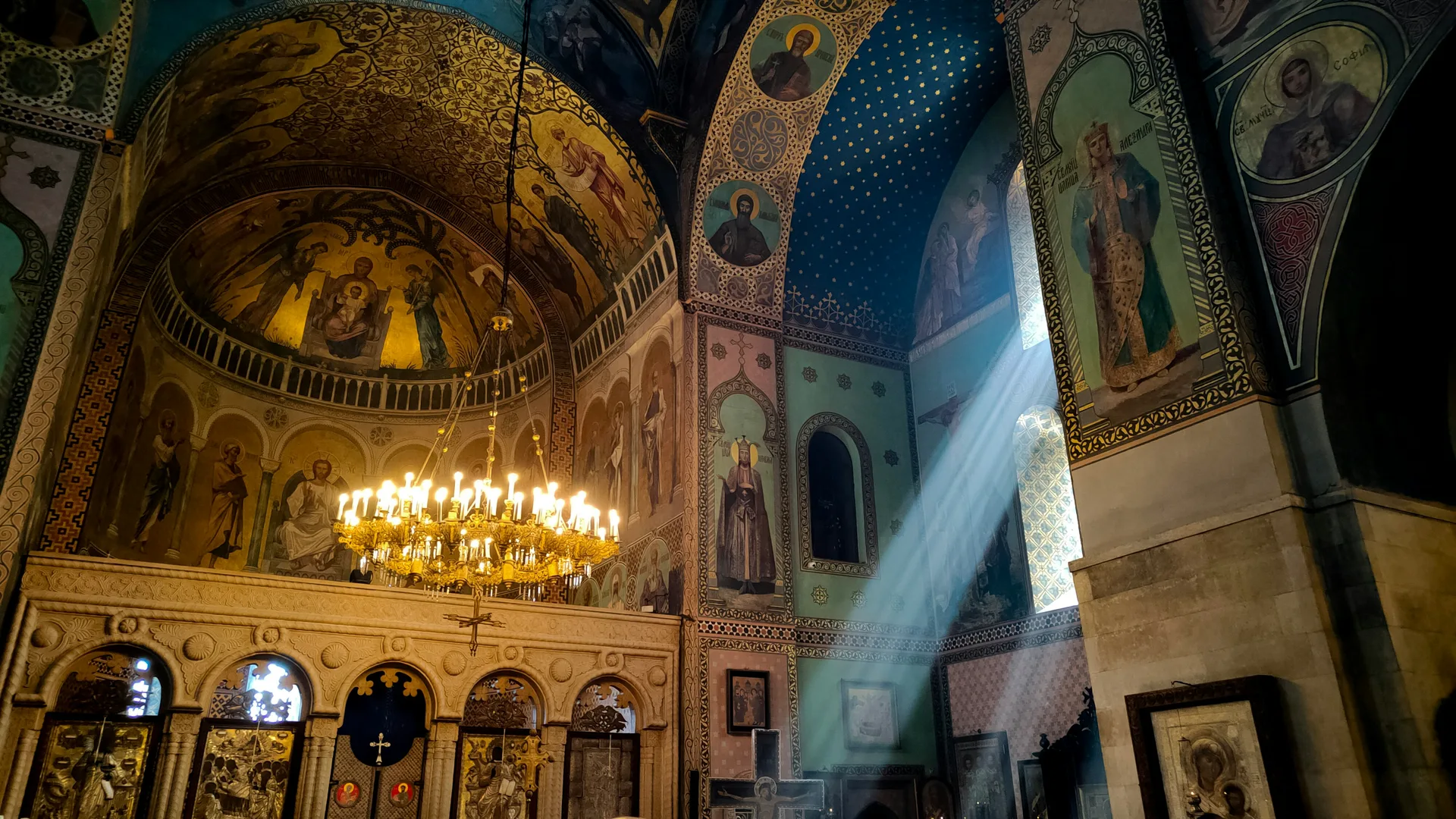
The main church, the Cathedral of the Nativity of the Virgin, contains a 12th-century mosaic of the Virgin and Child in the apse that rivals anything in Ravenna or Istanbul. It's survived 900 years of invasions, earthquakes, and Soviet neglect. The surrounding walls hold layers of frescoes from different centuries — you can literally read Georgian history on the walls if you know what to look for.
David the Builder is buried under the main gateway — deliberately, so that everyone entering the monastery would walk over his grave. Read that as extreme humility or extreme ego, depending on your interpretation. Either way, you're stepping on a medieval king every time you enter.
Getting There
11 km from Kutaisi centre. Marshrutkas from behind the theatre (8 AM, 11 AM, 2 PM, 4 PM, 6 PM). Taxi ~15 GEL one way. Combine with Motsameta (2 km away).
Time Needed
1.5–2 hours minimum. Walk the forest trail behind the complex for more ruins and quiet. Audio guides available for 15 GEL — worth it here.
Mtskheta: Jvari & Svetitskhoveli
Mtskheta is Georgia's religious capital — a small town 20 minutes from Tbilisi where two of the country's most important buildings stand within sight of each other. The whole town is a UNESCO World Heritage Site, and while it can feel touristy during the day, the buildings themselves justify every visitor.
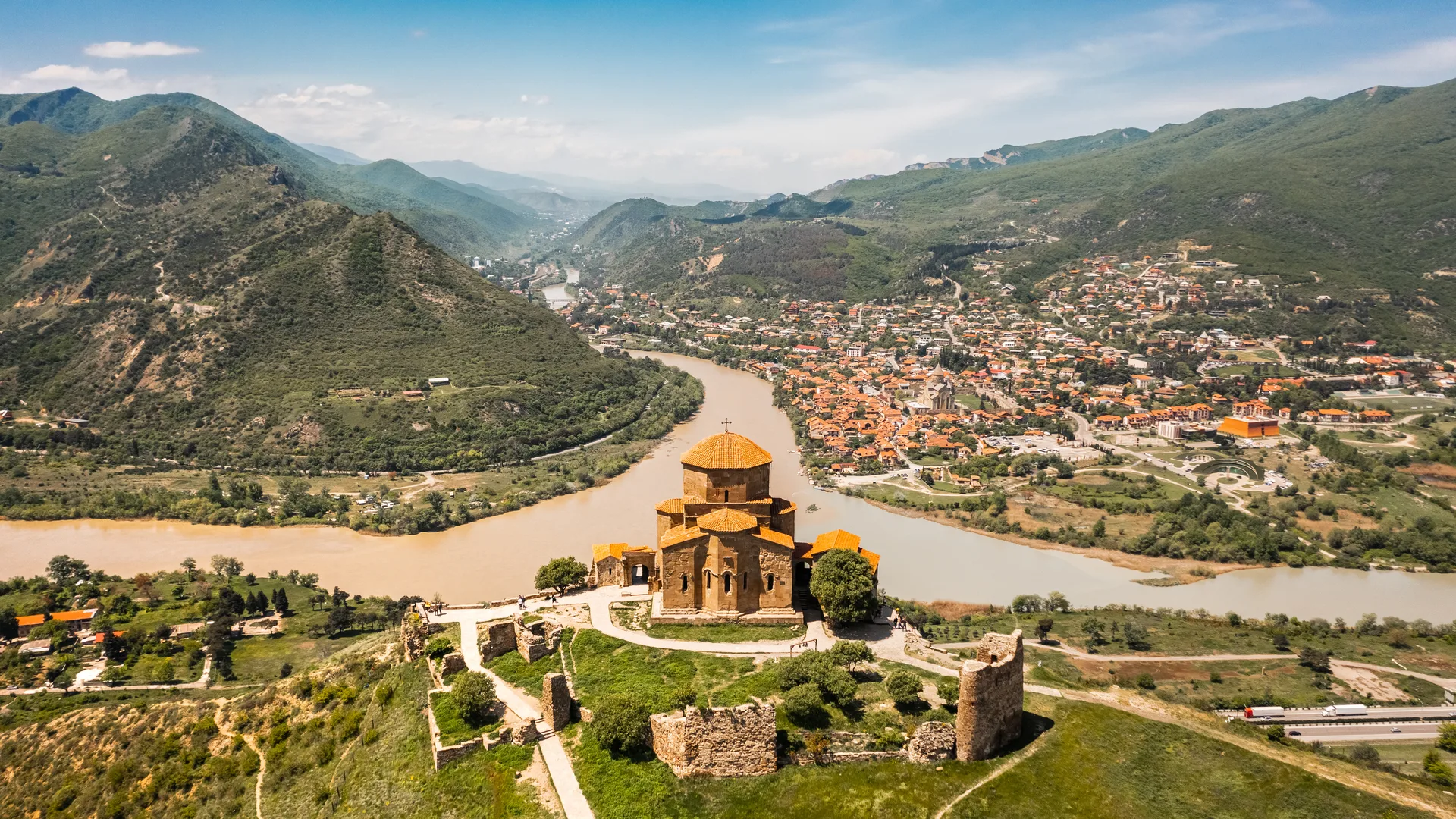
Jvari Monastery (590s) sits on a hilltop overlooking the confluence of the Mtkvari and Aragvi rivers — the exact spot where St. Nino is said to have erected a wooden cross in the 4th century. Architecturally, Jvari is arguably more important than any other church in Georgia. It's the prototype — the first fully realised Georgian cross-dome church. Every major church built after it owes something to its proportions. The exterior stone carving is severe, almost abstract. Inside, it's bare stone and silence.
Svetitskhoveli Cathedral (1010–1029) sits down in the town and is Georgia's principal cathedral — the equivalent of St. Peter's for Georgian Orthodoxy. Tradition claims Christ's robe is buried beneath it (hence the name, which translates roughly as "the Living Pillar"). The cathedral has been rebuilt multiple times after earthquakes and invasions, but the current structure dates mainly from the early 11th century. It's large, imposing, and actively used for major religious ceremonies. Expect crowds on Sundays and holy days.
Combine These Two
Jvari and Svetitskhoveli are only 4 km apart but on different elevations — there's no walking path between them. Take a taxi from Tbilisi (25–30 GEL), do Jvari first (it's on the way), then descend to Svetitskhoveli in town. Marshrutkas from Tbilisi's Didube station go to Mtskheta town only (1 GEL), not up to Jvari. You'll need a taxi for Jvari either way (10 GEL round-trip from town with waiting).
David Gareja
David Gareja is unlike any other monastery in Georgia. Forget mountain meadows and stone domes — this is a semi-desert on the Azerbaijani border, and the monastery is carved directly into sandstone ridges that look more like Central Asia than the Caucasus.
Founded in the 6th century by David, one of the thirteen Assyrian monks who brought monasticism to Georgia, the complex eventually grew to include thousands of cave cells, churches, refectories, and wine cellars spread across several ridges. At its peak, it was one of the largest monastic complexes in the Orthodox world.
The lower Lavra monastery (the Georgian side) is still active — monks live here, and you can explore the caves and the small church with its worn frescoes. The upper Udabno monastery (technically across the Azerbaijani border) had Georgia's finest surviving cave frescoes — 10th to 13th century paintings that are heartbreaking in their beauty and their deterioration. Access has been restricted since 2019 due to the border dispute, though the situation fluctuates.
Getting there requires effort. It's 70 km southeast of Tbilisi, the last 20 km on an unpaved road. The Gareji Line minibus runs daily from Tbilisi at 10:45 AM (returning at 6 PM) for about 25 GEL round-trip. Alternatively, rent a car — but bring water, sunscreen, and realistic expectations about the road surface.
Vardzia
Vardzia isn't a monastery with caves. It's a cave city with a monastery inside it. Queen Tamar commissioned the complex in the 1180s, and at its height, 13 levels of caves contained 6,000 rooms — living quarters, chapels, libraries, pharmacies, wine cellars, and an irrigation system. Then a 1283 earthquake ripped the cliff face off, exposing the interiors to the elements and effectively ending Vardzia as a functioning city.
What remains is still extraordinary. You can explore roughly 300 rooms connected by tunnels, stairways, and terraces. The Church of the Assumption — the spiritual heart of the complex — contains vibrant frescoes from the 1180s, including a portrait of Queen Tamar herself. A handful of monks still live here, maintaining a tiny working monastery amid the tourist traffic.
The honest assessment: Vardzia is remote (4 hours from Tbilisi, 1 hour from Akhaltsikhe), the entrance fee is 15 GEL, and the sheer cliff-face setting means a lot of stair climbing. But it's one of the most unusual historical sites in the Caucasus — nothing else looks like this. Combine it with nearby Rabati Castle in Akhaltsikhe for a full day.
Kakheti's Church Circuit
Kakheti — Georgia's wine region — has an embarrassment of medieval churches, and most visitors drive past them on the way to wineries. That's their loss. Three of the best can be visited in a single day loop from Telavi or Sighnaghi.
| Site | Built | Highlight | Time Needed |
|---|---|---|---|
| Alaverdi Cathedral | 11th century | Georgia's tallest medieval cathedral (50m), active monastery with qvevri wine production | 45 min–1 hr |
| Ikalto Academy | 6th–12th c. | Medieval university ruins where Rustaveli studied, ancient qvevri yard | 30–45 min |
| Nekresi Monastery | 4th–7th c. | Oldest church layers, spectacular Alazani Valley views from hilltop, shuttle bus | 1–1.5 hr |
| Bodbe Monastery | 9th c. | Burial place of St. Nino, immaculate gardens, Alazani views | 45 min–1 hr |
| Gremi Fortress | 16th c. | Fortified royal church with bell tower, small museum, 360° views | 30–45 min |
Alaverdi deserves extra attention. The cathedral is massive — 50 metres tall, making it the tallest medieval building in Georgia. But what makes it special is the atmosphere. This is a working monastery where monks make wine using the same qvevri method they've used for centuries. The surrounding wall, the gardens, the quiet — it feels more authentic than any winery tasting room. The frescoes inside are partially restored, partially crumbling, and the combination is more beautiful than either state alone.
Nekresi requires a shuttle bus up the mountain (3 GEL), but the reward is the oldest surviving church building in Georgia — a tiny 4th-century basilica that predates most European Christianity. The view from the monastery walls over the Alazani Valley is one of the best panoramas in Kakheti.
Katskhi Pillar
A church on top of a 40-metre natural limestone pillar. That's it. That's the pitch.
Katskhi Pillar looks photoshopped, but it's real. A small church has sat on top of this impossibly narrow rock column since at least the 7th century. For centuries, nobody could figure out how to get up there after the original access method was lost. When Georgian climbers finally scaled it in 1944, they found the ruins of two churches, a wine cellar, and human bones.
Since 2010, a monk named Maxime Qavtaradze has lived on top of the pillar — yes, full-time — in a rebuilt hermitage. He climbs a 40-metre ladder to get home. Supplies are hauled up in a bucket. Visitors cannot climb the pillar (it's his home and a place of prayer), but you can view it from below and visit the small monastery at its base.
Katskhi is near Chiatura, about 3.5 hours from Tbilisi. Combine it with Chiatura's Soviet-era cable cars for a genuinely surreal day trip.
Ananuri Fortress-Church
Ananuri is the church most visitors see without planning to — it sits right on the Georgian Military Highway, an hour north of Tbilisi, overlooking the turquoise Zhinvali Reservoir. Every bus heading to Kazbegi stops here for 20 minutes.
That's enough time to miss the best parts. The fortress complex contains two churches. The smaller, older Church of the Virgin (early 17th century) is easily overlooked behind the showier main church. Duck inside — the frescoes, though fragmentary, are some of the most expressive in Georgia. The carving on the exterior of the larger Church of the Assumption is unusually ornate for Georgian architecture, with vine motifs and a celebrated "Cross of the Vine" relief.
If you have your own car, don't just stop for photos. Walk the fortress walls for reservoir views, and check the small watchtower on the far side for the best panorama.
Worth the Detour
Beyond the famous twelve, Georgia is full of churches that see almost no tourists but reward the effort of finding them.
Oshki (Öşkvank)
One of Georgia's greatest medieval churches — but it's in northeastern Turkey. A masterpiece of 10th-century architecture, partly ruined, hauntingly empty. Accessible from Erzurum. Seeing it requires a Turkish visa and a long drive, but scholars consider it the equal of Gelati.
Nikortsminda
In Racha, an 11th-century church with the most elaborate exterior stone carving in Georgia. The entire facade is covered in relief sculptures of saints, animals, and geometric patterns. Almost no tourists make it here — the reward-to-effort ratio is enormous.
Sapara Monastery
Hidden in a forested gorge near Akhaltsikhe, this 10th-century monastery has outstanding 14th-century frescoes and zero crowds. The 6 km forest road from the highway adds to the sense of discovery.
Uplistsikhe
Not technically a monastery — it's a pre-Christian cave city near Gori. But a 10th-century church sits at the top, and the combination of pagan and Christian structures spanning 3,000 years makes it one of Georgia's most fascinating archaeological sites.
Need the practical version?
If you're mostly wondering what women and men should actually wear, how strict the scarf rule is, and what to do when you arrive dressed wrong, read our Georgia church etiquette and dress code guide. This page focuses more on the churches themselves.
Church Etiquette (What Nobody Tells You)
Georgian churches are active places of worship, not museums. Most are free to enter, but that comes with expectations. Get these wrong and you won't be thrown out — Georgians are too polite for that — but you'll get disapproving looks from grandmothers, which is honestly worse.
| Rule | Details |
|---|---|
| Women: cover your head | Headscarves are often provided at the entrance (free, on hooks). Bring your own to be safe. Hair doesn't need to be completely covered — a loose scarf is fine. |
| Women: cover shoulders & knees | Long skirts or wraps usually available at entrances. No shorts, no tank tops, no miniskirts. Trousers are technically not ideal but widely tolerated for tourists. |
| Men: remove hats | The opposite of women — men must uncover their heads. No baseball caps, beanies, or sunglasses on your head inside. |
| Photography | Exterior: always fine. Interior: usually fine without flash, but check for signs. During services: absolutely not. Put your phone away. |
| Candles | You can buy thin beeswax candles (0.50–1 GEL) and light them. For the living: place in the upper sand tray. For the dead: lower tray. Don't mix them up. |
| Don't cross behind the iconostasis | The screen separating the altar area is off-limits. Only clergy go behind it. This is the most common tourist mistake. |
| Volume | Whisper or stay silent inside. Don't talk on your phone. Don't narrate your Instagram story. People are praying. |
The Candle Distinction
Lighting a candle for the living in the dead tray (or vice versa) is considered bad luck at best, genuinely upsetting to believers at worst. If there are two trays, the upper/right one is for the living, the lower/left for the dead. When in doubt, watch what locals do first. If there's only one tray, it's usually for the dead.
Planning Your Church Visits
You can't see everything in one trip, and you shouldn't try. Church fatigue is real — after the seventh medieval stone building in three days, they start to blur. Here are three routes that balance quantity with sanity.
The Greatest Hits (3 days from Tbilisi)
Western Georgia Focus (3 days from Kutaisi)
The Deep South (2 days from Akhaltsikhe)
Common Mistakes
🚫 Only Doing Gergeti
It's the most famous, not the most important. Gelati's mosaics, Jvari's architectural significance, and Vardzia's sheer scale all offer more depth than Gergeti's (admittedly spectacular) view.
🚫 Visiting During Sunday Liturgy
Major churches hold long Sunday services. You can attend (stand quietly in the back), but don't wander around taking photos. If you want to explore freely, go on a weekday.
🚫 No Headscarf
Women who forget a headscarf can usually borrow one at the entrance, but some smaller churches don't have them. Carry a lightweight scarf in your daypack — you'll use it daily.
🚫 Too Many in One Day
Three churches per day is the maximum before everything blends together. Mix churches with wine tastings, hikes, or meals. Georgia makes this easy.
🚫 Skipping Interiors
Many visitors photograph the exterior and leave. Georgian church interiors — the frescoes, the iconostasis, the atmosphere — are where the real experience lives. Let your eyes adjust to the darkness.
🚫 Ignoring Context
A church is just a building without its story. Read about St. Nino, David the Builder, and Queen Tamar before your trip. A basic understanding of Georgian history makes every site three times more meaningful.
Frequently Asked Questions
Do I need to be Christian to visit Georgian churches?
Not at all. Georgian churches welcome visitors of all faiths (and none). Follow the dress code and etiquette rules, and you're welcome everywhere. Monks and nuns may even offer you tea or churchkhela.
Are Georgian churches free to enter?
Almost all active churches and monasteries are free. The exceptions are museum-sites like Vardzia (15 GEL) and sites that charge for shuttle transport like Nekresi (3 GEL). You'll spend more on candles than entrance fees.
What's the difference between Georgian and Russian Orthodox churches?
The Georgian Orthodox Church is autocephalous — independent from the Russian Orthodox Church since the 5th century. Architecturally, Georgian churches are typically smaller and more austere than Russian ones, with less gilding and more stone. The Georgian church uses its own liturgical language and calendar. Don't call it "Russian" — Georgians will correct you, politely but firmly.
Can I photograph inside churches?
Usually yes, without flash. Some churches (especially during services) prohibit photography entirely. Look for signs or ask. When in doubt, put the phone away and just experience it — the frescoes look better with your eyes than through a screen anyway.
Which church should I visit if I only have time for one?
Gelati Monastery near Kutaisi, for its mosaics, history, and completeness. If you're only in Tbilisi and can't travel far, Jvari Monastery in Mtskheta is a 30-minute drive and architecturally the most significant church in the country.
Written by The Georgian Guide Team
Based in Tbilisi with years of exploring Georgia's churches, from the famous hilltop icons to crumbling monasteries that don't appear on any map. We've lit candles in the right trays, worn out headscarves, and climbed more monastery staircases than we can count.
Last updated: February 2026.
Related Articles
Georgian Culture & Etiquette
The unwritten rules of Georgian social life, hospitality, and everyday interactions.
Mtskheta: Georgia's Holy City
Complete guide to Georgia's ancient spiritual capital.
Vardzia Cave City Guide
Exploring Queen Tamar's extraordinary cave monastery complex.
Kazbegi & Stepantsminda Guide
Everything you need for Georgia's most dramatic mountain destination.