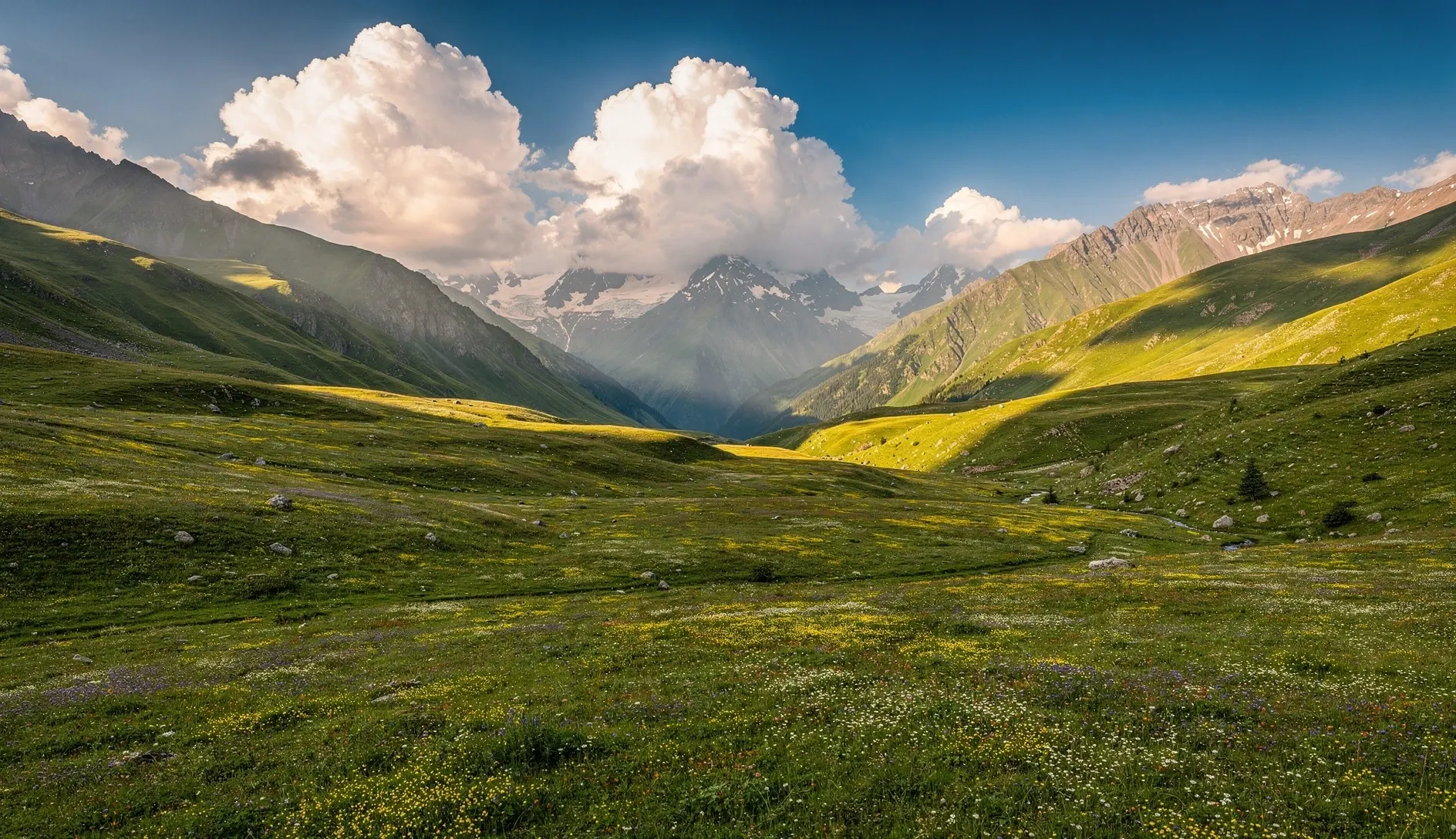
Summer is when Georgia clicks. The mountains turn impossibly green, the hiking trails open up, and the whole country shifts outdoors — terraces, rooftop bars, road trips with the windows down. It's also when Tbilisi becomes a convection oven and half the city decamps to the Black Sea or the mountains.
If you time it right, summer in Georgia is one of the best travel experiences in Europe. If you don't, you'll be sweating through Tbilisi in 38°C heat wondering why everyone keeps recommending this place. The difference is planning — knowing when to be where, what to pack, and which destinations shine (or suffer) in the heat.
Having lived here for five years, I've learned the rhythms. Here's the honest guide to doing summer in Georgia right.
Month-by-Month: What to Expect
Summer in Georgia isn't one uniform season. June is a completely different trip from August. Here's the honest breakdown:
| Month | Tbilisi Temp | Mountain Temp | Crowds | Best For |
|---|---|---|---|---|
| June | 25–32°C | 12–22°C | Moderate | The sweet spot — warm but manageable, trails opening, pre-peak prices |
| July | 28–38°C | 15–25°C | High | Mountain trekking, Tusheti road opens, Batumi beach season peaks |
| August | 28–40°C | 15–25°C | Very High | Peak season, everything open, highest prices, Tbilisi empties out |
| September | 22–32°C | 10–20°C | Moderate | Rtveli (grape harvest), Tbilisoba prep, still warm, crowds thinning |
The Sweet Spot
June and September are the best months for most travelers. June has wildflowers in the mountains, comfortable city temperatures, and pre-peak pricing. September brings the grape harvest, cooler days, and golden light that photographers dream about. July and August are for beach lovers and committed mountain trekkers who don't mind sharing trails.
June: The Goldilocks Month
June is when Georgia transitions from spring to full summer, and it's arguably the best month to visit the country. Tbilisi is warm without being punishing — you can still walk the Old Town at noon without feeling like you're melting. The mountains are exploding with wildflowers, and most high-altitude trails are passable by mid-June. The Tusheti road usually opens in late June (weather dependent — they don't plow it, the snow just has to melt).
Prices are 15–20% lower than peak July–August, and you'll share popular spots with fewer tour groups. Kazbegi is gorgeous. Svaneti is at its greenest. The only downside: some very high passes (Chaukhi, parts of Tusheti) might still have snow patches in early June.
July–August: Peak Everything
This is Georgia's main event. Every trail is open, every guesthouse is full, and Tbilisi feels like it's been put in a slow cooker. The city regularly hits 38–40°C, and the combination of heat, humidity from the river, and lack of sea breeze makes mid-afternoon miserable. Locals adapt by shifting their schedules — shops close at the hottest hours, dinners start at 9 PM, and anyone who can afford it leaves the city entirely.
The flip side: this is when the mountains are perfect. Svaneti, Tusheti, Kazbegi, and Racha are in their prime. The Black Sea coast is packed but fun if you like beach culture. Batumi becomes a 24-hour party city. If you're here in July–August, structure your trip around escaping Tbilisi, not staying in it.
September: The Harvest
September might be the most underrated month in Georgia. The brutal heat breaks, usually by mid-month. Tbilisi becomes walkable again, the light turns golden, and the vineyards of Kakheti start the rtveli — the grape harvest that's been going on here for 8,000 years. If you visit a family vineyard during rtveli, expect to end up ankle-deep in grapes, covered in juice, and three glasses of homemade wine in before noon.
The mountain trails are still open but starting to empty out. September is prime time for Mestia-Ushguli, Juta-Roshka, and Lagodekhi before the autumn rains hit in October.
Tbilisi in Summer: Surviving (and Enjoying) the Heat
Let's be honest: Tbilisi in July and August is hot. Not "pleasant Mediterranean warmth" hot — more like "the asphalt is radiating heat and the air doesn't move" hot. The city sits in a valley, which traps warm air. There's no sea breeze. AC exists but isn't universal, especially in older buildings and many restaurants.
That said, Tbilisi has its own summer rhythm that's actually quite enjoyable once you adapt.
🌅 Morning (7–11 AM)
The best hours. Walk the Old Town, hit the Dezerter Bazaar, climb to Narikala. The city is alive but the heat hasn't settled in yet. Most locals run errands now.
☀️ Midday (11 AM–4 PM)
The dead zone. Find a café with AC, visit the National Museum, do a sulfur bath (counterintuitive but the hot water feels oddly refreshing), or take a nap. Don't fight this.
🌇 Evening (5–9 PM)
The city wakes up again. Rooftop bars open, terraces fill. Walk along the Mtkvari, explore Vera and Sololaki. The golden light on the old buildings is worth the wait.
🌙 Night (9 PM–Late)
Summer nights in Tbilisi are warm and long. Dinner at 9 or 10 PM is normal. Wine bars stay open late. The city is at its best — lively, sociable, and finally comfortable.
Where Locals Go to Cool Off
Turtle Lake (Kus Tba) is the city's unofficial swimming hole — a reservoir in the hills above Vake, accessible by cable car. Tbilisi Sea (really a reservoir on the east side) has beaches and restaurants but feels more local/rough around the edges. Mtatsminda Park is cooler due to elevation and has a breeze. For AC, locals park themselves in malls — East Point and Galleria are social spaces as much as shopping centers.
Where to Go: Summer's Best Destinations
Georgia is a small country with huge altitude variation. When Tbilisi is 38°C, the mountains might be 15°C. The smart move in summer is to use Tbilisi as a base for a day or two, then head to the mountains or coast. Here's what shines:
Mountains (The Main Event)
| Destination | From Tbilisi | Summer Temp | Best For | Crowd Level |
|---|---|---|---|---|
| Kazbegi (Stepantsminda) | 3 hrs by car | 15–22°C | Day trip or 2-night stay, iconic views | High |
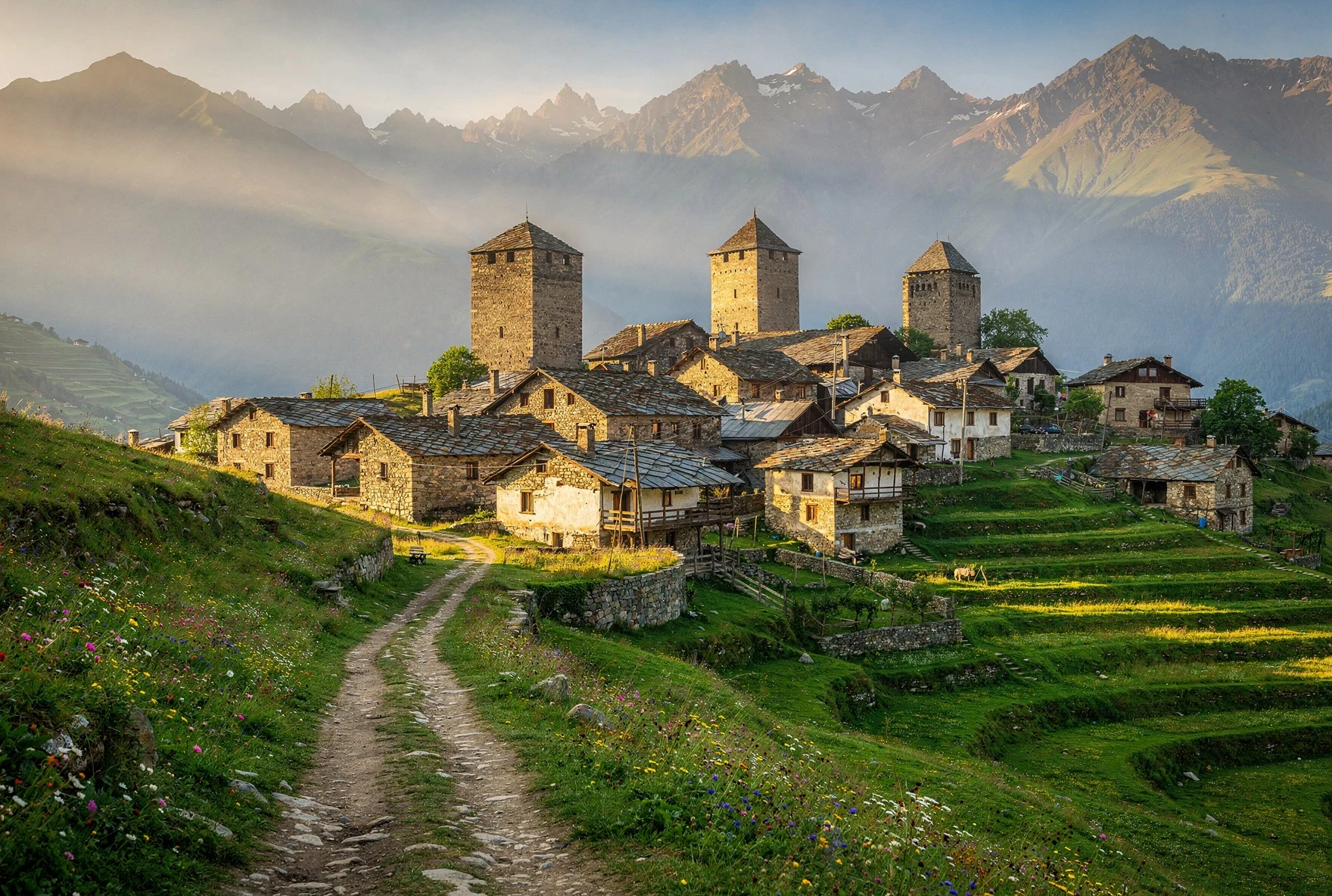
| Svaneti (Mestia/Ushguli) | 8 hrs drive / 1 hr flight | 12–20°C | Multi-day trekking, Svan towers, remote feel | Moderate |
| Tusheti | 10+ hrs (4x4 only) | 10–18°C | Adventure travelers, remoteness, trekking | Low |
| Racha | 5 hrs drive | 15–25°C | Off-the-beaten-path, wine, Shaori Lake | Very Low |
| Borjomi | 3 hrs by car/train | 18–28°C | Forest walks, mineral water, family-friendly | Moderate |
| Gudauri | 2 hrs drive | 10–18°C | Paragliding, mountain biking, cool escape | Low (summer) |
The Black Sea Coast
Georgia's coastline is short — about 310 km — but it packs in everything from the party city of Batumi to nearly deserted stretches of beach further north. The water temperature reaches 24–26°C in August, which is warm enough for actual swimming (unlike Tbilisi's reservoirs).
Batumi
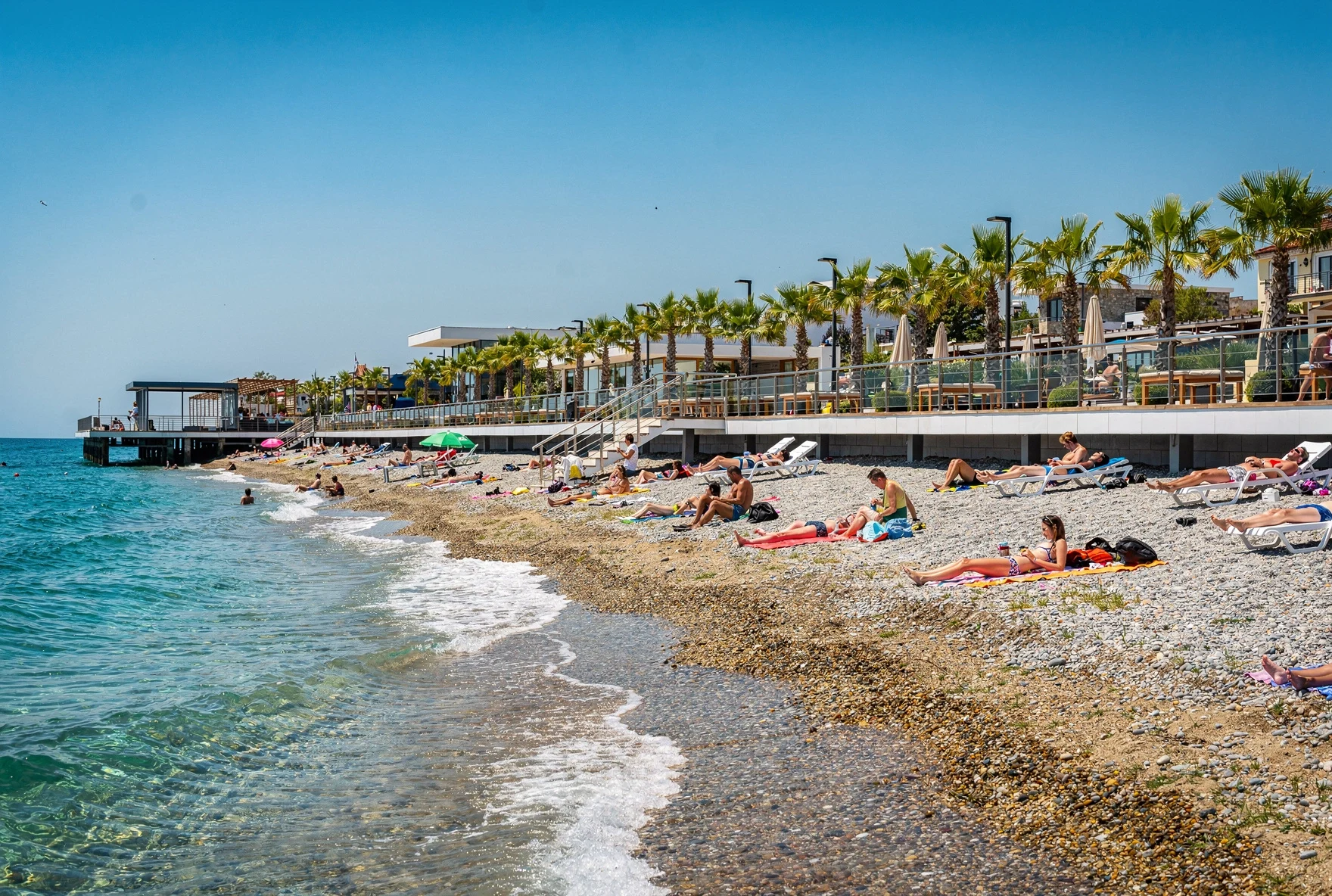
Georgia's summer capital. Pebble beaches, a lively boulevard, casinos, seafood restaurants, and a party atmosphere. Gets packed in August — book accommodation early. The Adjarian food alone is worth the trip.
Kobuleti
30 minutes north of Batumi. Longer beaches, cheaper accommodation, more family-friendly vibe. The beach is mostly dark pebbles. Less glitzy than Batumi but that's part of the appeal.
Ureki
Georgia's only real sand beach (magnetic black sand, supposedly therapeutic). Popular with families and Georgian vacationers. The water is shallow and safe for kids. Accommodation is budget to mid-range.
Gonio & Sarpi
South of Batumi, close to the Turkish border. Cleaner water, fewer crowds, more local feel. Gonio has a Roman fortress worth exploring. Sarpi beach sits right at the border — you can literally see Turkey from your towel.
An Honest Note on Georgian Beaches
If you're expecting Greek islands or Croatian coastline, reset your expectations. Most Georgian beaches are pebble, the infrastructure is improving but still rough in places, and the August crowds can be intense. The water quality is fine, but this isn't a luxury beach destination. That said, the combination of Adjarian food, mountain day-trips from Batumi, and low prices makes the coast a genuinely fun summer base.
Wine Country
Kakheti — Georgia's main wine region, about 2 hours east of Tbilisi — is blazing hot in July and August (often matching or exceeding Tbilisi temperatures). But it's still worth visiting, especially if you time it right. Early morning wine tastings, visiting family cellars where the qvevri are buried underground (naturally cool), and the rolling vineyard landscapes make Kakheti a solid 2–3 day side trip.
September during rtveli is the magic window. The heat drops, the grapes come in, and every family with a vineyard is making wine. It's participatory — visitors are genuinely welcomed to join the harvest. There's nothing quite like crushing grapes in a satsnakheli (wine press) on a warm September afternoon.
Suggested Summer Itineraries
🗓️ One Week: Greatest Hits
Day 1–2: Tbilisi (morning sightseeing, evening terraces)
Day 3: Mtskheta day trip
Day 4–5: Kazbegi via Georgian Military Highway
Day 6–7: Kakheti wine region (Sighnaghi base)
🗓️ Two Weeks: Mountains + Coast
Day 1–2: Tbilisi
Day 3–5: Kazbegi + Military Highway
Day 6–9: Svaneti (Mestia, Ushguli trek)
Day 10–12: Batumi + coast
Day 13–14: Kakheti or return to Tbilisi
🗓️ Adventure Seekers (2 Weeks)
Day 1: Tbilisi
Day 2–4: Juta → Roshka (Chaukhi Pass) trek
Day 5–8: Mestia → Ushguli trek
Day 9–10: Martvili/Okatse Canyons
Day 11–14: Tusheti (4x4 + hiking)
🗓️ September: Wine Harvest
Day 1–2: Tbilisi
Day 3–5: Kakheti rtveli (grape harvest, winemaking)
Day 6–7: Sighnaghi + David Gareja
Day 8–9: Kazbegi
Day 10: Tbilisi (Tbilisoba festival if late Sept/early Oct)
What to Pack for Summer
Packing for summer Georgia is tricky because the temperature range is enormous. Tbilisi might be 38°C while the mountains are 12°C. If your trip covers both, pack layers.
| Category | Essentials | Notes |
|---|---|---|
| Clothing (City) | Light breathable fabrics, shorts, sandals | Cotton or linen — avoid synthetics in Tbilisi heat |
| Clothing (Mountains) | Fleece, wind jacket, long pants, warm layer | Temperatures drop fast above 2,500m — evenings are cold |
| Footwear | Hiking boots, comfortable sandals, water shoes (coast) | Pebble beaches destroy bare feet. Bring water shoes. |
| Sun Protection | SPF 50+, hat, good sunglasses | UV is intense — especially at altitude. Sunscreen is expensive locally. |
| Rain Gear | Light rain jacket or poncho | Mountain afternoons can bring sudden thunderstorms June–August |
| Other | Refillable water bottle, insect repellent, swimsuit | Mosquitoes can be aggressive near rivers in Tbilisi. Ticks in tall grass. |
Church Dress Code
If you're visiting any churches or monasteries (and you should), women need covered shoulders and a long skirt or wrap (most churches have loaners). Men need long pants. Pack a lightweight scarf or sarong that can double as a church cover-up. In the city, shorts and tank tops are fine everywhere else.
Summer Budget: What Things Cost
Summer is peak season, and prices reflect it — especially for accommodation in Batumi, Kazbegi, and Svaneti. That said, Georgia remains remarkably affordable by European standards even at peak pricing.
Daily Budget: Mid-Range Traveler
Price Surge Alert
Accommodation in Batumi, Kazbegi, and popular Svaneti guesthouses can jump 50–100% in August compared to June. Book 2–4 weeks ahead for August travel. Tbilisi prices stay more stable year-round. The biggest savings come from eating like locals (khinkali for 0.70 GEL each, beer for 3–4 GEL) rather than at tourist restaurants.
Summer Festivals & Events
Georgia's summer calendar is packed with festivals, though many are local affairs that don't make it into English-language guides. Here are the ones worth planning around:
| Event | When | Where | Worth It? |
|---|---|---|---|
| ArtGene Festival | Late July | Open Air Museum, Tbilisi | Yes — crafts, music, camping, great atmosphere |
| Shatili Festival | Mid-July | Shatili, Khevsureti | If you can get there — remote, traditional, incredible setting |
| Black Sea Jazz Festival | July | Batumi | Free outdoor concerts, solid lineup, beach vibes |
| Alaverdoba | Late September | Alaverdi Cathedral, Kakheti | Harvest + religious festival at Georgia's tallest cathedral |
| Rtveli (Grape Harvest) | September–October | Kakheti (all over) | Absolutely — participatory, authentic, unforgettable |
| Tbilisoba | Late October | Tbilisi (citywide) | Tbilisi's birthday — food, music, crowds, fireworks |
Eating in Summer
Georgian food is built for feasting — heavy on meat, cheese, bread, and butter. In 38°C heat, your appetite for a full supra might diminish. The good news is that summer unlocks Georgia's lighter side: fresh herbs, fruit that's insanely good, and dishes that actually work in the heat.
🥒 Summer Dishes
Pkhali (cold walnut-vegetable spreads), badrijani nigvzit (cold eggplant rolls with walnut paste), cold lobio, fresh tomato-cucumber-walnut salads, cold matsoni (yogurt) soup. These are the dishes that make 35°C bearable.
🍉 Summer Fruit
Georgian summer fruit is a revelation. Peaches, figs, watermelon, mulberries, cherries, and grapes — all local, all cheap, all absurdly good. The Dezerter Bazaar has mountains of it. Don't leave without trying a Georgian peach — they're a different species from what you buy in supermarkets back home.
🍷 Summer Wine
Switch to lighter styles: Tsinandali (dry white from Kakheti), Tvishi (semi-sweet from Racha), or amber wine served slightly chilled. Save the heavy Saperavi reds for evening. Cold kompoti (fruit stew juice) and tarkhuna (tarragon lemonade) are perfect non-alcoholic options.
🏖️ Adjarian Food
If you're heading to Batumi, Adjarian cuisine is its own thing: Adjarian khachapuri (the boat-shaped one with egg), borano (cheese in butter, deadly but incredible), sinori (cottage cheese rolls), and fresh Black Sea fish. The Adjarian supra hits different.
Getting Around in Summer
Summer is the easiest time to travel Georgia — all roads are open, marshrutkas (minibuses) run frequently, and you can get almost anywhere by public transport. That said, renting a car opens up dramatically more of the country.
| Route | Transport | Time | Cost |
|---|---|---|---|
| Tbilisi → Kazbegi | Marshrutka (Didube station) | 3–4 hrs | ₾15 (~$5.50) |
| Tbilisi → Batumi | Train (overnight or day) | 5–6 hrs | ₾25–40 (~$9–15) |
| Tbilisi → Mestia | Vanilla Sky flight | 1 hr | ₾65 (~$24) |
| Tbilisi → Mestia | Marshrutka (Zugdidi transfer) | 8–10 hrs | ₾40–50 (~$15–18) |
| Tbilisi → Sighnaghi | Marshrutka (Samgori station) | 2 hrs | ₾7 (~$2.50) |
| Rental car | Local agencies / MyGPS | — | ₾80–150/day (~$30–55) |
Should You Rent a Car?
For a Tbilisi-only trip: no. For anything involving mountains, wine country, or the coast: strongly consider it. Public transport connects major towns but can't reach trailheads, remote monasteries, or family wineries. Georgian driving is... assertive. The roads have improved massively but mountain passes require confidence. An SUV or crossover is recommended if you're heading to Svaneti or Tusheti. See our complete car rental guide for details.
Summer Safety & Practical Tips
☀️ Sun & Heat
Heatstroke is a real risk in Tbilisi. Drink 3+ liters of water daily. The UV index at altitude is brutal — SPF 50 and a hat are essential for mountain hiking. Locals drink cold kompoti and stay in shade between noon and 4 PM.
⛈️ Mountain Weather
Afternoon thunderstorms are common in the Caucasus June–August. They blow in fast and can include lightning. Start hikes early (by 7–8 AM) and aim to be below the ridgeline by 2 PM. Mountain weather apps like Windy are more reliable than generic forecasts.
🐕 Stray Dogs
Georgia has stray dogs everywhere, including on mountain trails. They're mostly harmless and part of the landscape. Give shepherd dogs (big, white, serious-looking) a wide berth on hiking trails — they're protecting livestock and don't know you're friendly. Don't run from them.
🦟 Bugs & Ticks
Mosquitoes in Tbilisi can be bad near the river, especially at dusk. Mountain meadows have ticks — check yourself after hikes through tall grass. Pharmacies sell repellent, but bring DEET-based spray from home if you're heading into the mountains.
🏊 Swimming Safety
Mountain rivers look inviting but are glacial-cold and can have strong currents. The Black Sea is generally safe but has no lifeguards at most beaches. Riptides are rare but be cautious after storms. Turtle Lake in Tbilisi is popular but has no official swimming areas.
📱 Connectivity
4G is solid in cities and along main highways. Mountain villages (Tusheti, Upper Svaneti, Khevsureti) have patchy to zero coverage. Download offline maps before heading into the mountains. Magti and Geocell are the main carriers — get a SIM at the airport for ₾15–25.
The Honest Downsides of Summer
This guide wouldn't be complete without the stuff that most travel blogs gloss over:
| Issue | Reality | Workaround |
|---|---|---|
| Tbilisi heat | Genuinely oppressive July–Aug. Not everyone has AC. | Book accommodation with AC. Escape to mountains. |
| August crowds | Batumi gets packed. Kazbegi church viewpoint is a zoo. Booking.com prices spike. | Visit in June or September instead. Book ahead. |
| Driving | Mountain roads are narrow with oncoming traffic. Local driving is aggressive. | Hire a local driver or stick to main highways. |
| Tourist pricing | Some taxi drivers, tour operators, and market sellers charge "tourist tax." | Use Bolt/Maxim apps for taxis. Ask prices before buying. |
| Infrastructure | Some guesthouses are basic. Hot water isn't guaranteed everywhere. Beach facilities vary. | Read reviews. Mid-range and up is usually fine. |
| Dust & construction | Tbilisi is constantly building. Dust + heat = not great for allergies. | Antihistamines. Avoid ground-floor apartments near construction. |
Summer vs. Other Seasons
🌸 vs. Spring (Apr–May)
Spring is milder and less crowded, but high mountain trails are still closed. May is arguably the best single month to visit Georgia — warm enough for comfort, cool enough for walking, everything green and blooming. High passes won't open until mid-June.
🍂 vs. Autumn (Oct–Nov)
October is spectacular — harvest season, golden colors, comfortable temperatures. By November it's cold and some mountain roads close. If you want wine culture, September–October beats summer. If you want hiking, summer wins.
❄️ vs. Winter (Dec–Mar)
Completely different trip. Skiing, sulfur baths, indoor culture, and dramatically lower prices. Half the country is inaccessible. If you're here for hiking, mountains, or beaches, winter won't work. Read our winter guide if you're considering the off-season.
🏆 The Verdict
Summer (specifically June and September) is the best time for first-time visitors who want the full Georgia experience. July–August is for beach lovers and mountain trekkers who don't mind heat and crowds. See our best time to visit guide for a full breakdown.
Frequently Asked Questions
Is Georgia too hot in summer?
Tbilisi can be brutal in July–August (35–40°C). But the mountains are 15–22°C at the same time. The trick is not spending your entire trip in Tbilisi. A few days in the city combined with mountain or coast time gives you the best of both.
Is the Black Sea warm enough for swimming?
Yes, from mid-June through September. Water temperature reaches 24–26°C in August. It's not the Aegean, but it's perfectly swimmable. The water is generally clean, especially south of Batumi.
Do I need to book accommodation in advance?
For August in Batumi, Kazbegi, and Mestia — yes, absolutely. Book 2–4 weeks ahead. For Tbilisi and less popular destinations, you can often find availability with a few days' notice. September and June are more flexible.
Can I hike without a guide?
Most popular trails (Kazbegi, Koruldi Lakes, Lagodekhi) are well-marked and doable solo. Multi-day treks like Mestia-Ushguli and Juta-Roshka are manageable with offline maps (Maps.me or Komoot) and basic mountain experience. Tusheti and remote Khevsureti trails benefit from local knowledge.
Is Tusheti worth the difficult road?
If you have the time and tolerance for a terrifying 4x4 road — yes. Tusheti is the most remote, least touristy region accessible in summer, with medieval tower villages and some of the best trekking in the Caucasus. The road alone (Abano Pass, 2,926m) is an experience. It's open roughly July to mid-October.
What about Ramadan — does it affect travel?
Georgia is predominantly Orthodox Christian, so Ramadan has minimal impact on daily life or travel. A few neighborhoods in Tbilisi (Marneuli area) and the Pankisi Valley have Muslim communities, but restaurants and bars operate normally everywhere.
Written by The Georgian Guide Team
Based in Tbilisi for five years and counting, we've survived every Georgian summer — from the Tbilisi heat waves to the mountain thunderstorms. This guide is built from experience, not research.
Last updated: March 2026.
Related Articles
Georgia in Winter
The honest guide to visiting November–March — skiing, cold cities, and the off-season magic.
Best Time to Visit Georgia
Month-by-month breakdown of weather, crowds, prices, and what's happening.
Georgia Itinerary (1–3 Weeks)
Sample itineraries for every trip length, from a long weekend to a full month.
What to Pack for Georgia
The complete packing guide for every season and activity.