If you spend more than five minutes around Georgian wine, someone will say the word qvevri. Usually with a certain look. Half pride, half challenge. As in: this is the real thing, now let's see what you make of it.
Qvevri wine is not a cute branding exercise and it is definitely not just "orange wine in a clay pot." It is the old Georgian method: large clay vessels buried in the ground, grapes fermented with minimal interference, and a style of winemaking that is older than pretty much every wine country tourists usually talk about. In Georgia, this is not museum material. It is still alive in family cellars, monastery marani, natural wine bars, and serious commercial wineries.
This guide is for travelers who keep hearing the word and want the actual explanation. What a qvevri is. Why it gets buried. Why many whites turn amber. Why some bottles taste brilliant and others taste like a philosophy lecture in liquid form. And where to try qvevri wine without pretending you understood it more than you did.
What is qvevri wine, exactly?
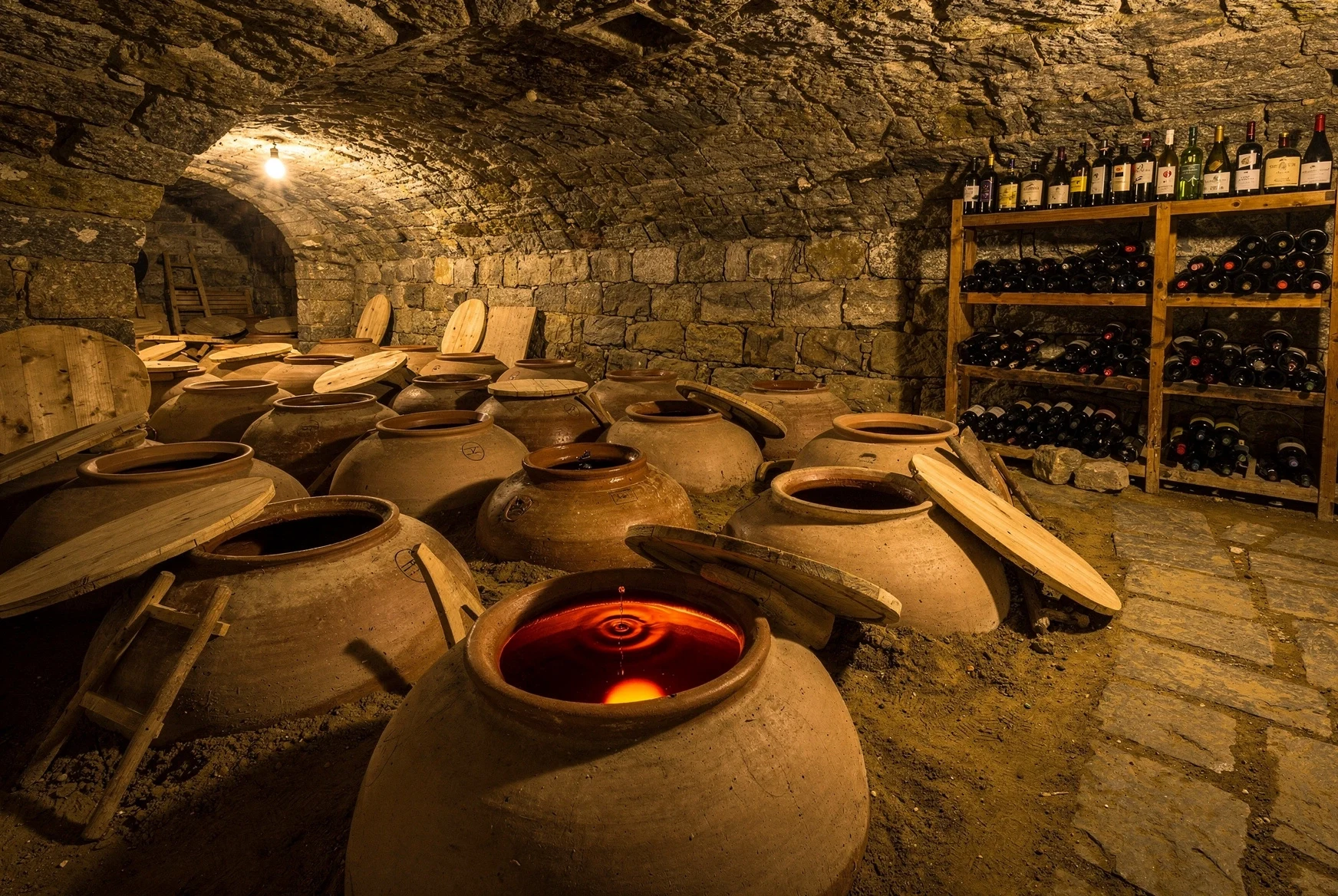
A qvevri is a large egg-shaped clay vessel used for fermenting, storing, and aging wine. The vessel is buried underground up to its neck, sealed, and left to do its thing at naturally stable temperatures. Qvevri wine is wine made using that vessel and that broader traditional method.
In practical terms, the biggest difference for most visitors is this: Georgian qvevri whites are often fermented on their skins, seeds, and sometimes stems for far longer than what most people think of as normal white wine. That is why they come out deep gold or amber, with tannin, grip, and a structure closer to a light red than a supermarket Sauvignon Blanc.
Quick translation
You may also see the spelling kvevri. Same thing. The Georgian word is ქვევრი. In English travel and wine writing, qvevri is the version you will usually run into.
Not all Georgian wine is qvevri wine. In fact, a lot of modern Georgian wineries use stainless steel tanks, oak, or mixed methods, just like producers elsewhere. But qvevri is the country's signature contribution to wine culture, and the reason serious wine people keep showing up in Kakheti looking mildly evangelical.
Why are qvevri buried in the ground?
Because it works. Buried clay keeps temperature far more stable than a vessel sitting in open air. That matters during fermentation, when grape juice turns rowdy, heats up, and can become harder to control. Long before modern technology, Georgians solved the problem by using the earth itself as insulation.
The shape matters too. Qvevri are wider in the middle and taper at the bottom, which helps solids settle naturally after fermentation. Skins and stems rise and fall, sediment drops, and the wine clarifies over time without a lot of machinery. It is elegant in the way old systems sometimes are: slightly laborious, extremely physical, but genuinely clever.
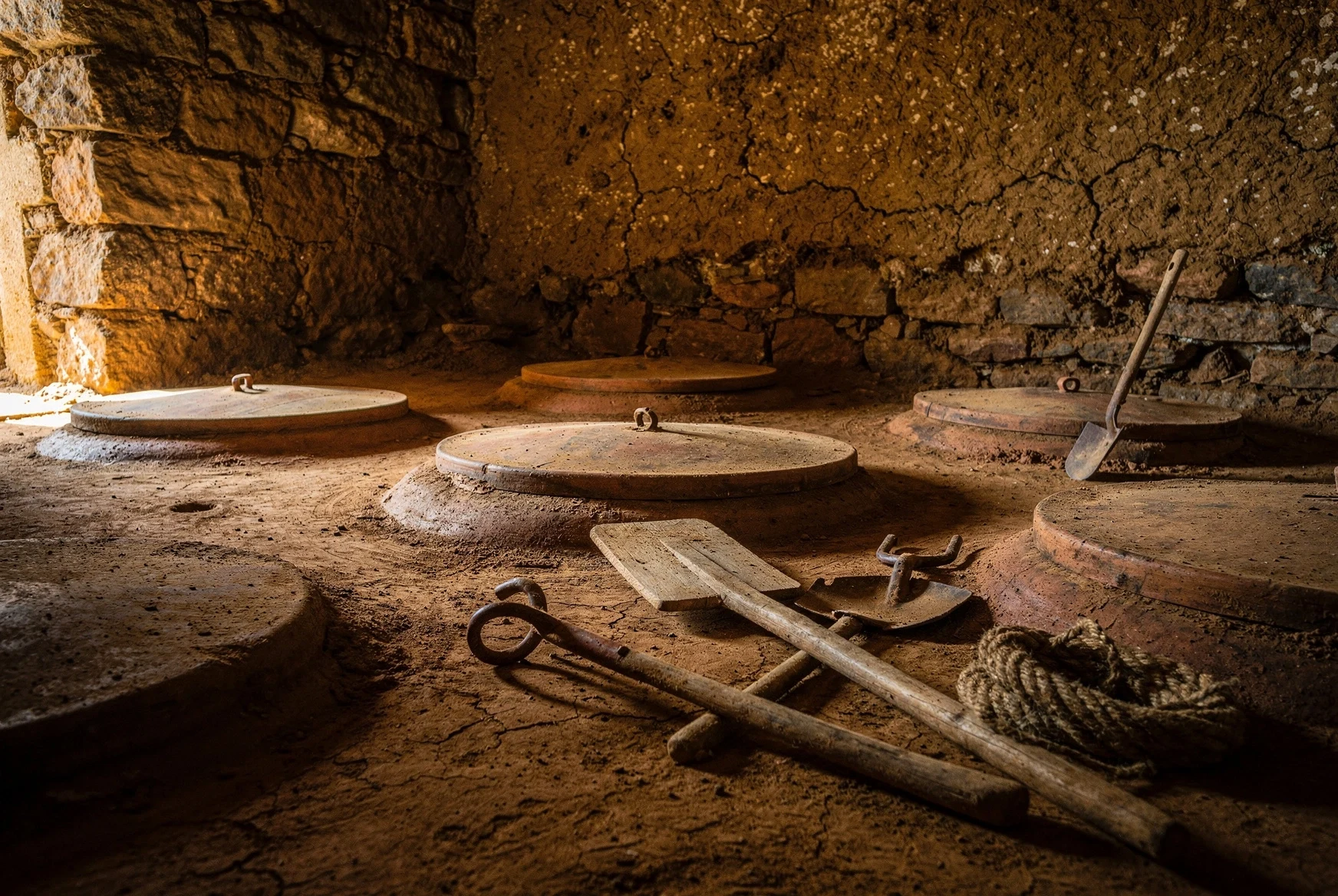
There is also a cultural point here. A proper marani is not just a production room. It is one of the symbolic centers of a Georgian home or winery. You walk in, see the lids in the floor, and understand immediately that this is not a decorative nod to tradition. The tradition is literally under your feet.
| Feature | Qvevri Method | Modern Tank Method |
|---|---|---|
| Fermentation vessel | Buried clay vessel | Usually stainless steel |
| Temperature control | Natural earth insulation | Mechanical control |
| White wine skin contact | Often long and deliberate | Usually short or none |
| Flavor profile | Textural, tannic, savory, often wild | Cleaner, fruitier, more familiar |
| Labor | High, hands-on, messy | More standardized and scalable |
How qvevri wine is made
At the risk of offending winemakers who will point out ten regional variations and six family arguments, the basic process looks like this.
1. Harvest and crush
Grapes are picked during harvest, usually in September or October depending on the region and variety. They are crushed and sent into the qvevri.
2. Fermentation with solids
For traditional amber wines, juice ferments together with skins, seeds, and often stems. This is what creates the color, grip, and deeper structure.
3. Seal and settle
After fermentation, the qvevri is sealed and the wine sits for months. Sediment sinks, the wine clarifies, and flavors settle into something more coherent.
4. Rack and drink
The finished wine is moved off the solids, bottled or stored, and eventually poured for guests who are told very confidently that this is the correct way to make wine.
That last part is not entirely a joke. Qvevri is not just a production choice in Georgia. It carries moral weight. For many producers and plenty of families, it represents continuity, integrity, and a refusal to flatten everything into export-friendly sameness.
A useful reality check
Traditional does not automatically mean better. Some qvevri wines are stunning. Some are flat, funky in the wrong way, or clearly more interesting in theory than in the glass. Taste broadly and do not assume every unlabeled family bottle is a revelation.
What does qvevri wine taste like?
Depends on the grape, region, producer, and how committed the winemaker is to making you work for it. But there are some patterns.
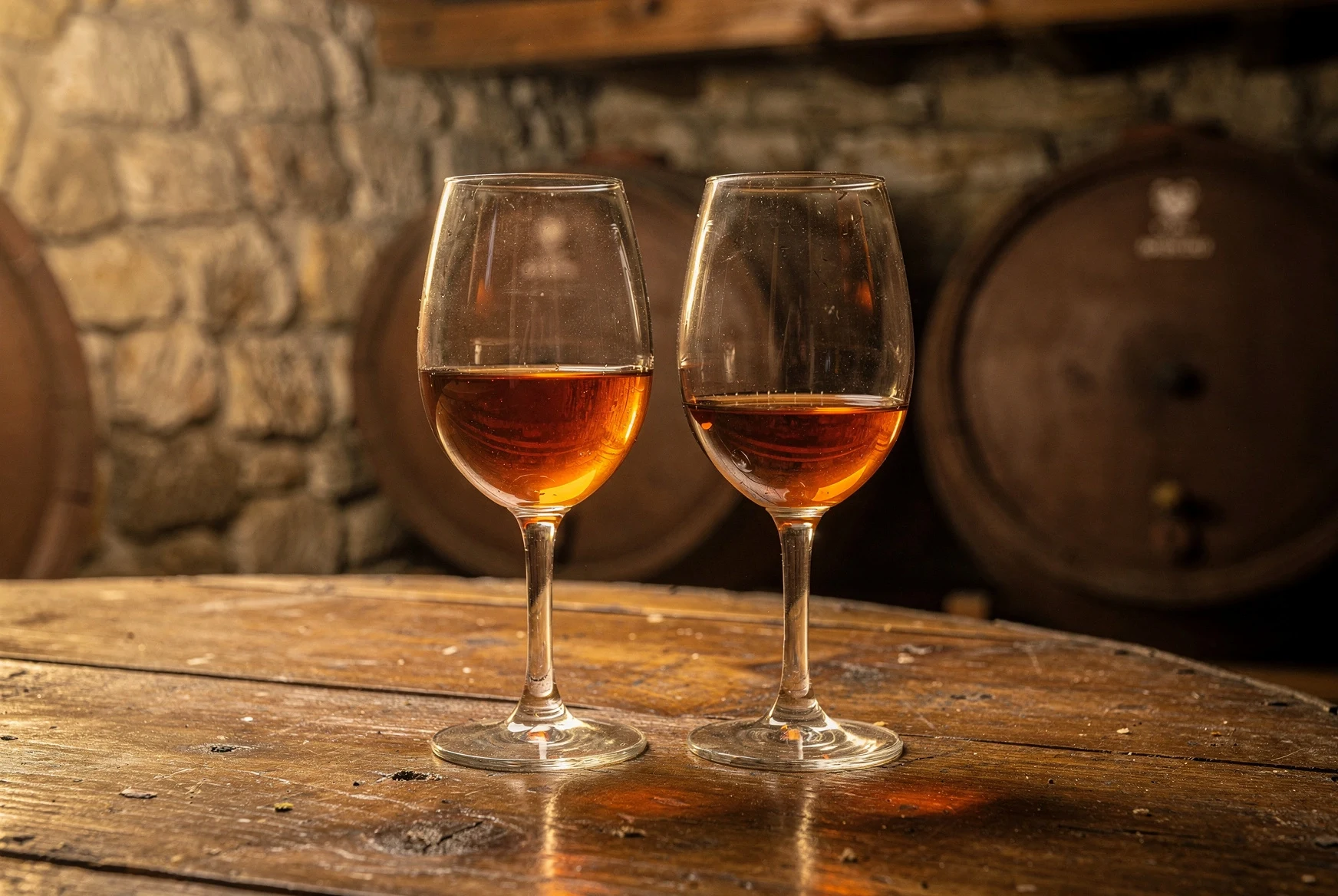
Qvevri amber wines often taste of dried apricot, quince, tea, orange peel, walnut, herbs, and sometimes a faint earthy note that people either call "beautifully savory" or "strange" depending on how much natural wine they already drink. They usually have more tannin than expected in a white wine, more texture, and less obvious fruitiness.
Qvevri reds can be deep, broad, and slightly wild around the edges. Saperavi made in qvevri can feel darker and more structural than many travelers expect, with plenty of black fruit but also earth, spice, and grip.
| If you usually like... | Try this qvevri style | What to expect |
|---|---|---|
| Structured whites | Rkatsiteli qvevri | Firm, nutty, tea-like, often quite dry |
| Aromatic whites | Kisi or Mtsvane qvevri | More perfume, softer fruit, still textured |
| Big reds | Saperavi qvevri | Dark fruit, tannin, earthy depth |
| Natural wine | Small-producer amber wines | Can be brilliant, can be weird, occasionally both |
Kakheti vs Imereti: not all qvevri styles are the same
Travelers often talk about qvevri as if it were one taste. It is not. The two regional approaches most worth understanding are Kakheti and Imereti.
Kakhetian style
The fuller, more famous version. More skin contact, often stems included, more tannin, more body, more of that classic Georgian amber punch. If you try one qvevri wine in Georgia, odds are it will be this style.
Imeretian style
Usually gentler, lighter, and more restrained. Still made in qvevri, but often with less skin material. Better for people who want the tradition without being slapped by tannin at lunch.
That difference matters because a lot of first-time tasters decide they "do" or "don't" like qvevri after one glass in Tbilisi. That is a bit like deciding whether you like all cheese after one very opinionated blue.
Why qvevri matters so much in Georgia
Because it sits at the intersection of hospitality, religion, family, and national pride. Georgia's wine story is one of the few things the country can claim with a straight face and with evidence. Oldest wine civilization in the world is not a tourism slogan pulled from nowhere. Archaeology backs it up.
Qvevri also survived periods when a lot of Georgian identity was under pressure. Empires came and went. Soviet production favored volume and standardization. Families still kept making wine at home. Monasteries kept traditions alive. Villages kept burying qvevri and filling them. That gives the method emotional weight beyond taste.
And then there is the social layer. Qvevri wine is inseparable from the Georgian supra, from toasts, from family gatherings, from harvest season, and from the national talent for stretching one dinner into a minor historical era.
Good context before you taste
If you want the wider picture first, read our Georgian wine culture guide. This page is the narrow deep dive on qvevri itself.
Where travelers should try qvevri wine
You have three sensible options: Tbilisi wine bars, winery visits in Kakheti, or a family table if you are lucky enough to be invited and smart enough not to show up with fake expertise.
| Where | Best for | Reality check |
|---|---|---|
| Tbilisi wine bars | Easy comparison tasting | Best low-effort starting point, especially if you want someone to explain the list |
| Kakheti wineries | Seeing the marani and method in context | Worth the trip if wine is a real interest, not just an afternoon filler |
| Family cellar or supra | The most authentic experience | Quality varies wildly; hospitality usually does not |
In Tbilisi, dedicated wine bars are your easiest entry point because you can order flights, compare styles, and avoid committing to a whole bottle of something that tastes like dried herbs and conviction. For that, start with our guide to Tbilisi wine bars.
If you want to see the vessel, cellar, and region all together, go to Kakheti. That is where qvevri stops being a concept on a menu and turns into a place-based tradition with actual dirt, heat, harvest labor, and very talkative hosts. For trip planning, use the Kakheti guide and our list of the best wineries to visit in Georgia.
How to order qvevri wine without sounding ridiculous
Ask by grape, not just by color
Rkatsiteli, Kisi, Mtsvane, Chinuri, Saperavi. You will get a better conversation and a better recommendation.
Say what you usually drink
If you like textured whites or big reds, say so. Staff can steer you away from the more feral bottles.
Try a glass first
Some qvevri wines are immediate crowd-pleasers. Others are homework. One glass is cheaper than a philosophical mistake.
Do not confuse sweet with traditional
Many first-time visitors accidentally order semi-sweet export-style wines when they were really looking for serious qvevri bottles.
What qvevri wine costs in Georgia
Typical 2026 price range
As usual in Georgia, the gap between fair local pricing and tourist pricing can be annoying. Good qvevri wine is still comparatively affordable by Western Europe standards, but you should not assume every bottle in a souvenir-heavy old-town venue is a bargain. Buy from proper wine shops or bars with staff who can actually tell you what is in the glass.
Common mistakes first-time drinkers make
The big four mistakes
Ordering the wildest amber wine first, drinking it too cold, expecting it to taste like normal white wine, and deciding after one bottle that qvevri is either the future of humanity or complete nonsense.
Temperature matters. Serve qvevri amber too cold and you flatten the texture and hide the aroma. Food matters too. These wines often make far more sense with cheese, grilled meat, pkhali, mushrooms, or walnut-heavy dishes than they do on their own.
Also: do not treat homemade wine as a safe shortcut to authenticity. Sometimes it is brilliant. Sometimes it tastes tired, unstable, or aggressively homemade in the least romantic sense. Accept the glass with gratitude anyway. Hospitality is the point.
Frequently asked questions
Is qvevri wine the same as orange wine?
Not exactly. Many Georgian qvevri whites are what the wider wine world now calls orange wine, but qvevri refers to the vessel and method, not just the color. You can have qvevri reds too.
Do all Georgian wineries use qvevri?
No. Plenty use modern tank methods, oak, or a mix. Qvevri is culturally central, but it is not the whole Georgian wine industry.
What grape should I start with?
For amber wines, Rkatsiteli is the obvious starting point. Kisi and Mtsvane are also excellent if you want something aromatic and a little softer around the edges.
Where is the best place to try qvevri wine?
Tbilisi is easiest. Kakheti is best if you want the full cellar-and-region experience. A real family supra is the most memorable if you get invited.
Can beginners enjoy qvevri wine?
Yes, if they start with the right bottle. Do not begin with the most aggressively funky amber wine on the list just because a natural-wine enthusiast looked excited.
Written by The Georgian Guide Team
We live in Tbilisi and spend an unreasonable amount of time explaining Georgia's wine culture to visiting friends, usually one glass too late. We have tasted qvevri wines in bars, wineries, and family cellars across Georgia, including bottles that were sublime and bottles that felt like a personal attack.
Last updated: March 2026.
Related Articles
Georgian Wine Culture
The bigger picture: grapes, supra, regions, and why wine in Georgia is never just a drink.
Kakheti Wine Region
Where to base yourself, which towns matter, and how to plan a proper wine-country trip.
Best Wineries in Georgia
A shortlist of wineries that are worth your time rather than just easy to sell to tourists.
Best Wine Bars in Tbilisi
The easiest way to compare qvevri styles without leaving the capital.