Tbilisi is a city where location matters more than you'd think. Stay in the wrong neighborhood and you'll spend half your trip in taxis. Stay in the right one and you'll wander home from dinner at midnight through lamp-lit streets, wondering why you booked only five days.
The good news: Tbilisi is compact. The tricky part is that its neighborhoods have wildly different personalities. The party district is a 10-minute walk from the quietest residential streets you've ever seen. The ultra-modern business towers are minutes from crumbling 19th-century courtyard houses.
I've lived in or spent significant time in every area covered here. This isn't a hotel booking guide — it's the neighborhood breakdown I wish I'd had before my first visit.
Quick Comparison
| Neighborhood | Best For | Budget/Night | Vibe |
|---|---|---|---|
| Old Town (Kala) | First-timers, sightseeing | $30–80 | Touristy, historic, busy |
| Sololaki | Design lovers, couples | $40–100 | Artsy, quiet, photogenic |
| Marjanishvili | Nightlife, foodies, creatives | $25–60 | Buzzy, eclectic, fun |
| Vera | Longer stays, remote workers | $30–70 | Residential, charming, walkable |
| Rustaveli / Mtatsminda | Culture, shopping, convenience | $35–120 | Central, polished, varied |
| Vake | Families, expats, comfort | $40–90 | Leafy, upscale, quiet |
| Avlabari | Budget travelers, views | $15–45 | Local, panoramic, raw |
| Saburtalo | Long stays, students, budget | $15–40 | Suburban, practical, no-frills |
Short Trip? Start Here
If you're visiting for 3–5 days and just want the simple answer: Sololaki or Marjanishvili. Both are walkable to everything, have great food and bars, and feel authentically Tbilisi rather than tourist-Tbilisi. Old Town works too, but you'll pay more for less apartment space.
Old Town (Kala) — The Tourist Heart
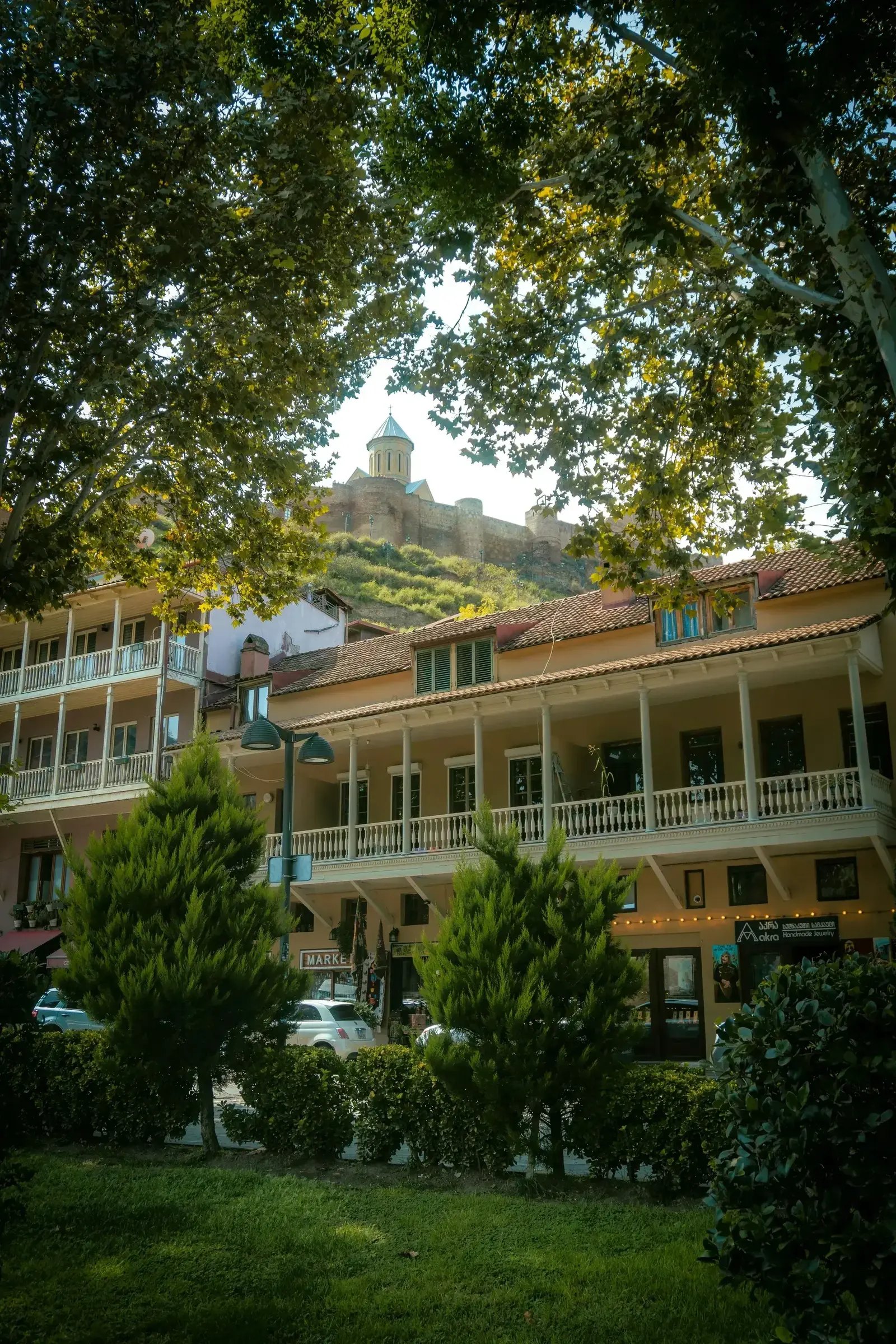
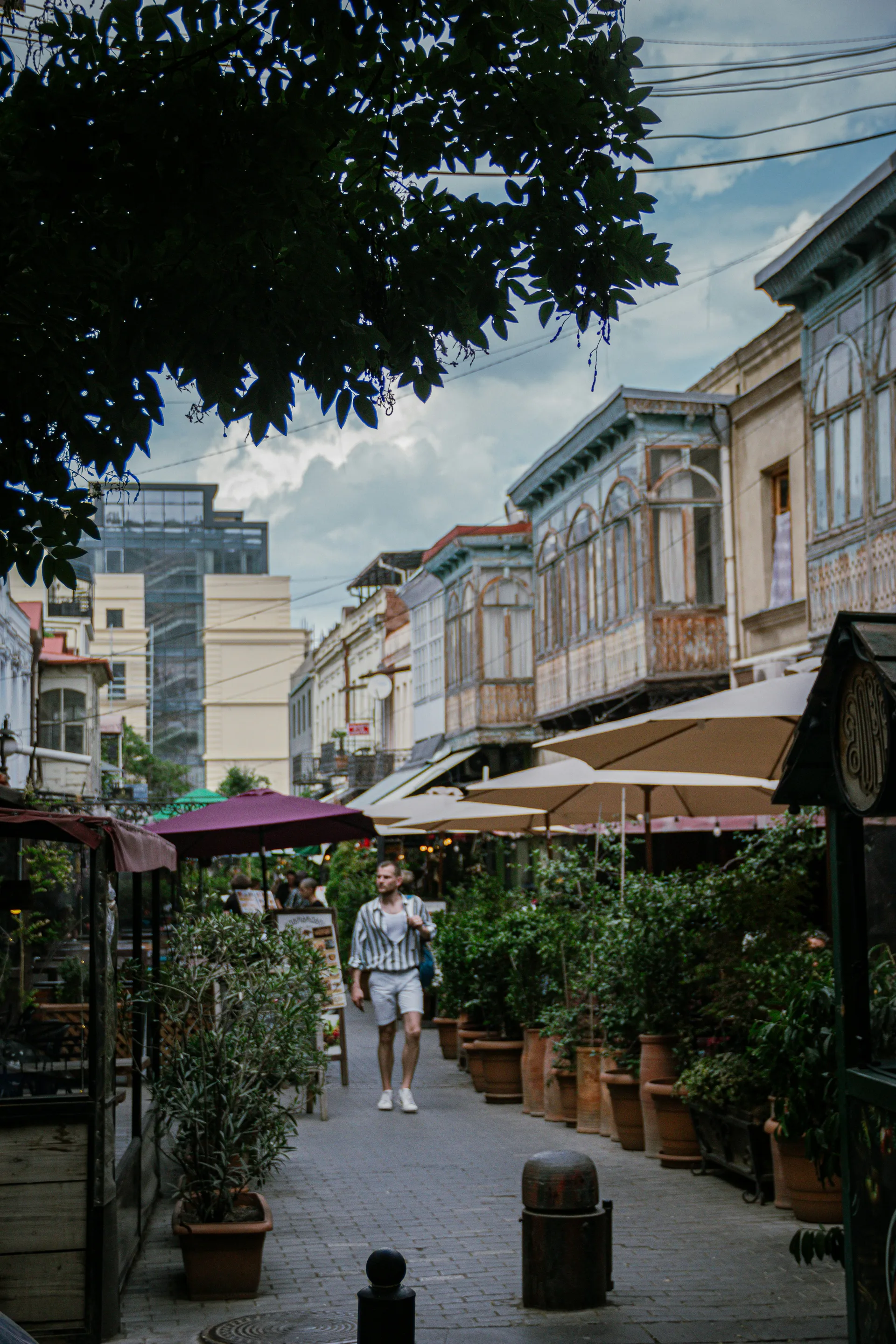
This is where most first-timers end up, and honestly? It's fine. Not perfect, not a mistake, just fine. Old Town is Tbilisi's postcard: sulfur baths, Narikala Fortress looming above, crooked streets with those iconic wooden balconies, and restaurants on every corner.
The issue is that "restaurants on every corner" increasingly means tourist-priced restaurants with laminated English menus. The Old Town of 2018 — full of hidden wine bars and family-run kitchens — has been steadily giving way to souvenir shops and overpriced khinkali joints. It's still beautiful. It's just less of a secret.
✅ Pros
Walking distance to all major sights. Sulfur baths nearby. Atmospheric streets. Good for photos. Cable car to Narikala right there.
❌ Cons
Touristy restaurants with inflated prices. Narrow streets make taxis difficult. Accommodation tends to be small and overpriced. Gets crowded in summer. Street sellers can be pushy.
Stay here if: It's your first visit and you want to be in the thick of things. You prioritize walkability to sights over food quality and apartment size.
Skip if: You're here for more than 3 days, you value good restaurants, or you want to feel like you're in a real neighborhood rather than a tourist zone.
Sololaki — The Instagrammer's Favorite
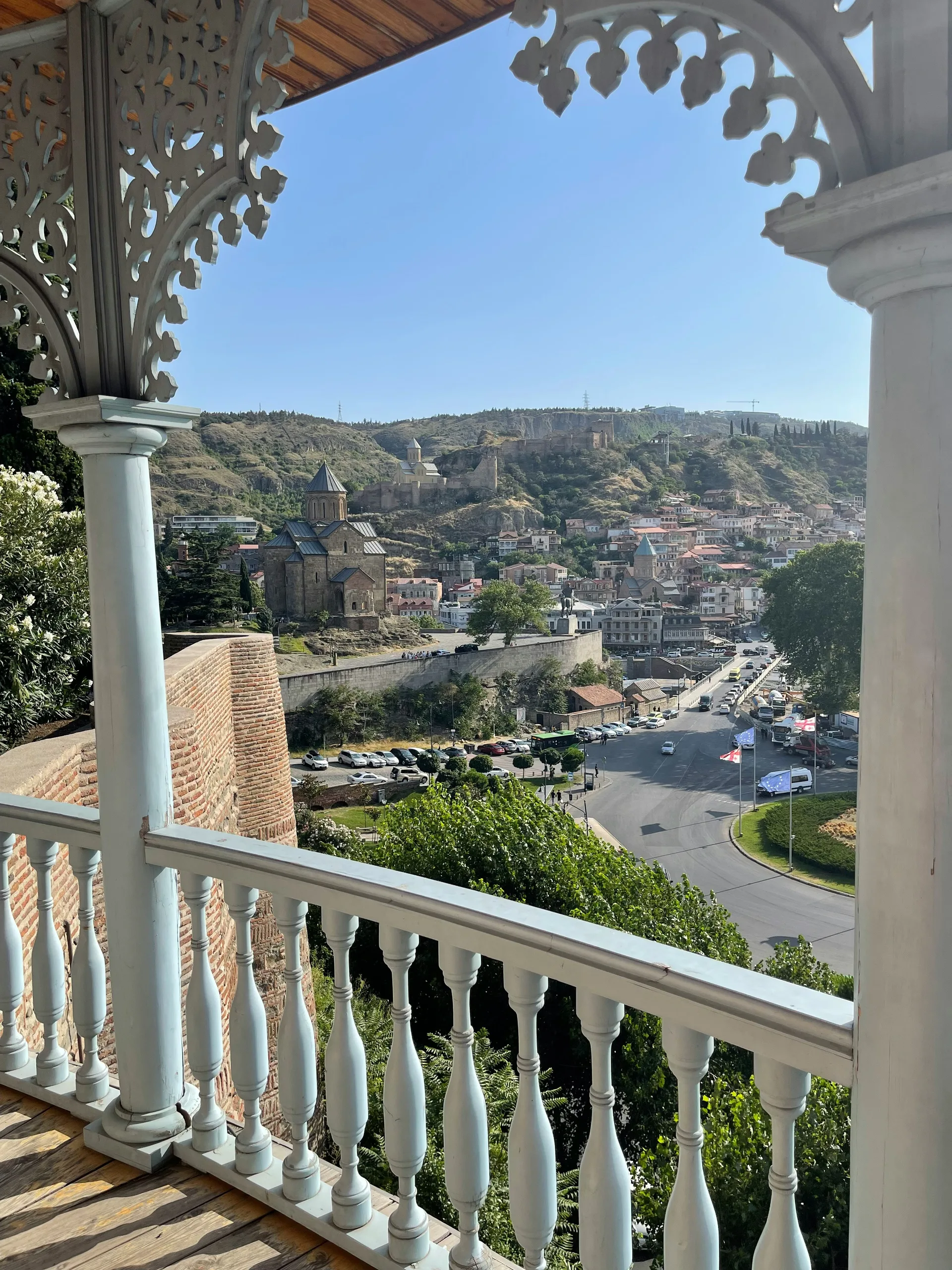
Sololaki is Old Town's cooler older sibling. Same vintage buildings with carved balconies and inner courtyards, but fewer tourist traps and more actual character. The streets are steeper, the buildings more photogenic, and the restaurants are the kind where locals actually eat.
This neighborhood runs along the hillside below Mtatsminda, which means two things: great views and a lot of stairs. If you have mobility issues, think twice. Everyone else will find the daily stair-climbing a fair trade for waking up in one of Tbilisi's most beautiful pockets.
Sololaki has become the go-to for boutique hotels and design-forward guesthouses. The renovation wave has been tasteful here — more restored Art Nouveau than sterile modern. You'll find small galleries, independent coffee shops, and wine bars that wouldn't look out of place in Lisbon or Porto.
✅ Pros
Stunning architecture. Walking distance to Old Town. Better restaurant quality than Kala. Boutique hotels with real character. Quieter at night.
❌ Cons
Steep hills everywhere. Limited grocery options. Can feel empty late at night. More expensive than Marjanishvili or Vera.
Stay here if: You want beauty and walkability without the full tourist circus. Great for couples and anyone who appreciates architecture.
Skip if: You struggle with hills, or you want buzzy nightlife outside your door.
Marjanishvili (Chugureti) — Where the Fun Is
If Sololaki is the quiet art gallery, Marjanishvili is the bar that's still going at 4 AM. This neighborhood — centered around Marjanishvili Square and the streets radiating off it — is where Tbilisi's creative class eats, drinks, and hangs out. Fabrika, the converted Soviet sewing factory turned hostel-bar-coworking-courtyard, is the unofficial hub.
The food here is seriously good. Not tourist-good — actually good. Georgian, Japanese, Italian, Georgian-fusion, natural wine bars, specialty coffee shops, craft beer spots. The concentration of quality per square meter rivals neighborhoods in much bigger cities. And the prices are still reasonable.
It's also where most of Tbilisi's nightlife happens. The techno scene that put Tbilisi on the map is centered in this general area, along with wine bars, cocktail spots, and the kind of dive bars where you end up talking to strangers until sunrise.
✅ Pros
Best food scene in Tbilisi. Vibrant nightlife. Young and creative energy. Good value accommodation. Metro station right there. Walkable to Old Town (15 min).
❌ Cons
Can be noisy at night (especially weekends). Some streets feel rough. Less "pretty" than Sololaki or Old Town. Not ideal if you want peace and quiet.
Stay here if: You care more about what you eat and drink than what you photograph. Solo travelers, food lovers, and anyone under 40 will feel right at home.
Skip if: You want a postcard-pretty setting or you're a light sleeper.
Vera — The Local's Pick
Vera is the neighborhood Tbilisi residents will tell you to stay in — and then feel slightly conflicted about, because they don't want it to change. It's residential, tree-lined, full of small cafes and neighborhood shops, and about a 10-minute walk from Rustaveli Avenue.
The charm of Vera is that it feels like a real place. Not curated for tourists, not gentrified beyond recognition — just a pleasant neighborhood where people live. The buildings are a mix of old and Soviet-era, the streets are quieter, and you'll hear Georgian far more than English.
For remote workers and longer stays (a week or more), Vera is hard to beat. Apartments are spacious by Tbilisi standards, rents are fair, and you're close enough to everything without being in the middle of it.
✅ Pros
Authentic neighborhood feel. Great cafes. Walking distance to Rustaveli and Old Town. Good value apartments. Tree-lined streets. Quiet at night.
❌ Cons
Fewer hotels (mostly Airbnb/apartments). Not as walkable to Old Town as Sololaki. Some Soviet-era buildings aren't pretty. Limited nightlife.
Stay here if: You want to live like a local. Perfect for digital nomads, longer stays, or anyone who values neighborhood charm over tourist convenience.
Skip if: You're here for 2 days and want maximum sightseeing efficiency.
Rustaveli / Mtatsminda — The Central Axis
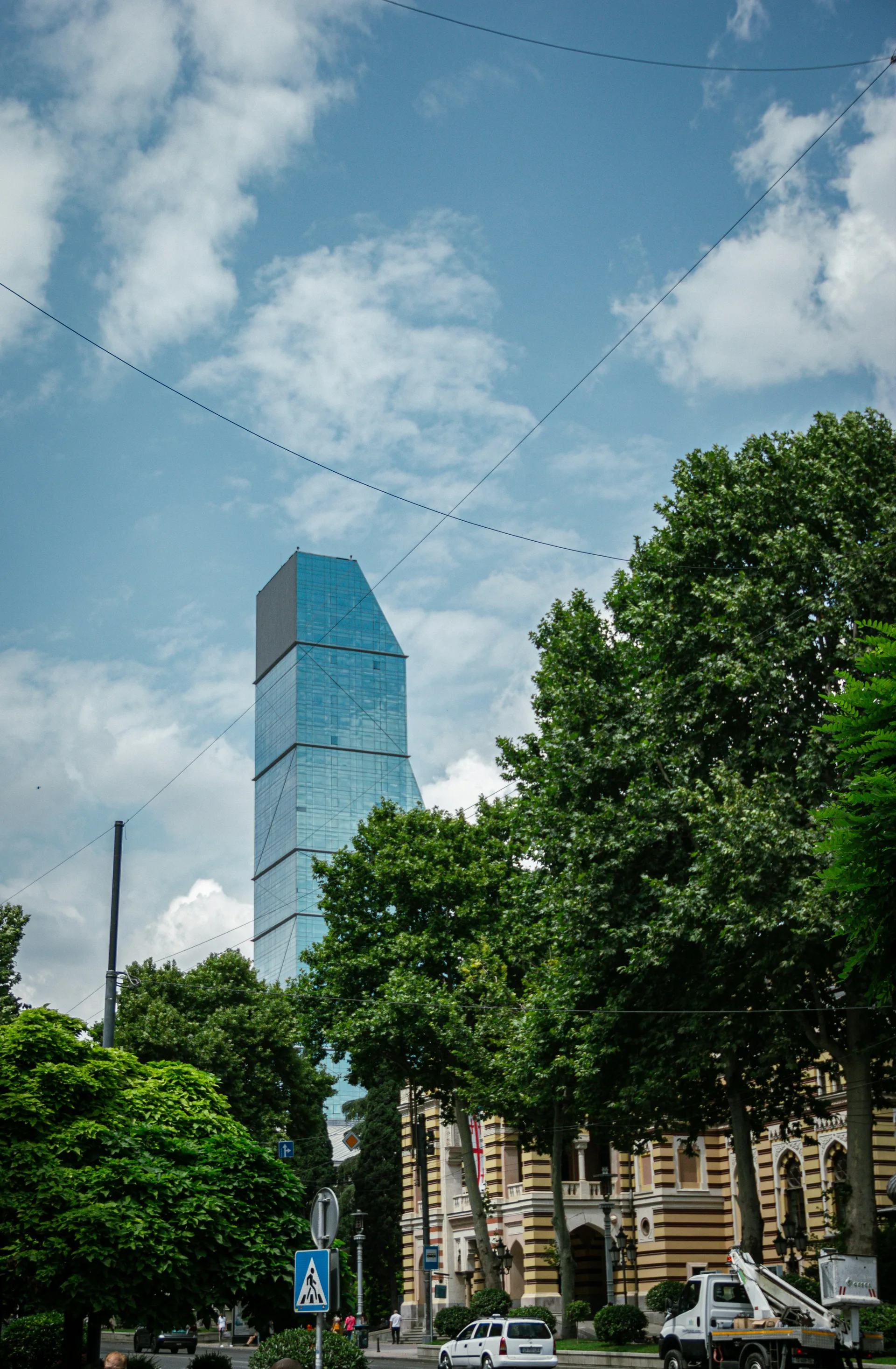
Rustaveli Avenue is Tbilisi's main boulevard — think Champs-Élysées but shorter, cheaper, and with better wine. The area around it (technically Mtatsminda district) is where you'll find the Parliament, the Opera House, the National Museum, bookshops, and most of the city's high-end hotels.
Staying near Rustaveli puts you on the central axis of the city. You can walk downhill to Old Town in 10 minutes or uphill to Vera and Vake. The metro runs right under the avenue with two stations (Liberty Square and Rustaveli). It's the most "city center" location Tbilisi has.
The accommodation range here is the widest in the city — from budget hostels on the side streets to the Stamba and Rooms hotels, which are legitimately world-class (and priced accordingly). The side streets off Rustaveli hide excellent restaurants and wine bars that are less tourist-oriented than Old Town equivalents.
✅ Pros
Most central location. Two metro stations. Wide range of hotels. Cultural institutions nearby. Walkable to everywhere. Best shopping in the city.
❌ Cons
Rustaveli itself is busy and noisy. Traffic can be bad. Feels more "city" than "charming." Hotel prices are the highest in Tbilisi. Less character than Sololaki or Vera.
Stay here if: You want convenience and don't mind paying for it. Good for business travelers or anyone who wants a familiar city-center feel.
Skip if: You're looking for charm and character. Rustaveli is functional, not romantic.
Vake — The Upscale Suburb
Vake is where well-off Tbilisi families live, where the embassies are, and where you'll find the city's fanciest grocery stores. It's leafy, clean, and noticeably calmer than the city center. Think of it as Tbilisi's equivalent of a nice European residential district.
The main draw is Vake Park — a huge, well-maintained green space that's perfect for morning runs, picnics, or escaping the summer heat. The restaurants in Vake tend to be upscale Georgian or international, and there's a good selection of cafes along Chavchavadze Avenue.
The downside: it's not walking distance to Old Town. You'll need a Bolt (2–3 GEL) or the metro to get to the sights. For tourists, this feels like staying in a suburb. For families or anyone spending a month or more, it's ideal.
✅ Pros
Leafy and clean. Great park. Good restaurants and cafes. Quiet streets. Best supermarkets. Metro access (Delisi). Modern apartments available.
❌ Cons
Far from Old Town on foot (30+ min). Feels suburban. Less character than central neighborhoods. Higher rents. Can feel sterile compared to the old city.
Stay here if: You're here for a month, have kids, or want comfort over atmosphere. Popular with expats for a reason.
Skip if: You're on a short trip and want to maximize your time exploring the historic center.
Avlabari — The Underdog
On the east bank of the Kura River, Avlabari is Tbilisi's most overlooked neighborhood for tourists — and one of its most rewarding. This is where you'll find the Holy Trinity Cathedral (Sameba), the Presidential Palace, and some of the best panoramic views of Old Town from across the river.
Avlabari is historically an Armenian neighborhood, and that heritage is visible in the churches and old buildings. It's less polished than the west bank — rougher around the edges, more Soviet-era apartment blocks, fewer boutique hotels. But accommodation prices are the lowest in central Tbilisi, and you're only a 10-minute walk across the bridge to Old Town.
The restaurant scene is thinner here but improving. A few genuinely excellent spots have opened in recent years, and the absence of tourists means you'll get local prices and local attention.
✅ Pros
Best value in central Tbilisi. Stunning views of Old Town. Sameba Cathedral. Very local feel. Metro station (Avlabari). Close to the Dry Bridge Market.
❌ Cons
Less attractive buildings. Fewer dining options. Some areas feel run-down. Not as walkable to nightlife. Hill from the river can be tiring.
Stay here if: You're budget-conscious and don't mind a slightly rougher setting. The views alone are worth it.
Skip if: You want to be surrounded by restaurants and bars, or you want picture-perfect streets.
Saburtalo — The Practical Choice
Saburtalo is not charming. Let's get that out of the way. It's a massive residential district north of Vake, full of Soviet-era apartment towers, big roads, and shopping malls. It's where Tbilisi State University is, where the Technical University metro stops are, and where many working-class Tbilisi families live.
Why would you stay here? Two reasons: price and space. You can get a modern, fully-equipped two-bedroom apartment for what a studio costs in Sololaki. If you're here for a month or more on a tight budget, or if you're a student, Saburtalo makes financial sense. There are decent Georgian restaurants, a few craft beer spots, and everything you need for daily life.
But for a week-long trip? Don't bother. You'll spend too much time in taxis or on the metro. There's nothing to "see" in Saburtalo — it's a place to live, not to visit.
✅ Pros
Cheapest rents in the city. Spacious apartments. Good metro access. Big supermarkets. University area with student energy.
❌ Cons
Far from everything tourists want to see. Soviet architecture. No charm. Not walkable to the center. Busy roads. Feels like a different city from Old Town.
Stay here if: You're on a long stay with a tight budget. Students and language course attendees often end up here — and make it work.
Skip if: You're visiting for less than two weeks.
Accommodation Tips
Apartments vs. Hotels
Tbilisi's apartment stock on Booking.com and Airbnb is massive and mostly excellent. For stays of 3+ nights, apartments almost always offer better value — bigger space, kitchen access, washing machine, and a more authentic feel. Hotels in Tbilisi tend to be either budget (basic but clean) or luxury (genuinely world-class). The mid-range hotel scene is surprisingly thin.
| Tip | Details |
|---|---|
| Book direct for discounts | Many Tbilisi hotels and guesthouses offer 10–20% off if you message them directly on WhatsApp or Instagram instead of booking through platforms. |
| Check the floor | Many old buildings have no elevator. Floor 5 in a walk-up with luggage is no joke. Ask before booking. |
| Heating matters in winter | Central heating in older buildings can be unreliable. From November to March, confirm the apartment has gas heating or a good space heater. Ask about hot water too. |
| Noise from the street | Tbilisi drivers use their horns generously. Request a courtyard-facing room if you're a light sleeper, especially near main roads. |
| Monthly stays | For 30+ days, negotiate directly with landlords on Facebook groups or myhome.ge. Expect $400–800/month for a decent one-bedroom in central areas. |
| Euro-renovation trap | "Euro renovation" means the apartment has been modernized — often badly. Glossy tile floors, LED light strips, and a shower stall instead of a proper bathroom. Check photos carefully. |
What Does It Actually Cost?
Nightly Accommodation Costs (2026)
Price Trends
Tbilisi accommodation prices jumped significantly in 2022–2023 with the influx of Russian and Ukrainian relocators. They've stabilized somewhat since, but don't expect the rock-bottom prices from travel blogs written in 2019. Budget an extra 30–50% on what older guides quote.
Getting Around Between Neighborhoods
Tbilisi's metro has only two lines, but they hit the key neighborhoods: Liberty Square (Old Town edge), Rustaveli, Marjanishvili, Avlabari, and several Saburtalo/Vake stations. A single ride costs 1 GEL (~$0.37) with a reusable Metromoney card.
For everything else, Bolt is your best friend. Rides within the center rarely exceed 5–8 GEL ($2–3). It's cheaper and more reliable than Tbilisi's official taxis, and every driver has the app. You can also use Maxim, which tends to be slightly cheaper.
Walking is the best way to explore the central neighborhoods. Old Town to Marjanishvili is about 15 minutes on foot. Old Town to Vera is about 20 minutes. Only Vake and Saburtalo really require transport.
| From → To | Walk | Bolt | Metro |
|---|---|---|---|
| Old Town → Marjanishvili | 15 min | 3–5 GEL | 1 stop |
| Old Town → Sololaki | 5–10 min | — | — |
| Rustaveli → Vera | 10 min | 3–4 GEL | — |
| Old Town → Vake | 30–40 min | 5–8 GEL | ~15 min |
| Old Town → Avlabari | 10–15 min | 3–5 GEL | 1 stop |
| Rustaveli → Saburtalo | 40+ min | 5–8 GEL | 3–4 stops |
Common Mistakes
Booking Old Town because it's "central"
Central doesn't mean best. You'll pay more for a smaller room and eat at worse restaurants. Sololaki and Marjanishvili are just as walkable and better value.
Ignoring the floor number
Tbilisi is full of gorgeous buildings with no elevator. Ask about this before you book, especially if you're hauling luggage or have kids.
Using old blog prices
Travel blogs from 2019–2021 quote prices that no longer exist. Budget at least 30–50% more than what pre-2022 sources suggest.
Staying too far out on a short trip
Vake and Saburtalo are fine for long stays but a waste of a short trip. If you're here for under a week, stay central — your time is worth more than the savings.
Expecting Western-style hotels
Outside the luxury tier, Tbilisi hotels can be quirky. Plumbing surprises, creative interpretations of "breakfast included," and interesting noise levels are all part of the charm.
Not considering the season
Summer (July–August) and New Year's Eve are peak season. Prices spike 40–60% and popular spots book out. Shoulder seasons (May, June, September, October) are better in every way.
FAQ
Is Tbilisi safe to walk around at night?
Yes. Tbilisi is remarkably safe, even late at night. The central neighborhoods (Old Town, Sololaki, Marjanishvili, Vera, Rustaveli) are all fine to walk alone after dark. Use normal urban awareness, but violent crime against tourists is extremely rare.
Should I book an Airbnb or a hotel?
For 1–2 nights, a hotel or guesthouse is simplest. For 3+ nights, apartments (on Booking.com or Airbnb) usually win on value and space. For a month+, negotiate directly with landlords via myhome.ge or Facebook groups.
When is the cheapest time to visit?
November through March (excluding New Year's) is low season. Prices drop 20–40% across the board. The trade-off: shorter days, colder weather, and some mountain destinations are inaccessible. January–February is the absolute cheapest.
Do I need a car in Tbilisi?
Absolutely not. The city center is walkable, the metro covers key points, and Bolt rides are cheap. A car is only useful for day trips outside the city — and even then, you can arrange a driver for $40–60/day.
Can I negotiate rent for monthly stays?
Yes, and you should. Landlords expect it. Offering to pay 2–3 months upfront usually gets you a better rate. Always ask about utilities — they're typically not included and can add $30–80/month depending on the season.
Written by The Georgian Guide Team
We've lived in multiple Tbilisi neighborhoods over the years — from Old Town walk-ups to Vake apartments to a questionable Saburtalo flat with creative plumbing. This guide reflects real experience, not hotel booking affiliate rankings.
Last updated: February 2026.
Related Articles
Tbilisi for First-Timers: The Honest Guide
Where to eat, what to skip, and the stuff nobody tells you.
Money, ATMs & Tipping in Georgia
Fee-free ATMs, exchange tips, and tipping etiquette.
Getting Around Georgia
Metro, marshrutkas, trains, Bolt, car rental — the full guide.
Is Georgia Safe?
Crime stats, scams, driving dangers — an honest assessment.