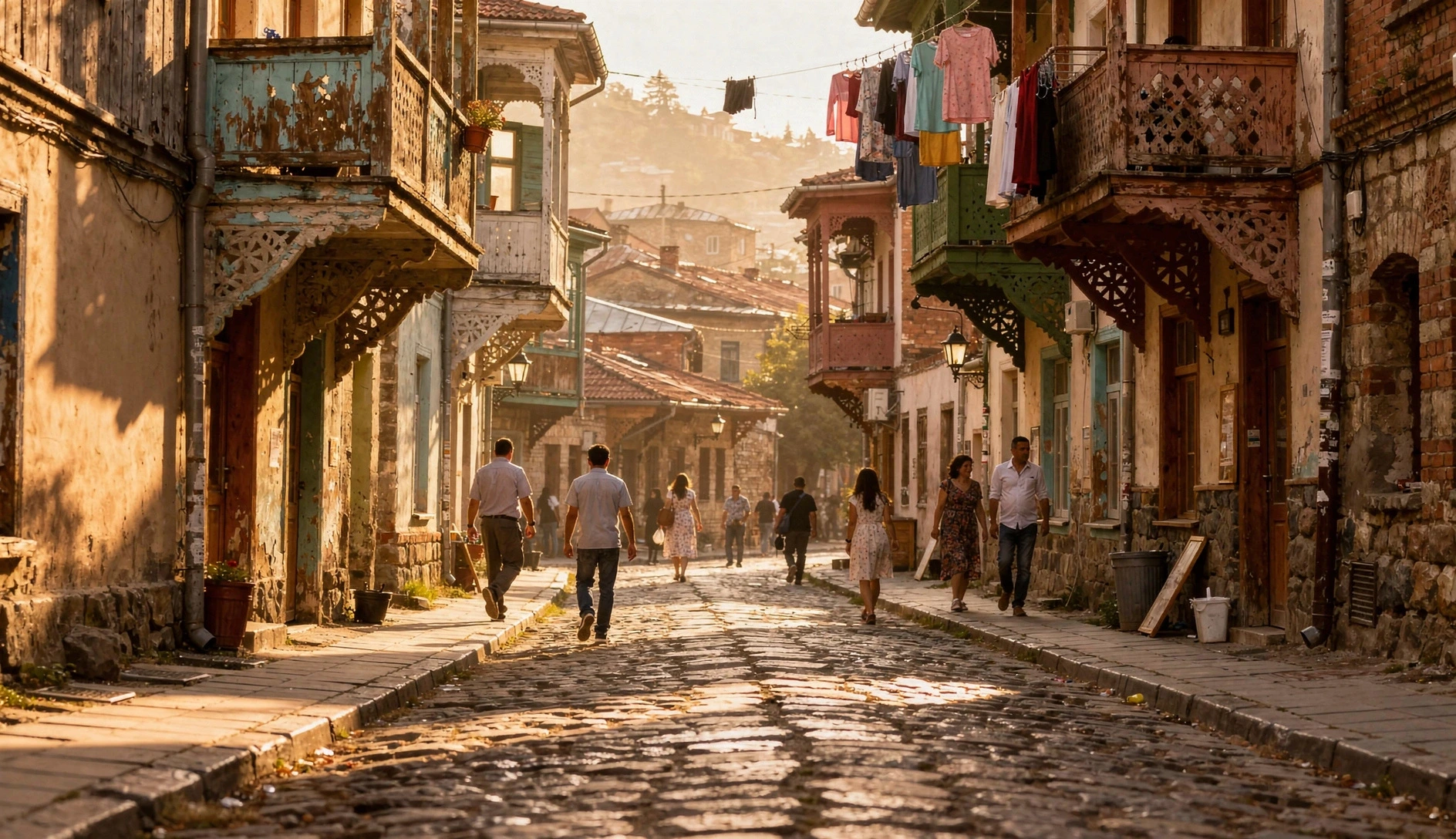
Georgia isn't just another European country to tick off a list. It's a place that genuinely surprises people — sometimes in wonderful ways, sometimes in confusing ones. After years of living here, I still get caught off guard occasionally.
This isn't a fluffy "10 reasons to visit Georgia!" listicle. It's the stuff I wish someone had told me before my first trip — the practical, the cultural, the slightly weird. Some of it will save you money. Some will save you embarrassment. All of it will make your trip better.
1. It's Georgia the Country, Not the US State
Let's get this one out of the way. Yes, you will have to specify "Georgia the country" in every conversation with someone who hasn't been. Yes, your friends will make jokes about Atlanta. No, it never stops being mildly annoying.
Georgia (საქართველო — Sakartvelo in Georgian) is a small country at the crossroads of Europe and Asia, tucked between Russia, Turkey, Armenia, and Azerbaijan. It has roughly 3.7 million people, the Caucasus Mountains, 8,000 years of winemaking history, and absolutely nothing to do with peaches.
When booking flights, search for Tbilisi (TBS) to avoid confusion.
2. Visa-Free for Most — But Insurance Is Now Mandatory
Citizens of over 95 countries can enter Georgia without a visa and stay for up to one year. That's not a typo — 365 days, no visa, no questions asked. It's one of the most generous entry policies in the world.
However, as of 2026, Georgia now requires all visitors to have valid health and accident insurance for the duration of their stay, with minimum coverage of 30,000 GEL (roughly $11,000 USD). Both Georgian and international providers are accepted. You may be asked for proof at the border or airport.
Insurance Requirement (2026)
Your policy must cover the full duration of your stay with a minimum of 30,000 GEL coverage. This applies to visa-free visitors too. Get a policy before you fly — checking is inconsistent but getting stricter. World Nomads, SafetyWing, and Allianz all work.
3. Georgia Is Remarkably Safe
Georgia is one of the safest countries you'll visit. Violent crime against tourists is essentially nonexistent. Petty theft is rare. You can walk around Tbilisi at 3 AM and feel completely fine — and many people do, because the city genuinely doesn't sleep.
The one caveat: driving. Georgian drivers treat lane markings as suggestions and traffic lights as mild recommendations. Pedestrian crossings offer no magical protection. Look both ways — then look again. Jaywalking fines are actually enforced now (50 GEL), which tells you something about how common it used to be.
Two regions — Abkhazia and South Ossetia — are occupied by Russia and off-limits. Don't try to enter them from the Georgian side or the Russian side. The rest of the country is completely safe to travel.
4. It's Not as Cheap as Travel Blogs Say
Georgia used to be absurdly cheap. A filling lunch for $3, a bottle of excellent wine for $4, a nice guesthouse for $15. Some of that still exists in rural areas, but Tbilisi has caught up significantly since 2022.
Food prices have risen 8-12% year over year. Museum entrances have doubled or tripled. A decent dinner for two in Tbilisi now runs $25-40. Still great value by European standards — but not the "travel for $20 a day" fantasy that older blog posts promise.
| Travel Style | Daily Budget (per person) | What That Gets You |
|---|---|---|
| Budget | $25–40 | Hostels, street food, marshrutkas, free walking tours |
| Mid-range | $50–80 | Boutique hotels, restaurant meals, taxis, day trips |
| Comfort | $100+ | Nice hotels, wine tours, rental car, premium dining |
5. The Alphabet Looks Intimidating — But You Don't Need It
Georgian has its own unique alphabet (მხედრული) that looks like beautiful alien calligraphy. It has 33 letters, no uppercase or lowercase, and zero resemblance to Latin, Cyrillic, or Arabic scripts. It's one of only 14 unique alphabets still in use worldwide.
The good news: you don't need to learn it for a short visit. Most restaurant menus in tourist areas have English translations. Road signs on major routes are bilingual. Google Maps works well. Young Georgians in Tbilisi generally speak decent English.
That said, learning even 5-10 letters makes navigating much easier — especially for reading bus destinations, market signs, and menus in smaller towns where English disappears fast.
6. The Language Barrier Is Real Outside Tbilisi
In Tbilisi, you'll be fine with English in most restaurants, hotels, and shops. Step outside the capital and it drops off dramatically. In Kutaisi you'll manage. In Mestia or Sighnaghi, gesture a lot. In a village in Tusheti, you're on your own.
Russian works as a bridge language with older Georgians (40+), but don't assume everyone speaks it, and some Georgians — understandably — prefer you don't lead with Russian. A few Georgian words go a very long way. "Gamarjoba" (hello) and "madloba" (thank you) will earn you genuine smiles.
Essential Georgian Phrases
Gamarjoba (hello), madloba (thank you), ki/ara (yes/no), ramdeni ghirs? (how much?), tu sheidzleba (please/if possible). Even attempted Georgian gets you treated like family. See our Georgian phrases guide for more.
7. The Food Will Ruin You for Other Cuisines
This isn't hyperbole. Georgian food is that good — and it's nothing like what you'd expect. It's not Mediterranean, not Middle Eastern, not Russian. It's its own fully realized cuisine that the world is just starting to discover.
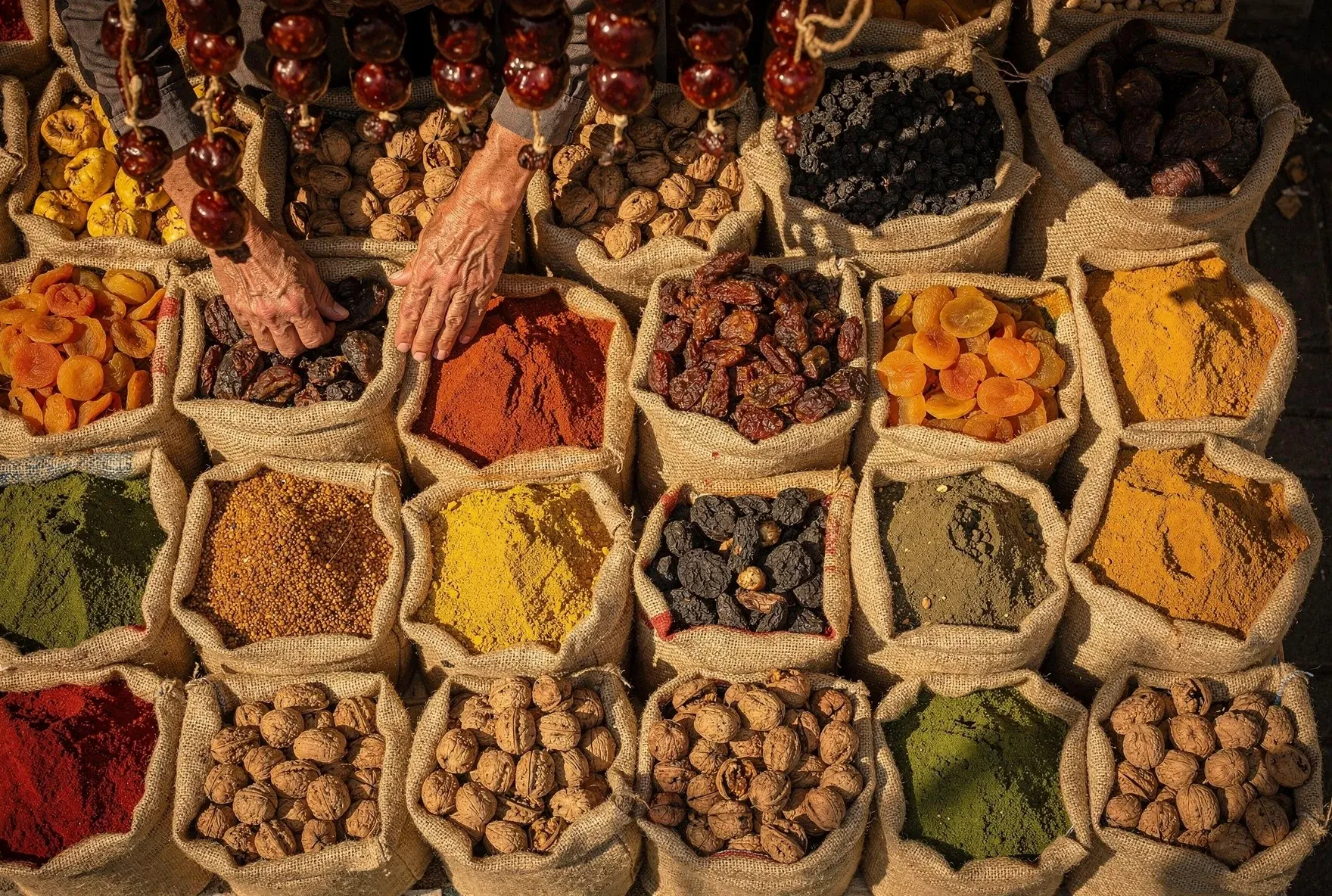
Khachapuri (cheese bread) and khinkali (soup dumplings) get the headlines, but the real depth is in the variety: walnut-based sauces, slow-stewed meats, fresh herb salads piled high, flatbreads pulled from clay ovens, pomegranate seeds on everything. Every region has its own specialties.
A few things to know: portions are enormous. Georgians eat family-style — order fewer dishes than you think and share. Vegetarians actually do surprisingly well here (eggplant with walnut paste, bean stews, fresh salads, cheese everything). And breakfast is usually a full meal, not a continental afterthought.
8. Wine Is Not a Drink Here — It's a Religion
Georgia has been making wine for about 8,000 years. That's not marketing — they've found clay vessels (qvevri) with wine residue dating to 6000 BC. Wine is woven into every aspect of Georgian culture: celebrations, funerals, religion, daily life.
Georgian wine tastes different from what you're used to. The traditional method involves fermenting grapes with their skins, seeds, and stems in qvevri buried underground. This produces amber wines (orange wines) with complex, tannic flavors that can be an acquired taste. The conventional (European-style) wines are also excellent and more familiar.
Wine is cheap. A good bottle costs 15-30 GEL ($5-11) in a shop. In restaurants, a carafe of house wine runs 8-15 GEL. The Kakheti region (1.5 hours from Tbilisi) is Georgia's wine heartland and absolutely worth a day trip or overnight.
9. The Supra Will Find You
A supra is a traditional Georgian feast, led by a tamada (toastmaster) who delivers elaborate toasts — to God, to Georgia, to family, to the dead, to the guests. Each toast requires you to drain your glass. There are many toasts.
If you stay in guesthouses, attend a wine harvest, or simply make friends with a Georgian, you will end up at a supra. It's not optional. It's how Georgia socializes, celebrates, and mourns. The food will be overwhelming in quantity. The wine will be homemade and strong. The warmth will be completely genuine.
Two survival tips: pace yourself with the wine (toasts come every few minutes) and eat the bread — it helps. Saying you don't drink is respected, but you may be gently tested on it.
10. Transport Is an Adventure (Not Always a Good One)
Georgia's transport system is... evolving. Between cities, your main options are marshrutkas (minivans), trains, and shared taxis. None of them are what you'd call "streamlined."
Marshrutkas leave when they're full, not on a schedule. They're cheap but cramped, and the driving style ranges from assertive to genuinely alarming. Trains are comfortable and scenic but limited to a few routes (Tbilisi-Batumi, Tbilisi-Zugdidi, Tbilisi-Kutaisi). The railway website works but booking in English requires patience.
| Transport | Best For | Cost Example | Drawbacks |
|---|---|---|---|
| Marshrutka | Short-medium routes | Tbilisi–Kazbegi: 15 GEL | No schedule, cramped, wild driving |
| Train | Long routes, comfort | Tbilisi–Batumi: 25-50 GEL | Limited routes, sells out fast |
| Bolt / Taxi | Within cities, short trips | Cross-Tbilisi: 8-15 GEL | Surge pricing, traffic |
| Rental Car | Flexibility, rural areas | $25-40/day | Georgian driving culture, parking |
| Shared Taxi | Medium routes, faster than marshrutka | Tbilisi–Kutaisi: 25-30 GEL | Negotiation required, less comfort |
For getting around Tbilisi, download Bolt (Georgia's Uber equivalent). It's cheap, reliable, and saves you from negotiating with taxi drivers who may not use meters. The metro works well for two main lines but shuts at 11 PM.
11. Driving Here Requires Nerves of Steel
Renting a car is the best way to explore Georgia's countryside, but you need to know what you're signing up for. Lane discipline is a concept, not a practice. Overtaking on blind corners happens. Cows on the road are normal. Mountain roads can be single-lane gravel with 500-meter drops and no guardrails.
That said, main highways between cities are good and improving rapidly. The Rikoti Pass tunnel (connecting east and west Georgia) was completed in late 2025 and has cut travel times significantly. If you stick to paved roads and drive defensively, you'll be fine.
For mountain roads (Tusheti's Abano Pass, the road to Ushguli), you need a 4x4 and either confidence or a local driver. Hiring a driver for a day costs $50-80 and is worth every lari.
12. Cash Still Matters — But Cards Are Catching Up
Tbilisi is increasingly card-friendly. Most restaurants, cafés, and supermarkets accept Visa and Mastercard. Apple Pay and Google Pay work. ATMs are everywhere.
But step outside the capital and cash becomes essential. Marshrutka drivers, market vendors, guesthouses in villages, entrance fees at smaller sites — all cash only. Keep Georgian Lari on you. US dollars and euros can be exchanged at good rates in Tbilisi but are useless for purchases.
ATM Tips
TBC Bank and Bank of Georgia ATMs are everywhere and reliable. Always decline the "conversion" offer at ATMs — let your home bank do the conversion for a better rate. Withdraw in Georgian Lari, not your home currency. See our money and ATMs guide for more.
13. The Weather Varies Wildly by Region
Georgia is tiny on a map but has microclimates that would make California jealous. Tbilisi hits 40°C in summer and can drop below freezing in winter. Batumi on the coast gets subtropical humidity and 2,500mm of rain annually. Svaneti gets buried in snow from November to May. The Kakheti valley is dry and hot.
The takeaway: pack layers regardless of when you visit, and check forecasts for each region separately. A sunny day in Tbilisi can coincide with rain in Batumi and snow in Mestia.
14. Internet and SIM Cards Are Easy and Cheap
Buy a SIM card at the airport. Magti or Geocell both work well. For about 20-30 GEL ($7-11), you get a month of unlimited data with solid 4G coverage in cities and decent coverage on most highways. Mountains can be spotty — don't rely on Google Maps in remote areas without downloading offline maps first.
Wi-Fi in cafés and hotels is generally good in Tbilisi. Coworking spaces are plentiful if you're working remotely. Outside the capital, Wi-Fi quality drops but mobile data usually fills the gap.
15. Tap Water Is Safe (Mostly)
Tap water in Tbilisi and most cities is safe to drink. It comes from mountain sources and tastes better than what you'll find in many European capitals. There's no need for bottled water in urban areas.
In rural areas and smaller towns, check with your host. Some villages have spring-fed systems that are perfectly fine; others have aging infrastructure where bottled water is the safer bet. Mountain springs you'll encounter on hikes are generally clean and refreshingly cold.
16. Tbilisi Is Not Georgia (And Georgia Is Not Just Tbilisi)
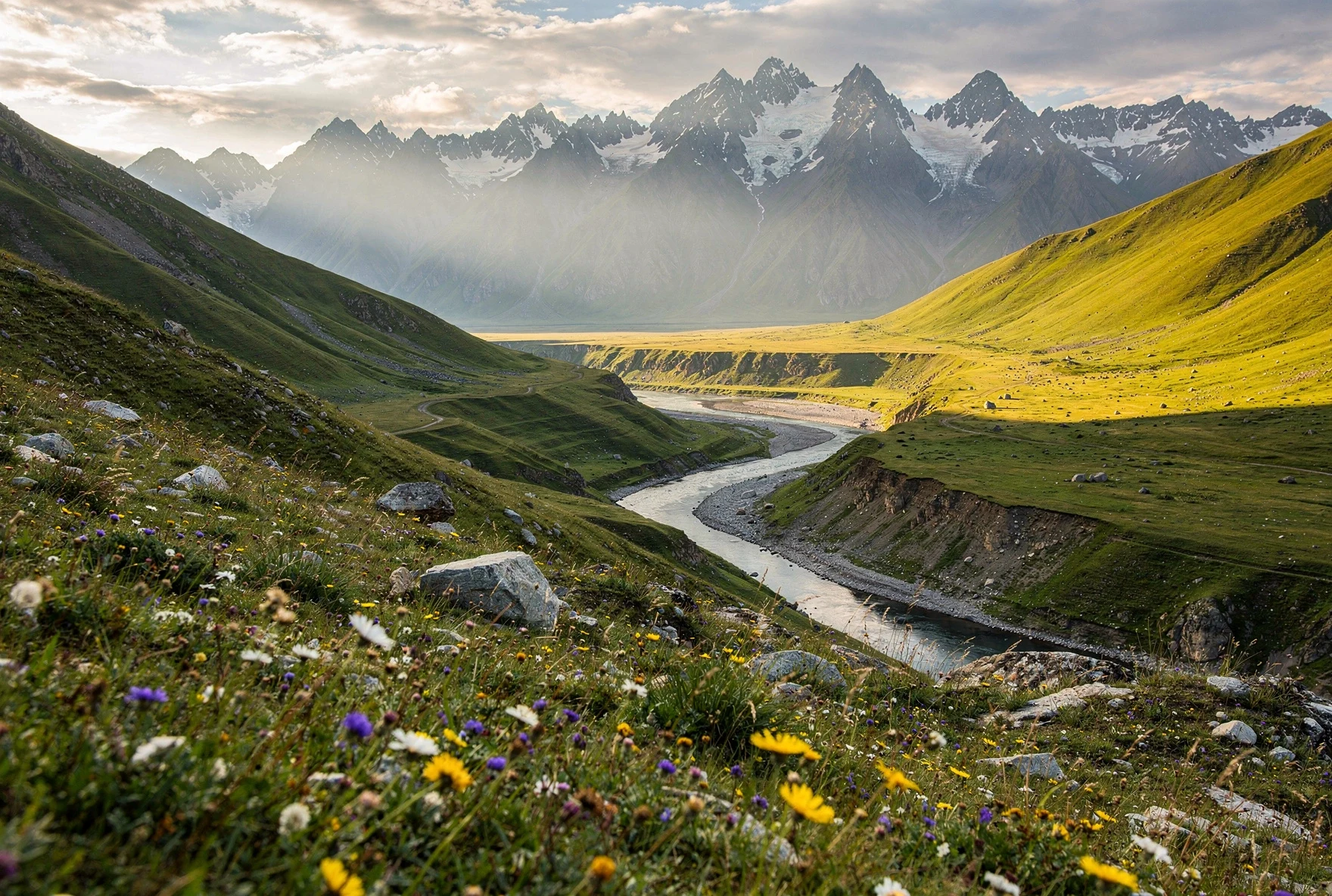
Many visitors spend their entire trip in Tbilisi and think they've seen Georgia. They haven't. Tbilisi is a cosmopolitan, evolving, slightly chaotic capital with craft cocktail bars and electric scooters. The rest of Georgia is ancient churches on clifftops, medieval tower villages, farmers making cheese in backyards, and landscapes so dramatic they look photoshopped.
Budget at least a few days outside the capital. The Kazbegi area (3 hours north), Kakheti wine region (1.5 hours east), and Svaneti (a day's travel west) all deliver experiences Tbilisi simply can't match.
17. Stray Dogs Are Everywhere — And They're Friendly
Georgia has a lot of stray dogs. A lot. You'll see them on sidewalks, in parks, outside restaurants, on mountain trails. Most have ear tags (yellow or green) indicating they've been vaccinated, neutered, and released — Georgia's approach to managing the population.
They're overwhelmingly docile and friendly. Many are essentially community dogs that everyone feeds. You'll see them sleeping in subway stations and casually crossing streets. If you're nervous around dogs, know that they almost never approach aggressively. Give them space and they'll give you space.
18. Religion Is Central to Georgian Identity
Georgia adopted Christianity in 337 AD — one of the first nations to do so. The Georgian Orthodox Church is deeply woven into national identity. You'll see churches and monasteries everywhere, from city centers to impossible mountaintop perches.
When visiting churches: women should cover their heads and shoulders (scarves are usually provided at the entrance). Men should wear long pants. No shorts for anyone. Photography rules vary — look for signs or ask. Services are beautiful and worth attending even if you're not religious, but stand quietly and don't wander around during active worship.
19. Don't Let Protest Headlines Scare You
Georgia has an active protest culture, especially in Tbilisi. Demonstrations along Rustaveli Avenue make international news periodically. Without getting into the politics: protests are organized, peaceful, contained to specific areas and times, and easy to avoid.
Daily life continues normally a few blocks away. The biggest impact is temporary road closures and traffic disruptions, usually announced in advance. Keep an eye on local news and avoid large gatherings, as you would anywhere.
20. Best Time to Visit: May-June or September-October
These shoulder months give you the best of everything: warm weather, fewer tourists, reasonable prices, and green landscapes. July-August is hot in Tbilisi (35-40°C) and peak season everywhere. Winter (December-February) is cold but magical if you're into skiing at Gudauri or the atmospheric Tbilisi café scene.
🌸 Spring (Apr–May)
Green landscapes, wildflowers, mild temps. Some mountain roads still closed. Fewer crowds. Ideal for Tbilisi, Kakheti, and lower-altitude destinations.
☀️ Summer (Jun–Aug)
Hot in cities, perfect in mountains. Peak season — book ahead. All mountain roads open. Best for Svaneti, Tusheti, Kazbegi hiking.
🍂 Autumn (Sep–Oct)
Wine harvest season — Kakheti is magical. Warm days, cool nights. Fewer tourists. Rtveli (grape harvest) festivals. Arguably the best time overall.
❄️ Winter (Nov–Mar)
Skiing at Gudauri and Bakuriani. Atmospheric Tbilisi. Mountain areas inaccessible. Cold but manageable. Cheapest time to visit.
21. Cultural Quirks That Will Catch You Off Guard
A few things nobody warns you about:
Georgians say "no" by shaking their head the way you say "yes." Or rather, the Georgian head-nod-back can look like a nod to Western eyes. Watch for it — it causes real confusion.
Shoes off at the door. Always remove shoes when entering a Georgian home. This is non-negotiable. Slippers will be provided.
Toasting culture is elaborate. At any dinner, expect a tamada to lead structured toasts. You can't just clink glasses randomly — toasts follow a specific order (to God, country, family, the departed, etc.). Wait for the tamada.
Time is flexible. "Georgian time" is a real concept. Meetings start late. Buses leave late. Dinner at 8 means sitting down at 9. Adapt or suffer.
Hospitality is aggressive. A Georgian host will feed you until you physically cannot eat more, then bring out another course. Refusing food can be slightly offensive. Pace yourself from the start — the meal is always longer than you think.
Public displays of affection are fine... between men. Georgian men hold hands, link arms, and kiss cheeks as standard greetings. It's cultural, not romantic. Meanwhile, the country remains quite conservative about LGBTQ+ visibility.
Everyone wants to feed you. Your taxi driver might offer you fruit. Your guesthouse host will insist on extra helpings. Strangers at a supra will pile food on your plate. This is Georgia's love language.
Quick Practical Tips
Download offline Google Maps for the regions you'll visit. Carry a power adapter (Type C, European standard). Download Bolt for taxis. Get travel insurance before you fly. Learn 5 Georgian words. Pack layers. And bring antacids — you'll eat more than you plan to.
The Bottom Line
Georgia is one of those rare places that consistently exceeds expectations. The food is better than you've heard. The landscapes are more dramatic than the photos. The people are warmer than you'd believe. And the wine... well, 8,000 years of practice shows.
It's not perfect. Infrastructure can be rough. Bureaucracy is Kafkaesque. The driving will take years off your life. But it's real — not packaged, not sanitized, not trying to be something it isn't. That authenticity is increasingly rare in travel, and it's what keeps people coming back.
Come with an open mind, a flexible schedule, and an empty stomach. Georgia will take care of the rest.
Written by The Georgian Guide Team
Based in Tbilisi for over five years, we've navigated every marshrutka meltdown, survived countless supras, and learned to love the beautiful chaos of daily life in Georgia. This guide reflects what we wish we'd known before our first visit.
Last updated: March 2026.
Related Articles
First Time in Tbilisi
Everything you need for your first visit to Georgia's capital.
Georgia Travel Budget Guide
Realistic costs and budgets for every travel style.
Georgia Itinerary: 1-3 Weeks
Day-by-day itineraries for every trip length.
Is Georgia Safe?
An honest look at safety for tourists in Georgia.