Train travel in Georgia is better than many first-time visitors expect, but worse than the internet sometimes pretends. It is not Japan. It is not Italy. You are not gliding between every cute town on an hourly schedule. What you do get is a cheap, comfortable, low-stress way to cover a few major routes — especially Tbilisi to Batumi, Zugdidi, Poti, Ozurgeti, and Borjomi.
If you understand what Georgian trains are good at, they are excellent. If you expect the railway network to solve every trip in the country, you are going to end up back at Didube wondering why your “easy train to Kazbegi” does not exist.
Is train travel in Georgia actually worth it?
Yes — on the right routes. Georgian trains make the most sense when you want to avoid highway fatigue, skip the marshrutka circus, and arrive in a city without feeling like you have been folded into a plastic seat for five hours. They are particularly strong for the Black Sea coast and western Georgia. They are weak for mountains, wine-country wandering, and anywhere transport depends on flexibility.
The classic example is Tbilisi to Batumi. By train, this is a genuinely civilized journey: reserved seating, air-conditioning, room for your bag, no mid-route haggling, and no driver treating every overtake like a moral duty. By marshrutka, it is cheaper only in theory and worse in every human way.
The short version
Use trains for Batumi, Zugdidi, Poti, Ozurgeti, and Borjomi. Use marshrutkas, hired drivers, or rental cars for Kazbegi, Kakheti, Tusheti, Svaneti mountain access, and most rural detours.
The main train routes travelers actually use
According to the current Georgian Railway schedule, the useful passenger routes for travelers are straightforward. There are two daily fast trains between Tbilisi and Batumi, a daily train to Zugdidi, a daily train to Poti, an every-second-day service to Ozurgeti, and two daily services to Borjomi. There are also local and commuter services, but unless you are doing niche rail tourism or staying somewhere very specific, those are not what most visitors need.
| Route | Typical Duration | Why it matters |
|---|---|---|
| Tbilisi → Batumi | About 5.5 hours | Best long-distance rail trip in Georgia. Easy, comfortable, and usually the smartest coast transfer. |
| Tbilisi → Zugdidi | About 6 hours 45 minutes | Useful if you are heading toward Samegrelo or continuing to Mestia by road. |
| Tbilisi → Poti | About 6 hours | Niche route, but useful if your plans involve the western coast rather than Batumi. |
| Tbilisi → Ozurgeti | About 7 hours 15 minutes | A slower Guria option that works if your final goal is Ureki, Shekvetili, or western villages. |
| Tbilisi → Borjomi | About 4 hours 10 minutes | More scenic than fast. Good if you enjoy the ride and are not in a hurry. |
| Kutaisi → Batumi | About 4.5 hours | Exists, but not especially efficient. Fine if it fits your timing, not worth planning your life around. |
The official schedule changes occasionally, so always confirm close to travel day. But the broader pattern is stable: the network is thin, and the useful spine runs east-west across the country rather than up into the headline mountain destinations.
Which routes are genuinely good for tourists?
Excellent choice
Tbilisi–Batumi is the clear winner. Tbilisi–Zugdidi is also smart if you are breaking west before heading to Svaneti by minibus or driver.
Good if you like slow travel
Tbilisi–Borjomi is scenic and relaxed, but not fast. Good for travelers who value comfort over shaving off an hour.
Fine, but not magic
Kutaisi–Batumi works, though road transport can be quicker or more flexible depending on the day.
Do not plan around rail
Kazbegi, Kakheti, Tusheti, Vardzia, Sighnaghi, and most hiking gateways. The train is not your tool there.
This is the part many generic blog posts miss. Georgia is a road-trip country first and a train country second. The railway is useful, but selective. If your itinerary is Tbilisi, Batumi, Kutaisi, Borjomi, and maybe western Georgia, rail fits nicely. If your dream trip is all mountain passes, wineries, fortress villages, and village detours, the train network is mostly background noise.
How to book train tickets in Georgia
The simplest move is to book online in advance. Most travelers use tkt.ge for Georgian Railway ticket sales, and you can also verify routes and times through the official Georgian Railway website. For popular departures — especially summer Fridays, Sundays, holidays, and anything involving Batumi — booking a few days early is smart. If you leave it too late, the train may be full and you will be back in marshrutka-land whether you like it or not.
Booking rule that saves hassle
If the route matters to your itinerary, book it as soon as your travel dates are fixed. Georgia is casual about many things. Reserved long-distance train seats are not one of them.
You can also buy tickets at stations, and for quieter routes that is often perfectly fine. But station buying is better treated as a backup, not a strategy. The whole point of train travel is reducing friction. Queueing at Tbilisi Central and discovering the train is sold out is friction with extra disappointment.
What information you usually need
- Your route and date
- Your preferred departure time
- Your passport details or passenger details as requested
- A bank card that plays nicely with local payment systems
If the booking platform is being temperamental — which happens — try again from desktop rather than phone. Georgian travel tech occasionally behaves like it resents being asked to work after midnight.
Classes, comfort, and what the ride is actually like
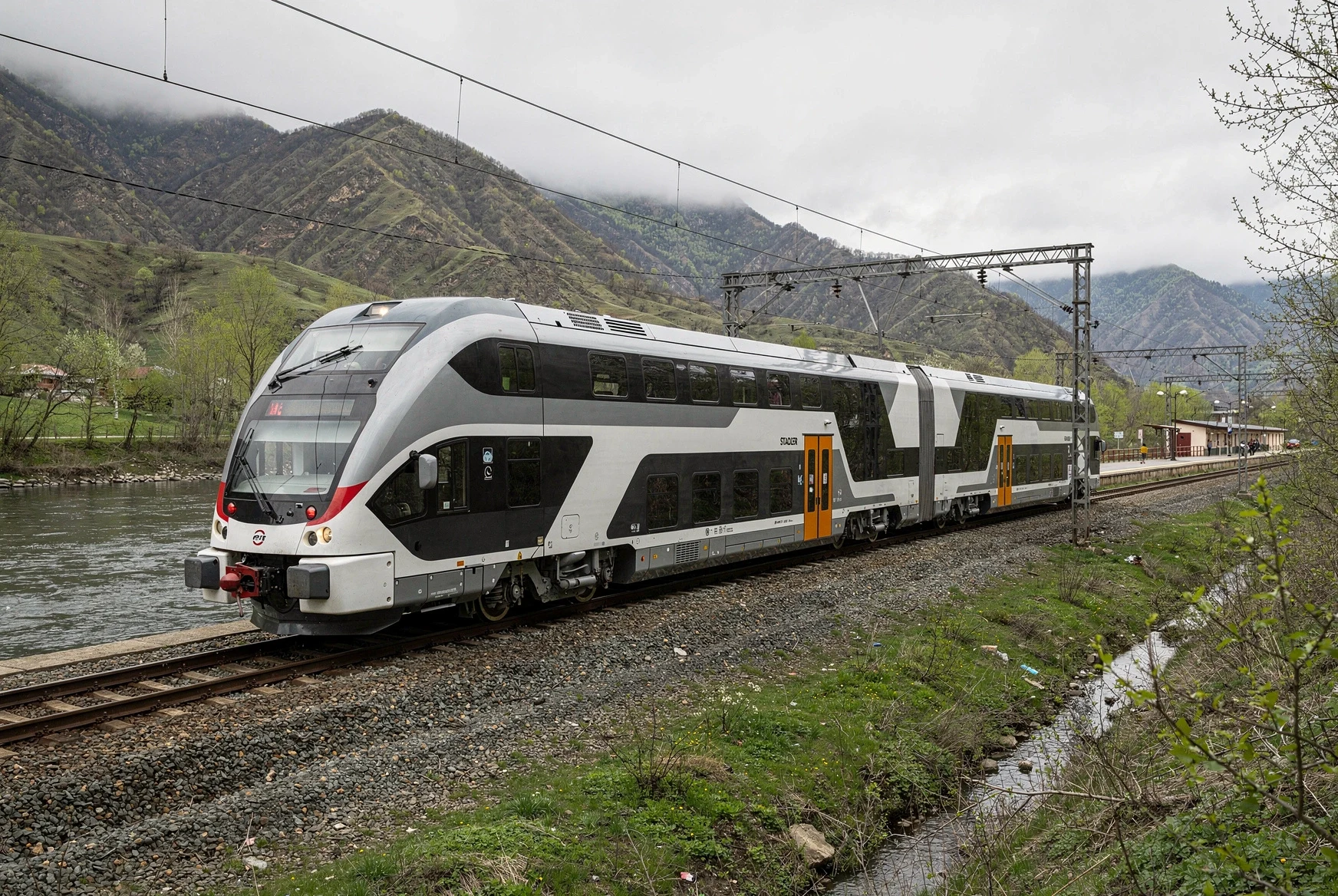
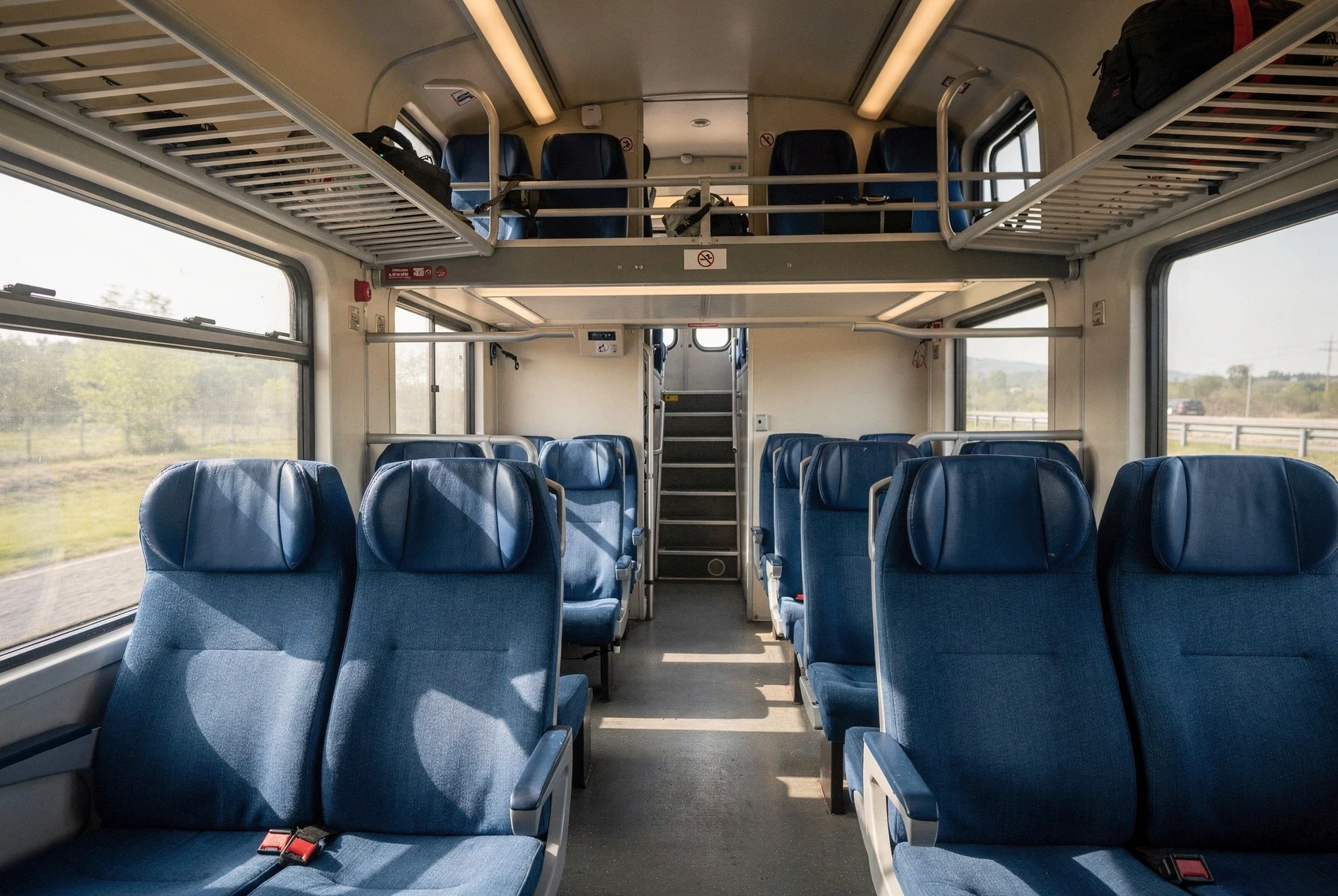
On the flagship routes, especially Tbilisi–Batumi, the modern double-decker Stadler trains are the ones you want. They are clean, air-conditioned, reserved-seat trains with a straightforward cabin layout. First class is better, second class is usually perfectly fine, and neither should be compared to Western Europe’s premium rail mythology. This is practical comfort, not luxury theatre.
| Class | What to expect | Who should choose it |
|---|---|---|
| Second class | Comfortable assigned seats, air-conditioning, decent legroom, standard cabin atmosphere. | Almost everyone. Best value by far. |
| First class | More space, calmer carriage, slightly less cattle-travel energy. | Worth it if prices are close or you want a smoother long ride. |
| Older regional stock | Less polished, slower, more functional than charming. | Fine for Borjomi or regional hops if schedule suits you. |
Food service is not something I would build a romantic narrative around. Bring water, a snack, and whatever makes you less annoying to yourself after three hours. Stations and nearby kiosks solve this easily.
Luggage, stations, and boarding reality
Georgia is refreshingly simple on luggage compared with budget airlines pretending your backpack is a geopolitical problem. On trains, you bring your bag, find your seat, and stow it in the available luggage space. Still, pack like a sane person. A giant hard-shell suitcase plus three shopping bags is annoying everywhere, including here.
Tbilisi Central is the main railway hub and it is more functional than beautiful. It is attached to the Station Square complex, which means your pre-departure atmosphere can range from totally manageable to “why does every corridor smell like ten different snacks and old retail carpets?” Give yourself enough time, especially if it is your first visit.
Arrival timing
Arrive 25–30 minutes early for major departures unless you already know the station well. That gives you enough buffer to find the platform without turning the start of the trip into a sprint.
What boarding usually feels like
- Much calmer than a marshrutka station
- Less intuitive than an airport if you have never used Georgian stations before
- Usually easy once you are on the correct platform
- Better with a screenshot of your ticket rather than faith in mobile signal
Train vs marshrutka vs car: which should you choose?
This depends less on price than on what kind of suffering you are willing to tolerate. Georgian transport is often cheap enough that comfort, predictability, and total journey logic matter more than shaving off a few lari.
| Mode | Best for | Main downside |
|---|---|---|
| Train | Long westbound city-to-city trips, comfort, reserved seating | Limited network and limited daily frequency |
| Marshrutka | Routes trains do not cover, budget travel, regional access | Chaotic stations, cramped ride, questionable comfort |
| Rental car / driver | Flexibility, remote places, wine regions, mountain itineraries | Driving stress, parking, and road quality depending on route |
If you are going from Tbilisi to Batumi, choose the train. If you are going from Tbilisi to Kazbegi, forget the train exists. If you are piecing together a Borjomi stop and have time to spare, the train is pleasant. If your whole trip is based on spontaneity and remote stops, rent a car or hire drivers and move on with your life.
The smartest ways to use trains in a Georgia itinerary
Tbilisi → Batumi city break
One of the cleanest transport decisions in the country. Book the train, take a Bolt to your hotel, and enjoy not having done the highway by van.
Tbilisi → Zugdidi → Mestia
A sensible two-step westbound strategy if you want to reduce road time before heading into Svaneti.
Tbilisi → Borjomi slow-travel plan
Good for travelers who enjoy scenery and do not need maximum speed. Less good if you are trying to cram five places into two days.
West Georgia without driving
Rail to Batumi, Poti, or Zugdidi can remove one of the most tiring road legs from your itinerary.
Common mistakes people make with Georgia train travel
| Mistake | Why it is a problem | Better move |
|---|---|---|
| Assuming every major destination has a train | Much of Georgia's best travel is road-based | Treat rail as selective, not universal |
| Booking Batumi too late in peak season | Seats on good departures can disappear fast | Book when dates are fixed |
| Planning mountain trips around rail | You still need vans, drivers, or transfers | Use the train only to shorten the western leg |
| Showing up at the station at the last second | Station Square is not where you discover inner peace | Arrive 25–30 minutes early |
| Choosing train only because it sounds romantic | Sometimes the road option is simply more logical | Choose the mode that fits the route, not the fantasy |
Frequently asked questions
Are trains in Georgia safe?
Yes. For normal passenger travel they are safe, calm, and much less stressful than intercity road transport for many visitors.
Is the Tbilisi to Batumi train worth it?
Absolutely. It is the strongest rail route in the country and usually the best non-driving option between the capital and the coast.
Can I get to Kazbegi by train?
No. Kazbegi is a road trip or marshrutka route via the Georgian Military Highway.
Do I need to print my ticket?
Usually a phone ticket works, but keeping a screenshot or offline copy is smart in case signal or app behavior goes weird.
Are train tickets expensive in Georgia?
No. Georgian rail is generally affordable by European standards, and even first class is often reasonable on major routes.
Should I choose train or marshrutka?
Choose the train when it exists on your route and timing works. Choose the marshrutka when the rail network simply does not go where you need.
Written by The Georgian Guide Team
We use Georgian trains when they make sense, and we do not pretend they solve every trip. This guide is based on real route planning, station experience, and the transport decisions people actually make on the ground in Georgia.
Last updated: March 2026.
Related Articles
Getting Around Georgia
The bigger transport picture: trains, marshrutkas, Bolt, car rental, and route logic.
Tbilisi Public Transport Guide
How to handle metro, buses, cable cars, and local transport before you even reach the station.
Batumi Guide
If you are taking the country's best train route, odds are Batumi is the reason.
Borjomi Guide
One of the few classic slow-travel Georgian train trips that still feels worth doing.