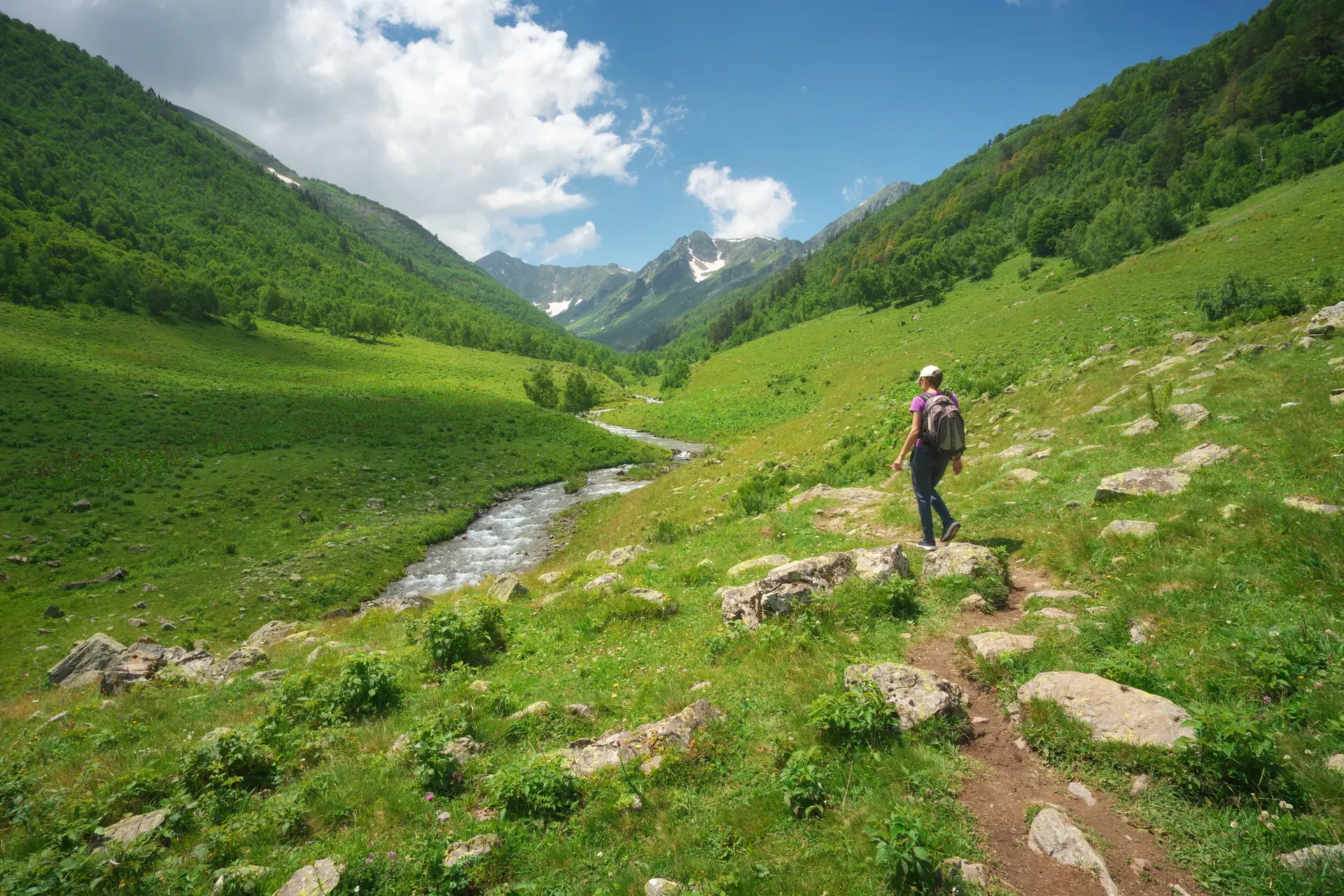
Vardzia is the kind of place that makes you question how it's even real. A cliff face stretching 500 meters along the Mtkvari River, riddled with over 600 caves across 13 levels, carved by hand in the 12th century. It's not a ruin you admire from a distance — you climb into it, walk through tunnels that haven't changed in 800 years, and stand in rooms where monks lived, prayed, and made wine while the Mongol Empire burned everything around them.
Most visitors treat Vardzia as a long day trip from Tbilisi — four and a half hours each way, snap a few photos, drive home exhausted. That's a mistake. The cave city itself takes 2-3 hours to properly explore, and the surrounding Samtskhe-Javakheti region has enough to fill several days: Rabati Fortress in Akhaltsikhe, the medieval Khertvisi Fortress, Tmogvi Castle ruins, and a volcanic landscape that feels nothing like the rest of Georgia.
This guide covers everything you need to plan a proper visit — not just the caves, but the logistics that most guides gloss over.
Quick Facts
Why Vardzia Matters
Georgia has several cave cities — Uplistsikhe near Gori, David Gareja on the Azerbaijani border — but Vardzia is the one that stops you in your tracks. The sheer scale of it, hundreds of openings in a vertical rock face overlooking a river gorge, is unlike anything else in the Caucasus.
But Vardzia isn't just impressive to look at. It represents the peak of medieval Georgia. When Queen Tamar ordered its expansion in the late 12th century, Georgia controlled territory from the Black Sea to the Caspian. Vardzia was both a functioning monastery and a strategic fortress — a place where 50,000 people could shelter during invasion, with its own water supply, wine cellars, and a pharmacy.
The legend of its name captures something about the place. As a child, Tamar supposedly got lost in the caves and called out to her uncle: "აქ ვარ, ძია!" — "I am here, uncle!" Var dzia became Vardzia. Whether or not it's true, it tells you something about the labyrinthine scale of the complex even in its early years.
🏛️ At Its Peak
Over 6,000 rooms on 19 levels — sleeping quarters for 200 monks, 25 wine cellars, chapels, a pharmacy, bakeries, and a nunnery on the upper level.
💥 The 1283 Earthquake
A massive earthquake sheared away half the cliff face, exposing the caves' inner workings to the outside. What you see today is the skeleton of something far larger.
🔥 Ottoman Destruction
After the earthquake, Ottoman invasions burned the caves and their manuscripts. Shepherds used the ruins for shelter, blackening the walls with campfires.
⛪ Still Active
Monks returned in 1988. A handful still live here today. Vardzia is both a UNESCO-nominated monument and a working Orthodox monastery.
What to See Inside the Caves
Exploring Vardzia takes 2-3 hours if you're thorough. The site has a marked trail that leads you through the main sections, but there are side passages and upper levels that reward curiosity. Wear proper shoes — the paths are uneven stone, and some tunnels are narrow and low-ceilinged.
The Bell Tower and Entrance
You enter through a stone archway near the base of the cliff. The bell tower, one of the few free-standing structures, marks the beginning of the trail. From here, you start climbing through increasingly narrow passages carved directly into the rock. The scale becomes apparent immediately — these aren't shallow caves, they're deep, multi-room complexes with connecting tunnels.
The Church of the Dormition
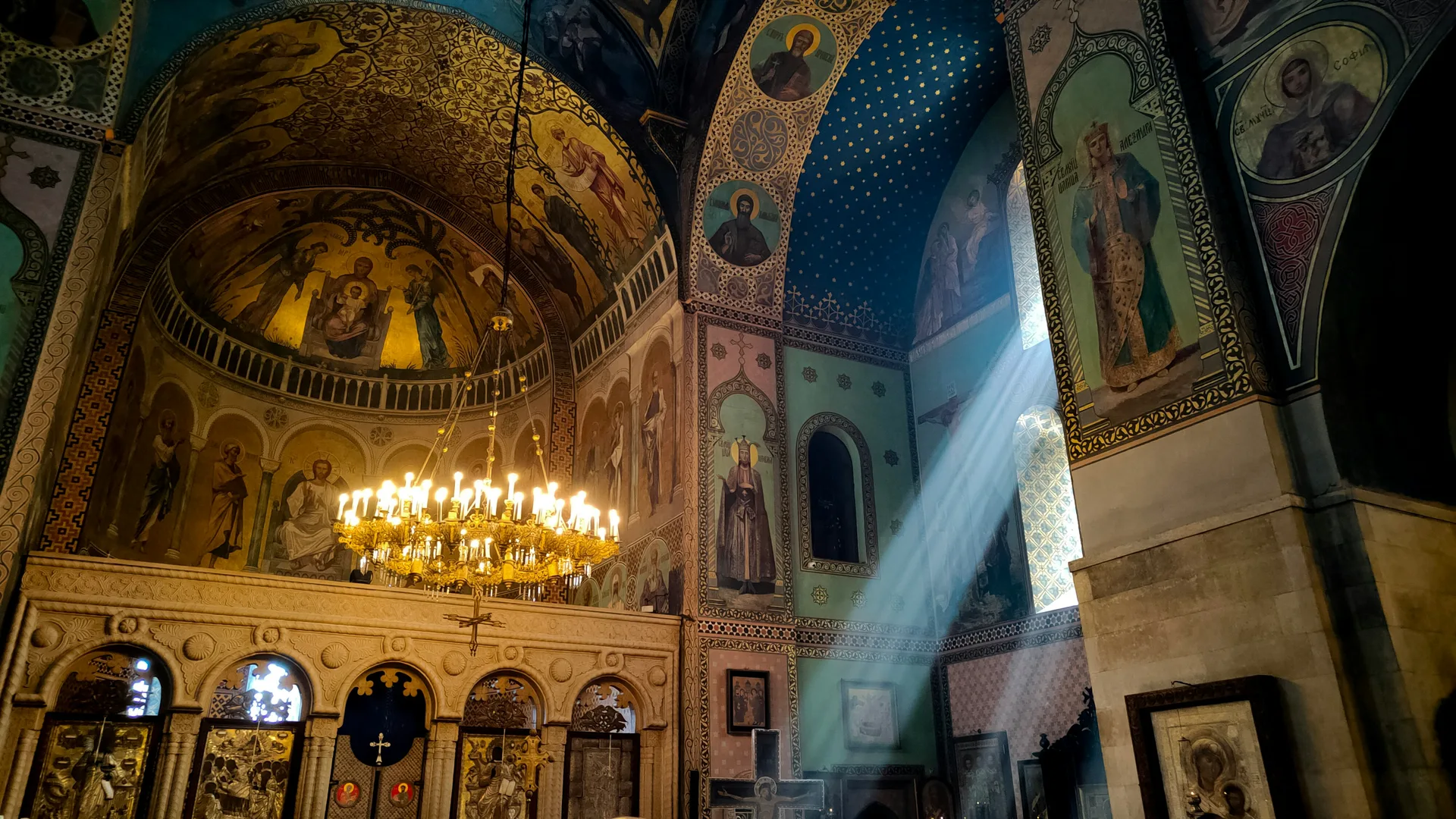
The crown jewel of Vardzia. This cave church, carved entirely from rock, contains frescoes dating to the 1180s — including the only known contemporary portrait of Queen Tamar. She's depicted alongside her father, King Giorgi III, in a fresco above the apse. The colors have faded but the composition is still striking. The church also has an iconostasis and functional altar — services are still held here.
Dress Code
Vardzia is an active monastery. Women should cover shoulders and knees — headscarves are appreciated but not always enforced at the church. Men should wear long trousers. Wraps are sometimes available at the entrance, but don't count on it.
The Holy Spring (Tears of Tamar)
Deep inside the caves, you'll find a natural spring that's been flowing since before the monastery was built. Known as the "Tears of King Tamar," the water seeps through the rock and is collected in a small basin. Locals consider it holy. Whether or not you believe that, it's remarkable that this spring provided freshwater to an entire cave city for centuries — one of the engineering feats that made Vardzia self-sufficient during sieges.
Wine Cellars
Georgia invented wine 8,000 years ago, and the monks at Vardzia were serious about continuing the tradition. The complex had at least 25 wine cellars with qvevri (clay vessels) buried in the cave floors. On recent excavations, archaeologists uncovered previously buried qvevri that had been hidden under sand for centuries. Some of the cellar rooms still have visible qvevri pits in the floor.
Tamar's Room and the Upper Levels
Queen Tamar had her own chamber at Vardzia, though as a woman she wouldn't have been permitted to live in the monastery full-time. She sheltered here once during a particularly dangerous invasion, along with other women and children. The upper levels — which required ladders in the original design — contained the nunnery and additional residential cells. Some of these are accessible, though sections remain under excavation.
The Defense Gate and Tunnels
Vardzia wasn't just a monastery — it was a fortress. The defense gate controlled access to the complex, and the tunnel system was designed so that invaders who breached the entrance would find themselves in a disorienting maze. Some tunnels stretch over 150 meters. The original entrance was concealed entirely — the only way in was through a hidden passage, making the complex virtually invisible from the outside before the earthquake exposed it.
Get the Audio Guide
The 15 GEL audioguide is worth it. Without context, Vardzia is just impressive caves. With it, you understand the irrigation system, the defensive logic, and the daily life of the monks. A human guide (45 GEL/hour) is even better if you're in a group.
Practical Information
| Detail | Information |
|---|---|
| Entrance Fee | 15 GEL (~$5.50 USD). Under 6 free. |
| Car Shuttle | 2 GEL/person to the cave entrance (saves a 15-min uphill walk) |
| Audio Guide | 15 GEL (English, Georgian, Russian available) |
| Human Guide | 45 GEL/hour. Worth it for groups. |
| Payment | Cash (GEL) and credit/debit cards accepted |
| Visit Duration | 2–3 hours for the caves. Half a day with the drive from Akhaltsikhe. |
| Difficulty | Moderate. Uneven paths, steep stairs, low tunnels. Not wheelchair accessible. |
Opening Hours
| Season | Hours |
|---|---|
| May 1 – October 1 | 10:00 AM – 7:00 PM |
| March 1 – May 1 | 10:00 AM – 6:00 PM |
| October 1 – November 15 | 10:00 AM – 6:00 PM |
| November 15 – March 1 | 10:00 AM – 5:00 PM |
Arrive Early
Tour buses from Tbilisi typically arrive between 12:00–2:00 PM. If you're staying in Akhaltsikhe, get to Vardzia by 10:00 AM and you'll have the caves nearly to yourself for the first hour or two. The experience is dramatically different without crowds.
How to Get to Vardzia
Vardzia is in Georgia's deep south, in the Samtskhe-Javakheti region. The nearest town with services is Akhaltsikhe (60 km, about 1.5 hours by road). From Tbilisi, you're looking at 270 km and 4.5–5 hours of driving through Borjomi.
| Option | Details | Cost |
|---|---|---|
| Hire a driver (Tbilisi) | Full-day trip, usually includes Borjomi + Rabati. 10–12 hours. | 200–250 GEL |
| Organized tour | Group or private. Includes Borjomi, Rabati, Vardzia. English guide. | 120–200 GEL/person |
| Marshrutka (Tbilisi → Akhaltsikhe) | From Didube station. 4–5 hours, several per day. | 20 GEL |
| Taxi (Akhaltsikhe → Vardzia) | Find drivers at bus station. 1.5 hours each way. | 50–70 GEL round trip |
| Marshrutka (Akhaltsikhe → Vardzia) | One daily departure ~10:30 AM, returns ~3:00 PM. Check locally. | 7 GEL |
| Rental car | Best option for flexibility. Road is paved and in good condition. | From 80 GEL/day |
The Smart Way to Do It
Don't try to do Vardzia as a day trip from Tbilisi — it's 9+ hours of driving for 2-3 hours at the site. Instead, stay a night in Akhaltsikhe (or a guesthouse near Vardzia). You can stop at Borjomi on the way down, visit Rabati Fortress in the evening, then hit Vardzia fresh in the morning. You'll see more and enjoy it infinitely more.
Nearby Sites Worth Visiting
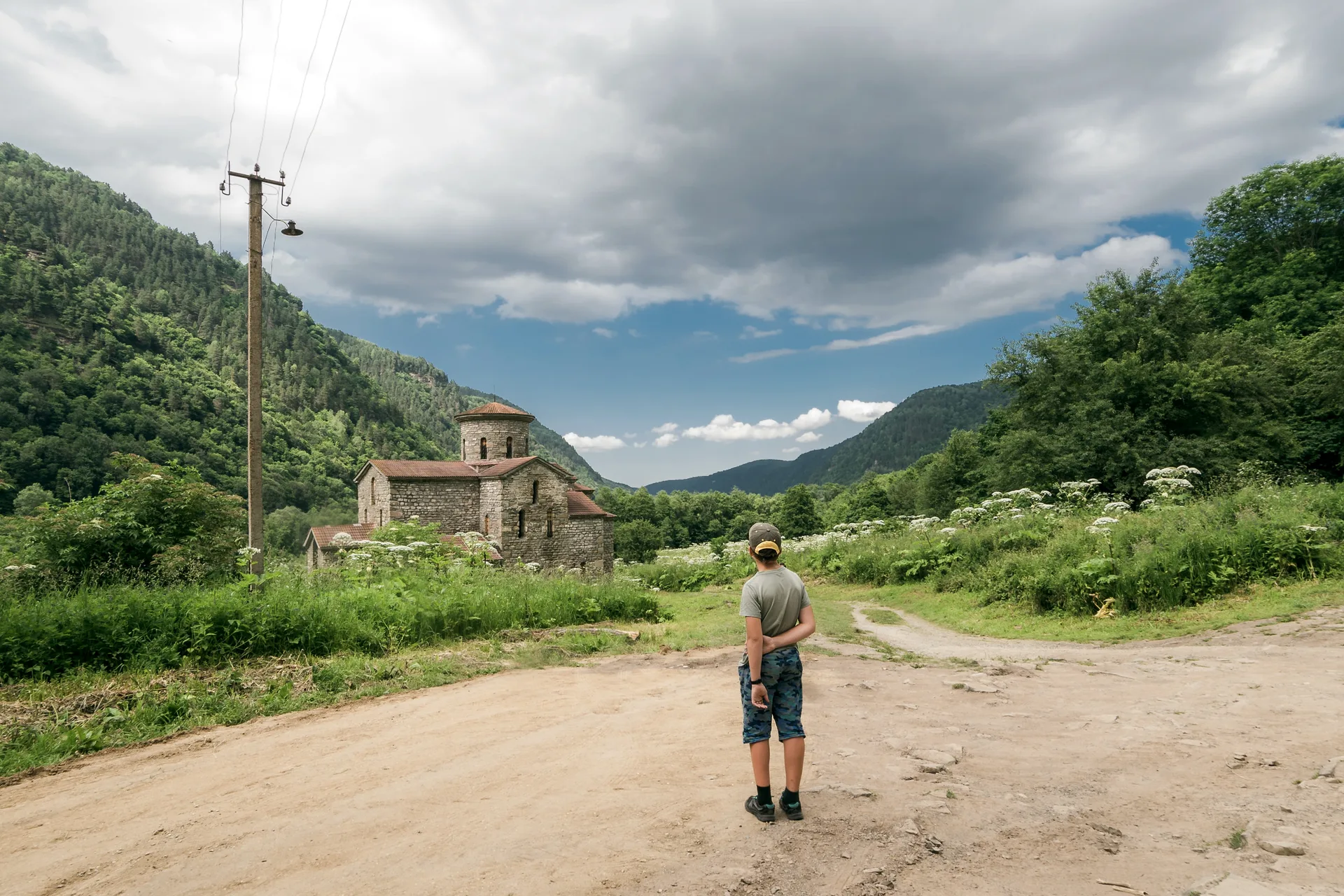
The Samtskhe-Javakheti region is packed with historical sites that most tourists skip because they're fixated on Vardzia alone. If you're spending a night in the area, any of these are worth adding to your itinerary.
| Site | Distance from Vardzia | Why Visit |
|---|---|---|
| Khertvisi Fortress | 15 km (20 min) | One of the oldest fortresses in Georgia. Perched above the confluence of two rivers. Free entry, usually empty. |
| Tmogvi Castle | 10 km (15 min + hike) | Dramatic ruined fortress on a cliff. Requires a short uphill hike. Rarely visited — you'll likely have it to yourself. |
| Rabati Fortress (Akhaltsikhe) | 60 km (1.5 hrs) | Impressively restored fortress complex with mosque, church, museum, and café. Controversial restoration but undeniably photogenic. |
| Vani Caves (Vanis Kvabebi) | 3 km (5 min) | Another cave monastery visible from Vardzia across the gorge. Smaller but less crowded. Worth the short detour. |
| Upper Vardzia Nunnery | 1 km (15 min hike) | Above the main complex. Active nunnery with a small church. Peaceful atmosphere and a different perspective of the gorge. |
| Borjomi | 120 km (2.5 hrs) | Famous spa town. Great stop on the way to/from Tbilisi. Try the mineral water, walk the park, ride the cable car. |
When to Visit
| Season | Weather | Verdict |
|---|---|---|
| Spring (April–May) | 15–22°C. Green valley, wildflowers, occasional rain. | ⭐ Best. Mild, beautiful, fewer tourists. |
| Summer (June–Aug) | 25–35°C. Hot, dry. Caves stay cool inside. | Good. Peak tourists. Caves are a welcome escape from heat. |
| Autumn (Sep–Oct) | 12–22°C. Golden light, harvest season. | ⭐ Excellent. Warm enough, gorgeous colors, thin crowds. |
| Winter (Nov–Mar) | -5–8°C. Cold, possible snow. Short hours. | Atmospheric but harsh. Bring layers. Few visitors. |
Where to Stay
You have two main options: Akhaltsikhe (the regional capital, 60 km from Vardzia) or a guesthouse in the villages near Vardzia itself. Each has trade-offs.
| Location | Pros | Cons | Price Range |
|---|---|---|---|
| Akhaltsikhe | Restaurants, ATMs, Rabati Fortress. More hotel options. | 90 min from Vardzia. Town itself is not exciting. | 40–120 GEL/night |
| Near Vardzia (guesthouses) | Walk to caves. Local hospitality. Quiet, authentic. | Limited options. No restaurants. Book ahead. | 30–80 GEL/night |
| Borjomi | Nice town, many hotels. Good stop on the route. | 2.5 hours from Vardzia. Better as a stopover, not a base. | 50–200 GEL/night |
The Guesthouse Experience
Staying near Vardzia means staying in a family guesthouse — typically a room in someone's home with homemade dinner and breakfast included. The food alone is worth it. Don't expect hotel amenities, but do expect genuine warmth and some of the best home cooking in Georgia. Book through Booking.com or ask at the Akhaltsikhe Tourist Information Office.
Budget Breakdown
2-Day Trip from Tbilisi (Per Person, Budget)
What to Bring
👟 Proper Shoes
The caves have uneven stone floors, steep staircases, and narrow tunnels. Sandals and flip-flops are asking for a twisted ankle.
🧥 A Layer
Inside the caves it's significantly cooler than outside, even in summer. A light jacket or hoodie prevents the chill from cutting your visit short.
💧 Water + Snacks
There's a small café near the parking lot, but nothing inside the caves. Bring at least a liter of water. The climb can be strenuous in heat.
🔦 Phone Flashlight
Some tunnel sections are pitch dark. Your phone light is fine, but having it ready saves fumbling in narrow passages.
Common Mistakes
Day-Tripping from Tbilisi
9+ hours of driving for 2-3 hours at the site. You arrive tired, rush through, and drive back exhausted. Stay overnight instead.
Skipping the Audio Guide
Without context, Vardzia is "cool caves." With context, it's one of the most impressive medieval engineering projects in the world. Spend the 15 GEL.
Only Visiting Vardzia
Khertvisi Fortress is 15 minutes away, Vani Caves are across the gorge, and Tmogvi Castle is barely visited. The area has enough for 2-3 days.
Arriving with Tour Buses
Tour groups from Tbilisi hit Vardzia between noon and 2 PM. The tunnels that feel magical at 10 AM feel claustrophobic with 50 other people.
No Cash
The ticket booth takes cards, but guesthouses, taxis, and village shops near Vardzia often don't. Get cash in Akhaltsikhe before heading south.
Wrong Vardzia on Google Maps
There are two places called Vardzia in Georgia. Make sure you're navigating to the cave monastery near Aspindza, not the village in a different region.
Suggested 2-Day Itinerary
Day 1: Tbilisi → Vardzia Area
Leave Tbilisi early. Stop in Borjomi for mineral water and a walk in the park (1.5 hrs). Continue to Akhaltsikhe, explore Rabati Fortress (1 hr). Drive to your guesthouse near Vardzia. Homemade dinner, early bed.
Day 2: Vardzia → Tbilisi
Arrive at Vardzia by 10 AM opening. Explore caves for 2-3 hours. Stop at Khertvisi Fortress (30 min) on the way back. Optional: Vani Caves or Tmogvi Castle. Return to Tbilisi via Borjomi, arriving by early evening.
3-Day Extension
If you have a third day, spend it exploring the Javakheti plateau — an Armenian-influenced highland region with volcanic lakes, ancient churches, and a completely different landscape. Paravani Lake and Poka Monastery are both worthwhile, and you'll barely see another tourist.
The Honest Assessment
Vardzia is genuinely one of the most impressive historical sites in the Caucasus, and that's not hyperbole. The combination of scale, setting, and age is hard to match anywhere in Europe.
That said, manage your expectations on a few things:
- It's remote. The drive from Tbilisi is long and not particularly scenic until you reach the Borjomi gorge. If you only have 3-4 days in Georgia, Vardzia competes with Kazbegi and Svaneti for your limited time.
- The caves are mostly empty chambers. Unlike, say, Cappadocia's cave hotels, there's no furniture or reconstruction. You're looking at carved rock rooms and imagining what was there. The audioguide helps enormously with this.
- Photography is tricky. The caves face south, so midday light is harsh on the cliff face. Interior shots need a good phone camera — no tripods allowed in most sections.
- The surrounding region is quiet. There's no nightlife, limited restaurant options, and the villages are very small. This is a feature if you want peace, a bug if you want convenience.
If you're the kind of traveler who gets excited about walking through 800-year-old tunnels, standing where Tamar stood, and seeing a fresco that was painted before the Magna Carta was signed — Vardzia is unmissable. If you need Instagram-ready scenery with minimal effort, Kazbegi is an easier win.
Frequently Asked Questions
Is Vardzia worth the long drive from Tbilisi?
Yes, but don't do it as a day trip. The 9+ hours of round-trip driving makes for an exhausting day. Stay overnight in Akhaltsikhe or near Vardzia instead. With a stop in Borjomi and Rabati Fortress, the journey itself becomes part of the trip.
How long do you need at Vardzia?
Plan 2-3 hours to properly explore the caves, including audioguide stops. Add 30 minutes for the walk up and back. If you also visit nearby Vani Caves and Khertvisi Fortress, budget half a day for the area.
Can you visit Vardzia without a car?
Possible but tricky. One daily marshrutka from Akhaltsikhe (~10:30 AM, returns ~3 PM, 7 GEL), but it's unreliable. A taxi from Akhaltsikhe is 50-70 GEL round trip with more flexibility. Organized tours from Tbilisi are easiest.
Is Vardzia suitable for children?
Older children love it — it's a giant cave playground. Under 6 is free. However, steep drops, low ceilings, and dark passages mean very young children need constant supervision. No stroller access.
What's the difference between Vardzia and Uplistsikhe?
Both are cave cities, but different experiences. Uplistsikhe (near Gori, 1.5 hrs from Tbilisi) is older, smaller, and an outdoor hillside site. Vardzia is a vertical cliff-face complex with deep tunnels. Uplistsikhe is easier to visit; Vardzia is more impressive.
Written by The Georgian Guide Team
Based in Tbilisi with years of exploring Georgia's southern regions. We've visited Vardzia across different seasons and can confirm: it's worth the drive, just not as a day trip.
Last updated: February 2026.
Related Articles
Mtskheta: Georgia's Ancient Capital
UNESCO World Heritage site, 30 minutes from Tbilisi. The country's spiritual heart.
Kutaisi: Georgia's Most Underrated City
Gelati Monastery, the Green Bazaar, and Imereti wine — without the tourist crowds.
Kazbegi: Georgia's Iconic Mountain Town
Gergeti Trinity Church, epic hikes, and the Greater Caucasus — all 3 hours from Tbilisi.
Day Trips from Tbilisi
The best excursions from the capital, from easy half-days to ambitious overnighters.