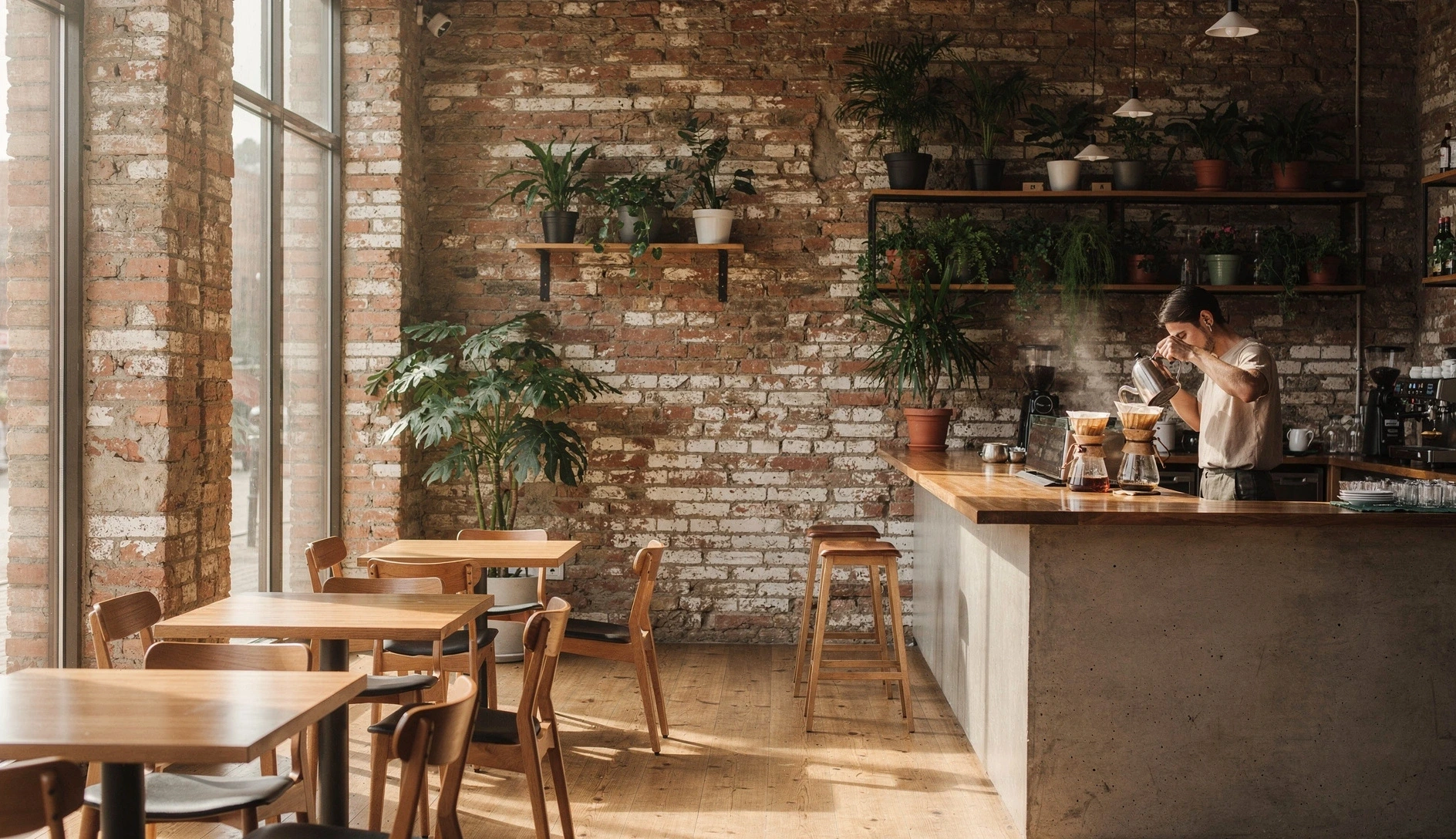
Ten years ago, ordering "coffee" in Tbilisi meant one thing: a teaspoon of Nescafé dissolved in hot water, served in a glass cup with three sugars. Maybe, if you were lucky, you'd find a spot doing Turkish-style coffee in a small copper cezve. Specialty coffee? Pour-overs? Latte art? Those existed in Tbilisi roughly as much as Georgian wine existed in Portland — which is to say, barely.
Then something shifted. Around 2018-2019, a small wave of Georgian entrepreneurs who'd spent time in Berlin, Melbourne, and Kyiv started coming home. They brought espresso machines, roasting equipment, and the radical idea that coffee in Tbilisi could be more than caffeine-flavored hot water. By 2022, the trickle became a flood. And now, in 2026, Tbilisi has a specialty coffee scene that genuinely rivals cities five times its size.
This guide isn't a ranked list of every café with an Instagram account. It's a neighborhood-by-neighborhood look at where to find the best coffee in Tbilisi, organized by what you actually need: quick espresso on the go, a spot to park your laptop for four hours, or somewhere to linger over a flat white while watching the city wake up from one of those famous wooden balconies.
How Tbilisi Became a Coffee City
Georgia's relationship with coffee is newer than you'd think. This is a tea-drinking country at heart — the subtropical Black Sea coast grows tea commercially, and every grandmother has a samovar. Coffee was what you drank at work from a jar of instant, or occasionally as a thick, sweet Turkish brew at a café.
The transformation started with a handful of pioneers. Coffee LAB opened in Saburtalo and started roasting beans in-house — a genuine novelty in 2016 Tbilisi. Shavi Coffee Roasters followed, bringing a Brooklyn-loft aesthetic and a no-nonsense approach to extraction. Then came the influx: OKRO, Tsvari, Vardo, Erti Kava, and dozens more, each trying to carve out a niche in a market that barely existed five years earlier.
What makes Tbilisi's coffee scene interesting isn't just the quality — it's the speed. The city essentially compressed a decade of coffee culture evolution into three or four years. One month you're watching a café install Tbilisi's first Modbar system; the next, there are five shops doing competition-grade pour-overs within walking distance of each other.
The digital nomad boom helped, obviously. When thousands of remote workers showed up between 2020-2023 (many from Russia, others from everywhere else), they brought expectations for real coffee and the spending power to support it. But credit the locals — Georgians have never been the type to do anything halfheartedly, and they've attacked coffee culture with the same enthusiasm they bring to toasting at a supra.
Vera: The Coffee Capital
If Tbilisi has a single neighborhood that defines its coffee scene, it's Vera. This quiet, tree-lined district between Rustaveli Avenue and Vake Park has become ground zero for specialty coffee. You can walk five minutes in any direction and hit at least three excellent roasters.
The star is Coffee LAB's Paliashvili Street branch — cozy booth seating, efficient service, and a pastry case that's genuinely dangerous. Their beans supply half the city's cafés, which tells you something about consistency. A cappuccino runs 9 GEL, and the honey cheesecake is worth whatever they're charging.
OKRO Coffee Roastery on Nikoladze Street is the moodier option — graffiti art meets Caucasian carpets in a space that feels more Berlin than Tbilisi. They roast on-site (Guatemalan, Colombian, Ethiopian origins), and their flourless chocolate cake paired with a long black is one of the best simple pleasures in the city. Expect to pay around 10 GEL for a cappuccino.
Shavi Coffee Roasters has its original Vera branch on Zandukeli Street — bright, airy, Brooklyn-loft style. They've expanded to three locations now, but the Vera original retains the most character. One caveat: no laptops after 11 AM. They want you to actually drink your coffee and talk to people. Imagine.
Vera Coffee Walk
Start at Coffee LAB on Paliashvili, walk down to OKRO on Nikoladze, then finish at Shavi on Zandukeli. The whole route takes 15 minutes on foot, and you'll have sampled three of Tbilisi's best roasters. Do this before noon for the best atmosphere (and open laptop seats).
Sololaki & Old Town: Atmosphere Over Everything
If you're looking for the kind of café experience that makes you forget what century it is, head to Sololaki. This is Old Tbilisi at its most photogenic — winding streets, crumbling Art Nouveau facades, carved wooden balconies that shouldn't still be standing but somehow are.
Shavi's Sololaki branch occupies a garage on Asatiani Street with a lovely shaded courtyard — it's the kind of place where you come for one coffee and end up staying for three, reading a book you found on the community shelf.
The Old Town proper has a different energy. Cafés here cater more to tourists, which means higher prices and more predictable menus. But scattered between the souvenir shops are genuine gems. Look for the small, unmarked spots on side streets off Shardeni — the ones with three tables, no English menu, and an owner who roasts beans in a back room. These places exist. You just have to wander.
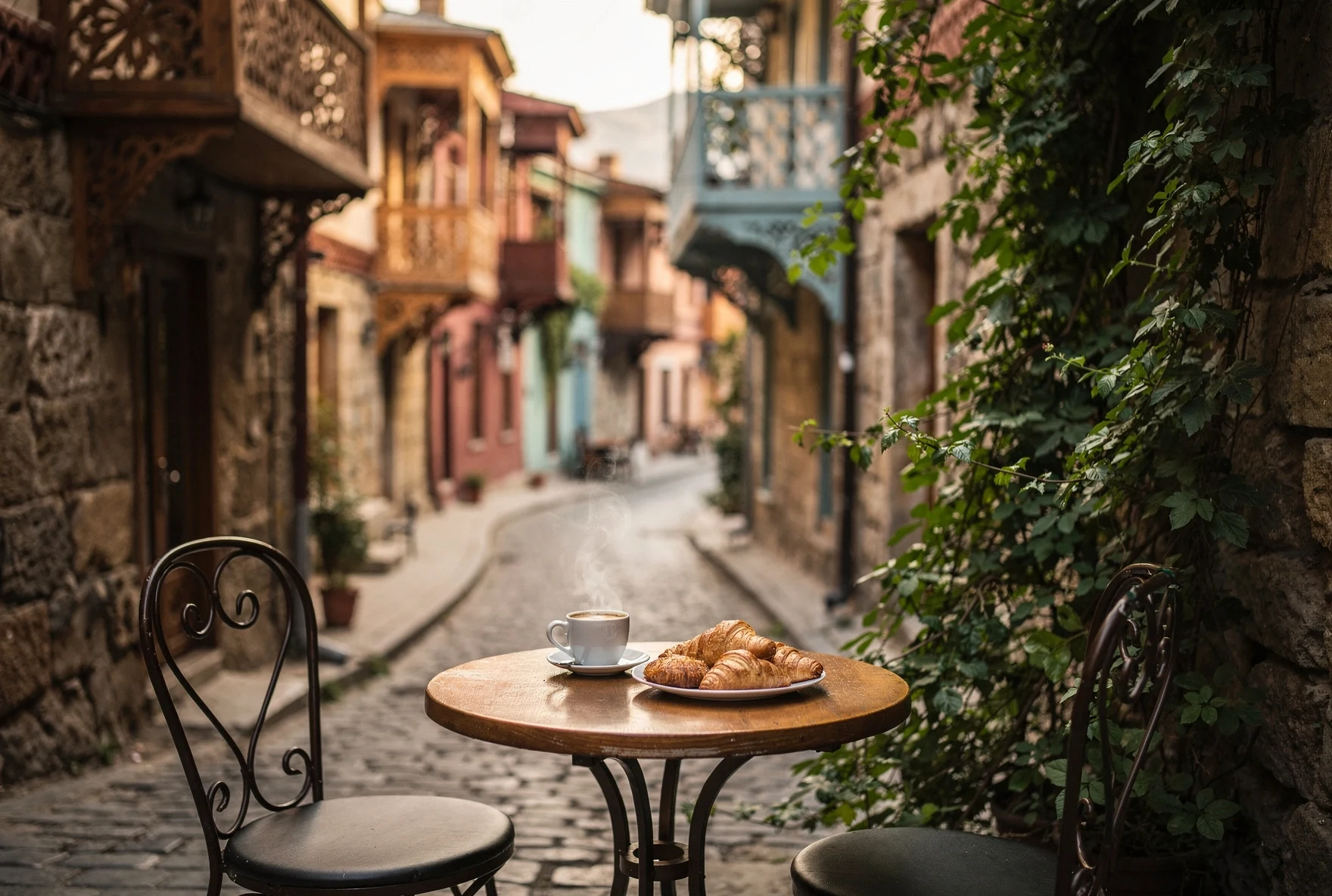
The other Sololaki draw is the café-wine bar hybrid — a concept that's become distinctly Tbilisi. Several spots transition from specialty coffee by day to natural Georgian wine by evening. Slow Tbilisi, which took over from the Russian-owned Chernyi Cooperative in 2025, is the most polished example — occupying the ground floor of an 1903 mansion, it pours house-roasted beans by day and spotlights Georgian natural winemakers by night.
Vake & Saburtalo: The Coworking Belt
If you need to actually get work done — not the Instagram kind of "working from a café" but real, sustained, four-hours-of-deep-focus work — head north to Vake or Saburtalo. These residential neighborhoods have the strongest WiFi, the most power outlets, and the most forgiving laptop policies in the city.
Coffee LAB Saburtalo on Kazbegi Avenue is the gold standard for café-coworking. Two floors of indoor seating, plus an outdoor area where each table has its own umbrella with a built-in power socket. WiFi reliably hits 50+ Mbps. The crowd is a mix of Georgian students, remote workers, and startup types having meetings that could have been emails.
Entrée is the Vake option — a large, well-designed space with excellent pastries and strong WiFi. It draws a slightly more polished crowd (this is Vake, after all), but the vibe is genuinely productive. Their croque monsieur and fresh-squeezed juices make a solid working lunch.
Laptop Etiquette in Tbilisi
Most cafés are laptop-friendly on weekdays. On weekends, especially during brunch hours (11 AM - 2 PM), some places discourage or ban laptops. Shavi has a strict "no laptops after 11 AM" policy. When in doubt, order something every 90 minutes and don't hog a four-person table alone. Georgians are polite about it, but the passive-aggressive glances are real.
Need the breakfast-specific version?
This page focuses on coffee and café culture. If you want the practical morning game plan — bakeries, brunch neighborhoods, what Georgians actually eat before noon, and where weekend queues are worth it — use the Tbilisi Breakfast & Brunch guide.
Marjanishvili & Fabrika: The Creative Scene
The area around Marjanishvili metro station — particularly the streets near Fabrika, the converted Soviet sewing factory turned hostel/coworking/cultural-hub — has become Tbilisi's creative epicenter. The café scene here reflects that energy: younger, more experimental, less interested in traditional latte art and more likely to serve you something with oat milk and turmeric.
Shavi's newest location on Ninoshvili Street is right in this zone, and it's arguably their best — spacious, well-designed, and home to what multiple sources confirm is the best cherry pie in Tbilisi. Nearby, Tsvari Roasters opened in late 2025 with clean, minimalist interiors (concrete floors, custom wood furniture, pink textural finishes) and a rotating selection of single-origin beans roasted in-house.
This neighborhood is also where you'll find some of Tbilisi's most interesting café-gallery combinations. Small spots that double as exhibition spaces, bookstores, or vinyl shops — the kind of places that make you wonder how they're financially viable and then you remember rent in Tbilisi is still absurdly cheap.
What to Order: A Quick Guide
Georgian café menus can be slightly confusing if you're coming from a market where coffee vocabulary is standardized. Here's what you need to know:
| Order | What You Get | Price (GEL) |
|---|---|---|
| Americano | Espresso + hot water. The default "coffee" at most places. | 6-9 |
| Cappuccino | Standard cappuccino, usually well-made at specialty spots. | 8-12 |
| Flat White | Available at most specialty shops. Quality varies — ask if they do it. | 9-12 |
| Pour Over / Hand Brew | V60 or Chemex. Available at serious roasters — always ask what beans they're pouring. | 10-15 |
| RAF Coffee | Espresso + cream + vanilla, steamed together. A post-Soviet specialty — sweet, rich, divisive. | 10-14 |
| Cold Brew | Widely available in summer. Some places do it year-round. | 9-13 |
| Turkish / Cezve Coffee | Finely ground coffee boiled in a small copper pot. The old-school option. Often comes with churchkhela. | 3-6 |
One thing you'll notice: RAF coffee is everywhere. If you've never encountered it, RAF is a Russian invention from the late '90s — espresso, cream, and vanilla sugar steamed together until it's basically a warm dessert in a cup. It migrated to Georgia through the post-Soviet coffee culture pipeline, and it's now a staple. Is it specialty coffee? Absolutely not. Is it delicious on a cold January afternoon? Absolutely yes.
Best Cafés by What You Need
Rather than ranking cafés numerically (a fool's errand in a city where new spots open monthly), here's what to go for depending on your situation:
🏆 Best Overall Coffee
Coffee LAB (any branch) — The most consistent roaster in the city. Paliashvili for atmosphere, Saburtalo for space, Lisi Lake for a view.
💻 Best for Remote Work
Coffee LAB Saburtalo — Power at every table, fast WiFi, ample seating. You could work here eight hours and nobody would look at you funny.
🎨 Best Atmosphere
OKRO Coffee Roastery — Industrial-chic meets heritage carpets. Moody lighting, great pastries from a French-trained pastry chef, and beans roasted on-site.
📸 Best for Instagram
Slow Tbilisi (Aghmashenebeli) — Inside an 1903 mansion. Coffee by day, natural wine by night. The kind of place you photograph before you drink.
🧁 Best Pastries
Entrée (Vake) — Croissants, tarts, croque monsieur. The pastry game here is genuinely Parisian, which is a sentence I never expected to write about Tbilisi.
🌿 Best Outdoor Seating
Shavi Sololaki (Asatiani St) — A shaded courtyard behind a garage door. Feels like a secret garden that happens to serve excellent coffee.
The Sweet Stuff: Georgian Café Food
Georgian cafés don't just sell coffee. They sell pastries, cakes, and breakfast items at a level that would make many European bakeries nervous. This isn't an accident — Georgians have always been serious about bread and sweets, and the café boom just gave that tradition a specialty-coffee-adjacent platform.

A few things to look for:
- Honey cake (medovik) — A layered cake with thin pastry sheets and honey-cream filling. Russian in origin, but Tbilisi cafés have made it their own. Coffee LAB does an excellent version.
- Napoleoni — Georgia's take on the Napoleon/mille-feuille. Flaky layers, custard cream, sometimes topped with powdered sugar. Absurdly good when fresh.
- Churchkhela slices — Some cafés serve sliced churchkhela (the walnut-and-grape-juice candle snacks) alongside coffee. A surprisingly good pairing.
- Penovani khachapuri — Puff pastry khachapuri, available at many café-bakeries. Not a traditional breakfast, but it's become one. Flaky, cheesy, perfect with a black coffee.
Things Nobody Tells You About Tbilisi Café Culture
A few observations from years of caffeinated observation:
Georgians drink coffee sweet. Not everyone, and not at specialty spots — but at a regular café, your coffee may arrive with sugar already in it. If you want it unsweetened, say "უშაქრო" (ushaghro) or just mime "no sugar" aggressively enough.
The brunch industrial complex is real. Weekend brunch culture hit Tbilisi like a freight train around 2022, and it hasn't slowed down. By 11 AM on a Saturday, every café worth its WiFi password has a queue. If you want a seat, arrive by 10 or go on a weekday.
Service pace is different. Tbilisi café culture is built around lingering, not efficiency. Nobody is going to rush you to order, and nobody is going to bring your check unless you ask. This is wonderful if you're settling in for three hours with a book. Less wonderful if you have 15 minutes before a meeting.
Cash is dying but not dead. Most specialty cafés accept card payments and even Apple Pay. But some smaller spots — particularly in Sololaki and the Old Town — are cash-only or have card minimums. Keep a 20-lari note in your pocket just in case.
The smoking situation. Georgia technically banned indoor smoking in restaurants and cafés in 2018. Enforcement has improved enormously since then, and the vast majority of indoor spaces are now genuinely smoke-free. Outdoor terraces are fair game though — if cigarette smoke bothers you, sit inside.
Neighborhood Price Comparison
| Neighborhood | Cappuccino | Vibe | Laptop-Friendly? |
|---|---|---|---|
| Vera | 9-11 GEL | Coffee purist, design-forward | Mixed — check policies |
| Vake | 10-13 GEL | Polished, brunch-heavy | Yes, generally |
| Saburtalo | 8-10 GEL | Practical, student/worker | Very much yes |
| Sololaki / Old Town | 10-14 GEL | Atmospheric, tourist-adjacent | Less so |
| Marjanishvili / Fabrika | 9-11 GEL | Creative, artsy, young | Yes |
| Aghmashenebeli | 9-12 GEL | Boulevard stroll, heritage buildings | Yes, at most spots |
Beyond Specialty: Traditional Coffee Spots
Not everything has to be a single-origin V60. Tbilisi still has a thriving traditional café culture that predates the specialty wave, and these spots have their own charm — often more than the slick new places, honestly.
Tonis (bread bakeries) are the OG Tbilisi coffee spot. These small bakeries with clay tone ovens bake fresh shotis puri and puri throughout the day. Many have a few tables and serve Turkish-style cezve coffee for 3-4 GEL alongside warm bread. There's no WiFi, no latte art, and no menu printed on recycled paper. There's just excellent bread, strong coffee, and the kind of no-nonsense atmosphere that makes you feel like a local for ten minutes.
Soviet-era cafés — a few survivors still exist, particularly in Saburtalo and near the covered market on Dezerter Bazaar. These are places where retired men play backgammon over small cups of strong coffee, and where the concept of "specialty" means the owner remembered your name. They're disappearing fast, which makes every visit feel slightly bittersweet.
Buying Beans to Take Home
If you want to bring the Tbilisi coffee experience home, several roasters sell beans by the bag:
Coffee LAB
Sells fresh beans, grinds, French presses, and grinders at all locations. Their house blend is a safe bet. 250g bags from 18 GEL.
Shavi Coffee
Rotating single-origin selections available at all three branches. Ask the barista what's freshly roasted — they'll grind to your spec.
OKRO Roastery
Direct-trade beans from Central and South America, plus East Africa. Their packaging is beautiful if you're buying gifts.
Bazari Orbeliani
The renovated Orbeliani Market has a Coffee LAB stall plus other vendors selling beans. Good for one-stop souvenir shopping.
Practical Tips
Power & WiFi
Georgian outlets use European Type C/F plugs (two round pins). Most specialty cafés have ample outlets, but bring a small power strip if you're planning a long session. WiFi passwords are usually displayed at the counter or printed on your receipt. Speeds at specialty cafés typically range from 30-100 Mbps — better than many coworking spaces in Western Europe.
Best Times to Visit Cafés
Weekday mornings (8-11 AM) are the quietest — perfect for focused work. Weekday afternoons (2-5 PM) have a nice post-lunch lull. Avoid Saturday-Sunday 11 AM - 2 PM unless you enjoy queuing. Most specialty cafés open at 8-9 AM and close at 8-10 PM.
Frequently Asked Questions
How much does coffee cost in Tbilisi?
A cappuccino at a specialty shop runs 8-12 GEL ($3-4.50 USD). Americano or filter is 6-9 GEL. Turkish coffee at traditional spots is 3-5 GEL. Even at the most expensive cafés, you're paying less than half what you would in London or New York.
Can I work from cafés in Tbilisi?
Absolutely — it's one of the best cities for it. Most specialty cafés have strong WiFi and power outlets. Some places restrict laptops during peak weekend hours. Coffee LAB Saburtalo, Entrée, and Leila are the most reliably laptop-friendly options.
What's the best neighborhood for cafés?
Vera has the highest concentration of quality roasters. Saburtalo is best for coworking. Sololaki has the most atmosphere. The Fabrika area is the creative hub. Vake is for upscale brunch culture.
Do Tbilisi cafés have WiFi?
Nearly all of them, yes. Specialty shops typically offer 30-100 Mbps. Ask for the password at the counter. Some use open networks.
What time do cafés open?
Most specialty spots open at 8-9 AM. Traditional toni bakeries open as early as 7 AM. Closing varies from 8 PM to midnight depending on whether the café doubles as a bar.
Written by The Georgian Guide Team
Based in Tbilisi and fueled by an unreasonable amount of Georgian coffee. We've tested every café on this list multiple times — usually with a laptop open and a honey cake on the side.
Last updated: February 2026.
Related Articles
Best Restaurants in Tbilisi
Where locals actually eat — from 5-lari canteens to special-occasion dining.
Tbilisi Nightlife & Bars
From wine bars to cocktail lounges — where to drink after the coffee wears off.
Tbilisi Markets Guide
Exploring Dezerter Bazaar, Orbeliani Market, and the city's best food halls.
Tbilisi First-Time Visitor Guide
Everything you need to know for your first trip to Georgia's capital.