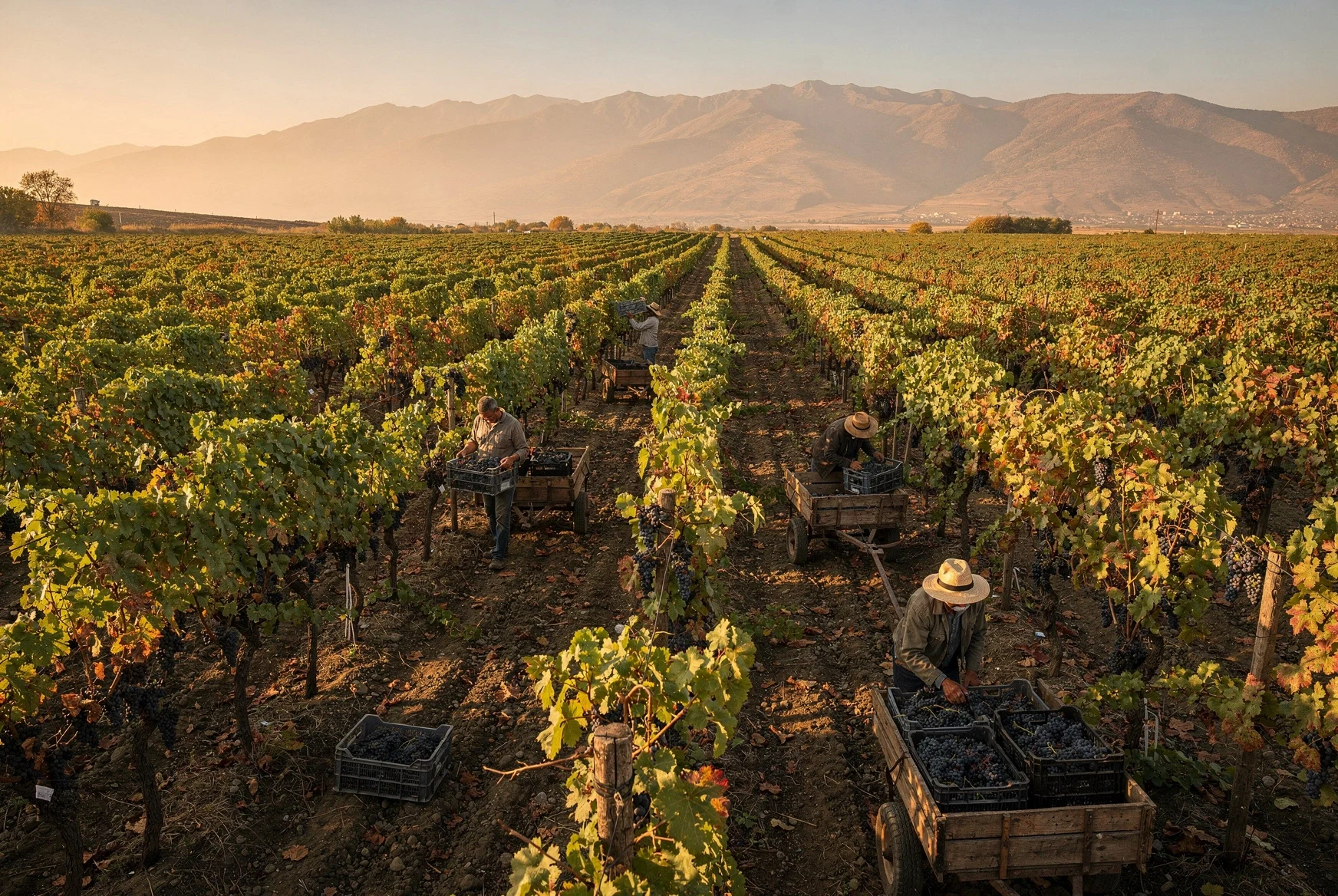
If you are in Georgia in autumn, sooner or later someone will say one word with a slightly reverent tone: Rtveli. It gets translated as "the grape harvest," which is technically true and spiritually incomplete. Rtveli is work, family theatre, winemaking, mild chaos, rural logistics, pride, and usually a table groaning under more food than any medically sensible person needs.
Travel guides often describe it like a cute folk festival where everybody picks a few grapes, sings, drinks amber wine, and glows in perfect sunset light. Real Rtveli is better than that and messier than that. Some days it is magical. Some days it is mud, tractors, arguments about sugar levels, and a grandmother silently judging how useless you are with a crate.
This guide is for people who want the real thing without romantic nonsense. I'll cover when Rtveli actually happens, where travelers should base themselves, how to join without being annoying, what a harvest day looks like, what it costs, and when you should skip the vineyard fantasy and just enjoy the post-harvest feast instead.
What Rtveli Actually Is
Rtveli is Georgia's annual grape harvest, but that still undersells it. In wine countries with glossy marketing departments, harvest often gets packaged as a luxury experience. In Georgia, the old logic is still visible: harvest matters because the whole year points toward it. Families watch the weather, producers track ripeness, villages mobilize, and the vineyard becomes the center of everything for a while.
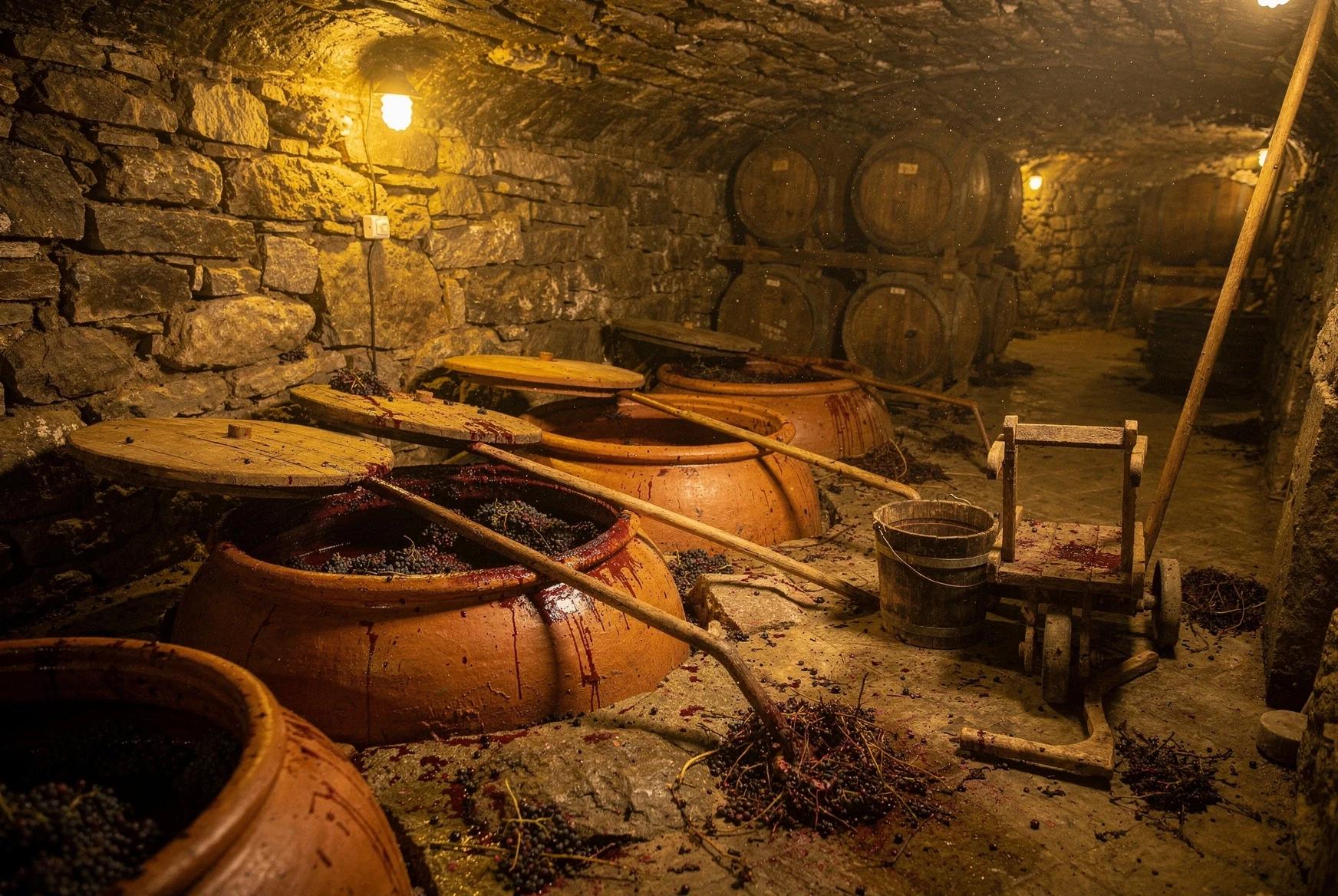
The word itself can be used casually, but culturally it carries weight. This is not just about agriculture. It connects directly to qvevri winemaking, family maranis, village hospitality, and the strange Georgian ability to turn hard labor into a social event without pretending the labor part does not exist.
That is why Rtveli feels different here. Even if you join through a polished winery, you are stepping into something older than tourism. Handle that fact well and people open up. Treat it like a costume party and you will still get fed, because Georgia, but you will have missed the point.
The short version
Rtveli is not one national festival day. It is a harvest season that unfolds region by region, village by village, producer by producer. The timing changes every year, and the best experiences usually come from being flexible rather than trying to hit one mythical perfect date.
When Rtveli Happens
If you want the reliable traveler answer, it is this: aim for September through mid-October, especially in Kakheti. That is the safest window for most visitors. But there is no master calendar that the entire country obeys. Harvest timing depends on rainfall, temperature, altitude, grape variety, and whether a producer wants freshness, sugar, tannin, or drama.
In practice, early-ripening grapes can start moving in late August in warm years. Kakheti usually gets busiest in September. Higher, cooler, or more western regions can run later. Racha is the classic example of a region that can still be active when Kakheti has largely moved on to feasting, fermentation, and comparing notes.
| Region | Typical Window | Why Travelers Go | Reality Check |
|---|---|---|---|
| Kakheti | Early September to mid-October | Biggest wine region, easiest logistics, most visitor options | The best places book up and the obvious ones get touristy |
| Kartli | September to October | Closer to Tbilisi, smaller-scale experiences | Less obvious for first-timers and fewer drop-in options |
| Imereti | September to October | Interesting western Georgian wine styles and family cellars | Better for wine nerds than casual first-time harvest seekers |
| Racha | October to early November | Late harvest, mountain scenery, Khvanchkara territory | Harder logistics and less forgiving weather |
If your whole trip depends on participating, do not book non-refundable flights around one exact harvest day you found on some blog written in 2023. Ask your hotel, winery, or guide what the current season looks like. Georgian harvest timing is decided by ripeness, not your Google Calendar.
The Best Place for Travelers to Experience Rtveli
For most people, the answer is Kakheti. Not because the rest of Georgia is irrelevant, but because Kakheti is where the scale, infrastructure, and wine culture line up in your favor. It is the country's dominant wine region, the easiest place to arrange a harvest experience, and the place where even a short trip can feel like you caught something substantial.
If you want the smoothest base, choose Kakheti's wine region and sleep in or near Telavi. Telavi gives you useful access to family wineries, bigger estates, village guesthouses, and workable dinner options once the harvest dust settles. Sighnaghi is prettier on postcards, but Telavi usually works better logistically if harvest is the main reason you came.
Kvareli and Tsinandali also make sense if you already know where you are going. Kvareli is convenient for several established wineries. Tsinandali works well if you want a more polished stay and do not mind that some of the best-looking experiences can feel more curated than spontaneous.
Best for first-timers
Telavi and nearby villages. You get easier transport, more accommodation, and better odds of finding a harvest day that is real rather than staged beyond recognition.
Best for wine obsessives
Small producers in Kakheti, Kartli, or Imereti where the conversation goes beyond "drink this" and into grape decisions, fermentation, and qvevri handling.
Best for pretty photos
Sighnaghi area, yes. But understand that nice views and good harvest participation are not always the same thing. Pick what matters more to you.
Best for last-minute day trips
Organized outings from Tbilisi can work, but they are often more demo than deep immersion. Fine if you are short on time, not ideal if you want the whole arc of the day.
How to Join Rtveli Without Being a Nuisance
The cleanest way is through a guesthouse, winery, or guide that already knows which harvests are open to visitors. That does not automatically mean a soulless package. In Georgia, the difference between authentic and contrived is not whether money changed hands. It is whether the host relationship is real and whether the day still revolves around actual work.
The worst approach is assuming you can drive into a village, point at some vines, and become part of the family. Sometimes Georgian hospitality will rescue you anyway. Sometimes people are busy, tired, under pressure, and not interested in entertaining unannounced foreigners with cameras. Fair enough.
Good ways to arrange it:
- Ask your guesthouse in Kakheti. This is still one of the best routes because the owner probably knows who is harvesting nearby and who enjoys visitors.
- Contact wineries directly. Smaller ones are often more flexible than big hotel-style estates.
- Use a specialized harvest tour. Not my favorite by default, but some are genuinely well-run and useful if you have no time to coordinate.
- Build it into a broader wine trip. That usually gives better results than treating Rtveli as a one-hour activity.
Do not cosplay peasant life
Wear practical clothes, help when asked, stay out of the way when people are moving fast, and do not turn every crate into a photo shoot. If the hosts are actually working, your job is to add energy, not friction.
What a Real Rtveli Day Looks Like
The exact rhythm varies, but a proper day usually starts earlier than tourists hope. Grapes get cut, sorted, loaded, moved, and processed. People drift between vineyard rows, crates, tractors, cellars, and whatever shade exists. By midday, hands are sticky, backs are complaining, and somebody has already started talking about lunch as if it were a constitutional right.
If you are joining as a visitor, expect some version of this sequence:
| Stage | What Happens | What You Should Do |
|---|---|---|
| Morning vineyard work | Cutting bunches, carrying crates, sorting fruit | Listen first, work second, don't freelance with sharp tools |
| Transport to marani | Grapes move to the cellar or processing area | Stay clear when space is tight and vehicles are moving |
| Crushing / processing | Depending on setup, grapes are crushed, sorted, and sent toward fermentation | Ask before touching anything; this is where sentiment meets hygiene |
| Meal break | Bread, cheese, mtsvadi, salads, maybe far more | Eat. Seriously. Empty-stomach wine is rookie behavior |
| Toasts and wine | The day relaxes and the social logic takes over | Pace yourself and do not try to out-Georgian Georgians |
Yes, some harvests still include grape stomping for demonstration or tradition. No, that does not mean every serious producer is waiting for tourists to hop into a vat like a 2004 lifestyle channel segment. Sometimes it happens. Sometimes it very much does not. Treat it as a bonus, not an entitlement.
What to Wear and Bring
This is not the day for your nice linen set and white trainers. Vineyards are dusty until they are muddy. Cellars are sticky. Tables spill. A proper Rtveli can move from heat to evening chill surprisingly fast. Dress for real movement and mild abuse.
Wear this
Closed shoes, clothes you do not mind staining, layers for evening, a hat, and something that survives dust and grape juice.
Bring this
Water, sunscreen, tissues, a power bank, and maybe a second shirt if you plan to stay for the feast and still look vaguely respectable.
Leave this behind
Anything fragile, overly precious, or difficult to clean. Also the fantasy that you will look effortlessly cinematic by hour six.
For photographers
Ask before shooting people up close. Wide scenes are fine; turning workers into props is not. Georgia is hospitable, not public domain.
Costs and Booking Strategy
There is no single Rtveli price because the experience can mean wildly different things. A guesthouse might fold a simple participation day into your stay. A boutique winery might offer a polished package with transport, lunch, tasting, and a guided cellar walk. A serious private guide might stitch together the whole thing for you. All three can be worth it if expectations match.
Typical Rtveli Budget
The smart move is to book your accommodation early, then use that host relationship to solve the harvest piece. September weekends in Kakheti get busy for both locals and visitors. Waiting until the last moment is how people end up overpaying for a generic program with more staging than soul.
If you are deciding between a day trip from Tbilisi and sleeping in Kakheti, sleep in Kakheti. It gives you slack. Harvest timing slips. Lunch becomes dinner. Toasts multiply. The road back to Tbilisi is a terrible place to discover you are both tired and mildly over-served.
The Best Part Might Be the Table Afterward
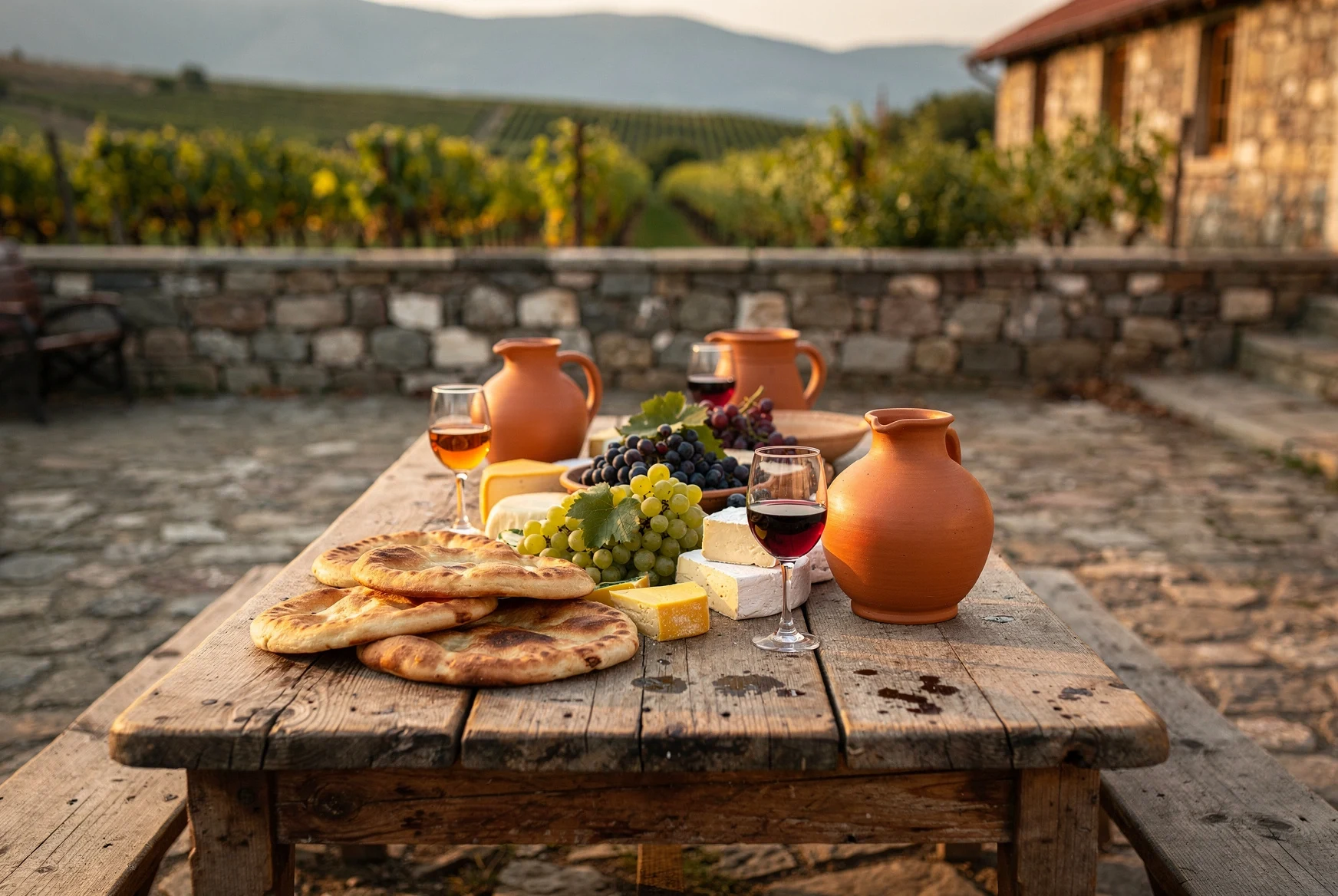
There is a decent argument that the greatest Rtveli experience is not the picking but what comes after it. Once the urgent work calms down, the social logic of Georgia takes over. Bread appears. Then cheese. Then salads, meats, maybe khinkali, maybe churchkhela, depending on the house and the day. Wine shows up in a way that makes formal tasting language feel slightly ridiculous.
This is where people who came for "wine tourism" usually understand that Georgian wine culture is not mainly about swirling and describing notes of apricot skin. It is about context. The wine is tied to labor, place, family, weather, and the people sitting at the table. That is why a humble homemade pour in a village courtyard can be more memorable than a technically perfect tasting flight in the city.
If you want to understand that wider culture before you go, read up on Georgian wine culture and the logic of the Georgian supra. Rtveli is not identical to a supra, but the overlap in tone and values is obvious the minute the first proper toast starts.
Common Mistakes Travelers Make
| Mistake | Why It Backfires | Do This Instead |
|---|---|---|
| Booking too late | Better stays and hosts fill first | Book Kakheti accommodation well ahead for peak weekends |
| Treating it like a staged attraction | You miss the real rhythm and annoy hosts | Follow instructions, help a bit, observe more |
| Wearing city-fashion clothes | Dust, stains, and heat win immediately | Dress like you plan to work, not pose |
| Drinking too early, too fast | Georgia rewards confidence and punishes stupidity | Eat first, pace yourself, respect the day |
| Trying to squeeze it into a rushed day trip | You lose flexibility and the evening table | Stay overnight if Rtveli is the main goal |
Should You Do Rtveli as a Day Trip or Overnight?
If you care about depth, overnight wins and it is not close. A day trip can be fun, especially if you are short on time and just want a taste of the harvest atmosphere. But the best part of Rtveli is often the looseness after the work is done, and that is exactly what day trips compress into a schedule.
Overnight also lets you combine the harvest with a broader wine-country visit. You can spend the next day visiting a couple of serious producers, walking around Telavi or Sighnaghi, and taking Georgia's wine culture seriously rather than reducing it to one sticky afternoon.
If you need help planning the wider route, pair this with a proper Kakheti wine road trip or build it into a longer autumn itinerary.
Is Rtveli Worth Planning a Trip Around?
Yes, if you already like wine, food culture, or agricultural traditions that still feel alive. Also yes if you want Georgia at one of its most generous and least polished moments. No if you hate unpredictability, dislike group meals, need everything air-conditioned and punctual, or want a wine experience that behaves like Napa with better folklore.
That is the honest answer. Rtveli at its best is unforgettable because it feels real. At its worst, it can feel like a long drive for a half-staged demonstration and a lunch you could have had anyway. The difference is usually planning. Stay in the right place, talk to the right host, and leave room for the day to breathe.
Georgia does many things well, but staged perfection is not really the national specialty. Thank God. Rtveli is better because it still has edges.
FAQ
Do I need a car?
Not strictly, but it helps if you are staying outside Telavi or moving between villages. If wine is involved, arrange a driver instead of improvising.
Is it family-friendly?
Usually yes, especially at guesthouses and family wineries, though long harvest days can be tiring for younger children.
Will there be English?
At bigger wineries and tourism-facing guesthouses, usually yes. In village settings, sometimes only partially. Warmth carries a lot of the communication.
Can I just go for the feast?
Honestly, that is sometimes the smartest move. If you are not eager to pick grapes, a harvest dinner or wine-country stay still gives you the best cultural part.
Written by The Georgian Guide Team
We live in Georgia and spend an unhealthy amount of time thinking about where culture still feels real and where tourism starts sanding off the edges. Kakheti in harvest season is one of the places where Georgia still shows its full personality.
Last updated: March 2026.
Related Articles
Kakheti Wine Region Guide
Where to base yourself, what to drink, and how to plan a proper wine-country trip.
Georgian Wine Culture
Qvevri, amber wine, grape varieties, and why Georgian wine feels different.
Kakheti Wine Road Trip
Turn Rtveli into a broader road trip through vineyards, monasteries, and cellar dinners.
The Georgian Supra
Understand the toasts, the table, and the social code that often follows the harvest.