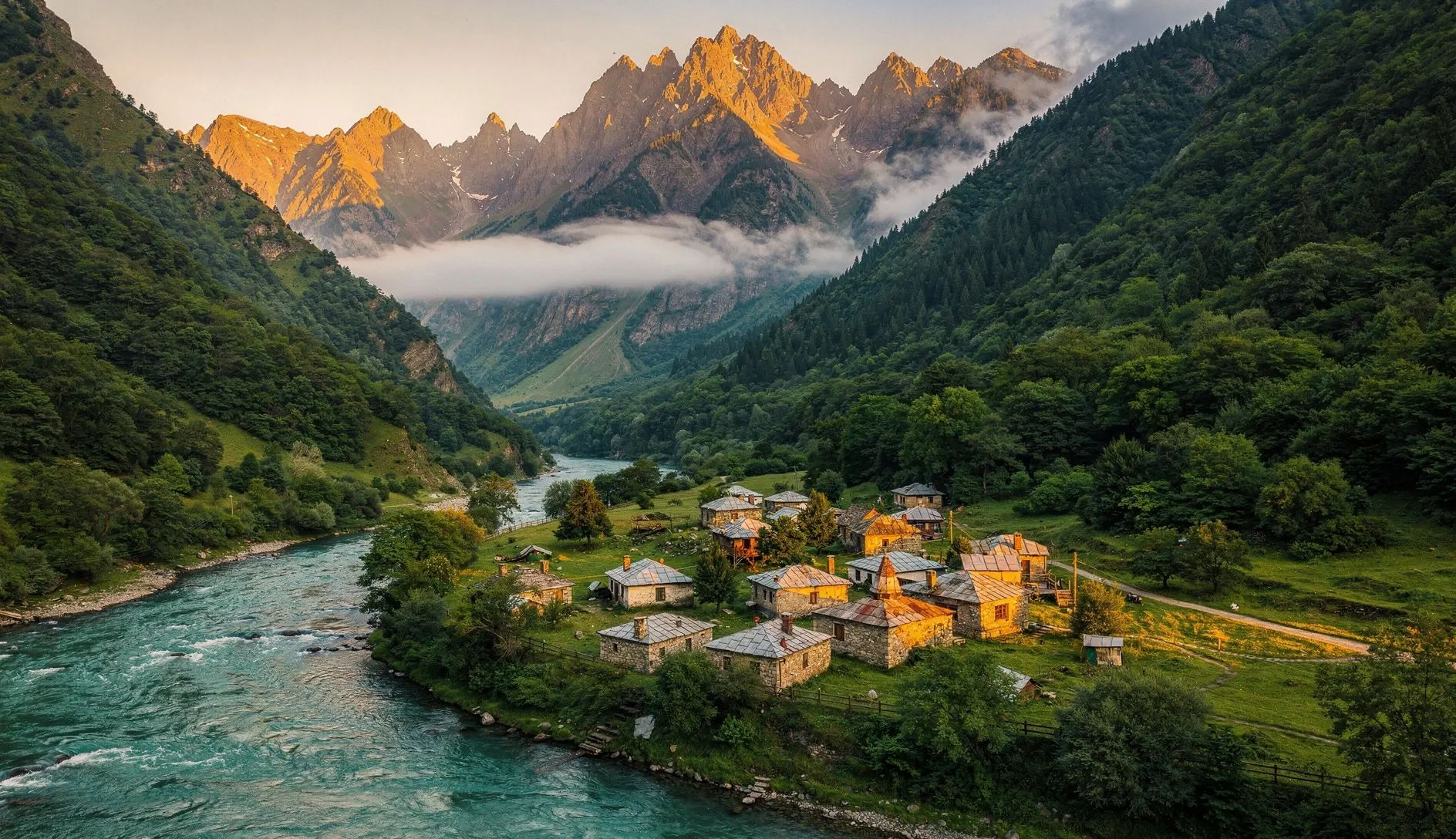
Ask a Georgian where they'd go for a quiet holiday, and they'll probably say Racha. Not Batumi. Not Kazbegi. Racha — a mountainous wine region in western Georgia that most foreign visitors have never heard of, and that Georgians would rather keep to themselves. It's the kind of place where your guesthouse host pours you homemade Khvanchkara at breakfast, where the rivers run an impossible shade of turquoise, and where the loudest sound you'll hear all day is cowbells.
Racha sits between Svaneti and the occupied territory of South Ossetia, roughly 300 kilometers from Tbilisi. It's split into Lower Racha (the wine-producing valleys around Ambrolauri) and Upper Racha (the mountain villages around Oni, Ghebi, and Shovi). Between them, you get alpine lakes, medieval churches, some of Georgia's best wine, and almost no other tourists.
This guide covers the whole region — what to see, when to go, how to get there, and the practical details that are genuinely hard to find elsewhere. Written from multiple visits across different seasons.
Quick Facts
Why Racha
Georgia has no shortage of mountain regions — Svaneti has the towers, Kazbegi has the church on the hill, Tusheti has the remoteness. Racha's thing is something harder to market but easier to feel: it's just nice. Genuinely, quietly nice.
The valleys are greener than anywhere else in Georgia. The rivers are fed by glacial melt, so they run that milky turquoise you usually associate with Iceland or Patagonia. The food is excellent — Rachans are considered some of the best cooks in Georgia, which is saying something. And the wine culture here predates Kakheti's fame by centuries.
What Racha doesn't have: crowds, Instagram influencers, overpriced hotels, or any of the tour-bus energy that's started creeping into Svaneti. The infrastructure is basic. The English is limited. The phone signal is patchy. For some travelers, that's a dealbreaker. For others, it's the entire point.
Why You Should Go
Georgia's best semi-sweet wine (Khvanchkara), empty hiking trails, Shaori Lake, authentic guesthouse culture, genuinely off-the-beaten-path without being inaccessible. The food alone is worth the drive.
Why You Might Not
Limited public transport, basic accommodation, patchy connectivity, no nightlife whatsoever. You need a car or a lot of patience. Upper Racha roads can be rough. Not for luxury travelers.
When to Go
Timing matters more in Racha than most Georgian destinations. Upper Racha is effectively closed from November through April — snow blocks the mountain roads and most guesthouses shut down. Even Lower Racha gets quiet in winter, with many restaurants and cafes closing by early November.
| Season | Conditions | Best For |
|---|---|---|
| Late June – August | Warm (25–32°C in valleys), all roads open, all services running. Can be hot in Lower Racha. | Hiking, swimming, Upper Racha villages |
| September | Quieter, pleasant temperatures, early autumn colors. Some services start closing. | Photography, fewer crowds, comfortable hiking |
| October – early November | Spectacular foliage, Rtveli (wine harvest). Cooler, some Upper Racha roads closing. | Wine harvest, autumn photography, Lower Racha |
| April – May | Green, wildflowers, rivers high. Upper Racha may still be snowed in. Rain likely. | Lower Racha only, spring scenery |
| November – March | Cold, snow at elevation, many services closed, Upper Racha inaccessible. | Not recommended unless you know what you're doing |
Sweet Spot: Late September to Mid-October
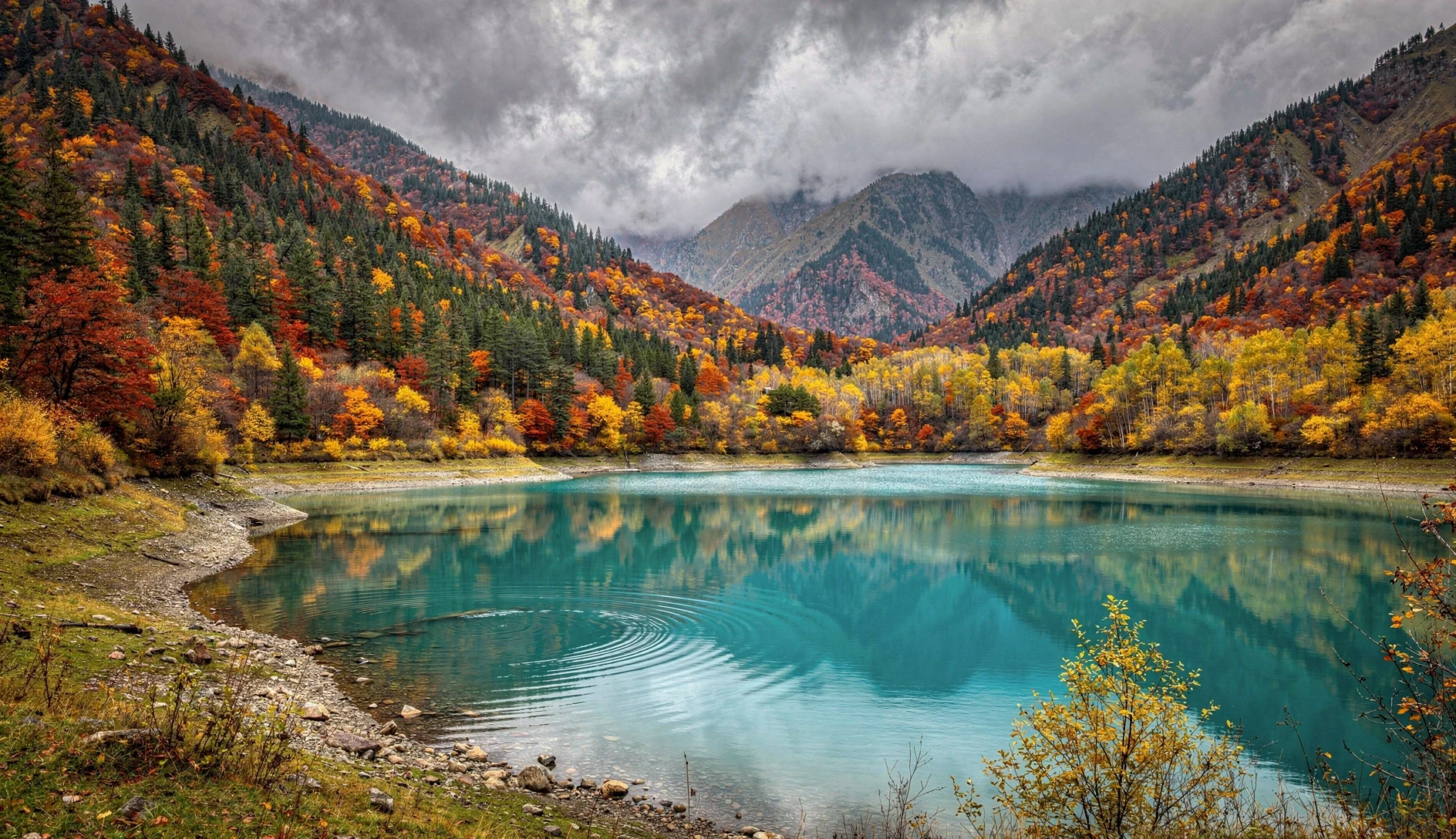
The autumn colors in Racha are genuinely some of the best in Georgia. The forests turn every shade of red and gold, Shaori Lake becomes a mirror, and the wine harvest is in full swing. The tourists from summer have gone home. It's close to perfect.
Getting There
Let's be straightforward: you need a car. Racha has marshrutka connections to Kutaisi and Tbilisi, but they're infrequent and won't get you to the best parts of the region. A rental car (or hiring a driver) is the right move.
By Car
There are two main routes from Tbilisi:
Via Kutaisi (Western Route)
Tbilisi → Kutaisi (3.5 hrs) → Nakerala Pass → Ambrolauri (1.5 hrs). Total: ~5 hours. Better road conditions. Enter Racha from the west through the scenic Nakerala Pass.
Via Sachkhere (Direct Route)
Tbilisi → Sachkhere → Oni (3.5–4 hrs). New road opened in 2021. Shorter, more direct, enters from the east. Good condition but fewer services en route.
4WD Recommended
Lower Racha is fine with a regular car. But if you want to reach Upper Racha villages (Ghebi, Gona, Shovi) or drive unpaved mountain roads, a 4WD is strongly recommended. Some roads are rough gravel with river crossings. Check conditions on the GeoRoad Facebook page before you go.
By Public Transport
Marshrutkas run from Tbilisi's Didube station to Oni (1–2 daily, typically around 8:30 AM, ~4 hours, 20–25 GEL). From Kutaisi, vans to Oni take about 2 hours. From Oni, you can arrange local transport to nearby villages, but it's ad hoc — ask your guesthouse host.
There's no public transport to Upper Racha villages, Shaori Lake, or the Nakerala Pass area. Without a car, your best bet is basing yourself in Oni and exploring what you can reach on foot or by arranging rides with locals.
Lower Racha: Ambrolauri and the Wine Valley
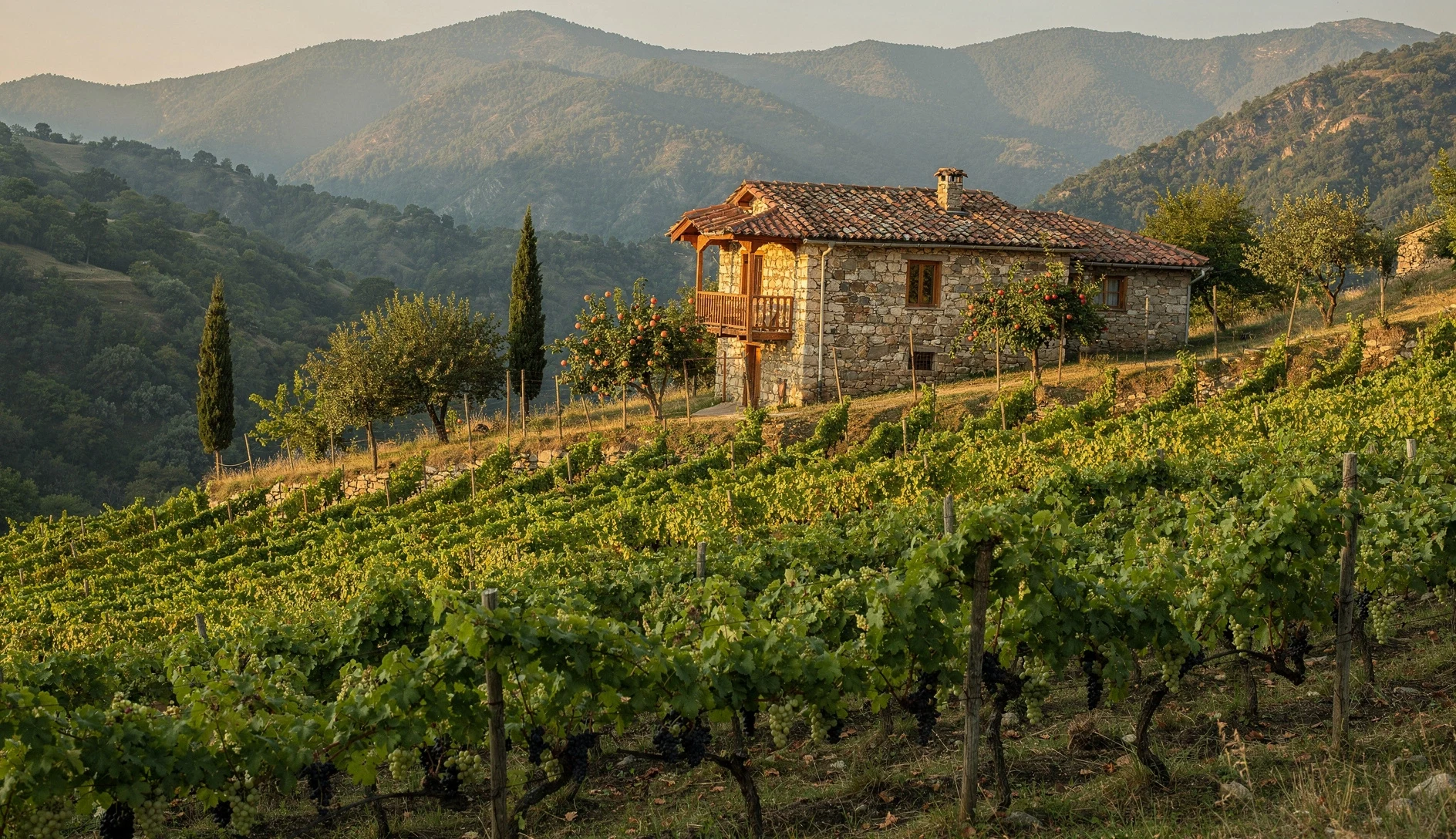
Lower Racha is where the wine comes from. The valleys around Ambrolauri sit at around 500–800 meters elevation — low enough for viticulture, high enough for cool nights that give the grapes their character. This is the home of Khvanchkara, Georgia's most famous semi-sweet red wine, and several other varieties you won't find anywhere else.
Ambrolauri
The regional capital is small — maybe 2,000 people — and it's not going to win any beauty contests. But it's a practical base for Lower Racha, with a few guesthouses, restaurants, and a market. The town itself doesn't demand much time, but the surrounding area does.
Nikortsminda Cathedral
About 12 kilometers from Ambrolauri, this 11th-century cathedral is the architectural highlight of Racha. The exterior stone carvings are extraordinary — intricate biblical scenes and ornamental patterns that rival anything in Mtskheta. The cathedral is a UNESCO-nominated site and genuinely one of the most beautiful churches in Georgia. Budget 30–45 minutes.
Shaori Lake
A reservoir, technically, but don't let that put you off. Shaori sits at about 1,100 meters, surrounded by forest-covered hills that turn absurd shades of orange and red in autumn. In summer, locals picnic along the shore and swim in the cold water. It's the kind of place where you plan to stop for 20 minutes and end up staying two hours.
Khvanchkara and Sadmeli
The twin villages where Georgia's most prized semi-sweet wine originates. The Khvanchkara micro-zone produces wine from Aleksandrouli and Mujuretuli grapes — varieties you won't find outside this valley. Several family wineries offer tastings, ranging from casual (your host opens a bottle on the porch) to slightly more structured affairs. Wine here costs a fraction of what it costs in Tbilisi shops.
Barakoni Church
A 17th-century church near the village of Tsakhi, set on a cliff above the Rioni River. Less famous than Nikortsminda but worth a stop for the setting alone — the river gorge below is dramatic, especially after rain when the water runs fast and green.
Upper Racha: Mountains and Stone Villages
Upper Racha is a different world. The elevation jumps, the valleys narrow, and the villages shrink to clusters of stone houses that look like they haven't changed in centuries. This is hiking and mountain country, and it's where Racha starts to feel genuinely remote.
Oni
The main town of Upper Racha (population about 3,000) and the most practical base for the mountain side of the region. Oni has a surprisingly interesting history — it was once home to a large Jewish community, and the old synagogue still stands in the center of town. There are several guesthouses, a handful of restaurants, and a small market. The town sits at the confluence of two rivers and is surrounded by forested mountains on all sides.
Ghebi
A stone village at about 1,300 meters that feels like stepping into a previous century. The traditional Rachan architecture — two-story stone houses with slate roofs and wooden balconies — is at its most photogenic here. Ghebi is also the starting point for several hiking trails, including routes toward the Caucasus ridge. The road from Oni is partially unpaved and requires a 4WD in places.
Shovi
A former Soviet health resort at 1,600 meters, known for its mineral springs. Shovi was once a popular retreat, and traces of that era remain in the form of slightly melancholic sanatorium buildings set among pine forests. The setting is beautiful — a narrow valley hemmed in by high peaks — and there are several easy walks from town. A few guesthouses operate in summer.
Shovi Landslide Warning
In August 2023, a devastating landslide hit the Shovi area, causing significant damage and loss of life. The area has been rebuilding, but check current conditions before planning a visit. Some facilities may still be closed or under construction. Ask locally for the latest situation.
Gona and Chiora
Two tiny mountain villages accessible by rough road from Ghebi. Gona has a handful of stone towers (reminiscent of Svaneti's famous towers, but far less visited) and stunning views of the high Caucasus. Chiora, further up the valley, has become a base for serious hikers heading toward alpine lakes and high passes. Accommodation is in family-run guesthouses — basic but welcoming.
The Wine
Racha's wine scene is fundamentally different from Kakheti's. Where Kakheti does big-volume qvevri production and international exports, Racha does small-batch, family-made wines that rarely leave the region. Most production is semi-sweet — a style that's often dismissed by wine snobs but is genuinely excellent when done right.
| Wine | Type | Notes |
|---|---|---|
| Khvanchkara | Semi-sweet red | Georgia's most famous semi-sweet. Blend of Aleksandrouli and Mujuretuli grapes. Dark berry, pomegranate, and chocolate notes. Stalin's reported favorite wine. |
| Aleksandrouli | Dry or semi-sweet red | The primary grape behind Khvanchkara, also made as a varietal. Deep color, earthy. |
| Tetra | Semi-sweet white | Made from the Rachuli Tetra grape. Floral, honey, and green apple. Light and easy drinking. |
| Usakhelouri | Semi-sweet red | Extremely rare — from neighboring Lechkhumi. Arguably Georgia's most expensive wine. One tiny micro-zone produces it. |
The best way to taste Rachan wine is at the source. In Khvanchkara and Sadmeli, several families welcome visitors for informal tastings — just show up or have your guesthouse host arrange it. Expect to pay 15–30 GEL per bottle (sometimes less), and don't be surprised when a "tasting" turns into lunch, then dinner, then a three-hour conversation about grape varieties.
In Ambrolauri and Oni, wine shops and small wine bars are starting to appear, though this isn't Kakheti — there are no slick tasting rooms or wine-tourism complexes. That's part of the charm.
Hiking
Racha's hiking is undersold. The trails are quieter than Svaneti or Kazbegi, the scenery is just as good, and you'll often have an entire valley to yourself. The downside: trails are less well-marked, maps are scarce, and you're largely on your own for navigation.
| Hike | Difficulty | Duration | Notes |
|---|---|---|---|
| Tskhradjvari | Easy–Moderate | 2–3 hours | Panoramic viewpoint near Nakerala Pass. Quick roadside hike with massive views over Lower Racha. |
| Lagora Huts | Moderate | 5–6 hours | From Ghebi, through alpine meadows to shepherd huts with Caucasus ridge views. Well worth the effort. |
| Kulbaki Lakes | Moderate–Hard | Full day | Alpine lakes above Tsageri (Lechkhumi). Remote, stunning, requires good fitness and navigation skills. |
| Notsara | Hard | Full day | Jeep tour + hike from Oni or Ghebi. High alpine terrain with glacier views. Needs early start and possibly a guide. |
| Sairme Pillars | Easy–Moderate | 3–4 hours | In Lechkhumi. Natural stone pillars and formations. Well-marked by Racha standards. |
Navigation Matters
Download offline maps before you go — phone signal disappears in Upper Racha. The Caucasus Trekking Map app and Maps.me both have some Racha trails. For more serious hikes, consider hiring a local guide through your guesthouse. Trails are not always well-marked, and weather can change fast at elevation.
Where to Stay
Accommodation in Racha means guesthouses. Full stop. There are no hotels worth mentioning, no hostels, and no Airbnb scene to speak of. What you get instead are family-run homes where the host feeds you three meals a day, pours you wine from their cellar, and treats you like a long-lost relative.
This is genuinely one of the best things about Racha. The guesthouse experience here is warmer and more authentic than anywhere else in Georgia — partly because tourism is still new enough that hosts are excited to have visitors, and partly because Rachans are just extraordinarily generous people.
| Area | Price (per person, with meals) | Notes |
|---|---|---|
| Ambrolauri | 50–80 GEL | Most options, some with private bathrooms. Good base for Lower Racha and wine tasting. |
| Oni | 40–70 GEL | Smaller selection but solid quality. Best base for Upper Racha day trips. |
| Ghebi / Chiora | 40–60 GEL | Very basic. Shared bathrooms, simple rooms. But the setting and hospitality are unforgettable. |
| Shaori Lake area | 60–100 GEL | A few glamping options and guesthouses have appeared. Beautiful lakeside setting. |
Booking in advance is recommended for July–August, when Georgian families from Tbilisi fill up the best guesthouses. Outside summer, you can usually just show up. Booking.com has some listings, but many guesthouses operate only through phone — your previous host can usually call ahead to the next one.
Where to Eat
Eating in Racha is inseparable from staying in Racha. Your guesthouse meals will likely be the best food you eat — massive spreads of local dishes prepared by someone who's been cooking them for decades.
Rachan cuisine has its own specialties that you won't find elsewhere in Georgia:
Lobiani (Rachan Style)
Bean-filled bread that Rachans do differently — with more spices and often smoked bacon mixed into the filling. The best lobiani in Georgia, and most Georgians agree.
Shkmeruli
Chicken in garlic cream sauce, originally from the Rachan village of Shkmeri. The authentic version uses an absurd amount of garlic and milk. Rich, simple, devastating.
Rachuli Ham
Air-dried, smoked pork leg — Georgia's answer to prosciutto. Made in almost every Rachan household during winter. Sliced thin, served with fresh bread and cheese.
Lori
Smoked pork sausage, another Rachan specialty. Often served alongside lobiani or eggs for breakfast. Deeply savory and slightly smoky.
There are a few standalone restaurants in Ambrolauri and Oni, but honestly, your best meals will come from guesthouse kitchens. If a host offers to make you lobiani, say yes. If they bring out the Rachuli ham, cancel your afternoon plans — you're about to eat for two hours.
Budget
Racha is one of the cheapest travel destinations in Georgia, which is already one of the cheapest countries in Europe. The guesthouse-with-meals model means your daily costs are remarkably predictable.
Budget Traveler (per person/day)
Comfortable Traveler (per person/day)
That's roughly $30–45 per day for a budget traveler, or $50–75 for more comfort. It's hard to spend much more than that in Racha even if you try — there just aren't many things to spend money on.
Suggested Itinerary: 3–4 Days
This route assumes you have a car and are entering from Kutaisi (the more scenic approach). You can reverse it if coming from Tbilisi via Sachkhere.
Day 1: Kutaisi → Lower Racha
Drive the Nakerala Pass (stop at Tskhradjvari viewpoint if weather is clear). Visit Nikortsminda Cathedral. Continue to Shaori Lake for a walk along the shore. Wine tasting in Khvanchkara or Sadmeli. Overnight in Ambrolauri.
Day 2: Ambrolauri → Upper Racha
Drive to Oni (1.5 hours). Explore the town — synagogue, market, river walk. Continue to Ghebi for stone village architecture. If time and 4WD allow, push to Gona for the towers. Overnight in Oni or Ghebi.
Day 3: Hiking Day
Hike to Lagora Huts from Ghebi (full day) or do the Tskhradjvari trail if you skipped it on Day 1. Alternatively, visit Shovi for mineral springs and easy forest walks. Overnight in Oni.
Day 4 (Optional): Lechkhumi Extension
Drive west to Lailashi and hike the Sairme Pillars trail. Continue to Kutaisi via Tsageri, or push on to Lentekhi and the Zagari Pass toward Ushguli (summer only, 4WD required).
Common Mistakes
Treating It as a Day Trip
Some tour operators sell Racha as a day trip from Kutaisi. Don't. The drive alone eats most of your day, and you'll see nothing worthwhile. Minimum two nights.
Coming Without a Car
Public transport exists but barely. Without a car, you're limited to Oni and whatever you can walk to. The best parts of Racha — Shaori Lake, Nikortsminda, wine villages, Ghebi — require wheels.
Expecting Wi-Fi Everywhere
Signal drops in Upper Racha. Some guesthouses have Wi-Fi; many don't. Download maps and anything you need before you leave Ambrolauri or Oni. Embrace the disconnect.
Visiting in Winter
Upper Racha is inaccessible November–April. Even Lower Racha is quiet with most services closed. Unless you specifically want solitude and have a local contact, save it for summer or autumn.
Skipping the Wine
If you visit Racha without tasting wine at the source, you've missed the point. Even if you don't usually drink semi-sweet, try it here. Context changes everything.
Not Eating at Your Guesthouse
The restaurants in Ambrolauri are fine. Your guesthouse kitchen is better. Always opt for full board — you'll eat some of the best home-cooked Georgian food of your life.
Frequently Asked Questions
Is Racha safe?
Extremely safe. Crime is virtually nonexistent. The only real hazards are rough mountain roads and unpredictable weather at elevation. The area near South Ossetia is not a concern — there's no border crossing and no security issues for travelers in Racha itself.
Do I need to speak Georgian?
It helps a lot. English is rare outside of a few guesthouse owners who cater to foreign tourists. Google Translate works for basics, but learning a few Georgian phrases goes a long way. Younger people in Oni and Ambrolauri may speak some English or Russian.
Can I combine Racha with Svaneti?
Yes — the Zagari Pass road connects Lentekhi (Lechkhumi) with Ushguli in Svaneti. It's a spectacular but challenging drive, open June–October only, and requires a 4WD. It's the logical next step if you're already in the region with time to spare.
Is there an ATM?
Yes, in Ambrolauri and Oni. But nowhere else in the region. Bring enough cash to cover your stay, especially if heading to Upper Racha. Some guesthouses accept bank transfers, but most prefer cash.
How does Racha compare to Kakheti for wine?
Completely different experiences. Kakheti has polished wineries, tasting rooms, and a developed wine tourism infrastructure. Racha has family cellars, homemade wine poured in someone's kitchen, and grapes you've never heard of. Kakheti for the wine industry, Racha for the wine culture.
Written by The Georgian Guide Team
We live in Georgia and have visited Racha across multiple seasons — from summer hikes to autumn wine harvests. This guide is based on firsthand experience, not research summaries.
Last updated: February 2026.
Related Articles
Kakheti Wine Region Guide
Georgia's main wine region — wineries, tastings, and where to stay.
Svaneti Travel Guide
Georgia's most dramatic mountain region — towers, glaciers, and Ushguli.
Kutaisi Complete Guide
The gateway city to Racha — what to see, eat, and do.
Renting a Car in Georgia
Everything you need to know about driving in Georgia.