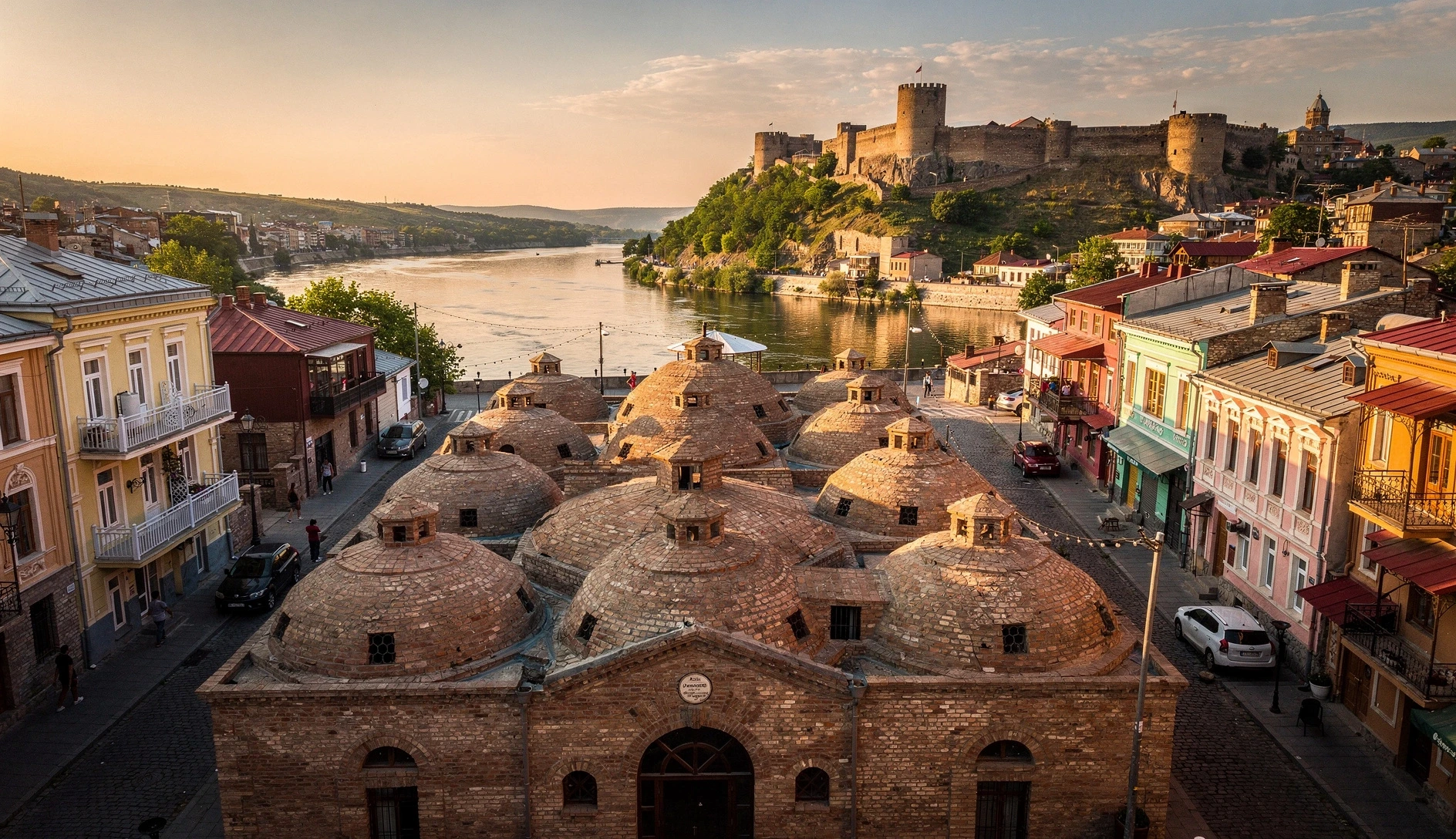
The sulfur baths aren't just a Tbilisi attraction. They're the reason Tbilisi exists. In the 5th century, King Vakhtang Gorgasali was out hunting when his falcon chased a pheasant into a hot spring. The bird came out cooked. The king, apparently impressed by nature's sous vide, decided to build a city on the spot. He called it Tbilisi — from tpili, meaning "warm place." Whether the legend is literally true doesn't matter. The hot sulfurous water bubbling up from the earth is real, and people have been soaking in it for over 1,500 years.
Today, the bath district of Abanotubani sits in Tbilisi's Old Town, recognizable by its brick domes poking out of the ground like half-buried eggs. Underneath those domes are steamy rooms fed by naturally hot, sulfur-rich water at 38–40°C. You'll smell the rotten-egg whiff before you see the baths — that's the hydrogen sulfide, and yes, you get used to it in about three minutes.
This guide covers everything: which bathhouse to pick, how much you'll actually spend, what happens during a kisi scrub (and whether you should get one), plus the etiquette mistakes that tourists keep making.
Quick Facts
Why the Baths Matter
Every city has a tourist activity that makes you wonder if it's actually worth doing or just something guidebooks repeat on autopilot. The sulfur baths are worth doing. They're one of the few "must-do" items in Tbilisi that genuinely delivers, because it's not a manufactured tourist experience — it's something people have been doing here since before the city had a name.
The baths served as social hubs for centuries. Business deals, matchmaking, gossip — all of it happened in the steam. Women would visit to assess prospective daughters-in-law (presumably while everyone was naked, which adds a layer of awkwardness we can only imagine). By the 13th century, there were 65 bathhouses in Abanotubani. Marco Polo wrote about them. Pushkin visited in 1829 and called it the finest bath experience he'd ever had. Alexandre Dumas came too.
Today fewer than a dozen bathhouses remain. Some have been polished up for tourists with spa menus and online booking. Others are rough around the edges — cracked tiles, fluorescent lighting, a guy in shorts slapping you with a mitt. Both versions have their appeal.
Public vs. Private Baths
This is the first decision you'll make, and it determines completely different experiences.
🏛️ Public Baths
5–20 GEL per person. Gender-segregated, communal nudity. More authentic, more chaotic. You'll share the pool with locals who've been coming every week for decades. Bring your own soap and flip-flops. Not for the body-shy.
🔑 Private Rooms
70–500+ GEL per room per hour. Your own pool, shower, and changing area. Great for couples, families, or anyone who prefers nudity without an audience. Most popular choice for tourists.
If you have time, try both. The public baths are a genuinely different experience — sitting in a tiled room full of steam with strangers who couldn't care less that you're there. It's the closest you'll get to how Georgians experienced the baths for centuries.
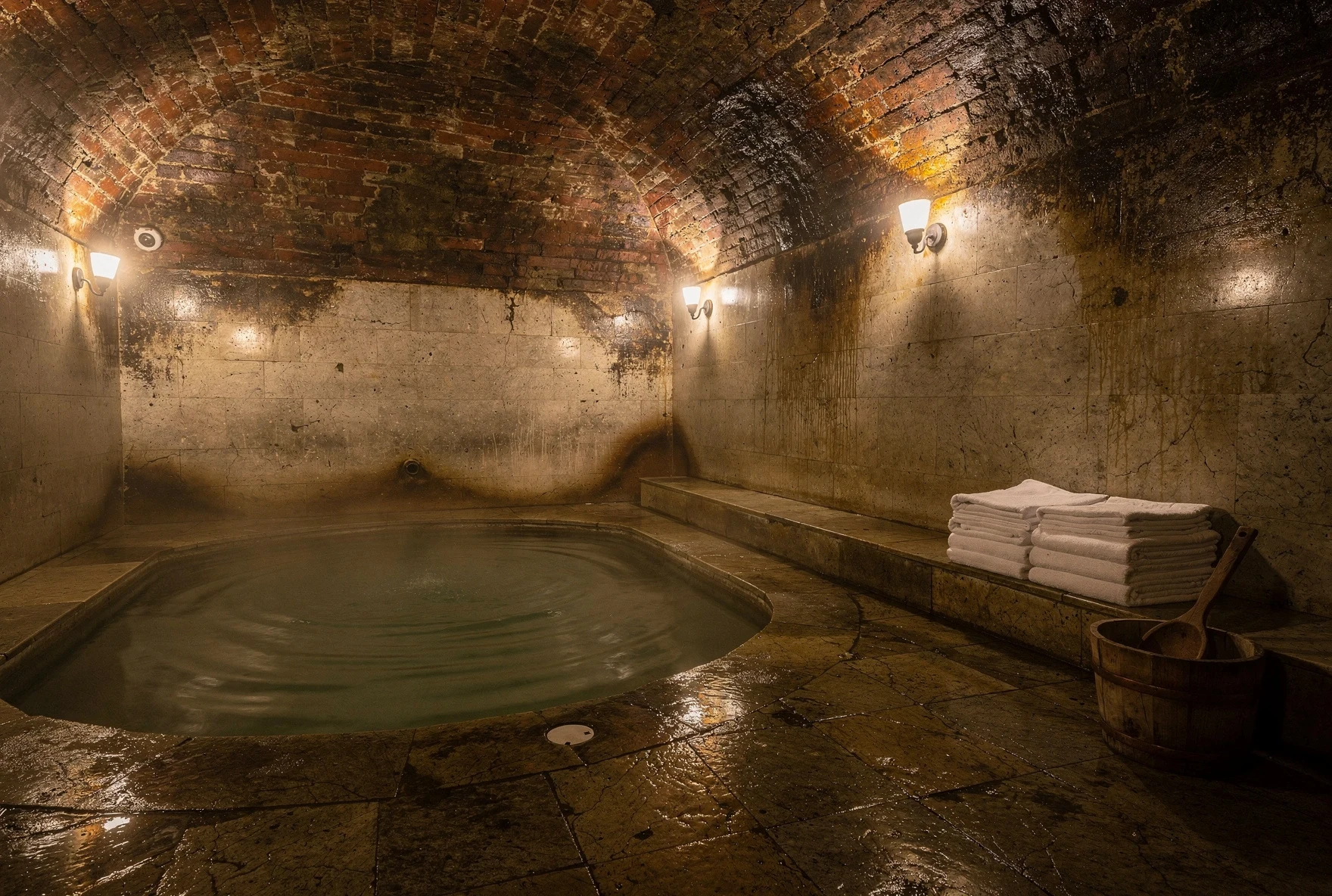
Private rooms are more comfortable but can feel a bit clinical in the cheaper places. The higher-end rooms at Chreli Abano or Gulo's have proper atmosphere — arched brick ceilings, mosaic tiles, and enough space to not feel claustrophobic.
Pricing tip
Private room prices are per room, not per person. A 130 GEL room split between two people is 65 GEL each — less than most spa experiences anywhere in the world. Larger rooms (300–500 GEL) fit 4–8 people, making group visits surprisingly affordable.
Which Bathhouse to Choose
There's no single "best" bathhouse — it depends on what you want. Here's an honest breakdown of the main options:
| Bathhouse | Private Room From | Public Bath | Best For |
|---|---|---|---|
| Chreli Abano (Orbeliani) | 130 GEL | No | Most photogenic, best atmosphere |
| Bath No. 5 | 80 GEL | Yes (10 GEL) | Budget private + public option |
| Gulo's Thermal Spa | 100 GEL | No | Modern, clean, good massages |
| Royal Bath House | 80 GEL | Yes (5 GEL) | Cheapest public bath, local vibe |
| King Erekle's Bath | 100 GEL | No | Historic, quieter, less touristy |
| Sulfur Bath No. 7 | 70 GEL | No | Budget private room, no frills |
Chreli Abano (Orbeliani Baths)
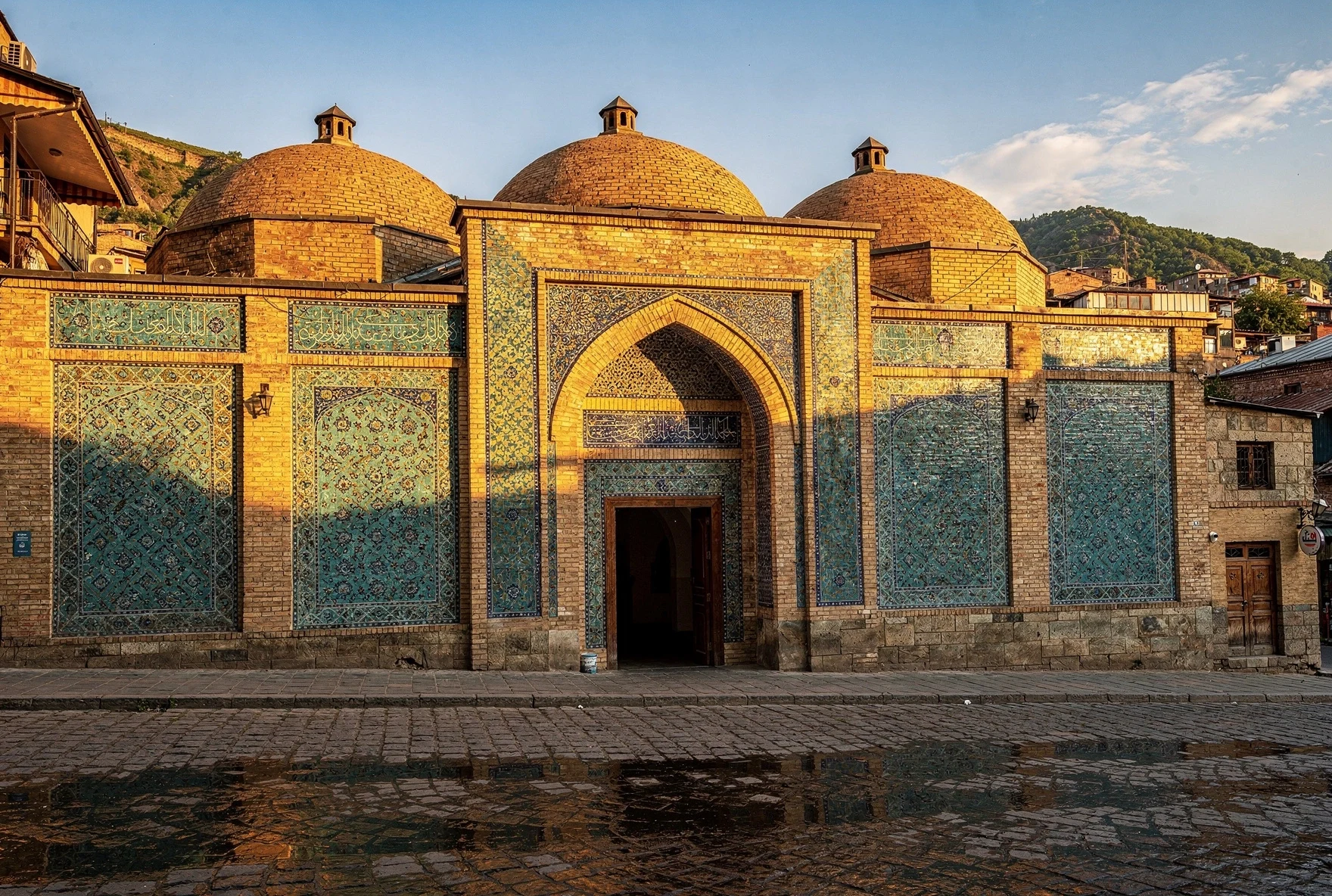
The most famous bathhouse in Tbilisi, and the most recognizable. The blue-tiled Persian facade is on every postcard and Instagram feed. Renovated and reopened in 2017, it's the most polished option — online booking, a proper spa menu, clean rooms with decent ventilation. Private rooms start at around 130 GEL for a small room for two. The larger VIP rooms go up to 500+ GEL but fit groups and have saunas. It's pricier than the alternatives, but the atmosphere is genuinely better. The arched brick ceilings and mosaic work make you feel like you're in a historical monument, which you are.
Bath No. 5
The most reviewed bathhouse on TripAdvisor, and the one that gets the most complaints. It's not bad — it's just the most "touristy" option, and the quality varies wildly depending on which room you get and who's working that day. The public section is the cheapest way to experience the baths (around 10 GEL). Private rooms start around 80 GEL. Some rooms are fine; others have seen better decades. Book a specific room if you can, and don't go in expecting spa-level service.
Royal Bath House
The cheapest public bath option at around 5 GEL. This is the no-frills, local-experience version. The facilities are basic — think Soviet-era tiles and fluorescent lights — but the water is the same sulfur-rich stuff flowing under the fancier places. Gender-segregated. Bring everything you need (soap, shampoo, towel, flip-flops). You won't find many tourists here, which is either a selling point or a warning depending on your tolerance for adventure.
Book ahead for Chreli Abano
Chreli Abano accepts online reservations through their website (chreli-abano.ge). During peak season (May–October) and weekends, rooms fill up fast. Book at least a day or two ahead. Other bathhouses are usually walk-in only.
The Kisi Scrub — What Actually Happens
The kisi (also spelled kisa) scrub is the signature treatment, and you should absolutely get one. It's not relaxing in the spa sense — it's more like being vigorously cleaned by someone who has strong opinions about your skin.
Here's what happens: You soak in the hot sulfur pool for 15–20 minutes until your skin is soft. Then a mekise (scrub attendant) appears, usually a stocky person who radiates the energy of someone who has done this 10,000 times. You lie on a warm stone slab. They put on a rough textured mitt — the kisi — and proceed to scrub every inch of your body with a force that feels alarming at first.
Dead skin rolls off in visible gray strips. It's simultaneously disgusting and deeply satisfying. After the scrub, they lather you up with soap bubbles and wash you down. The whole thing takes 10–15 minutes. When it's done, your skin feels like it belongs to a different, younger person.
✅ Do Get the Kisi If
You want the full traditional experience. You're not sunburned. You don't have extremely sensitive skin. You're comfortable being scrubbed by a stranger while mostly or fully naked.
❌ Skip It If
You have sunburn, eczema, open cuts, or very sensitive skin. The scrub is vigorous — there's no "gentle" setting. You can always just soak and enjoy the water instead.
Kisi payment etiquette
The kisi scrub costs 15–25 GEL depending on the bathhouse. Always pay the mekise directly in cash — this is their main income. Some places also offer an upgraded version with massage (25–40 GEL). Tipping is appreciated but not mandatory; rounding up to the nearest 10 GEL is a nice gesture.
What to Expect Step by Step
If you've never been to a bathhouse before, the process can feel confusing. Here's exactly what happens when you walk through the door:
| Step | What Happens |
|---|---|
| 1. Arrive | Pay at reception. For private rooms, you'll be led to your room. For public baths, you'll enter a communal changing area. |
| 2. Change | Leave belongings in the changing area or locker. In private rooms, the dry area has hooks and a bench. Swimsuits optional in private rooms; required in some public baths (ask). |
| 3. Soak | Get in the pool. The water is 38–40°C — hot but not unbearable. Soak for 15–20 minutes to soften your skin before the scrub. |
| 4. Scrub | If you've ordered a kisi, the mekise will come to your room (or signal you in the public bath). Lie on the stone slab. Try to relax. |
| 5. Rinse & Repeat | After the scrub, rinse off under the shower. Get back in the pool if you want. Most people soak, scrub, soak again. |
| 6. Wind Down | Some rooms have saunas. Many bathhouses offer tea or drinks you can order. Dry off, get dressed, walk out feeling reborn. |
Etiquette and Tips
Georgian bathhouse etiquette is mostly common sense, but there are a few things that trip up first-timers:
🩴 Bring Flip-Flops
Floors are wet, slippery, and not always clean. Some places rent towels (2–5 GEL) but flip-flops are on you. Don't walk barefoot.
🧴 Bring Toiletries
Budget bathhouses provide nothing. Chreli Abano and Gulo's include basics, but bring your own shampoo, soap, and towel to be safe.
📱 Leave Valuables
Humidity will damage electronics. Most private rooms have a dry area, but lockers are safer. Leave expensive jewelry at your hotel.
💧 Hydrate
You'll sweat more than you realize in 40°C water. Bring a water bottle. Some bathhouses serve tea, which is the traditional pairing.
⏱️ Book Enough Time
One hour is the minimum. Two hours is better — you'll want time to soak properly before and after the scrub. Don't rush it.
💵 Bring Cash
Many bathhouses accept cards for the room, but the kisi scrub is always cash. Small bills (5, 10, 20 GEL notes) make tipping easier.
The sulfur smell
Yes, the water smells like rotten eggs. That's the hydrogen sulfide — it's natural and harmless. You stop noticing it within minutes. But it will cling to your skin and hair for a few hours afterward. Don't schedule a fancy dinner immediately after your bath visit. The mineral residue is actually good for your skin, so locals recommend not showering with soap right after.
Health Benefits (What's Real, What's Not)
Georgians will tell you the sulfur baths cure everything from arthritis to heartbreak. Let's separate fact from folklore:
| Claim | Reality |
|---|---|
| Skin conditions (psoriasis, eczema) | Some evidence. Sulfur has anti-inflammatory properties and has been used in dermatology for centuries. Not a cure, but many people report improvement. |
| Joint and muscle pain | Likely true. The combination of warm water and minerals promotes blood circulation and can temporarily relieve pain. Similar to any hot spring. |
| Improved circulation | Yes. Hot water causes vasodilation (blood vessels expand), increasing blood flow. This is basic physiology, not magic. |
| Stress relief | Obviously. You're soaking in hot water in a quiet room. It would be weird if you weren't less stressed afterward. |
| "Cures heart disease" | No. People with heart conditions should actually be cautious in very hot water. Consult a doctor if you have cardiovascular issues. |
What You'll Actually Spend
💰 Budget Visit (~30–50 GEL per person)
✨ Comfortable Visit (~100–200 GEL per person)
When to Visit
The baths are open year-round, but timing matters more than you'd think.
| Season | Verdict |
|---|---|
| Winter (Dec–Feb) | Best time. Stepping into hot sulfur water when it's 2°C outside is exactly as good as it sounds. Fewer tourists too. |
| Spring (Mar–May) | Great. Cool evenings make the hot water feel perfect. Abanotubani is beautiful when the trees are blooming. |
| Summer (Jun–Aug) | Doable but less appealing. It's already 35°C outside — soaking in 40°C water feels excessive. Visit in the late evening if you go. |
| Autumn (Sep–Nov) | Another sweet spot. Tourist crowds thin out after October, and the cooler weather returns. |
Go in the evening
Most bathhouses are open until midnight or later. An evening session — especially in winter — is magical. You walk out into the cold air feeling like a different species. The neighborhood is also prettier at night, with the domes lit up and far fewer tour groups clogging the streets.
Getting to Abanotubani
Abanotubani is in Tbilisi's Old Town, walking distance from most central hotels. It's at the bottom of the gorge beneath Narikala Fortress, next to the Botanical Garden entrance.
| From | How | Time |
|---|---|---|
| Liberty Square | Walk through Old Town | 10–15 min |
| Rustaveli Ave | Walk or metro to Avlabari, then walk | 20–25 min |
| Vake / Saburtalo | Taxi (Bolt or Yandex Go) | 15–20 min, ~8–12 GEL |
| Airport | Taxi | 25–40 min, ~30–45 GEL |
What Else to Do Nearby
Abanotubani is in the heart of Tbilisi's most interesting neighborhood, so you can easily combine a bath visit with other sightseeing:
🌊 Leghvtakhevi Waterfall
A small waterfall hidden in a gorge, literally a 3-minute walk from the baths. Free. Worth the detour even if it's not Niagara.
🏰 Narikala Fortress
Take the cable car up from Rike Park for panoramic views of the city. The fortress ruins are free to explore. Best at sunset.
🌳 Botanical Garden
The entrance is right next to Abanotubani. A peaceful escape with walking trails, waterfalls, and zero tourist crowds. Entry 4 GEL.
🍷 Wine Bars
The streets around the baths are packed with wine bars and restaurants. Perfect for post-bath drinks. Try the side streets off Gorgasali Square.
Common Mistakes
🎒 Expecting a spa
These are bathhouses, not spas. Even the nicest ones are rough compared to what you'd find in Budapest or Istanbul. Adjust expectations and you'll love it.
⏰ Booking only one hour
One hour feels rushed, especially with a kisi scrub. Book two hours minimum. You're paying per room, and the extra hour is the same price.
🚿 Showering with soap after
Locals say the mineral residue is beneficial and recommend not scrubbing it off with soap right away. Rinse with water, sure. But let your skin absorb the good stuff.
🌡️ Going in summer midday
Hot water in hot weather is no fun. If you visit in summer, go in the late evening when it's cooled down. Winter is objectively the best season for this.
💳 No cash for the mekise
The kisi scrub is always paid in cash directly to the person doing it. Having exact change avoids the awkward "I'll pay you later" dance.
📸 Taking photos inside
Don't. Just don't. People are naked or nearly naked. Take your photos outside where the domes and facades are photogenic anyway.
Frequently Asked Questions
Do I have to get naked?
In private rooms, it's up to you — most people go naked since it's just you (or your group). In public baths, full nudity is the norm. Swimsuits are technically allowed in some public baths but you'll stand out. For the kisi scrub, you'll need to be at least partially undressed for the mekise to do their job.
Can couples visit together?
Yes, in private rooms. Public baths are gender-segregated, so couples would have to split up. Private rooms are the obvious choice for mixed groups.
Are the baths clean?
The water is constantly flowing from natural springs — it's not a stagnant pool. That said, cleanliness varies between bathhouses. Chreli Abano and Gulo's are the cleanest. Budget public baths are functional but won't win hygiene awards.
Is it safe for pregnant women or people with health conditions?
The hot water can raise blood pressure and heart rate. People with cardiovascular conditions, pregnant women, and those with very low blood pressure should consult a doctor first. Short soaks at moderate temperatures are generally safer than prolonged sessions.
Are kids allowed?
Yes, in private rooms. Most bathhouses welcome children. The public baths are generally adults-only in practice, though there's no strict rule. The hot water may be too intense for very young children.
Written by The Georgian Guide Team
We live in Tbilisi and visit the sulfur baths regularly — in winter because it's perfect, and in summer because we forgot how hot 40-degree water feels when it's already 35 outside. This guide is based on years of personal experience across multiple bathhouses, not a single afternoon trip for a blog post.
Last updated: February 2026.
Related Articles
Tbilisi for First-Timers
Everything you need to know for your first visit to Georgia's capital.
Georgian Culture & Etiquette
Social norms, hospitality customs, and what to expect from Georgian culture.
Where to Stay in Tbilisi
Neighborhood guide to Tbilisi's best areas for every budget.
Tbilisi Nightlife & Bars
The best bars, wine spots, and nightlife in Tbilisi.