
Tbilisi is a fantastic base — but Georgia's real magic is what's within a few hours' drive. Ancient cave cities, wine valleys, Caucasus peaks, medieval towers. Most of the country's best sights are day-trip distance from the capital. Here are 10 that are actually worth your time, ranked by someone who's done them all.
Quick Comparison
| Destination | Distance | Travel Time | Best For | Public Transport? |
|---|---|---|---|---|
| Mtskheta | 20 km | 30 min | History, churches | ✅ Easy (marshrutka) |
| Kazbegi | 150 km | 3 hours | Mountains, scenery | ✅ Marshrutka from Didube |
| Sighnaghi & Kakheti | 110 km | 2 hours | Wine, romance | ✅ Marshrutka from Samgori |
| David Gareja | 70 km | 1.5 hours | Monasteries, desert | ❌ Tour or taxi only |
| Ananuri & Jinvali | 70 km | 1.5 hours | Fortress, lake | ⚠️ On Kazbegi route |
| Uplistsikhe | 80 km | 1.5 hours | Cave city, ancient history | ✅ Train to Gori + taxi |
| Borjomi | 160 km | 2.5 hours | Nature, spa town | ✅ Train (scenic route) |
| Chiatura | 200 km | 3.5 hours | Soviet urbex, cable cars | ✅ Marshrutka from Didube |
| Bolnisi & Dmanisi | 90 km | 1.5 hours | Archaeology, off-beat | ⚠️ Marshrutka to Bolnisi only |
| Kutaisi (long day) | 230 km | 3.5 hours | Caves, canyons, cathedral | ✅ Train (fast) |
1. Mtskheta — Georgia's Ancient Capital
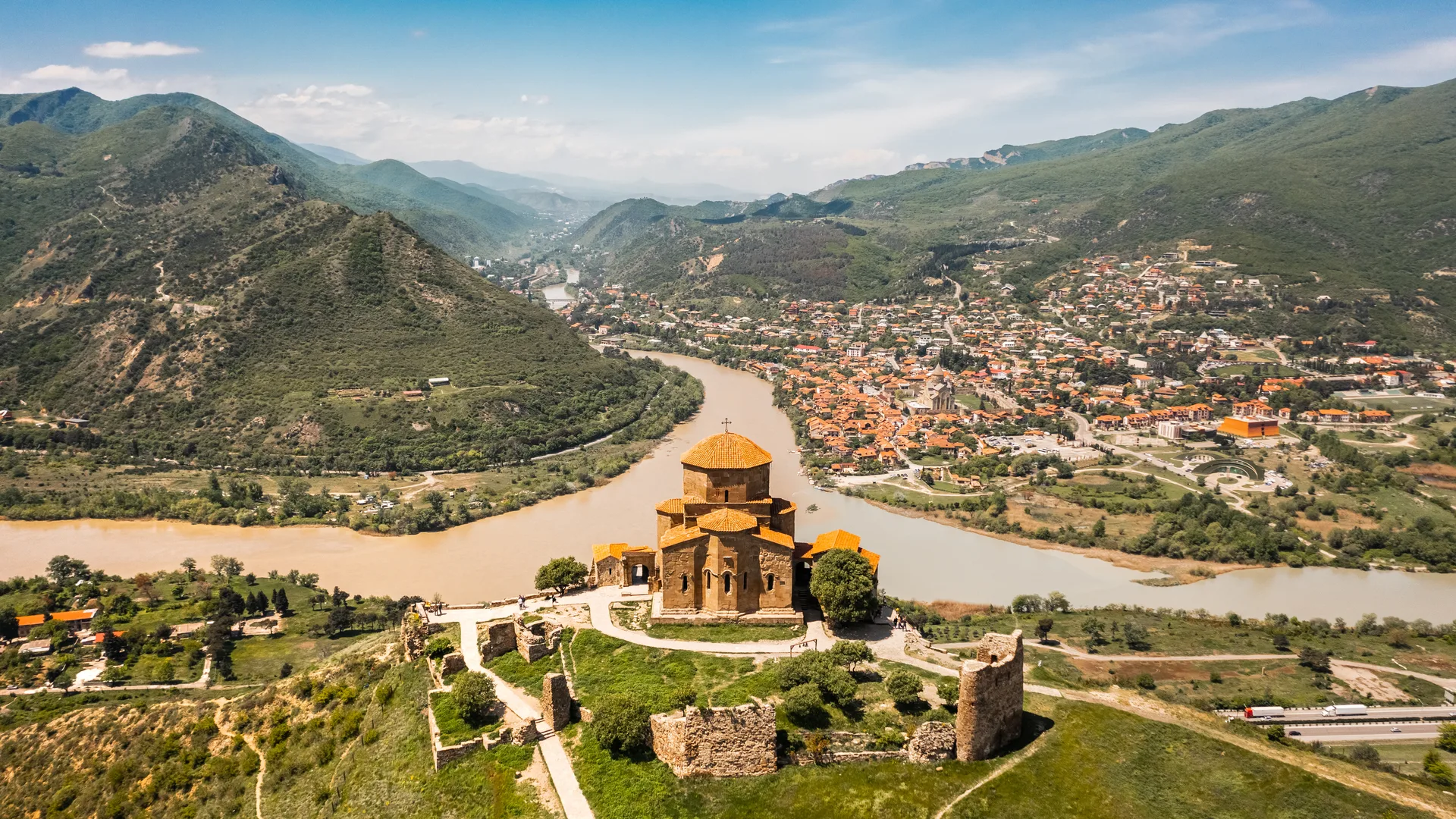
If you only do one day trip from Tbilisi, make it Mtskheta. It's 20 minutes away, it's a UNESCO World Heritage site, and it holds the two most historically significant churches in Georgia. This is where Christianity became the state religion in 337 AD — one of the first places on Earth that happened.
Svetitskhoveli Cathedral dominates the town center. It's the spiritual heart of Georgia, a massive 11th-century church where Georgian kings were crowned and buried. The interior is surprisingly austere — rough stone walls, faded frescoes, and an atmosphere that makes modern cathedrals feel like shopping malls. Local legend says Christ's robe is buried beneath the church, which is why the name translates to "the living pillar."
Jvari Monastery sits on a cliff above town, overlooking the confluence of the Mtkvari and Aragvi rivers. The 6th-century church is one of the earliest examples of the "cross-in-square" architecture that defined Georgian churches for centuries. The view alone justifies the trip — you can see the two rivers merging with Mtskheta spread below.
Getting there
Marshrutkas run every 15–20 minutes from Didube station in Tbilisi. The ride takes about 30 minutes and costs 1 GEL (~$0.35). They drop you in the town center, a short walk from Svetitskhoveli. For Jvari Monastery on the hill, you'll need a taxi (10–15 GEL round trip) — no public transport goes up there.
Pro Tip
Visit Jvari first thing in the morning. By midday in summer, tour buses pack the tiny parking area and the contemplative atmosphere evaporates. Early morning light on the rivers is also far better for photos.
Time needed
Half a day is perfect. You can combine it with lunch in Mtskheta (try Salobie for excellent lobio in clay pots) and still be back in Tbilisi by mid-afternoon. Some people combine Mtskheta with the drive to Kazbegi since it's on the way — though that makes for a very full day.
2. Kazbegi & the Georgian Military Highway
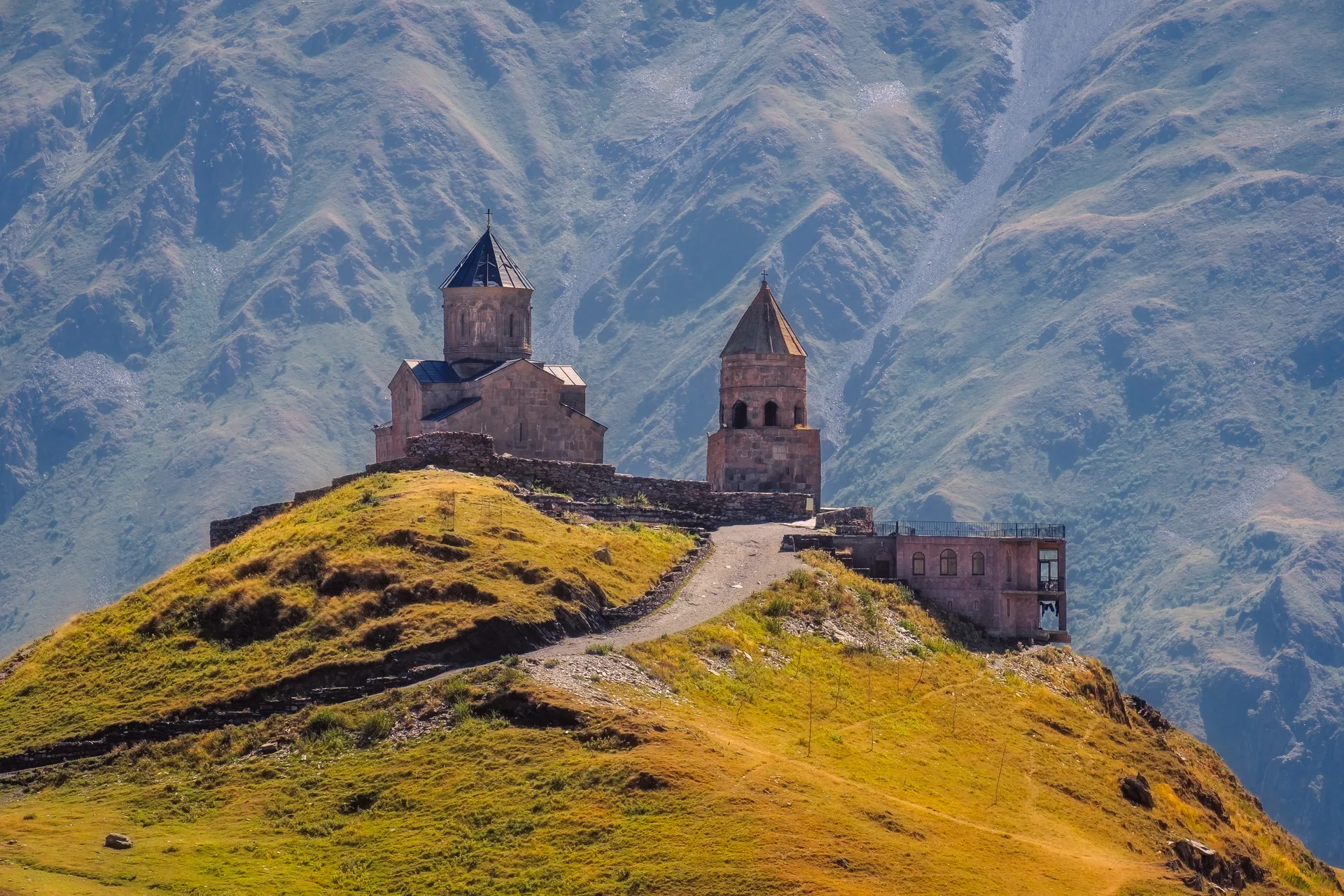
This is the day trip that ends up on everyone's Instagram. The Georgian Military Highway is 150 km of some of the most dramatic mountain road in Europe — steep valleys, ski resorts, a reservoir that looks photoshopped, and a fortress that could've been a Game of Thrones set. At the end of it: Gergeti Trinity Church, perched at 2,170m with Mount Kazbek (5,054m) looming behind it.
The drive itself is half the experience. You'll pass through the Aragvi Valley, stop at Ananuri Fortress above the turquoise Jinvali Reservoir, climb through the ski resort of Gudauri, cross the Jvari Pass at 2,379m (where there's a Soviet-era friendship monument with mosaic murals), and descend into Stepantsminda — the town at the base of Kazbek.
The hike to Gergeti Trinity Church takes about 40–60 minutes uphill. You can also hire a 4x4 for about 50–60 GEL round trip if the ascent doesn't appeal. I'd recommend hiking up and getting a ride down — the trail gives you changing angles of the church that you miss from a car window.
Getting there
Marshrutkas to Stepantsminda leave from Didube station roughly every hour (first departure around 7:00 AM). The trip takes about 3 hours and costs 15 GEL. For the return, the last marshrutka back usually departs around 3:00–4:00 PM — confirm locally as schedules shift.
A private driver costs 150–200 GEL for the day and lets you stop wherever you want along the highway. Split between 3–4 people, it's barely more expensive than marshrutkas and infinitely more flexible.
Winter Warning
The Jvari Pass closes during heavy snow (usually November–March, sometimes April). The road can be blocked for days. Check conditions before going in winter — the Facebook group "Georgia Travel Info" is the most reliable real-time source. In summer, the road is fine in any vehicle.
Time needed
A full day. Leave Tbilisi by 7:00–8:00 AM, aim to arrive in Stepantsminda by 10:00–11:00, hike to Gergeti, have lunch, and return by evening. If you're hiring a driver, build in an hour at Ananuri and 15 minutes at the Soviet friendship monument — both are worth the stops.
3. Sighnaghi & the Kakheti Wine Region
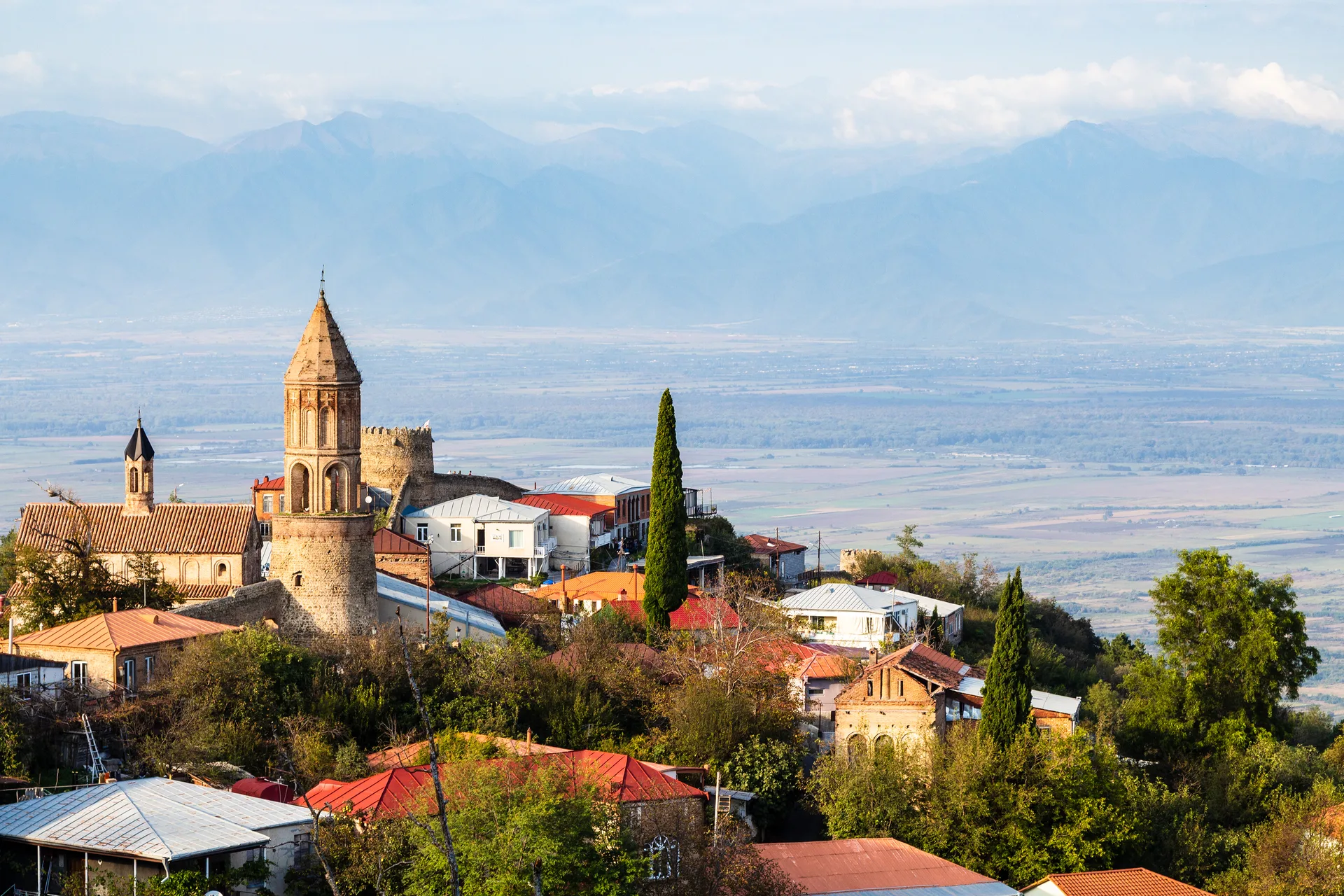
Kakheti is where wine was invented — not metaphorically, literally. This region has 8,000 years of continuous winemaking history, and the qvevri method (fermenting in underground clay vessels) is a UNESCO-recognized tradition. A day trip here means wine tastings, chacha shots, and enough food to last a week.
Sighnaghi is the postcard town — a hilltop settlement with cobblestone streets, Italian-style terracotta roofs, and sweeping views over the Alazani Valley to the Caucasus mountains. It's tiny, walkable in an hour, and unreasonably photogenic. The town wall and watchtowers are open to explore, and the Bodbe Monastery (burial place of Saint Nino, who brought Christianity to Georgia) is a 15-minute walk below town.
For wine, don't just hit the big commercial operations. The best tastings are at small family cellars where you'll sit in someone's courtyard, drink from a horn, and eat homemade churchkhela while the host explains the difference between amber wine from Kakhuri Mtsvane and the dark, tannic Saperavi that turns your teeth purple.
Getting there
Marshrutkas to Sighnaghi leave from Samgori station (not Didube). About 2 hours, 7 GEL. Departures are less frequent than other routes — typically every 2–3 hours. A taxi for the day costs 120–150 GEL and lets you combine Sighnaghi with winery stops in Telavi or along the Kakheti highway.
Wine Tasting Tip
Skip the polished tasting rooms with marketing brochures. Ask locals (or your driver) to recommend a family marani. You'll taste better wine, pay less (often nothing — Georgians are genuinely insulted if you try to pay for hospitality), and get a far more authentic experience. Just bring a gift — a bottle of something or chocolates goes a long way.
Time needed
A full day. If you're only doing Sighnaghi, a half day works. But the best Kakheti day trips combine the town with 2–3 winery stops. Leave early, return late. Have a designated driver situation sorted — chacha at 10 AM happens more often than you'd expect.
4. David Gareja Monastery Complex
This one's for the adventurous. David Gareja is a 6th-century cave monastery carved into a semi-desert ridge on the Azerbaijan border. The main monastery (Lavra) is impressive enough, but the real prize is climbing over the ridge to the Udabno caves — medieval monk cells with remarkably preserved frescoes, looking out over an endless, Mars-like landscape of red and yellow hills.
The setting is otherworldly. Georgia is usually associated with lush mountains and forests — David Gareja is the opposite. Dry steppe, painted hills, zero shade. The hike over the ridge takes 30–40 minutes and involves some scrambling, but it's not technical. Just bring lots of water and sun protection.
Getting there
No public transport. Your options are a guided tour (50–80 GEL per person), a taxi (120–150 GEL round trip), or renting a car. The road is paved most of the way but the last stretch can be rough — a regular car is fine in summer but check conditions in spring when it can get muddy.
Best Season
Spring (April–May) is ideal — wildflowers blanket the steppe, and temperatures are comfortable for hiking. Summer is brutally hot (40°C+) with zero shade on the ridge. Autumn works too. Winter is empty and atmospheric but cold and windy.
Time needed
A full day including driving. Some tours combine David Gareja with the "Rainbow Mountains" (the painted hills of Udabno region) — worth doing if you have time. Budget 2–3 hours at the monastery complex itself.
5. Ananuri Fortress & Jinvali Reservoir
Most people see Ananuri as a 20-minute photo stop on the way to Kazbegi. That's fair — it is right on the Georgian Military Highway. But if you're not doing the full Kazbegi day trip, Ananuri alone makes a worthwhile shorter excursion, especially combined with lunch at one of the restaurants overlooking the reservoir.
The 16th-century fortress complex includes two churches, defensive towers, and a position above the Jinvali Reservoir that produces genuinely ridiculous colors — the water is turquoise-to-emerald depending on the light, framed by green hills. The smaller Church of the Virgin has some of the finest carved stone decoration in Georgia.
Getting there
Any marshrutka heading to Gudauri or Kazbegi from Didube passes Ananuri (about 1 hour, 5 GEL). Tell the driver "Ananuri" and they'll drop you roadside. Getting back is trickier — you'll need to flag down a returning marshrutka on the highway, and they're often full. A taxi from Tbilisi is about 60–80 GEL round trip.
Time needed
Half a day. An hour at the fortress is enough, plus time for the reservoir views. Combine with Mtskheta on the way back for a satisfying double-header.
6. Uplistsikhe — The Ancient Cave City
Uplistsikhe is a 3,000-year-old cave city carved into a rocky ridge above the Mtkvari River. It's one of the oldest urban settlements in Georgia — predating Christianity by centuries. At its peak, it housed 20,000 people and had a theater, pharmacy, and pagan temples. Today, you walk through the hollowed-out rooms, tunnels, and ceremonial halls of a civilization that thrived here from the Early Iron Age through the Middle Ages.
It's smaller than Vardzia (which requires an overnight trip to the south) but more accessible and arguably more atmospheric. The rock formations, the secret tunnel to the river, and the 10th-century basilica built right on top of the ancient structures create this surreal layering of eras.
Getting there
Take the train from Tbilisi to Gori (about 1.5 hours, 2 GEL, several departures daily). From Gori, a taxi to Uplistsikhe costs 15–20 GEL one way (it's 15 km). Many people combine Uplistsikhe with Gori itself — which has a small but fascinating Stalin Museum, regardless of your politics. The man was born here, and the museum treats that fact with a tone that ranges from "historical documentation" to "uncomfortable admiration" depending on which room you're in.
Photography Note
Late afternoon light is best at Uplistsikhe — the rock glows golden and the shadows create dramatic depth in the cave rooms. Morning works too, but midday sun washes everything out. The entrance fee is 7 GEL.
Time needed
A full day if combining Uplistsikhe + Gori. Half a day for Uplistsikhe alone. The cave city needs about 1.5–2 hours to explore properly.
7. Borjomi — Mineral Water & Forest Walks
Everyone in the former Soviet Union knows Borjomi — the mineral water brand is as iconic as Coca-Cola. The source town is a pleasant surprise: a narrow valley with a beautiful central park, hot springs, a cable car, and trails into Borjomi-Kharagauli National Park (one of Europe's largest protected areas).
The main draw is Borjomi Central Park, where you can drink the warm, sulfurous mineral water straight from the source for free. The taste is... distinctive. It's warm, fizzy, and has a strong mineral flavor that you'll either love or immediately spit out. Either way, it's an experience. The park itself extends along a forested gorge with a river, walking trails, pools (some warm, some cold), and a cable car to a hilltop viewpoint.
If you want more nature, trails from Borjomi lead into the national park — the hike to Likani and back takes about 3 hours and follows a beautiful forest river.
Getting there
The train from Tbilisi to Borjomi is one of Georgia's most scenic routes — 4+ hours through valleys and mountains. It's comfortable but slow. For a day trip, marshrutkas from Didube are faster (about 2.5 hours, 10 GEL). Some people combine Borjomi with nearby Rabati Castle in Akhaltsikhe (another 45 minutes by marshrutka).
Time needed
A full day. The park alone fills 2–3 hours. Add a national park hike and you'll need every minute. The train schedule means an overnight might be more relaxing — but it's doable as a day trip if you take the marshrutka.
8. Chiatura — Soviet Cable Cars & Manga Mining Town
Chiatura is Georgia's most surreal day trip. It's a manganese mining town that's been slowly declining since the Soviet collapse, connected by a network of cable cars that were built in the 1950s and largely haven't been updated since (though some newer ones have been added). The town sits in a dramatic canyon, and the cable cars — some of them genuinely terrifying, others recently modernized — are both transport and attraction.
This isn't a comfortable tourist experience. Chiatura is working-class, rough around the edges, and largely empty. That's exactly the appeal. If you're interested in Soviet industrial heritage, post-industrial landscapes, or just want to ride cable cars that feel like time machines, this is unmissable. Nearby Katskhi Pillar — a 40-meter natural stone column with a church on top — adds another layer of absurdity to the trip.
Getting there
Marshrutkas from Didube, about 3.5 hours, 12 GEL. Getting to Katskhi Pillar requires a taxi from Chiatura (about 20 GEL round trip). The pillar itself is visible from the road but you can't climb it — a monk lives up there and access is restricted.
Time needed
A long full day. Leave early. The drive is substantial, and you'll want time to ride at least 3–4 cable cars, explore the canyon, and visit Katskhi.
9. Bolnisi & Dmanisi — Georgia's Archaeological Frontier
This is the off-the-beaten-path pick. Dmanisi is one of the most important archaeological sites in the world — where 1.8-million-year-old hominid skulls were discovered, making it the oldest known human settlement outside Africa. The site itself is modest (a medieval fortress with the excavation area below), but the significance is staggering.
Nearby Bolnisi Sioni is the oldest surviving church in Georgia (5th century) and the origin of the Bolnisi cross — the symbol on Georgia's flag. The carved stone inscriptions here are the earliest known examples of the Georgian alphabet.
Neither site gets many tourists, which means you'll likely have them to yourself. The combination of some of the oldest human remains on Earth and the oldest Georgian church makes this a fascinating day for history enthusiasts.
Getting there
Marshrutkas to Bolnisi from Tbilisi (Samgori station, about 1.5 hours, 5 GEL). From Bolnisi to Dmanisi, you'll need a taxi (about 30 GEL round trip). A private driver for the whole loop is 100–120 GEL.
Time needed
A full day. The sites themselves are quick visits, but the drive and logistics fill the time. Combine with Bolnisi's German colonial village (Katharinenfeld) for extra historical layers — the Swabian Germans settled here in the 1810s and their influence is still visible.
10. Kutaisi — Georgia's Second City (Long Day Trip)
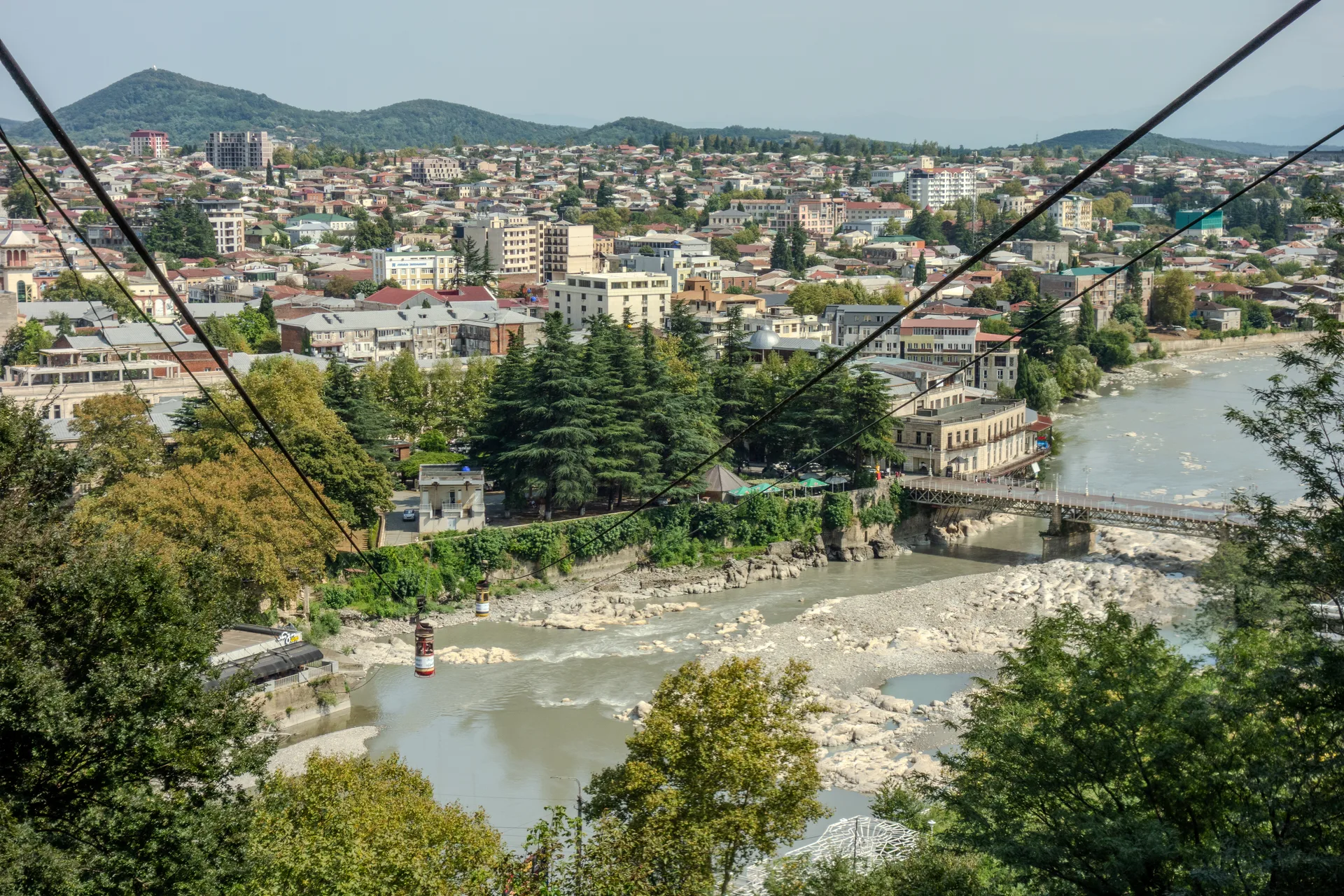
Kutaisi is technically a day trip, but it's a long one — 3.5 hours each way. The payoff: Gelati Monastery (UNESCO World Heritage, one of the finest medieval academies in the world), Bagrati Cathedral, Prometheus Cave (a massive underground cavern with a boat ride through an underground river), and the Martvili or Okatse canyons.
You can't do all of this in a day. Pick two: Gelati + the city, or Gelati + one canyon/cave. Gelati is non-negotiable — the mosaics inside are genuinely among the finest Byzantine-era artworks in the Caucasus, and the monastery's role as a medieval center of learning gives it a gravitas that most tourist monasteries lack.
Getting there
The fast train from Tbilisi to Kutaisi takes about 5.5 hours (departs early morning). Marshrutkas are slightly faster at 3.5–4 hours from Didube (15 GEL). For a proper day trip, a hired car is almost essential — otherwise you'll spend most of the day in transit. Budget 250–300 GEL for a driver.
Overnight Alternative
Honestly? Kutaisi deserves two days. If you can swing it, spend a night and do Gelati + Prometheus Cave + one canyon. The city center has good cheap guesthouses and a charming farmers' market. The day trip version works but feels rushed.
Transport Tips
🚐 Marshrutkas
The backbone of Georgian intercity travel. Old minivans that leave when full. Cheap, frequent on main routes, uncomfortable. Main hubs: Didube (north/west), Samgori (south/east). No online booking — just show up.
🚗 Private Drivers
The best option for day trips with multiple stops. Most guesthouses can arrange one. Apps like GoTrip work too. Always agree on price beforehand. 150–300 GEL/day is normal depending on distance.
🚂 Trains
Scenic but slow. Best for Gori/Uplistsikhe and Borjomi. Book at railway.ge or at the station. The Tbilisi–Borjomi route is genuinely beautiful. The Kutaisi train is too slow for a comfortable day trip.
📱 Useful Apps
Google Maps works well for navigation. Bolt for taxis in cities. GoTrip for intercity private transfers. Maps.me for offline maps (essential in mountain areas with no signal).
What You'll Spend
| Expense | Budget | Comfortable |
|---|---|---|
| Transport (marshrutka) | 5–15 GEL | — |
| Transport (private driver) | — | 60–300 GEL |
| Entrance fees | 0–15 GEL | 0–15 GEL |
| Lunch | 10–15 GEL | 25–40 GEL |
| Wine tasting | Free (family cellars) | 15–30 GEL (commercial) |
| Total per person | 15–45 GEL ($5–16) | 100–385 GEL ($35–140) |
Georgia is absurdly cheap for day trips. Even with a private driver, you're spending less than a taxi ride to the airport costs in most European capitals. Entry fees are minimal — most churches and monasteries are free. The biggest expense is transport, and splitting a driver between 3–4 people makes even that reasonable.
My Ranking: If You Only Have Time For Three
Every trip on this list is worth doing. But if I had to choose three for a first-time visitor to Georgia, those are the ones. They give you the full spectrum: ancient history, mountain grandeur, and cultural immersion. Everything else is a bonus.
Written by The Georgian Guide Team
We've lived in Georgia for years, driven every route on this list multiple times, and have strong opinions about which ones are actually worth your time. Our recommendations come from experience, not research — we've hiked to Gergeti in rain, drunk too much chacha in Kakheti, and ridden Chiatura's cable cars more times than is advisable.
Last updated: February 2026.
Frequently Asked Questions
What is the best day trip from Tbilisi?
Mtskheta is the easiest (20 minutes, UNESCO site). For the most dramatic scenery, the drive to Kazbegi along the Georgian Military Highway is unbeatable. For wine lovers, Sighnaghi or a Kakheti winery tour wins.
Can I do day trips without a car?
Mtskheta and Jvari are easy by marshrutka or taxi. For Kazbegi, David Gareja, and Kakheti, either hire a driver for the day (80-120 GEL) or join an organized tour. Solo marshrutka travel works but limits flexibility.
How much does a day trip driver cost?
A private driver for a full day typically costs 80-150 GEL depending on distance. Kazbegi runs about 120-150 GEL. Kakheti wine tours with a driver are 100-130 GEL. Your hotel or guesthouse can usually arrange one.
Is David Gareja worth the trip?
The cave monastery complex is stunning and the views into Azerbaijan are dramatic. But the road is rough (unpaved for the last stretch), it's remote, and there's limited shade. Go in spring or fall, not summer.
Can I visit Kazbegi as a day trip?
Technically yes — it's about 3 hours each way. But it's a long day (leave by 7am, return by 8pm), and you'll only have 2-3 hours at the top. An overnight stay is strongly recommended to enjoy it properly.
Related Articles
The Georgian Military Highway
The most beautiful drive in the Caucasus, from Tbilisi to Kazbegi.
Kakheti Wine Region Guide
Everything about Georgia's wine heartland — wineries, towns, and itineraries.
Getting Around Georgia
Metro, marshrutkas, trains, Bolt — the complete transport guide.
Tbilisi for First-Timers
Everything you need to know before your first trip to Tbilisi.