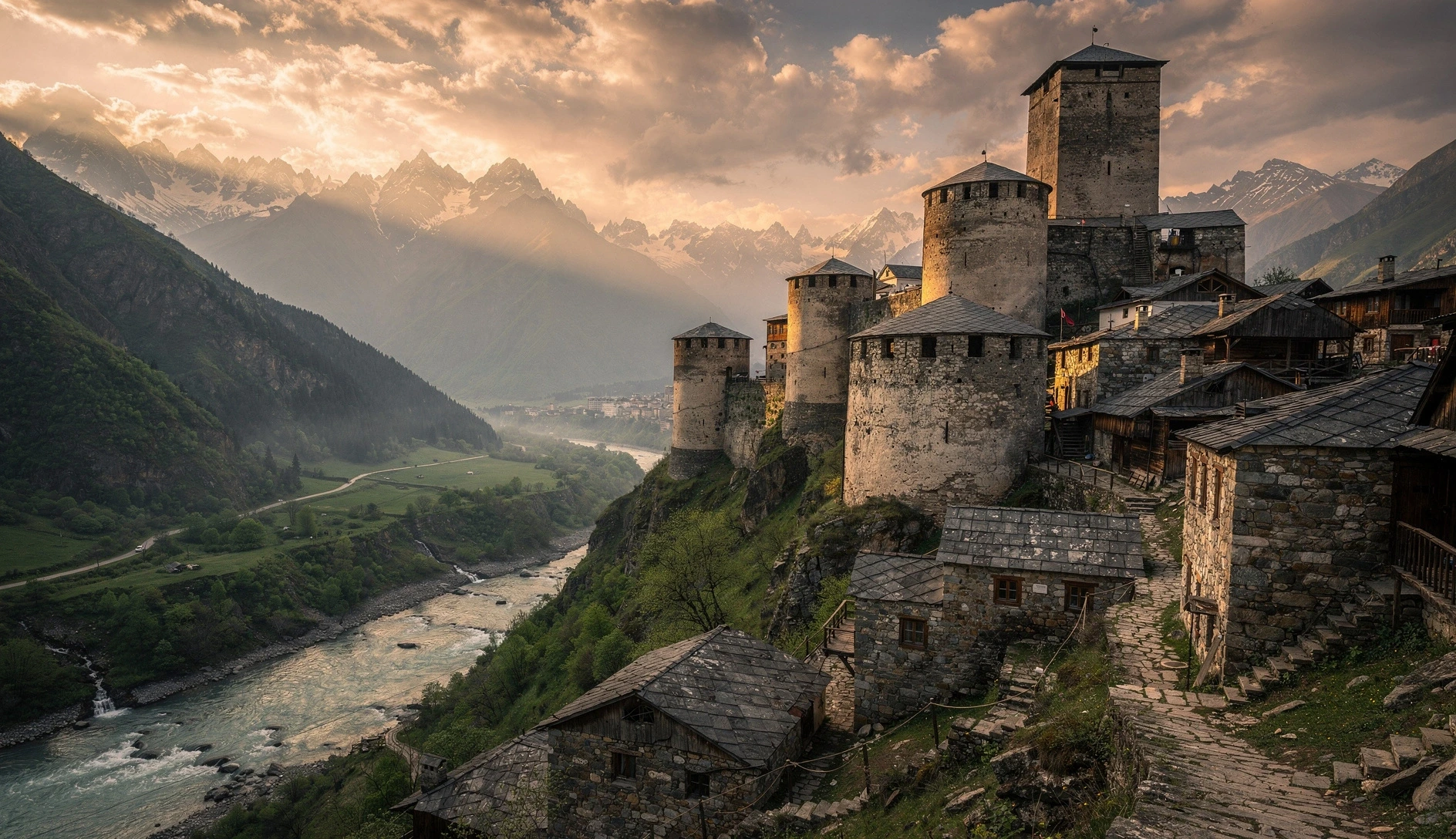
Everyone who visits Georgia goes to Kazbegi. Most make it to Svaneti. But Khevsureti — the region wedged between them, home to medieval fortress villages that look like something from a Tolkien adaptation — remains almost entirely off the tourist radar. Which is exactly why you should go.
Khevsureti is the historical highland province in the Greater Caucasus northeast of Tbilisi. Its centerpiece is Shatili, a UNESCO Tentative World Heritage Site where dozens of stone towers cluster together like a living organism that grew directly from the mountainside. Nearby, the abandoned fortress of Mutso crumbles dramatically on a clifftop. And all around, alpine valleys stretch toward the Russian border through landscapes that haven't fundamentally changed in centuries.
This isn't a region you can rush through. The road in crosses a 2,676-meter pass, the season is brutally short, and the infrastructure barely exists. But if you're the kind of traveller who finds Kazbegi too crowded and thinks Tusheti sounds too easy, Khevsureti is your place.
Quick Facts
Why Khevsureti Matters
If Svaneti is Georgia's mountain showpiece — well-connected, tourist-ready, UNESCO-certified — then Khevsureti is its wilder, more reclusive sibling. The region was home to the Khevsurs, a warrior people who guarded Georgia's northeastern frontier for centuries. They were so isolated that when a group of Khevsur men rode into Tbilisi in 1915 wearing chainmail and carrying broadswords to volunteer for World War I, the sight reportedly stunned the city.
The Khevsurs practiced a unique blend of Christianity and pre-Christian belief. Their sacred shrines (khati) still dot the valleys. Their code of honour, which included ritualized duelling and a famous chastity test involving a dagger placed between unmarried couples sharing a bed, was so unusual that European travellers theorized the Khevsurs descended from Crusaders. (They didn't. DNA testing has firmly debunked this, but it makes for a good story over dinner.)
During Soviet times, many Khevsur families were forcibly relocated to the lowlands. Villages were abandoned. Traditions frayed. But in the last decade, Shatili has come back to life — partly through restoration, partly through the stubborn persistence of the handful of families who never left, and partly through a growing trickle of travellers who've heard whispers about this place and decided to see it for themselves.
Shatili: The Fortress Village
Shatili is the reason most people come to Khevsureti, and it delivers. The village is essentially a single massive fortification: dozens of stone towers and dwellings fused together into a structure that covers an entire hillside above the Arghun river gorge. From a distance, it looks like a single castle. Up close, you realize it's an entire community — defensive towers, living quarters, livestock pens, and passageways all interlocked into one organic mass of stone.
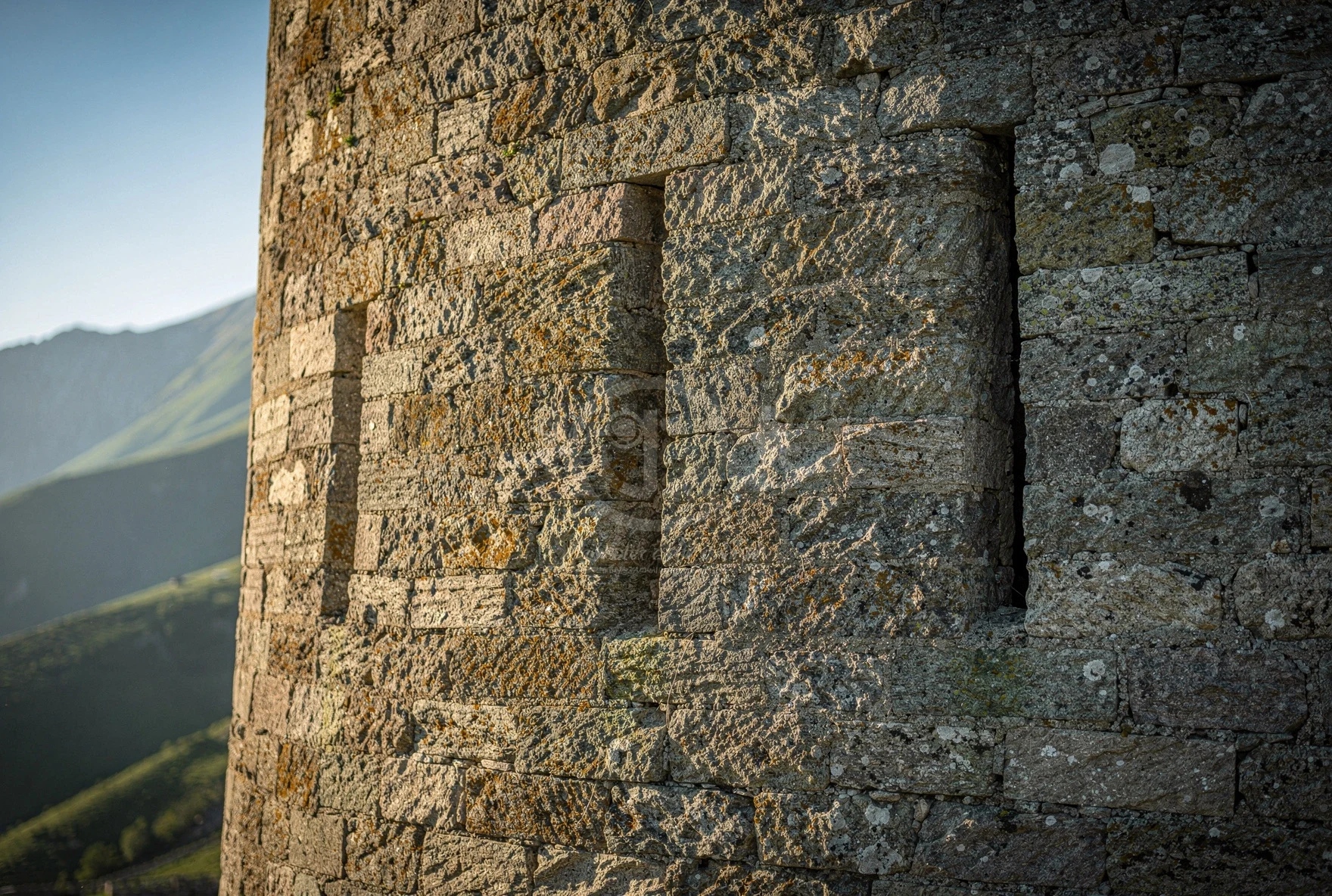
The architecture dates mainly from the 7th to 13th centuries, though some structures may be older. Look for the pictogram carvings above doorways — crosses, animals, geometric patterns — that mark different clan territories. The narrow window slits were designed for defending against raids from across the border. Every element of the design serves a purpose.
The village splits into Old Shatili (the fortress complex, partially restored and open to walk through) and New Shatili, where a few families still live year-round and several guesthouses operate in summer. Old Shatili is free to explore on your own, though hiring a local guide for 50–80 GEL gets you stories and context that make the stones come alive.
Photography Tip
The best light on Shatili is early morning, when the sun hits the eastern-facing towers while the gorge below is still in shadow. The classic overview shot is from the hillside across the river — follow the trail past the new village for about 10 minutes.
Mutso: The Abandoned Fortress
If Shatili is impressive, Mutso is haunting. This abandoned fortress village sits on a sheer cliff above the Arghun gorge, about 8 km from Shatili. Nobody lives here anymore. The towers are crumbling. Burial crypts with actual human remains are visible in the cliff face. It feels less like visiting a tourist site and more like trespassing on a place that history forgot.
Getting to Mutso requires a steep 30–40 minute hike from the road below. The trail is marked but unmaintained. At the top, you can explore the ruins freely — there are no fences, no signs, no ticket office. Just you and 500 years of silence. Watch your footing near the cliff edges; nothing is secured.
Mutso's towers were partially restored in 2019–2021 with support from the National Agency for Cultural Heritage. The work stabilized the structures without over-restoring them, which was the right call. The place still feels authentically abandoned rather than museum-ified.
Safety Note
The burial crypts at Mutso and Anatori contain human bones and are considered sacred by locals. Look but don't touch, and definitely don't take anything. These are not decorative — they're real remains of real people. Respect accordingly.
What to Do in Khevsureti
Hike to Anatori
The Anatori necropolis sits in a side valley about 4 km from Shatili. Stone crypts built into the cliff face contain skeletal remains dating back several centuries. It's a surreal, slightly eerie experience — these are open-air tombs in a remote mountain gorge. The hike takes about 90 minutes each way and follows the Arghun river upstream.
Trek to Ardoti and Beyond
For serious hikers, Khevsureti connects to the multi-day Omalo–Shatili trek, one of the great Caucasus traverses. The trail passes through Ardoti and crosses the 3,431-meter Atsunta Pass into Tusheti. This is a 3–4 day trek requiring camping gear, navigation experience, and ideally a guide. Don't attempt it alone unless you know what you're doing — the pass is tricky in bad weather and there's no mobile signal for most of the route.
Day Hike from Shatili
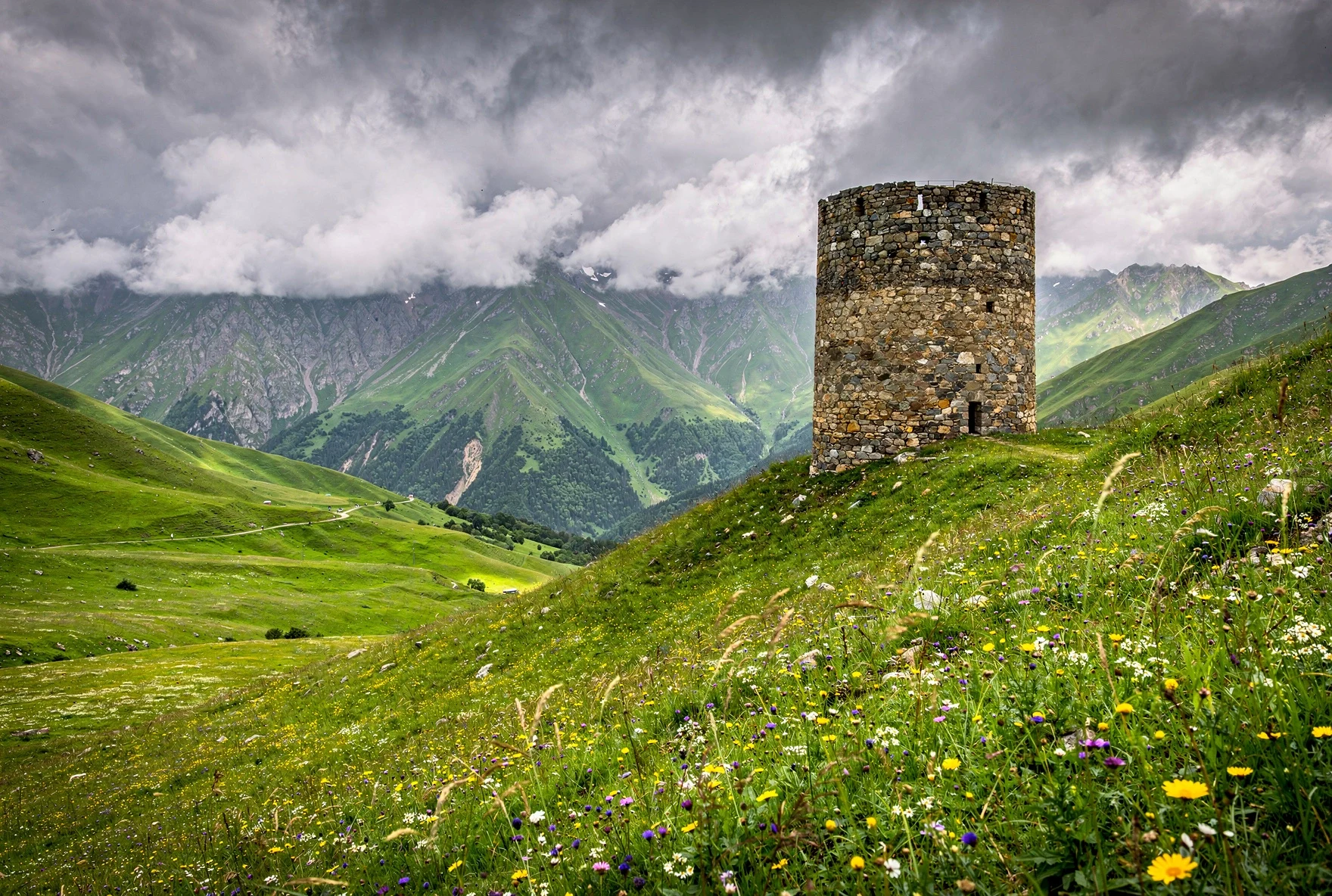
Several shorter trails radiate from Shatili into the surrounding valleys. The hike up the Arghun gorge toward the Russian border is spectacular — green meadows, scattered towers, increasingly dramatic peaks. Turn around whenever you've had enough. You don't need a guide for this, but carry water and food since there's nothing out there.
Visit Khati Shrines
The Khevsurs maintained a complex system of sacred sites called khati — a mix of Christian and pre-Christian worship. Some are small stone enclosures near villages; others are marked by ancient crosses or carved stones in remote locations. Ask your guesthouse host to point out the ones near Shatili. Don't enter shrines without local permission — some are still actively used.
Eat Khevsurian Food
Khevsureti has its own distinct cuisine, heavier and simpler than lowland Georgian food. The star is kuserbo — pan-fried potatoes with cheese and clarified butter that sounds basic until you taste it at 1,400 meters of altitude after a day of hiking. Also try dambalkhacho, a mild aged cheese unique to the region. Khinkali here comes with a pure beef filling (no pork in the mountains) and tends to be simpler than the Tbilisi version.
Getting There
This is the part where Khevsureti gets complicated. There's one road in, and it's not always open.
| Transport | Details | Cost |
|---|---|---|
| Marshrutka | From Didube station, Tbilisi. Runs late June–September, usually daily. ~6 hours. | ~25 GEL |
| Shared Taxi | Arrange at Didube or through guesthouse. Faster, more flexible departure time. | ~50–70 GEL per person |
| Private Car/4WD | Hire a driver with a 4WD through your guesthouse or a Tbilisi tour agency. Recommended. | 300–400 GEL one-way |
| Self-Drive | 4WD strongly recommended. Road is paved to Barisakho, then gravel/dirt over the pass. Not for nervous drivers. | Rental from ~120 GEL/day |
The road from Tbilisi heads north through Zhinvali and Barisakho, then climbs to the Datvisjvari (Bear's Cross) Pass at 2,676 meters before descending into the Arghun gorge toward Shatili. The paved section ends around Barisakho. After that, it's gravel, dirt, and in some sections, a single lane carved into the mountainside. The pass section is exposed and can be foggy or icy even in summer.
Road Conditions
The road to Shatili is significantly easier than the road to Tusheti (Abano Pass). A regular 4WD can handle it in dry conditions. That said, after heavy rain the gravel sections get slick and visibility near the pass can drop to almost nothing. Check conditions locally before setting out, and don't drive this at night.
When to Visit
| Month | Conditions | Verdict |
|---|---|---|
| Late May–June | Road may just be opening. Green, wildflowers, some rain. Fewer people. | Good (check road first) |
| July–August | Peak season. Warmest, driest, most guesthouses open. Festivals in July/September. | Best |
| September | Early autumn colors. Shatiloba festival (first/second weekend). Cooler nights. | Excellent |
| October | Late season. Beautiful fall colors but road may close any day. Few services. | Risky but rewarding |
| Nov–April | Road closed. Snow covers the pass. Region is inaccessible. | Not possible |
If you can time it, the Shatiloba festival (usually first or second weekend of September) brings traditional music, dancing, horse racing, and a general celebration that gives you a window into Khevsur culture that's hard to find otherwise. The Mountain Days festival, a newer government initiative, has also been held in Shatili — check dates closer to your trip.
Where to Stay & Eat
Accommodation in Khevsureti is limited to family-run guesthouses in Shatili. Don't expect hotels, booking.com listings, or much of an internet presence. Most guesthouses are booked by phone (Georgian language helps enormously) or through contacts in Tbilisi. Some have appeared on Booking.com in recent years, but availability is sparse.
Guesthouse Cost
Expect 60–100 GEL per person per night including dinner and breakfast. Some charge separately for meals. Confirm pricing when booking.
What's Included
A bed (usually shared rooms), home-cooked dinner, breakfast, and as much homemade wine or chacha as your liver can handle. Bathrooms are shared.
Food Situation
There are no restaurants. Your guesthouse is your restaurant. The food is hearty mountain fare — cheese, bread, potatoes, meat. Bring snacks for hikes.
Supplies
There's a tiny shop in Shatili for basics. Bring anything specific you need from Tbilisi — sunscreen, medications, extra snacks, proper hiking gear.
Connectivity
Mobile signal in Shatili ranges from weak to nonexistent depending on your carrier and the weather. Magti tends to have the best coverage. Don't count on data. Wi-Fi at guesthouses is rare and when it exists, it's painfully slow. Embrace the disconnection — it's part of the experience.
Budget Breakdown
3-Day Trip from Tbilisi (Per Person)
That's roughly $105–165 USD for a three-day trip to one of the most remarkable historic sites in the Caucasus. Georgia remains absurdly affordable for what you get.
Suggested 3-Day Itinerary
| Day | Plan |
|---|---|
| Day 1 | Leave Tbilisi early morning. Stop at Zhinvali reservoir and Barisakho for lunch. Cross the Datvisjvari Pass. Arrive Shatili by afternoon. Explore Old Shatili before dinner. Overnight in guesthouse. |
| Day 2 | Morning hike to Mutso (drive to trailhead, 30–40 min hike up). Afternoon: hike to Anatori necropolis or explore the Arghun valley. Evening: guesthouse dinner with homemade wine. |
| Day 3 | Final morning walk around Shatili. Drive back to Tbilisi via the Pshavi road, stopping at Roshka or the Abudelauri Lakes trailhead if time allows. Back in Tbilisi by evening. |
Extend Your Trip
With 4–5 days, you can combine Khevsureti with the Abudelauri Lakes hike (accessible from the Roshka side) or continue north from Shatili on the Omalo–Shatili trek into Tusheti. Both options require camping gear and significantly more planning.
Lower Khevsureti & Pshavi
Most visitors focus on Shatili in Upper Khevsureti, but the region's lower half — accessible year-round from the Tbilisi side — has its own appeal. The villages of Roshka and Korsha sit in a green valley surrounded by peaks, and the trailhead for the Abudelauri Lakes (three alpine lakes in different colors — blue, green, and white) starts here.
The Abudelauri Lakes hike is a full day (6–8 hours round trip, moderate difficulty) and is one of the best day hikes in the country. You can reach Roshka from Tbilisi in about 3 hours, making it feasible even if you don't have time for the full Shatili trip.
The adjacent historical region of Pshavi also deserves mention. Less dramatic than Khevsureti but more accessible, Pshavi has its own traditions, sacred sites, and the beautiful Pshavela museum dedicated to the great Georgian poet Vazha-Pshavela, whose epic poems about Khevsur warriors are required reading in every Georgian school.
Practical Tips
🥾 Footwear
Proper hiking boots are essential. The terrain around Shatili and especially at Mutso is loose rock, steep trails, and uneven stone. Trainers won't cut it.
💧 Water
Tap water in Shatili comes from mountain springs and is generally safe to drink. Carry a bottle for hikes — there are streams everywhere but treat water from lower-altitude sources.
🏧 Cash
There are no ATMs in Khevsureti. Bring enough cash for your entire stay. The last reliable ATM is in Tbilisi or possibly Zhinvali.
🌤️ Weather
Mountain weather changes fast. Even in July, nights get cold (bring a fleece or light jacket). Rain is always possible. Pack layers regardless of the forecast.
🗣️ Language
Very little English is spoken. Basic Georgian goes a long way. "Gamarjoba" (hello), "Madloba" (thanks), and "Lamazia" (beautiful) will earn you goodwill. See our Georgian phrases guide.
🛡️ Safety
Khevsureti borders Chechnya/Ingushetia. The border area is restricted — don't hike north of marked trails. The region itself is perfectly safe. The main risks are the road and the terrain.
Common Mistakes
| Mistake | What to Do Instead |
|---|---|
| Day-tripping from Tbilisi | It's possible but miserable — 12 hours of driving for 2 hours at Shatili. Stay at least one night. |
| No cash | Card payments don't exist here. Bring at least 300 GEL per person in cash. |
| Arriving without accommodation | Book a guesthouse before you go. There aren't many, and in July/August they fill up. |
| Skipping Mutso | Some people only visit Shatili. Mutso is just as impressive and completely different in atmosphere. |
| Driving a 2WD | The road past Barisakho is rough gravel and dirt. A sedan will bottom out. Get a 4WD or take shared transport. |
| No layers | Tbilisi might be 35°C; Shatili will be 15°C at night. Pack warm clothes regardless of season. |
Frequently Asked Questions
Is Shatili safe to visit?
Yes. Despite bordering Chechnya, the area is peaceful and has been for decades. Georgian border patrols are present. The only real danger is the road and the terrain.
Do I need a guide?
Not for Shatili and Mutso — you can explore independently. For multi-day treks (especially the Omalo–Shatili route), a guide is strongly recommended.
Can I visit Khevsureti in winter?
No. The road closes with the first major snowfall (usually November) and doesn't reopen until May or June. The pass is impassable in winter.
How many days do I need?
Minimum 2 nights to see Shatili and Mutso properly. 3–4 nights if you want to hike to Anatori or the Abudelauri Lakes. A week if you're trekking to Tusheti.
Is there a border permit needed?
No special permits are required for Shatili or standard hiking routes. If you're trekking near the Russian border, stick to marked trails and don't cross into restricted areas.
Khevsureti or Tusheti?
Both are incredible but different. Khevsureti is closer to Tbilisi and easier to reach. Tusheti is more remote with better hiking. Khevsureti wins on history; Tusheti wins on wilderness. Do both if you can.
Written by The Georgian Guide Team
Based in Tbilisi with years of experience exploring Georgia's mountain regions. We've driven the Datvisjvari Pass, slept in Shatili guesthouses, and hiked to Mutso more times than our knees would like.
Last updated: March 2026.
Related Articles
Tusheti: Georgia's Most Remote Region
The complete guide to Georgia's final frontier — towers, trails, and traditions.
Kazbegi & Stepantsminda Guide
Georgia's most iconic mountain destination — Gergeti Trinity Church and beyond.
Svaneti Travel Guide
Tower villages, glaciers, and the Mestia–Ushguli trek.
Off the Beaten Path: 12 Hidden Gems
Places in Georgia most tourists never see.