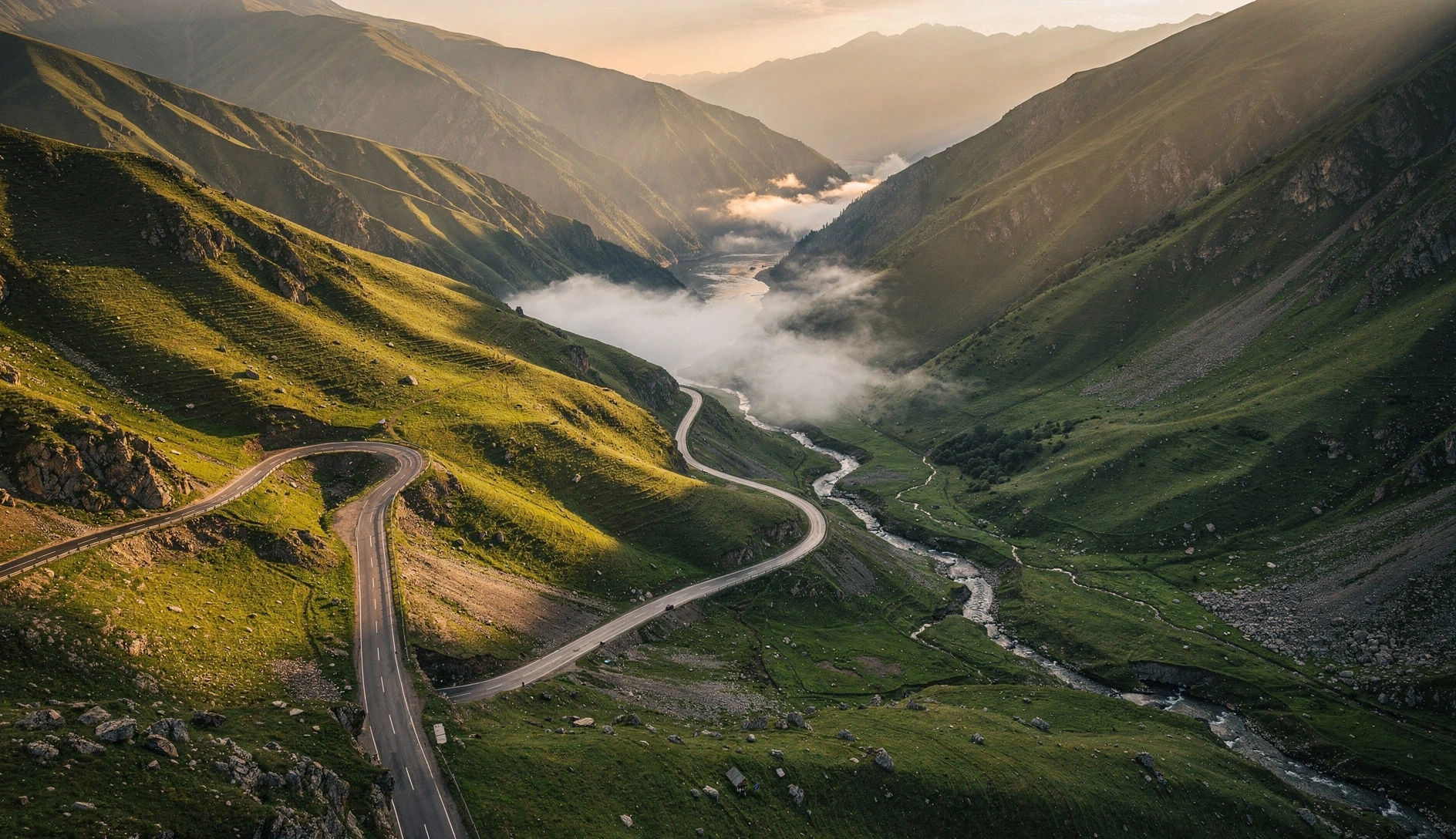
Georgia's tourism boom has a well-worn groove. Tbilisi, Kazbegi, Kakheti wineries, maybe Svaneti if you're feeling adventurous. These places are popular for good reason — they're genuinely impressive. But they're also where every other tourist goes. The Instagram trail is real, and it's getting busier every year.
The good news: step even slightly off that trail and Georgia becomes a completely different country. One where you're the only foreigner for miles, where guesthouse hosts look genuinely surprised to see you, and where the landscapes are just as spectacular — sometimes more so — without a selfie stick in sight.
This guide covers 12 places that most visitors to Georgia never see. Not because they're impossible to reach (though a few push the definition of "road"), but because they haven't yet made it onto the standard itinerary. Some are weird, some are wild, all are worth it.
Why Go Off the Grid in Georgia
Georgia is a small country — roughly the size of Ireland — but its geographic diversity is staggering. In a single day, you can drive from subtropical coastline to semi-desert badlands to alpine meadows above 3,000 meters. Most of this terrain sees almost zero tourist traffic.
The reasons tourists stick to the main circuit are practical. Public transport to remote areas is limited or nonexistent. Roads range from rough to genuinely terrifying. English signage disappears entirely. Accommodation options shrink to "guesthouse run by someone's grandmother" or "your tent."
But if any of that sounds appealing rather than off-putting, you're in the right place. Georgia rewards the adventurous more generously than almost any country in the Caucasus.
1. Chiatura & Katskhi Pillar
What it is: A Soviet manganese mining town suspended on cliffs, connected by the most terrifying cable car network you'll ever ride — plus a 40-meter limestone pillar with a church on top where a monk has lived for two decades.
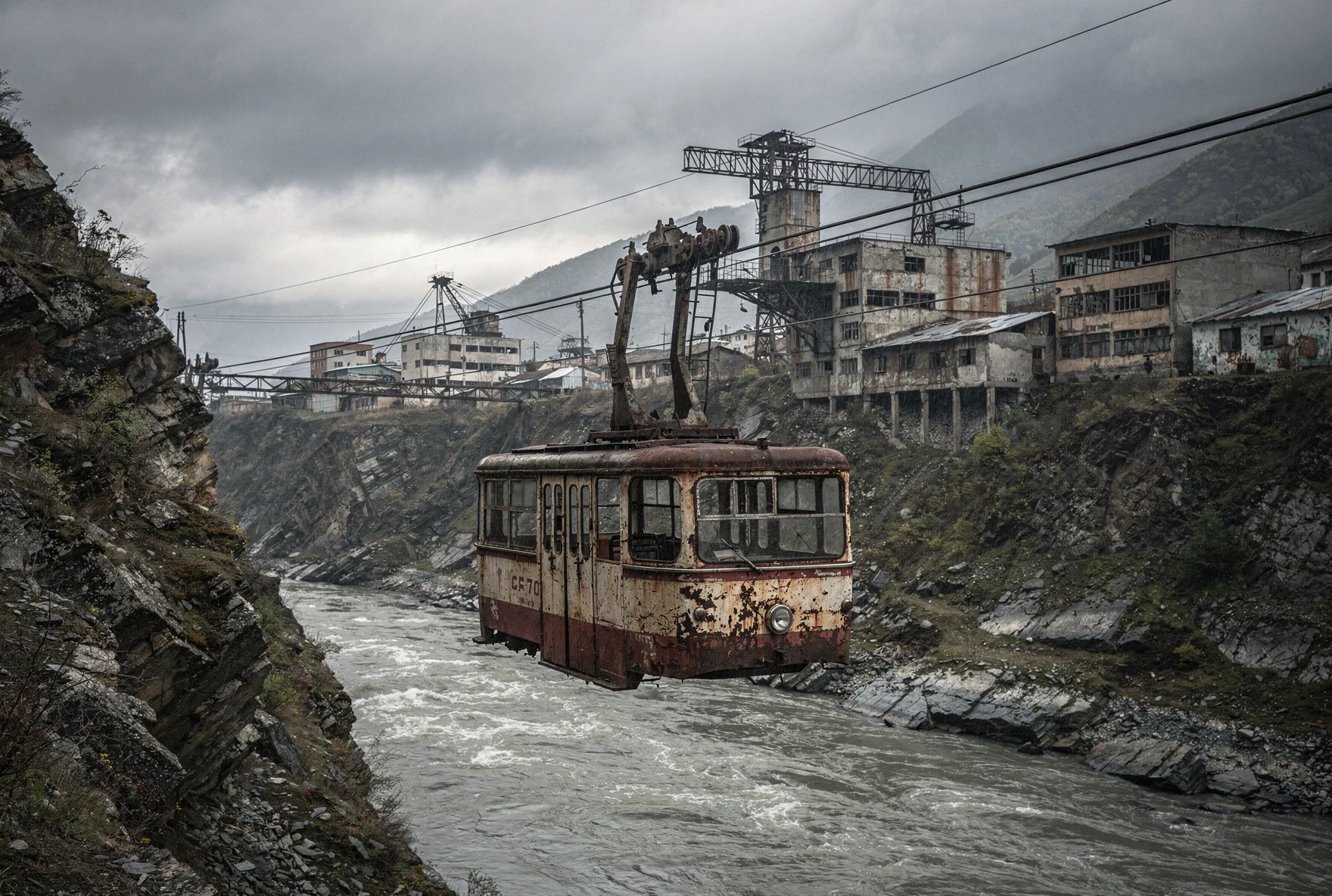
Chiatura is not a pretty place. It's an industrial town carved into a gorge, where apartment blocks cling to cliff faces and rusting infrastructure hangs above the river Qvirila. In the 1950s, the Soviets built a network of aerial tramways to move miners across the canyon — metal boxes dangling from cables over a 200-meter drop. Most were decommissioned, but a few still run. The newer replacements are modern, but the old stations with their crumbling concrete platforms remain, and they're extraordinary.
Fifteen minutes from town, the Katskhi Pillar is something else entirely. A natural limestone monolith, 40 meters straight up, with a 7th-century church on top that was rediscovered in 1944. Since the 1990s, a monk named Maxime Qavtaradze has lived on the summit, climbing the iron ladder daily. Visitors can't go up (it's his home), but the monastery complex at the base is open, and seeing the pillar against the sky is one of Georgia's most surreal moments.
Getting There
Chiatura is 200 km from Tbilisi (3.5 hours) or 70 km from Kutaisi (1.5 hours). Marshrutkas run from both cities. Combine with Katskhi Pillar as a day trip from Kutaisi — the pillar is between Chiatura and the main highway. No public transport to Katskhi itself; you'll need a taxi from Chiatura (~15 GEL) or your own car.
2. Shatili & Khevsureti
What it is: A medieval fortress village of interconnected stone towers in one of Georgia's most remote and culturally distinct mountain regions. Our full Shatili & Khevsureti guide covers everything you need to plan the trip.
If Svaneti is Georgia's famous highland, Khevsureti is its forgotten twin. Located in the northern Caucasus between Kazbegi and Tusheti, this region was home to the Khevsurs — a warrior people who wore chainmail into the 20th century and practiced a unique blend of Christianity and paganism. Their descendants have mostly moved to the lowlands, but the architecture they left behind is haunting.
Shatili is the centerpiece: a cluster of medieval defensive towers fused together into a single fortress-village, perched above a gorge near the Chechen border. About half the towers are ruins; the other half have been partially restored. In summer, a handful of families return to run guesthouses. The atmosphere is unlike anything else in Georgia — part history museum, part living village, part post-apocalyptic movie set.
Past Shatili, the road continues to Mutso — an even more dramatic abandoned fortress on a cliff — and eventually to the trailhead for the Shatili-Omalo trek, one of the best multi-day hikes in the Caucasus.
Best For
History buffs, trekkers, photographers, anyone who wants to feel like they've traveled back 500 years. The Shatili-Omalo trek (3–5 days) crosses into Tusheti.
The Reality Check
Accessible only June–October. The road from Tbilisi takes 5–6 hours on a rough, winding mountain road (the last stretch is unpaved). No ATMs, no shops, extremely limited phone signal. Bring cash and supplies.
Border Zone
Khevsureti borders Chechnya (Russian Federation). You don't need a special permit to visit Shatili, but don't wander off established trails toward the border. Border guard patrols are common and friendly, but they will check your documents.
3. Vashlovani National Park
What it is: Georgia's desert. Semi-arid badlands, eroded clay canyons, dry riverbeds, and the surreal sight of snow-capped Caucasus peaks rising above desert terrain.
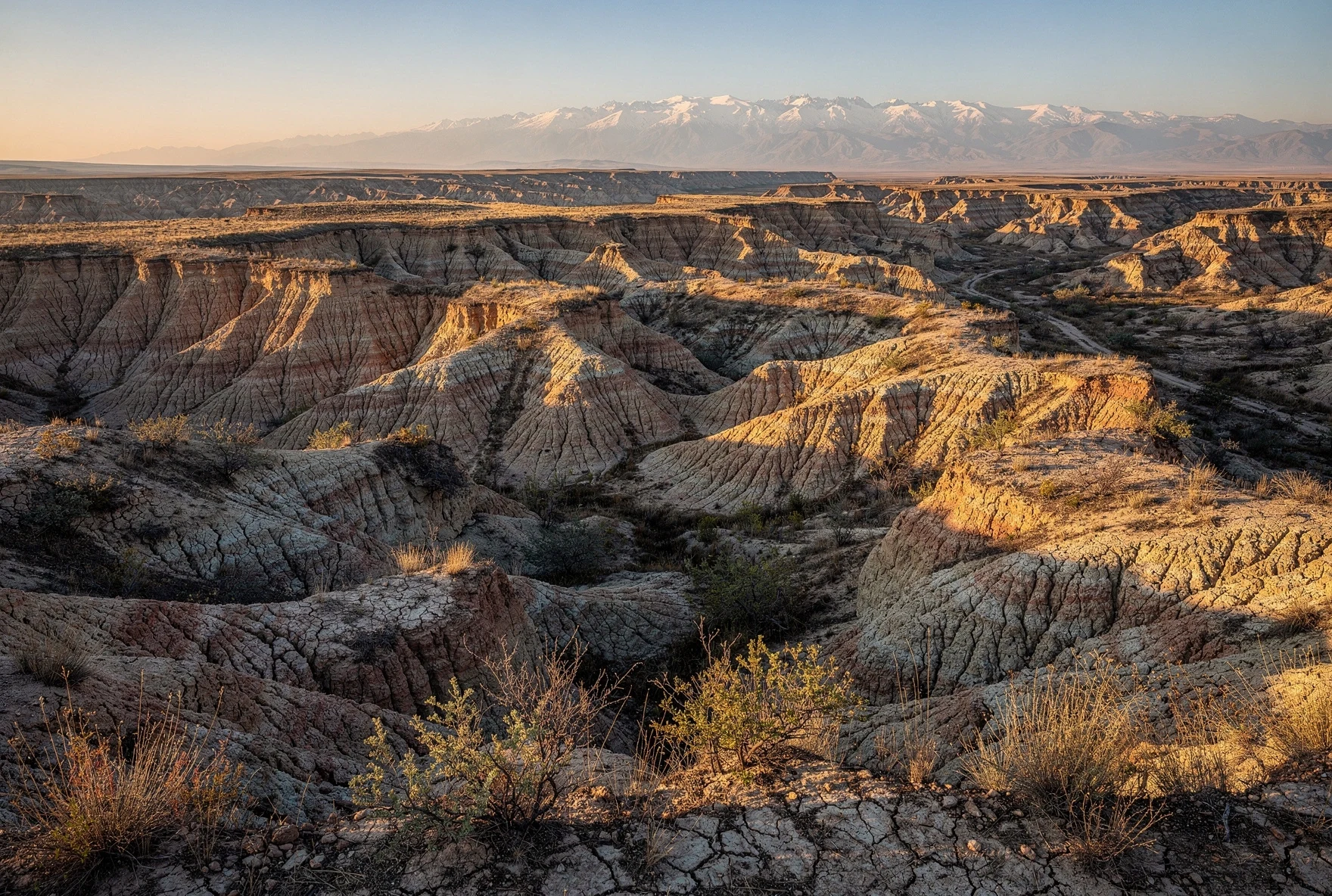
Most people don't associate Georgia with desert, but Vashlovani National Park in the far east of the country looks like it belongs in Utah or Jordan. The landscape is dominated by eroded clay formations, golden-brown ridges, sparse scrub, and an emptiness that feels out of place in the Caucasus. Then you look north, and the snow-capped Greater Caucasus mountains are right there, creating one of the most disorienting visual contrasts in the region.
The park covers about 350 square kilometers near the Azerbaijan border and is home to gazelles, wolves, striped hyenas, and one of the largest vulture populations in the Caucasus. Trails range from easy walks to multi-day treks through the badlands. There's a basic campsite and a ranger station, but this is genuine wilderness — you'll need to register at the visitor center in Dedoplistskaro and arrange a ranger guide for some routes.
The standout feature is Eagle Canyon (Artsivistskali) — a narrow, winding gorge with 100-meter walls that you can hike through in about 3 hours. It's one of the most dramatic hikes in Georgia, and on a weekday, you might not see another person.
| Detail | Info |
|---|---|
| Distance from Tbilisi | ~180 km (3–3.5 hours) |
| Best time to visit | April–June, September–October (summer is extremely hot) |
| Entry fee | 5 GEL per person |
| Vehicle required | 4x4 strongly recommended; some routes require it |
| Accommodation | Basic campsites in park; guesthouses in Dedoplistskaro |
4. Machakhela National Park
What it is: A subtropical river gorge near the Turkish border, thick with ancient forest, stone arch bridges, and the remains of a pre-modern gunsmithing culture.
Just 30 minutes from Batumi, Machakhela feels like a different country. The valley of the Machakhela River cuts south through dense subtropical forest toward Turkey, and for centuries it was one of the most isolated communities in Georgia. The Machakhelans were famous throughout the Ottoman Empire as gunsmiths — master craftsmen who made firearms by hand, a tradition dating back to the 16th century. You can still see the remains of their workshops and the fortified stone towers they built to defend the valley.
Today the valley is a national park with hiking trails through old-growth forest, past stone arch bridges (some medieval, some newer but still striking), waterfalls, and the occasional ruined tower. The vegetation is lush — giant ferns, boxwood groves, moss-covered everything. If you've been in dry eastern Georgia, walking into Machakhela feels like stepping into a tropical greenhouse.
The park is criminally undervisited, mostly because Batumi tourists don't know it exists. On a busy day you might encounter 10 people. On a normal day, maybe two.
Combine With Batumi
Machakhela is an easy half-day trip from Batumi. Drive to the village of Chkhutuneti, then hike the marked trails along the river. The gunsmith museum in the park is small but genuinely interesting. Entry is 5 GEL. Best visited April–October when the forest is at its most impressive.
5. Abastumani
What it is: A faded mountain resort town at 1,300 meters with an astrophysical observatory, Romanov-era architecture, and some of the clearest skies in the Caucasus.
In the 19th century, Abastumani was Georgia's fashionable mountain retreat. The Russian imperial family built a palace here (long gone), the aristocracy followed, and it became a popular destination for tuberculosis patients seeking clean mountain air. In Soviet times, scientists built an astrophysical observatory on the ridge above town, taking advantage of the unusually clear atmospheric conditions.
Today Abastumani is a quiet, slightly melancholy place. The grand buildings have faded, the sanatoriums are mostly closed, and the town has a dreamy, time-stopped quality. But the observatory still operates, the surrounding forests are beautiful, and on clear nights you can see the Milky Way so clearly it almost hurts. A few tour operators now offer stargazing sessions at the observatory.
The drive to Abastumani through the Adigeni valley is stunning in itself — winding mountain roads through pine forests with occasional views of the Lesser Caucasus. From Akhaltsikhe (the nearest town with services), it's about 30 km on a decent road.
What to Do
Visit the observatory (arrange in advance), hike in the surrounding forests, explore the botanical garden, see the Romanov-era church, stargaze at night. The sulfur springs still operate if you want a thermal bath.
Practicalities
Base yourself in Akhaltsikhe and day-trip, or stay in one of Abastumani's basic guesthouses. No public transport — you need a car or taxi. Combine with Vardzia and Rabati Castle for a Samtskhe-Javakheti loop.
6. Dashbashi Canyon
What it is: A 300-meter deep canyon with a glass-bottomed bridge, a suspended café, and ziplines — Georgia's answer to adventure tourism, opened in 2022.
Dashbashi is the one entry on this list that's actively trying to attract tourists, and it's succeeding. But most international visitors still haven't heard of it. The centerpiece is a diamond-shaped glass bridge stretching 240 meters across the canyon at a height of about 200 meters. In the middle, there's a café with a glass floor where you can drink coffee while staring straight down into the gorge. It sounds gimmicky. It's actually impressive.
Beyond the bridge, there are ziplines, a bicycle zipline (you pedal across the canyon on a suspended rail), and a massive swing. The canyon itself is genuinely beautiful — lush green walls, a waterfall visible from the bridge, and a river winding through the bottom. If you hike down into the canyon (which you can — there's a trail), you'll find yourself mostly alone.
It's the kind of place that could become a major tourist draw in a few years. Right now, it's mostly domestic visitors on weekends and nearly empty on weekdays.
| Activity | Price (2026) | Notes |
|---|---|---|
| Glass Bridge Entry | 25 GEL | Includes the bridge café |
| Zipline | 50 GEL | ~500 meters across the canyon |
| Bicycle Zipline | 40 GEL | Pedal across suspended rail |
| Canyon Swing | 30 GEL | Not for the faint-hearted |
Location & Access
Dashbashi is about 100 km south of Tbilisi, just off the main highway toward Akhaltsikhe. It's an easy stop on the way to Vardzia or Borjomi — the turnoff is well-signed. Drive time from Tbilisi is about 1.5 hours. No public transport directly to the site.
7. Dedoplistskaro & Eagle Canyon
What it is: A small town in Georgia's far east that serves as the gateway to Vashlovani National Park — and home to Eagle Canyon, one of the country's most spectacular hikes.
Dedoplistskaro itself isn't much to look at — a quiet agricultural town surrounded by steppe. But it's the base for exploring Georgia's wildest eastern landscapes. The national park visitor center is here, and from town you can arrange 4x4 transport and ranger guides for Vashlovani.
Even if you don't do the full Vashlovani experience, Eagle Canyon (Artsivistskali Gorge) is worth the trip alone. The trail drops into a narrow gorge with soaring cliff walls, passing through terrain that shifts from grassland to semi-desert to riparian forest in the space of a few kilometers. Griffon vultures circle overhead — this area has one of the largest vulture colonies in the Caucasus. The 3-hour loop hike is moderate difficulty and genuinely world-class scenery.
The drive from Tbilisi crosses the dry Iori Plateau, passing through landscapes more reminiscent of Central Asia than the Caucasus. It's beautiful in a stark, empty way that grows on you.
8. Algeti National Park
What it is: A forested national park just 60 km from Tbilisi that almost nobody visits — perfect for a quick escape from the city.
Algeti is Georgia's best-kept easy secret. It's just over an hour from Tbilisi, the trails are well-marked, and the forest — a mix of beech, oak, and pine — is genuinely beautiful. In autumn, the fall colors rival anything in the Caucasus. In summer, the elevation (1,000–2,000 meters) provides welcome cool relief from Tbilisi's heat.
There's a visitor center, several marked hiking trails (2–15 km), a few picnic areas, and that's about it. No restaurants, no gift shops, no Instagram spots. Just forest, trails, and silence. On weekdays you'll likely have the whole park to yourself.
The catch: no public transport. You need a car or a taxi from Manglisi (the nearest town on the marshrutka route from Tbilisi). But for Tbilisi-based travelers who want nature without the 5-hour drive to Svaneti or Kazbegi, Algeti is perfect.
9. Nikortsminda Cathedral
What it is: An 11th-century cathedral in Racha with some of the finest stone carvings in the Caucasus — and almost no tourists.
Georgia is full of medieval churches, and after a while they start to blur together. Nikortsminda doesn't blur. Built in 1010–1014 during Georgia's golden age under Bagrat III, the cathedral's exterior is covered in intricate stone reliefs depicting biblical scenes, mythological creatures, hunting scenes, and geometric patterns. The quality and preservation of the carvings are extraordinary — this is Georgia's equivalent of the carved churches at Lalibela or the temples of Angkor, just on a smaller and more intimate scale.
Inside, faded but still visible frescoes cover the walls and dome. The setting — a quiet hillside in Racha's green valleys, with mountains in every direction — adds to the atmosphere. UNESCO has it on Georgia's tentative World Heritage list.
Nikortsminda is about 10 km from Ambrolauri, Racha's main town. If you're doing a Racha trip (which you should — see our Racha guide), this should be a mandatory stop. It takes 30 minutes to see, and you won't forget it.
10. Javakheti Plateau
What it is: A high-altitude volcanic plateau in southern Georgia — windswept grasslands, crater lakes, and a landscape that looks more like Mongolia than the Caucasus.
Javakheti is Georgia's highest inhabited region, sitting at 1,700–2,200 meters. The terrain is treeless steppe — vast grasslands stretching to the horizon, punctuated by volcanic lakes (Paravani, Saghamo, Khanchali) and the occasional herder on horseback. In winter, it's brutally cold and largely inaccessible. In summer, it's one of the most surreal landscapes in the country.
The population here is predominantly ethnic Armenian, and the culture, food, and architecture feel distinctly different from the rest of Georgia. The town of Ninotsminda is the regional center — functional but not charming. The appeal is entirely in the landscape: ancient fortresses on hilltops, Orthodox and Armenian churches side by side, and skies so big you start to understand why this place has been contested for millennia.
Birdwatchers take note: Javakheti's lakes host massive seasonal migrations. Paravani Lake is the largest lake in Georgia, and in spring and autumn, it's covered in migratory birds.
Weather Warning
Javakheti has one of the harshest climates in Georgia. Even in summer, nights can drop to 5°C and sudden storms are common. Winter temperatures regularly hit -25°C. Visit between June and September, and bring layers regardless of the forecast. The wind up here is relentless.
11. Kinchkha Waterfall
What it is: A 100-meter multi-tier waterfall near Kutaisi that was barely accessible until a few years ago — now reachable via a walkway but still remarkably uncrowded.
Kinchkha has been described as Georgia's tallest waterfall, though that depends on how you measure (the total cascade is around 100 meters across multiple tiers). It's located in the Okatse Canyon area near Kutaisi, but unlike the Okatse walkway — which gets busier every year — Kinchkha remains relatively quiet.
The waterfall feeds into a natural pool at the base, surrounded by moss-covered cliffs and lush vegetation. A viewing platform and pathway were built recently, making access much easier than the old scramble through the forest. The upper tiers are more dramatic; the lower pool is where you want to be on a hot day (yes, you can swim).
Combine Kinchkha with the Martvili and Okatse Canyons for a full day of western Georgia's canyon country. Together they make one of the best day trips from Kutaisi.
12. Chiatura's Abandoned Mines
What it is: The deeper, grittier side of Chiatura — abandoned manganese mine shafts, decaying Soviet infrastructure, and raw industrial urbex.
We already covered Chiatura's cable cars and Katskhi Pillar above, but the town has a second layer for those interested in industrial history and urban exploration. The manganese mining industry that built Chiatura in the Stalin era has largely collapsed, leaving behind abandoned mine entrances, derelict processing plants, and a town that feels like it's slowly being reclaimed by nature.
The old cable car stations — even the ones no longer in use — are architectural time capsules. Concrete brutalist platforms perched on cliff edges, with machinery rusting in place since the 1990s. Walking through town, you'll see apartment buildings growing out of rock faces, suspended walkways connecting neighborhoods across the canyon, and infrastructure that no Western country would allow to exist.
This isn't for everyone. Chiatura is not sanitized urbex — these are real places where people still live and work. Approach with respect, don't enter structures that are clearly dangerous, and don't photograph people's homes without permission. But for those with an interest in Soviet industrial heritage, there's nowhere quite like it in the Caucasus.
Safety Note
Do not enter abandoned mine shafts. Seriously. The ground is unstable, there's no ventilation, and collapses are a real risk. Admire from outside. The above-ground infrastructure is fascinating enough. If you want a guided urban exploration experience, local tour operators in Kutaisi offer Chiatura tours that know which areas are safe.
Planning Your Off-the-Beaten-Path Trip
| Destination | From Tbilisi | Difficulty | Best Season | Min. Days |
|---|---|---|---|---|
| Chiatura & Katskhi | 3.5 hours | Easy | Year-round | 1 (day trip) |
| Shatili & Khevsureti | 5–6 hours | Moderate–Hard | Jun–Oct | 2 |
| Vashlovani | 3–3.5 hours | Moderate | Apr–Jun, Sep–Oct | 2 |
| Machakhela | 6 hours (via Batumi) | Easy | Apr–Oct | Half day |
| Abastumani | 4 hours | Easy | May–Oct | 1 |
| Dashbashi Canyon | 1.5 hours | Easy | Year-round | Half day |
| Dedoplistskaro | 3 hours | Easy–Moderate | Apr–Jun, Sep–Oct | 1–2 |
| Algeti | 1 hour | Easy | Year-round | Half day |
| Nikortsminda | 5 hours | Easy | Jun–Oct | Part of Racha trip |
| Javakheti Plateau | 3.5 hours | Easy–Moderate | Jun–Sep | 1–2 |
| Kinchkha Waterfall | 4.5 hours | Easy | Apr–Nov | Half day |
Essential Tips for Off-Grid Georgia
🚗 Rent a Car
Public transport won't get you to most of these places. A rental car (ideally 4x4 for Vashlovani and Khevsureti) is essential. See our car rental guide.
💰 Carry Cash
ATMs are rare or nonexistent outside regional towns. Bring enough GEL for accommodation, food, park fees, and emergencies. Card payments are not reliable.
📱 Download Offline Maps
Phone signal drops out in many of these areas. Download the region on Google Maps or Maps.me before you leave Tbilisi. Seriously — GPS is your lifeline on unmarked mountain roads.
🏠 Book Ahead (Sometimes)
In places like Shatili, there are only a few guesthouses and they fill up in July–August. Book via Booking.com or call ahead. In Vashlovani, register at the visitor center in Dedoplistskaro before entering the park.
Suggested Itineraries
Weekend: Soviet & Sacred (2 days)
Day 1: Tbilisi → Dashbashi Canyon → Chiatura (overnight). Day 2: Chiatura cable cars → Katskhi Pillar → return via Kutaisi or Tbilisi.
Desert & Steppe (3 days)
Day 1: Tbilisi → Dedoplistskaro, Eagle Canyon hike. Day 2: Vashlovani 4x4 exploration, camp overnight. Day 3: Morning hike → return to Tbilisi via Sighnaghi for wine.
Highland Fortress (4 days)
Day 1: Tbilisi → Shatili. Day 2: Explore Shatili, hike to Mutso ruins. Day 3: Begin Shatili-Omalo trek (or return). Day 4: Complete trek to Tusheti or drive back.
Southern Loop (5 days)
Day 1: Tbilisi → Dashbashi → Borjomi. Day 2: Vardzia → Abastumani. Day 3: Javakheti Plateau → Paravani Lake. Day 4: Kutaisi → Nikortsminda. Day 5: Kinchkha + Okatse → Tbilisi.
Frequently Asked Questions
Is it safe to travel off the beaten path in Georgia?
Yes. Georgia is one of the safest countries in the Caucasus for travelers. The main risks off-grid are practical (bad roads, no services) rather than security-related. Just avoid the occupied territories (South Ossetia, Abkhazia) and don't wander near the Russian border without awareness. See our safety guide.
Do I need a 4x4?
For Vashlovani and Khevsureti/Shatili, yes — a 4x4 is strongly recommended or required. For Chiatura, Dashbashi, Algeti, Machakhela, and Kinchkha, a regular car is fine. Javakheti roads are paved but can be rough in places.
Do people speak English in these areas?
Rarely. In remote areas, Russian is your second-best language option. Download Google Translate with the Georgian language pack for offline use. A few basic Georgian phrases go a very long way — see our phrase guide.
Can I do these without a car?
A few — Chiatura and Dashbashi are reachable by marshrutka + taxi. For everything else, you'll need either a rental car, a hired driver, or a tour. Geotrip and Envoy Hostel in Tbilisi organize group trips to several of these destinations in season.
What's the best time of year?
May–June and September–October are ideal for most destinations. July–August works but is very hot in the lowlands (Vashlovani, Dedoplistskaro) and crowded in the highlands (Shatili). Many mountain destinations are inaccessible November–May. See our best time to visit guide.
How much does off-grid travel cost?
Cheap. Guesthouses run 40–80 GEL per person with meals. Park fees are 5–15 GEL. The biggest expense is car rental (from 100 GEL/day) or a private driver (~200 GEL/day). Budget 150–250 GEL per person per day for a comfortable off-grid trip. See our budget guide.
Written by The Georgian Guide Team
Based in Georgia and always looking for the next place nobody's heard of. We've driven the bad roads, hiked the unmarked trails, and slept in the guesthouses where the host doesn't speak a word of English — and wouldn't have it any other way.
Last updated: March 2026.
Related Articles
Tusheti: Georgia's Most Remote Region
Medieval towers, alpine meadows, and shepherd culture in Europe's most isolated inhabited region.
Racha: Georgia's Hidden Highland Wine Region
Khvanchkara wine, Shaori Lake, stone villages, and empty hiking trails in Georgia's most underrated region.
Renting a Car in Georgia
Everything you need to know about renting and driving in Georgia — agencies, costs, insurance, and road conditions.
Is Georgia Safe? An Honest Assessment
Crime, scams, road safety, solo female travel, and the occupied territories — what you actually need to know.