Every year, thousands of tourists pass through Samegrelo without stopping. They're on marshrutkas or rental cars heading to Svaneti, eyes locked on the mountain road ahead, Zugdidi nothing more than a fuel stop and a bathroom break. This is a mistake. Not a catastrophic one — Svaneti is worth the rush. But Samegrelo is the part of Georgia that most travelers don't know they're missing, and it has a legitimate claim to the country's best food, its most dramatic canyon, a palace with one of Napoleon's death masks, and the kind of quiet, unhurried atmosphere that Tbilisi lost about five years ago.
This is the ancestral homeland of the Mingrelians — ethnically Georgian, but with their own language, their own cuisine, and a regional identity strong enough that Megrelian food gets its own section on restaurant menus across the country. The subtropical climate means palm trees, tea plantations, and mandarin orchards where you'd expect pine forests. The landscape is green year-round in a way that eastern Georgia simply isn't.
If you have two or three spare days in your Georgia itinerary — and especially if you're already heading to Svaneti — Samegrelo will reward you with experiences you won't find anywhere else in the country.
Quick Facts
Why Visit Samegrelo
Samegrelo sits in Georgia's subtropical west, sandwiched between the Greater Caucasus to the north, the Colchis lowlands to the south, and the occupied territory of Abkhazia to the northwest. It's a region that rarely makes international travel lists, which is exactly its appeal.
The Food
Megrelian cuisine is Georgia's spiciest and arguably its most distinctive. Elarji, kupati, gebzhalia, kharcho — dishes that have become Georgian staples all originated here, and they taste different when you eat them where they were invented.
The Canyons
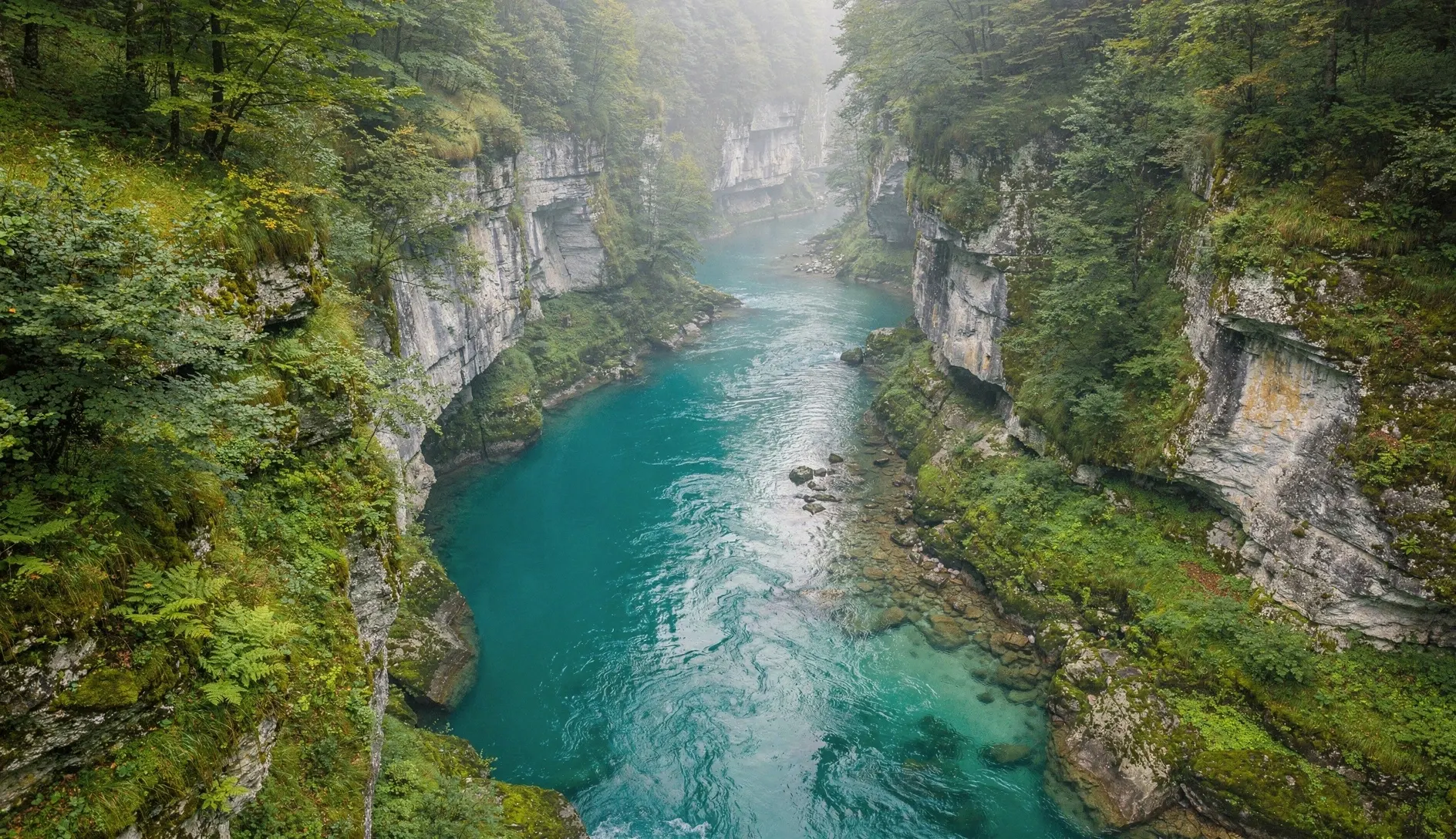
Martvili Canyon is one of Georgia's most spectacular natural sites — a deep limestone gorge with turquoise water, moss-covered walls, and a boat ride through a scene that looks like a deleted Lord of the Rings set.
The History
The Dadiani dynasty ruled here for centuries and married into Napoleon's family. Their palace in Zugdidi houses one of only three authenticated Napoleon death masks in the world.
The Pace
This isn't a region optimized for tourism. No Instagram cafés, no souvenir shops on every corner. Just a genuinely Georgian place going about its business, happy to have visitors but not performing for them.
Zugdidi: The Regional Capital
Let's be honest: Zugdidi is not a pretty city. It's a Soviet-era administrative center with the usual collection of concrete apartment blocks, potholed roads, and random livestock in unexpected places. But it has character, a world-class museum, and the best food in a country that's already famous for its food.
Most travelers spend about 40 minutes here waiting for a marshrutka connection to Mestia. Those who stay longer discover a city that's genuinely interesting once you know where to look.
Dadiani Palace
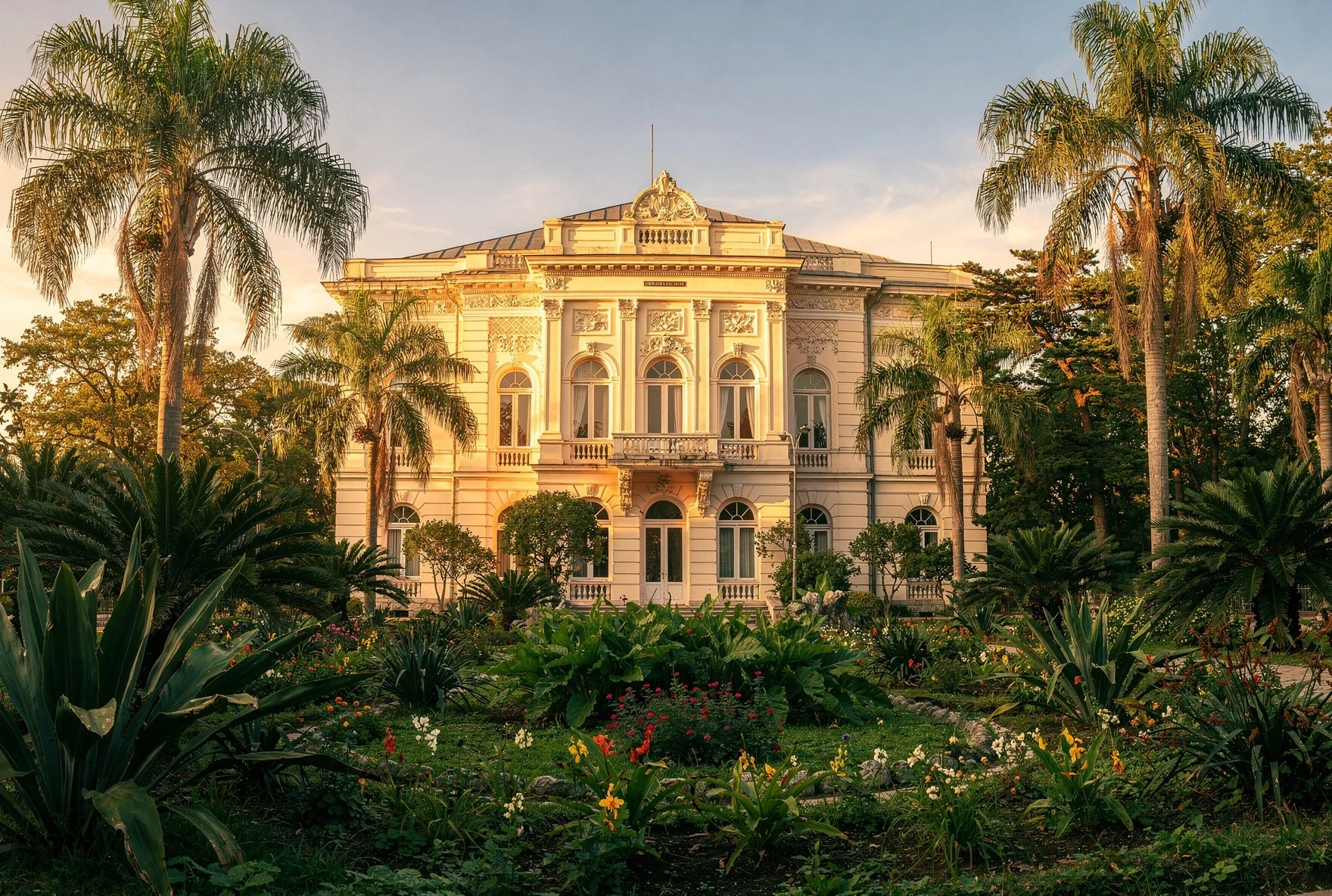
The star attraction. The Dadiani family ruled Samegrelo (then called Odishi) from the 11th century until Russian imperial expansion forced the last prince to abdicate in 1867. Their palace complex in central Zugdidi is now a museum, and it's surprisingly impressive for a regional city this size.
The main draw is one of only three authenticated death masks of Napoleon Bonaparte. How did it end up in western Georgia? Salome Dadiani, daughter of the last ruling prince, married Achille Murat — grandson of Napoleon's sister Caroline. The mask came to Zugdidi as part of the family collection. It's the kind of historical footnote that sounds made up, but there it is, sitting in a glass case in a mid-sized Georgian city.
Renovation Notice
The main Dadiani Palace building is undergoing major renovations expected to last until 2028. Parts of the building may be closed or covered in scaffolding. The botanical garden, second palace building, and museum collections remain accessible — check locally for the latest status before visiting.
Beyond Napoleon's mask, the museum collection includes medieval Georgian manuscripts, European furniture, and a surprisingly good archaeological section. The surrounding botanical garden was established by the Dadianis in the 19th century and features subtropical species — palm trees, bamboo groves, and magnolias — that feel wildly out of place if you've been in the mountains.
Admission is 7 GEL. Budget about 1.5 hours for the palace and gardens.
Zugdidi Bazaar
The central market is where Zugdidi comes alive. This is one of the better bazaars in western Georgia — not as chaotic as Tbilisi's Dezerter Bazaar, but more authentic and less touristy. You'll find mountains of adjika (the fiery chili-walnut paste that defines Megrelian cooking), local cheeses, churchkhela, seasonal fruits, and the kind of direct vendor interaction that makes Georgian markets so much fun. Nobody here is performing for tourists.
The mandarin season (November through January) transforms the market into a citrus wonderland. Samegrelo is Georgia's mandarin-growing heartland, and during harvest season, entire trucks of the fruit show up daily.
Soviet-Era Architecture
If you're interested in Soviet heritage — and Georgia has some of the best examples outside Moscow — Zugdidi has a handful of noteworthy sites. The old post office downtown features elaborate mosaic friezes. Several apartment blocks on the outskirts have decorative tile mosaics in surprisingly good condition. The drama theater and various public buildings showcase that particular brand of Soviet Brutalist optimism that's either hideous or fascinating, depending on your taste.
Martvili Canyon
If Samegrelo has one headline attraction, this is it. Martvili Canyon is a 2.4-kilometer gorge carved by the Abasha River, with limestone walls rising 50 to 70 meters on either side, every surface covered in thick green moss. The water is an almost unreal shade of turquoise.
The visiting experience has two parts: a 700-meter walking trail along the upper canyon with views down to the river and several waterfalls, followed by a 15-minute boat ride through the lower canyon. The boat ride is the highlight — you drift through a narrow gorge that feels primeval, the water so clear you can see the riverbed, with hanging vegetation and dripping limestone overhead.
History nerds will appreciate that this was the private bathing spot of the Dadiani princes. They built a stone staircase down to the water, which you can still see along the trail.
| Detail | Info |
|---|---|
| Location | Gachedili village, ~50 km northwest of Kutaisi, ~45 km from Zugdidi |
| Entrance Fee | 17 GEL (walking trail + boat ride) |
| Opening Hours | 10:00–18:00 daily (summer); shorter hours in winter |
| Time Needed | 1.5–2 hours total |
| Best Season | Spring and autumn (fewer crowds, lush greenery) |
| Open Year-Round? | Yes, though the boat ride may be suspended after heavy rain |
Beat the Crowds
Martvili Canyon gets very crowded in summer, especially between 11:00 and 15:00 when tour buses from Kutaisi arrive. The walking paths are narrow, so a crowd of 50 people makes it feel like rush hour. Arrive at opening time or visit in the late afternoon. Better yet, come in spring or autumn when it's green and gorgeous but far less busy.
The honest assessment: Martvili is commercial and the ticket price is steep by Georgian standards. But the canyon itself is genuinely beautiful — one of the most photogenic natural sites in the country. If you've seen photos of Georgia's canyons on Instagram, chances are good they were taken here.
Nokalakevi: Ancient Colchis Fortress
History runs deep in Samegrelo, and nowhere deeper than Nokalakevi — a fortified settlement that's been continuously occupied since the Bronze Age. This was Archaeopolis, the capital of ancient Colchis, and some historians believe it's connected to the myth of Jason and the Golden Fleece.
The site today is a partially excavated archaeological complex with ruins spanning from the 4th century BC through the medieval period. You'll see massive defensive walls (some of the best-preserved in Georgia), a 6th-century church, a royal palace foundation, and a tunnel carved through rock that leads down to the Tekhuri River — supposedly an escape route and water supply during sieges.
What makes Nokalakevi special isn't the scale (it's modest compared to, say, Vardzia) but the layering of history. Roman, Byzantine, and Georgian remains all sit on top of each other. And unlike the heavily touristed sites in eastern Georgia, you'll likely have the place to yourself.
Nokalakevi is about 35 km east of Zugdidi. A small on-site museum displays finds from ongoing excavations. Admission is free.
More Things to See
Enguri Dam
The world's second-tallest arch dam (271.5 meters), built in 1987 on the border with occupied Abkhazia. The dam is accessible and the scale is staggering — standing on top and looking down into the gorge is vertigo-inducing. About 80 km north of Zugdidi on the road toward Mestia.
Kolkheti National Park
A UNESCO-listed wetland preserve protecting the Colchis rainforest — one of Europe's oldest ecosystems. Boat tours through the marshlands offer birdwatching (over 190 species) and a landscape unlike anything else in Georgia. The visitor center is in Poti, about 50 km south of Zugdidi.
Martvili Monastery
A 7th-century monastery perched on a hill above the town of Martvili. It's one of Georgia's oldest Christian sites and offers panoramic views of the surrounding countryside. Often combined with a visit to Martvili Canyon since they're only 5 km apart.
Okatse Canyon
Technically in neighboring Imereti, but close enough to visit from Samegrelo. A suspended metal walkway jutting out over a 140-meter-deep gorge — genuinely thrilling if you're okay with heights. About 50 km southeast of Zugdidi. Often combined with Martvili Canyon in a single day trip.
Megrelian Food: Why It Matters
This is the real reason to spend time in Samegrelo. Megrelian cuisine is Georgia's culinary crown jewel — spicier, more complex, and more cheese-forward than what you'll find in the rest of the country. Many dishes that tourists eat in Tbilisi and call "Georgian food" are actually Megrelian in origin, and they taste noticeably different here — bolder, hotter, and made with the aggressive confidence of people who've been perfecting these recipes for centuries.
Essential Megrelian Dishes
| Dish | What It Is | Why You Should Care |
|---|---|---|
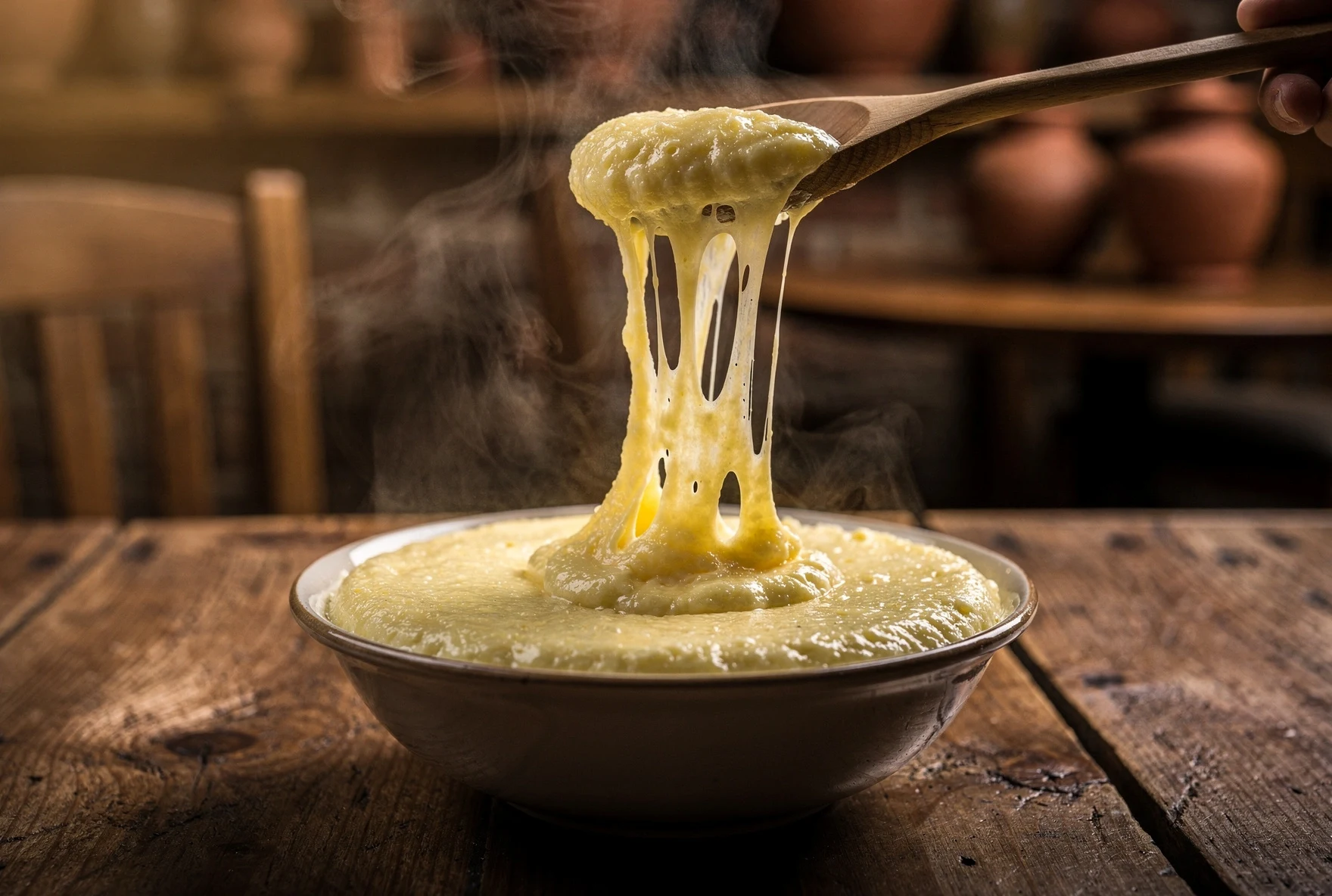
| Elarji | Cornmeal cooked with copious sulguni cheese until it becomes a stretchy, gooey mass | The ultimate Megrelian comfort food. When made properly, the cheese pulls in long strings. You eat it with your hands or a wooden spoon. |
| Gebzhalia | Fresh cheese rolls filled with mint and bathed in a tangy matsoni sauce | Light, refreshing, and unlike anything else in Georgian cuisine. The mint and yogurt combination is addictive. |
| Kupati | Spiced pork sausage, grilled until the casing crackles | Megrelian kupati is spicier and more intensely flavored than versions elsewhere. Order it straight off the grill. |
| Megrelian Khachapuri | Cheese bread with cheese on top AND inside (double cheese, basically) | The version most Georgians argue is superior. More cheese than the Imeretian version, with a gratinéed crust. |
| Kharcho | Rich walnut and beef soup with dried plum and spices | A winter staple across Georgia, but the Megrelian original is thicker, nuttier, and has more heat. |
| Adjika | Fiery chili-walnut paste used as a condiment on everything | This is what gives Megrelian food its kick. Homemade adjika from the Zugdidi bazaar is the best souvenir you can bring home. |
Spice Warning
Megrelian food is genuinely spicy by Georgian standards. If you found Tbilisi food mild, Samegrelo will wake you up. The liberal use of adjika (chili paste) and fresh peppers means dishes have real heat. If you have a low spice tolerance, ask for "naklebi tskhare" (less spicy) when ordering.
Where to Eat in Zugdidi
Skip the modern cafés downtown and head to the family-run restaurants. Zugdidi's dining scene is unpretentious — you're not going to find craft cocktails or deconstructed anything. What you will find is exceptionally well-made traditional food, massive portions, and prices that feel almost free compared to Tbilisi.
The best approach is to ask your guesthouse owner for recommendations — they'll know which family restaurants are currently the best, and many guesthouses will cook dinner for you if asked. Home-cooked Megrelian food at a guesthouse is often the best meal you'll have in the region.
For a market lunch, head to the bazaar and look for the vendors selling hot kupati sausages and fresh lobiani (bean-filled bread). It's the kind of cheap, spectacular street food that Tbilisi's food tours charge five times as much for.
Getting There
| Method | Duration | Cost | Notes |
|---|---|---|---|
| Train from Tbilisi | ~5.5 hours | 15–25 GEL | Daily departures. Comfortable, scenic. Book via railway.ge or at the station. |
| Marshrutka from Tbilisi | ~5 hours | 20–25 GEL | From Didube station. Frequent departures morning to early afternoon. |
| Car from Tbilisi | ~4.5 hours | Fuel ~60–80 GEL | Via the E60 highway through Kutaisi. Road is good quality throughout. |
| From Kutaisi | ~1.5 hours | 8–10 GEL | Frequent marshrutkas. Easy to combine with a Kutaisi visit. |
| From Mestia (Svaneti) | ~3.5 hours | 20–25 GEL | Daily marshrutka, or shared taxi. Mountain road, stunning scenery. |
The Svaneti Connection
If you're headed to or from Svaneti, Zugdidi is the natural stopover. Instead of making it a 15-minute bus change, plan a night or two here. It makes the journey less exhausting and gives you time to explore a region most travelers skip entirely.
Getting Around Samegrelo
Zugdidi itself is walkable — the Dadiani Palace, bazaar, and downtown are all within a 15-minute radius on foot. For sites outside the city, you have a few options:
Marshrutkas run to Martvili from Zugdidi's bus station (about 45 minutes, 3–4 GEL). From Martvili town, you'll need a taxi to reach the canyon entrance (about 5 km, 5–8 GEL).
Taxis are the most practical way to visit multiple sites in a day. A full-day taxi from Zugdidi covering Martvili Canyon, Nokalakevi, and Martvili Monastery runs about 80–120 GEL depending on your negotiation skills. Agree on the price beforehand and confirm it includes waiting time.
Rental cars give you the most flexibility, especially if you want to visit the Enguri Dam or Kolkheti National Park. Roads in Samegrelo are generally good — paved and flat in the lowlands, with the mountain roads north toward Svaneti being the main exception.
Where to Stay
Zugdidi's accommodation scene is dominated by family guesthouses, which is a feature, not a bug. You'll get home-cooked Megrelian meals (often the best food of your trip), local tips from people who actually live here, and a genuine hospitality experience that hotels can't replicate.
| Budget | Price Range | What to Expect |
|---|---|---|
| Budget Guesthouse | 40–70 GEL/night | Simple room in a family home. Shared bathroom likely. Breakfast usually included. The food alone is worth the stay. |
| Mid-Range Guesthouse | 80–130 GEL/night | Private room with ensuite bathroom. Better furnishings. Breakfast and often dinner included. Some have gardens. |
| Hotel | 120–200 GEL/night | A few proper hotels in downtown Zugdidi. Standard amenities but less character than guesthouses. |
Book through Booking.com — the guesthouse owners in Zugdidi are generally responsive and many speak basic English. For the most authentic experience, ask your host about dinner. Paying 20–30 GEL for a home-cooked Megrelian feast at your guesthouse is one of the best food deals in Georgia.
Suggested Itinerary: 2–3 Days in Samegrelo
Day 1: Zugdidi
Day 2: Canyons & History
Day 3 (Optional): Wetlands or Dam
When to Visit
| Season | Weather | Verdict |
|---|---|---|
| Spring (Apr–May) | Mild, green, some rain | Excellent. Lush landscapes, few tourists, wildflowers everywhere. |
| Summer (Jun–Aug) | Hot and humid, 30°C+ | Good for canyons (cooling effect). Crowded at Martvili. Subtropical heat can be intense. |
| Autumn (Sep–Nov) | Warm, colorful, mandarin season | Best overall. Beautiful foliage, harvest season, mandarin picking, comfortable temperatures. |
| Winter (Dec–Mar) | Mild but very rainy | Canyon still green and open. Very few tourists. Bring waterproof gear. |
Budget Guide
Budget Traveler (per day)
Comfortable Traveler (per day)
Common Mistakes
Treating Zugdidi as a Bus Stop
The biggest mistake of all. Spending 30 minutes between marshrutkas means you miss the Dadiani Palace, the best bazaar in western Georgia, and Megrelian food at its source.
Visiting Martvili Canyon at Midday
Tour buses from Kutaisi arrive between 11:00–15:00, turning the narrow paths into a conga line. Go at opening time (10:00) or late afternoon.
Skipping Guesthouse Dinners
Eating at restaurants when your guesthouse host offers to cook dinner is like going to Naples and ordering Domino's. The home-cooked Megrelian food is the whole point.
Not Bringing Rain Gear
Samegrelo is one of the wettest regions in Georgia. The subtropical climate means rain can arrive quickly, even in summer. A light waterproof jacket saves your day.
Underestimating Megrelian Spice
If you've been eating "spicy" food in Tbilisi and thought it was mild, Megrelian food will correct that assumption. The adjika here has genuine heat.
Only Visiting Martvili Canyon
The canyon is spectacular but Samegrelo has much more — Nokalakevi, Kolkheti National Park, the Enguri Dam, Martvili Monastery. Plan for at least two full days.
Frequently Asked Questions
Is Samegrelo safe for tourists?
Yes, completely. It's a rural region with very low crime. The one area to avoid is the administrative boundary line with occupied Abkhazia — don't try to cross into Abkhazia from the Georgian side.
Can I visit Martvili Canyon and Okatse Canyon in one day?
Yes, easily. They're about 50 km apart. Most day trips from Kutaisi combine both. From Zugdidi, Okatse adds about an hour of extra driving each way. Start early.
Do people speak English in Zugdidi?
Very little. Younger people may speak some English, but Russian is far more common as a second language. Google Translate and pointing work fine. Guesthouse owners on Booking.com usually speak basic English.
What's the difference between Megrelian and Mingrelian?
Same thing. Megrelian (მეგრული) is the Georgian/English term; Mingrelian is an older transliteration still used in some academic sources. Both refer to the people, language, and cuisine of Samegrelo.
Can I visit Abkhazia from Zugdidi?
No. While the Enguri Bridge crossing exists, entering Abkhazia from the Georgian side is illegal under Georgian law for foreign nationals and can cause serious problems with Georgian authorities. Abkhazia can only legally be entered from the Russian side (which Georgia also considers illegal entry).
Written by The Georgian Guide Team
We've been exploring Georgia for years, from the tourist trail to the places guidebooks forget. Samegrelo is one of those regions that keeps pulling us back — the food alone is worth the trip, and the canyons don't hurt either.
Last updated: February 2026.
Related Articles
Svaneti Travel Guide
The complete guide to Georgia's most spectacular mountain region — Mestia, Ushguli, towers, and treks.
Kutaisi Complete Guide
Georgia's second city — Gelati Monastery, Prometheus Cave, and the gateway to western Georgia.
What to Eat in Georgia
The essential guide to Georgian cuisine — every dish you need to try and what to expect.
Tbilisi to Batumi Road Trip
The complete driving guide through western Georgia — both routes, day-by-day stops, and practical tips.