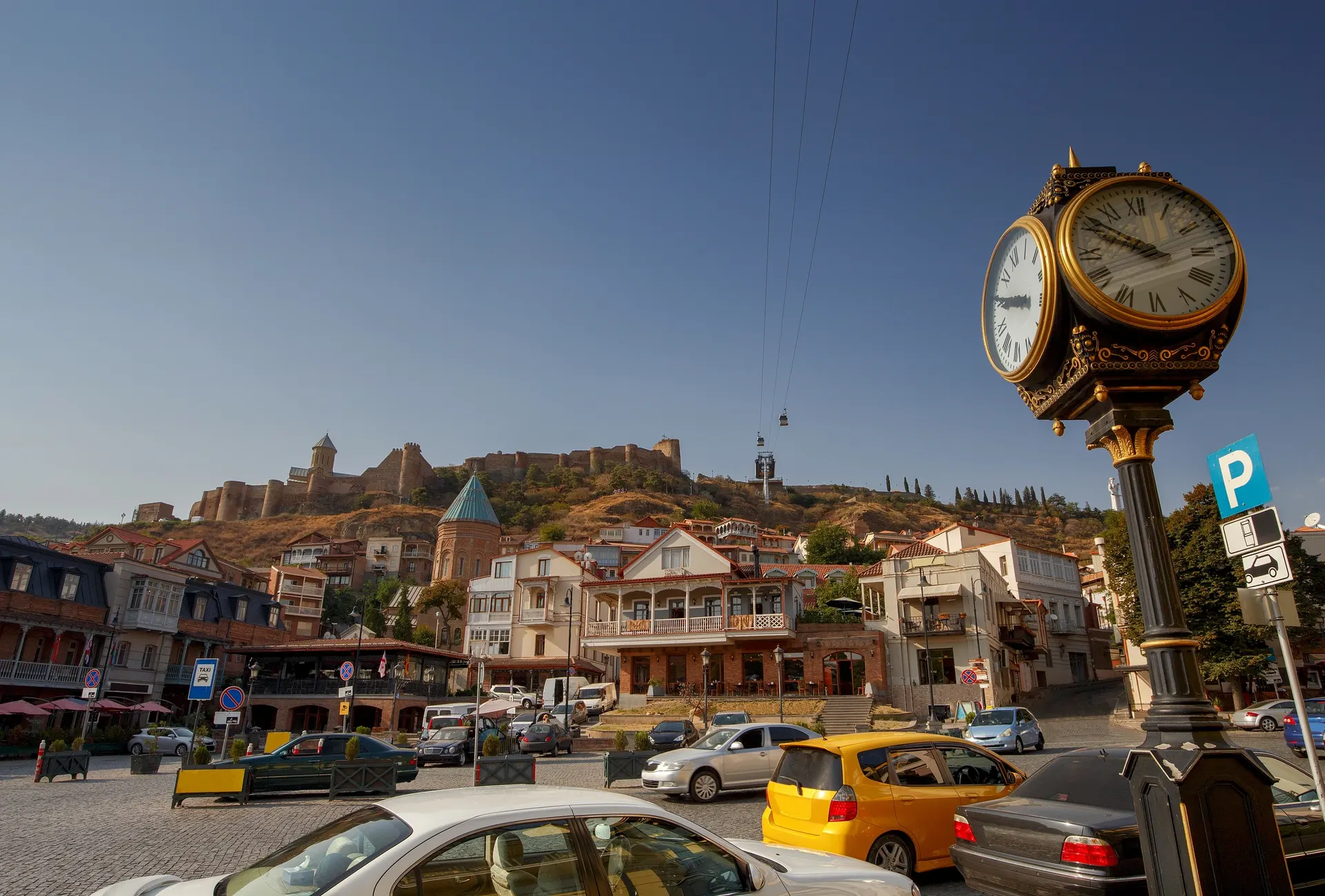
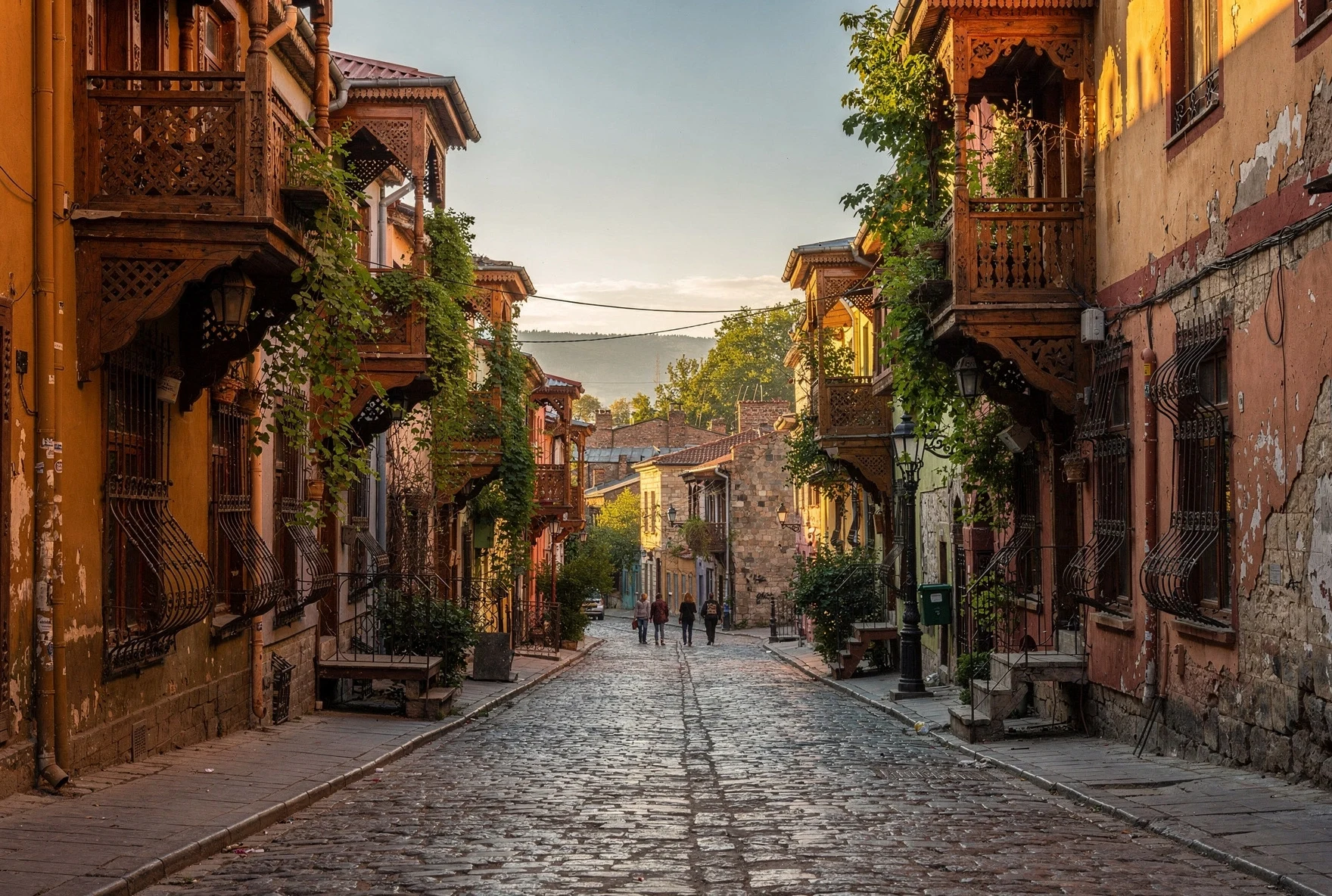
Tbilisi's Old Town is one of those places that rewards getting lost. The streets don't follow logic — they follow the landscape, curving around hillsides, ducking under ancient balconies, opening suddenly into hidden courtyards where grapevines climb three stories up crumbling walls. You could spend a week here and still find corners you haven't seen.
But if you've got half a day, this route will take you through the best of it. Ten stops, roughly three to four hours if you don't linger (you will linger), covering everything from sulfur baths to medieval fortresses to a clock tower that looks like it was designed by someone who'd had too much chacha.
No tour guide needed. No app. Just this page and a pair of comfortable shoes.
Before You Start
A few things that will make this walk better:
Wear proper shoes. This isn't a suggestion — it's a plea. Half the Old Town is cobblestone, the other half is uneven pavement with surprise holes. Sandals will betray you. Heels are an act of self-sabotage.
Bring water. In summer, the Old Town becomes a sun trap. The narrow streets offer shade in places, but the climb to Narikala doesn't. There are corner shops and cafés everywhere, but you'll want water from the start.
Cash helps. Most places take cards now, but a few of the best small spots — the old women selling churchkhela on the street, the tiny bakeries with shotis puri coming straight from the tone — are cash only. 20–30 GEL in small bills is enough.
Start early. Seriously. In July and August, the temperature hits 38°C by noon. Starting at 8 or 9 AM means you'll do the hillside sections in tolerable heat and have the streets largely to yourself. Bonus: the morning light in the Old Town is genuinely beautiful.
Getting to the Start Point
Meidan Square is the natural starting point. From Avlabari metro, it's a 10-minute walk across the Metekhi Bridge. From Freedom Square, walk down Kote Abkhazi street — it takes about 8 minutes and the walk itself is gorgeous. A Bolt taxi from most central Tbilisi locations costs 3–5 GEL.
The Route at a Glance
| Stop | What | Time | Cost |
|---|---|---|---|
| 1. Meidan Square | Historic crossroads, orientation | 10 min | Free |
| 2. Abanotubani | Sulfur bath district | 15 min (walk) / 1–2 hrs (bath) | Free to walk / 30–150 GEL bath |
| 3. Leghvtakhevi | Hidden waterfall and gorge | 15–20 min | Free |
| 4. Narikala Fortress | 4th-century fortress, best views | 30–45 min | Free (cable car 7 GEL round trip) |
| 5. Kartlis Deda | Mother of Georgia statue | 10 min | Free |
| 6. Botanical Garden | Historic garden, waterfall | Optional: 45–90 min | 4 GEL |
| 7. Sioni & Shardeni | Cathedral, café streets | 20–30 min | Free |
| 8. Clock Tower | Gabriadze's whimsical tower | 5–10 min | Free |
| 9. Anchiskhati | Oldest church in Tbilisi | 10–15 min | Free |
| 10. Bridge of Peace | Modern bridge, Rike Park | 15–20 min | Free |
Stop 1: Meidan Square
Meidan means "square" in Georgian, though calling this a square is generous — it's more of a chaotic roundabout where several old streets converge. For centuries this was the commercial heart of Tbilisi: caravansaries, merchant houses, bathhouses, all clustered around this point. The Silk Road didn't just pass through Tbilisi. It paused here, traded, ate, and probably had a few too many glasses of wine.
Today it's been pedestrianized and cleaned up, ringed by restored buildings and a few cafés. There's a modest fountain in the center. Stand here for a moment and look around — you'll see the sulfur bath domes to the south, the cliff face with Narikala above, and the tangle of old streets heading north toward the river. This intersection has looked roughly like this for 500 years.
The building on the east side with the tall arched entrance was a caravansary — essentially a medieval hotel and trading post. Traders coming from Persia, Turkey, and Central Asia would stable their animals in the courtyard below and sleep in the rooms above. Some of these buildings still have the original vaulted ceilings.
Morning Coffee Stop
If you're starting early and need caffeine, there are several cafés right on Meidan. Prices are tourist-zone elevated but not outrageous — expect 8–12 GEL for a cappuccino. For cheaper (and often better) coffee, duck into the side streets. The corner shops along Kote Abkhazi serve Turkish coffee for 2–3 GEL.
Walk south from Meidan Square along Abano Street. You'll see the bathhouse domes ahead — they look like oversized brick beehives rising from the ground.
Stop 2: Abanotubani (The Sulfur Bath District)
You'll smell it before you see it — a faint whiff of sulfur, like someone boiled an egg in a hot spring. Don't worry, it fades to nothing after about two minutes. What you're smelling is the reason Tbilisi exists. When King Vakhtang Gorgasali supposedly discovered the hot springs here in the 5th century, he decided to build a city around them. Tbilisi literally means "warm place" in Georgian.
The brick domes you see belong to bathhouses that have been operating for centuries, some continuously since the 17th century. They're built over natural sulfur springs — the water comes up from underground at 38–40°C, loaded with sulfur and other minerals. Locals have been soaking in it for generations, claiming it cures everything from joint pain to bad luck.
You have two options here: walk through and admire the architecture (15 minutes), or actually go in for a bath (1–2 hours). If you're doing the bath, I'd suggest coming back later — do the walking tour first and end your day at the baths when your legs are tired.
Planning a Bath Visit?
If you want the full bathhouse experience, read our complete sulfur baths guide — it covers which bathhouse to choose, what to expect from the kisi scrub, prices, and the etiquette that tourists keep getting wrong.
Walk past the largest dome (Orbeliani Bathhouse — the one with the blue-tiled facade that looks vaguely Moorish) and continue south. The road narrows as it follows the gorge. You're heading toward one of Tbilisi's best-kept secrets.
Stop 3: Leghvtakhevi Waterfall
Most visitors to Tbilisi never see this. Which is strange, because it's literally a waterfall in the middle of the city — a short walk from the bathhouses, hiding at the bottom of a narrow gorge that cuts through the Old Town.
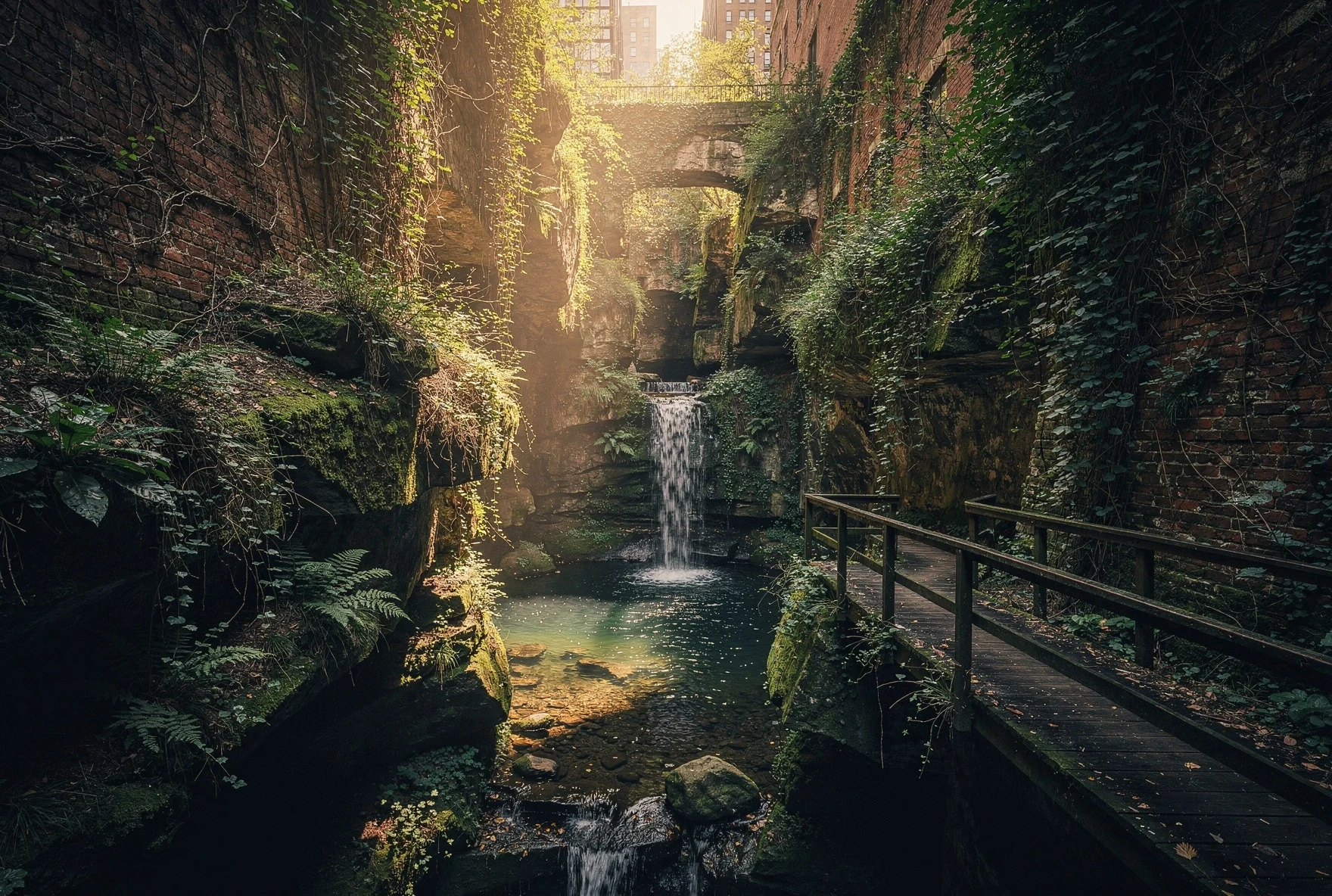
Follow the path past the bathhouses and you'll find yourself descending into a surprisingly deep ravine. The Tsavkisis-Tskali stream (good luck pronouncing it — locals just call it the Leghvtakhevi gorge) has carved this channel through the rock over millennia. The walls rise steeply on both sides, covered in hanging vines and moisture-loving plants. There's a boardwalk built along the cliff face.
At the end of the path, a modest waterfall drops about 20 meters into a pool. It's not Niagara — but it's a waterfall inside a capital city, and the setting is genuinely magical. In summer, the gorge is cool and shaded while the rest of Tbilisi bakes. In winter, when the water volume is higher, the falls are more impressive.
There are a couple of cafés perched on the edge of the gorge — sometimes you hear them before you see them, music floating down from above. One of them, a tiny terrace built right over the ravine, serves decent Turkish coffee. If the weather's nice, it's worth stopping.
From the waterfall, retrace your steps to Abanotubani. Now look up — way up — at the fortress walls on the ridgeline above. That's where you're going next.
Stop 4: Narikala Fortress
Narikala is one of the oldest fortifications in Georgia. The original citadel was built in the 4th century — before Tbilisi was even founded as a city. Over the centuries, every empire that controlled Georgia expanded or modified it: Persians, Arabs, Mongols, Ottomans, Russians. What you see today is a patchwork of different eras, partly ruined, partly restored, entirely dramatic.
You have two ways up:
🚡 Cable Car
Take the cable car from Rike Park (across the river). Fast, scenic, 7 GEL round trip. You'll need a Metromoney transit card (2 GEL deposit at any metro station). The ride takes about 2 minutes and gives you an aerial view of the Old Town.
🥾 Walk Up
From Abanotubani, take the stairs behind the Orbeliani Bathhouse or the path from near the mosque. It's a steep 15–20 minute climb. Sweaty in summer, but the views improve with every step. Free, and you'll earn your wine at dinner.
Once you're up, the fortress is free to explore at your own pace. There are no guardrails in many sections — this is Georgia, not Disneyland — so watch your footing, especially on the walls. The panoramic views from the top are the best in Tbilisi, period. On a clear day you can see from the TV tower on Mtatsminda to the Sameba cathedral across the river, the Kura winding through the valley below, and the sprawl of Soviet-era apartment blocks fading into the hills.
Inside the fortress walls, the Church of St. Nicholas was rebuilt in the 1990s on the foundations of a 13th-century original that was destroyed by an earthquake. It's small but pretty, with frescoes still being added.
Safety Note
Narikala has steep drops with no barriers. This is normal for Georgia — but keep a close eye on kids, watch your step on uneven stones, and don't climb on the walls if you've been drinking. Accidents do happen here.
From the fortress, follow the ridge path west (away from the cable car station) toward the large statue on the hilltop.
Stop 5: Kartlis Deda (Mother of Georgia)
The 20-meter aluminum statue standing on Sololaki Ridge is Kartlis Deda — Mother of Georgia. She holds a wine bowl in one hand (for friends) and a sword in the other (for enemies). Erected in 1958 for Tbilisi's 1,500th anniversary, she's become one of the city's most recognizable symbols.
Is she beautiful? Not exactly. The Soviet-era aluminum has a certain utilitarian charm, and from up close she looks a bit like a giant chess piece. But the symbolism is very Georgian — hospitality and fierceness in equal measure. And the view from her feet is excellent, sweeping across the river valley.
You'll probably encounter a few vendors up here selling churchkhela (those candle-shaped walnut-and-grape-juice snacks), homemade chacha, and occasional spin-the-wheel games. The chacha vendors are characters — they'll insist you try before you buy, and the stuff can be surprisingly good (or dangerously strong).
From Kartlis Deda, you can either enter the Botanical Garden or begin the descent back down to the Old Town.
Stop 6: National Botanical Garden (Optional Detour)
If you have the time and energy, the Botanical Garden is worth the detour. Founded in 1625 as fortress gardens, it now covers a sprawling 161 hectares (almost 400 acres) on the south side of the Sololaki Ridge.
It's not the manicured gardens of Versailles. It's wilder than that — more like a forest with pathways cut through it, crossing bridges over streams, following a gorge that runs its full length. There's a 40-meter waterfall (larger than the Leghvtakhevi one), thousands of plant species, and long stretches where you'll forget you're in a city of 1.5 million people.
The entrance from the Narikala/Kartlis Deda side is the upper gate. Entry costs 4 GEL (about $1.50). You can easily spend an hour or more inside, but a 45-minute loop covering the main waterfall and the central trail gives you a good taste.
The Garden at Different Seasons
Spring (April–May) brings everything into bloom and the waterfall is at full force from snowmelt. Summer is lush but hot. Autumn turns the canopy golden and amber — probably the most beautiful time. Winter is bare but peaceful, and you'll have the place to yourself.
Exit the garden via the lower (eastern) gate onto Botanikuri Street. Walk past the Tbilisi Mosque, turn right, and follow the road north toward the river. You'll emerge near Sioni Cathedral.
Stop 7: Sioni Cathedral & Shardeni Street
Sioni Cathedral sits on its namesake street in the heart of the Old Town. Originally built in the 6th–7th century (though the current structure dates mostly to the 13th century), it served as the seat of the Georgian Orthodox Catholicos for centuries. Inside, you'll find the cross of St. Nino — the 4th-century missionary who converted Georgia to Christianity. It's one of the most important religious relics in the country.
The cathedral is free to enter. Dress modestly — women should cover their shoulders and head (scarves are often available at the entrance), and men should remove hats. The interior is dimly lit, heavy with incense and candlelight. It's quite atmospheric, especially during a service.
Stepping outside Sioni, you're in the middle of what might be Tbilisi's most photographed neighborhood. The streets around here — Sioni, Shardeni, and Erekle II — are packed with restaurants, wine bars, and cafés. The buildings lean over narrow lanes, their wooden balconies jutting out at precarious angles, draped in vines.
Shardeni Street is the pedestrianized strip that serves as the Old Town's unofficial living room. Named after the French traveler Jean Chardin who visited in 1671, it's lined with tables and chairs that spill out of restaurants. It's touristy? Yes. Overpriced? Slightly. But the atmosphere is hard to beat, especially in the evening when the fairy lights come on and someone in every other restaurant is playing live music.
If you want to eat here, expect to pay 20–30% more than you would a few blocks away. The food is decent but rarely the best in the city. For better value, wander into the smaller streets — Bambis Rigi, Leselidze, or the alleys behind Sioni.
Walk north along Shardeni Street until it ends. Turn left, and you'll see a leaning tower covered in tiles and clocks.
Stop 8: The Leaning Clock Tower (Gabriadze Theater)
You won't miss it. The Gabriadze Clock Tower leans at an angle that looks structurally impossible, covered in irregular tiles and ceramics, with a small angel figure that emerges to ring the bell every hour. It's attached to the Rezo Gabriadze Marionette Theater, and the whole thing looks like it was built by a very talented child who rejected the concept of straight lines.
Rezo Gabriadze, who passed away in 2021, was a legendary Georgian filmmaker, artist, and puppeteer. This tower was his personal project — a piece of functional art that has become one of Tbilisi's most beloved landmarks. Every hour, a little mechanical angel comes out and taps the bell. At noon and 3 PM (times can vary), there's a more elaborate puppet show on the small stage at the tower's base.
If the marionette theater has a show during your visit (check the schedule at the box office), it's absolutely worth attending. The performances are in Georgian, but they're so visual that language barely matters. These are some of the most beautiful puppet performances in the world — no exaggeration.
Gabriadze Theater Performances
Shows run on selected days (usually Wednesday through Sunday). Tickets are 30–50 GEL and often sell out in advance. Book ahead if you can — the theater seats fewer than 100 people. Even if you can't get in, the café next door is charming.
The café attached to the theater (also Gabriadze's creation) is decorated in the same eccentric style — every table, tile, and light fixture seems hand-picked. The coffee is good, the food is decent, and the prices are reasonable for the neighborhood.
Continue north along the street. In about 3 minutes of walking, you'll reach a small square with a very old stone church.
Stop 9: Anchiskhati Basilica
Anchiskhati is the oldest surviving church in Tbilisi, built in the 6th century. Let that sink in for a moment — this building has been standing since around 520 AD, through Persian invasions, Arab rule, Mongol sacking, Ottoman occupation, Russian imperialism, Soviet atheism, and Georgian independence. It's outlasted every empire that tried to claim this city.
It's a modest building by Georgian church standards — small, stone, with a simple belltower added later. Don't expect the grandeur of Sameba Cathedral. What you'll find instead is something more affecting: the quietness of genuine age. The stones are worn smooth. The frescoes inside are faded to ghosts. The proportions are humble and human-scaled.
The church takes its name from the Anchiskhati icon — a 6th-century icon of Christ's face that was once kept here (it's now in the National Museum). The icon is considered one of Georgia's most sacred religious objects.
Services still happen regularly. If one is in progress, you can step inside briefly — just be respectful, don't take flash photos, and don't block the nave.
From Anchiskhati, walk east toward the river. You'll see the distinctive glass-and-steel form of the Bridge of Peace ahead.
Stop 10: Bridge of Peace & Rike Park
The Bridge of Peace is Tbilisi's most divisive piece of architecture. Built in 2010 by Italian architect Michele De Lucchi, it's a 150-meter pedestrian bridge over the Kura River, made of steel and glass with a canopy that lights up at night with 30,000 LEDs.
Locals either love it or hate it. Some think it's an elegant statement of modern Georgia — a country that looks forward while honoring its past. Others call it a "giant maxi pad" (I'm not making this up) and think it clashes with the Old Town skyline. Both sides have a point. The bridge is objectively impressive engineering, and at night, with the LED pattern rippling overhead while Narikala glows on the cliff behind you, the effect is genuinely striking.
Cross the bridge and you're in Rike Park, a landscaped green space on the river's east bank. From here you have a postcard-perfect view back across to the Old Town: the bath domes, the cliff face, Narikala on top, and the hodgepodge of Old Town rooftops in between. This is where most of those "Tbilisi panorama" photos you've seen online were taken.
Rike Park is also where the cable car to Narikala departs — if you didn't take it earlier and want the aerial view, this is your chance.
End With Wine
You've earned it. Back across the bridge, the streets around Shardeni and Erekle II have dozens of wine bars. For something special, seek out a bar that serves wines by the glass from small Georgian producers — amber (qvevri) wine is the local specialty, and tasting it in the Old Town feels like exactly the right way to end this walk.
Detours Worth Taking
If you have more time, these additions are close to the main route:
Metekhi Church & Viewpoint
Cross the Metekhi Bridge to the cliff-top church on the east bank. The 13th-century church is scenic, but the real draw is the viewpoint — one of the best angles of Old Tbilisi. The equestrian statue of King Vakhtang Gorgasali (Tbilisi's founder) stands here. 10–15 minutes from Rike Park.
Betlemi Street & the Treehouse
Climb the steep stairs up Betlemi Street from near Meidan. At the top you'll find the Betlemi churches (two small ones side by side) and the famous tree-growing-through-a-house ruin that shows up in every photographer's Instagram. The views from up here rival Narikala.
Tbilisi Mosque
The only mosque in Tbilisi, located on Botanikuri Street between the baths and Sioni. It's unique: Sunni and Shia Muslims pray under the same roof — a rarity in the Islamic world. Georgians point to this as a symbol of their country's religious tolerance. Free to enter respectfully.
Dry Bridge Market
About a 15-minute walk west from the Bridge of Peace along the river. This sprawling flea market sells Soviet memorabilia, antique jewelry, old paintings, vinyl records, and genuine treasures mixed with absolute junk. Best on weekends. Haggling is expected.
Practical Tips
| Topic | Details |
|---|---|
| Toilets | Public toilets exist but are rare and often grim. Use restaurant/café bathrooms — buy a coffee if you feel guilty. The Botanical Garden has decent facilities. |
| Wi-Fi | Nearly every café offers free Wi-Fi. If you need constant connection, a Georgian SIM card from Magti or Cellfie costs 10–15 GEL with generous data. Read our SIM card guide. |
| Accessibility | Honestly, poor. The Old Town has cobblestones, stairs, steep inclines, and virtually no ramps. Wheelchair users will find most of this route difficult. The cable car is wheelchair-accessible. |
| Safety | Tbilisi's Old Town is very safe, even at night. Petty crime exists but is rare compared to most European cities. The usual rules apply: don't leave bags unattended, be aware of your surroundings in crowds. Read our safety guide. |
| Dogs | You will see stray dogs everywhere. They are mostly friendly, vaccinated (check for ear tags), and well-fed by locals. Don't run or scream if one approaches — just walk normally. They're a beloved part of Tbilisi's street culture. |
| Photography | Outdoor photography is unrestricted. Inside churches, photography is usually allowed but flash is not. During active services, put your camera away — it's disrespectful. At Narikala, be careful near edges while framing shots. |
When to Do This Walk
| Season | Conditions | Tips |
|---|---|---|
| Spring (Mar–May) | 15–25°C, occasional rain, green and blooming | Ideal. Comfortable temperatures, fewer tourists than summer. Bring a light layer for mornings. |
| Summer (Jun–Aug) | 30–40°C, dry, intense sun | Start before 9 AM or after 5 PM. The midday climb to Narikala in July is brutal. Carry extra water. |
| Autumn (Sep–Nov) | 12–25°C, crisp, golden light | Arguably the best time. Perfect walking weather, wine harvest season, the Botanical Garden is spectacular. |
| Winter (Dec–Feb) | 0–8°C, some rain and fog, occasional snow | The Old Town is moody and atmospheric. Very few tourists. The sulfur baths are especially appealing when it's cold. |
Golden Hour Alternative
If you're a photographer (or just love good light), consider doing this walk in reverse — starting at Rike Park around 4–5 PM and ending at Narikala for sunset. The fortress at golden hour, with the city spread below, is one of those views that stays with you.
Frequently Asked Questions
Is this walk suitable for children?
Mostly, yes. Kids will enjoy the waterfall, the cable car, and the clock tower. The main concern is Narikala — there are steep drops with no railings. Keep a close eye on small children there. The walk itself is fine for kids aged 6+ with reasonable stamina.
Do I need a guide?
No. The Old Town is compact and hard to get truly lost in — the river and Narikala ridge are constant landmarks. That said, free walking tours run daily from Meidan Square (tip-based) and the good ones add stories and context you won't get from any article. If you're social and like group energy, they're worth considering.
How much money do I need?
The walk itself is essentially free. Budget 7 GEL for the cable car, 4 GEL for the Botanical Garden (if you go), and 15–30 GEL for food and coffee along the way. A comfortable total would be 50–60 GEL ($18–22 USD) including a meal.
Can I do this walk at night?
The lower parts — Meidan, Abanotubani, Shardeni, Bridge of Peace — are wonderful at night. Everything is lit up and the restaurant terraces are buzzing. Narikala is technically accessible at night but unlit and dangerous in the dark. Leghvtakhevi closes at dusk.
What about rainy days?
Rain makes the cobblestones slippery and the Narikala climb inadvisable. But the lower route (Meidan → baths → Shardeni → Clock Tower → Bridge of Peace) works fine with an umbrella, and ducking in and out of churches and cafés is half the charm. The baths are especially great in the rain.
Written by The Georgian Guide Team
We've walked these streets hundreds of times — in every season, at every hour, in rain and 40-degree heat. This route reflects years of living in Tbilisi, not a weekend trip.
Last updated: February 2026.
Related Articles
Tbilisi for First-Timers
The honest guide to visiting Georgia's capital.
Tbilisi Sulfur Baths Guide
Which bathhouse to choose, what to expect, and what tourists get wrong.
Where to Stay in Tbilisi
Neighborhood guide for choosing the right base.
Day Trips from Tbilisi
The best excursions within a few hours of the capital.