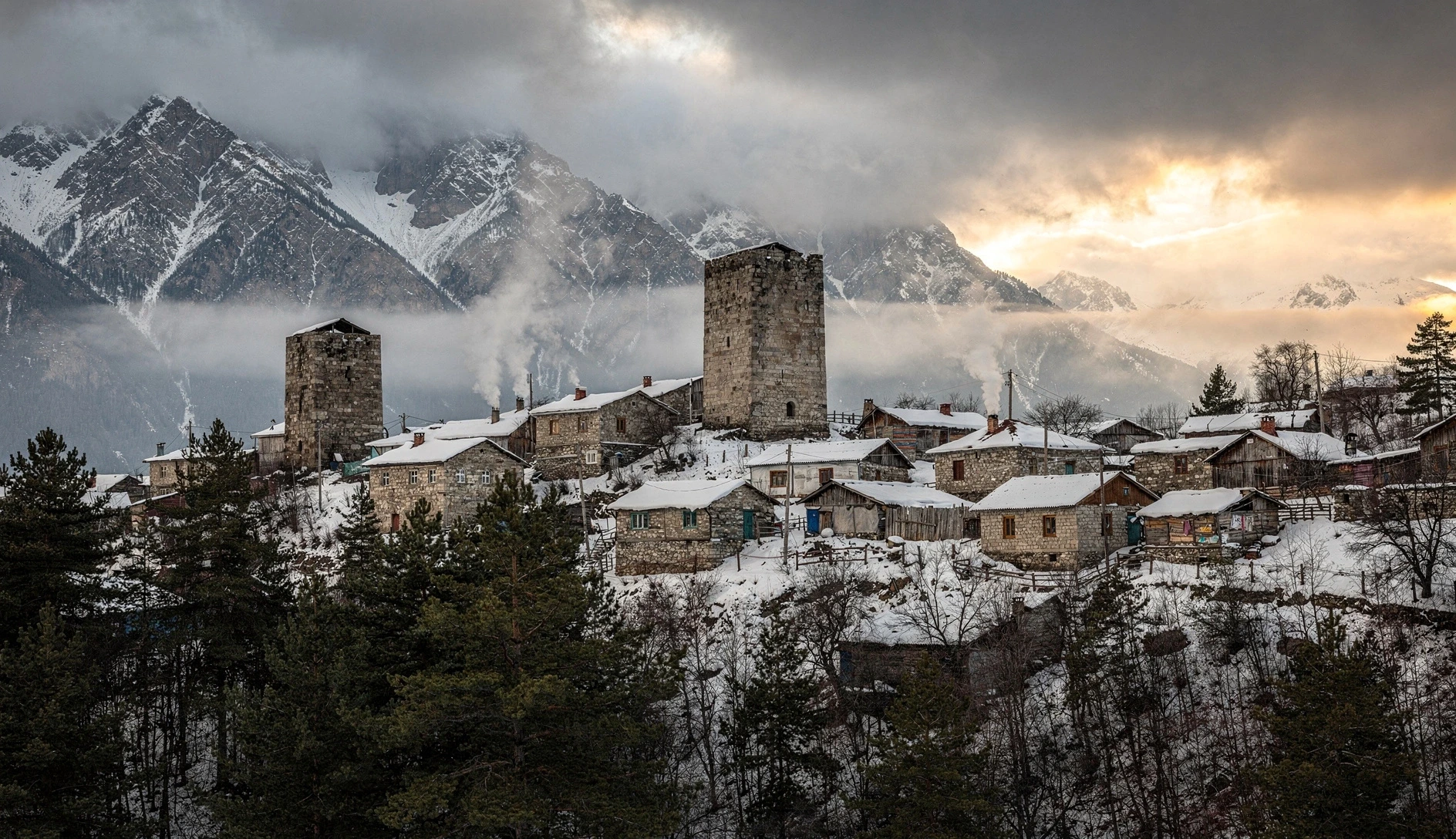
Georgia in summer is all golden light, green valleys, and Instagram-ready scenery. Georgia in winter is a different animal. The mountains are buried in snow, half the hiking trails are inaccessible, and Tbilisi trades its café terrace culture for something more inward — fireplace bars, sulfur baths in the fog, and the kind of bone-deep cold that makes a bowl of khashi at 7 AM feel like a spiritual experience.
But here's what most travel blogs won't tell you: winter is one of the best times to visit Georgia. Prices drop by 30–50%. Tourist crowds vanish. The ski resorts offer genuinely world-class terrain at a fraction of Alpine prices. And the food — built for this weather — hits differently when there's frost on the windows.
This guide covers the real picture. What's open, what's closed, where to go, what it costs, and what the competition between "winter wonderland" marketing and actual Georgian winter looks like. Having lived here for five years, I can tell you: it's not always pretty, but it's always interesting.
Why Visit Georgia in Winter
The pitch for summer Georgia is easy — hiking, wine tours, beach towns. The pitch for winter takes more explaining, but it's just as compelling if you know what you're getting into.
First, the practical stuff: flights are cheaper, hotels are cheaper, and you won't share Tbilisi's sulfur baths with forty other tourists. The Dezerter Bazaar is the same chaotic, beautiful market — but without the heat. The wine bars in the Old Town have the same qvevri pours — but with fewer crowds and warmer vibes.
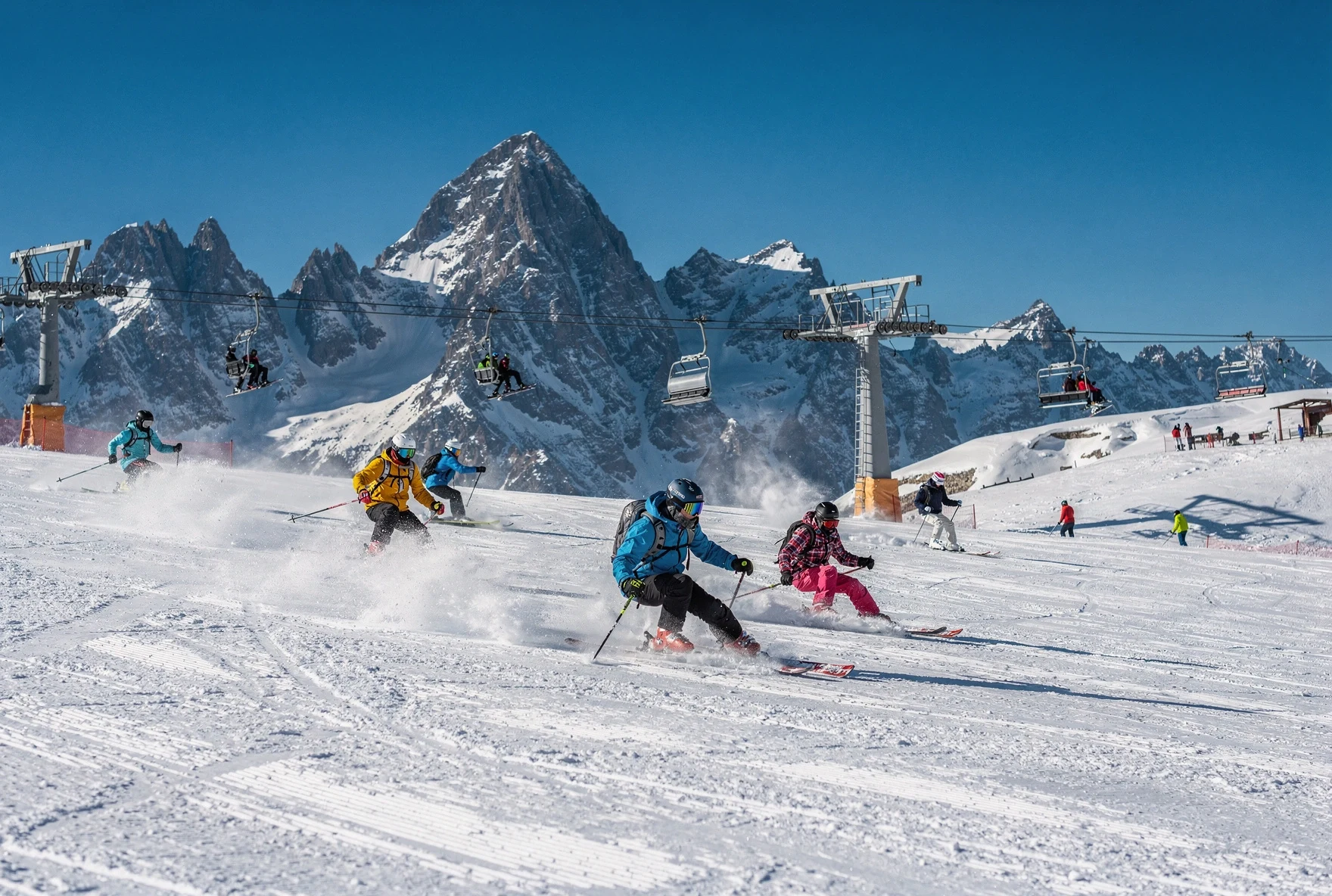
Second, the skiing. Gudauri is a legitimate ski resort with 80km of runs, modern lifts, and freeride terrain that would cost 5× more in the Alps. Bakuriani is a family-friendly alternative. Mestia's Hatsvali and Tetnuldi resorts are more remote but stunningly scenic. And Goderdzi, above Adjara, gets the most snow in the country.
Third — and this is the part nobody writes about — winter is when you see the real Georgia. The tourist veneer fades. The restaurants are full of locals. The supra (feast) culture hits its stride. And there's something about Tbilisi in January fog, with Narikala looming above the sulfur district, that summer can't replicate.
Weather: What to Actually Expect
Georgia's winter weather is more varied than most people expect. The country packs multiple climate zones into a small area, and your experience will vary dramatically depending on where you are.
| Region | Dec–Feb Avg. | Snow? | Notes |
|---|---|---|---|
| Tbilisi | 0–8°C | Rare, 2–5 days/yr | Grey, damp, occasional fog. Cold wind from the gorge. |
| Kutaisi | 2–10°C | Very rare | Milder than Tbilisi but wetter. More rain than snow. |
| Batumi | 5–12°C | Almost never | Subtropical. Rainy but mild. Feels empty in winter. |
| Kazbegi | -8 to 0°C | Heavy, Nov–Apr | Road open but chains/winter tires required. Stunning. |
| Gudauri | -10 to -2°C | Reliable, Dec–Mar | On the Military Highway. Deep snow, excellent skiing. |
| Svaneti (Mestia) | -5 to 3°C | Heavy, Nov–Apr | Road open year-round (improved). Flights unreliable. |
| Bakuriani | -6 to 1°C | Reliable, Dec–Mar | Family resort. Less extreme than Gudauri. |
| Kakheti (wine region) | 0–8°C | Occasional | Wine cellars open. Quieter, sometimes misty. Beautiful. |
The Tbilisi Reality Check
Tbilisi winter isn't the picturesque snowy scene you see on Instagram (that's maybe 3 days a year). It's mostly grey, damp, and around 3–5°C with a wind chill that cuts through you. The upside: it rarely drops below -5°C, and sunny winter days — when they happen — are genuinely gorgeous. Pack layers and waterproof shoes, not a ski jacket.
What's Open and What's Closed
This is the part that catches people off guard. Georgia doesn't shut down in winter, but it definitely shifts gears. Some of the country's most iconic destinations are simply unreachable from late October through May.
| Destination | Winter Status | Details |
|---|---|---|
| Tbilisi | ✅ Fully open | Everything runs. Fewer outdoor dining options. |
| Kazbegi/Stepantsminda | ✅ Open (road conditions vary) | Military Highway open. Gergeti church may need 4WD or snowshoes. |
| Gudauri | ✅ Peak season | Ski resort fully operational late Dec–Mar. |
| Mestia / Svaneti | ✅ Open (drive only) | Road improved but slow. Flights unreliable. Ski resorts open. |
| Kutaisi | ✅ Fully open | Caves, churches, canyon walkway all accessible. |
| Kakheti wine region | ✅ Open | Wineries open (some by appointment only in winter). |
| Vardzia | ✅ Open | Fewer visitors, atmospheric in snow. Road clear. |
| Batumi | ⚠️ Open but quiet | Most restaurants/hotels open. Ghost town vibe. Rainy. |
| Tusheti | ❌ Closed | Abano Pass (2,926m) snowed shut Oct–June. No access. |
| Ushguli | ❌ Essentially closed | Road from Mestia impassable. Locals live there but tourists can't reach it. |
| Most hiking trails | ❌ Closed (snow/avalanche) | Juta-Chaukhi, Mestia-Ushguli, Lagodekhi alpine routes all closed. |
| David Gareja | ⚠️ Accessible but desolate | Road fine. No services. Can be very cold and windy. |
Road Closures Are Real
The Cross Pass section of the Georgian Military Highway (between Gudauri and Kazbegi) can close without warning due to avalanche risk. In bad winters, it may be shut for days. Check road conditions on police.ge or ask your hotel before driving north. Winter tires are legally required November 1 – March 1 on mountain roads.
Skiing and Snowboarding
Georgia's ski scene is the biggest reason to visit in winter, and it's genuinely underrated. The country has four operational resorts, each with a distinct personality. Prices are a fraction of European resorts — a full day lift pass at Gudauri costs around 70 GEL (~$25), compared to €60+ at most Alpine resorts.
| Resort | Runs | Altitude | Lift Pass | Best For |
|---|---|---|---|---|
| Gudauri | 80km, 22 runs | 2,200–3,307m | ~70 GEL/day | All levels, freeride, heli-ski |
| Bakuriani | 30km, 12 runs | 1,700–2,700m | ~50 GEL/day | Families, beginners, relaxed pace |
| Hatsvali (Mestia) | 6km, 3 runs | 1,865–2,348m | ~30 GEL/day | Scenery, village feel, off-piste |
| Tetnuldi (Mestia) | 25km, 6 runs | 2,265–3,165m | ~40 GEL/day | Advanced, high-altitude, powder |
| Goderdzi | 8km, 4 runs | 2,000–2,400m | ~25 GEL/day | Deep snow, uncrowded, adventure |
Gudauri vs. Bakuriani — Quick Decision
Want serious skiing, freeride terrain, and après-ski bars? Gudauri. Traveling with kids, want a proper town with restaurants and parks, or just learning to ski? Bakuriani. Want both epic scenery and solitude? Svaneti (Hatsvali + Tetnuldi), but plan for a longer journey.
Tbilisi in Winter
Winter Tbilisi is a different city. The sidewalk cafés retreat indoors. The tourist crowds thin to a trickle. And the Old Town, stripped of its summer crowds, feels oddly intimate — like you're seeing it without the performance.
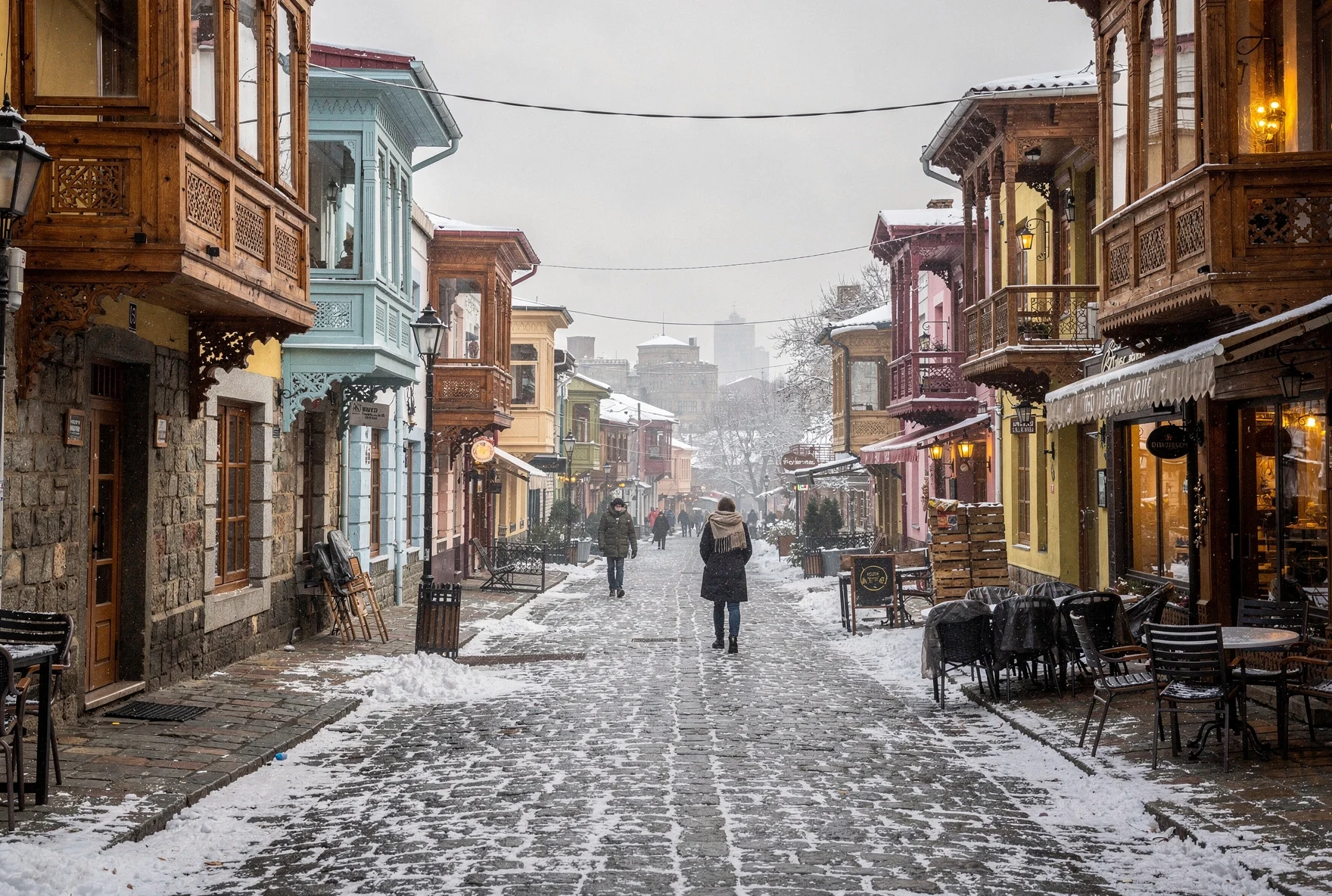
The best winter experiences in Tbilisi:
🛁 Sulfur Baths
Peak experience in winter. Hot sulfur water + cold air = perfect. Go early morning to beat crowds. Budget 30–50 GEL for a private room.
🍷 Wine Bar Crawl
Tbilisi's wine bar scene is world-class. Vino Underground, g.Vino, Wine Factory are all perfect cold-weather spots. Expect 15–30 GEL/glass for natural wines.
🏛️ Museums
The National Museum, Georgian National Gallery, and Museum of Soviet Occupation are all indoors and rarely crowded. Most are 10–15 GEL entry.
🍲 Winter Food
Georgian winter food is elite. Khashi (tripe soup, hangover cure), kharcho (walnut beef stew), lobio (bean stew in a clay pot). This cuisine was built for cold weather.
The Khashi Tradition
Khashi (ხაში) is Georgia's winter-only dish — a garlic-heavy tripe soup served before dawn. Dedicated khashi restaurants open at 6–7 AM and close by noon. It's served with dried lavash bread, raw garlic, and chacha (grape brandy). Locals swear it cures any hangover. It's an acquired taste, but it's one of the most genuinely Georgian food experiences you can have.
Holidays and Festivals
Georgia's winter calendar is a beautifully confusing mix of old and new. The country follows the Orthodox calendar, so Christmas falls on January 7, not December 25. This means the holiday season stretches from late December well into mid-January.
| Date | Holiday | What Happens |
|---|---|---|
| Dec 25 | Western Christmas | Not a holiday in Georgia. Normal working day. Some expat bars celebrate. |
| Dec 31 | New Year's Eve | THE biggest celebration. Massive fireworks in every city. Family supras. The Christmas tree is actually for New Year's. |
| Jan 1–2 | New Year's / Bedoba | Public holidays. Jan 2 (Bedoba) is about the year's first visitor bringing luck. |
| Jan 7 | Orthodox Christmas | Public holiday. Alilo procession through Tbilisi — children in white singing carols. Churches packed. Beautiful. |
| Jan 14 | Old New Year | Public holiday. Basically a second New Year's celebration. Because one wasn't enough. |
| Jan 19 | Epiphany (Natlisgheba) | Public holiday. Holy water rituals. Brave souls jump into frozen Paravani Lake. Impressive to watch. |
| Feb 14 | Lamproba (Svaneti) | Svan fire festival in Mestia. Torchlit processions through the streets. Worth the trip. |
The New Year's Supra
New Year's Eve is the biggest celebration of the year in Georgia — bigger than Christmas. Families gather for enormous supras with satsivi (walnut-chicken), gozinaki (honey walnuts), churchkhela, and more food than any table should hold. If you get invited to a Georgian New Year's supra, say yes. It's one of those experiences that defines a trip.
Winter Itineraries
Not all of Georgia works in winter, so your itinerary needs to be different from a summer trip. Here are three tested options:
🗓️ 5 Days — City + Skiing
🗓️ 7 Days — Winter Explorer
🗓️ 10 Days — The Full Winter Experience
Winter Budget Breakdown
Winter is bargain season in Georgia. Hotels drop their rates, flights get cheaper, and the ski resorts — while not free — are a fraction of what you'd pay in Europe.
💰 Budget Traveler (per day)
💳 Mid-Range (per day)
Skiing Adds Up
If you're skiing, add 70–100 GEL/day for lift passes, plus 50–80 GEL/day for equipment rental if you don't bring your own. Gudauri accommodation in peak season (late Dec–early Jan, Feb school holidays) can be 2–3× off-peak prices. Mid-January and March offer the best value with good snow.
What to Pack
| Item | Why | Priority |
|---|---|---|
| Waterproof walking shoes | Tbilisi streets get slushy. Cobblestones + ice = dangerous in regular sneakers. | Essential |
| Warm layers (merino base) | Indoor heating is strong (Georgian homes are warm). You'll overheat in a heavy coat indoors. | Essential |
| Wind-resistant outer layer | Tbilisi's gorge funnels cold wind. 3°C can feel like -5°C. | Essential |
| Beanie + gloves | You'll want these for evening walks and mountain trips. | Essential |
| Sunscreen + sunglasses | Mountain sun reflects off snow. Sunburn at 3,000m is real. | Mountains only |
| Power bank | Cold kills phone batteries fast. Especially at ski resorts. | Recommended |
Getting Around in Winter
Transport works differently in winter. Marshrutkas (minibuses) still run, but less frequently to mountain destinations. Some routes stop entirely. Here's what to know:
🚗 Renting a Car
The best option for flexibility. Winter tires are legally required Nov 1 – Mar 1. Most rental agencies provide them but confirm when booking. 4WD recommended for Svaneti and Kazbegi. From ~80 GEL/day.
🚐 Marshrutkas
Run year-round on main routes (Tbilisi–Kutaisi, Tbilisi–Batumi). Mountain routes (Mestia, Kazbegi) have reduced schedules or may stop in bad weather. Check departure times day-of.
🚕 Private Drivers
The reliable option. GoTrip.ge or ask your hotel. Expect 200–300 GEL for Tbilisi–Gudauri, 400–500 GEL for Tbilisi–Mestia. Drivers know the roads and conditions.
✈️ Domestic Flights
Tbilisi–Mestia flights exist but cancel frequently in winter due to weather. Budget alternatives (Kutaisi–Mestia drive is more reliable). Tbilisi–Batumi flights are fine.
Practical Tips
📱 SIM Card
Buy at the airport on arrival. Magti or Cellfie. ~15 GEL for a month of data. Works everywhere except deep mountain valleys. Essential for maps and translation.
💵 Cash vs. Card
Tbilisi is increasingly card-friendly, but carry cash for marshrutkas, small restaurants, and mountain destinations. ATMs everywhere in cities. 1 GEL ≈ $0.36 (check current rate).
🕐 Daylight Hours
Sunset around 5:30 PM in December, 6:15 PM by February. Plan outdoor activities for midday. Tbilisi is beautifully lit at night, though — Narikala and the Old Town glow.
🏨 Booking Accommodation
Tbilisi hotels are 30–50% cheaper in winter (except New Year's week). Gudauri peaks around Jan 1 and Feb school breaks. Book Gudauri early for holidays, but Tbilisi can be done last-minute.
🌡️ Heating
Most Tbilisi accommodations have gas heating and are warm (sometimes too warm). Guesthouses in villages may use wood stoves — cozy but inconsistent. Ask about heating before booking rural stays.
🗓️ Best Month?
January (after the 19th) and March offer the best balance: good snow, fewer crowds, lower prices. February is peak ski season. December is festive but short on daylight. November is grey and transitional.
Winter Food You Shouldn't Miss
Georgian cuisine was designed for winter. The heavy, warming dishes that might feel too rich in August are absolutely perfect when it's 2°C outside. Some dishes are genuinely seasonal — you won't find them in summer.
| Dish | What It Is | When/Where |
|---|---|---|
| Khashi (ხაში) | Garlic tripe soup. Hangover cure. National winter ritual. | Winter only. 6–7 AM at dedicated khashi spots. |
| Kharcho (ხარჩო) | Beef and walnut soup with spices. Rich, warming, complex. | Year-round but perfect in winter. Every restaurant. |
| Lobio (ლობიო) | Spiced bean stew served in a clay pot with mchadi cornbread. | Year-round. Best with mchadi in winter. |
| Satsivi (საცივი) | Cold chicken in walnut sauce. Traditional New Year's dish. | Dec–Jan. Holiday special. Incredible. |
| Gozinaki (გოზინაკი) | Honey-fried walnuts. Traditional New Year's sweet. | Late Dec–Jan. Sold everywhere. |
| Chakapuli (ჩაქაფული) | Veal stew with tarragon and sour plums. | Late Feb/Mar (spring arrival). Seasonal favorite. |
Best Day Trips from Tbilisi in Winter
| Destination | Drive Time | Winter Appeal |
|---|---|---|
| Mtskheta | 30 min | UNESCO churches without the crowds. Jvari in fog is haunting. |
| Ananuri Fortress | 1.5 hrs | Lakeside fortress. Stunning with snow on the towers. |
| Gudauri | 2 hrs | Full day skiing and return same day. Totally doable. |
| Sighnaghi | 1.5 hrs | Charming wine town. Misty Alazani Valley views. Romantic. |
| Borjomi | 2.5 hrs | Hot springs and mineral water. Park is beautiful in snow. |
| David Gareja | 2 hrs | Dramatic desert monastery. Empty in winter. Bring warm clothes. |
| Uplistsikhe + Gori | 1.5 hrs | Ancient cave city + Stalin Museum. Good winter combo. |
Common Mistakes
Planning a Summer Itinerary
Half the places on "Top 10 Georgia" lists are inaccessible in winter. Tusheti, Ushguli, most hiking trails — all closed. Research road conditions before committing to anything in the mountains.
Underestimating the Cold
3°C in Tbilisi feels colder than 3°C in most European cities because of the wind chill from the Mtkvari gorge. And mountain temperatures can be 15–20 degrees colder than the capital. Layer up.
Booking Gudauri at New Year's
Dec 28 – Jan 3 is the most expensive week of the year. Prices triple. Crowds peak. If you can ski mid-January or March instead, you'll get better snow and 60% lower prices.
Relying on Domestic Flights
Tbilisi–Mestia flights cancel constantly in winter (weather-dependent). Always have a backup plan. The drive via Zugdidi is 8–10 hours but reliable. Or go via Kutaisi.
Skipping Tbilisi
Some people rush straight to the mountains. Tbilisi in winter deserves at least 2–3 days. The sulfur baths, food, and wine bars are at their best when it's cold outside. Don't miss it.
Not Trying Khashi
Yes, it's tripe soup at 7 AM. Yes, it sounds terrible. But it's one of Georgia's most authentic winter experiences. Even if you hate it, you'll have a story. Go with an open mind and an empty stomach.
Frequently Asked Questions
Is Georgia worth visiting in winter?
Absolutely. It's a completely different experience from summer — fewer tourists, cheaper prices, excellent skiing, and Georgian food at its most comforting. Tbilisi's sulfur baths and wine bars are arguably better in cold weather. The main trade-off is that high-mountain hiking and some remote destinations are off-limits.
How cold does it get in Tbilisi in winter?
Average December–February temperatures range from 0–8°C. It rarely drops below -5°C in the city, but wind chill can make it feel much colder. Snow is rare (a few days per year) but when it happens, the city looks magical. Mountain destinations can be -15°C or colder.
Can I drive to Kazbegi in winter?
Yes, the Georgian Military Highway stays open year-round, but the Cross Pass section between Gudauri and Kazbegi can close temporarily during heavy snowfall or avalanche risk. Winter tires are legally required. Check conditions at police.ge before driving. A 4WD is recommended but not strictly necessary on the main road.
When does ski season start and end?
Ski season typically runs late December through March, sometimes into early April at higher resorts. Gudauri usually opens around December 20–27, depending on snowfall. The best conditions are usually mid-January through late February. March can offer excellent spring skiing with warmer temperatures.
What should I budget for a week in winter?
Budget travelers can manage on $25–45/day. Mid-range travelers should budget $75–140/day. Add $35–65/day if skiing (lift pass + gear rental). A comfortable 7-day trip without skiing runs $500–1,000 total including accommodation, food, transport, and activities. With skiing, expect $700–1,500.
Written by The Georgian Guide Team
Based in Tbilisi for over five years, we've survived every Georgian winter — from the grey January days to the magnificent powder days at Gudauri. We've eaten khashi at dawn, celebrated Orthodox Christmas with Georgian families, and driven the Military Highway in every condition imaginable.
Last updated: February 2026.
Related Articles
Gudauri: Complete Ski Guide
Everything about Georgia's top ski resort — runs, passes, freeride, and honest advice.
Kazbegi / Stepantsminda Guide
Mountains, churches, and the iconic Gergeti Trinity — stunning in any season.
Best Time to Visit Georgia
Month-by-month breakdown of weather, crowds, and what to expect.
Georgia Travel Budget Guide
Detailed breakdown of what everything costs — transport, food, hotels, activities.