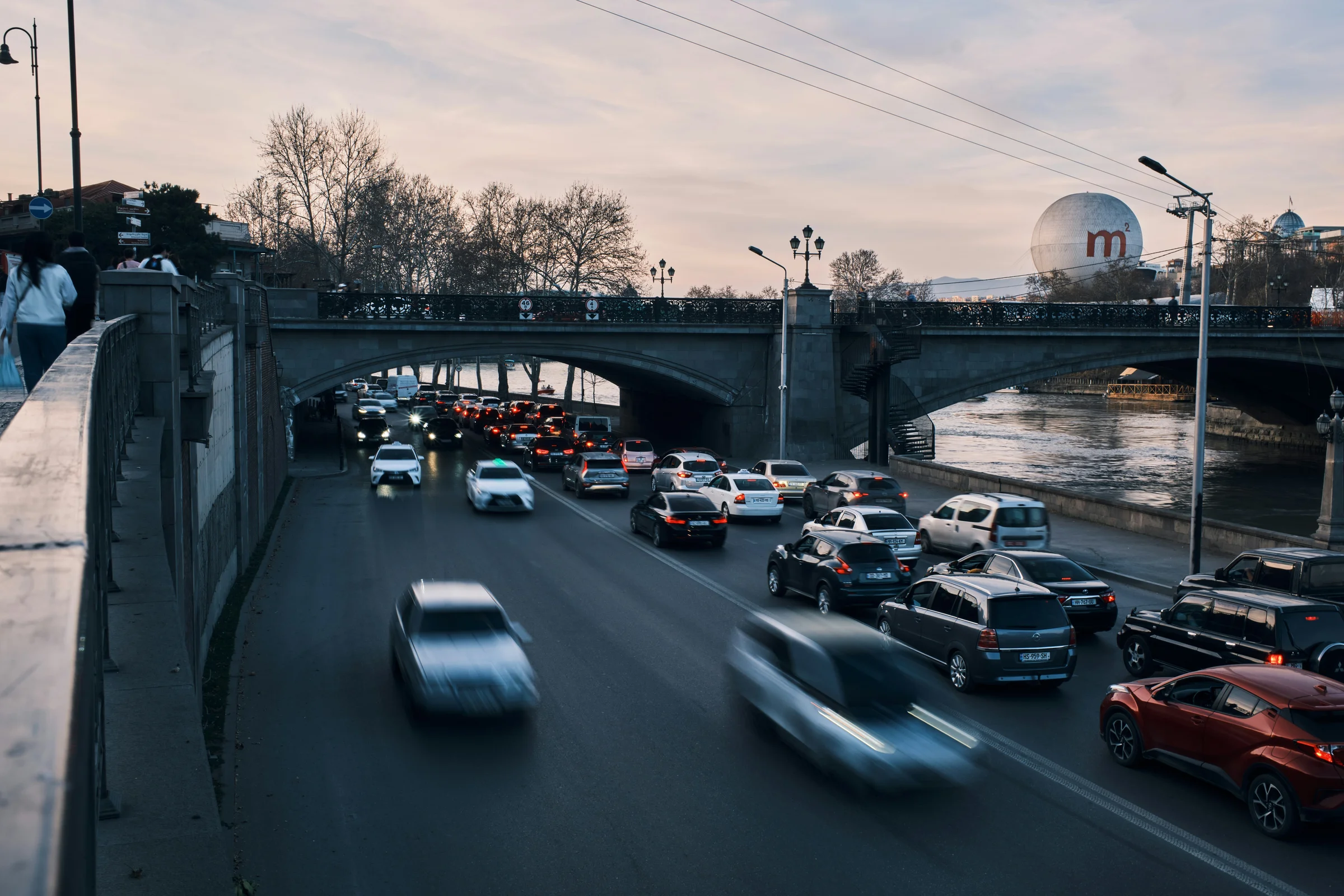
Georgia's transport system is a beautiful mess. There's a Soviet-era metro that costs pennies, minibuses that leave "when full," ride-hailing apps cheaper than a coffee, and overnight trains with surprisingly decent sleeper cars. It's not Swiss precision, but once you understand how it works, you can get almost anywhere without burning money or patience for no reason.
Here's everything you need to know, from someone who actually uses this stuff instead of writing from a one-week itinerary and a heroic amount of optimism.
The Big Picture
Georgia is a small country — roughly the size of Ireland — but the Caucasus mountains make distances deceptive. Tbilisi to Batumi is only 370 km, but it takes 5-6 hours by road. Tbilisi to Mestia (Svaneti) is a full day journey. The terrain dictates everything.
The system breaks down like this: within cities, you have metro, buses, and Bolt. Between cities, you have marshrutkas (minibuses), trains, and shared taxis. Into the mountains, you usually need a 4x4 or a very adventurous attitude.
The Metromoney Card
Get one immediately. It works on the metro, city buses, cable cars, and some marshrutkas in Tbilisi. Buy it at any metro station (2 GEL for the card, then top up). Without it, you're stuck with cash for everything — and buses won't take cash at all.
Tbilisi Metro
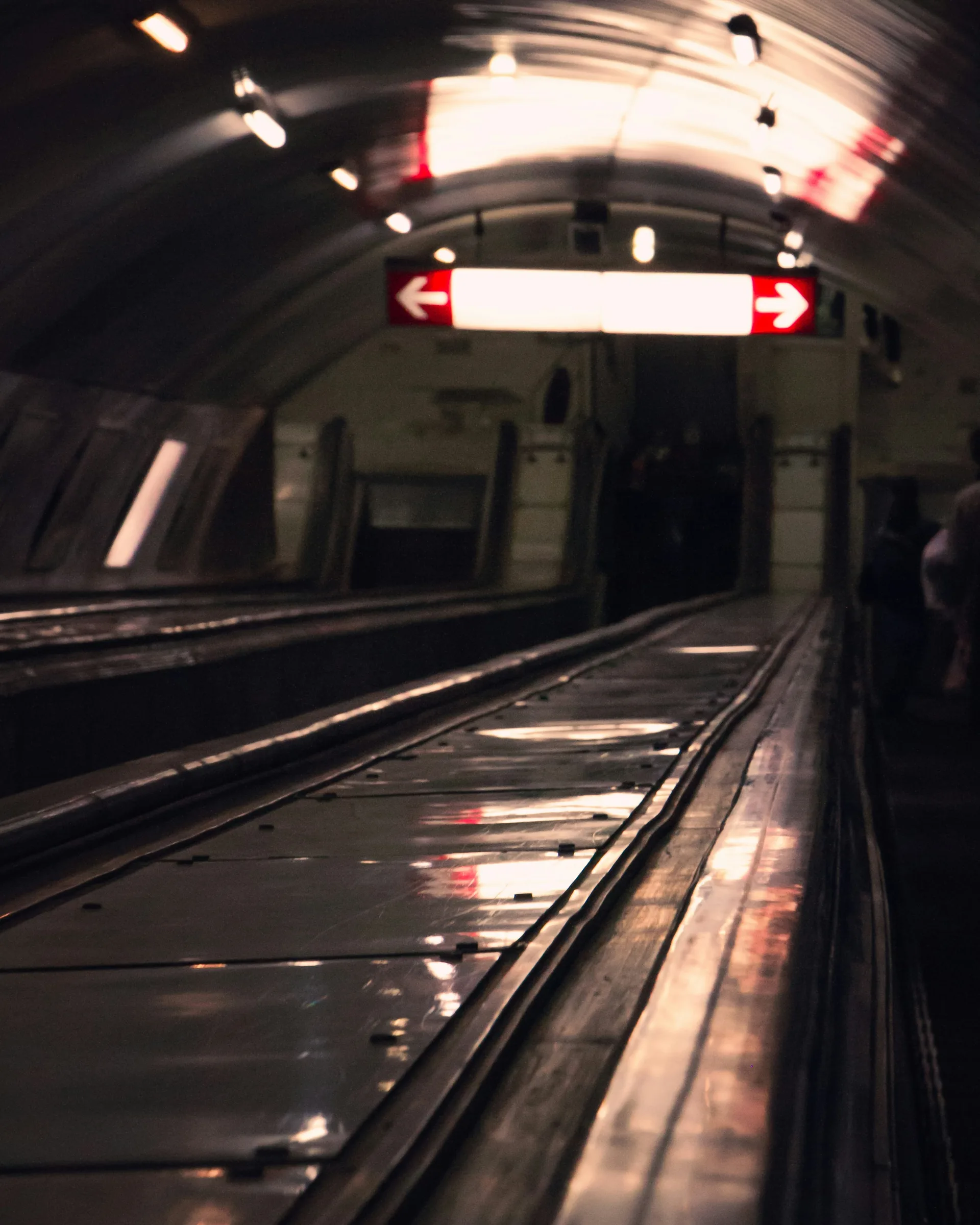
Two lines. 23 stations. Built in 1966. Soviet-deep (some stations are 50+ meters underground — the escalator ride alone takes a full minute). It's basic, it's reliable, and it costs 1 GEL per ride regardless of distance.
| Detail | Info |
|---|---|
| Lines | 2 (Akhmeteli–Varketili & Saburtalo) |
| Stations | 23 total |
| Hours | 6:00 AM – midnight |
| Frequency | Every 3-5 min (peak), 7-10 min (off-peak) |
| Fare | 1 GEL (~$0.37) — Metromoney card required |
| Free transfers | Bus → metro (and back) within 90 minutes |
The two lines connect at Station Square (also the main railway station) — this is the main interchange. Key stops for tourists: Liberty Square (old town), Avlabari (Holy Trinity Cathedral), Rustaveli (main avenue), and Marjanishvili (restaurants and nightlife).
Stations are announced in Georgian and English. Signs are bilingual. It's genuinely hard to get lost — two lines don't leave much room for confusion.
Transfer trick
Your Metromoney card gives you a free transfer between metro and bus within 90 minutes. So metro + bus to your final destination costs just 1 GEL total. Take advantage of this — it covers most trips.
City Buses
Tbilisi's bus system got a major overhaul in recent years. The new buses are modern, air-conditioned, and have electronic displays showing the next stop in Georgian and English. The old yellow marshrutkas that used to dominate city routes are mostly gone — replaced by proper city buses.
Fare: 1 GEL, paid by Metromoney card (tap on the reader when boarding). Cash is not accepted. The same card works on metro and buses, and transfers within 90 minutes are free.
Routes cover the entire city, and Google Maps is reasonably accurate for Tbilisi bus routing. Just type in your destination and it'll show bus options with real-time arrival estimates.
Batumi and Kutaisi also have city bus systems, though smaller. Batumi's buses cost 0.50 GEL and cover most tourist areas. Kutaisi's system is minimal — you'll mostly use taxis there.
Marshrutkas (Minibuses)
This is the one that confuses everyone. Marshrutkas are the backbone of Georgian intercity transport — small, usually white or yellow Mercedes Sprinters that run fixed routes between cities and towns. They're cheap, frequent on popular routes, and completely chaotic if you don't know the system. If you want the deeper version on station choice, fares, luggage reality, and how departure logic actually works, read the dedicated Marshrutka Guide.

Here's how they work:
- Go to the right bus station. In Tbilisi, most marshrutkas leave from two main hubs: Didube (north/west destinations — Kazbegi, Kutaisi, Borjomi) and Ortachala (south/east — Sighnaghi, David Gareja, Armenia). Station Square handles some routes too.
- Find your destination. There's no central booking desk. Walk around, ask "Kazbegi?" or wherever you're going, and drivers or station workers will point you to the right van. Destinations are written on the windshield — usually only in Georgian.
- Wait until it's full. Most marshrutkas leave when they have enough passengers, not on a fixed schedule. On popular routes (Tbilisi → Kutaisi), this might mean every 30 minutes. On quiet routes, you could wait an hour or more.
- Pay the driver. Cash only, when you board or sometimes when you arrive. No tickets, no receipts.
- Signal your stop. Shout "gaacheret!" (გააჩერეთ — "stop!") or knock on something when you want to get off.
| Route | From | Price | Duration |
|---|---|---|---|
| Tbilisi → Kutaisi | Didube | 15 GEL | 3.5-4 hrs |
| Tbilisi → Batumi | Didube | 25 GEL | 5-6 hrs |
| Tbilisi → Kazbegi | Didube | 10 GEL | 3-3.5 hrs |
| Tbilisi → Sighnaghi | Ortachala | 8 GEL | 2 hrs |
| Tbilisi → Borjomi | Didube | 10 GEL | 3 hrs |
| Tbilisi → Mtskheta | Didube | 1.50 GEL | 25 min |
| Kutaisi → Mestia | Kutaisi station | 25 GEL | 5-6 hrs |
Marshrutka survival tips
Arrive early (before 9 AM for mountain routes). Bring small bills — drivers rarely have change for 100 GEL notes. Motion sickness is real on mountain roads — sit in front. There's no luggage hold, so pack light or expect your bag on your lap. And yes, the driving is aggressive. That's normal.
Taxis & Bolt
Bolt is the dominant ride-hailing app in Georgia. Uber doesn't operate here. Yandex Go also works but Bolt has better coverage and is what most locals use.
Prices are absurdly cheap by Western standards. A typical 15-20 minute ride across central Tbilisi costs 5-10 GEL ($2-4). Airport to city center is 8-15 GEL. Even a 40-minute ride to the outskirts rarely exceeds 20 GEL.
If you want the deeper version on fares, airport pickups, card versus cash, and how to avoid the classic arrivals-hall taxi nonsense, read the dedicated Bolt in Georgia guide. This section is the transport-overview version.
✅ Do use Bolt
Fixed prices, no haggling, GPS-tracked, card payment, rated drivers. This is your default for city transport.
❌ Avoid street taxis
No meters, inflated prices for tourists, the classic "my meter is broken" routine. Airport taxis are the worst — they'll quote 3-4x the Bolt price.
One exception: shared taxis for intercity travel. At bus stations, you'll find drivers with private cars heading to specific destinations. They're more expensive than marshrutkas (roughly double) but faster, more comfortable, and leave sooner since they only need 3-4 passengers. Bargaining is expected.
For day trips, you can also hire a Bolt driver for the full day. Negotiate directly — expect 100-150 GEL ($37-55) for a full-day trip including Kazbegi or Kakheti wine country. It's worth it if you're splitting between a group.
Trains
Georgian Railway (საქართველოს რკინიგზა) connects Tbilisi to Batumi, Kutaisi, Zugdidi, Borjomi, Ozurgeti, and several other cities. The trains are comfortable, cheap, and a genuinely pleasant way to travel — especially the Tbilisi-Batumi route along the coast.
Need the full rail breakdown?
If you're deciding between Batumi, Zugdidi, Borjomi, or western Georgia by rail, read the dedicated Georgia Train Travel Guide for routes, classes, booking tips, and station reality. This section is the short version.
| Route | Duration | 2nd Class | 1st Class |
|---|---|---|---|
| Tbilisi → Batumi | 5-5.5 hrs | 25 GEL | 35 GEL |
| Tbilisi → Kutaisi | 5 hrs | 14 GEL | 18 GEL |
| Tbilisi → Zugdidi | 5.5 hrs | 24 GEL | 32 GEL |
| Tbilisi → Borjomi | 4 hrs | 9 GEL | — |
| Tbilisi → Batumi (overnight) | 8 hrs | 30 GEL | 50 GEL (sleeper) |
Book tickets online at tkt.ge — the official Georgian Railway booking site. You can also buy tickets at the station, but popular routes (especially summer Tbilisi-Batumi) sell out. Book 2-3 days ahead in peak season.
The overnight train to Batumi
Departs Tbilisi around 9 PM, arrives Batumi at 5 AM. First class gets you a 4-person sleeper compartment with sheets and blankets. It's not luxury, but it's comfortable and saves you a night's accommodation. Bring snacks — there's no dining car.
What to expect: Second class is open seating (comfortable enough for day trips). First class on day trains gets you a reserved seat with more legroom. The Tbilisi-Batumi express is the most modern, with air conditioning and power outlets. Regional trains to places like Borjomi are older but perfectly functional.
Car Rental & Driving
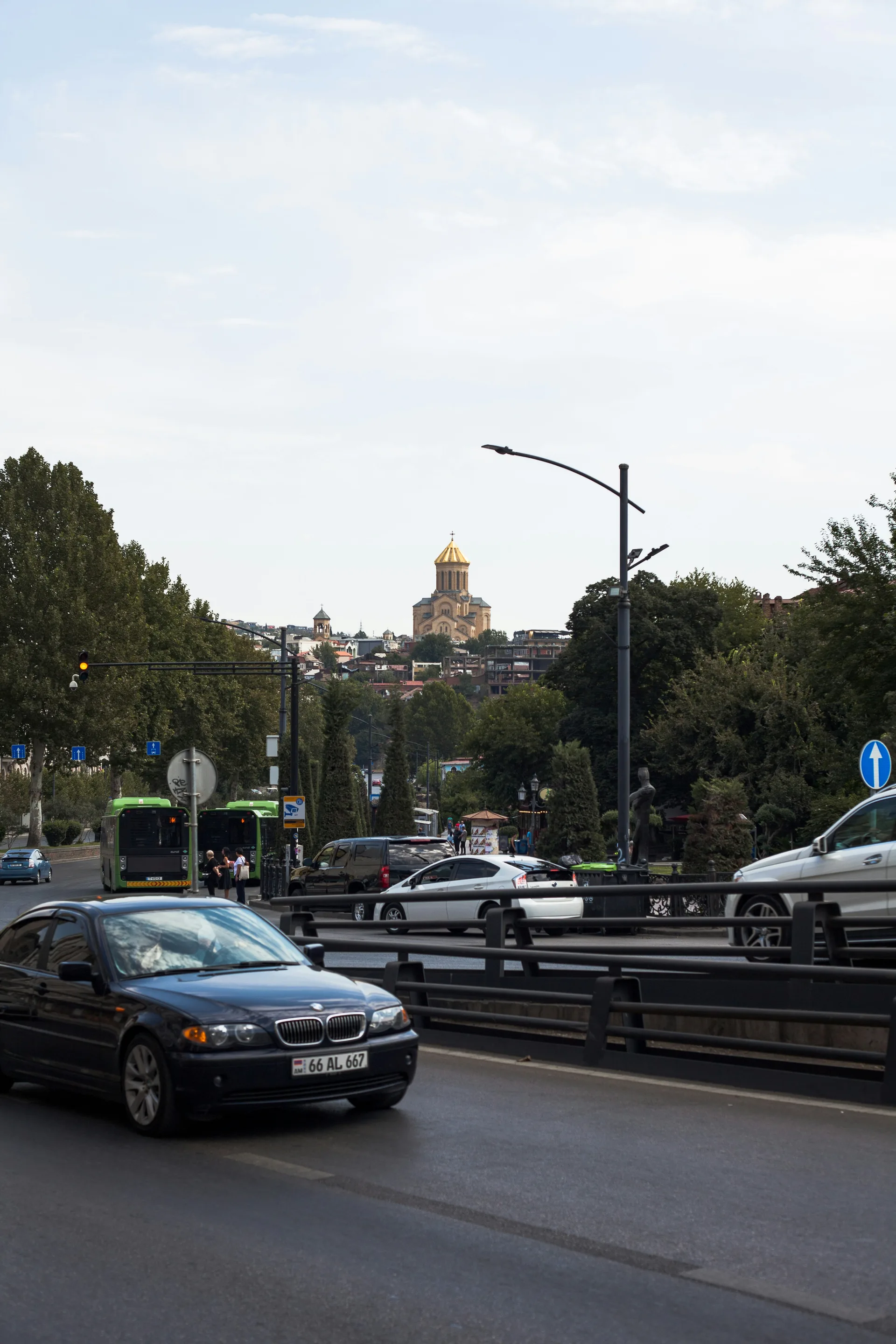
Renting a car unlocks Georgia's best scenery — the Georgian Military Highway, Tusheti, the wine roads of Kakheti. But driving here is not for the faint-hearted.
Rent a car when
- • Exploring Kakheti wine country at your own pace
- • Driving the Georgian Military Highway
- • Visiting multiple towns in one trip
- • Traveling with family or heavy luggage
- • Going to places without marshrutka access
Skip the car when
- • Staying in Tbilisi (Bolt + metro is better)
- • Going to Batumi (train is more relaxing)
- • You're an anxious driver (roads are intense)
- • Heading to Svaneti in winter (dangerous)
- • Budget is tight (Bolt day hire is cheaper)
Costs: Budget cars (Hyundai i10, Suzuki Swift) start around 80-120 GEL/day ($30-45). SUVs and 4x4s run 150-250 GEL/day. Always get full insurance — Georgian drivers are unpredictable, and road conditions outside main highways can be rough.
Requirements: International Driving Permit (IDP) is technically required but rarely checked. Your home country license is usually enough at rental agencies. Minimum age is typically 21, and some agencies charge extra for drivers under 25.
Rental companies: Local agencies (Rent a Car Tbilisi, MyGeo) are cheaper than international chains. Book through platforms like localrent.com or directly. Avoid airport pickup premiums — take a Bolt to the rental office in the city.
Driving reality check
Georgian driving is aggressive. Overtaking on blind corners, tailgating on mountain roads, livestock on highways — it's all part of the experience. Speed cameras are common (fines are automatic). Fuel is about 3 GEL/liter. Road quality varies wildly — the main highways are fine, but side roads can be unpaved and treacherous after rain. For Tusheti and Upper Svaneti, you absolutely need a 4x4.
Domestic Flights
Georgia has three airports: Tbilisi (TBS), Kutaisi (KUT), and Batumi (BUS). There are occasional domestic flights between them, but honestly, they're rarely worth it for domestic travel. The distances are short enough that trains and marshrutkas are cheaper and nearly as fast once you factor in airport logistics.
The one exception: Mestia has a tiny airport with seasonal flights from Tbilisi (Vanilla Sky airline). When they're running (summer months), it cuts a brutal 9-hour drive down to 1 hour. Flights cost around 65 GEL one-way — an absolute steal. But schedules are unreliable and weather-dependent. Don't count on it as your only plan.
Getting to/from the Airport
Tbilisi International Airport (TBS) is about 15-20 minutes from the city center.
| Option | Cost | Time | Notes |
|---|---|---|---|
| Bolt | 8-15 GEL | 15-25 min | Usually the easiest option, though surge pricing and pickup confusion happen. |
| Airport bus (337) | 1 GEL | 30-40 min | Runs to Liberty Square. Every 15-20 min, until midnight. Metromoney card needed. |
| Airport taxi | 40-60 GEL | 15-25 min | Rip-off. They'll ask 50-60 GEL. Walk past them to Bolt. |
Kutaisi Airport (KUT) is a budget airline hub (Wizz Air). It's 20 km from Kutaisi and 230 km from Tbilisi. Georgian Bus runs direct shuttles to Tbilisi (25 GEL, 4 hours) timed with Wizz Air flights. Book at georgianbus.com.
Useful Apps
🚗 Bolt
The Uber of Georgia. Essential. Works in Tbilisi, Batumi, Kutaisi.
🗺️ Google Maps
Surprisingly good for Georgia. Real-time bus tracking in Tbilisi. Download offline maps for mountain areas.
🚂 tkt.ge
Official train booking. English version available. Book 2-3 days ahead for popular routes.
🚌 georgianbus.com
Kutaisi airport shuttles to Tbilisi and vice versa. Book online, timed with flights.
Get a local SIM card
Without data, you can't use Bolt, Google Maps, or check schedules. Buy a SIM at the airport if you want the cheapest strong local option, or set up a Georgia eSIM before you arrive if you want instant airport data and less hassle.
Best Transport by Route
Here's the quickest reference for the most popular trips:
| Trip | Best option | Why |
|---|---|---|
| Tbilisi → Batumi | Train (express or overnight) | Comfortable, scenic, affordable. Book ahead in summer. |
| Tbilisi → Kazbegi | Marshrutka or hire a driver | No train. Marshrutka from Didube is cheapest. Driver gives you stops along the way. |
| Tbilisi → Kutaisi | Marshrutka (faster) or train (comfortable) | Marshrutka: 3.5 hrs. Train: 5 hrs but more relaxing. |
| Tbilisi → Sighnaghi | Marshrutka from Ortachala | Only real option. 2 hours, 8 GEL. Or hire a driver for a Kakheti wine loop. |
| Tbilisi → Mestia | Flight (summer) or train to Zugdidi + marshrutka | Long journey any way you slice it. Flight if available; otherwise Zugdidi train + 3hr marshrutka. |
| Tbilisi → Mtskheta | Marshrutka from Didube | 25 min, 1.50 GEL. Easiest day trip in Georgia. |
| Kakheti wine tour | Hire a driver for the day | You're drinking wine — don't drive. 100-150 GEL for a full day with stops. |
Budget Breakdown
Daily Transport Budget (Tbilisi)
Intercity Trip Budget (Tbilisi → Batumi return)
For context: a typical week in Georgia using public transport costs less than a single taxi ride from most European airports to their city centers.
Frequently Asked Questions
Is Bolt available in Georgia?
Yes, Bolt is the main ride-hailing app and works well in Tbilisi, Batumi, and Kutaisi. Rides are cheap — most Tbilisi trips cost 5-10 GEL. It's the easiest way to get around cities.
What is a marshrutka?
A marshrutka is a minibus that serves as Georgia's main intercity transport. They're cheap, frequent on popular routes, and leave when full rather than on a fixed schedule. Comfort varies from decent to sardine-can.
Can I rent a car in Georgia?
Yes, international and local rental agencies operate in Tbilisi and Batumi. An international driving permit is recommended. Georgian driving can be aggressive — if you're comfortable with that, a car gives unbeatable freedom for exploring remote areas.
Is the Tbilisi Metro good?
It has two lines and covers the city center well. Trains run frequently, it's cheap (1 GEL per ride), and stations are deep Soviet-era constructions. Buy a Metromoney card at any station — it works on buses too.
How do I get from Tbilisi airport to the city?
Bus 37 runs to the city center for 1 GEL (every 15-20 minutes). A Bolt ride costs 15-25 GEL depending on destination. Airport taxis charge 40-60 GEL — avoid them unless you enjoy overpaying.
Written by The Georgian Guide Team
Based in Tbilisi, we use marshrutkas, Bolt, and the metro daily. We've taken the overnight train to Batumi more times than we can count, survived Didube station at 7 AM, and once waited 90 minutes for a marshrutka to Tusheti that never came.
Last updated: February 2026.
Related Articles
Tbilisi for First-Timers
Everything you need to know before your first trip.
The Georgian Military Highway
The most beautiful drive in the Caucasus, stop by stop.
10 Best Day Trips from Tbilisi
Every day trip tested and ranked.
Is Georgia Safe?
An honest assessment for travelers.