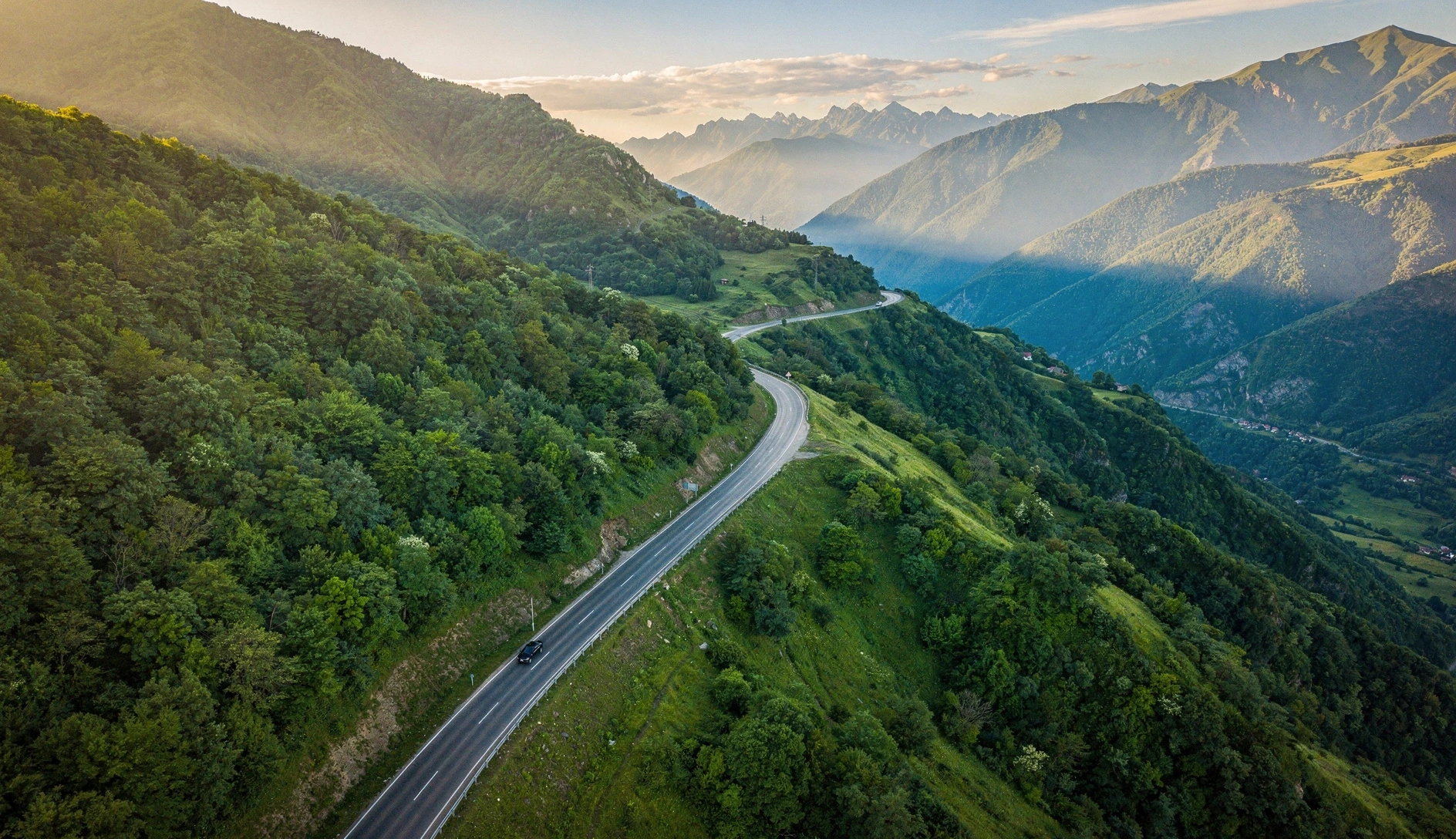
Most visitors fly or train between Tbilisi and Batumi. That's fine if your only goal is getting to the beach. But driving this route means crossing the entire country — from the dry eastern plateau through a mountain pass, past ancient cave cities and Soviet-era industrial towns, through wine country and subtropical valleys, before the Black Sea finally appears on the horizon. It's 360 kilometers of Georgia in concentrate.
I've driven this route more times than I can count, in rental cars and marshrutkas, in summer heat and winter fog. The straight shot takes about five hours. But nobody should do the straight shot. The best version of this trip takes two to three days, with stops that most guides barely mention.
Here's everything you need to know — including what's changed with the massive Rikoti Highway construction project.
Quick Facts
Two Routes, Two Experiences
There are two ways to drive from Tbilisi to Batumi, and which you choose shapes the entire trip.
🛣️ The Highway Route (E60)
Tbilisi → Gori → Khashuri → Rikoti Pass → Kutaisi → Batumi. The main east-west highway through the Rikoti Pass. Fastest option at 5-6 hours direct. Good road quality with ongoing improvements. The route most rental car companies expect you to take.
🏔️ The Southern Route (via Borjomi)
Tbilisi → Gori → Khashuri → Borjomi → Akhaltsikhe → Batumi. Longer by about 2 hours but passes through Borjomi's mineral water valley and the historic Samtskhe-Javakheti region. Better scenery, fewer trucks, more character. Requires a detour south from Khashuri.
My recommendation: take the highway route westbound with a Kutaisi stop, then return via the southern route through Borjomi — or vice versa. You see different Georgia in each direction and avoid driving the same road twice.
Car Rental Tip
Most rental companies in Tbilisi allow one-way drop-off in Batumi for a surcharge of 100-200 GEL. Book this in advance — it saves you driving the same route back. Local companies like MyGPS, StarCar, and MSG are usually cheaper than international brands and more flexible with drop-off.
The Highway Route: Day by Day
This is the more common route and the one I'd recommend for first-time drivers in Georgia. Here's how to break it into a proper road trip rather than a highway grind.
Day 1: Tbilisi to Kutaisi (230 km, 3-4 hours driving)
Leave Tbilisi in the morning and resist the urge to get on the highway immediately. Your first stop is just 20 minutes north of the route.
Mtskheta (30 min stop) — Georgia's ancient capital sits at the confluence of the Mtkvari and Aragvi rivers, barely 20 km from Tbilisi. Svetitskhoveli Cathedral is one of the most important churches in the country — it's where Georgians believe Christ's robe is buried. Jvari Monastery sits on the hill above, with one of the best panoramic views in all of Georgia. You've probably seen the photo even if you don't know the name. Both are UNESCO World Heritage sites. Give yourself at least 30-45 minutes.
Gori (1 hour stop) — Stalin's birthplace. Whether you care about Soviet history or not, the Stalin Museum is one of the strangest museum experiences in the Caucasus. It's essentially a shrine to the dictator, complete with his personal railway carriage and death mask. The museum has barely changed since the Soviet era, which makes it fascinating in a deeply uncomfortable way. The town itself is unremarkable — grab lunch at a local cafeteria (there are several around the central square) and move on.
Uplistsikhe (45 min detour from Gori) — This ancient cave city carved into a rocky hillside dates back to the 1st millennium BC. It's one of the oldest settlements in the Caucasus and far less touristy than you'd expect given its significance. The site sits about 15 km east of Gori. Don't skip this — it's genuinely impressive and takes about an hour to explore properly.
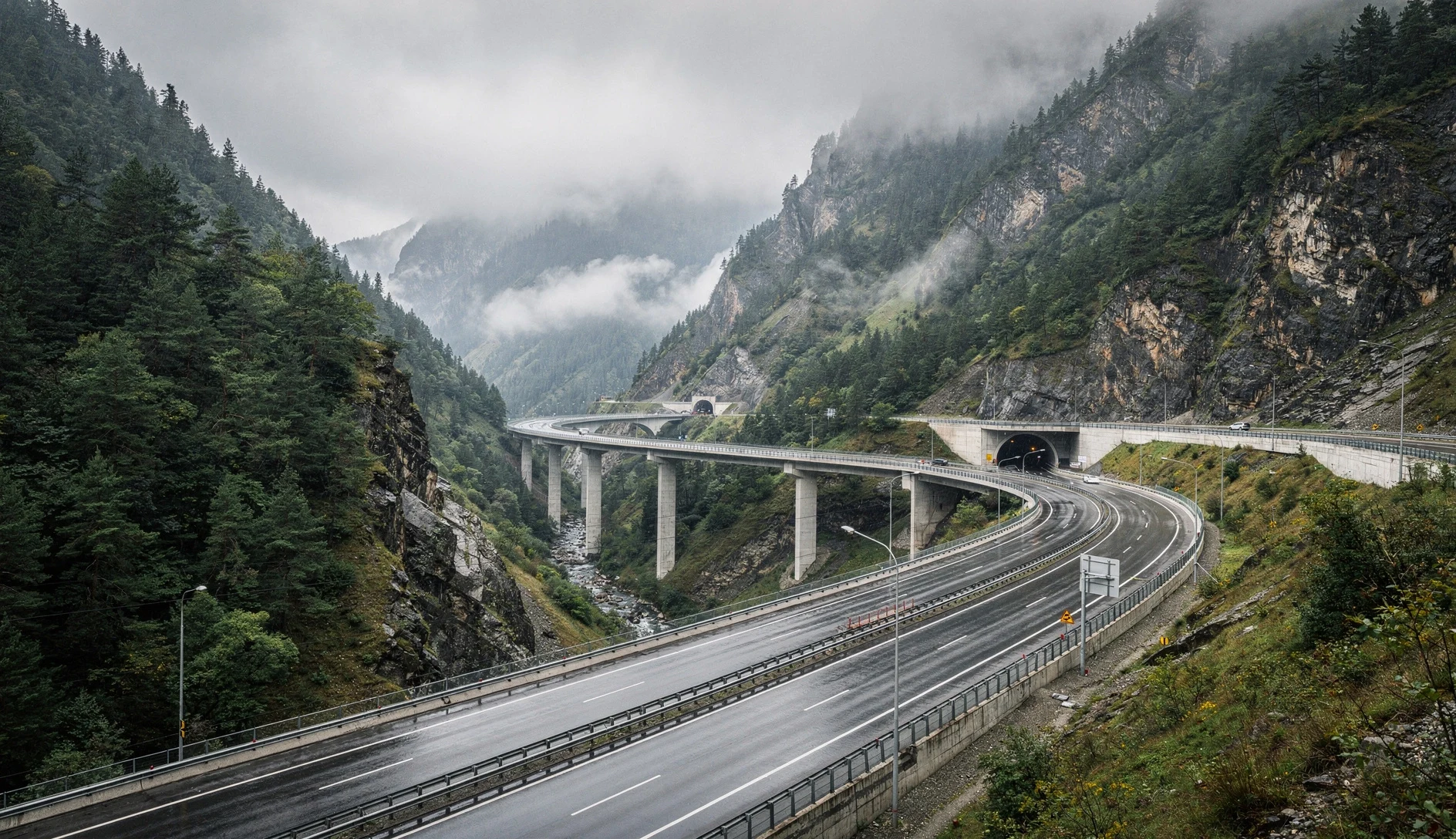
The Rikoti Pass — After Khashuri, you'll enter the Rikoti Pass section. This is where things get interesting. The Georgian government has been building a massive new highway here since 2019 — think European-grade tunnels, bridges, and multilane road carved through the mountains. Parts are complete and genuinely impressive. Other sections are still under construction, which means lane changes, temporary diversions, and patience.
The old Rikoti Pass road is still driveable and more scenic — winding through forested mountains at around 1,000 meters. If you're not in a rush and want to see the old Georgia before it gets bypassed by modernity, take it. But the new highway sections are faster and safer.
Rikoti Construction Zone
The Rikoti Highway project has been ongoing for years and isn't fully complete as of early 2026. Expect construction delays of 15-30 minutes during busy periods. Traffic is managed by workers with flags — follow their signals. The drive through is safe but dusty and chaotic in places. This will eventually be a proper 4-lane highway, but "eventually" is doing a lot of work in that sentence.
Arrive in Kutaisi by late afternoon. Georgia's second city doesn't have Tbilisi's glamour, but it has its own low-key charm. The Bagrati Cathedral sits on a hill overlooking the city and the White Bridge over the Rioni River is a pleasant evening walk. Kutaisi's restaurant scene has improved massively in recent years.
Day 2: Kutaisi Area Exploration
Kutaisi deserves a full day. The surrounding area has some of Georgia's most underrated attractions.
Gelati Monastery — This is a non-negotiable. One of Georgia's finest medieval monasteries, a UNESCO World Heritage site, and arguably more impressive than anything in Mtskheta. The mosaics inside the main church are extraordinary. It's 8 km from Kutaisi center.
Prometheus Cave or Sataplia — Pick one, not both (they're similar). Prometheus Cave is larger and more dramatic — an underground river, colorful stalactites, and a boat ride at the end. Sataplia is smaller but has dinosaur footprints and a glass-floor observation platform. Both are about 30 minutes from Kutaisi.
Martvili Canyon — If you have time, this turquoise canyon about 50 km northwest of Kutaisi is stunning. You can take a boat ride through a narrow gorge with waterfalls and emerald pools. It gets crowded in summer, so go early. The road there is decent but slow.
Okatse Canyon — A suspended walkway over a deep canyon, ending at a platform with vertigo-inducing views. It's near Martvili and can be combined into the same half-day trip. Not for those afraid of heights.
Day 3: Kutaisi to Batumi (150 km, 2.5-3 hours)
The final stretch from Kutaisi to Batumi is easy driving on good road. The landscape changes dramatically — from the rolling hills around Kutaisi to flat subtropical lowland, past tea plantations and citrus groves, through increasingly humid air until you catch your first glimpse of the Black Sea.
You'll pass through Samtredia, a railway junction town with no reason to stop, and Kobuleti, a beach town that's worth a pause if you want to stretch your legs before Batumi. Kobuleti's beach is longer and less crowded than Batumi's, though the town itself is quiet.
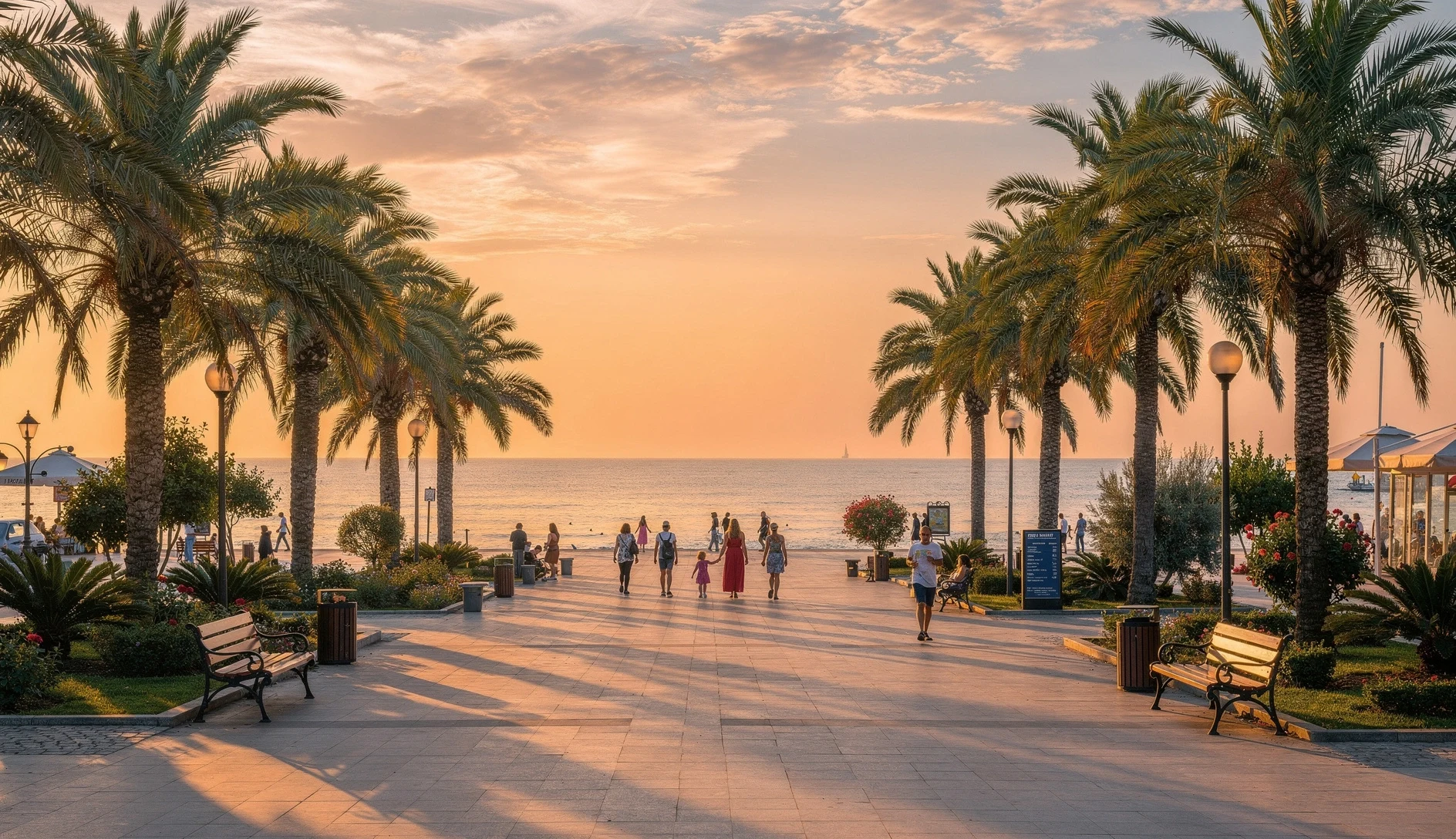
Arriving in Batumi — The city announces itself with a cluster of glass towers on the coast. Love it or hate it (opinions are strong), Batumi's skyline is unmistakably ambitious for a city of 170,000. The seaside boulevard is genuinely pleasant — 7 km of promenade, palm trees, and Black Sea views. In summer it's buzzing; in off-season it's melancholy in a photogenic way.
The Southern Route: Via Borjomi
If you've already done the highway route or want a different flavor, the southern route swings through some of Georgia's most interesting landscape.
From Khashuri (where you'd normally continue west toward the Rikoti Pass), turn south toward Borjomi. The road follows the Borjomi Gorge — densely forested, cooler than the plains, and immediately more scenic.
Borjomi — Famous for its mineral water (yes, the one in the green bottle). The town sits in a forested valley and has a slightly faded resort-town feel. The central park is pleasant, the cable car offers forest views, and you can drink the famously sulfurous mineral water straight from the source for free. It tastes exactly like you'd expect water from the earth to taste. Give it a try; just don't commit to a full bottle until you have.
Borjomi-Kharagauli National Park — If you're into hiking, this is one of the best-maintained trail systems in Georgia. Multi-day routes exist, but even a half-day hike from the Likani entrance gives you old-growth forest and mountain views. Not a road trip stop per se, but worth knowing about.
Akhaltsikhe — The Rabati Castle complex here was controversially renovated in 2012 (think Disneyland meets medieval Georgia). Opinions vary. The old fortress sections are genuinely atmospheric; the new additions are undeniably polished. It's a 45-minute detour from the main road but breaks up the drive nicely.
Vardzia (optional, adds a full day) — If you can spare the time, continue south from Akhaltsikhe to the Vardzia cave monastery. It's one of the most impressive sights in Georgia — a cliff face with hundreds of carved rooms and a 12th-century church with original frescoes. It adds about 120 km round trip from Akhaltsikhe. This detour is worth the extra day if you haven't been.
From Akhaltsikhe, the road west toward Batumi climbs through the Goderdzi Pass (2,025m). This is a proper mountain road — narrow, winding, and spectacular in good weather. The pass is snow-covered from November to May, making the southern route a summer-only option for this section. After Goderdzi, the road descends steeply through subtropical forest to Khulo and eventually to the coast south of Batumi.
Goderdzi Pass Warning
The Goderdzi Pass road has been significantly improved in recent years but it's still a mountain road with hairpin bends and occasional rockfall risk. It's paved most of the way now, but some sections are rough. Not recommended in bad weather, at night, or for nervous drivers. The pass is closed in winter. Check conditions locally before attempting it.
Road Conditions in 2026
| Section | Distance | Road Quality | Notes |
|---|---|---|---|
| Tbilisi → Gori | 80 km | Excellent | 4-lane highway, well-maintained |
| Gori → Khashuri | 40 km | Good | 2-lane highway, some slow trucks |
| Khashuri → Zestafoni (Rikoti) | 60 km | Variable | Active construction, new tunnels + old road mix |
| Zestafoni → Kutaisi | 30 km | Good | Recently upgraded sections |
| Kutaisi → Batumi | 150 km | Good to Excellent | Flat, fast, some 4-lane sections |
| Khashuri → Borjomi | 30 km | Good | Scenic gorge road, some curves |
| Borjomi → Akhaltsikhe | 60 km | Good | Mountain road, well-paved |
| Akhaltsikhe → Batumi (Goderdzi) | 160 km | Moderate | Mountain pass, paved but narrow. Summer only. |
When to Go
| Season | Highway Route | Southern Route | Batumi Weather |
|---|---|---|---|
| May-June | Excellent | Excellent (Goderdzi opens late May) | Warm, not crowded, occasional rain |
| July-August | Good (busier traffic) | Good | Hot, humid, crowded beaches |
| September-October | Excellent | Good (Goderdzi closes mid-Oct) | Warm, quieter, best swimming |
| November-April | Good (Rikoti stays open) | Goderdzi closed. Borjomi possible. | Rainy, grey, quiet |
Driving Tips for Georgia
Georgian driving culture is... let's call it spirited. If you've only driven in Western Europe, the first 20 minutes will be an adjustment. Here's what to expect:
🚦 Lane Discipline
It doesn't really exist outside Tbilisi. Expect overtaking on blind corners, trucks straddling lanes, and cars using the shoulder as a passing lane. Drive defensively and don't take it personally.
🍷 Zero Tolerance
Georgia has a strict 0.0% blood alcohol limit for drivers. Yes, in the country famous for wine. Police checkpoints exist, especially on the highway out of Tbilisi and near Kutaisi. Don't risk it.
⛽ Fuel Stops
Gulf, Socar, and Wissol stations are everywhere on the main highway. Fill up before the Rikoti Pass and again before the Goderdzi Pass if taking the southern route. All stations accept cards.
📱 Navigation
Google Maps works well for main routes. Waze is popular with locals and better for live traffic/police alerts. Download offline maps before you leave — mobile coverage drops in the Rikoti Pass and Goderdzi Pass areas.
🐄 Animal Crossings
Cows on the highway are a real thing. Not a joke. Especially between Khashuri and Zestafoni, and on any rural stretch. They have zero road awareness. Slow down through villages, even on the main highway.
🚔 Speed Cameras
Fixed cameras are increasingly common, especially on the Tbilisi-Gori stretch and near Kutaisi. Fines are 50 GEL for minor speeding, more for serious violations. Your rental company will charge you plus an admin fee if a ticket arrives.
Where to Stay Along the Route
| City | Budget | Mid-Range | Notes |
|---|---|---|---|
| Gori | 40-60 GEL | 80-120 GEL | Limited options, guesthouses mostly. Skip unless visiting Uplistsikhe next morning. |
| Kutaisi | 50-80 GEL | 100-180 GEL | Best overnight stop on the highway route. Good hotel options have multiplied. |
| Borjomi | 60-90 GEL | 120-200 GEL | Best overnight on the southern route. Some spa hotels worth the splurge. |
| Akhaltsikhe | 40-70 GEL | 80-150 GEL | Useful base if adding Vardzia. Several decent guesthouses near Rabati. |
| Batumi | 60-100 GEL | 150-300 GEL | Huge range. Boulevard area for beach access, Old Town for character. |
What It Costs
Budget Trip (2 people, 3 days)
Comfortable Trip (2 people, 3 days)
Common Mistakes
Driving straight through
5-6 hours of Georgian highway is exhausting and pointless when there's this much to see. Break it into at least two days. The stops are the whole point of driving instead of taking the train.
Skipping Kutaisi
Most people see Kutaisi as just a cheap flight destination. But Gelati Monastery, Prometheus Cave, and Martvili Canyon are some of the best things in the country. Spend a night.
Attempting Goderdzi in winter
The pass is closed from roughly November to May. Even in shoulder season, check conditions locally. Getting stuck on a 2,000m mountain pass in Georgia is not the adventure you want.
Not booking one-way drop-off
Driving Tbilisi → Batumi → Tbilisi doubles your time on the road for no reason. Pay the one-way surcharge. Or rent in Batumi and fly back to Tbilisi (flights are 1 hour, often under 80 GEL).
Leaving too late from Tbilisi
The Rikoti Pass section is best in daylight, both for safety and scenery. Leave by 9 AM if you want to see Mtskheta and Gori and still reach Kutaisi by evening. Georgian summer days are long but traffic builds after noon.
Expecting the highway to be finished
The Rikoti Highway project has been "nearly complete" for years. Don't plan your trip around projected completion dates. Plan for construction zones. You'll be pleasantly surprised when sections are done rather than frustrated when they're not.
Should You Drive or Take the Train?
| Factor | Driving | Express Train |
|---|---|---|
| Time (direct) | 5-6 hours | 5 hours |
| Cost (2 people) | ~250-400 GEL (fuel + rental day) | 70-100 GEL total |
| Stops possible | Unlimited — that's the point | None (express is direct) |
| Stress level | Moderate to high (Georgian driving) | Low (sit back, read, sleep) |
| Scenery | You choose the route and stops | Good from train windows |
| Best for | Exploring the country between the cities | Just getting to Batumi efficiently |
The honest answer: if you just want to be in Batumi, take the train. It's cheaper, less stressful, and the same travel time. Drive only if the journey matters to you as much as the destination. For most visitors doing a multi-week Georgia trip, the road trip version is the far richer experience.
FAQ
How long does it take to drive from Tbilisi to Batumi?
The direct drive takes 5-6 hours via the E60 highway through the Rikoti Pass. With the ongoing highway upgrades, this should drop to under 4 hours once complete. Adding stops for Mtskheta, Gori, Kutaisi, or Borjomi turns it into a 2-3 day trip — which is the better way to do it.
Do I need a 4WD for the Tbilisi to Batumi drive?
No. The entire main highway route is paved and a regular sedan handles it fine. The southern route via Goderdzi Pass is also paved now, though an SUV gives more confidence on the mountain sections. You'd only truly need 4WD for side detours to remote villages.
What is the Rikoti Pass and is it safe?
The Rikoti Pass is the mountain crossing between eastern and western Georgia at roughly 1,000m elevation. A massive highway project has been replacing the old winding road with modern tunnels and bridges. The route is safe but has active construction zones with temporary diversions. It stays open year-round.
Should I take the train or drive?
If you just want to reach Batumi, take the express train — it's 5 hours, comfortable, and costs 35-50 GEL per person. Drive only if you want to explore the country between the two cities. The road trip version with stops is a fundamentally different (and richer) experience.
What's the best time for a Tbilisi to Batumi road trip?
May-June and September-October. Summer works but Batumi gets crowded and the road is busier. The highway route is open year-round, but the southern route via Goderdzi is summer-only (roughly June to mid-October).
Written by The Georgian Guide Team
Based in Tbilisi and writing from years of driving Georgia's highways, mountain passes, and questionable shortcuts. We've done this route in rental sedans, borrowed SUVs, and one memorably cramped marshrutka.
Last updated: February 2026.
Related Articles
Batumi: The Complete Guide
Everything you need for Georgia's Black Sea capital.
Kutaisi Complete Guide
Georgia's second city and the caves, canyons, and monasteries around it.
Borjomi Guide
Mineral water, forested valleys, and Georgia's favorite spa town.
Renting a Car in Georgia
Everything you need to know about self-driving in Georgia.