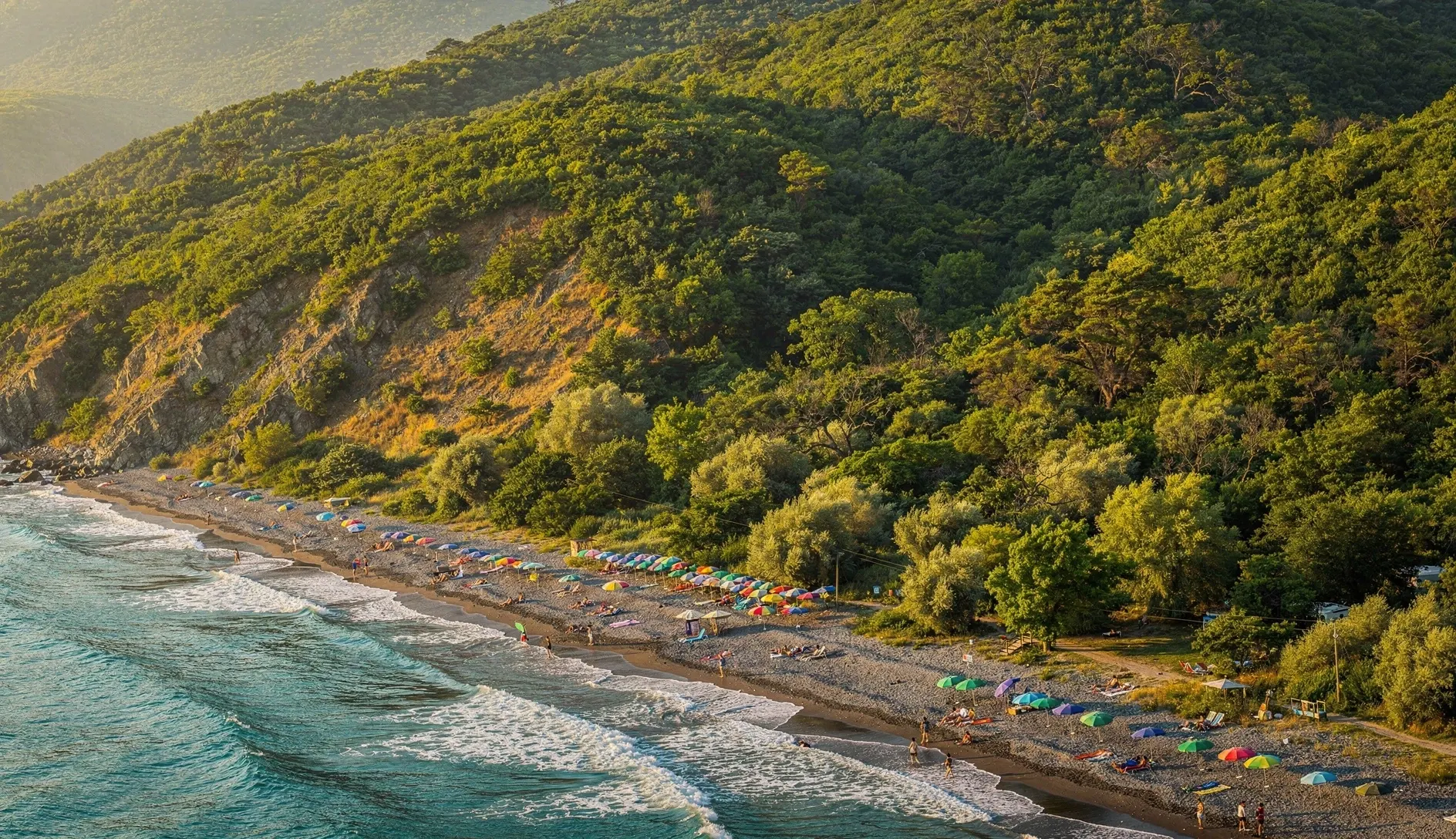
Let's get one thing out of the way: nobody flies to Georgia for a beach vacation. If you're expecting Sardinia or the Greek islands, you're going to be disappointed. But if you temper your expectations and know where to look, Georgia's Black Sea coast has some genuinely pleasant surprises — pebble coves backed by subtropical forest, magnetic black sand that supposedly cures ailments, and water so clean you can see the bottom. The trick is knowing which beaches are worth your time and which ones to skip entirely.
Setting Expectations: What Georgia's Beaches Are Actually Like
Georgia's coast runs about 310 kilometers along the Black Sea, from the Turkish border at Sarpi up to Anaklia near the Abkhazian line. That sounds like a lot, but the usable beach stretches are concentrated in a few key areas, mainly around Batumi and heading north toward Poti.
Here's the honest truth: the beaches themselves aren't the main attraction. There are no white sand paradises, no turquoise lagoons, no Instagram-perfect beach clubs. What you get instead is a coastline backed by the foothills of the Lesser Caucasus, covered in lush subtropical vegetation — tea plantations, tangerine orchards, eucalyptus groves. The backdrop is the selling point, not the beach itself.
The Black Sea is also noticeably less salty than the Mediterranean — roughly half the salinity. Swimming feels different. Lighter, somehow. The water is generally clean, especially south of Batumi and at the smaller beaches. The big resort beaches in peak July can get crowded and a bit littered, which is frustrating but avoidable if you know where to go.
The Right Mindset
Think of Georgia's coast as a complement to a broader trip, not the destination. Spend a few days at the beach after hiking in Svaneti or touring Kakheti's wine country. That's when it really works — as a decompression stop, not the main event.
Pebbles vs Sand: Understanding the Coast
The single most important thing to know: Georgia's coast splits into two distinct types, and which one you pick will determine your entire beach experience.
Southern coast (Sarpi to Kobuleti): Pebble beaches. Smooth, rounded stones ranging from grape-sized to fist-sized. Beautiful to look at, less comfortable to lie on without a mat. The water gets deep quickly — a few steps and you're swimming. Great for actual swimming, less great for small kids wading.
Northern coast (Ureki to Anaklia): Sandy beaches. Fine black or dark gray sand, much of it naturally magnetic. Gentle, gradual entry into the water — you can wade 30 meters and still be waist-deep. Perfect for families, kids, and anyone who doesn't want to negotiate pebbles in flip-flops.
| Feature | Pebble Beaches (South) | Sandy Beaches (North) |
|---|---|---|
| Surface | Smooth pebbles, need a beach mat | Fine dark sand, some magnetic |
| Water Entry | Drops off fast — swimming in 2-3 steps | Gradual — wade 20-30m before it's deep |
| Water Clarity | Excellent — pebbles don't cloud the water | Good, slightly murkier when waves kick up sand |
| Best For | Swimming, snorkeling, couples | Families, kids, sunbathing, sandcastles |
| Crowds | Less crowded (except central Batumi) | Can get very crowded in July-August |
| Key Towns | Kvariati, Gonio, Sarpi, Tsikhisdziri | Ureki, Shekvetili, Grigoleti, Anaklia |
Best Beaches Near Batumi
Batumi's own central beach — the 7-kilometer pebble strip along the Boulevard — is fine for a quick dip but not where you want to spend a proper beach day. It's crowded in summer, the water quality drops when 50,000 tourists are sharing the same stretch, and the constant foot traffic means you'll never fully relax. Batumi is a city first, beach destination second.
The smart move is to use Batumi as a base and head to the beaches just outside the city. All of these are within 15-30 minutes by marshrutka or taxi.
Kvariati
12 km south of Batumi · 20 min
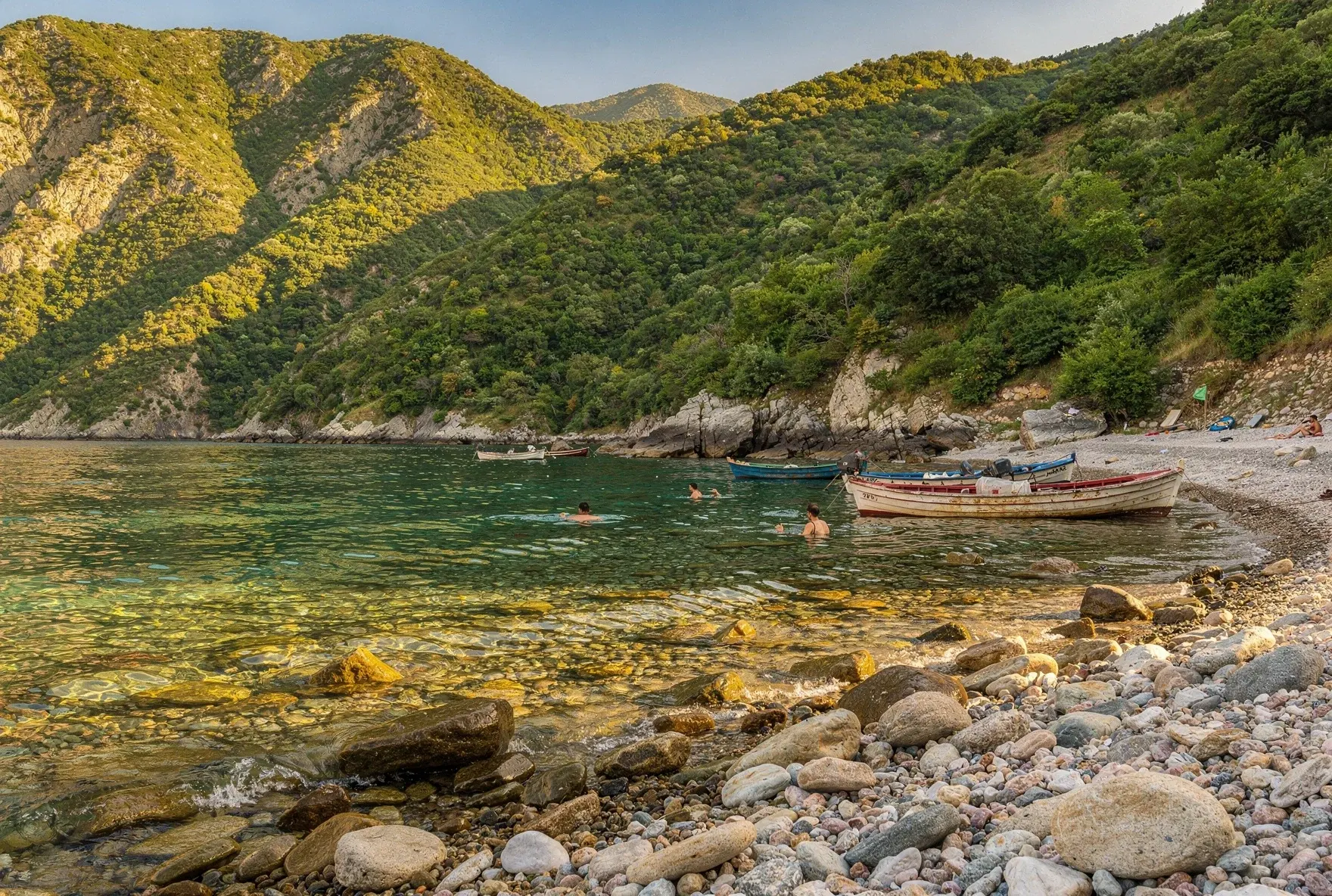
The best pebble beach on the entire coast, full stop. Crystal-clear water, dramatic cliffs rising behind, and a relaxed atmosphere that Batumi lost years ago. The water gets deep quickly, which makes it Georgia's best spot for snorkeling and scuba diving. Small guesthouses line the shore. This is where locals who actually know the coast come to swim.
Sarpi
18 km south of Batumi · 25 min
Georgia's southernmost beach, literally a stone's throw from the Turkish border. Small, clean, and beautifully framed by a sheer cliff face. The water is some of the clearest on the coast because there's no development to pollute it. Tiny — maybe 300 meters of shore — but that's part of the charm. Gets some truck noise from the border crossing.
Gonio
8 km south of Batumi · 15 min
Wider pebble beach than Kvariati, more developed with restaurants, sunbed rentals, and a proper parking area. The Roman fortress of Gonio-Apsaros is just inland — combine a beach day with some history. Water quality is good but not as pristine as Kvariati. Good middle ground between isolation and convenience.
Tsikhisdziri
20 km north of Batumi · 30 min
A stretch of coastline between Batumi and Kobuleti that's been quietly developed with a few resorts. The beach is pebbly, the setting is green and peaceful, and it feels a world away from Batumi's chaos. Paragraph Resort and Castello Mare are here. Good option if you want resort-style comfort without the city.
Kvariati Pro Tip
For the best experience, go early morning (before 10 AM) or late afternoon (after 5 PM). The water is calmest, the light is gorgeous for photos, and you'll have the beach practically to yourself. Marshrutka #16 from Batumi runs every 15 minutes and costs about 1 GEL.
Kobuleti & the Sandy Coast
Kobuleti is where things change. About 25 kilometers north of Batumi, the pebbles gradually give way to coarse dark sand, and by the time you reach central Kobuleti, you're on a proper sand beach. It stretches for about 12 kilometers, making it the longest continuous beach in Georgia.
The vibe here is completely different from the Batumi area. Kobuleti is a traditional Georgian resort town — think Soviet-era sanatoriums being slowly replaced by modern hotels, families grilling mtsvadi on the beach, kids running around until midnight, and a general atmosphere of unhurried summer leisure. It's not glamorous, but it's authentic.
The beach itself is wide and dark — the sand is a mix of volcanic minerals, not the golden sand you might expect. The water entry is gradual, making it far more family-friendly than the pebble beaches down south. The town has a long, tree-lined promenade parallel to the beach with cafés, small shops, and restaurants serving Adjarian food.
Kobuleti's main drawback: it's a bit of a one-note destination. There's the beach, the promenade, and that's about it. After two or three days, you might get restless. But as a beach stop within a broader trip, it's hard to beat for sheer unpretentious relaxation.
| Beach Area | Distance from Batumi | Type | Vibe |
|---|---|---|---|
| South Kobuleti | 22 km (30 min) | Mixed pebble/sand | Quieter, fewer facilities |
| Central Kobuleti | 25 km (35 min) | Dark sand | Main resort strip, most services |
| North Kobuleti | 30 km (40 min) | Fine dark sand | Less crowded, more natural |
| Chakvi | 12 km (15 min) | Pebble | Small village, tea plantations nearby |
| Bobokvati Beach | 16 km (20 min) | Pebble transitioning to sand | Local feel, very affordable |
Ureki's Magnetic Sand
Ureki is the weirdest beach story in Georgia. This small village about 50 kilometers north of Batumi has beaches covered in fine black sand that is naturally magnetic. Yes, actually magnetic — hold a magnet near it and the grains will cling to it. The sand contains high concentrations of magnetite, and for decades Georgians have believed it has therapeutic properties for joint pain, cardiovascular issues, and nervous system disorders.
Is there scientific evidence? Some. Georgian and Russian researchers have published studies suggesting magnetite sand exposure may improve certain conditions, but the research isn't exactly cutting-edge. What's undeniable is that Ureki has been a health resort since the Soviet era, and plenty of Georgians swear by it. Families bring their children for "sand therapy" — burying kids up to their necks in the warm black sand is a genuine tradition here.
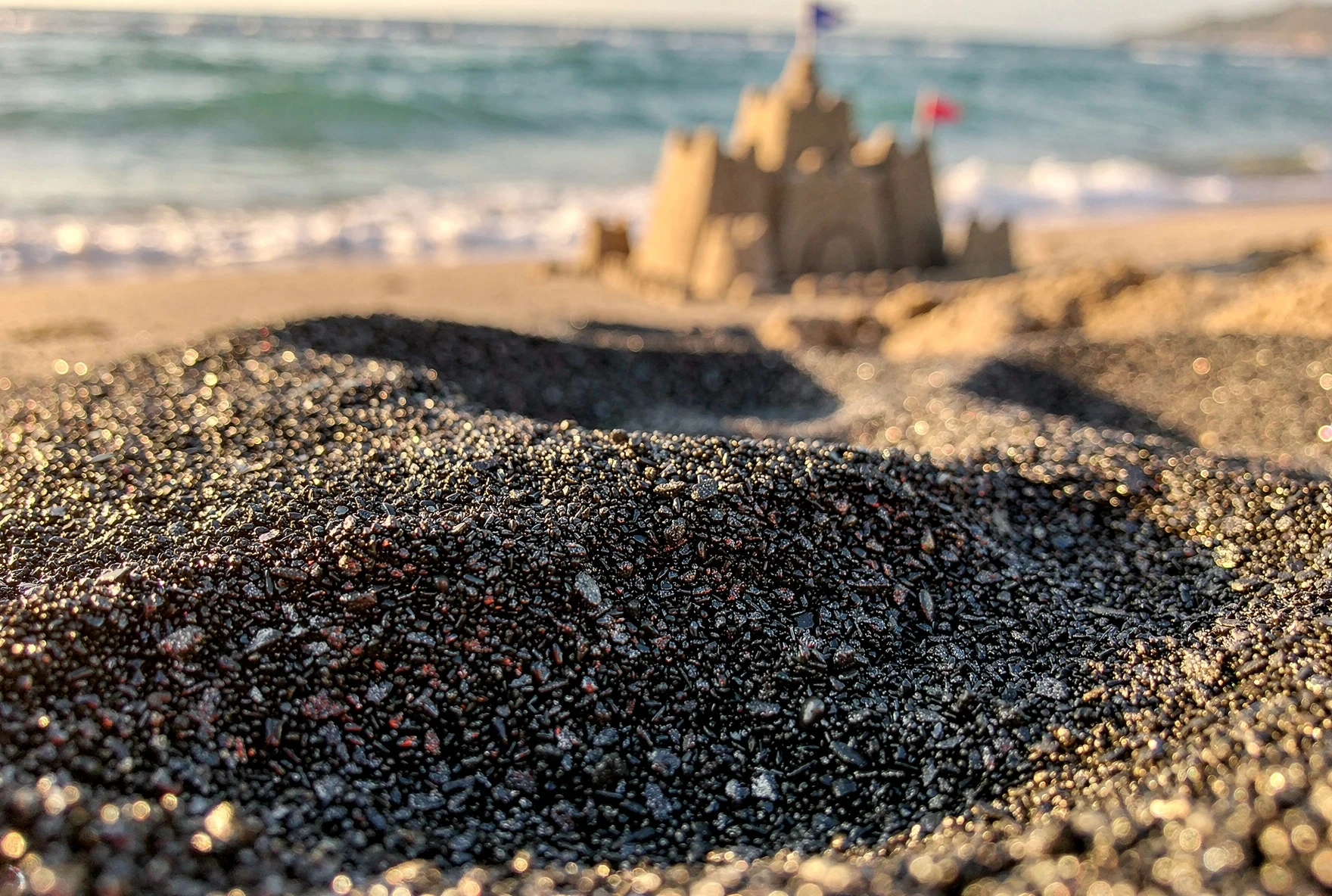
Whether or not you buy the health claims, Ureki has some of the most family-friendly swimming conditions on the coast. The water is incredibly shallow — children can wade out 30-40 meters and still be standing. The sand is fine and soft underfoot. And the beach is wide enough that even in peak summer, you can find space.
The downside: Ureki itself has very little infrastructure compared to Batumi. Accommodation is mostly guesthouses and small hotels. The restaurant scene is basic. And in July-August, it gets absolutely packed with Georgian and Russian families. September is much more pleasant.
Magnetic Sand Therapy
Locals typically recommend 15-20 minute sessions buried in the sand, usually in the morning when it's warmest. Whether it actually helps is debatable, but the experience is uniquely Georgian. If nothing else, it makes for a good story.
Just north of Ureki, Shekvetili offers a similar sandy beach with slightly fewer crowds. It's also home to the Shekvetili Dendrological Park and a few higher-end resorts (including Paragraph Resort, one of the nicer properties on the entire coast). If you want the magnetic sand experience without Ureki's summer chaos, Shekvetili is the better call.
Hidden Spots & Quiet Coves
The best-kept secrets on Georgia's coast aren't advertised in any guidebook — they're the spots between the main resort towns where the road gets a little rougher and the tourists thin out.
Green Cape (Mtsvane Kontskhi)
10 km north of Batumi
A botanical garden perched on a headland with a small, almost private pebble beach below. The garden itself (established 1912) has 5,000+ plant species. After wandering the grounds, follow the trail down to the rocky shore. Not a beach for sunbathing — it's for people who want to swim surrounded by subtropical forest with nobody else around.
Grigoleti
55 km north of Batumi
A long stretch of dark sandy beach between Ureki and Poti that most tourists drive right past. Almost no development, just pine forest meeting sand. The water is calm and shallow. Bring your own supplies — there are a few seasonal cafés but nothing reliable. This is as close to a "wild beach" as Georgia's coast gets.
Anaklia
85 km north of Batumi
Georgia's northernmost beach before the Abkhazian border. A wide sandy beach at the mouth of the Enguri River. The government poured money into developing it as a new resort town — there's a modern promenade, a bridge, and some infrastructure. Then the plans stalled. The result is a half-built resort with a beautiful, almost empty beach. Surreal but interesting.
Kvariati Cliffside
Past main Kvariati beach, south
Walk past the main beach at Kvariati and follow the rocky path south toward Sarpi. You'll find tiny pebble coves tucked under the cliffs, accessible only on foot. Crystal-clear water, total privacy. Bring water shoes — the rocks are uneven. This is the closest Georgia gets to a Mediterranean hidden cove experience.
Water Conditions: The Honest Breakdown
The Black Sea doesn't have the reputation of the Mediterranean or the Adriatic, and in some ways that's deserved. But in other ways, it gets an unfairly bad rap. Here's what you actually need to know.
| Factor | Details |
|---|---|
| Temperature | 22-24°C in June, 25-27°C in July-August, 23-25°C in September. Comfortable for swimming without a wetsuit from mid-June through September. |
| Salinity | About 17-18 ppt — roughly half the Mediterranean. Feels noticeably less salty. Less buoyancy, gentler on eyes and skin. |
| Currents | Generally mild. Occasional cold currents can drop water temp by 5°C overnight — rare but happens. No dangerous riptides at the main beaches. |
| Cleanliness | Varies dramatically. South of Batumi (Kvariati, Sarpi) = excellent. Batumi central = mediocre in peak summer. Ureki = decent. Near Poti = avoid (port pollution). |
| Jellyfish | Moon jellyfish appear in warm years (usually August). Harmless — they don't sting. Locals swim right through them. |
| Waves | Usually gentle swells, occasionally storms bring 1-2m waves. No real surf scene. The sea can get rough for 1-2 days, then calm again. |
One Beach to Skip
Avoid swimming near Poti. It's Georgia's main commercial port, and water quality near the harbor is poor. The beaches north and south of the city are fine, but the stretch immediately around Poti isn't worth it. The Kolkheti wetlands behind the town are worth visiting — just don't swim there.
When to Go
Timing matters enormously on Georgia's coast. Get it right and you'll have clean water, warm weather, and manageable crowds. Get it wrong and you'll be sharing a sweaty pebble beach with what feels like the entire population of the South Caucasus.
🌸 June
Water warming up (22-24°C). Beaches are empty mid-week. Occasional rain showers. Late June is arguably the best time — warm enough to swim, before the crowds arrive. Hotels are 30-40% cheaper than peak.
☀️ July–August
Peak season. Water at its warmest (25-27°C). Beaches crowded, especially weekends. Hotel prices double. Batumi gets loud and chaotic. If you must come now, go to smaller beaches (Kvariati, Grigoleti) and avoid weekends.
🍂 September
The "velvet season" and the local secret. Water is still 23-25°C. Crowds vanish after the first week. Prices drop. The light turns golden. Combine with Kakheti's grape harvest (rtveli) for the perfect Georgia trip. First two weeks of September are ideal.
🌊 October
Gambling with the weather. Some years it's still warm enough to swim through mid-October. Others, it's rainy and chilly by the first week. Water drops to 18-20°C. Worth a shot if you're flexible, but don't build a trip around it.
Beach Costs: What You'll Actually Spend
One of the genuine upsides of a Georgian beach trip: it's absurdly cheap compared to almost any European coastal destination. Here's a realistic daily budget.
Daily Beach Budget (Per Person)
For context, that's roughly what you'd pay for a single beach cocktail in Croatia or Greece. Accommodation is similarly affordable — a decent guesthouse in Kobuleti or Ureki runs 80-150 GEL (₾28-55) per night for a double room in peak summer. Boutique hotels and resorts range from 200-500 GEL (₾72-180).
Getting Around the Coast
The entire coast is connected by a single main road and a railway line. Getting between towns is straightforward but not always fast.
| Route | Options | Time | Cost |
|---|---|---|---|
| Tbilisi → Batumi | Train, bus, flight, or car | 5-6h (car/bus), 5h (train), 45min (flight) | 25-35 GEL (bus), 35-75 GEL (train), 100-200 GEL (flight) |
| Batumi → Kvariati/Sarpi | Marshrutka #16, taxi | 20-25 min | 1 GEL (marshrutka), 15-20 GEL (taxi) |
| Batumi → Kobuleti | Marshrutka, train, taxi | 30-40 min | 3 GEL (marshrutka), 25-30 GEL (taxi) |
| Batumi → Ureki | Marshrutka, train | 1-1.5 hrs | 5-7 GEL (marshrutka) |
| Kutaisi → Ureki | Marshrutka, car | 1.5-2 hrs | 7-10 GEL (marshrutka) |
Renting a Car?
A rental car is the best way to explore the coast freely. You can hit Sarpi, Kvariati, Batumi, Kobuleti, and Ureki all in one long day. The coastal road is in good condition. Budget around 80-120 GEL/day for a compact car. Check our car rental guide for the full breakdown.
Where to Stay
Your base depends entirely on what kind of beach trip you want. Here's the honest rundown.
Batumi
Best for: nightlife, restaurants, city vibe
Stay in Batumi if you want the full city experience — restaurants, bars, the Boulevard, weird architecture. Use it as a base for day trips to better beaches. Accommodation ranges from ₾30 hostels to ₾400+ luxury hotels. The old town area is the most interesting neighborhood.
Kvariati
Best for: swimming, quiet, clean water
Stay directly on the beach in a guesthouse for ₾60-120/night. You'll trade nightlife and restaurant variety for the best swimming conditions on the coast. Good option for couples or anyone who just wants to read, swim, and eat. A few restaurants right on the shore.
Kobuleti
Best for: families, sandy beach, budget
The best value on the coast. Guesthouses from ₾50/night, decent hotels from ₾100. Wide sandy beach, plenty of family-friendly restaurants, a promenade for evening strolls. Not exciting, but comfortable and affordable. Book facing the sea if possible.
Shekvetili / Ureki
Best for: magnetic sand, health tourism, kids
Shekvetili has Paragraph Resort (₾300+) if you want luxury. Ureki has a handful of decent guesthouses (₾50-80). This is the sandcastle-and-shallow-water zone. Book early for July-August — these beaches fill up fast with Georgian families who've been coming every summer for decades.
Practical Tips
🩴 Bring Water Shoes
Essential for pebble beaches. The stones are smooth but walking barefoot over them repeatedly gets painful. Even a cheap pair of aqua shoes transforms the experience.
🧴 Sunscreen Is Expensive
Bring your own. Imported sunscreen at Batumi pharmacies costs 2-3x what you'd pay in Europe. Georgian-made options are limited and not great quality.
💰 Cash for Small Beaches
Batumi is fully card-friendly, but smaller beach towns like Ureki, Grigoleti, and the guesthouses at Kvariati often prefer or only accept cash. Get lari from Batumi ATMs before heading out.
🌦️ Check the Forecast
The coast gets more rain than inland Georgia, especially in late summer. Short thunderstorms blow through fast (30-60 minutes), then it's sunny again. Don't cancel beach plans over a morning drizzle.
🏊 Safety First
No lifeguards at most beaches outside central Batumi. The pebble beaches drop off fast — keep an eye on non-swimmers. Alcohol + Black Sea swimming is a bad combination that causes problems every summer.
🍽️ Eat Adjarian Food
The coast is in Adjara, which has its own cuisine. Adjarian khachapuri (the boat-shaped one), borano (cheese in butter), sinori, and fresh fish from the Black Sea. Don't eat at tourist-trap restaurants on the Boulevard — walk one block inland for better food at half the price.
Frequently Asked Questions
Are Georgia's beaches good?
By Mediterranean standards, no — they're pebbles and dark sand, not white sand paradise. But the water is clean, the coastline is backed by stunning green mountains, and the value is incredible. Adjust expectations and you'll have a great time.
Is it safe to swim in the Black Sea?
Yes. The water is clean, there are no dangerous marine animals, and currents are mild. The main risk is the fast drop-off at pebble beaches — watch children and non-swimmers. Avoid swimming near Poti's port area.
Can I combine beach time with other Georgia destinations?
Absolutely — and you should. The best approach is beach + mountains or beach + wine country. Batumi to Kutaisi is 2.5 hours. Kutaisi to Svaneti is 3-4 hours. Tbilisi to Kakheti is 1.5 hours. A 2-week trip can easily cover coast, mountains, and wine.
Which beach is best for families?
Ureki or Kobuleti. Both have gradual sandy entries, shallow water for wading, and a family-oriented atmosphere. Ureki's magnetic sand is a bonus activity for kids. Kobuleti has more infrastructure (restaurants, shops, promenade).
Is Batumi's beach worth it?
For a quick swim while exploring the city, sure. For a dedicated beach day, no — head to Kvariati or Sarpi instead. Batumi's beach is crowded, pebbly, and the water quality isn't the coast's best. The city itself is worth visiting for the food, architecture, and nightlife.
Do I need a visa for the coast?
Same rules as the rest of Georgia — most nationalities get 1 year visa-free. The border crossing at Sarpi (Turkey-Georgia) is a popular entry point. See our visa guide for full details.
Written by The Georgian Guide Team
Based in Georgia since 2021, we've swum at every beach from Sarpi to Anaklia — in peak summer heat and in the quiet September "velvet season" when the coast is at its best. We've stayed in everything from Kvariati guesthouses to Batumi's flashiest hotels, and we'll tell you which ones are actually worth the money.
Last updated: March 2026.
Related Articles
Batumi: The Complete Guide
Everything about Georgia's Black Sea city — food, nightlife, day trips, and honest advice.
Georgia in Summer
The complete guide to visiting Georgia from June through September.
Tbilisi to Batumi Road Trip
The scenic route from the capital to the coast, with all the best stops along the way.
Renting a Car in Georgia
Everything about car rental — costs, insurance, driving tips, and what to watch out for.