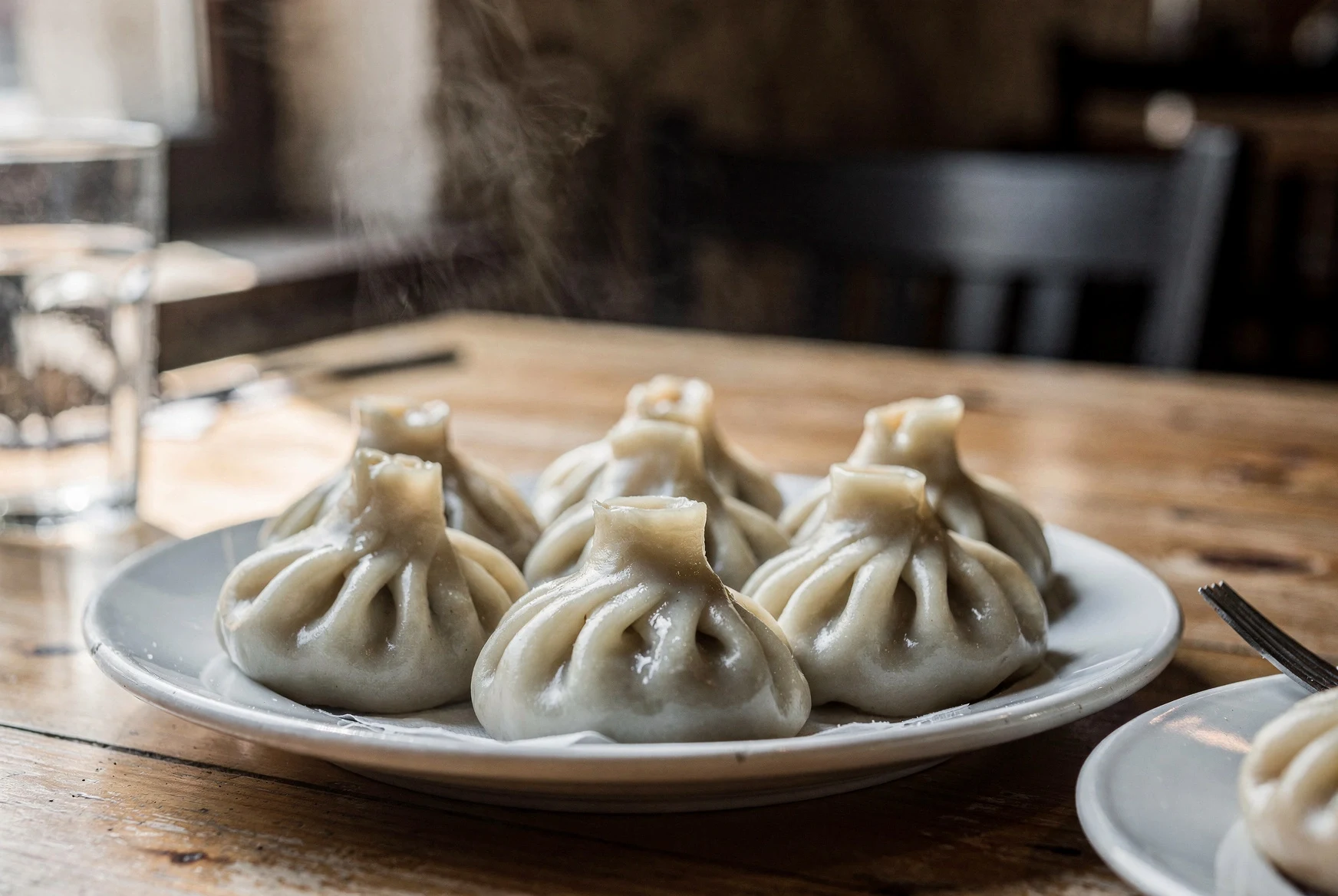
Khinkali are the Georgian dish people get weirdly competitive about. Not wine. Not khachapuri. Not whose grandmother makes the best satsivi. Khinkali. Everyone has a preferred filling, a preferred city, a preferred technique, and a preferred opinion about which places have gone soft and touristy.
That intensity makes sense once you have a good one. A proper khinkali lands somewhere between comfort food and engineering. The dough has to be strong enough to hold broth, thin enough not to feel like punishment, and twisted tightly enough that the whole thing does not explode in your hand. Inside, the filling should be juicy and highly seasoned, not a dry meatball trapped in pasta.
This guide is for the traveler who wants more than “it’s a Georgian dumpling.” We are doing the whole thing properly: where khinkali come from, the mountain-vs-city styles, what to order first, how to eat them without wearing the broth, what a good batch actually tastes like, and where to chase the best versions in Tbilisi and beyond.
What khinkali actually are
Khinkali are twisted Georgian dumplings filled with broth and some combination of meat, herbs, pepper, onion, cheese, mushroom, or potato. If that sounds simple, good. It should. The point of khinkali is not novelty. The point is getting a few basic things exactly right.
The classic version is a plump dough pouch filled with minced meat and juices that turn into soup while steaming. Good khinkali arrive glossy, heavy, and slightly tense. Pick one up and you can feel the liquid weight inside. Bad khinkali feel limp, overworked, or suspiciously dry before you even bite them.
Visitors often compare them to Chinese soup dumplings, Central Asian manti, or Tibetan momos. That is not totally wrong, but it also misses the Georgian personality of the thing. Khinkali are bigger, rougher, less delicate, more pepper-forward, and designed for a table that probably also contains beer, loud opinions, and a bowl of more black pepper than seems socially acceptable.
Where khinkali come from
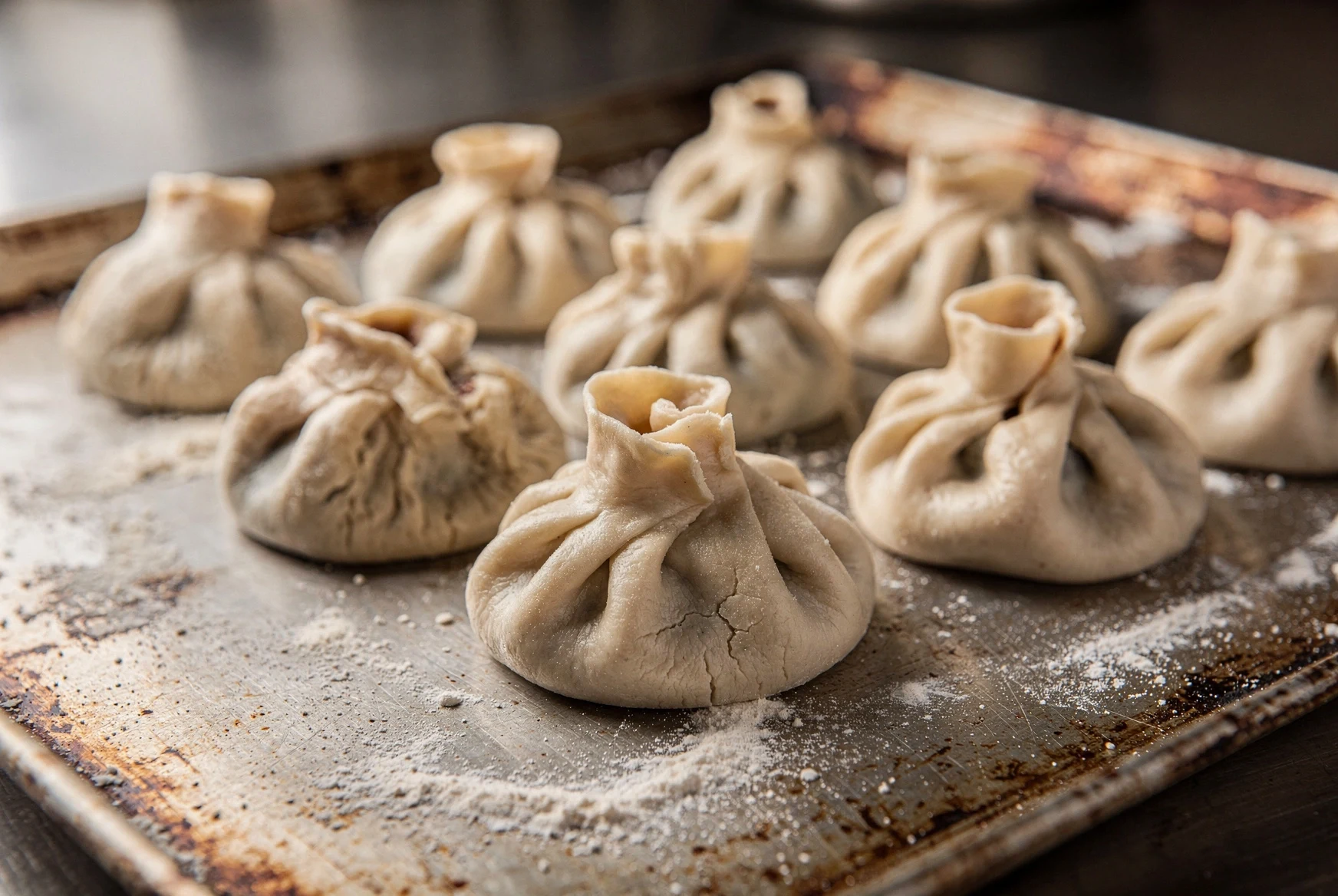
Khinkali are strongly tied to Georgia’s eastern mountain culture, especially Mtskheta-Mtianeti and the rougher highland regions beyond it. Ask three Georgians where they truly come from and you may get three different answers, but the mountain claim matters more than the exact village argument. These are not originally urban café dumplings. They are mountain food that Tbilisi adopted, polished a little, and then built an obsession around.
The name you will hear constantly is Pasanauri. That town on the Georgian Military Highway has become the spiritual shorthand for “serious khinkali territory.” Whether the single best khinkali in Georgia are actually there on the day you visit is another matter. Georgia is not that tidy. But the road north from Tbilisi, into colder, more rugged country, is absolutely part of khinkali’s myth and identity.
That origin story still shapes how people talk about the dish. The more rustic, peppery, herb-light styles are treated as more “real” by purists. The city versions are broader, sometimes softer, sometimes more crowd-pleasing. Neither is automatically better. But if you want to understand khinkali properly, you have to understand that the mountain version is the reference point, even when you are eating them in central Tbilisi.
Mountain food, not tasting-menu food
The best khinkali still feel a little blunt in the right way. They should be juicy, peppery, filling, and generous. If a place is treating them like tiny precious design objects, it usually means the priorities have drifted.
The main types of khinkali worth knowing
Not every filling deserves equal enthusiasm, and not every menu explains the difference clearly. This is the useful version.
| Type | What’s inside | What it tastes like | Best for |
|---|---|---|---|
| Kalakuri | Mixed meat with herbs | Juicy, balanced, more forgiving | First-timers |
| Mtiuluri | Mountain-style meat, fewer herbs | Peppery, deeper, more old-school | People who want the classic argument starter |
| Cheese | Usually sulguni or mixed cheeses | Rich, salty, softer comfort | Vegetarians |
| Mushroom | Seasoned mushroom filling | Earthy when good, damp when bad | People ordering carefully |
| Potato | Mashed potato filling | Gentle, simple, less dramatic | Comfort food mood |
| Modern extras | Everything from lamb to truffle nonsense | Sometimes good, often unnecessary | Curiosity, not fundamentals |
If you have never eaten khinkali before, order kalakuri first. It is the most approachable version and the easiest benchmark. Then order mtiuluri if you want to see the more mountain-coded style: less herb perfume, more black pepper, more seriousness. Cheese khinkali are not just the consolation prize for vegetarians either. In the right place they are excellent.
How to eat khinkali without looking lost
The mechanics matter. This is one of the few dishes where technique genuinely changes the experience.
1. Grab the top knob
Pick the khinkali up by the twisted top. That knob is your handle. Do not spear the dumpling with a fork unless you enjoy losing the broth immediately.
2. Bite the side first
Turn it slightly, make a small opening in the side, and pause. The broth inside is often hotter than your confidence level.
3. Sip the broth
This is the whole point. Sip the broth before it escapes down your wrist. If you skip this step, you are basically wasting the best part.
4. Eat the rest, usually not the knob
Most Georgians leave the thick twisted top on the plate. It is not illegal to eat it. It is just rarely worth the dough commitment.
The usual table companions are black pepper and maybe beer. Vinegar appears in some places and some people love it, but pepper is the more universal move. Ketchup should get you deported on principle.
The beginner mistake
Visitors often cut khinkali open with knife and fork because they are trying to be tidy. That is exactly how you guarantee the broth ends up on the plate instead of in your mouth. Tidy is not the goal here. Competent is.
What good khinkali taste like
A lot of bad travel writing turns khinkali into a novelty object. The real test is more boring and more useful.
- The dough should be elastic, not thick and gummy. If it feels like you are chewing wet bread, the balance is wrong.
- The broth should be rich and peppery. Not greasy in a lazy way, not watery, not absent.
- The filling should be loose enough to stay juicy. A tight meatball center is failure.
- The dumpling should still feel structured. Sagging, torn, over-steamed khinkali are a warning sign.
- Pepper should matter. Especially in mtiuluri. If the flavor is flat, the kitchen is being timid.
A good batch usually creates silence for a minute. That is the simplest metric. People stop explaining things and just eat.
Where to eat the best khinkali in Tbilisi
Tbilisi is full of places serving khinkali, but not all of them are worth your dumpling budget. The short version: the best ones still tend to come from dedicated khinkali houses or traditional restaurants that take them seriously, not polished all-day concept restaurants trying to be cute.
| Place | Why go | What to expect | Price level |
|---|---|---|---|
| Zakhar Zakharich | Classic old-Tbilisi reputation | Bustling, traditional, still taken seriously | ₾₾ |
| Pasanauri | Reliable chain for first contact | Not romantic, but convenient and consistent | ₾ |
| Mapshalia | Good value, strong local following | Less polished, more appetite-driven | ₾ |
| Shemomechama | Modern chain that still gets basics right | Easy option when you want no drama | ₾₾ |
| Local neighborhood khinkali houses | Highest upside | Can be brilliant or completely average | ₾ |
If you are in Tbilisi for just a few days, Zakhar Zakharich and Pasanauri are the practical starting points. The former has more of the old-school aura. The latter is less romantic but often more useful when you just want a competent plate and do not want to overthink your life. Georgia is full of situations where the chain version is more honest than the tourist trap pretending to be artisanal.
For a broader restaurant strategy, use our guide to the best restaurants in Tbilisi. But if your mission is specifically khinkali, stay focused. This is one of those dishes where specialization still counts.
Where to eat khinkali beyond Tbilisi
Tbilisi may be where most travelers meet khinkali, but it is not the only place that matters. If you are driving north on the Georgian Military Highway, this is where the mythology gets real. Pasanauri, Gudauri, and mountain road restaurants all trade on the idea that colder air and closer mountain roots make for better dumplings. Sometimes that is true. Sometimes it is branding with altitude. Still worth testing for yourself.
The thing to remember is that context helps. Khinkali after a long drive, on a cold day, with the mountains outside and steam hitting your face when the plate lands — yes, they do taste better. Not magically. Just correctly.
Pasanauri
The symbolic hometown argument. Worth stopping if you are already on the road. Do not drive there from Tbilisi just to post a dumpling pilgrimage unless you were heading north anyway.
Kazbegi corridor
A good region to keep eating khinkali, especially after mountain walks or road hours. Expectations should stay practical: dramatic scenery does not automatically mean elite technique.
Mountain guesthouses
The upside is atmosphere and generosity. The downside is inconsistency. Sometimes unforgettable, sometimes basically home-cooked dumplings with charm doing the heavy lifting.
Tbilisi still wins for convenience
If your trip is short, do not torment yourself trying to hunt some mythical single perfect dumpling in the mountains. Tbilisi already gives you plenty of strong versions.
What to order with khinkali
The purest khinkali meal is just khinkali, black pepper, and beer. Maybe salad if someone at the table wants to pretend balance exists. But if you are building a broader Georgian meal, keep the pairing logic simple.
| Add-on | Why it works | Watch out for |
|---|---|---|
| Beer | Classic, simple, cuts the richness | Nothing. This is the default. |
| Tomato-cucumber salad | Freshness and acidity help | Do not turn this into a full feast by accident. |
| Pickles | Sharp contrast with fatty meat fillings | Strong flavors can bully delicate broth. |
| Khachapuri | It does not, really | Too much dough. Rookie over-order. |
| Amber wine | Sometimes interesting with stronger fillings | Beer is still the easier win. |
If you order khinkali and khachapuri together for two people, congratulations: you have planned a dough summit. It can be done. It is rarely the smartest move.
Common khinkali mistakes visitors make
Ordering too much else
Khinkali are a meal, not a side quest. Order a plate first, then decide if your ambition was real.
Expecting delicate dumpling-bar elegance
Khinkali should be generous and practical. If you want micro-precision, eat somewhere else.
Using fork and knife
Technically possible. Spiritually wrong. Also terrible for broth retention.
Going only to pretty places
A room with Edison bulbs is not proof of dumpling seriousness. Khinkali often peak in less glamorous settings.
Skipping black pepper
Especially with meat versions. Pepper is part of the profile, not decorative dust.
Treating the top knob like a challenge coin
You can eat it if you want. Nobody is sending police. But most of the time it is just extra dense dough with no upside.
What to order if you’re different kinds of traveler
First-timer
Start with 5 kalakuri and a beer. That gives you the benchmark without overcomplicating things.
Food obsessive
Order 5 kalakuri and 5 mtiuluri side by side. Compare broth, pepper level, and dough. This is the useful nerd move.
Vegetarian
Cheese first, mushroom second. Potato only if you are after comfort rather than drama.
Budget traveler
A plate of khinkali is still one of the best-value meals in Georgia. Pair with water or lemonade and you are done very cheaply.
Frequently asked questions
What is khinkali?
Khinkali are Georgian soup dumplings with twisted tops and fillings like meat, cheese, mushroom, or potato. The classic versions contain broth inside and are eaten by hand.
How do you eat khinkali properly?
Pick them up by the top knob, bite a small hole in the side, sip the broth, then eat the rest. Most people leave the top knob on the plate.
What is the best filling for first-timers?
Kalakuri is the best starting point. It is juicy, balanced, and less aggressively peppery than mtiuluri.
Where should I eat khinkali in Tbilisi?
Zakhar Zakharich and Pasanauri are the safest classic recommendations. Neighborhood khinkali places can also be great, but consistency varies more.
How many khinkali make a meal?
Usually 5 to 8 for most travelers, 10 or more for the ambitious. They are more filling than they look.
Written by The Georgian Guide Team
We have eaten a frankly irresponsible amount of khinkali across Tbilisi and the mountain roads north of it. Enough to know when a dumpling is all mythology and when it actually deserves the argument.
Last updated: March 2026.
Related Articles
What to Eat in Georgia
The broader food guide if you want the full Georgian table, not just the dumpling obsession.
Best Restaurants in Tbilisi
Where to eat well in the capital once you move beyond your dedicated khinkali mission.
Georgian Street Food Guide
Bread, grills, market snacks, and the rest of the things you will end up eating between meals.
The Georgian Military Highway
The road north where khinkali mythology gets louder and the mountain claims start feeling more plausible.