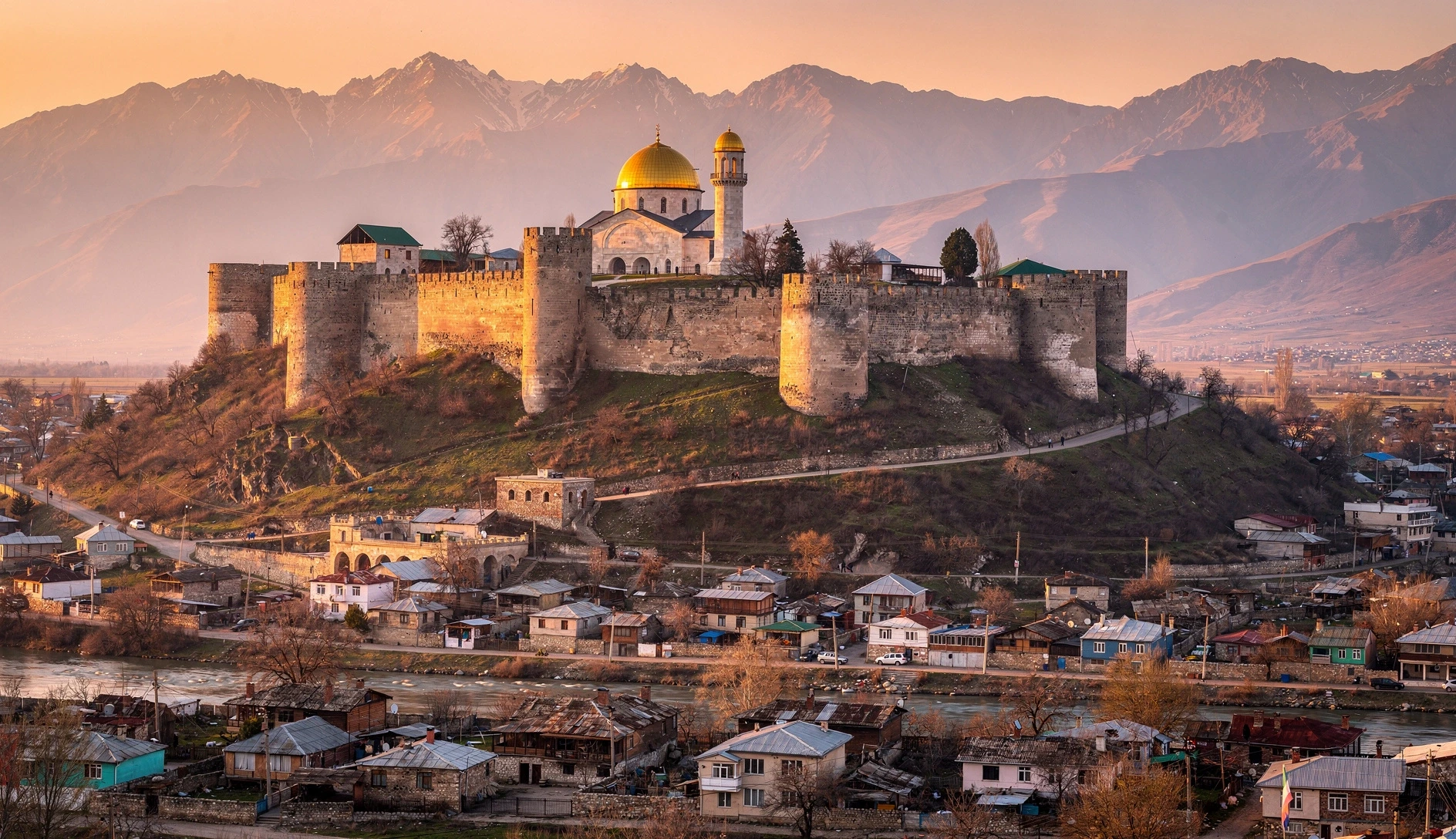
Akhaltsikhe means "New Castle" in Georgian, which is almost comically understated. The castle in question — Rabati Fortress — is a sprawling, multi-layered complex perched on a hill above town, where a Georgian church, an Ottoman mosque with a golden dome, and a medieval citadel all share the same walls. That architectural collision pretty much tells you everything about this town's history: it's been conquered, rebuilt, fought over, and reinvented so many times that its identity is the layering itself.
Most visitors blow through Akhaltsikhe on the way to Vardzia — a quick fortress selfie and back in the car. That's a missed opportunity. Akhaltsikhe is the capital of Samtskhe-Javakheti, Georgia's most ethnically diverse region, and the town rewards an overnight stay. The fortress alone takes 2-3 hours to explore properly, the old town has quiet streets worth wandering, and the surrounding area holds some of Georgia's most impressive (and least visited) castles and monasteries.
This guide covers the fortress in detail, the town beyond it, the best day trips from Akhaltsikhe, and the practical logistics most guides skip.
Quick Facts
Why Visit Akhaltsikhe
Akhaltsikhe won't make your jaw drop the way Kazbegi or Svaneti will. It doesn't have that dramatic mountain backdrop or the Instagram-ready wow factor. What it does have is depth — the kind that sneaks up on you when you're wandering fortress corridors and realize you've been at it for two hours.
🏰 Rabati Fortress
One of Georgia's most impressive fortress restorations. Church, mosque, citadel, and museum in one complex — a tangible timeline of Georgian, Ottoman, and Russian rule.
🗺️ Perfect Base Camp
Vardzia, Khertvisi Fortress, Tmogvi Castle, Sapara Monastery, and the Javakheti Plateau are all within an hour's drive. You can't see them all from Tbilisi in a day.
🧑🤝🧑 Cultural Crossroads
Large Armenian and Meskhetian Turkish communities give Akhaltsikhe a distinct cultural flavor unlike anywhere else in Georgia. The food reflects this — expect Armenian and Turkish influences at every meal.
🚗 Gateway to Turkey & Armenia
The Vale border crossing to Turkey is 70 km away, and the Bavra crossing to Armenia is about 100 km. Akhaltsikhe is a natural stop on overland routes south.
Rabati Fortress
Rabati is the main event, and it deserves more than a quick walk-through. The fortress covers a massive area on the hill above town, divided into an upper citadel and a lower section with gardens, pools, and restored buildings. The complex has been rebuilt multiple times over its 1,000+ year history, and the current version — a somewhat controversial 2012 restoration — is undeniably impressive even if purists grumble about historical accuracy.
What's Inside
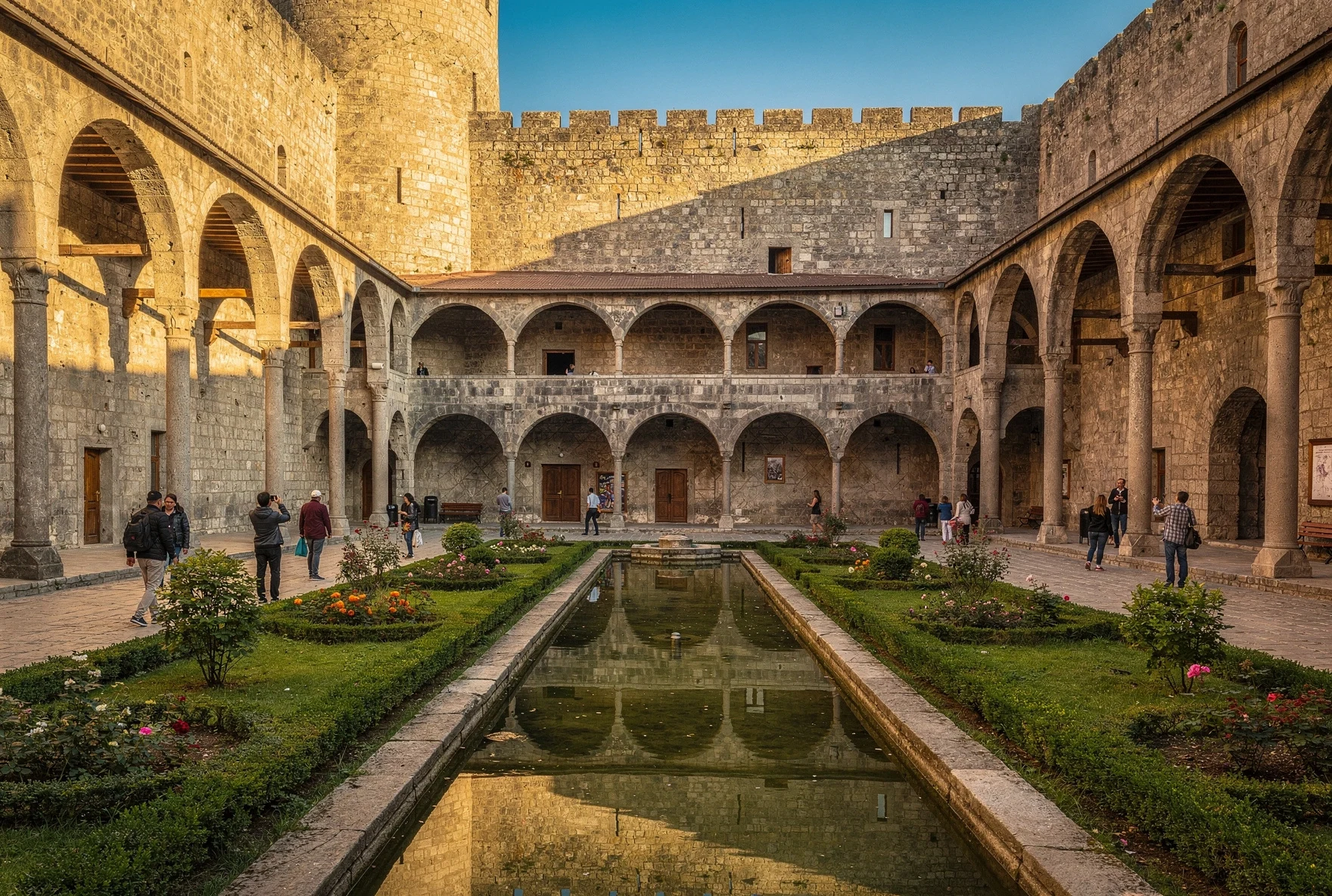
The fortress is essentially a walled town. The lower section is free to enter and includes landscaped gardens, a reflecting pool, stone archways, and the golden-domed Ahmadiyya Mosque — a relic from the centuries of Ottoman rule when the Pasha of Akhaltsikhe resided here. The upper citadel requires a ticket and houses the most interesting structures.
| Structure | Era | What to Know |
|---|---|---|
| Ahmadiyya Mosque | 16th century | Golden dome is visible from across town. Built when Ottomans controlled the region. Still standing — not functioning as a mosque today. |
| Church of the Assumption | 9th–10th century | Georgian Orthodox church, the oldest structure in the complex. Small but significant — survived Ottoman conversion to a mosque and back again. |
| Citadel & Flag Tower | 12th–13th century | Climb the tower for a panoramic view over the fortress, town, and valley. The best vantage point in Akhaltsikhe. |
| History Museum | Modern | Samtskhe-Javakheti regional museum inside the fortress. Archaeological finds, stone carvings, weapons, and a reproduction of the Vardzia Queen Tamar fresco. |
| Madrasa | Ottoman era | Islamic school building from the Ottoman period. Restored and open to walk through. |
| Meskhetian Oda House | Traditional | Reconstruction of a traditional Meskhetian guest house (saojaxo). Small but interesting glimpse into local domestic life. |
Practical Details
Tickets & Hours
The lower fortress (gardens, mosque exterior, shops) is free to enter. The upper citadel and museum require a ticket — 7 GEL for adults (~$2.50). Open daily 10:00–18:00 (last entry 17:30). Hours may extend in summer. Allow 2-3 hours for a thorough visit. The flag tower closes before the rest of the complex in windy conditions.
The Restoration Controversy
Here's the thing nobody in the tourism industry will tell you: the 2012 restoration of Rabati is, depending on who you ask, either a triumph of cultural preservation or a historical theme park. The Saakashvili-era project rebuilt large sections essentially from scratch, using modern materials behind a medieval veneer. Some of the "ancient" walls are barely a decade old.
Does it matter? Honestly, most visitors won't care — the result is visually stunning. But if you're the kind of traveler who cringes at reconstructed heritage sites, it's worth knowing. The Church of the Assumption and parts of the upper citadel retain genuine medieval stonework. The lower gardens, reflecting pools, and some of the too-perfect archways are entirely modern creations built to evoke history rather than preserve it.
Compare it to Vardzia, 60 km away, which is the real thing — crumbling, raw, and unembellished. Both are worth seeing, and the contrast between them tells you a lot about Georgia's complicated relationship with its own heritage.
Beyond the Fortress: Exploring the Town
Akhaltsikhe itself isn't going to win any beauty contests. It's a functional small city, not a charming old town. But there are a few things worth doing once you've finished with Rabati.
The Old Town Streets
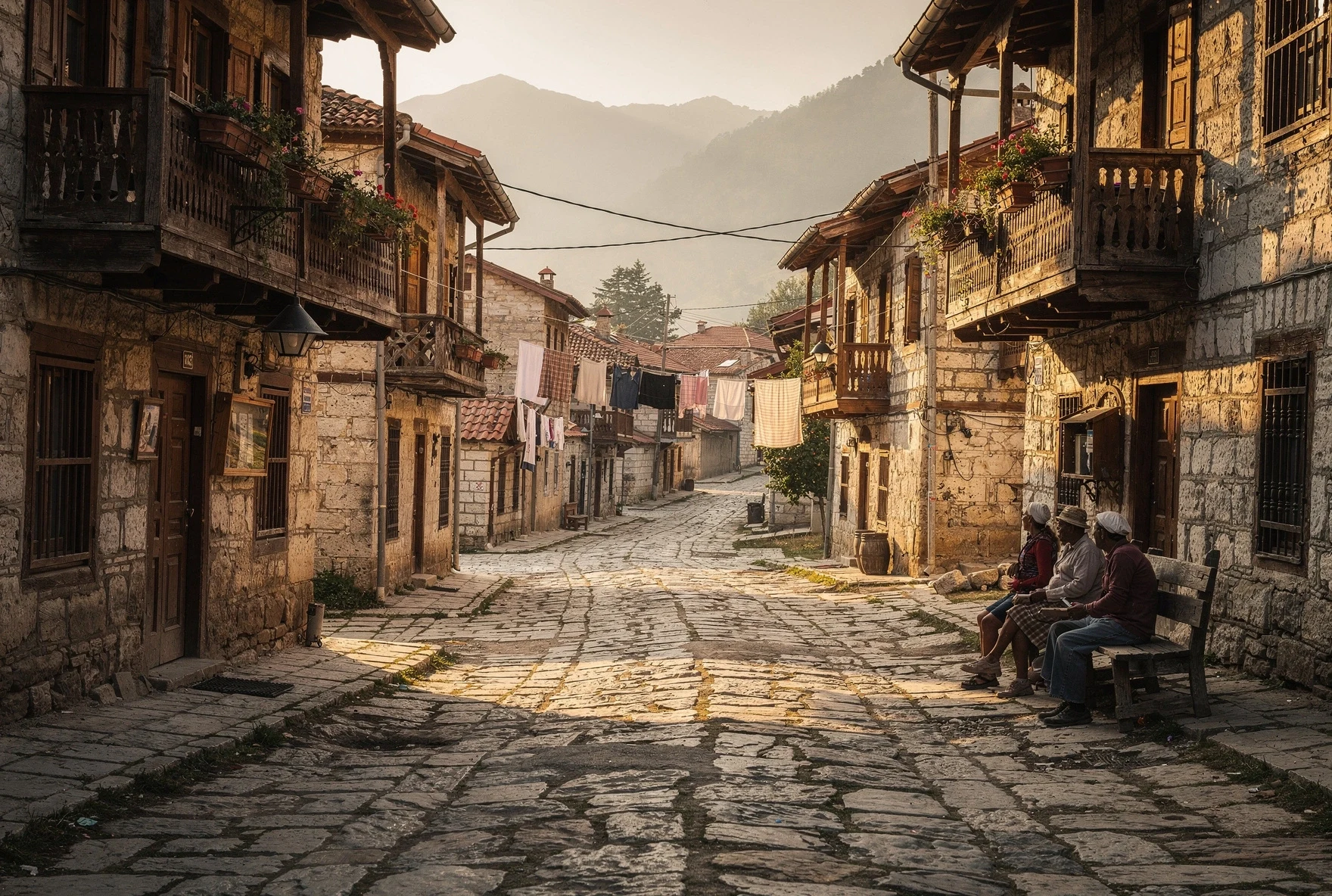
The streets below the fortress — particularly in the old Rabati district — have a quiet, lived-in character. You'll find Armenian churches, a few synagogues (Akhaltsikhe once had a significant Jewish community), and narrow lanes with stone houses that feel a world apart from Tbilisi. The multi-ethnic character of the town is visible everywhere: Georgian script next to Armenian, the occasional Turkish word overheard in the market.
Religious Buildings
For a town of 18,000 people, Akhaltsikhe has a remarkable density of religious buildings representing nearly every denomination that has historically been present in the region.
| Building | Denomination | Notes |
|---|---|---|
| Church of the Assumption | Georgian Orthodox | Inside Rabati Fortress, 9th–10th century |
| Surb Nshan | Armenian Apostolic | In town, active Armenian church |
| Ahmadiyya Mosque | Islamic (Ottoman) | Inside Rabati, golden dome — not functioning |
| Synagogue | Jewish | Historic, most of the Jewish community emigrated to Israel |
| Catholic Church | Roman Catholic | Small, from the period of French Capuchin missionaries |
Market & Food
The central market (bazroba) is small but worth a walk-through if you're there in the morning. You'll find local cheeses, dried fruits, churchkhela, and seasonal produce from the surrounding villages. The Armenian and Meskhetian Turkish influence shows up in the food — look for lahmajun (thin meat flatbread), various kebabs, and kuymak (a melted cheese dish). Several restaurants in town serve decent Georgian standards, though don't expect Tbilisi-level dining. The best food in Akhaltsikhe is usually at guesthouses, where the hosts cook.
A Brief History
Understanding Akhaltsikhe's history helps explain why the town feels so layered. This isn't a place with a single cultural identity — it's been reinvented with every conquest.
| Period | What Happened |
|---|---|
| 9th century | First fortress built by Georgian feudal lords. The name "New Castle" (Akhaltsikhe) dates to this period. |
| 12th–13th century | Golden age under the Georgian kingdom. The Jaqeli family ruled Samtskhe-Javakheti as a semi-independent principality. |
| 1578–1828 | Ottoman Empire conquers and rules for 250 years. The Pasha of Akhaltsikhe governs from the fortress. Mosque, madrasa, and bath houses built. Many locals convert to Islam. |
| 1828 | Russian Empire captures the city during the Russo-Turkish War. Brutal siege — much of the fortress is damaged. Russian garrison established. |
| 1944 | Stalin deports the entire Meskhetian Turkish population — roughly 100,000 people — to Central Asia overnight. One of the darkest chapters in the region's history. Most never returned. |
| 2011–2012 | Massive restoration of Rabati Fortress under President Saakashvili. Controversial but undeniably transformative for the town's tourism potential. |
The Meskhetian Turks
The 1944 deportation of Meskhetian Turks is one of those histories that most visitors to the region never learn about. In a single night, the entire Muslim population of Samtskhe-Javakheti — over 90,000 people — was loaded onto cattle cars and shipped to Uzbekistan, Kazakhstan, and Kyrgyzstan. Many died in transit. Despite decades of promises, most were never allowed to return. It's a painful topic locally, and the empty Ottoman-era buildings and mosques are a visible reminder. If you want to understand the region's cultural complexity, this history is essential.
Day Trips from Akhaltsikhe
This is really where Akhaltsikhe earns its keep. The surrounding Samtskhe-Javakheti region is packed with historical sites, and the town is perfectly positioned as a base. Here's what's within reach.
| Destination | Distance | Time Needed | Why Go |
|---|---|---|---|
| Vardzia | 60 km (1 hr) | Half day | 12th-century cave city carved into a cliff. Georgia's most impressive archaeological site. Non-negotiable. |
| Khertvisi Fortress | 45 km (40 min) | 1 hour | One of Georgia's oldest fortresses, dramatically perched at the confluence of two rivers. En route to Vardzia — stop here on the way. |
| Sapara Monastery | 12 km (20 min) | 1–2 hours | Hidden 10th-century monastery in the forest above town. Active, peaceful, with well-preserved frescoes. The drive there is beautiful. |
| Tmogvi Castle | 50 km (50 min) | 2–3 hours | Dramatic cliff-top ruin above the Mtkvari River. Requires a steep hike (30–40 min) to reach. Rewarding but bring water. |
| Borjomi | 50 km (45 min) | Half day | Famous spa town with mineral springs and a huge national park. Easy half-day trip or stop on the way to/from Tbilisi. |
| Abastumani | 30 km (30 min) | Half day | Former resort town with a Soviet-era astronomical observatory. Quirky, quiet, and good for a walk in the surrounding forest. |
| Javakheti Plateau | 70–100 km | Full day | High-altitude volcanic plateau with Armenian villages, alpine lakes, and vast grasslands. Feels like a different country — literally and figuratively. |
Getting Around Without a Car
Having your own wheels makes Akhaltsikhe 10x more rewarding. But if you don't drive, there are marshrutkas (minibuses) to Vardzia from Akhaltsikhe bus station — usually one morning departure around 10:00, returning mid-afternoon. Sapara Monastery has no public transport — you'll need a taxi (about 30–40 GEL round trip). Guesthouses can usually arrange drivers for day trips at reasonable rates (100–150 GEL for a full day including Vardzia, Khertvisi, and Tmogvi).
Where to Stay
Akhaltsikhe is a guesthouse town. There are a couple of mid-range hotels, but the best experiences are at family-run places where the host cooks, the beds are comfortable, and someone will drive you to Vardzia for a reasonable price. Budget travelers will find rooms for 50–80 GEL ($18–30) per night, often including breakfast.
| Category | Price Range | What to Expect |
|---|---|---|
| Budget Guesthouse | 50–80 GEL ($18–30) | Clean room, shared bathroom, homemade breakfast, warm hosts. The sweet spot for Akhaltsikhe. |
| Mid-Range Hotel | 120–200 GEL ($45–75) | Private bathroom, possibly AC, restaurant on-site. A few options near the fortress. |
| Rabati Castle Hotel | 250–400 GEL ($95–150) | Hotel inside the fortress complex itself. You're paying for the location — the rooms are decent, not luxurious. Worth it for the novelty of sleeping inside a castle. |
Book Guesthouses Directly
Many of the best guesthouses in Akhaltsikhe are listed on Booking.com, but you'll often get a better rate (and the host keeps more) by calling or messaging directly. Ask your guesthouse to arrange transport and tours — they almost always can, and the prices are fair because it's usually the host's cousin or neighbor doing the driving.
Where to Eat
Akhaltsikhe isn't a food destination, let's be honest. You won't find innovative restaurants or trendy wine bars here. What you will find is solid, generous Georgian and Meskhetian home cooking at very reasonable prices.
🍖 Guesthouse Dinner
Always the best option. Tell your host you want dinner (usually 25–35 GEL) and expect a multi-course spread: salads, soup, meat, khachapuri, dessert. It's almost always better than anything in town.
🫓 Lahmajun Spots
Thanks to the Armenian and Turkish communities, Akhaltsikhe has genuinely good lahmajun (thin meat flatbread) — something you won't find easily elsewhere in Georgia. Ask locals for recommendations; the best spots rotate.
🍷 Local Wine
Samtskhe-Javakheti isn't known for wine the way Kakheti is, but there's a small and growing scene of Meskhetian winemakers reviving local grape varieties. Ask at your guesthouse — some can arrange tastings.
☕ Café Culture
There are a few decent cafés near the fortress entrance. Don't expect Tbilisi specialty coffee, but they're fine for a break between sightseeing. Turkish coffee is the regional default and it's usually better than the espresso.
Getting There
From Tbilisi
| Method | Duration | Cost | Notes |
|---|---|---|---|
| Marshrutka | 3.5–4 hrs | 20 GEL (~$7.50) | Departs from Didube bus station. Several daily, usually morning departures. No reservations — just show up. The road via Khashuri is decent. |
| Private car/taxi | 3–3.5 hrs | 150–200 GEL ($55–75) | Book through your accommodation or use GG Taxi (app). Consider hiring a driver for the full Samtskhe-Javakheti circuit. |
| Rental car | 3–3.5 hrs | From 80 GEL/day | Best option if you want to explore the region freely. The road is well-paved the entire way. See our car rental guide. |
From Borjomi
Borjomi is only 50 km from Akhaltsikhe — about 45 minutes by car. Regular marshrutkas connect the two towns (5–7 GEL). Many travelers combine both into a Samtskhe-Javakheti road trip. If you're coming from Kutaisi or western Georgia, you'll pass through Borjomi on the way to Akhaltsikhe.
From Turkey or Armenia
The Vale border crossing to Turkey (towards Posof/Ardahan) is about 70 km southwest of Akhaltsikhe. The Bavra crossing to Armenia (towards Gyumri) is about 100 km south via the Javakheti Plateau. Both are straightforward for travelers with their own vehicle but have limited public transport options — plan ahead if you're crossing without a car.
When to Visit
| Season | Temperature | Verdict |
|---|---|---|
| Spring (Apr–May) | 8–18°C | Green hills, wildflowers, few tourists. Can be rainy. Good time to visit. |
| Summer (Jun–Aug) | 15–28°C | Best weather. Peak season for Vardzia. The 1,000 m elevation keeps it cooler than Tbilisi — a welcome relief if you're escaping the city's 35°C summers. |
| Autumn (Sep–Oct) | 7–20°C | Beautiful fall colors, thinning crowds. September is arguably the best month — warm days, cool evenings, golden light on the fortress. |
| Winter (Nov–Mar) | -5–5°C | Cold, often snowy. Fortress is atmospheric but some sites close or have reduced hours. Vardzia stays open year-round. Few tourists. |
Practical Tips
💰 Budget
Akhaltsikhe is cheap even by Georgian standards. A comfortable day including guesthouse, meals, and fortress entry costs 80–120 GEL ($30–45). Add 60–80 GEL for a taxi day trip to Vardzia.
📱 Connectivity
Mobile coverage is good in town (Magti and Geocell). WiFi at guesthouses is decent. Coverage gets spotty on the road to Vardzia and Tmogvi — download maps offline before heading out.
🏧 Money
There are ATMs in the town center (Bank of Georgia and TBC). The fortress ticket office accepts cards. Guesthouses and taxis usually want cash. Bring enough GEL — don't count on exchanging foreign currency outside Tbilisi.
🗣️ Language
English is limited. Most guesthouse owners speak some, and younger staff at the fortress and hotels manage basic English. Georgian and Russian are the primary languages. A few Georgian phrases go a very long way here.
How Long to Stay
Most travelers spend 1–2 nights. One night is enough to see the fortress and do a Vardzia day trip. Two nights lets you add Sapara, Tmogvi, or Abastumani without rushing. If you're driving the full Samtskhe-Javakheti circuit, Akhaltsikhe makes the best overnight base.
Suggested 2-Day Itinerary
Day 1: Arrive & Explore Akhaltsikhe
Day 2: Vardzia & Surroundings
Frequently Asked Questions
Can I visit Akhaltsikhe as a day trip from Tbilisi?
Technically yes, but it's a 7-hour round trip drive. You'd have maybe 3–4 hours on the ground, which is enough for the fortress but nothing else. Adding Vardzia to a Tbilisi day trip means 9+ hours of driving — exhausting. An overnight stay is strongly recommended.
Is Rabati Fortress worth visiting if I've already seen Vardzia?
They're completely different experiences. Vardzia is a raw, ancient cave city — minimal restoration, maximum wonder. Rabati is a polished, restored fortress complex — more museum-like, more comfortable. Both are worth seeing, and since they're in the same region, there's no reason to skip either.
Is Akhaltsikhe safe?
Very safe. Georgia in general is one of the safest countries in the region, and Akhaltsikhe is a quiet, friendly town with negligible crime. Standard travel sense applies — don't flash valuables, lock your car — but there's nothing specific to worry about.
Do I need a car?
For Akhaltsikhe itself, no — the town is walkable and the fortress is a short uphill walk from the center. For day trips to Vardzia, Tmogvi, and Sapara, a car is very helpful. Without one, you'll rely on limited marshrutkas and guestthouse-arranged taxis.
What else is in Samtskhe-Javakheti?
A lot more than most people realize. Beyond Akhaltsikhe and Vardzia: Borjomi and its national park, the volcanic Javakheti Plateau with Paravani Lake, the cave town of Abastumani, dozens of medieval fortresses, and some of Georgia's least-touristed landscapes. See our Samtskhe-Javakheti road trip guide for the full circuit.
Written by The Georgian Guide Team
We live in Georgia and write from years of first-hand experience exploring the country. Our guides are based on real visits, honest opinions, and practical knowledge — not press trips or recycled blog content.
Last updated: February 2026.
Related Articles
Vardzia: Georgia's Cave City
The complete guide to Georgia's most extraordinary archaeological site, 60 km from Akhaltsikhe.
Samtskhe-Javakheti Road Trip
The full southern Georgia circuit — fortresses, caves, volcanic plateaus, and hot springs.
Borjomi: Georgia's Spa Town
Mineral springs, sulfur pools, and one of Europe's largest national parks — 50 km from Akhaltsikhe.
Getting Around Georgia
Marshrutkas, trains, taxis, and rental cars — how to navigate Georgia's transport system.