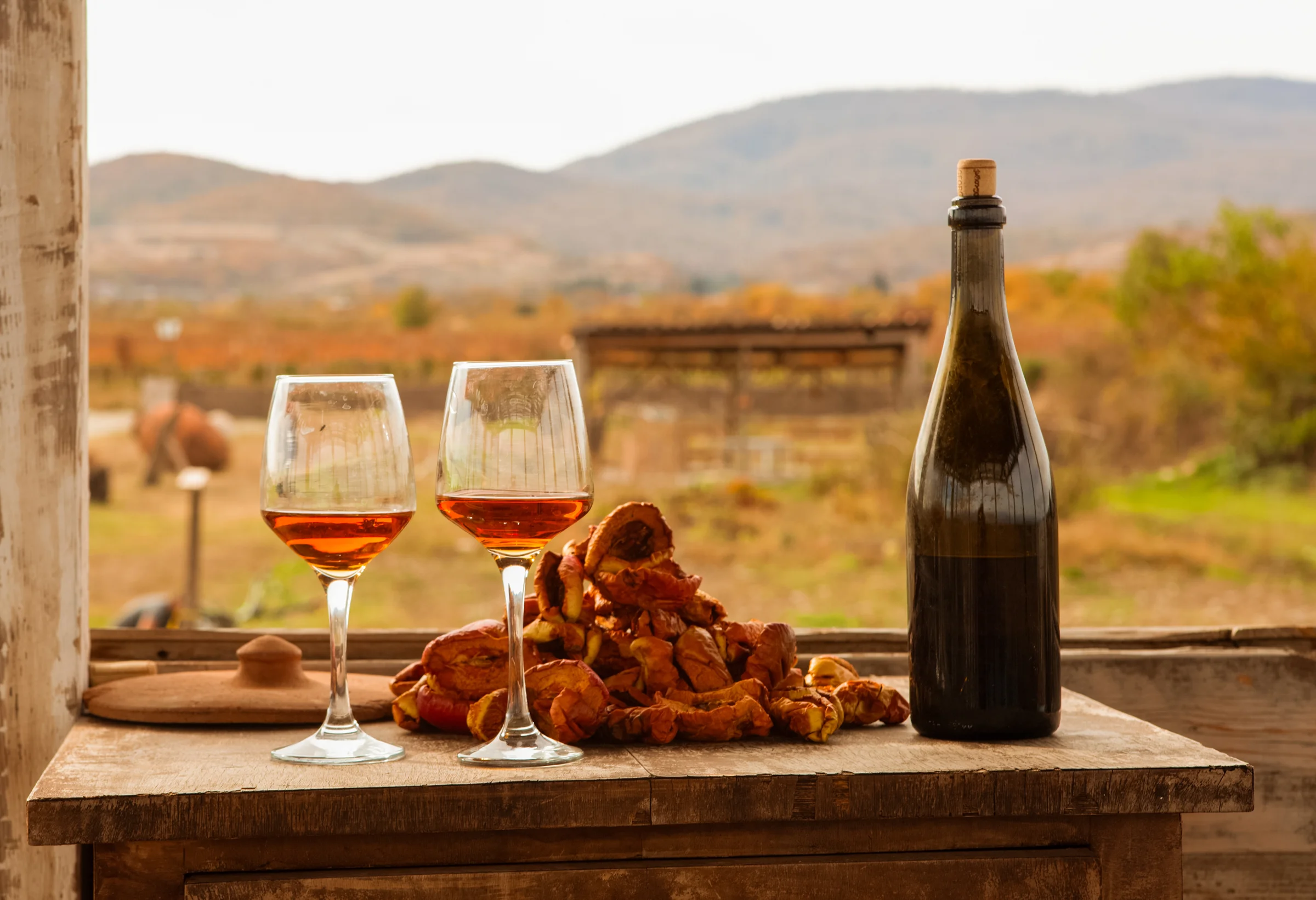
Every wine-producing country in the world has a claim to fame. France has terroir. Italy has tradition. California has marketing budgets. Georgia has something none of them can touch: it started the whole thing. Archaeological evidence from 6000 BCE makes Georgia the oldest known winemaking civilization on earth — and unlike most ancient traditions, this one never stopped. Walk into a Georgian home today and you'll find wine being made the same way it was eight millennia ago: in clay vessels buried underground, using grape varieties the rest of the world has never heard of.
This isn't a buying guide or a sommelier's tasting notes. It's about understanding what wine means in Georgia — because here, wine isn't a beverage. It's a language, a religion, a social contract. You can't understand Georgia without understanding its wine.
8,000 Years: The World's Oldest Wine Country
In 2015, archaeologists at Gadachrili Gora and Shulaveris Gora in eastern Georgia found ceramic fragments with grape residue dating to approximately 6000 BCE. Chemical analysis — mass spectrometry, chromatography — confirmed these were winemaking vessels. That's roughly 1,000 years before the previous record-holders in Iran, and 4,000 years before anyone in France figured it out.
But the timeline is almost beside the point. What's remarkable is the continuity. Georgia didn't invent wine and then move on. The country has been making wine without interruption — through invasions by the Mongols, Persians, Ottomans, and Russians, through Soviet collectivization, through economic collapse in the 1990s. The method persisted because it wasn't just agriculture. It was identity.
Wine has a stronger afterlife too
Once the wine is made, Georgia often distills the leftover grape matter into chacha. If you want the dedicated guide to the spirit itself rather than the broader wine story, read our chacha guide.
The Georgian word for wine — ღვინო (ghvino) — is one of the etymological candidates for the English word "wine" itself. Whether or not linguists agree on that, the cultural link is real. In Georgian mythology, the grapevine is intertwined with Christianity: the cross of Saint Nino, who converted Georgia in the 4th century, was made from grapevines bound with her own hair.
Qvevri: The Clay Vessels That Changed Winemaking
If you visit a Georgian winery — or more likely, someone's home — you'll eventually be led to the marani (wine cellar). It looks like a regular floor, maybe stone or tile, with a row of circular lids embedded in the ground. Under each lid is a qvevri: an egg-shaped clay vessel that can hold anywhere from 100 to 3,500 liters of wine.
The qvevri is buried for a reason. Underground, temperatures stay constant year-round — around 14-15°C — creating ideal fermentation conditions without any technology. The egg shape allows natural convection: grape skins and sediment circulate during fermentation and settle at the pointed bottom when it's done. No pumps, no temperature-controlled tanks, no additives. Just clay, grapes, and time.
How qvevri wine is made
Grapes are crushed (sometimes with stems and skins included), poured into the qvevri, and sealed with a stone or wooden lid. The vessel is buried underground. Fermentation happens naturally over weeks to months. The wine is then left to mature — sometimes for 5-6 months — before being siphoned out. The qvevri is cleaned (someone literally climbs inside), sealed with beeswax, and used again. Some qvevri in use today are over 100 years old.
In 2013, UNESCO added the traditional Georgian qvevri winemaking method to its list of Intangible Cultural Heritage. In 2021, qvevri received Protected Geographical Indication (PGI) status — meaning only vessels made in Georgia from Georgian clay can legally be called qvevri.
Today, only about 5% of Georgian wine is made in qvevri. Most commercial producers use stainless steel tanks, just like everywhere else. But the qvevri tradition is experiencing a renaissance. Natural wine enthusiasts, biodynamic producers, and serious wineries are returning to clay — and the international wine world is paying attention.
Want the deep dive?
This article covers the big picture. If you want the narrower guide to how qvevri works, what it tastes like, and where travelers should actually try it, read our dedicated qvevri wine guide.
| Feature | Qvevri (Traditional) | Modern (Steel/Oak) |
|---|---|---|
| Temperature control | Natural (underground) | Mechanical |
| Skin contact | Full (stems, skins, seeds) | Usually minimal for whites |
| Additives | None or minimal sulfites | Varies |
| Fermentation vessel | Clay (egg-shaped, buried) | Stainless steel or oak barrels |
| Result | Amber whites, tannic, complex | Cleaner, fruitier, familiar |
| % of Georgian production | ~5% | ~95% |
Amber Wine: Georgia's Gift to the Wine World
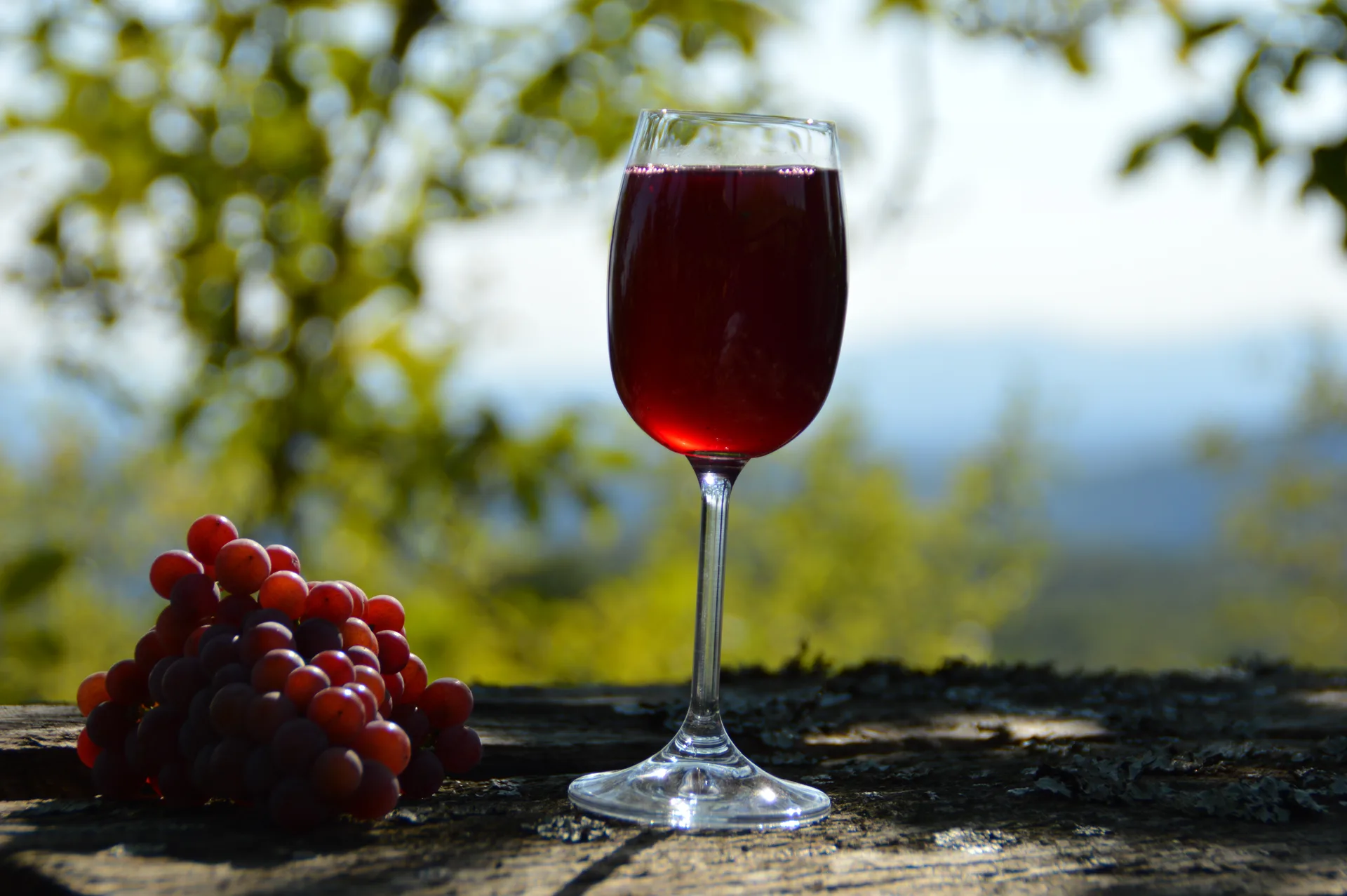
You've probably heard of "orange wine." Georgians would prefer you call it amber wine — and they have a point. The color isn't orange. It's deep gold, honey, sometimes almost copper. And unlike the trendy natural wines popping up in Brooklyn wine bars, this isn't a recent invention. It's how wine was made before someone decided to separate white grapes from their skins.
The process is simple: white grapes (typically Rkatsiteli, Mtsvane, or Kisi) are fermented with their skins, stems, and seeds in a qvevri for anywhere from a few weeks to six months. The extended skin contact gives the wine its amber color and a tannic structure you'd normally associate with reds. The result is unlike anything else — dry, with notes of golden apple, honey, dried apricot, and walnut, often with a pleasantly grippy finish.
Amber vs. orange: the naming debate
Georgian winemakers actively avoid the term "orange wine" because it implies citrus flavoring and sounds like a marketing gimmick. "Amber" (ქარვისფერი, karvisperi) describes the actual color. When you see "amber wine" on a Georgian label, it means skin-contact white wine — the same technique that's been used here for 8,000 years. The rest of the world adopted the method and renamed it.
Amber wines are served at 13-18°C — warmer than typical whites, closer to light reds. They pair beautifully with Georgian cuisine: the tannins can handle spicy lamb, the acidity cuts through cheese-heavy dishes like khachapuri, and the complex flavor profile complements walnut-based sauces like satsivi and bazhe.
The Grapes You've Never Heard Of
Georgia has over 525 indigenous grape varieties — the most of any country on earth. About 45 are used commercially today, but even the "common" ones are largely unknown outside the Caucasus. Forget Cabernet and Chardonnay. In Georgia, the stars are Saperavi and Rkatsiteli.
| Grape | Color | Tasting Notes | Look For |
|---|---|---|---|
| Saperavi | Red | Dark cherry, plum, chocolate, high tannins. Georgia's flagship red. | Mukuzani, Kindzmarauli |
| Rkatsiteli | White | Apple, quince, almond. Most planted grape in Georgia. | Tsinandali, qvevri amber |
| Mtsvane | White | Floral, citrus, herbal. Often blended with Rkatsiteli. | Mtsvane qvevri, blends |
| Kisi | White | Peach, honey, spice. Excellent as amber wine. | Kisi qvevri |
| Aleksandrouli | Red | Berry, pomegranate, soft. Used in semi-sweet Khvanchkara. | Khvanchkara |
| Chinuri | White | Crisp, mineral, green apple. Kartli region specialty. | Chinuri qvevri, sparkling |
| Tsolikouri | White | Tropical, nutty, creamy. Western Georgia's main white. | Imereti wines |
| Ojaleshi | Red | Raspberry, violet, elegant. Rare, from Samegrelo. | Ojaleshi (hard to find) |
Saperavi: the one grape you need to know
Saperavi (საფერავი, literally "dyer") is one of the world's only teinturier grapes — its flesh is red, not just the skin. This gives Saperavi wines an almost impossibly dark color. A good Mukuzani (dry Saperavi aged 3+ years in oak) can stand next to serious Bordeaux. Kindzmarauli — naturally semi-sweet Saperavi — was allegedly Stalin's favorite wine, which tells you something about both the wine and the dictator.
Wine Regions at a Glance
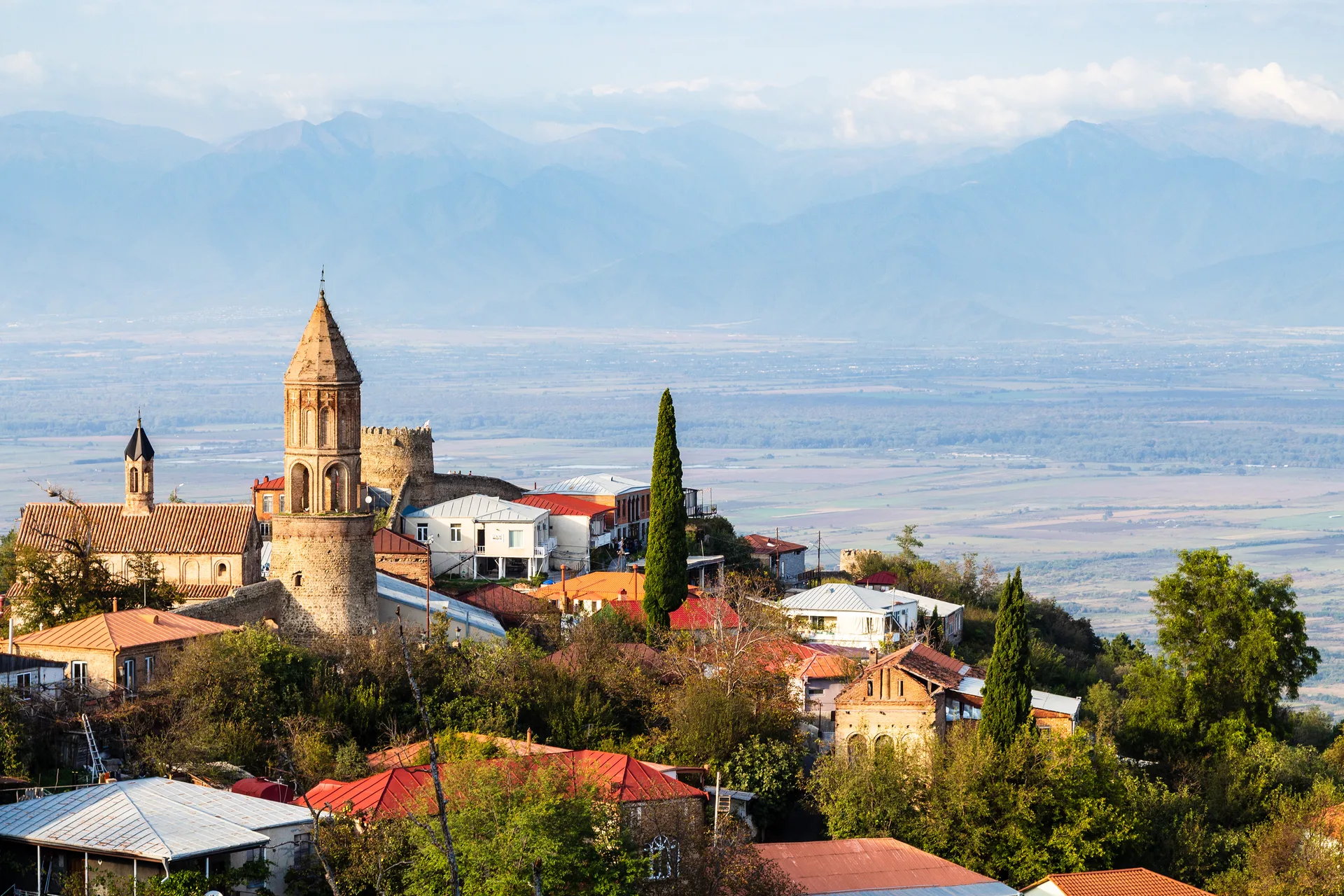
Georgia has wine regions the way France has wine regions — distinct terroirs with their own grape varieties, techniques, and appellations. But while Kakheti dominates (producing about 70% of all Georgian wine), every corner of the country makes wine worth trying.
| Region | Known For | Key Grapes | Style |
|---|---|---|---|
| Kakheti | Full skin-contact qvevri wines, bold reds | Saperavi, Rkatsiteli, Kisi | Full-bodied, tannic |
| Imereti | Lighter qvevri wines, less skin contact | Tsolikouri, Tsitska, Krakhuna | Lighter, more elegant |
| Kartli | Sparkling wines, Chinuri | Chinuri, Goruli Mtsvane | Crisp, mineral |
| Racha-Lechkhumi | Semi-sweet wines (Khvanchkara) | Aleksandrouli, Mujuretuli | Semi-sweet, fruity |
| Adjara | Subtropical varieties, emerging scene | Chkhaveri, Tsolikouri | Light, aromatic |
The key difference between Kakhetian and Imeretian winemaking: in Kakheti, grapes are fermented with all their skins, stems, and seeds (called chacha — the same word used for Georgian grape brandy). In Imereti, only about 20-30% of the skins go in, producing lighter, more approachable wines. Neither method is "better." They're different traditions from different landscapes.
Need the regional map first?
If you are trying to work out whether your trip belongs in Kakheti, Kartli, Imereti, or Racha, start with our Georgia wine regions guide. If you already know you want Kakheti specifically, jump to the complete Kakheti guide.
Wine and the Supra: More Than Just Drinking
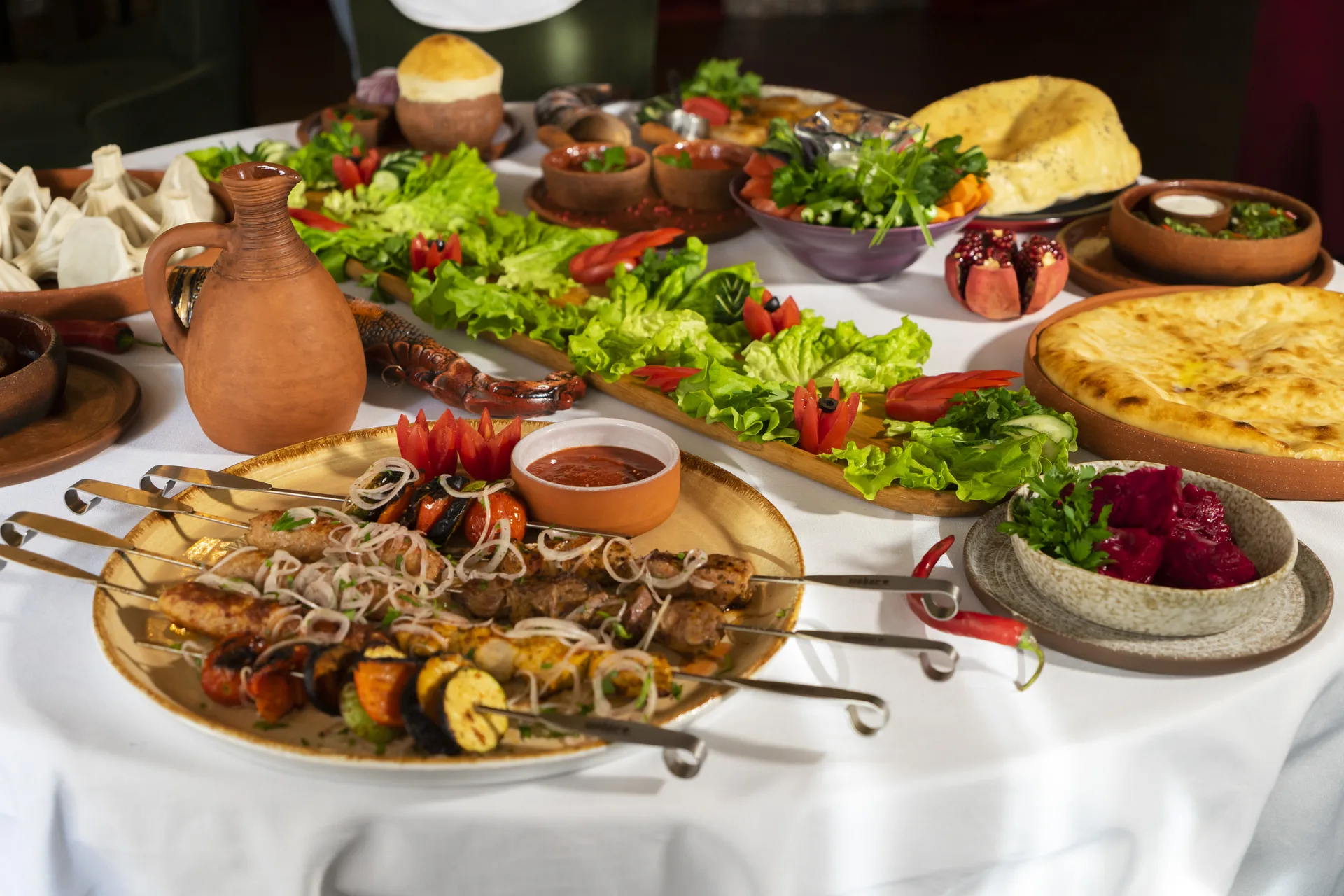
You cannot understand Georgian wine without understanding the supra — the traditional Georgian feast. And you cannot understand the supra without understanding the tamada — the toastmaster who presides over it.
A supra isn't a dinner party. It's a structured ritual with rules that go back centuries. The tamada leads a series of toasts — to God, to Georgia, to family, to the deceased, to love, to children, to the host. Each toast is followed by everyone at the table drinking wine. Not sipping. Drinking. The traditional vessel is the kantsi — a hollowed-out horn that can hold anywhere from a glass to half a bottle. You can't set a horn down without emptying it, which is either brilliant or terrifying depending on your constitution.
The tamada
The elected toastmaster who leads all toasts. It's a position of honor and responsibility — a good tamada is eloquent, funny, wise, and can hold their wine. Nobody else proposes toasts without the tamada's permission.
The alaverdi
After the tamada makes a toast, they can pass the right to elaborate to someone else — this is the alaverdi. That person adds their own thoughts to the same theme before everyone drinks. It's like a relay race of sincerity.
At a proper supra, you might go through 20-30 toasts over 3-4 hours. The wine flows freely — homemade, usually from the host's own qvevri. Refusing to drink is considered rude (though asking for smaller pours is perfectly acceptable). The food keeps coming: read our full supra guide for what to expect and how to survive your first one.
Survival tip for first-timers
You don't have to drain your glass after every toast. Take a meaningful sip, make eye contact, and put your glass down. The tamada won't mind — but if someone proposes a toast directly to you (a piri), you're expected to drink more generously. Also: eat. The table will be overflowing. The food is there for a reason — it's your armor.
Homemade Wine: Georgia's Open Secret
Here's something that shocks most visitors: a significant portion of wine produced in Georgia never reaches a bottle with a label. Estimates vary, but roughly half of Georgia's wine production is homemade — families making wine in their own qvevri or plastic containers (purists, don't wince) for personal consumption and sharing.
In the countryside, nearly every family with a yard has grapevines. The September harvest (rtveli) is a national event — families travel to their ancestral villages, pick grapes, crush them, and load the qvevri. It's a multi-generational affair that involves everyone from grandparents to toddlers. Schools in rural areas sometimes close during rtveli because the children are needed in the vineyards.
The quality of homemade wine varies wildly. Some family winemakers produce genuinely excellent wine that would embarrass mid-range commercial producers. Others make something closer to vinegar. If a Georgian friend or host offers you their wine, accept graciously and praise it — regardless of what your palate tells you. The gesture matters more than the vintage.
Rtveli (რთველი)
The annual grape harvest, typically September–October. Families gather in Kakheti and other wine regions to pick, crush, and ferment. It's part work, part festival, part family reunion.
Chacha
Georgian grape brandy, distilled from the leftover skins, stems, and seeds after winemaking. Usually 50-60% alcohol. Every family has some. Approach with caution and an empty stomach.
What to Try: A Practical Tasting Guide
Walking into a Georgian wine shop or scanning a restaurant wine list can be overwhelming. Here's a cheat sheet for what to order based on what you already like.
| If You Like... | Try This Georgian Wine | Why |
|---|---|---|
| Cabernet Sauvignon | Mukuzani (dry Saperavi) | Bold, tannic, dark fruit. Oak-aged 3+ years. |
| Pinot Noir | Ojaleshi or Tavkveri | Lighter, elegant, aromatic. Harder to find but worth seeking. |
| Chardonnay (oaked) | Rkatsiteli qvevri | Full-bodied, nutty, complex. Amber gold color. |
| Sauvignon Blanc | Tsinandali (European-style Rkatsiteli) | Crisp, clean, citrus. The "approachable" Georgian white. |
| Moscato / Riesling | Kindzmarauli or Khvanchkara | Naturally semi-sweet reds. Fruity, low tannins. |
| Natural / skin-contact wine | Any qvevri amber wine | This is where skin-contact wine was born. The real deal. |
Wine Prices in Georgia (2026)
Understanding Georgian Wine Labels
Georgian wine labels can be confusing because some names refer to grape varieties, some to places, and some to specific wine styles. Here's the key terminology you'll see:
| Name on Label | What It Means | Style |
|---|---|---|
| Mukuzani | PDO. Dry Saperavi from Mukuzani, oak-aged 3+ years | Dry red |
| Kindzmarauli | PDO. Naturally semi-sweet Saperavi from Kindzmarauli | Semi-sweet red |
| Khvanchkara | PDO. Semi-sweet from Aleksandrouli + Mujuretuli (Racha) | Semi-sweet red |
| Tsinandali | PDO. Rkatsiteli + Mtsvane blend, European method | Dry white |
| Napareuli | PDO. Saperavi (red) or Rkatsiteli (white) from Napareuli | Dry red or white |
| Tvishi | PDO. Semi-sweet Tsolikouri from Tvishi microzone | Semi-sweet white |
| Manavi | PDO. Dry Mtsvane from Manavi | Dry white |
Watch out for fake Kindzmarauli and Khvanchkara
These semi-sweet wines are hugely popular (especially with Russian tourists), and cheap imitations flood the market. If a bottle of Kindzmarauli costs less than 15 GEL, it's almost certainly not the real thing. Buy from reputable wine shops — not the tourist kiosks on Rustaveli Avenue. Real Kindzmarauli and Khvanchkara are PDO-protected and come from specific, limited-production microzones.
Where to Experience Georgian Wine
You don't need to drive to Kakheti to drink good wine in Georgia (though you should — here's how). Tbilisi has a thriving wine scene with bars, shops, and tasting rooms that showcase the country's best producers.
Wine Bars in Tbilisi
Vino Underground — the original natural wine bar, in a cellar on Tabidze Street. Mostly qvevri wines from small producers. g.Vino — upscale wine restaurant on Bambis Rigi with an enormous Georgian wine list. Wine Gallery — more casual, good selection, near Liberty Square.
Wine Shops
8000 Vintages — the best wine shop in Tbilisi, curated selection of Georgian wines from small to large producers. Staff speaks English and will guide you. Vinotheca — solid selection in Vera neighborhood. Supermarkets (Goodwill, Carrefour) stock basics.
Kakheti Day Trips
Most wineries in Kakheti offer tastings (20-50 GEL). Sighnaghi and Telavi are the main base towns. You can drive yourself, hire a driver (~100-150 GEL/day), or join a group tour (~80-120 GEL pp). Always book ahead for smaller family wineries.
Wine Museum & Events
Georgian National Museum has an 8,000-year-old qvevri. The annual New Wine Festival (May, Tbilisi) and Rtveli Festival (October, Kakheti) are the big wine events. Both are free, chaotic, and fantastic.
Wine, God, and Georgian Identity
Georgia adopted Christianity in 337 AD — one of the first nations to do so. The symbol of that conversion is a cross made from grapevines. That's not a coincidence. Wine and faith are woven together here in a way that would make even the most devout French Catholic pause.
Georgian churches were often built with marani (wine cellars) underneath them. Monks made wine. Wine was used in communion. The first toast at every supra is to God. Even during Soviet rule, when the state tried to suppress religion, wine remained — quietly carrying the culture forward.
There's a Georgian proverb: "A meal without wine is like a day without sunshine." It sounds quaint translated, but it captures something real. Wine isn't an accessory to Georgian life. It's the medium through which hospitality, faith, family bonds, and national identity are expressed. When a Georgian raises a glass and says "gaumarjos" (გაუმარჯოს — "to victory"), they're not just being polite. They're participating in a ritual older than Christianity itself.
Practical Tips for Wine Travelers
🏪 Where to buy
Wine shops > supermarkets > tourist stalls. Ask for recommendations — staff at good shops are passionate and helpful. Avoid anything under 8 GEL unless you know the producer.
✈️ Taking wine home
Georgian wine is hard to find abroad — buy here. Most shops will pack bottles for travel. Check in luggage (no liquids in carry-on). Tbilisi airport duty-free has a limited but decent selection.
🗓️ Best time for wine
September-October for rtveli (harvest). May for New Wine Festival. Spring and autumn are ideal for Kakheti trips — summer is brutally hot in the Alazani Valley.
🚗 Wine region logistics
Kakheti is 1.5-2 hours from Tbilisi by car. Hire a driver if you're tasting (police are strict about drink-driving). Bolt doesn't work in rural areas — arrange transport in advance.
🍽️ Wine with food
Georgians always drink wine with food. Ordering wine without food at a restaurant is unusual but not rude. At a supra, you'll have both — in abundance.
💬 Useful phrases
Gaumarjos (გაუმარჯოს) — "Cheers" / "To victory." Ghvino (ღვინო) — "Wine." Tetri (თეთრი) — "White." Tsiteli (წითელი) — "Red." Tkbili (ტკბილი) — "Sweet."
Frequently Asked Questions
Is Georgian wine good?
Some of it is world-class. Some of it is rough. The best Georgian wines — from producers like Pheasant's Tears, Iago's Wine, Lagvinari, and Schuchmann — rival anything from established wine countries. The key is buying from reputable producers, not the cheapest bottle on the shelf.
What does amber wine taste like?
Dry, with notes of golden apple, honey, dried apricot, walnut, and tea. More structured than typical whites — there's tannin from the skin contact. It's closer to a light red in body. Some people love it immediately; others need a few glasses to adjust.
Do I have to drink wine at a supra?
Technically, yes — it's considered impolite to refuse entirely. But you can take small sips rather than draining your glass. Saying you're a designated driver or on medication is also understood. Nobody will force you — but they will be persistent.
Can I visit wineries without a car?
In Tbilisi's wine bars, absolutely — no car needed. For Kakheti, join a day tour (bookable through your hotel or online) or hire a driver. Marshrutkas go to Sighnaghi and Telavi, but getting between wineries without your own transport is impractical.
What's chacha?
Georgian grape brandy, distilled from winemaking leftovers (skins, stems, seeds). Usually 50-60% alcohol and served at room temperature. It's the Georgian equivalent of Italian grappa. Homemade chacha varies from excellent to paint-stripper. Commercial brands are more consistent.
Written by The Georgian Guide Team
Based in Tbilisi for five years, we've drunk our way through family supras, winery tours, and more homemade wine than we care to admit. We've tasted wines in qvevri cellars, survived multi-hour toasting marathons, and learned the hard way that chacha at 3am is never a good idea.
Last updated: February 2026.
Related Articles
Kakheti Wine Region: The Complete Guide
Wineries, towns, itineraries, and practical tips for Georgia's wine heartland.
The Georgian Supra
Everything about Georgia's legendary feast — the tamada, the toasts, and how to survive your first one.
Tbilisi for First-Timers
Where to stay, what to eat, what to skip, and the stuff nobody tells you.
Best Time to Visit Georgia
Month-by-month breakdown — when to hike, when to drink wine, when to avoid.