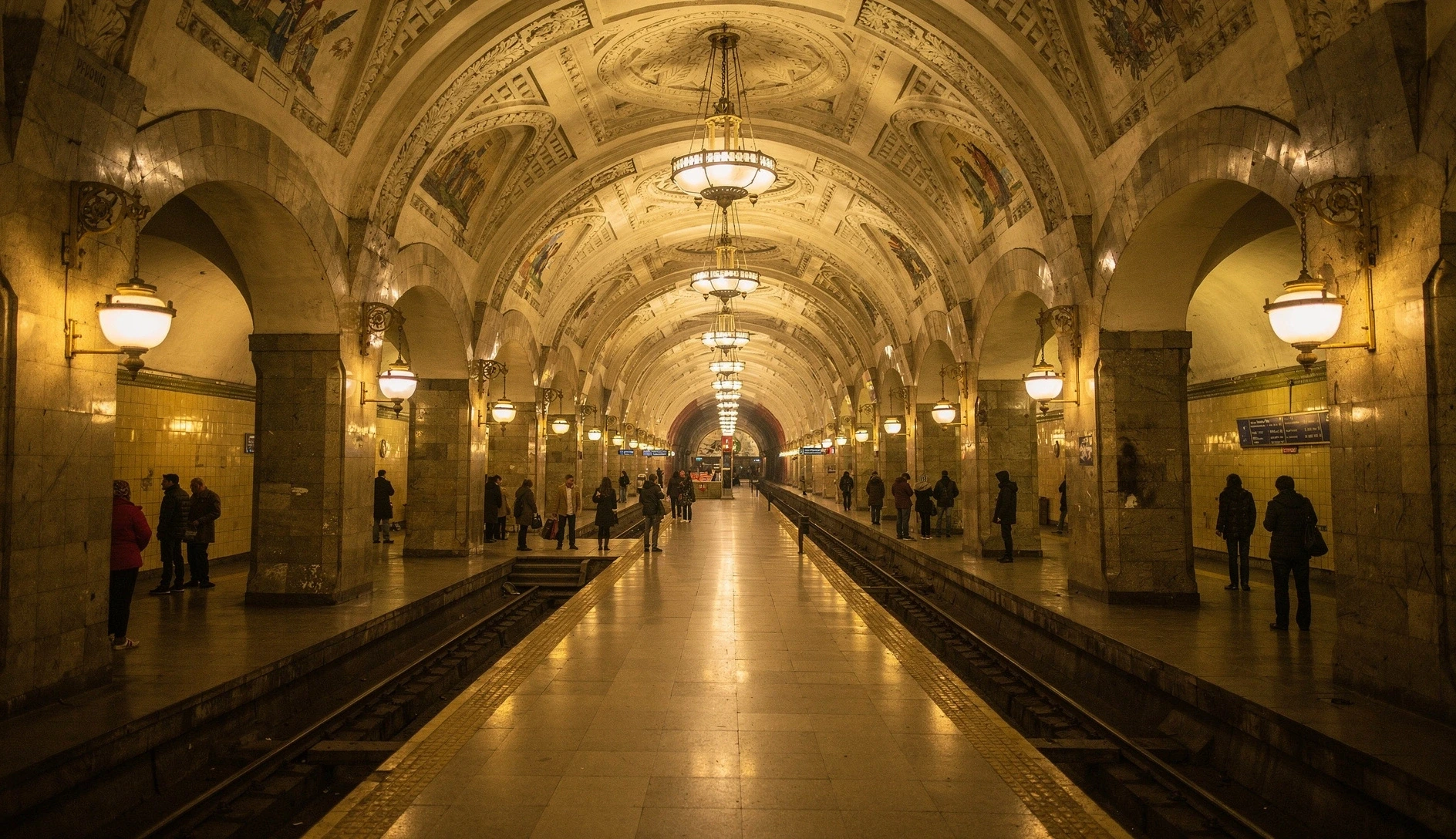
Tbilisi's public transport is cheap, surprisingly decent, and occasionally baffling. A metro ride costs about 15 cents. Buses run until midnight. The cable car over the Mtkvari River is one of the best deals in tourism. But nobody explains how the transport card works, which buses actually matter, or why Google Maps sometimes sends you on a 40-minute detour when a marshrutka would get you there in ten.
This is the guide I wish existed when I first arrived. Not the sanitized tourism board version — the real one, with the quirks, the workarounds, and the stuff that'll save you from standing at the wrong bus stop for half an hour.
The Transport Card (Metromoney)
Before anything else: get a transport card. You technically can pay cash on some buses, but nobody does, and the driver will look at you like you just asked them to break a 100-lari note. The card — called Metromoney — is your ticket to everything: metro, buses, cable cars, even some marshrutkas.
Where to Get a Card
Buy one at any metro station from the ticket window or the yellow vending machines. The card itself costs ₾2 (non-refundable), then you load whatever balance you want. Minimum top-up is ₾1. The machines accept cash and sometimes cards — but bring small bills, because they're not always reliable with change.
Here's the thing most guides won't tell you: you can tap one card for multiple people. Just tap it once for each person entering. This is official policy, not a hack. So a couple only needs one card.
Top up at metro stations, at yellow top-up machines scattered around the city (they're at most major bus stops), or through the TBC Bank app if you have a Georgian bank account. The balance never expires.
Transfers: The 90-Minute Rule
This is the best part of Tbilisi transport that almost nobody knows about. After your first tap (₾0.50), all subsequent transfers within 90 minutes are free. Metro to bus? Free. Bus to bus? Free. Bus to cable car? Free. The system tracks it automatically through your card.
So if you're sightseeing and hopping between neighborhoods, time your trips right and you can ride all day for practically nothing.
| Payment Method | Where It Works | Notes |
|---|---|---|
| Metromoney Card | Metro, buses, cable cars, some marshrutkas | Best option. Free 90-min transfers. |
| Contactless Bank Card | Metro turnstiles, newer buses | Works with Visa/Mastercard. No transfer discount. |
| Apple/Google Pay | Metro turnstiles, newer buses | Convenient but no transfer discount. |
| Cash | Some older buses, marshrutkas | Last resort. Exact change only. |
Contactless Cards vs. Metromoney
You can tap your Visa or Mastercard at metro turnstiles and newer buses. But you won't get the free 90-minute transfer benefit — each tap charges ₾0.50. If you're making more than two trips, the Metromoney card pays for itself on day one.
The Metro
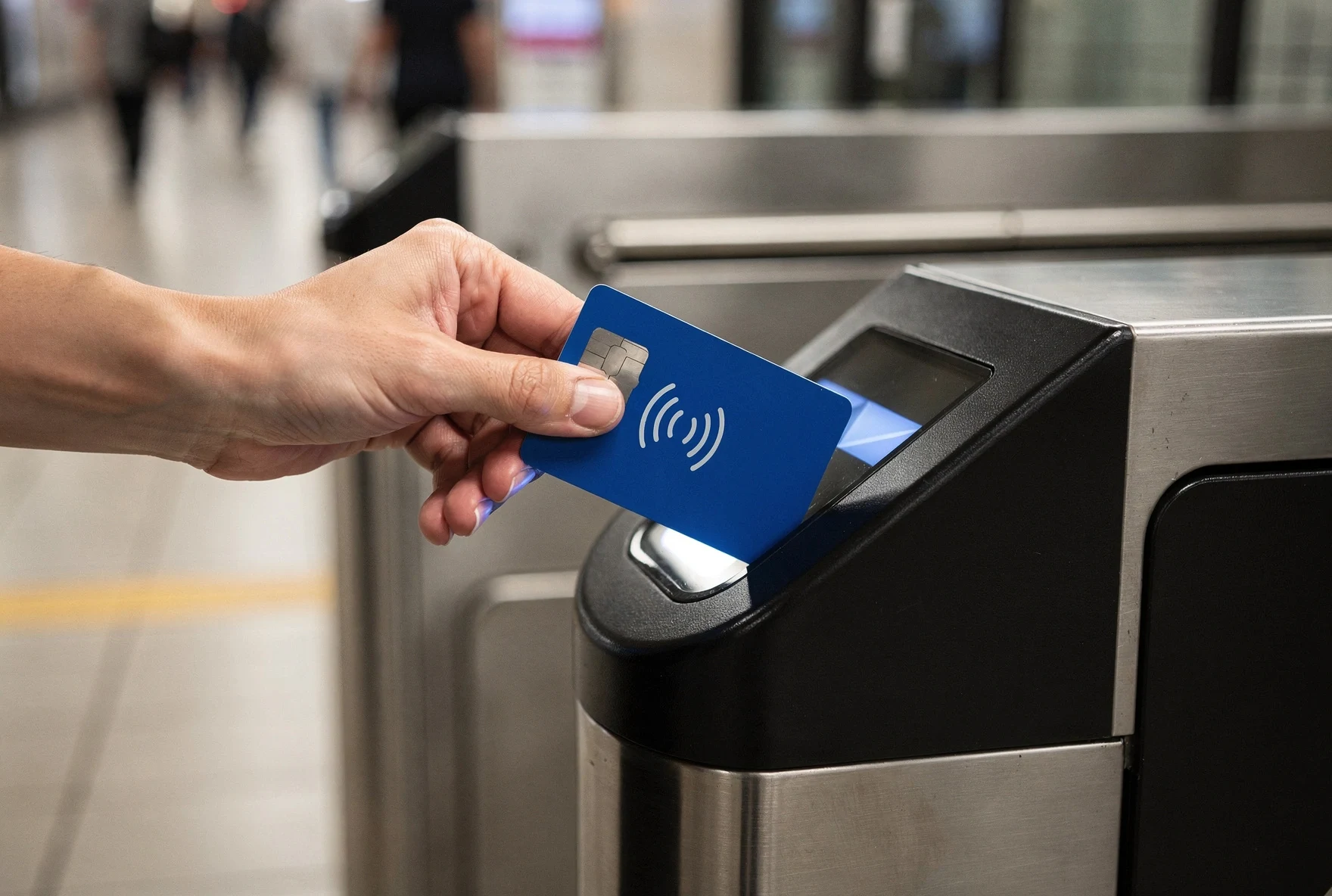
Tbilisi's metro is one of the deepest in the world. Some stations are 50+ meters underground, which means the escalator rides feel eternal. It's Soviet-built, opened in 1966, and while it's not going to win any design awards, it works. Two lines, 23 stations, trains every 3–5 minutes during peak hours.
The Two Lines
🔴 Akhmeteli–Varketili Line
16 stations. Runs roughly north–south through the center.
Key stations: Station Square (train station), Liberty Square (Rustaveli), Marjanishvili (restaurants/nightlife), Avlabari (Holy Trinity Cathedral)
🔵 Saburtalo Line
7 stations. Branches west from Station Square.
Key stations: Technical University (Vake area), Medical University (Saburtalo), State University (campus area)
The lines connect at Station Square (Sadguris Moedani), which is both the central metro hub and where the main train station sits. Transfers between lines are free — just follow the signs.
Stations That Matter for Tourists
| Station | What's Nearby | Line |
|---|---|---|
| Liberty Square (Tavisuplebis Moedani) | Rustaveli Avenue, Old Town entrance, National Museum | Red |
| Avlabari | Holy Trinity Cathedral, Rike Park, cable car to Narikala | Red |
| Marjanishvili | Dry Bridge Market, restaurants, Fabrika, Dedaena Park | Red |
| Station Square | Central Train Station, intercity buses, line transfer | Both |
| Rustaveli | Parliament, Opera House, Rustaveli Avenue shopping | Red |
| Technical University | Vake Park, residential Vake, cafés on Chavchavadze | Blue |
Metro Tips
- Rush hour (8:30–10 AM and 5:30–7:30 PM) is genuinely packed. If you're carrying luggage, avoid these windows.
- No English announcements on older trains — station names are in Georgian and sometimes Russian. Newer trains have screens. Count your stops.
- Phone signal works in stations but cuts out in tunnels. Download your map offline.
- The escalators are fast. Stand on the right, walk on the left. Some escalators are the longest in the former Soviet Union — hold on.
- No public bathrooms in metro stations. Plan accordingly.
Buses
Tbilisi's bus network is extensive and, after a fleet upgrade in the last few years, actually comfortable. Most routes now run modern, air-conditioned buses with digital displays. The old yellow marshrutka-style city buses are mostly gone from central routes.
There are roughly 100 bus routes covering the entire city. Most run from 7 AM to midnight, with some night routes running until 2 AM on weekends.
Use Google Maps for Bus Routes
Google Maps has accurate, real-time Tbilisi bus data. Just enter your destination and select the transit option. It'll show you which bus to take, where to board, and when the next one arrives. This is genuinely the easiest way to navigate — it works better than any dedicated Tbilisi transport app.
Bus Routes Tourists Actually Use
| Route | From → To | Why You'd Use It |
|---|---|---|
| 37 | Station Square → Airport | Cheapest airport transfer (₾0.50) |
| 61 | Liberty Square → Lisi Lake | Easy access to Lisi Lake for walks/sunset |
| 71 | Avlabari → Mtatsminda / Funicular area | Gets you close to the funicular lower station |
| 50 | Didube → Various southern routes | Connects the Didube marshrutka hub to the center |
Honestly though, unless you're commuting daily, you'll use the bus a few times and then default to the metro and Bolt for most trips. The metro is faster for crossing the city, and Bolt is so cheap that buses only really make sense for routes the metro doesn't serve.
Cable Cars
Tbilisi has two aerial cable cars, and one of them is arguably the single best-value tourist attraction in the city.
Rike Park → Narikala Fortress
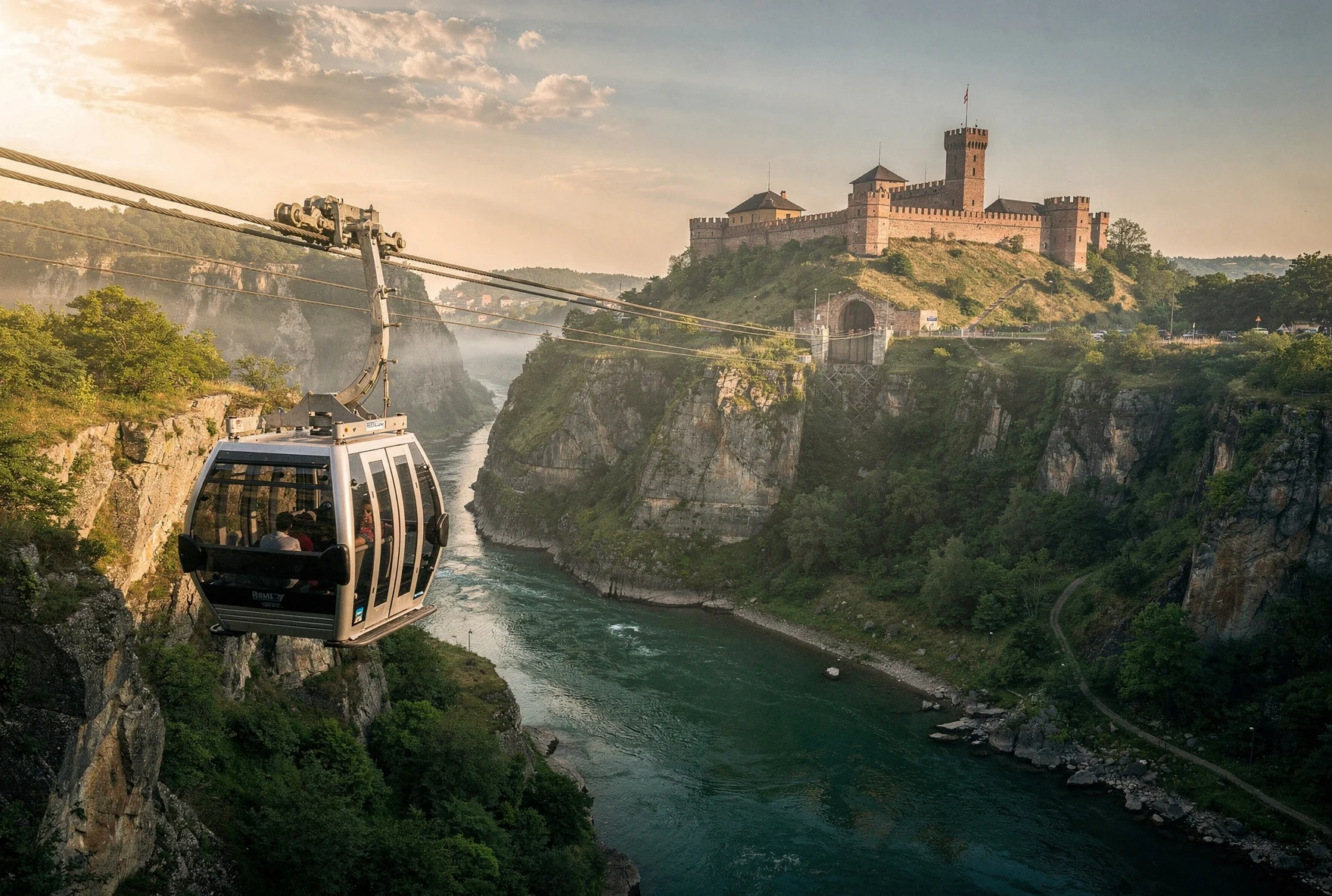
This is the one you want. For ₾0.50 (yes, the same price as a metro ride), you get a gondola ride over the Mtkvari River with a panoramic view of Old Town, the sulfur baths district, and Narikala Fortress. It's genuinely one of the best views in Tbilisi, and it costs less than a bottled water.
Rike → Narikala Details
Cost: ₾0.50 (Metromoney card)
Hours: 10 AM – 10 PM (until 11 PM in summer)
Duration: ~2.5 minutes each way
Access: Walk from Avlabari metro, cross Rike Park
Pro Tips
Go 30 minutes before sunset for the best light. The line gets long on weekend evenings — weekday visits are smoother. Take the cable car up, then walk down through the botanical garden (₾4 entry) or through the Old Town. One-way up is the move.
Turtle Lake Cable Car
The second cable car runs from Vake Park up to Turtle Lake (Kus Tba). It's more of a local escape — Tbilisi residents head up here for weekend barbecues and swimming in summer. The lake itself is small and not particularly scenic, but the forested trails around it are pleasant, and on hot days the altitude makes a noticeable difference.
Cost: ₾1 each way. Hours: 10 AM – 9 PM. Closed Mondays for maintenance.
The Funicular
The Mtatsminda funicular is the oldest mechanical transport in Tbilisi, originally built in 1905 by a Belgian company. It climbs from Chonkadze Street (near the Rustaveli area) to the top of Mtatsminda, where you get a panoramic platform and the slightly kitschy Mtatsminda Park amusement area.
| Detail | Info |
|---|---|
| Cost | ₾15 round-trip / ₾10 one-way |
| Hours | 10 AM – 1 AM (summer), 10 AM – 11 PM (winter) |
| Duration | ~3 minutes to the top |
| Payment | Cash or card at the ticket booth (NOT Metromoney) |
| Closed | Mondays (maintenance) |
Worth it? For the view, absolutely. For Mtatsminda Park itself, only if you have kids or enjoy slightly run-down amusement rides. The panoramic restaurant at the top is overpriced but the terrace is free. Go at sunset.
Save Money on the Funicular
Buy a one-way ticket up (₾10) and walk down. The path through the forest behind the TV tower takes about 25 minutes and brings you out near the Saburtalo side of town. Or walk down through the trails into the botanical garden.
Marshrutkas (Minibuses)
Marshrutkas are the yellow (sometimes white) minibuses that serve routes the metro and city buses don't reach. Within Tbilisi proper, they're less important than they used to be since the bus fleet upgrade. But for getting to nearby towns and intercity travel, marshrutkas are still king.
City Marshrutkas
Some still run within Tbilisi on fixed routes — you'll spot them by the route number in the windshield. They cost ₾0.50 with a Metromoney card, or ₾0.80 cash. Wave them down at designated stops (or honestly, anywhere on the route — drivers are flexible). Tell the driver where you're going when you board. Tap your card on the reader near the door.
Intercity Marshrutkas
This is how most Georgians travel between cities. They depart from specific hubs:
| Hub | Metro Station | Destinations |
|---|---|---|
| Didube Bus Station | Didube | Mtskheta, Kazbegi, Gudauri, Kutaisi, Batumi, northern/western Georgia |
| Ortachala Bus Station | 300 Aragveli (then bus) | Kakheti (Sighnaghi, Telavi), David Gareja, Azerbaijan border |
| Samgori | Samgori | Rustavi, some eastern routes |
Intercity marshrutkas don't have fixed schedules — they leave when full. Show up at the station, find the one going where you want (ask around or look for handwritten destination signs), and wait. Morning departures are most frequent. Last departures are usually mid-afternoon for distant destinations.
Ride-Hailing Apps: Bolt & Yandex
Let's be honest: for short-to-medium trips in Tbilisi, ride-hailing is so cheap that it competes with public transport. A 10-minute Bolt ride across the city center costs ₾3–5 (about $1–2). This is why many expats rarely use the bus.
Bolt
Best for: Most trips. Largest driver pool in Tbilisi.
Payment: Cash or card in the app.
Tip: Bolt Lite is even cheaper but can take longer to match.
Yandex Go
Best for: Backup when Bolt surge-prices. Slightly more drivers in outer areas.
Payment: Cash or card in the app.
Tip: Interface is in Russian by default — switch to English in settings.
Bolt vs. Taxi vs. Public Transport
A cross-town Bolt ride (say, Vake to Old Town) costs ₾4–7. The same trip by metro takes 15 minutes and costs ₾0.50 — but requires walking to/from stations. For 2+ people, Bolt often makes more sense than buying multiple metro tickets, especially with luggage. Street taxis (the ones not on apps) will try to charge 3–5x the Bolt price. Always use the app.
Ride-Hailing Tips
- Always set the destination in the app. Some drivers will try to negotiate a cash price if they think you don't know the route. The app keeps them honest.
- Rate 2 AM surge: Friday and Saturday nights, Bolt prices can triple. Budget for it or take the metro (last train around midnight).
- Airport runs: Bolt to/from the airport costs ₾15–25 depending on traffic. The bus #37 costs ₾0.50 but takes 40+ minutes. Your call.
- No English needed. The app handles communication. If a driver calls, they usually just want to confirm the pickup location — say the street name or landmark.
Getting to/from the Airport
Tbilisi International Airport (TBS) is about 17 km southeast of the city center. Here are your options, ranked by practicality:
| Option | Cost | Time | When to Use |
|---|---|---|---|
| Bolt / Yandex | ₾15–25 | 20–35 min | Best option for most people. Fast, door-to-door. |
| Bus #37 | ₾0.50 | 40–60 min | Budget option. Runs from Station Square every 15–20 min. |
| Airport taxi desk | ₾40–60 | 20–35 min | Overpriced. Only if your phone is dead. |
| Hotel transfer | ₾40–80 | 20–35 min | Convenient for late arrivals. Pre-arrange. |
The bus #37 runs from about 7 AM to 11 PM. If you're arriving on a late flight, Bolt is your only reasonable option. Connect to the airport WiFi, open Bolt, and order. Drivers usually take 5–10 minutes to arrive at the pickup area outside arrivals.
Trains (City & Regional)
Tbilisi doesn't have a commuter rail network worth mentioning for tourists, but the national railway is useful for two specific routes:
🚂 Tbilisi → Batumi
Duration: ~5 hours
Cost: ₾25–35 (1st/2nd class)
Frequency: 1–2 daily departures
Scenic ride through Khashuri and along the coast. Book at railway.ge or at the station.
🚂 Tbilisi → Kutaisi
Duration: ~5.5 hours
Cost: ₾10–15
Frequency: 1–2 daily
Slow but cheap. The marshrutka (3.5 hours, ₾15) is faster for most.
Book train tickets at tkt.ge — it's the official Georgian Railway booking site. You can also buy at the station, but popular routes (especially Batumi in summer) sell out.
Walking & Cycling
Tbilisi's center is highly walkable. Old Town, Sololaki, Vera, Marjanishvili, and the Rustaveli area are all within a 30-minute walking radius of each other. This is genuinely the best way to experience the city — you'll discover courtyard cafés, street art, and vine-covered balconies that you'd miss from a car window.
Cycling is another story. Tbilisi has a bike-share system (green bikes at docking stations around the center), but the cycling infrastructure is limited. There are a few dedicated lanes along the river, and Rike Park connects to the Dry Bridge area via a decent path. But most roads have no bike lanes, and Georgian drivers are... not accustomed to sharing the road with cyclists. If you ride, stick to parks and the riverfront.
Transport Budget: What to Expect
Daily Transport Budget (Per Person)
That's roughly $2–4 per day on transport. In most European capitals, a single metro ticket costs more than your entire daily transport budget in Tbilisi.
Useful Apps & Tools
Google Maps
Best all-in-one for routes, real-time bus tracking, walking directions. Download Tbilisi for offline use.
Bolt
Primary ride-hailing. Download before you arrive. Works with international cards.
Yandex Go
Backup ride-hailing. Useful when Bolt is surging or in outer neighborhoods.
tkt.ge
Georgian Railway tickets. Book Tbilisi–Batumi trains in advance during summer.
Common Mistakes
| Mistake | Why It's a Problem | What to Do Instead |
|---|---|---|
| Taking a taxi from the airport | Airport desk taxis charge 3–4x the app price | Connect to WiFi, order Bolt |
| Paying cash on buses | More expensive and no transfer benefit | Get a Metromoney card at the first metro station |
| Using bank card for every tap | No free 90-minute transfers | Metromoney card saves money on multiple rides |
| Going to Didube for Kakheti | Wrong station — Kakheti marshrutkas leave from Ortachala/Samgori | Check the marshrutka hub table above |
| Not downloading maps offline | No signal in metro tunnels | Save Tbilisi in Google Maps before going underground |
Frequently Asked Questions
Is Tbilisi transport safe at night?
Yes. The metro runs until midnight and is safe. Bolt operates 24/7. Walking in central neighborhoods (Old Town, Rustaveli, Vera, Marjanishvili) is safe even late at night — Tbilisi has very low street crime.
Do I need cash for transport?
Not really. Metromoney card or contactless bank card covers metro and buses. Bolt takes card payments. You'll only need cash for some marshrutkas and the funicular.
Can I use Uber in Tbilisi?
No. Uber doesn't operate in Georgia. Bolt is the main ride-hailing app, with Yandex Go as the alternative. Download Bolt before you arrive.
How do I get to Mtskheta from Tbilisi?
Marshrutka from Didube bus station. Costs ₾1, takes 20 minutes, leaves every 10–15 minutes. Easiest day trip from Tbilisi.
Is Google Maps reliable in Tbilisi?
For bus routes and driving directions, yes — it's excellent and has real-time data. For walking, it's good but occasionally suggests weird shortcuts through courtyards. Trust your instincts on walking routes.
Should I rent a car in Tbilisi?
For the city itself? Absolutely not. Traffic is chaotic, parking is a nightmare, and public transport plus Bolt covers everything. Rent a car only for road trips outside the city.
Written by The Georgian Guide Team
We've collectively spent thousands of hours on Tbilisi's metro, buses, and in the back of Bolt rides. This guide reflects years of daily commuting, airport runs, and late-night marshrutka adventures — not a weekend visit.
Last updated: March 2026.
Related Articles
Tbilisi Airport to City Center
All your options for getting from TBS airport to downtown Tbilisi.
Money, ATMs & Tipping in Georgia
How to handle money, where to exchange, and tipping customs.
Georgia Travel Budget: What Things Actually Cost
Real prices for accommodation, food, transport, and activities.
Getting Around Georgia
Intercity transport guide: trains, marshrutkas, car rentals, and flights.