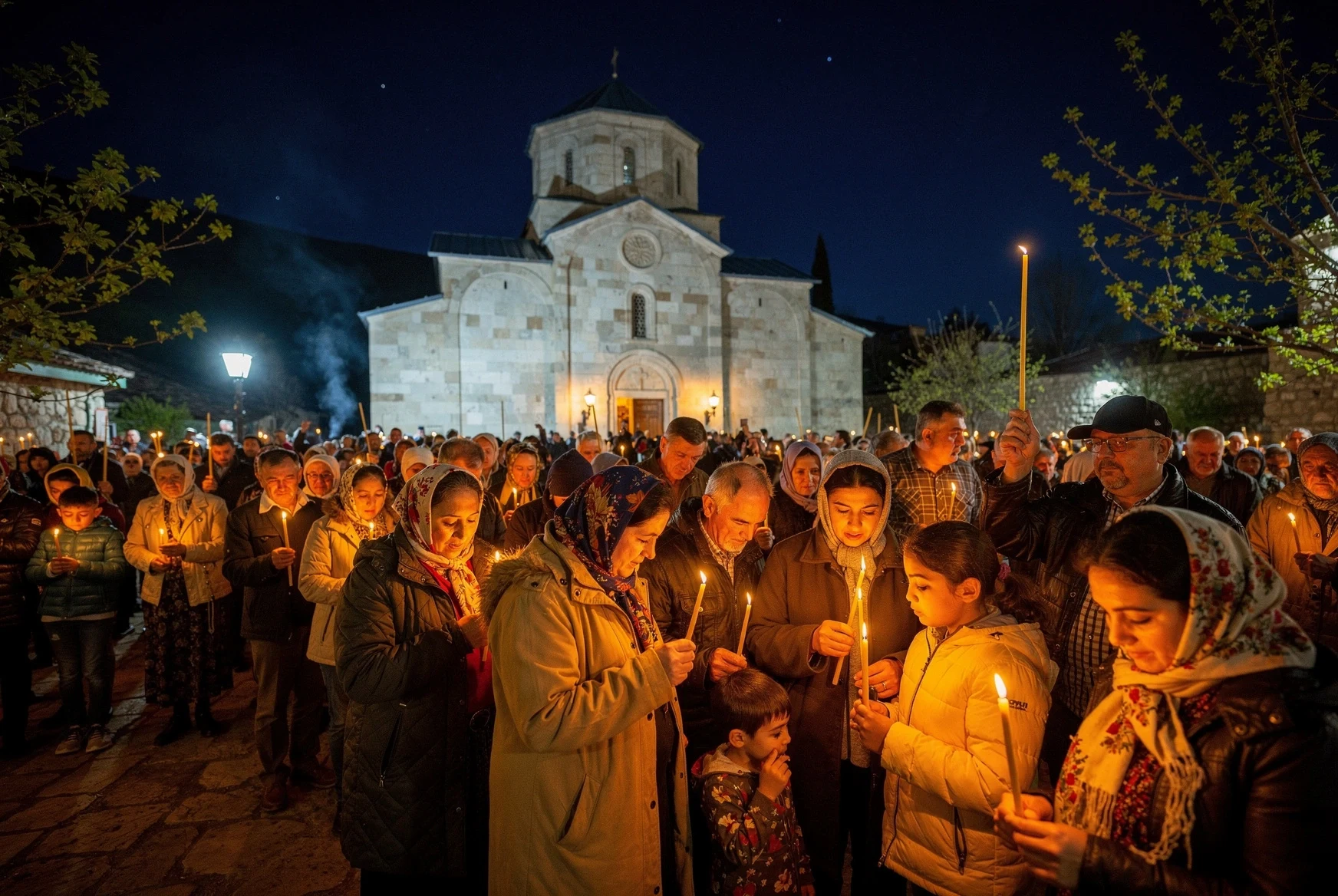
Orthodox Easter in Georgia is not a cute spring weekend with pastel packaging and hotel brunches pretending to be tradition. It is louder, more serious, more beautiful, and occasionally more logistically annoying than that. Churches fill up late at night. Candles move through dark courtyards like fireflies with intent. Families dye eggs red, bake paska, and gather for long tables after weeks of Lent. Roads to village churches get busy. Banks close. Some restaurants disappear for a day or two. If you land in Georgia during Easter without knowing any of this, you can easily mistake a meaningful national moment for random inconvenience.
If you do know what is happening, it becomes one of the most interesting times of year to be here. This guide is for travelers who want the useful version: what Easter in Georgia actually looks like, what the main dates mean in 2026, where to go in Tbilisi, what to wear, what closes, what to eat, and how not to behave like someone who wandered into a sacred service because the lighting looked good on Instagram.
The quick answer: is Easter a good time to visit Georgia?
Yes — if you want culture, atmosphere, and something that feels properly Georgian rather than tourism on autopilot. No — if your dream trip depends on everything running normally, every café being open, and zero schedule friction. Easter week is excellent for people interested in religion, ritual, family life, food traditions, and spring travel. It is less ideal if you are the sort of traveler who gets personally offended when a bank closes for a holiday that an entire country cares about.
Why it is worth it
Midnight services are memorable, spring weather is usually decent, bakeries smell incredible, and you see Georgia in a mode that ordinary sightseeing misses completely.
Why it can be annoying
Some businesses close, transport can be busier around the long weekend, and church etiquette becomes more important because people are there to worship, not to provide your cultural content.
2026 Easter dates in Georgia
In 2026, Orthodox Easter Sunday falls on April 12. The main travel-relevant dates are Good Friday on April 10, Easter Saturday night on April 11, Easter Sunday on April 12, and the cemetery-visiting holiday often observed on April 13.
What Easter means in Georgia
Georgia is not casually Orthodox. The church is woven into public life, family life, and national identity in a way many Western visitors underestimate. You see that year-round in monasteries, icons in taxis, roadside crosses, and church attendance patterns. Easter simply turns the volume up.
For practicing Georgians, Easter is the central religious holiday of the year. Christmas matters, of course, but Easter carries a heavier spiritual weight. It arrives after Lent, and even people who are not especially strict for the rest of the year often pay more attention to the season than outsiders expect. That means the weekend has a seriousness beneath the food and family side of it. You are not just dropping into a festival. You are visiting during an active religious moment.
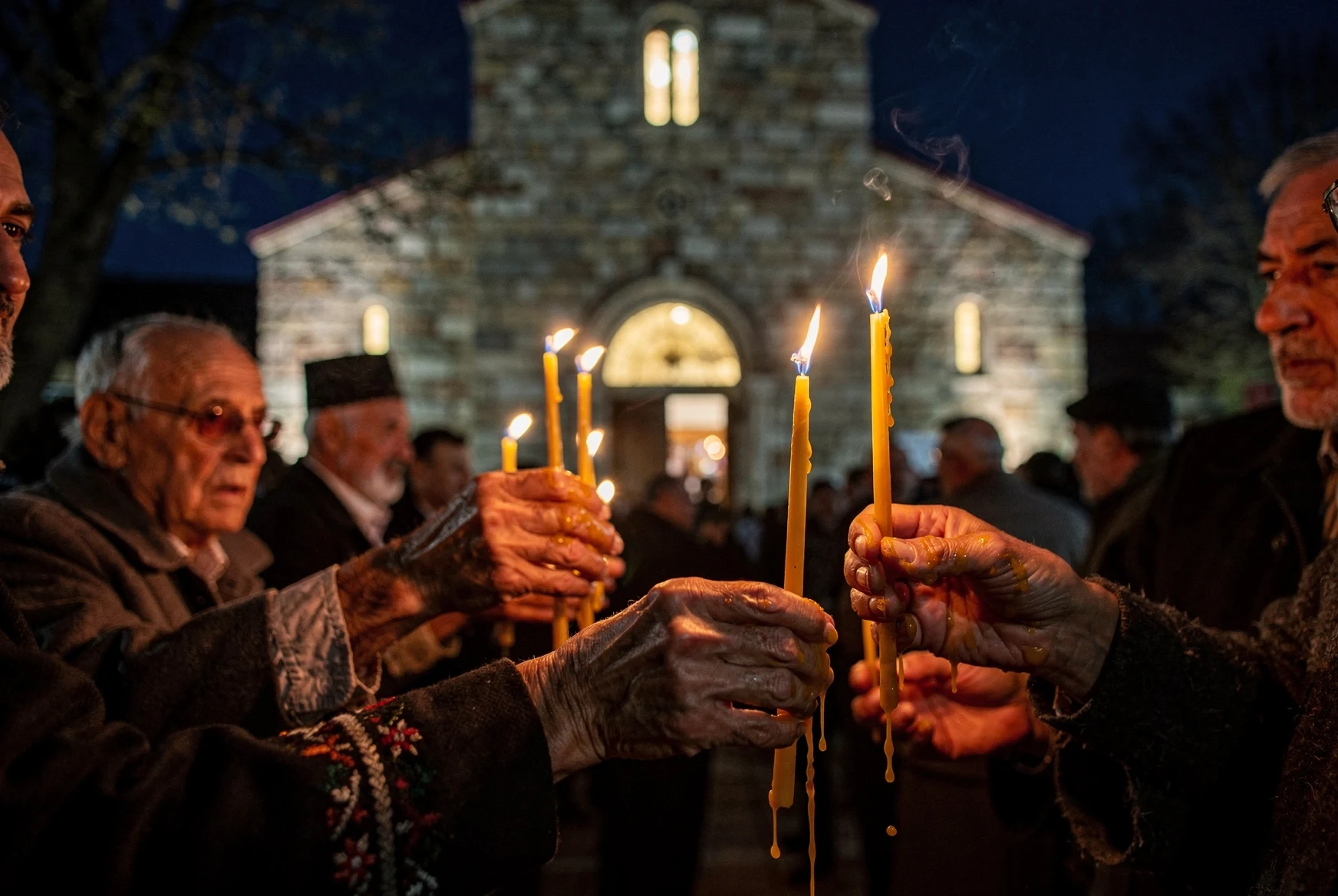
That sounds solemn, but it is not gloomy. Georgian Easter is warm, communal, and full of sensory detail: candle wax on your hands, church bells after midnight, red eggs cracking against each other at the table, sweet bread, incense, and the low hum of people greeting each other with the resurrection greeting. It is one of those moments when the country makes emotional sense all at once.
The main Easter dates and what happens
| Date | Day | What happens |
|---|---|---|
| April 10, 2026 | Good Friday | A quieter, more somber day. Some families remain in strict fasting mode. Expect reduced energy and some closures. |
| April 11, 2026 | Holy Saturday | Preparation day. Eggs are dyed red, paska appears, and people head to church late at night for the midnight liturgy. |
| April 12, 2026 | Easter Sunday | Family meals, resurrection greetings, church visits, and a very slow city rhythm the next morning if people were out until 3 AM. |
| April 13, 2026 | Easter Monday / cemetery day | Many families visit graves of relatives, bringing eggs, wine, and food. It is one of the more striking traditions travelers notice. |
That Monday cemetery tradition matters. In Georgia, remembrance and celebration do not sit in separate emotional boxes the way they often do elsewhere. Families visit cemeteries, clean graves, leave red eggs, pour wine, and spend time together there. To outsiders it can look unusual. To Georgians it feels normal, respectful, and continuous with the rest of life.
What the midnight Easter service is actually like
If you only do one Easter-specific thing in Georgia, make it the late-night service on Holy Saturday. This is the part worth reorganizing your evening around. Services build through the night, but for most visitors the memorable moment is around midnight, when the outside spaces fill with people holding thin candles and the light spreads outward from the church.
At big churches in Tbilisi — especially Sameba Cathedral — the scale is dramatic. The crowd is large, the atmosphere is grand, and you will absolutely not be the only outsider there. At smaller neighborhood churches, the feeling is less cinematic but often more affecting. Fewer phones. More local families. Less spectacle, more intimacy.
Do not expect a neatly stage-managed event. Georgia does not do sacred experiences with the efficiency of an airport gate. There is movement, waiting, murmured prayer, people arriving late, families coordinating children, wax dripping everywhere, and moments where you are not entirely sure what is happening and that is fine. You are there to witness, not to decode every liturgical detail in real time.
Best approach for travelers
Arrive a bit early, stand back rather than forcing your way to the front, keep your phone mostly away, and stay long enough to feel the atmosphere properly. Ten minutes for a photo and immediate escape is missing the point.
Where to experience Easter in Tbilisi
If you are in Tbilisi for Easter, you have three sensible options. None is universally best. It depends on whether you want scale, atmosphere, or ease.
Sameba Cathedral
The biggest and most obvious choice. Impressive, crowded, and powerful. Best if you want the grand version and do not mind sharing it with half the city.
Sioni Cathedral
More central, more historical, and easier to combine with an Old Town evening. Strong option if you want atmosphere without the full Sameba scale.
Neighborhood churches
Usually the most human option. Less theatrical, more local. Good if you care more about sincerity than landmark status.
Mtskheta as a side trip
If your schedule allows, Easter period in Mtskheta can feel especially resonant because of the city’s religious importance.
If you are staying in the center, Sioni is the easiest low-friction choice. If you want the full monumental Georgia experience, go to Sameba and accept the crowds. If you are the kind of traveler who prefers real over famous, ask your host or hotel which nearby church locals go to and follow that advice.
What to wear and how not to embarrass yourself
Easter is not the weekend to treat church dress rules like friendly suggestions. On ordinary days, some places are lenient and some are not. At Easter, expectations harden a bit because the services matter more and the buildings are fuller of people who actually care.
| For women | For men | General rule |
|---|---|---|
| Covered shoulders, skirt or trousers below the knee is safest, head scarf useful especially in traditional settings | Long trousers, shoulders covered, no hats inside | Dress modestly, avoid flashy behavior, and assume you are in a live place of worship rather than a historical exhibit |
You can read the full practical breakdown in our Georgia church dress code guide, but the Easter version is simple: dress respectfully, stand quietly, do not block people, and do not run a full amateur photo shoot during prayer.
Photo rule
If in doubt, do not take the picture. A discreet exterior shot is one thing. Flash photography in a packed midnight service is a fast way to look ridiculous.
Red eggs, paska, and the foods you will see everywhere
The two Easter foods every traveler notices first are red-dyed eggs and paska. The eggs are usually dyed a deep red rather than pastel, and yes, they are everywhere. At the table, people crack them against each other in a small competitive ritual. Paska is the sweet Easter bread — rich, slightly festive, often tall, and sold in bakeries in the days before the holiday.
If you are used to Western Easter sweets, Georgian Easter food feels less decorative and more sincere. It is not designed for themed brunch photos. It is designed to be eaten at a family table after fasting. That difference is part of the charm.
Red eggs
The visual symbol you will see most. Families dye them in advance and bring them to the table and, on Monday, often to graves as well.
Paska
Sweet Easter bread sold in bakeries and markets before the holiday. Buy one early if you want to try a good version before the shelves get stripped.
Post-Lent table
After fasting, Easter meals can be gloriously excessive. Meat returns, wine returns, and restraint is not the theme.
Bakery strategy
Go the day before, not late on Sunday. The best paska disappears, and by Easter afternoon many places are either sold out or shut.
What closes, what stays open, and what to plan for
This is the unromantic part, but it matters. Georgia during Easter is not shut down in the apocalyptic sense, but it is definitely not business as usual. Banks and government offices close. Some chain stores shorten hours. Independent restaurants vary wildly. Tourist-facing cafés in central Tbilisi often stay open, but do not assume your specific target will. Outside the capital, the closure effect tends to be stronger.
| Service | Likely Easter reality |
|---|---|
| Banks and public offices | Closed |
| Big supermarkets | Often open with reduced or irregular hours |
| Independent restaurants | Mixed — some open, some closed, many family-run places may take the day off |
| Museums and smaller attractions | Check individually; assume reduced service if you cannot confirm |
| Bolt and taxis | Usually running, though late-night demand around major churches can surge |
| Intercity transport | Running, but book ahead if the holiday weekend overlaps with your move day |
My blunt advice: buy snacks, water, and anything genuinely necessary before the weekend. Not because the country collapses, but because holiday improvisation is much more fun when it is optional.
The cemetery Monday tradition
For many travelers, this is the Easter detail they remember most. On the day after Easter, families often go to cemeteries to honor dead relatives. They bring food, red eggs, and wine. They tidy graves, spend time together, and mark the holiday with the dead included rather than politely separated.
If you happen to notice this, observe respectfully. Do not drift through photographing mourners and family tables as if you have discovered an interesting folk exhibit. This is one of those Georgia moments where you are allowed to witness, but not to appropriate.
How to handle it as a visitor
Quiet observation is fine. Treat cemeteries as active family space, not sightseeing inventory. If you are unsure whether you should be somewhere, that uncertainty is usually your answer.
Is Tbilisi or the countryside better for Easter?
Tbilisi is easier. Kakheti, Mtskheta, and smaller towns are often more atmospheric. That is the short version.
In Tbilisi, you get options, transport, major churches, and enough open businesses that the holiday never turns into a practical headache. In smaller towns and villages, the experience can feel more rooted and less diluted by city noise. But those same places are also more likely to slow down completely, and if you did not sort accommodation and transport properly, that rustic authenticity can start feeling suspiciously like your own bad planning.
Choose Tbilisi if
You want the easiest logistics, a major midnight service, and flexibility around where to eat and sleep.
Choose a smaller town if
You care more about atmosphere and local rhythm, and you are comfortable with a slower, less convenient holiday weekend.
A smart Easter weekend plan for travelers
If your trip overlaps with Easter and you want to use the timing well, do not overcomplicate it.
Holy Saturday
Keep the day light. Buy paska, wander a market, have an early dinner, then go to a church service late in the evening and stay through the midnight atmosphere.
Easter Sunday
Do not expect a hyper-productive sightseeing day. Sleep in, keep plans flexible, and let the city be slower than usual.
Easter Monday
Use it as a reflective day. A quiet walk, a museum if open, maybe sulfur baths, and no unrealistic expectation that Georgia is performing on your timetable.
Best pairing
Easter combines especially well with a broader spring trip through Tbilisi, Mtskheta, and Kakheti.
Common Easter mistakes travelers make
Treating it like a festival
It has atmosphere, yes. It is still a religious holiday first. That distinction changes how you should behave.
Underdressing for church
Tank tops, short shorts, and nightclub energy are not the move here, especially at midnight services.
Planning too much for Sunday
Make it a light day. Georgia is telling you to slow down. Listen for once.
Assuming everything will be open
Some places will be. Some will not. Build slack into the schedule and you will be fine.
Frequently asked questions
Do I need to be religious to attend?
No. But you do need to behave respectfully. You are a guest in a sacred space, not an entitled observer at a free performance.
Is Sameba the best church for visitors?
It is the grandest and easiest to recommend, but not automatically the most moving. Smaller churches can feel more personal.
Will restaurants be open on Easter Sunday?
Some yes, some no. Central Tbilisi usually has enough options, but outside the capital you should assume thinner choices and plan accordingly.
Can I photograph the midnight service?
A little, discreetly, from the outside edges. If you find yourself turning worshippers into props, you are doing it wrong.
Written by The Georgian Guide Team
We have spent enough Georgian spring seasons in Tbilisi to know the difference between ordinary church traffic and Easter-night gravity. This guide is based on local experience, not a recycled holiday explainer.
Last updated: March 2026.
Related Articles
Church Dress Code & Etiquette
What to wear, how strict the rules are, and how not to look painfully unprepared.
Georgian Festivals & Events
The wider calendar of holidays and festivals worth planning around.
Georgia in Spring
Month-by-month spring weather, where to go, and how to use April and May properly.
Mtskheta Guide
Georgia’s ancient capital and one of the most meaningful religious places in the country.