Most "things to do in Tbilisi" articles read like they were written by someone who spent a long weekend here and googled the rest. You get the same ten items in the same order: Narikala, sulfur baths, Bridge of Peace, repeat.
This isn't that guide. We've lived in Tbilisi for years. We know which sulfur bath is worth your money and which one charges tourists triple. We know the neighborhoods where the real food is, the wine bars you won't find on TripAdvisor, and the spots that make locals roll their eyes when tourists crowd them.
Here are 25 things genuinely worth doing — plus a few popular attractions we think you should skip entirely.
The Big Attractions (That Actually Deliver)
Let's get the famous stuff out of the way first. Some of it lives up to the hype. Some of it doesn't. Here's where to spend your time.
1. Soak in the Sulfur Baths (Abanotubani)
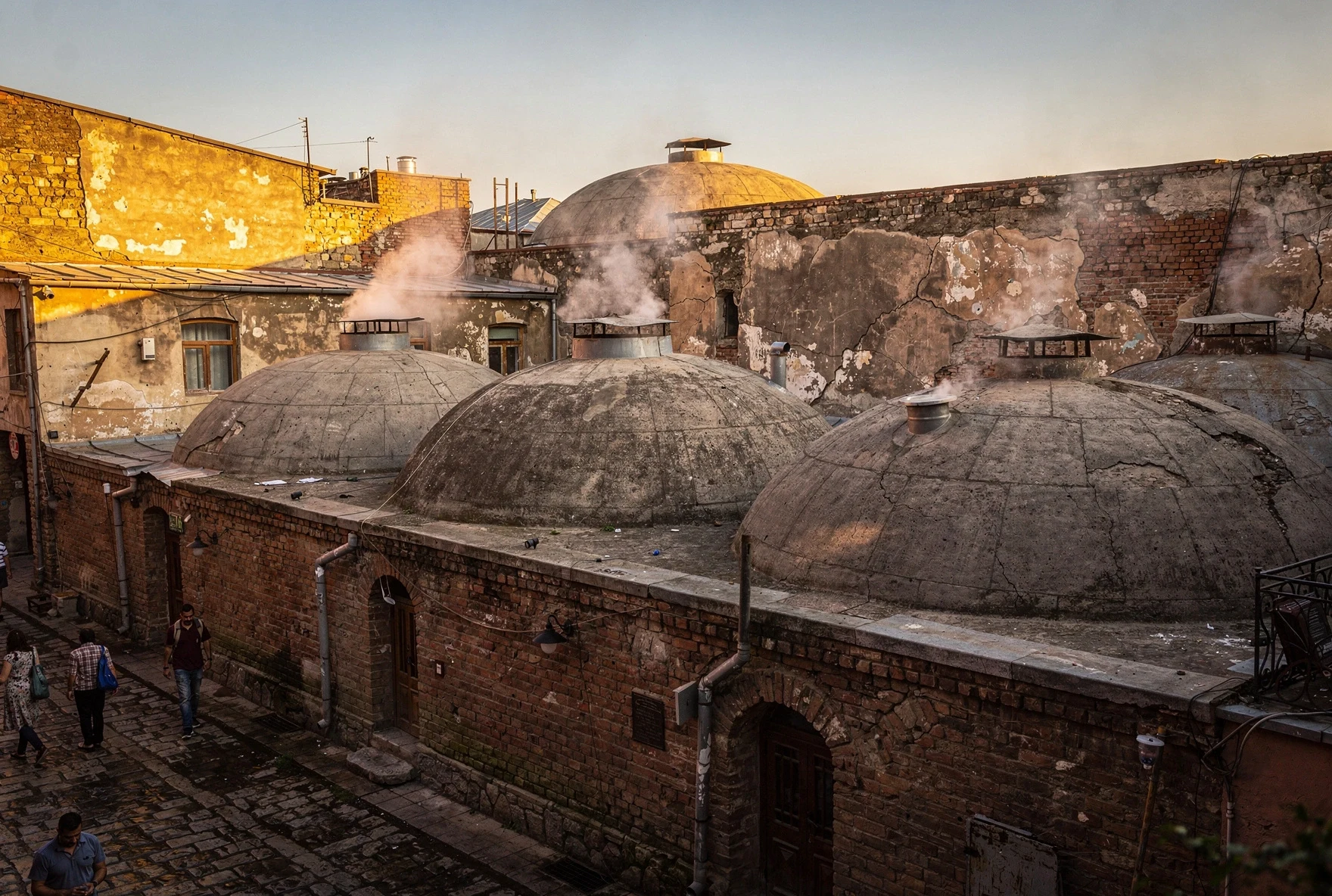
This is the one must-do in Tbilisi. The city is literally named after the hot springs — tbili means "warm" in Georgian. The sulfur baths in Abanotubani have been operating since the 13th century, and the experience hasn't changed much. You sit in hot sulfur water in a brick-domed chamber while someone scrubs your skin off with a rough mitt. It's aggressive, oddly relaxing, and you'll feel like a different person afterward.
Skip the public baths unless you're on a very tight budget — the private rooms are worth every lari. Gulo's Thermal Spa (formerly Royal Bath) is the best-maintained option. Orbeliani Baths (the famous blue-tiled facade) is fine but overpriced. Budget about 80-150 GEL ($30-55) for a private room with scrub. Book ahead on weekends.
Bath tip
Go on a weekday morning for the best experience. Weekend evenings are packed and rooms get booked out. Bring flip-flops — the floors are wet and warm. And yes, you're supposed to be naked. It's a bathhouse.
2. Walk Up to Narikala Fortress
The 4th-century fortress looming over Old Town is Tbilisi's most recognizable silhouette. You can take the cable car from Rike Park (2 GEL each way, accepts metro card), but the walk up through the botanical garden side is better if your knees allow it. The fortress walls are partially ruined and completely open — no tickets, no gates, no closing time. Just crumbling stone and panoramic views of the entire city.
The best time is sunset. The city turns gold, the Kura River catches the light, and you'll understand why everyone puts this on their list. Go past Kartlis Deda (Mother of Georgia statue) on the ridge for an even better vantage point with fewer people.
3. Get Lost in Old Town
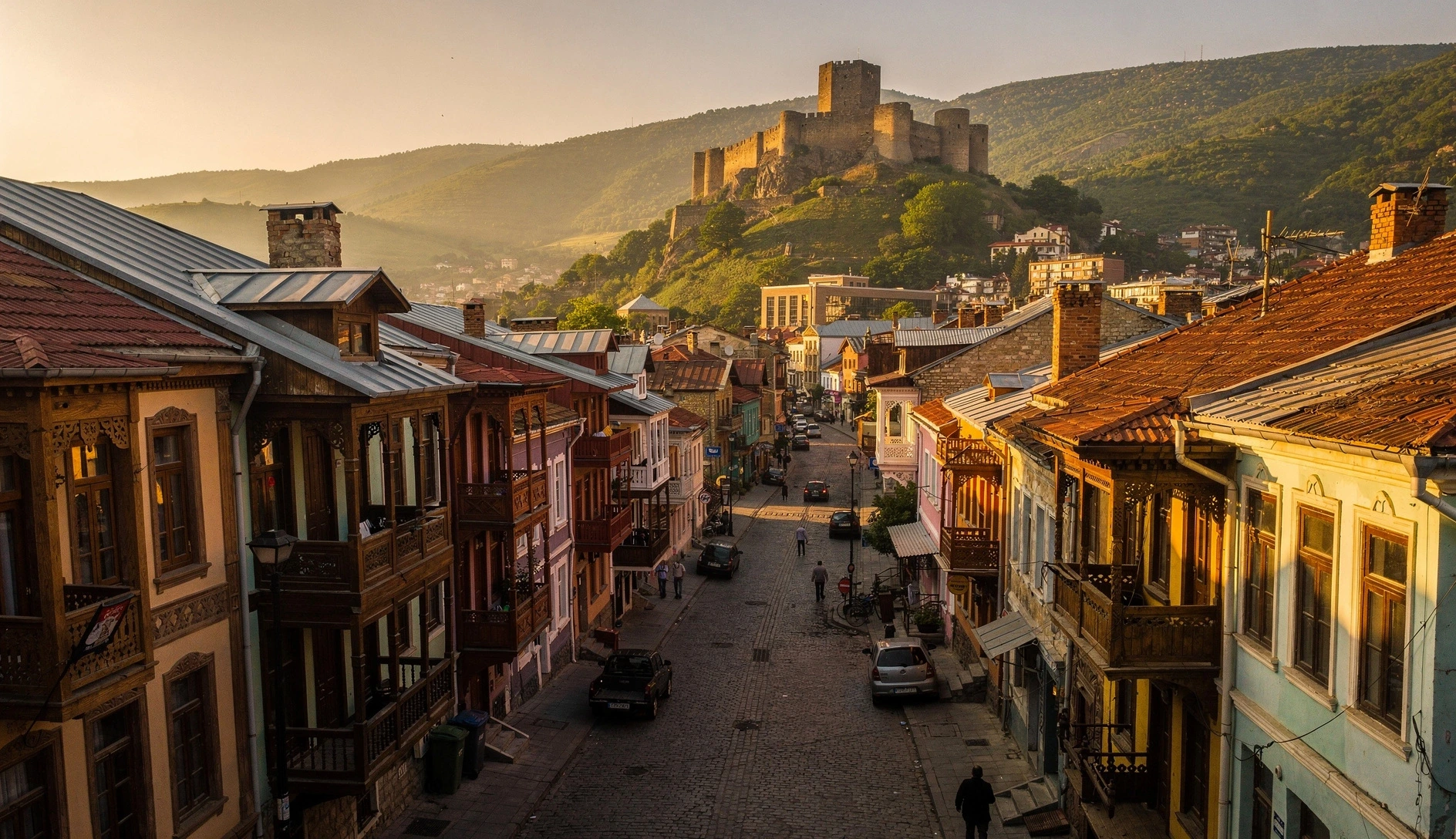
Tbilisi's Old Town isn't a museum — people actually live here. The crooked wooden balconies aren't decorative; they're someone's living room. Wander without a map. Duck into courtyards (most are open). Follow the sound of someone's radio through a stone archway. The streets between Meidan Square and Sioni Cathedral are the most photogenic, but the real character is in the unnamed alleys where laundry hangs between buildings and cats outnumber tourists ten to one.
The area around Betlemi Street is especially good — steep, quiet, and full of crumbling charm. If you end up at the clock tower (Rezo Gabriadze's leaning puppet theater), you've gone too far north but are in a fine spot for coffee.
4. Ride the Cable Car Over the Kura
The Rike Park cable car takes you from the modern park up to Narikala in about two minutes. At 2 GEL ($0.75) each way, it's the cheapest aerial view you'll get anywhere. The views are genuinely excellent — you float over the Kura River with Old Town sprawling below you. Use your metro card (available at any metro station for 2 GEL deposit).
5. Visit Anchiskhati Basilica
The oldest surviving church in Tbilisi, dating to the 6th century. It's tiny, dark, and smells like centuries of incense. Most tourists walk right past it because it doesn't look impressive from outside. That's the point. Step inside, let your eyes adjust, and spend five minutes in one of the oldest continuously used churches in the Caucasus. The polyphonic singing during Saturday evening or Sunday morning services is worth timing your visit around.
Food Experiences
Georgian food is one of the main reasons people come here, and it doesn't disappoint. But eating well in Tbilisi requires knowing where to go — tourist-trap restaurants on Shardeni Street serve mediocre food at inflated prices. Here's where to eat like you mean it.
6. Eat Khinkali at a Real Khinkali Joint
Forget the upscale restaurants. Khinkali — Georgia's giant soup dumplings — are best at dedicated sakhinkhle (khinkali houses). Zakhar Zakharich on Kote Abkhazi Street is the local favorite. It's always packed, service is brusque, and the khinkali are perfect. 1.20-1.50 GEL each (~$0.50). Order at least 5. Twist the top, bite a small hole, drink the broth, eat the dumpling, discard the top knot. Eating it with a fork and knife will get you looks.
7. Try Adjarian Khachapuri
The boat-shaped bread filled with cheese, topped with a raw egg and butter. Yes, it's as good as it looks. Retro on Lermontov Street serves one of the best in town. Mix the egg into the hot cheese with your fork, tear off the bread edges, and dip. Don't try to eat the whole thing alone unless you're skipping your next two meals.
8. Do a Wine Tasting
Georgia has been making wine for 8,000 years — literally the oldest wine-producing region on Earth. The traditional method uses qvevri (large clay vessels buried underground), and the amber wines are unlike anything you've had before. The Wine Underground bar in Old Town does good tastings with knowledgeable staff. For a more local experience, head to Vino Underground on Tabidze Street — small producers, natural wines, and someone who can actually explain what you're drinking.
Wine tip
Try at least one amber wine (also called orange wine). It's made from white grapes fermented with their skins in qvevri. The taste is intense, tannic, and nothing like European whites. You might hate it. You might become obsessed. Either way, it's an experience.
9. Eat at a Local Sakhli (Family Restaurant)
The best Georgian food isn't in restaurants — it's in someone's home. Several family-run sakhli (literally "house") restaurants operate in Tbilisi, serving home-cooked meals in a residential setting. The portions are enormous, the food is made by someone's grandmother, and you'll leave feeling like you visited a relative. Ask your guesthouse for recommendations — these places change and don't always have online presence.
10. Street Food Tour Through Dezerter Bazaar
The Dezerter Bazaar (near Station Square metro) is Tbilisi's biggest and most chaotic market. Named after the deserting soldiers who traded here during WWI, it's a sensory overload of churchkhela (walnut-grape candy), fresh herbs, spices, cheese wheels, and live chickens in the back. Come hungry. Buy churchkhela directly from the hanging strands (5-8 GEL each), grab lobiani (bean-stuffed bread) from a street vendor, and sample different cheeses. Saturday mornings are the liveliest.
Neighborhoods to Explore
Tbilisi's personality changes block by block. The Old Town gets all the attention, but the real character is spread across neighborhoods that most visitors never reach. Each has its own feel, its own cafés, its own pace.
Vera
The "cool" neighborhood. Specialty coffee shops on every corner, wine bars, art galleries, and leafy residential streets. Feels like Berlin if Berlin had balconies and sunshine. Walk Barnov Street and Vera Park.
Sololaki
The photogenic residential area climbing the hill behind Old Town. Art Nouveau facades, tiny wine cellars, rooftop views. Quieter than Old Town, more authentic. Best explored on foot with no destination in mind.
Marjanishvili
Tbilisi's creative hub. The Fabrika hostel/coworking complex anchors a strip of bars, thrift shops, and galleries. Younger crowd, more diverse food options (Korean, Indian, Mexican). Walk along Aghmashenebeli Avenue for the renovated European-style boulevard.
Mtatsminda
The hill district above the city. Take the funicular (2 GEL) to the top for panoramic views and the amusement park. On the way back down, walk through the quiet residential streets — they're gorgeous and empty.
Markets & Shopping
11. Browse the Dry Bridge Market
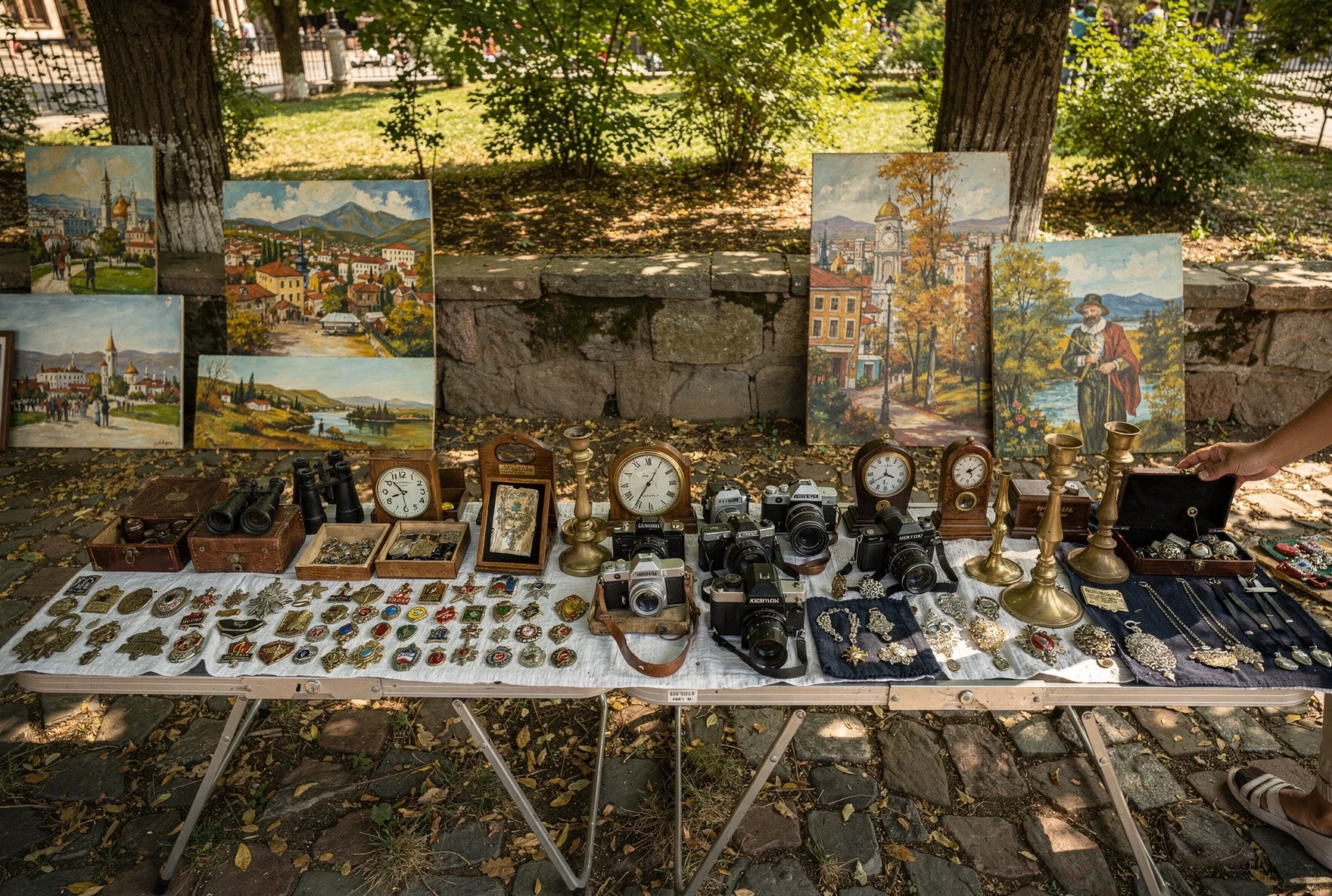
Tbilisi's famous flea market sprawls along the embankment near Dry Bridge every day, but weekends are the real show. Soviet medals, vinyl records, old cameras, oil paintings, vintage jewelry, ceramic pots, random brass objects of unclear purpose — it's all here, laid out on blankets and card tables. Haggling is expected. Most things are priced for tourists, so offer half and meet somewhere in the middle. Even if you buy nothing, the people-watching is excellent.
12. Explore the Dezerter Bazaar
Already mentioned for food, but the Dezerter Bazaar deserves its own entry. Beyond the food section, there's a sprawling area of cheap clothes, household goods, and the kind of organized chaos that defines Tbilisi's market culture. The cheese and spice sections alone are worth the metro ride. Go in the morning.
13. Wine Shopping on Kote Abkhazi Street
This street in Old Town has the highest concentration of wine shops in Tbilisi. 8000 Vintages is a good starting point — well-curated, staff speaks English, and they'll let you taste before buying. Expect to pay 15-40 GEL ($6-15) for a good bottle. Georgian wine is absurdly cheap compared to European equivalents.
Outdoor & Active
14. Hike to the Tbilisi National Park
Most visitors don't realize there's a national park touching Tbilisi's eastern edge. You can literally walk from the city center into proper forest within an hour. The Narikhala-to-Botanical Garden-to-Turtle Lake trail is the most accessible route — start at the fortress, descend through the botanical garden (5 GEL entry), and follow the trail uphill to Turtle Lake. About 2-3 hours one way. Bring water.
15. Swim at Turtle Lake (Kus Tba)
A small lake perched on a hilltop above the city, ringed by forest and a few cafés. Locals come here to swim in summer (June-September), jog the path, or just sit and do nothing. It's reachable by marshrutka (minibus) from Vake, or by hiking from the Botanical Garden. The water isn't crystal clear — this is a city lake — but it's clean enough and the setting is lovely.
16. Walk Aghmashenebeli Avenue
Tbilisi's longest pedestrian boulevard was renovated a few years ago and runs through the Marjanishvili/Chugureti district. Lined with restored 19th-century buildings, cafés, and restaurants, it's the city's best street for a long evening walk. Start near Marjanishvili metro and walk south. The buildings get more interesting as you go.
17. Rent a Bike Along the Kura
A paved cycling and walking path runs along sections of the Kura River embankment. It's not the Netherlands — the path has gaps and you'll share it with pedestrians — but on a cool morning it's a nice way to see the city. Bike rentals are available near Rike Park. About 10-15 GEL per hour.
For serious hikers
Tbilisi is a base for incredible day hikes. The Jvari Monastery hike (Mtskheta), Birtvisi Canyon (1 hour from Tbilisi), and Dashbashi Canyon (2.5 hours) are all doable as day trips. See our day trips guide for details.
Art, Culture & Nightlife
18. Georgian National Museum
The main branch on Rustaveli Avenue houses an extraordinary collection of Colchian gold jewelry from the 3rd millennium BC. The gold work is intricate and mind-bogglingly old. The Soviet occupation exhibit on the top floor is sobering and well-done. Budget 2 hours. Entry is 15 GEL.
19. Catch a Show at the Opera House
The Tbilisi Opera and Ballet Theater on Rustaveli Avenue hosts performances almost nightly. The building itself is beautiful — Moorish-style architecture from 1896. Tickets are absurdly cheap by European standards: 10-30 GEL ($4-11) for decent seats. Even if opera isn't your thing, the experience of watching a performance in this building at these prices is hard to pass up.
20. Night Out in Tbilisi
Tbilisi's nightlife scene is legitimate. It's not Berlin, but it's more interesting than most people expect. The scene splits roughly into wine bars (Vera/Sololaki area), cocktail bars (scattered, but Dive Bar on Tabidze and Warszawa on Asatiani are standouts), and clubs. If you're into techno, the club scene has grown significantly in recent years. Most bars don't get busy until 10-11 PM, and things run late.
21. Street Art Walk in Fabrika Area
The area around Fabrika (a converted Soviet sewing factory, now a hostel/coworking/bar complex) has the city's densest concentration of street art and murals. It's not curated or mapped — you just wander the side streets and courtyards of Marjanishvili/Chugureti and things appear. The art ranges from political to absurd. The courtyard of Fabrika itself always has something new.
22. Georgian Polyphonic Singing
Georgian polyphonic singing is a UNESCO Intangible Cultural Heritage, and hearing it live is one of those goosebump experiences you don't forget. Several restaurants host live folk performances (often during dinner), but the most authentic setting is a church service. Anchiskhati Basilica and Sioni Cathedral both feature polyphonic singing during regular services. It's free, it's real, and it's extraordinary.
Day Trips from Tbilisi
Some of Georgia's best sights are within easy reach of the capital.
| Destination | Distance | Highlight | Best For |
|---|---|---|---|
| Mtskheta | 25 min | Ancient capital, Jvari Monastery | History, UNESCO sites |
| Sighnaghi | 2 hours | Hilltop wine town, valley views | Wine, romance, photography |
| David Gareja | 2.5 hours | Cave monastery on Azerbaijan border | History, landscapes |
| Uplistsikhe | 1.5 hours | 3,000-year-old cave city | Archaeology, unique experience |
| Kazbegi | 3 hours | Gergeti Trinity Church, Caucasus peaks | Mountains, hiking, photos |
| Borjomi | 2.5 hours | Mineral water park, forest trails | Nature, relaxation |
Getting there
Mtskheta is easy by marshrutka (1 GEL from Didube station). Everything else is best done by rental car, shared taxi from the tourist info center, or a Bolt/Yandex driver for the day (~100-150 GEL). See our full day trips from Tbilisi guide.
23. Drive the Georgian Military Highway
The road from Tbilisi to Kazbegi is one of the most spectacular drives in the world. It climbs through the Greater Caucasus, passing medieval fortresses, Soviet-era monuments, and mountain villages. Even if you don't go all the way to Kazbegi, the drive up to the Jvari Pass (2,379m) and back makes for an unforgettable half-day. Read our complete Military Highway guide.
What to Skip
Not everything on the typical tourist checklist is worth your time. Here's what we'd pass on.
24. Chronicles of Georgia
The giant stone pillars near Tbilisi Sea. They're impressive from a distance in photos, but getting there requires a taxi to a desolate hilltop, the monument itself is poorly maintained, and there's nothing else around. Good for Instagram. Disappointing in person.
25. Shardeni Street Restaurants
The cobblestone strip in Old Town lined with restaurants that have English menus and inflated prices. The food is mediocre and exists purely for tourists. Walk one block in any direction and you'll find better food at half the price.
Also skip: The Mtatsminda amusement park (unless you have kids — it's dated and overpriced), the hop-on-hop-off bus (Tbilisi is a walking city), and any restaurant that has someone standing outside trying to get you to sit down.
How Many Days Do You Need?
2 Days (Minimum)
Old Town, sulfur bath, Narikala, one good restaurant dinner, one neighborhood walk. You'll see the highlights but feel rushed.
3-4 Days (Ideal)
Everything above plus Dry Bridge Market, wine tasting, a day trip to Mtskheta, exploring Vera/Marjanishvili, and one great night out. The sweet spot.
5-7 Days (Deep Dive)
Add day trips to Kazbegi or Sighnaghi, Turtle Lake, the National Museum, an opera, and time to wander without a plan. You'll start to feel the city's rhythm.
1 Week+ (Go Slow)
Settle into a neighborhood, find your regular café, do multiple day trips. Tbilisi rewards slow travel more than most cities. You'll leave understanding a place, not just seeing it.
Practical Tips
| Topic | Details |
|---|---|
| Getting around | Metro (1 GEL per ride), Bolt app (cheap rides, 5-15 GEL across town), walking. Skip official taxis. |
| Money | Georgian Lari (GEL). ~2.7 GEL = $1. Cards accepted almost everywhere. ATMs give GEL. |
| Language | Georgian script is unreadable. English is common in tourist areas, rare elsewhere. Learn "gamarjoba" (hello) and "madloba" (thanks). |
| Safety | Very safe, even at night. Normal city precautions apply. Stray dogs are everywhere but harmless. |
| Internet | Get a Magti SIM at the airport (10 GEL for 15GB). WiFi is good in most cafés and restaurants. |
| Tipping | Not expected but appreciated. 10% at restaurants if service was good. Round up for taxis. |
Save money
Tbilisi is already cheap, but you can stretch further: metro + walking beats taxis, eat at khinkali joints instead of tourist restaurants, buy wine from supermarkets (5-15 GEL bottles are excellent), and many of the best things — walking Old Town, Narikala, markets, churches — are completely free.
FAQ
Is Tbilisi worth visiting?
Absolutely. It's one of the most underrated cities in Europe — incredible food, stunning architecture, rich history, and prices that make Western Europe look like a scam. The only downside is getting here (limited direct flights from most countries).
Is Tbilisi safe for solo travelers?
Very safe. Georgia consistently ranks among the safest countries in the region. Solo female travelers report feeling comfortable walking at night. The main risk is overeating.
What's the best time to visit?
May and October are perfect — warm, dry, and not too crowded. Summer (July-August) is hot (35°C+). Winter is fine if you like cozy cafés and empty streets. Avoid January (cold, gray, dead).
How expensive is Tbilisi?
Budget travelers can manage on $25-30/day (hostel + street food + metro). Mid-range is $50-80/day (hotel + restaurants + activities). You'd have to try hard to spend over $150/day.
Do I need to know Georgian?
No, but learning a few words goes a long way. English is common among younger people and in tourist areas. Russian helps with the older generation. Google Translate works for menus.
Can I drink tap water?
Yes. Tbilisi tap water is safe and comes from mountain sources. Locals drink it. You'll taste the difference from chlorinated Western water. Bring a reusable bottle.
Written by The Georgian Guide Team
We've lived in Tbilisi for years and walked every neighborhood in this guide more times than we can count. Our sulfur bath opinions are strong and well-earned. Our khinkali consumption is professionally competitive.
Last updated: March 2026.
Related Articles
Tbilisi First-Time Visitor Guide
Everything you need to know for your first trip to the Georgian capital.
Where to Stay in Tbilisi
Neighborhood-by-neighborhood guide to Tbilisi accommodation.
Best Day Trips from Tbilisi
The best destinations within easy reach of the capital.
Best Restaurants in Tbilisi
Where to eat in Tbilisi — from hole-in-the-wall gems to fine dining.