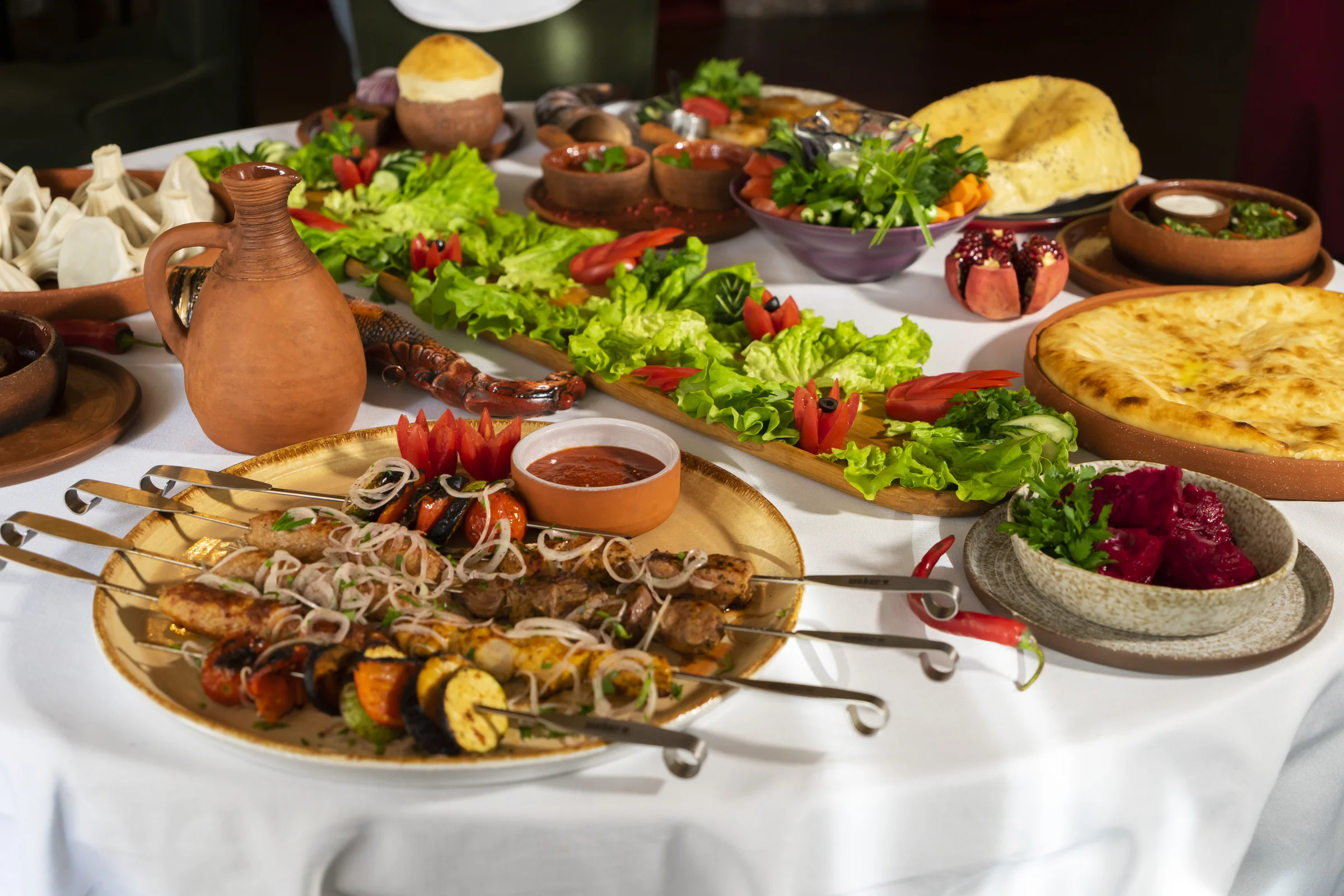
You'll hear about it before you see it. Someone will mention "supra" within your first 48 hours in Georgia, probably while gesturing at you to sit down and eat something. And then one evening — maybe at a friend's house, maybe at a winery in Kakheti, maybe at a wedding you somehow got invited to — you'll find yourself at a table so overloaded with food that you can't see the tablecloth.
That's the supra. Georgia's most important cultural institution isn't a museum or a church. It's a dinner party.
But calling it a dinner party is like calling the World Cup a kickabout. The supra is an elaborate, hours-long feast governed by centuries of tradition, led by a toastmaster, lubricated by truly heroic quantities of wine, and built on the sincere belief that no guest should ever leave a Georgian table hungry, sober, or unloved.
Here's everything you need to know before your first one.
What Exactly Is a Supra?
The word "supra" (სუფრა) literally means "tablecloth" in Georgian. Over centuries, it came to mean everything that sits on top of it — the feast itself.
A supra isn't just a meal. It's a structured social ritual combining food, wine, toasts, singing, and emotional bonding into something that can last anywhere from three to twelve hours. Georgians hold supras for weddings, funerals, baptisms, birthdays, holidays, business deals, and — most commonly — simply because guests have arrived and the fridge isn't empty.
There are two types: the festive supra (keipi) for celebrations, and the mourning supra (kelekhi) held after funerals. The rules differ — a kelekhi is sombre and formal, with strict toast sequences and no singing. A keipi can get loud, emotional, and go until dawn. This guide focuses on the festive kind, because that's what you'll likely experience as a visitor.
The Tamada: Georgia's Master of Ceremonies
Every supra has a tamada (თამადა) — a toastmaster who runs the entire evening. Think of them as a combination of host, emcee, philosopher, comedian, and drinking champion. The tamada decides when to toast, what to toast, and how long to speak. Everyone else follows their lead.
At a small family dinner, the tamada is usually the head of the household. At larger events — weddings, corporate gatherings, village celebrations — someone is chosen in advance, often weeks ahead. At a friends' get-together, someone simply gets nominated at the table.
The Bronze Tamada
In Tbilisi's Old Town, a small bronze statue of a tamada holding a drinking horn stands near the Sioni Cathedral. It's a replica of a 7th-century BC figurine found in Vani, proving Georgians have been throwing legendary dinner parties for nearly 3,000 years.
A good tamada needs several skills: eloquence, wit, emotional intelligence, and the ability to drink an enormous amount of wine while appearing completely sober. They must sense the mood of the table — knowing when to be philosophical, when to be funny, and when to let people talk. Getting drunk or losing control is considered deeply shameful for a tamada. At a full-length supra, a tamada might drink three litres of wine or more while maintaining composure.
The role is traditionally male, though this is slowly changing in modern Tbilisi. In rural Georgia and at formal events, you'll still almost always see a male tamada.
The Toasts: What They Mean and Why They Matter
Toasts aren't just a "cheers and drink" situation. Georgian toasts are structured mini-speeches — sometimes lasting five minutes or more — that follow a traditional sequence. The tamada delivers each one, and then individual guests can add their own words before everyone drinks.
The order varies, but a festive supra typically follows something like this:
| Order | Toast | What It Means |
|---|---|---|
| 1st | To God (ღმერთს) | Georgia is deeply Orthodox Christian. The first toast thanks God for the gathering. Even secular Georgians respect this tradition. |
| 2nd | To Peace (მშვიდობას) | Given Georgia's turbulent history — invasions, wars, and occupations — peace is never taken for granted. |
| 3rd | To Georgia (საქართველოს) | "საქართველოს გაუმარჯოს!" (Sakartvelos gaumarjos! — Victory to Georgia!). Often the most emotional toast. People sometimes stand. |
| 4th | To the Reason for Gathering | The birthday person, the newlyweds, the visiting guests — whoever prompted the supra. |
| 5th | To Parents | Honouring mothers and fathers — both living and deceased. Can get emotional. |
| 6th | To Ancestors / The Departed | Remembering those who've passed. Glasses are raised but often not clinked. A quiet, respectful moment. |
| 7th+ | To Children, Love, Friendship, Women, the Future... | The tamada continues as the spirit moves them. Late-night toasts get more personal and creative. |
The Golden Rule
Never interrupt the tamada or another person mid-toast. It's the single most disrespectful thing you can do at a supra. Eating during toasts is fine — talking is not.
Between the tamada's toasts, guests can offer alaverdi — their own words building on the tamada's theme. The tamada calls on people by name, or guests volunteer. This is where things get personal: people share stories, express gratitude, and occasionally reduce the whole table to tears.
Need the mechanics, not the mythology?
If you want the practical version of how Georgian toasts actually work — toast order, alaverdi, when to drink, and what foreigners usually get wrong — read our guide to the tamada and Georgian toasts.
The Wine: 8,000 Years of Practice
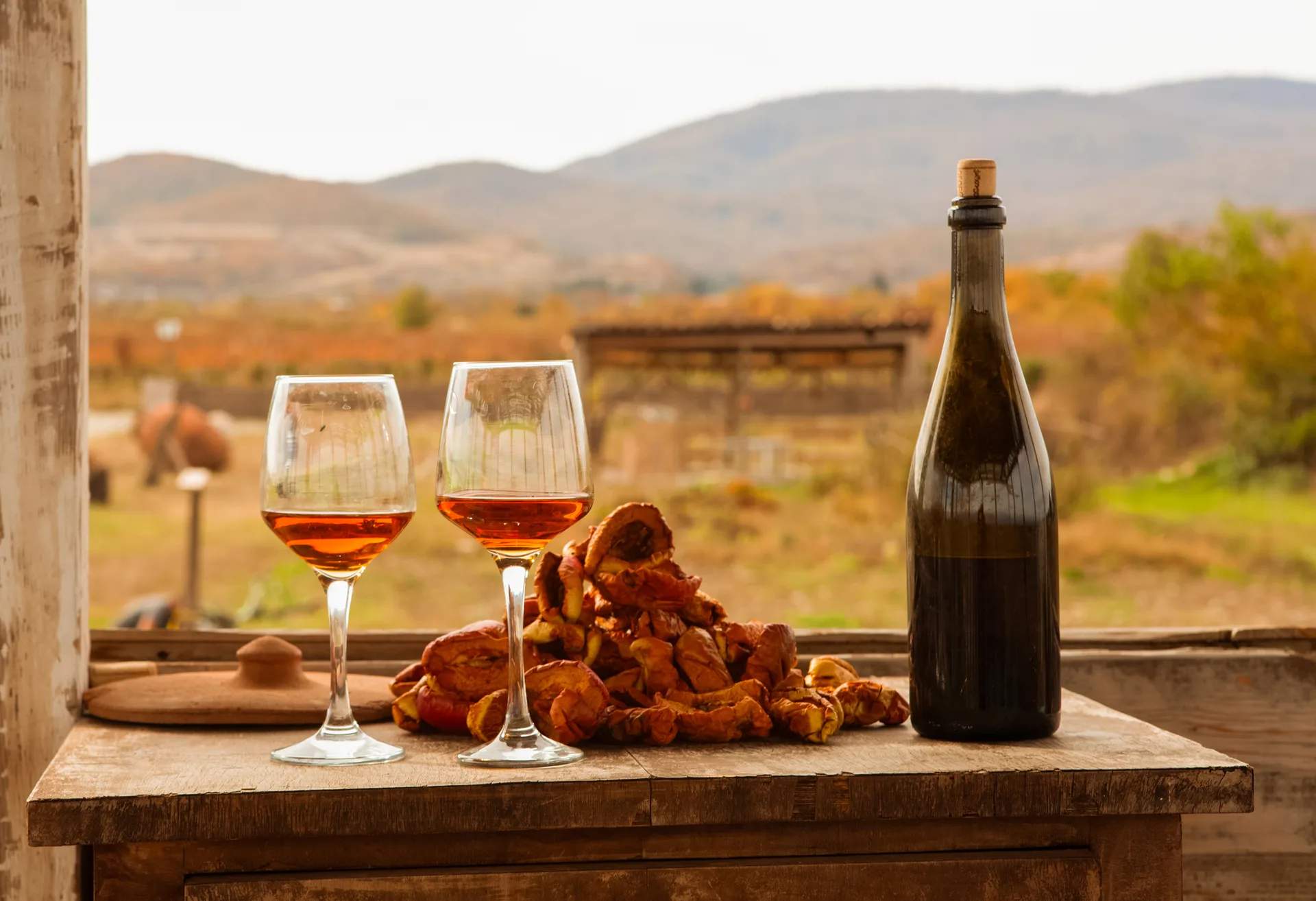
Georgia is the oldest wine-producing country on Earth. Archaeological evidence dates Georgian winemaking to roughly 6000 BC — predating European traditions by several thousand years. At a supra, wine isn't a beverage. It's a sacrament.
Most supra wine is homemade. Virtually every Georgian family with rural roots has a relative who makes wine — often in qvevri, large clay vessels buried underground that have been used since the Bronze Age. UNESCO recognized the qvevri method as an Intangible Cultural Heritage in 2013.
🍷 Drinking Horn (Kantsi)
The traditional drinking vessel at formal supras. You can't set it down — the only option is to finish it. Some hold over half a litre.
🏺 Qvevri Wine
Georgia's ancient clay-vessel winemaking method. The amber "orange" wine it produces is now trendy worldwide — Georgians have been drinking it for millennia.
🥃 Chacha
Georgia's grape brandy, often 50-60% alcohol. Sometimes served between toasts at livelier supras. Approach with extreme caution.
🫗 Full Glass Rule
You toast with a full glass and empty it completely. A half-full glass is considered disrespectful. Women and foreign guests usually get some leniency.
The most important thing to understand: at a supra, you drink when the tamada says to drink. Free-pouring and sipping between toasts is technically frowned upon, though in practice most people are relaxed about it, especially with foreigners. The tamada will often check that everyone's glass is full before each toast.
The Food: Why the Table Groans
An empty spot on a supra table is considered shameful. The host's reputation depends on abundance — not just quality, but sheer quantity. Dishes are placed on the table before guests arrive and continuously replenished throughout the evening. By the time you've identified everything in front of you, three more plates will have appeared.
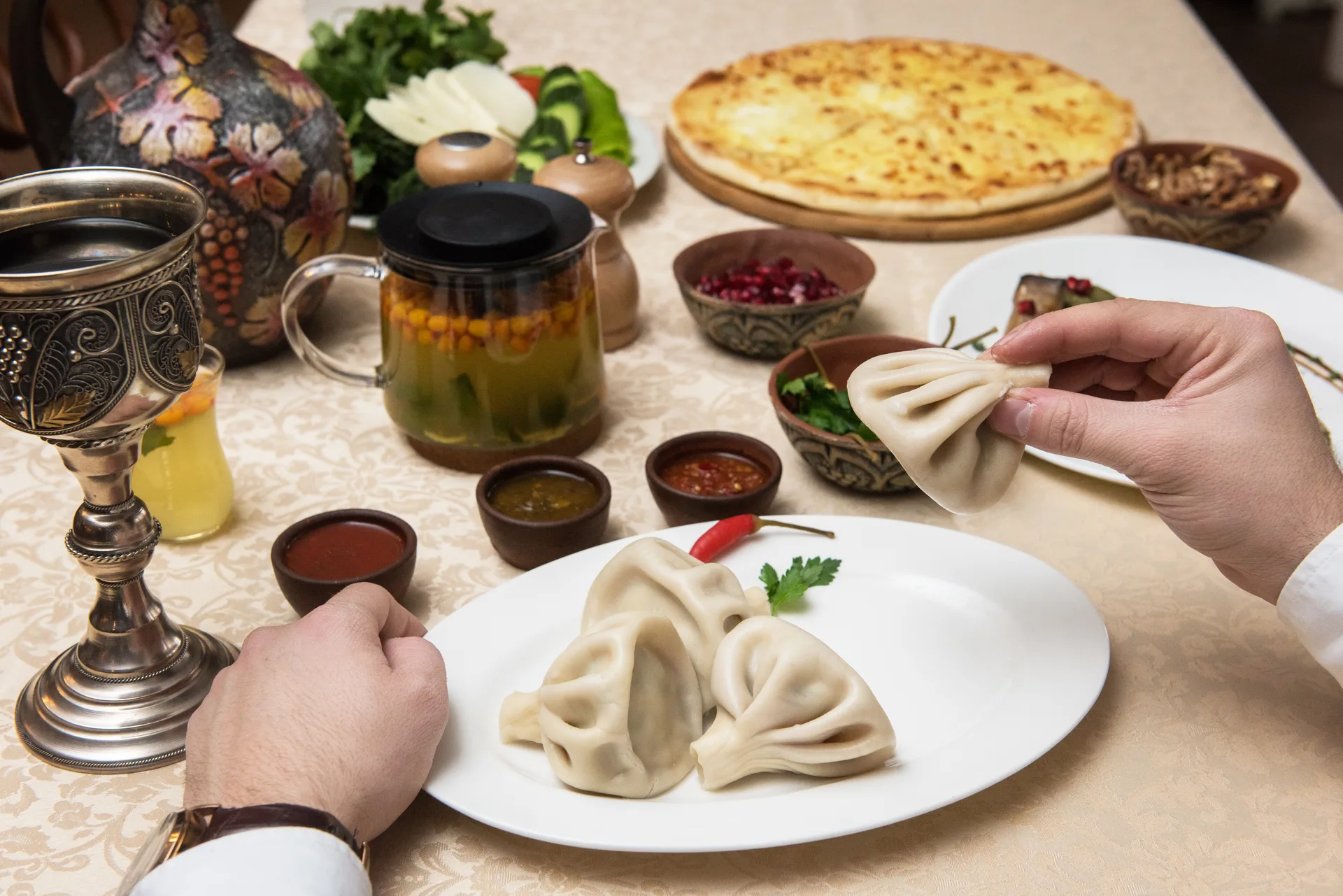
Here's what you'll typically find at a supra:
| Course | Typical Dishes | Notes |
|---|---|---|
| Cold starters | Pkhali (vegetable-walnut pâtés), badrijani (eggplant rolls), jonjoli (pickled blossoms), fresh herbs, cheese | Already on the table when you sit down |
| Bread | Shotis puri (brick-oven bread), mchadi (cornbread), lobiani (bean-filled bread) | Bread is sacred in Georgia — never throw it away |
| Khachapuri | Imeruli (round), Adjarian (boat-shaped with egg), Megruli (double-cheese) | The centrepiece. Multiple types often served at one supra. |
| Hot mains | Mtsvadi (grilled pork/veal), shkmeruli (garlic chicken), chanakhi (lamb stew), ojakhuri (fried potato + meat) | Arrive in waves throughout the evening |
| Khinkali | Georgia's famous soup dumplings — meat, cheese, mushroom, or potato fillings | Eaten with hands. Never use a fork. Bite, sip the broth, eat. Leave the top knob. |
| Sauces | Tkemali (sour plum), adjika (spicy pepper paste), satsebeli (tomato-walnut) | Put them on everything. Seriously. |
| Desserts | Churchkhela (walnut-grape candy), gozinaki (honey-walnut brittle), fresh fruit, pelamushi (grape pudding) | Often served alongside fruit at the end |
Pace Yourself
The single biggest mistake first-timers make is eating too much in the first hour. The food will keep coming for many hours. Start slowly. Take small portions. The host will insist you eat more regardless — that's their job.
The Music: Polyphonic Singing and Spontaneous Dancing
As the wine flows and the toasts deepen, music appears. Sometimes it's a professional ensemble hired for a wedding. More often, it's three or four men at the table who simply begin to sing.
Georgian polyphonic singing is extraordinary — multiple independent vocal lines weaving together in complex harmonies that UNESCO has recognized as a Masterpiece of Intangible Heritage. It's one of the oldest polyphonic traditions in the world, and hearing it at a supra, surrounded by people who've sung these songs since childhood, is genuinely spine-tingling.
Then someone will start a dance. Georgian dance ranges from the controlled, almost floating grace of kartuli (a romantic couple's dance) to the fierce, acrobatic footwork of khorumi (a war dance). At a supra, it's usually somewhere in between — joyful, improvised, and enthusiastically encouraged. Don't be surprised if you get pulled in.
Types of Supra
| Type | Occasion | Mood | Key Differences |
|---|---|---|---|
| Keipi (festive) | Weddings, birthdays, holidays, guests arriving | Joyful, loud, long | Singing, dancing, creative toasts, wine flowing |
| Kelekhi (mourning) | After funerals | Sombre, respectful | No singing, no clinking glasses, strict toast order, shorter |
| Qorwinili (wedding) | Georgian weddings | Maximum grandeur | 200-500+ guests, professional tamada, live band, can last all night |
| Casual supra | Friends, family dinners | Relaxed, warm | Fewer toasts, lighter rules, more conversation |
How to Survive Your First Supra
If you're invited to a supra — and if you spend any meaningful time in Georgia, you will be — here's how to get through it without offending anyone or ending up under the table:
1. Don't Refuse Invitations
Declining a supra invitation is considered rude. Even if you can only stay briefly, show up. Your hosts will understand if you leave early — but not coming at all is a slight.
2. Bring Something
Wine, sweets, or flowers for the host. Never arrive empty-handed. It doesn't need to be expensive — the gesture matters.
3. Listen During Toasts
When the tamada or anyone else is speaking, stop talking. Period. Eating is okay. Chatting with your neighbour is not.
4. Know Your Limits
Nobody expects a foreigner to match Georgian drinking stamina. Sip instead of draining your glass. Most hosts will gracefully pretend not to notice.
5. Say "Gaumarjos!"
The Georgian "cheers" — pronounced "gah-mar-JOS." It literally means "to victory." Use it every time you raise your glass. Everyone will love you for it.
6. Prepare a Toast
As a foreign guest, you will almost certainly be asked to make a toast. Keep it short, sincere, and mention Georgia positively. Thank your hosts. You'll get a standing ovation.
The Foreign Guest Advantage
Being a foreigner at a Georgian supra is genuinely wonderful. You'll be treated like royalty, forgiven for any mistakes, and your hosts will beam with pride that you're experiencing their culture. When in doubt, smile, eat, and say "gaumarjos." That covers about 90% of situations.
How to Experience a Supra as a Tourist
Getting invited to a private supra takes time and genuine relationships. But there are several ways tourists can experience the tradition:
| Option | Authenticity | Cost | Details |
|---|---|---|---|
| Wine tour with supra | High | $80–150 | Full-day Kakheti tours often include a supra at a family winery. The best option for most visitors. |
| Supra restaurants | Medium | $20–40 | Some Tbilisi restaurants recreate the supra atmosphere with live music, toasts, and abundant food. |
| Cooking class + dinner | Medium-High | $40–80 | Cook Georgian food, then sit down for a supra-style feast. Popular in Tbilisi and Kakheti. |
| Guesthouse dinners | High | $15–25 | Stay at a family guesthouse in Kakheti, Svaneti, or Tusheti. Evening meals often become impromptu supras. |
| Make Georgian friends | Maximum | Free | The real deal. Spend time in Georgia, befriend locals, and the invitations will come naturally. |
Essential Supra Phrases
| Georgian | Pronunciation | Meaning |
|---|---|---|
| გაუმარჯოს! | gah-mar-JOS | Cheers! / To victory! |
| ალავერდი | ah-lah-VER-dee | "I pass the toast to you" — when someone is invited to speak |
| მრავალჟამიერ! | mrah-val-zhah-mee-AIR | Long life! (said after toasts to people) |
| ძალიან გემრიელია | DZAH-lee-an gem-ree-EL-ee-ah | It's very delicious (your host will glow) |
| მადლობა | mad-LOB-ah | Thank you |
| სტუმარი ღვთისაა | STOO-mar-ee GHVT-ee-sah | "A guest is from God" — the saying that explains Georgian hospitality |
Why the Supra Matters
Georgia has been invaded, occupied, divided, and nearly erased from the map more times than most countries have existed. The Persians, Mongols, Ottomans, Russians — everyone has had a go. Through all of it, the supra survived. It's not just a tradition. It's a form of cultural resistance.
The supra kept Georgian identity alive during the Soviet era, when public expressions of national pride were dangerous. Families gathered around tables in their homes, toasted to Georgia, sang Georgian songs, and kept the flame burning. The tamada became a guardian of language, memory, and values at a time when those things were under threat.
Today, the supra remains the heartbeat of Georgian social life. It's where families reconnect, where business deals are sealed (Georgians trust people they've feasted with), where grieving happens, and where joy is multiplied. Understanding the supra is understanding Georgia.
სტუმარი ღვთისაა — "A Guest Is from God"
This Georgian proverb isn't just a saying — it's a lived value. The supra exists because Georgians genuinely believe that hosting someone well is a sacred duty. If you ever feel overwhelmed by the generosity at a Georgian table, know that your hosts consider it their honour, not their obligation.
Frequently Asked Questions
Can I attend a supra if I don't drink alcohol?
Yes. While wine is central, nobody will force you. Politely explain and you can toast with water, juice, or lemonade. Some hosts might be surprised, but they'll respect it.
How long do I have to stay?
There's no strict minimum, but leaving before the toast to the departed (usually 1-2 hours in) can feel premature. Three hours is a comfortable minimum for a casual supra. At weddings, expect 5+ hours.
Is there vegetarian food at a supra?
Plenty. Georgian cuisine has an unusually strong vegetarian tradition — pkhali, badrijani, lobio (beans), various cheeses, khachapuri, salads, and bread. You won't go hungry.
Should I offer to help clean up?
You can offer, and it will be appreciated, but expect to be firmly turned down. Georgian hosts rarely accept help from guests. Offering once is polite. Insisting might embarrass them.
Can women be tamada?
Traditionally no, but attitudes are shifting. In modern Tbilisi, among younger groups, women occasionally take the role. At formal or rural supras, the tamada is still almost always male.
Written by The Georgian Guide Team
We've lost count of the supras we've attended — from intimate family dinners in Kakheti to 300-person weddings in Tbilisi. After years of living in Georgia, the supra remains our favourite part of Georgian culture.
Last updated: February 2026.