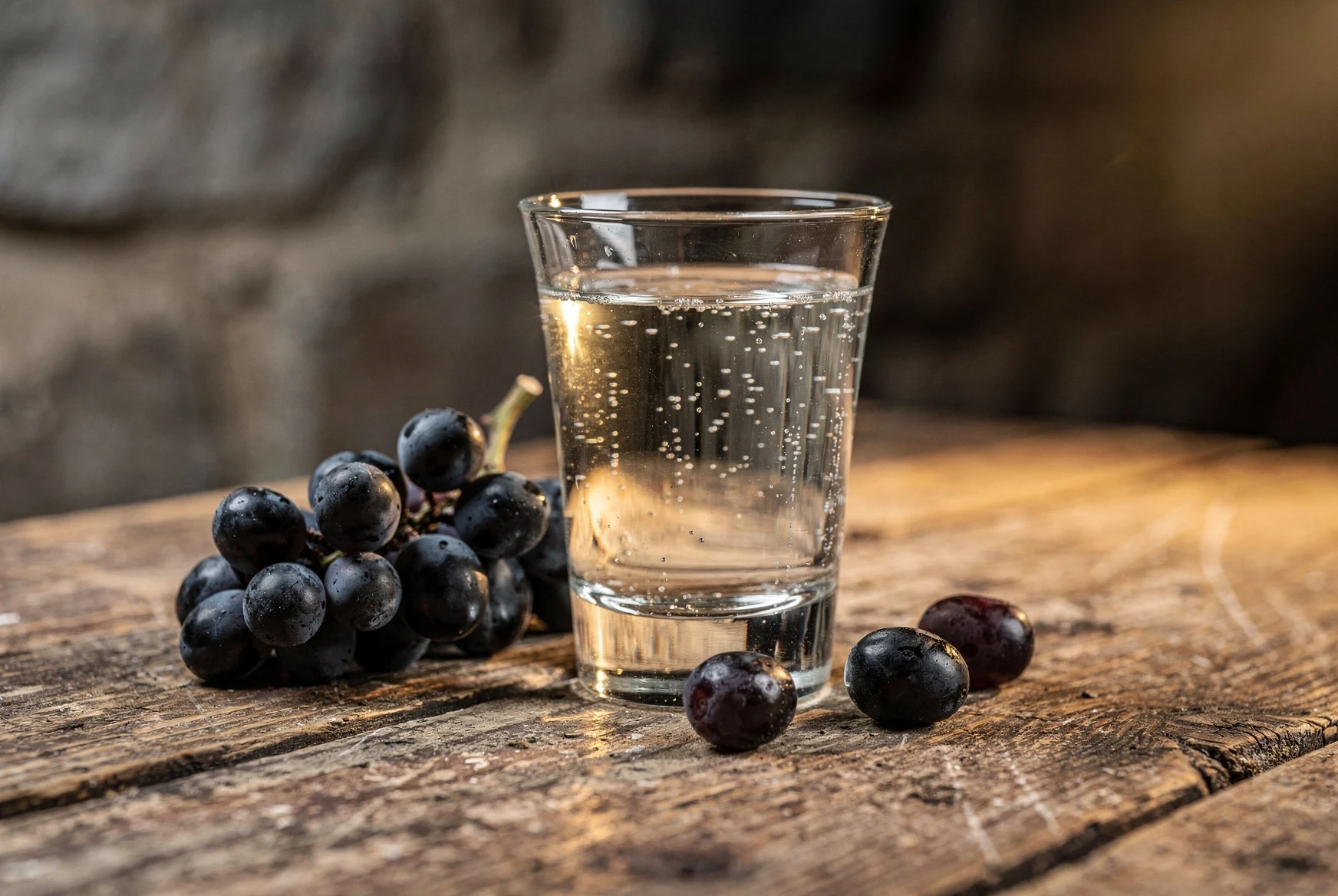
If Georgian wine is the charming diplomat of the local drinks scene, chacha is the cousin who shows up late, kisses everyone on both cheeks, and immediately starts making questionable decisions. It is Georgia's grape spirit. Clear, strong, homemade more often than not, and offered with the kind of cheerful generosity that should make any sensible person at least slightly nervous.
Travelers hear about chacha early. Usually in one of three settings: at a family table in Kakheti, in a guesthouse somewhere in the mountains, or from a Georgian friend saying "try just one" with the confidence of someone who does not have to wake up in your body tomorrow morning.
This guide is the practical version. What chacha actually is. Why the same word also refers to leftover grape material after winemaking. How strong it tends to be. Why homemade bottles vary from excellent to mildly alarming. Where tourists usually encounter it. And how to drink it without turning a good evening into a cautionary tale.
What is chacha, exactly?
Chacha is Georgia's traditional grape spirit, usually distilled from the pomace left behind after winemaking: skins, seeds, stems, and bits of pulp. If you know Italian grappa, the comparison is fair. If you know Balkan rakia, the social energy is similar even if the base ingredient is different. If you know neither, think of chacha as the strong second life of Georgian wine.
This is where the terminology gets mildly annoying. In Georgian wine writing, chacha can refer both to the finished spirit and to the grape leftovers used to make it. Context usually tells you which one people mean. If someone says a wine was fermented on its chacha, they are talking about skins and stems. If someone says "have some chacha," they are not offering agricultural by-product in a cup. Usually.
The short version
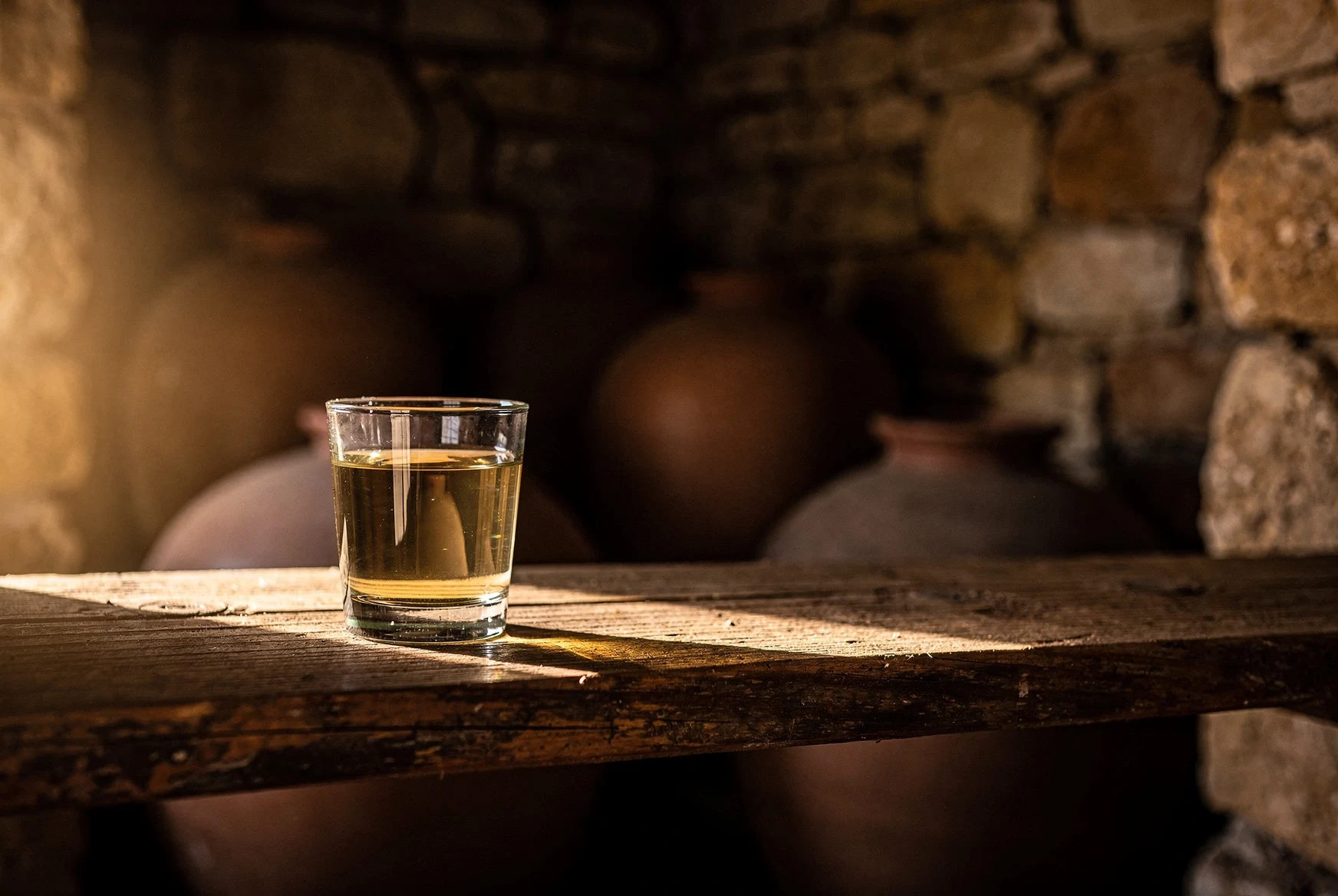
Chacha is a strong Georgian grape spirit, most often clear and unaged, though some commercial versions are rested in oak and turn golden. The clear rustic version is what travelers most commonly get offered in homes and guesthouses.
How chacha is made
The logic is simple and very Georgian: if grapes have already gone into wine, nobody is throwing the rest away. The leftover pomace can still ferment and still contains alcohol potential, so it gets distilled into spirit. In winemaking regions like Kakheti, this is the obvious next move rather than some niche craft project.
1. Wine gets made first
After grapes are crushed and fermented for wine, the remaining skins, stems, seeds, and pulp are collected rather than discarded.
2. Pomace ferments
The leftover grape matter is left to ferment further, developing enough alcohol to make distillation worthwhile.
3. It gets distilled
Small-scale producers run it through a still and collect the spirit. Homemade batches vary a lot in quality and strength.
4. It gets shared aggressively
The finished chacha ends up at family tables, supra sidebars, village kitchens, winery tastings, and guesthouse dinners where visitors discover that one tiny glass can still hit like a train.
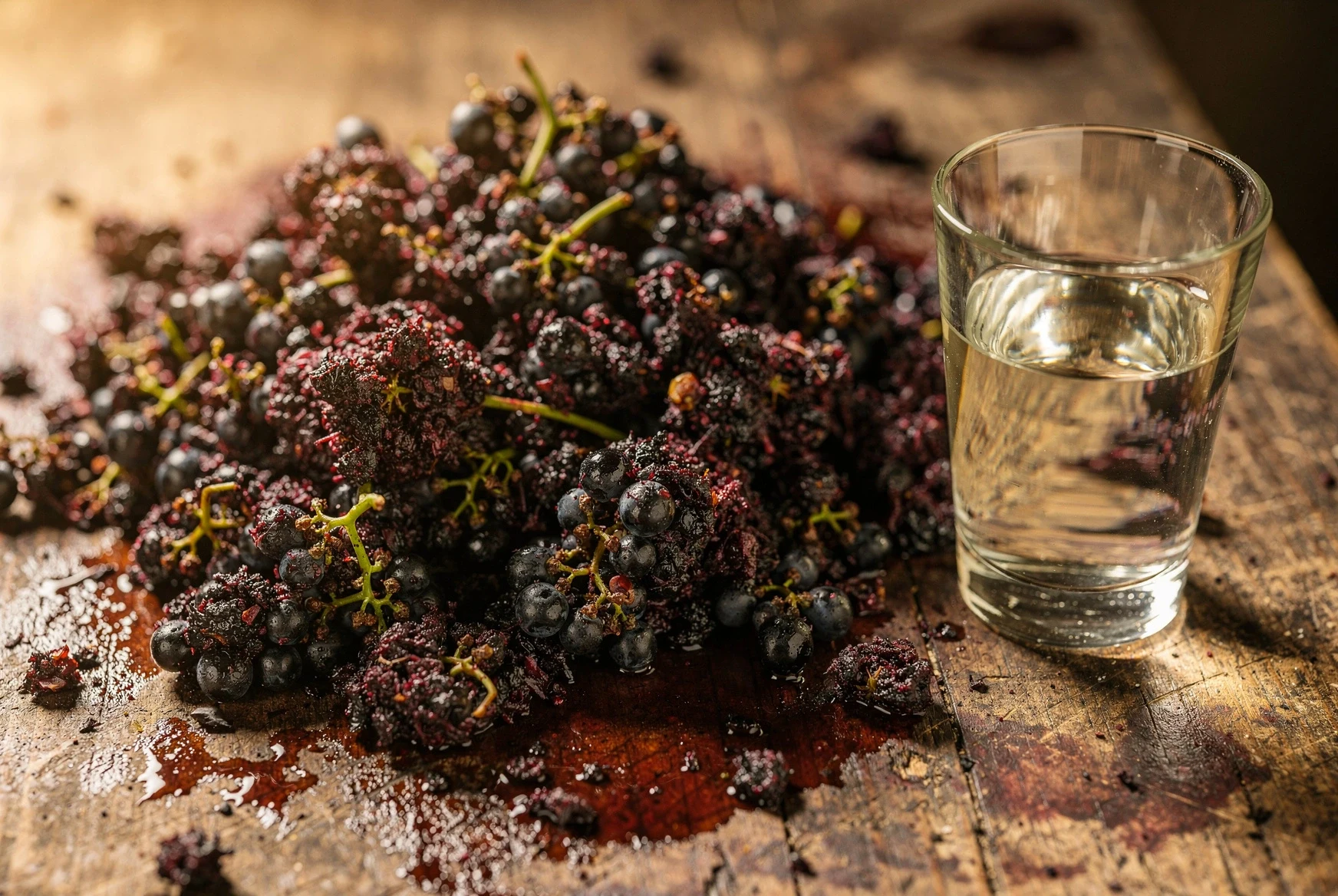
Commercial producers may filter more carefully, control the proof, and release cleaner bottlings. Homemade chacha is more variable. Sometimes beautifully clean and fragrant. Sometimes rough enough to make you briefly reconsider your life strategy. That variation is part of the culture, but it is also why travelers should stop romanticizing every unlabeled plastic bottle they meet.
| Style | What it is like | Who it suits |
|---|---|---|
| Homemade clear chacha | Rustic, strong, often a little wild around the edges | Curious drinkers who want the real household version |
| Commercial bottled chacha | More consistent, cleaner, easier to compare | First-timers who want less chaos |
| Oak-rested chacha | Softer, warmer, sometimes closer to brandy | People who prefer depth over raw punch |
How strong is chacha?
Usually somewhere between 40% and 65% ABV, though homemade versions can wander outside that range in both directions. If someone in a village tells you it is "light," that statement may be emotionally sincere while chemically false.
This is the main traveler problem. People hear "grape spirit" and assume something soft, floral, and basically manageable. Sometimes yes. Often no. Chacha can drink deceptively smoothly and then land all at once. The first sip may feel civilized. The second one is where you start signing contracts with consequences.
Do not judge by glass size
Chacha often comes in small glasses, but that is not a sign of weakness. It is a sign that people who know what it does have already learned a lesson you do not need to learn twice.
What chacha tastes like
Good chacha can be surprisingly elegant: grapey without becoming sweet, dry, warm, clean, sometimes slightly herbal, sometimes with a faint nutty or earthy edge depending on how it was made. Bad chacha tastes like heat, regret, and unfinished maintenance work.
The homemade versions people rave about are usually the ones that stay aromatic and clean without feeling industrial. The roughest bottles are not always dangerous, but they are often boring in the least fun way: just raw alcohol with national pride attached to it.
Better chacha usually feels
Clean, dry, grapey, and warm without scorching the entire inside of your face.
Worse chacha usually feels
Harsh, hot, flat, and memorable for the wrong reasons. Hospitality may still be excellent. The liquid may not be.
Where travelers usually encounter chacha
Most visitors do not go looking for chacha as a primary reason to travel. Chacha tends to find them. It appears in rural guesthouses, at winery lunches, after a long toast at a supra, at harvest time in Kakheti, and occasionally in restaurants trying to show that they are not just here to pour anonymous house wine.
| Setting | What to expect | Best move |
|---|---|---|
| Family supra | Offered generously, often homemade, not always measured | Sip slowly and keep eating |
| Winery lunch or tasting | More context, often cleaner product, easier comparison | Ask how strong it is before pretending confidence |
| Mountain guesthouse | Friendly, informal, occasionally dangerous to tomorrow morning | Accept hospitality, not endless refills |
| Restaurant or bar | More control, usually bottled, less folklore per glass | Good place for a first taste |
If you want the broader wine context before chasing the spirit, start with our guide to Georgian wine culture. If your real goal is understanding the dinner-table ritual around it, read the Georgian supra guide. Chacha makes more sense when you place it inside the bigger hospitality system rather than treating it like a standalone bar product.
How to drink chacha without acting like an idiot
Eat first
This is not a pre-dinner minimalist aperitif. Chacha behaves much better when there is actual food involved.
Sip, do not prove a point
No one worthwhile is impressed by speed. Georgia already has plenty of people who can outdrink you. Let them keep the title.
Ask what it is
Homemade or commercial? Clear or oak-aged? Roughly how strong? These are reasonable questions, not weakness.
Know when to slow down
If the room is suddenly feeling warmer, funnier, and more historical, you may already be behind on decision-making.
Polite refusal exists
If you do not want another glass, you can smile, thank your host, and say you are good for now. Georgians respect warmth more than robotic rule-following. A gracious slowdown works better than acting scandalized by strong liquor.
What chacha costs
Typical 2026 price logic
Commercial bottles are the better first buy if you actually want consistency. Homemade chacha is more interesting culturally, but that does not make it a smart airport-duty-free substitute or a guaranteed quality play.
Common mistakes visitors make with chacha
The main errors
Treating it like vodka, trusting every homemade bottle equally, drinking it fast to be polite, assuming one shot is trivial, and mixing it recklessly with an already serious amount of wine.
Another mistake is fetishizing the rustic version too hard. Yes, homemade chacha can be brilliant. It can also just be rough spirit in a recycled bottle. Georgia is full of lovely traditions. Not every manifestation of them is automatically your best possible drink.
Frequently asked questions
Is chacha the same as grappa?
Not exactly, but it is the closest easy comparison. Both are grape pomace spirits. Chacha is the Georgian version, with its own production habits, serving culture, and homemade traditions.
Is chacha always clear?
Most of the traditional versions travelers meet are clear. Some bottled versions are rested in oak and take on a golden color.
How strong is homemade chacha?
Often around 50-60% ABV, sometimes more, sometimes less. The problem is that people do not always know or tell you exactly.
Should first-timers start with homemade or bottled chacha?
Bottled is usually the safer first move because it is more controlled and easier to compare. Homemade is more cultural, but also less predictable.
Do I have to drink chacha at a supra?
No. Wine is far more central to the supra tradition. Chacha may appear, especially later, but you are not failing Georgia if you pace yourself and stay with wine or water.
Written by The Georgian Guide Team
We live in Tbilisi and have been offered chacha in vineyards, city apartments, mountain guesthouses, and family dinners where "just a little" turned out to be a dangerous lie. We like the good stuff, respect the rough stuff, and strongly prefer learning about both while eating actual food.
Last updated: March 2026.
Related Articles
Georgian Wine Culture
The wider context: grapes, qvevri, supra logic, and why wine still runs through Georgian social life.
The Georgian Supra
The full guide to toasts, tamadas, long dinners, and the hospitality system chacha sometimes crashes into.
Qvevri Wine in Georgia
If chacha is the afterlife of grapes, qvevri is where the wine story begins.
Kakheti Wine Region
The easiest place to understand why Georgia treats grapes like a whole civilizational project.