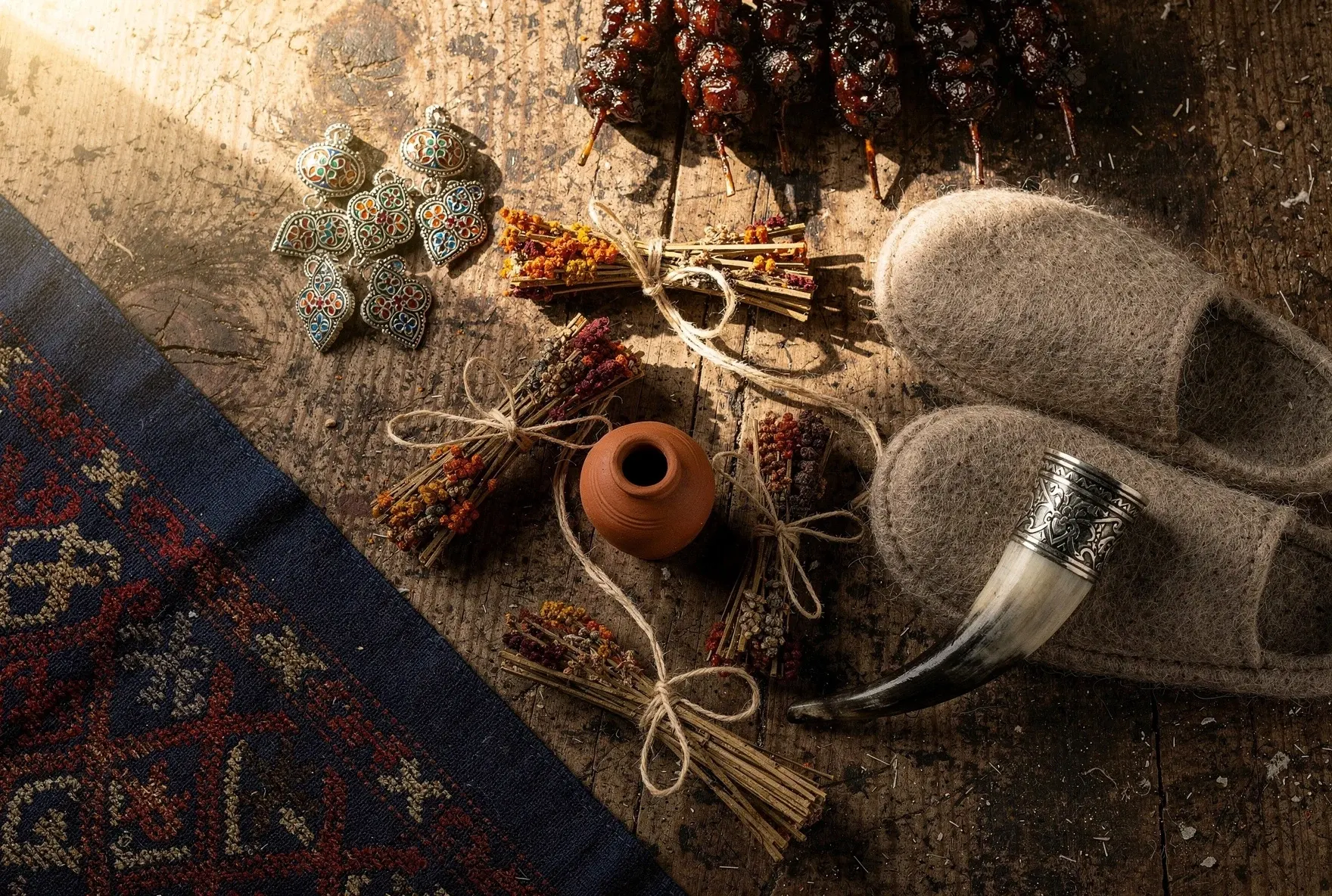
Most souvenir shopping in Georgia goes like this: you wander into a shop in Old Town Tbilisi, get overwhelmed by fridge magnets shaped like khachapuri, buy a bottle of wine and some churchkhela, and call it done.
That's fine. But Georgia has genuinely extraordinary crafts — some of them centuries old, some nearly extinct, all of them more interesting than a magnet. The problem is knowing what's actually worth buying versus what's mass-produced junk aimed at tourists, and where to find the real stuff.
After five years of living here and watching friends panic-shop at the airport, I've figured out what's worth bringing home. This guide covers the crafts that are uniquely Georgian, where to buy them without getting ripped off, and what to skip.
The Crafts Actually Worth Buying
Georgia has a handful of crafts that you genuinely cannot find anywhere else. Not "similar to what they make in Turkey" — actually unique. Here's what to prioritize.
Cloisonné Enamel (Minankari)
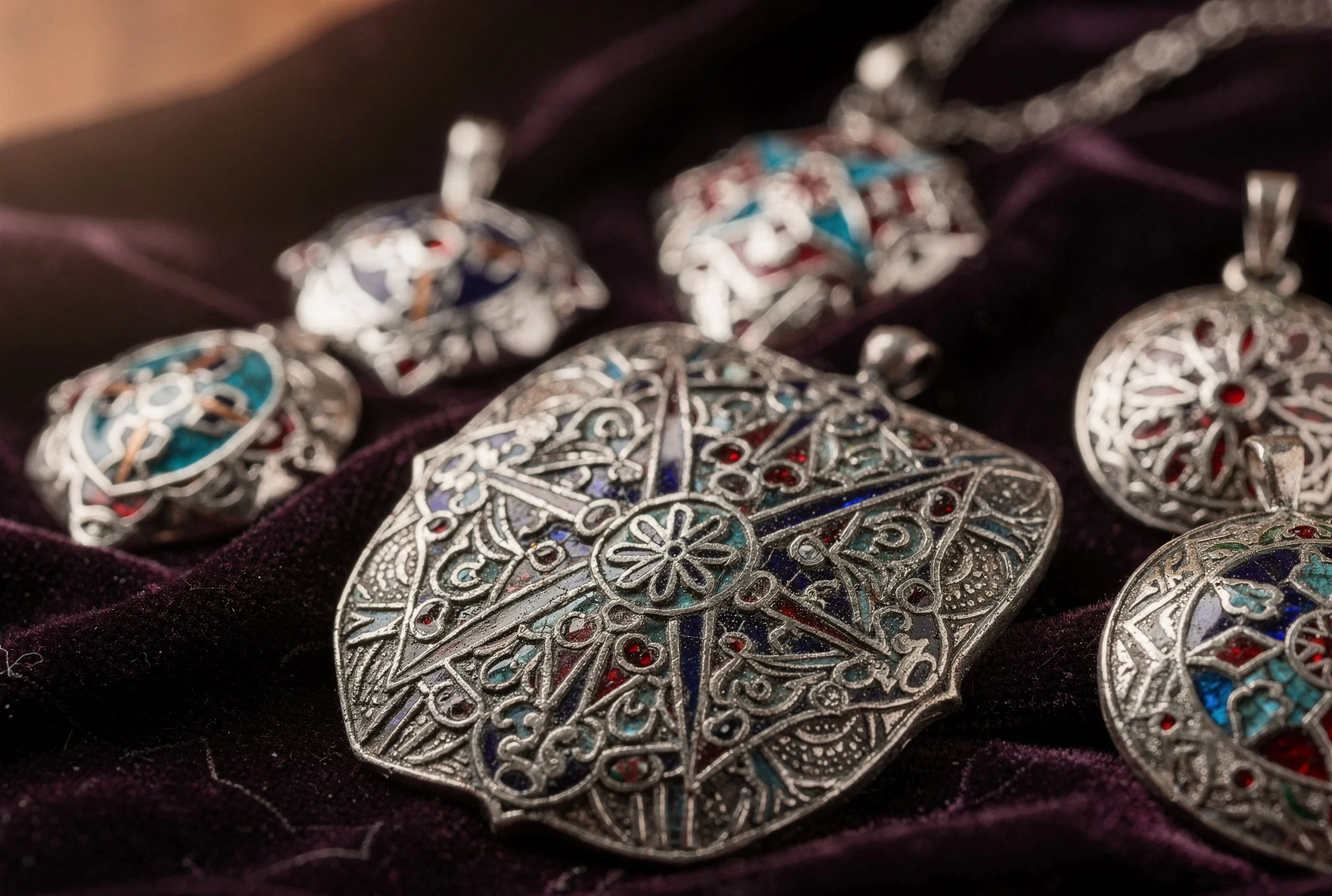
This is the one. If you buy a single souvenir in Georgia, make it minankari — cloisonné enamel jewelry. The technique involves soldering thin silver or copper wire into intricate patterns, then filling the cells with coloured enamel and firing them at high temperatures. Georgia has been doing this since at least the 8th century, and the quality of medieval Georgian enamel rivals anything produced in Byzantium.
Today you'll find minankari pendants, earrings, rings, and brooches in practically every souvenir shop. The quality varies enormously. Machine-stamped pieces from China cost 5–10 GEL. A handmade piece from a proper artisan starts at 80–150 GEL and can run into the thousands for complex work.
How to Spot Real Minankari
Look at the back of the piece. Handmade enamel will have slight irregularities — the wire won't be perfectly uniform, and you'll see tool marks on the metal. Mass-produced pieces are suspiciously perfect and lightweight. Also check the price: if a "silver enamel pendant" costs 15 GEL, it's not silver and it's not handmade. Real artisans are happy to explain their process — ask.
Lurji Supra (Blue Tablecloths)
The lurji supra — literally "blue tablecloth" — is one of Georgia's most recognizable textiles. Traditionally made by block-printing indigo patterns onto cotton fabric, these tablecloths have been used at Georgian feasts (supras) for centuries. The geometric and floral patterns are distinctly Georgian, and a good one looks stunning on any table.
The bad news: most "lurji supra" sold today are machine-printed polyester. They look okay from a distance but feel cheap and the colours fade fast. The Academy of Arts in Tbilisi still has a workshop that produces genuine hand-printed versions on cotton. It's the difference between a 15 GEL tourist piece and a 150+ GEL heirloom.
Carpets and Kilims
Hand-woven Caucasian carpets and kilims are among the most beautiful textiles in the world, and Georgia — particularly Kakheti — has a strong weaving tradition. Kakhetian kilims traditionally feature pairs of animals in symmetrical designs and were woven to mark significant occasions like weddings.
Most carpets sold in Tbilisi today are antique or semi-antique, sourced from villages across the Caucasus. Prices range from a few hundred GEL for a small kilim to several thousand for a large, fine-condition piece. If you're serious about buying, the Dry Bridge flea market and specialty shops in Chardin Street are the places to look.
Felt Crafts
Georgia has a long tradition of felting wool, and in recent years this has experienced a revival. You'll find felt slippers, hats (including traditional Svan caps), bags, toys, and decorative pieces. Felt is one of the best value souvenirs — handmade felt slippers cost 25–50 GEL and actually hold up well. The Svan felt cap (with its distinctive round shape) is particularly iconic.
Clay Pottery and Ceramics
Georgian pottery ranges from traditional to contemporary. The classics include ketsi (clay cooking dishes), small decorative qvevri (the vessels used for winemaking), and marani (wine cellar) figurines. Contemporary ceramics studios in Tbilisi produce beautiful modern tableware drawing on traditional forms.
For traditional pieces, you'll find potters in the Kakheti region and at various markets. In Tbilisi, several studio-boutiques offer contemporary Georgian ceramics that are genuinely beautiful — and far more interesting than the mass-produced stuff.
| Craft | Price Range | Uniqueness | Packability |
|---|---|---|---|
| Cloisonné enamel | 80–2,000+ GEL | ★★★★★ | ★★★★★ |
| Lurji supra tablecloth | 15–200+ GEL | ★★★★★ | ★★★★☆ |
| Caucasian carpet/kilim | 200–5,000+ GEL | ★★★★★ | ★★☆☆☆ |
| Felt crafts | 20–80 GEL | ★★★★☆ | ★★★★★ |
| Clay pottery | 15–300 GEL | ★★★☆☆ | ★★☆☆☆ |
| Drinking horn (kantsi) | 30–500 GEL | ★★★★☆ | ★★★☆☆ |
| Natural wine | 15–200 GEL | ★★★★★ | ★★★☆☆ |
| Churchkhela | 2–8 GEL | ★★★★☆ | ★★★★☆ |
Food & Drink Souvenirs
Some of the best things to take home from Georgia go in your stomach — or at least in your checked luggage. These are the edible and drinkable souvenirs that are actually worth the space.
Wine
Georgia has been making wine for 8,000 years — it's arguably the world's oldest wine culture. What makes Georgian wine special isn't just age but method: qvevri winemaking (fermenting in large clay vessels buried underground) produces amber wines with a texture and complexity you can't find anywhere else. This method is UNESCO-listed as intangible cultural heritage.
For souvenirs, look for amber (orange) wines — they're the most distinctly Georgian. Good names to look for include Pheasant's Tears, Lapati, Iago's Wine, Archil Guniava, and Zurab Topuridze. Expect to pay 25–80 GEL for a good bottle at a wine shop. Supermarket wines are fine for drinking in Georgia but aren't particularly special to bring home.
Wine Shopping Tip
Skip the tourist wine shops on Rustaveli — they're overpriced. Go to Wine Underground or 8000 Vintages in Tbilisi for curated selections with knowledgeable staff. If you visit Kakheti, buy directly from winemakers — prices are 30–50% lower and you'll get the story behind each bottle.
Churchkhela
Those sausage-shaped things hanging in every market and souvenir shop. They're walnuts (or hazelnuts) threaded on a string and dipped repeatedly in thickened grape juice (tatara). Done well, churchkhela is genuinely delicious — chewy, nutty, naturally sweet. Done poorly (which is most of what you see in tourist areas), it's rubbery and flavourless.
The best churchkhela comes from Kakheti during the grape harvest season (September–October). In Tbilisi, the Dezerter Bazaar has vendors selling fresh, high-quality churchkhela year-round. Taste before you buy — the quality difference is dramatic. A good one bends slightly and has visible walnut halves. A bad one is rock-hard or weirdly shiny (sugar-coated).
Spices and Sauces
Georgian cuisine relies on a spice palette you probably don't have at home. The essentials: blue fenugreek (utskho suneli), marigold petals (imeruli shaprani), khmeli suneli (the all-purpose Georgian spice blend), adjika (chili paste), and tkemali (sour plum sauce). These are cheap, lightweight, and genuinely useful in your kitchen back home.
Buy spices at Dezerter Bazaar — the spice vendors there will let you smell and taste everything, and prices are a fraction of what you'd pay at a souvenir shop. Pre-packaged spice sets sold in tourist shops look pretty but are overpriced and often stale.
🌿 Must-Buy Spices
Utskho suneli (blue fenugreek), khmeli suneli blend, dried marigold petals, svanuri marili (Svan salt), dried adjika flakes. All light, pack flat, and impossible to find abroad.
🫙 Must-Buy Sauces
Tkemali (green or red plum sauce), adjika paste, tklapi (dried fruit leather), satsebeli. Put them in checked luggage in ziplock bags — bottles can leak under pressure.
Honey
Georgian honey is extraordinary. The mountains produce wildflower, chestnut, and alpine honeys that are unlike anything from a Western supermarket. The best comes from the highlands — Tusheti, Svaneti, and the Borjomi-Kharagauli area. Expect to pay 20–40 GEL for a jar of genuine mountain honey at a market. It's worth every tetri.
Chacha
Georgia's grape brandy — essentially grappa's Georgian cousin. Homemade chacha is everywhere and ranges from "quite pleasant" to "probably illegal in most countries." For gifts, buy from a proper producer (Askaneli, Sarajishvili, or boutique producers) rather than the unlabelled stuff at markets. A good chacha costs 25–60 GEL and actually tastes like grapes, not paint thinner.
The Drinking Horn (Kantsi)
The kantsi — a drinking horn, usually from a bull or ram — is one of Georgia's most iconic objects. They range from plain polished horns (15–30 GEL) to elaborately silver-mounted pieces (200–500+ GEL). A kantsi is the traditional vessel for the tamada's (toastmaster's) wine at a supra feast, and a well-made one is a genuinely impressive piece.
The catch: it's impossible to set down a full drinking horn. That's the point. When the tamada fills it, you drink it. This is either deeply romantic or deeply impractical depending on whether you're at a supra or trying to use it at home.
Airport Warning
Drinking horns look great but can be fragile at the tip. Wrap them well in clothing in your checked bag. Silver-mounted horns sometimes get flagged at security — carry the receipt showing it's decorative, not a weapon.
Where to Shop in Tbilisi
Location matters more than you'd think. The same item can cost three times more in a tourist shop than at a proper market or artisan studio. Here's where to go for what.
| Location | Best For | Price Level | Notes |
|---|---|---|---|
| Dry Bridge Market | Antiques, Soviet memorabilia, paintings, carpets, jewelry | Low–Mid | Open daily, best on weekends. Haggling expected. |
| Dezerter Bazaar | Spices, churchkhela, honey, cheese, dried fruits | Low | The real deal. Locals shop here. Go hungry. |
| Meidan Bazaar (Old Town) | Quick tourist souvenirs, magnets, t-shirts | High | Atmospheric but overpriced. Good for a browse. |
| Chardin Street area | Carpets, antiques, art | Mid–High | Several reputable galleries. Quality is higher. |
| Gallery 27 | Lurji supra, ceramics, curated Georgian design | Mid–High | Excellent curation. Worth the premium for quality. |
| Wine Underground | Natural and qvevri wines | Mid | Best wine shop in Tbilisi. Staff know their stuff. |
| 8000 Vintages | Wine tasting and purchase | Mid | Great selection, tasting flights available. |
| Badagi | Packaged Georgian foods, spices, gifts | Mid | Beautifully packaged, ready for gifting. Multiple locations. |
| Tbilisi Airport shops | Last-minute wine, churchkhela, chacha | High | 30–50% markup but decent selection. Emergency only. |
Dry Bridge Market: A Deep Dive
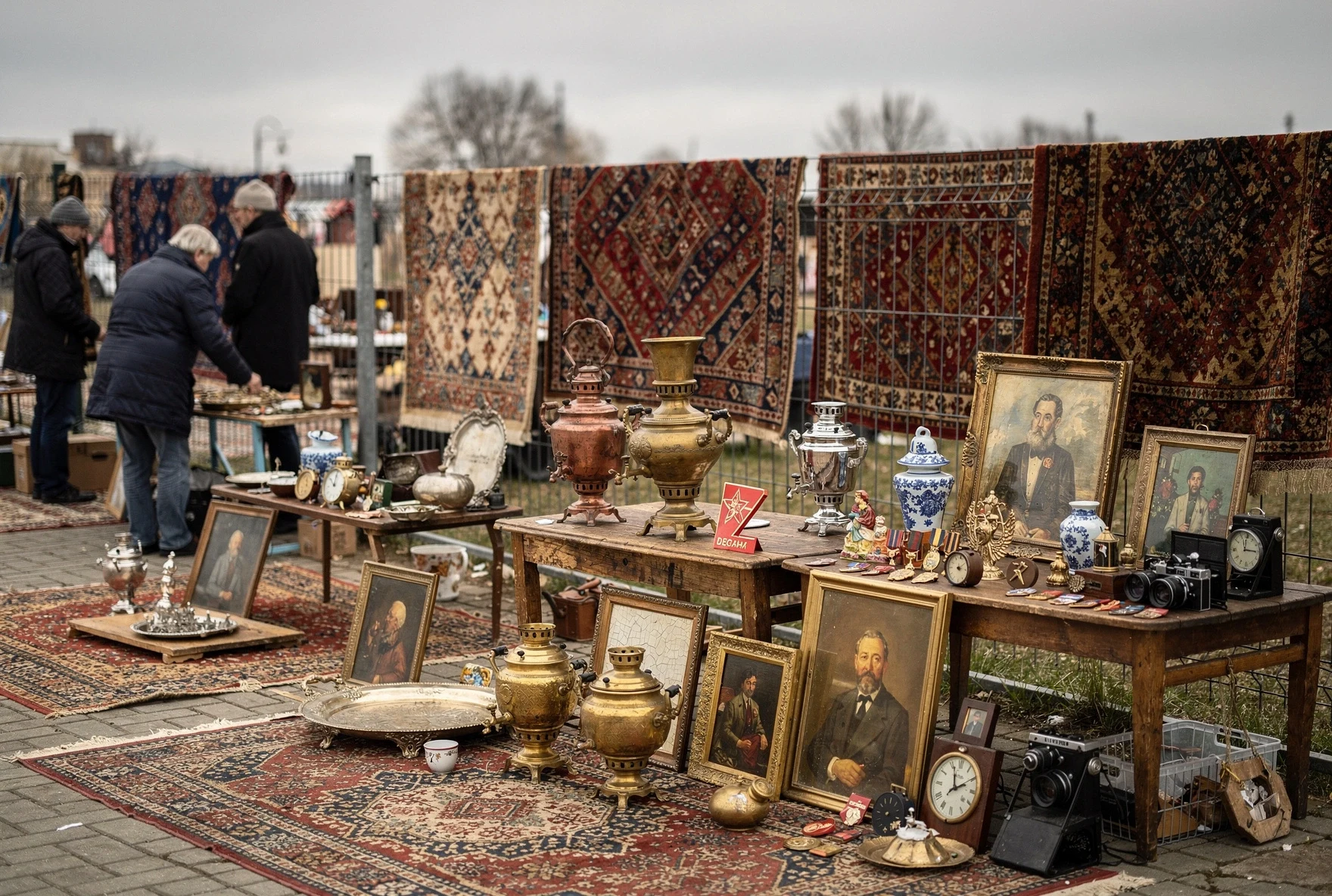
The Dry Bridge flea market (მშრალი ხიდის ბაზარი) deserves its own section because it's the single best shopping experience in Tbilisi. Stretching along both sides of the bridge connecting the Old Town to the east bank of the Mtkvari, this daily outdoor market is part flea market, part art gallery, part time capsule.
What you'll find: Soviet medals and memorabilia, antique jewelry, old cameras, vinyl records, oil paintings (some genuinely good), Persian and Caucasian carpets, vintage watches, silver tableware, cloisonné enamel, handmade knives, old maps, and whatever else Tbilisi's attics have given up that week.
🕐 When to Go
Saturday and Sunday mornings are the biggest days. The market runs daily but weekday selection is smaller. Arrive by 10 AM for the best finds — dealers pick over the best stuff early.
💰 Haggling
Haggling is expected and welcomed. Start at 50–60% of the asking price and meet in the middle. Don't be aggressive — keep it friendly. Walking away is the most effective negotiating tool.
🎨 Paintings
Georgia has an incredible art tradition and some of the paintings at Dry Bridge are genuinely impressive. Soviet-era art, Georgian landscapes, and modern works. Prices range from 50 GEL for small pieces to several thousand for established artists.
⚠️ Watch Out For
Fake "antiques" aged with shoe polish. Soviet medals are mostly genuine (they made millions) but claimed "rare" ones usually aren't. Real silver is hallmarked — check. And yes, some of the carpets are machine-made imports.
Shopping Outside Tbilisi
Some of the best souvenir shopping happens away from the capital, where you're buying directly from makers and paying local prices rather than tourist prices.
| Region | What to Buy | Where |
|---|---|---|
| Kakheti | Wine (direct from producers), churchkhela, walnuts, honey | Sighnaghi shops, Telavi market, any winery |
| Svaneti | Felt hats, knitted socks, Svan salt, honey, woodwork | Mestia shops, Ushguli village sellers |
| Tusheti | Wool felt, guda cheese, honey, handwoven textiles | Omalo and Shenako village shops |
| Kutaisi | Green Market (spices, ajika, churchkhela, preserved fruits) | Kutaisi Green Bazaar |
| Borjomi | Borjomi water, pine honey, local jams and preserves | Borjomi town center shops |
| Batumi | Tea, citrus products, Adjarian ajika, hazelnut products | Batumi Market, Adjarian villages |
Can You Bring Cheese Home?
Georgian cheese is incredible but tricky to transport. Most Georgian cheeses are brined (sulguni, imeruli) and need refrigeration. Guda cheese from Tusheti lasts longer. EU and US customs generally allow vacuum-sealed cheese for personal use, but check your destination's rules. Wrap it well — Georgian cheese has a ... distinctive aroma.
What to Skip
Not everything in a Georgian souvenir shop is worth your money. Here's what to avoid.
❌ Fridge Magnets
Mass-produced, usually made in China, identical to what you'd find in any tourist trap worldwide. If you must, at least get one that's hand-painted ceramic — a few vendors at Dry Bridge make these.
❌ "Georgian" Daggers
The decorative daggers (khanjar) sold everywhere are mostly Pakistani or Chinese imports. Genuine Georgian silverwork knives exist but cost hundreds of GEL. The 30 GEL ones will rust before you get home.
❌ Mass-Produced Wine
Kindzmarauli and Khvanchkara from big producers are fine for drinking in Georgia but not special enough to carry home. If you're bringing wine, bring something you can't get at home — natural and qvevri wines.
❌ Cheap Enamel
Those 5–10 GEL "cloisonné" pendants at tourist shops are printed stickers on metal. If the price seems too good for handmade jewelry, it is. Save your money for a real piece or skip it.
Packing & Customs Tips
Getting your souvenirs home safely requires a bit of planning. Georgian customs are relaxed on the export side, but your home country may have rules.
| Item | Packing Advice | Customs Notes |
|---|---|---|
| Wine | Wrap in clothes, centre of checked bag. Wine skin bags work well. | Most countries allow 1–3L duty-free. Declare if over. |
| Churchkhela | Wrap individually in paper, then plastic bag. Carry-on or checked. | Generally fine. Some countries inspect food items. |
| Spices | Double-bag in ziplock. Lightweight, go anywhere. | No issues. Dried spices are universally allowed. |
| Honey | Checked luggage only. Tape the lid, put in ziplock. | Some countries (Australia, NZ) restrict. Check first. |
| Carpets | Roll tightly, carry as separate bag or ship. | No export restrictions. Keep receipt for value declaration. |
| Antiques (pre-1970) | Depends on item — fragile items need bubble wrap. | Items of cultural significance may need export clearance from Ministry of Culture. Ask the seller. |
Budget Guide
Here's what a reasonable souvenir budget looks like, depending on how deep you want to go.
Budget Souvenir Haul (~100 GEL / ~$35)
Mid-Range Haul (~400 GEL / ~$140)
Frequently Asked Questions
Can I haggle in Georgian shops?
At markets and flea markets (Dry Bridge, Dezerter Bazaar), yes — it's expected. At proper shops and boutiques, prices are fixed. Never haggle aggressively; keep it friendly and you'll get a fair price.
Is duty-free at the airport worth it?
For wine and chacha, airport prices are 30–50% higher than city shops. But it's convenient and the selection is decent. Buy your main haul in town and use the airport for last-minute additions only.
Can I pay with card everywhere?
Most proper shops accept cards, but markets (Dry Bridge, Dezerter Bazaar) are cash-only. Bring GEL cash for market shopping. ATMs are everywhere in Tbilisi — withdraw before heading to markets.
Are there export restrictions?
Generally no, except for items of significant cultural/historical value (museum-quality antiques, archaeological items). If buying something genuinely old and valuable, ask the seller about export documentation.
What about bringing back food?
Dried spices, churchkhela, tklapi (fruit leather), and packaged sauces are fine for most countries. Fresh cheese, meat, and produce are restricted by many destinations. Check your home country's customs rules.
Best single souvenir under 50 GEL?
Svan salt plus utskho suneli from Dezerter Bazaar (~15 GEL for both) — lightweight, impossible to find abroad, and will transform your cooking. Or a pair of handmade felt slippers (~30 GEL) — practical and uniquely Georgian.
Written by The Georgian Guide Team
Based in Tbilisi for over five years. We've bought the bad magnets, haggled at Dry Bridge, and learned which churchkhela vendors to trust the hard way. This guide reflects years of shopping mistakes and occasional triumphs.
Last updated: March 2026.
Related Articles
Tbilisi Markets Guide
Navigate Tbilisi's best markets like a local.
Georgian Wine Culture
8,000 years of winemaking tradition explained.
Georgian Culture & Etiquette
The unwritten rules every visitor should know.
The Georgian Supra
Everything about Georgia's legendary feast tradition.