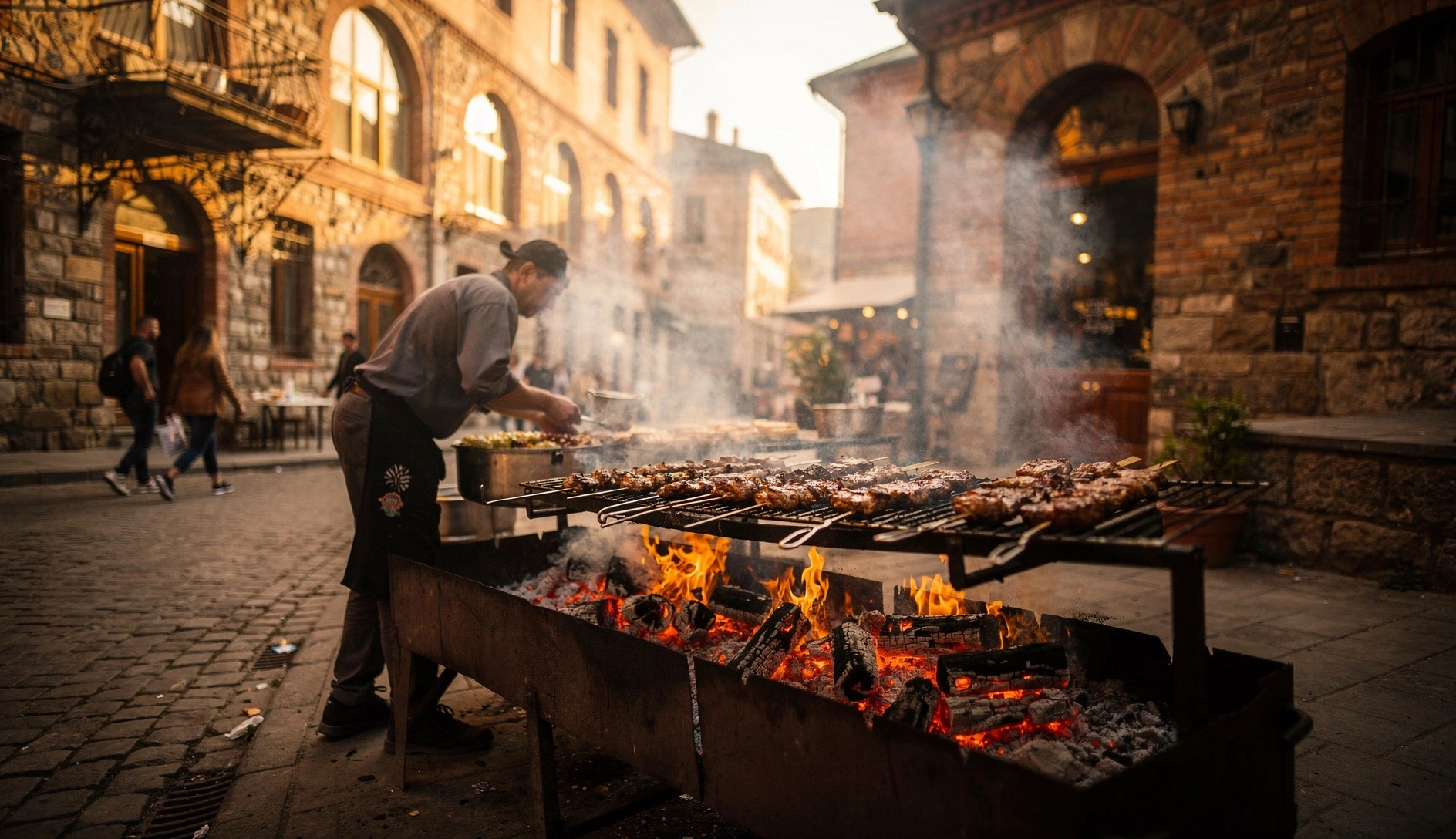
Georgia might be the only country where street food is better than most restaurant food. That's not an exaggeration — it's just what happens when a culture builds its entire food identity around bread, cheese, and grilled meat, then sells it all from hole-in-the-wall bakeries for pocket change.
Walk any major street in Tbilisi and within five minutes you'll pass a tone bakery pulling bread off clay walls, a window counter selling khachapuri that's still bubbling, and someone with a charcoal grill doing things to pork that should probably be illegal. The smells alone are worth the plane ticket.
This guide covers everything you'll actually encounter on the streets — what it is, what it costs, and where to find the best versions. No restaurant recommendations (we have a separate guide for that). Just the stuff you eat standing up, walking, or sitting on a random bench while questioning all your previous food choices.
The Bread: Where It All Starts
Georgian street food begins and ends with bread. Not supermarket bread — bread that's been slapped onto the inside walls of a clay oven called a tone (ტონე) and pulled off minutes later with bare hands. Georgians eat more bread per capita than almost any country on earth, and once you try it straight from the oven, you'll understand why.
Tonis Puri (ტონის პური)
The foundation of Georgian eating. Tonis puri is a long, canoe-shaped bread baked inside a cylindrical clay oven. It comes out with a crispy exterior, soft chewy interior, and that specific char pattern from where it stuck to the oven walls. You'll find tone bakeries (ტონე) on almost every other block in Tbilisi — look for the small storefronts with the distinctive round oven pit visible through the window.
Cost: 1–1.50 GEL ($0.35–$0.50) for a full loaf. Yes, really.
The Tone Experience
Stand outside any tone bakery and watch. The baker reaches into a pit oven that's easily 300°C, slaps the dough onto the vertical clay wall with their bare hand, and pulls it off minutes later. It's mesmerizing. And the bread they hand you is the best thing you'll eat all week.
Shotis Puri (შოტის პური)
The other major bread variety — diamond-shaped with a hole in the center. Same oven, same technique, slightly different shape. Some Georgians will argue passionately about whether tonis puri or shotis puri is superior. The correct answer is "whatever just came out of the oven." The functional difference is that shotis puri tears apart more easily, making it better for group eating. You'll see people walking down the street carrying several loaves stacked on their arm like oversized frisbees.
Cost: 1–1.50 GEL.
Lavashi (ლავაში)
Thin, soft flatbread — Georgian lavash, not to be confused with Armenian lavash (they'll both tell you the other one stole the name). Used mostly to wrap things. Street vendors will sometimes wrap grilled meat in lavashi for an improvised wrap that beats any fast-food chain on the planet.
Khachapuri: The National Obsession
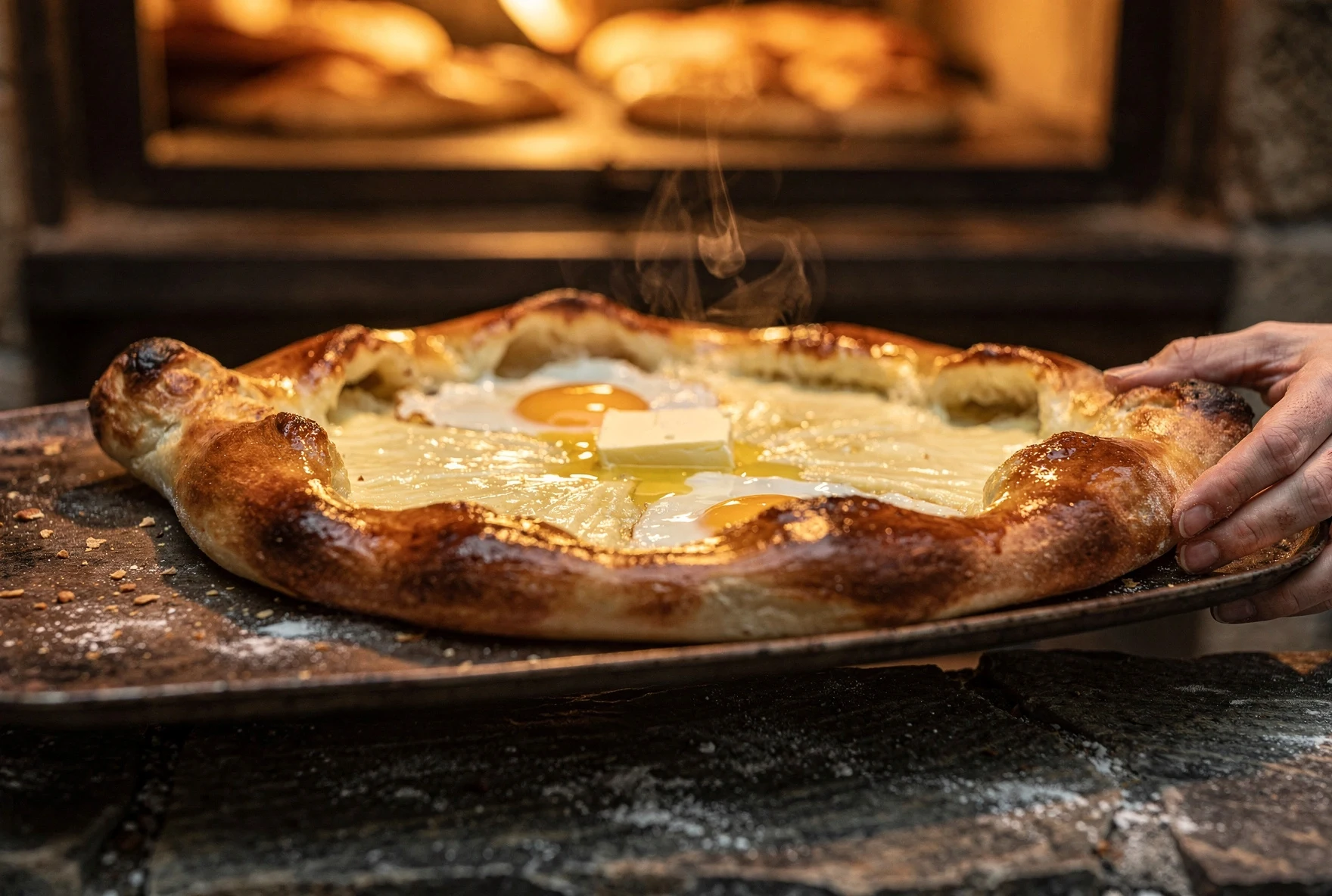
Khachapuri is to Georgia what pizza is to Italy — except Georgians eat it more often, argue about it more fiercely, and have at least a dozen regional variations. On the street, you'll mainly encounter three types:
| Type | Shape | Filling | Street Price | Where to Find |
|---|---|---|---|---|
| Imeretian (იმერული) | Round, flat | Imeretian cheese | 4–7 GEL | Everywhere — the default |
| Adjarian (აჭარული) | Boat-shaped, open | Cheese, egg, butter | 8–14 GEL | Bakeries, some windows |
| Megruli (მეგრული) | Round, cheese on top too | Double cheese | 6–10 GEL | Bakeries, western Georgia |
| Penovani (ფენოვანი) | Square, flaky pastry | Cheese in puff pastry | 3–5 GEL | Bakeries, supermarkets |
The Imeretian version is what most street bakeries sell. It's the everyday khachapuri — round, flat, filled with salty Imeretian cheese. You'll see stacks of them in bakery windows, and Georgians grab one the way you might grab a sandwich. Eaten hot, the cheese stretches in strings. At room temperature, it becomes denser, chewier — still good, just different.
Adjarian khachapuri — the boat-shaped one with the raw egg and butter pat — is the Instagram darling, but it's actually less common as street food because it has to be eaten immediately. When you find a bakery selling them fresh from the oven, stop everything and eat one. You stir the egg and butter into the molten cheese with bread torn from the sides. It's messy, caloric, and absolutely worth it.
Penovani is the underrated one. Flaky puff pastry with cheese — basically a Georgian cheese croissant. Cheap, portable, and perfect for breakfast on the move.
How to Eat Adjarian Khachapuri
Don't cut it with a knife like a tourist. Tear the crusty ends off, use them to stir the egg and butter into the cheese until it's a uniform molten mess, then keep tearing bread from the edges and dipping. Eat it fast — it hardens as it cools and loses its magic.
Want the full breakdown of Imeruli vs Megruli vs Adjarian and where each style makes the most sense? Use the dedicated Khachapuri in Georgia guide.
Grilled Meat: Mtsvadi & More
If you smell charcoal and hear the sizzle of fat dripping onto embers, follow your nose. You've found a mtsvadi vendor — Georgia's answer to the kebab, except Georgians will fight you if you call it a kebab.
Mtsvadi (მწვადი)
Chunks of pork (sometimes beef or chicken) threaded on a metal skewer and grilled over charcoal or vine cuttings. The pork version, especially when marinated in onion juice, is the default. You'll find mtsvadi everywhere — at roadside stands, in the mountains, at markets, outside supermarkets on weekends. The quality varies wildly. The best mtsvadi is grilled over grape vine cuttings (vitsis mtsvadi), which gives it a subtle smoky sweetness you won't forget.
Cost: 5–10 GEL per skewer, depending on location and meat quality.
Kupati (კუპატი)
Georgian sausage — pork and beef mixed with spices, stuffed into natural casing, and grilled until the exterior is charred and the inside is juicy enough to be legitimately dangerous to your shirt. Kupati from a street grill is one of Georgia's supreme pleasures. The casing snaps when you bite through it. The interior is fatty, spiced, and intensely savory.
Cost: 3–6 GEL per sausage.
The Kupati Explosion
Kupati builds up pressure while grilling. When you bite into one, hot juice can and will spray in unpredictable directions. Veterans of Georgian street food lean forward and bite carefully. Or just accept that your shirt is collateral damage. It's worth it.
Stuffed, Fried & Baked Things
Lobiani (ლობიანი)
Lobiani is khachapuri's humble cousin — same dough, but filled with seasoned kidney beans instead of cheese. It's the Georgian equivalent of a bean burrito, except better because it comes out of a tone oven. Traditionally eaten on Barbaroba (December 17), but you'll find it year-round in bakeries. Filling, cheap, surprisingly addictive. The best ones have a slightly smoky bean paste with plenty of black pepper.
Cost: 3–5 GEL.
Kubdari (კუბდარი)
Svaneti's gift to the world — a round bread stuffed with spiced, minced meat (usually a mix of pork and beef with heavy amounts of cumin, coriander, and dried fenugreek). The dough seals in the juices, so when you tear it open, the meat inside is almost steamed. Finding real kubdari on the streets of Tbilisi is harder than the bean and cheese options, but specialty bakeries and Svan restaurants serve it. In Mestia and Upper Svaneti, it's everywhere.
Cost: 6–12 GEL.
Kada / Nazuki (ყადა / ნაზუქი)
Sweet options for when you need a sugar hit. Kada is a flaky pastry with a sweet butter-sugar filling — somewhere between a croissant and a cinnamon roll in concept, but uniquely Georgian in execution. Nazuki is a sweet bread from the Borjomi area, flavored with cloves and cinnamon, often seen at roadside stands on the highway between Tbilisi and Kutaisi. When you're on a road trip through central Georgia, stopping for fresh nazuki is non-negotiable.
Cost: 2–4 GEL.
Khinkali: Not Exactly Street Food, But Close
Technically, khinkali (soup dumplings) are a sit-down restaurant food. But Georgia blurs the line. Several Tbilisi spots specialize in nothing but khinkali — you walk in, order a number (never fewer than five, ideally ten), eat them standing at a counter, and leave. The whole transaction takes fifteen minutes. That counts as street food in my book.
| Filling | Description | Price Each | Spice Level |
|---|---|---|---|
| Kalakuri (კალაკური) | Mixed meat, herbs — the city style | 1–1.50 GEL | Mild |
| Mtiuluri (მთიულური) | Mountain style — cumin-heavy, no herbs | 1–1.50 GEL | Medium |
| Cheese (ყველით) | Sulguni cheese filling | 1–1.50 GEL | None |
| Potato (კარტოფილით) | Mashed potato — comfort food | 0.80–1.20 GEL | None |
| Mushroom (სოკოთი) | Seasonal, usually wild mushrooms | 1–1.50 GEL | None |
How to Eat Khinkali (The Right Way)
Pick it up by the twisted top knob (the kudi). Flip it upside down, take a small bite from the side, and suck out the hot broth first. Then eat the meat and dough. Leave the knob on the plate — you don't eat it. At the end, your plate full of discarded knobs is your scoreboard. Georgians will judge you (lovingly) if you use a fork.
Sweets & Snacks
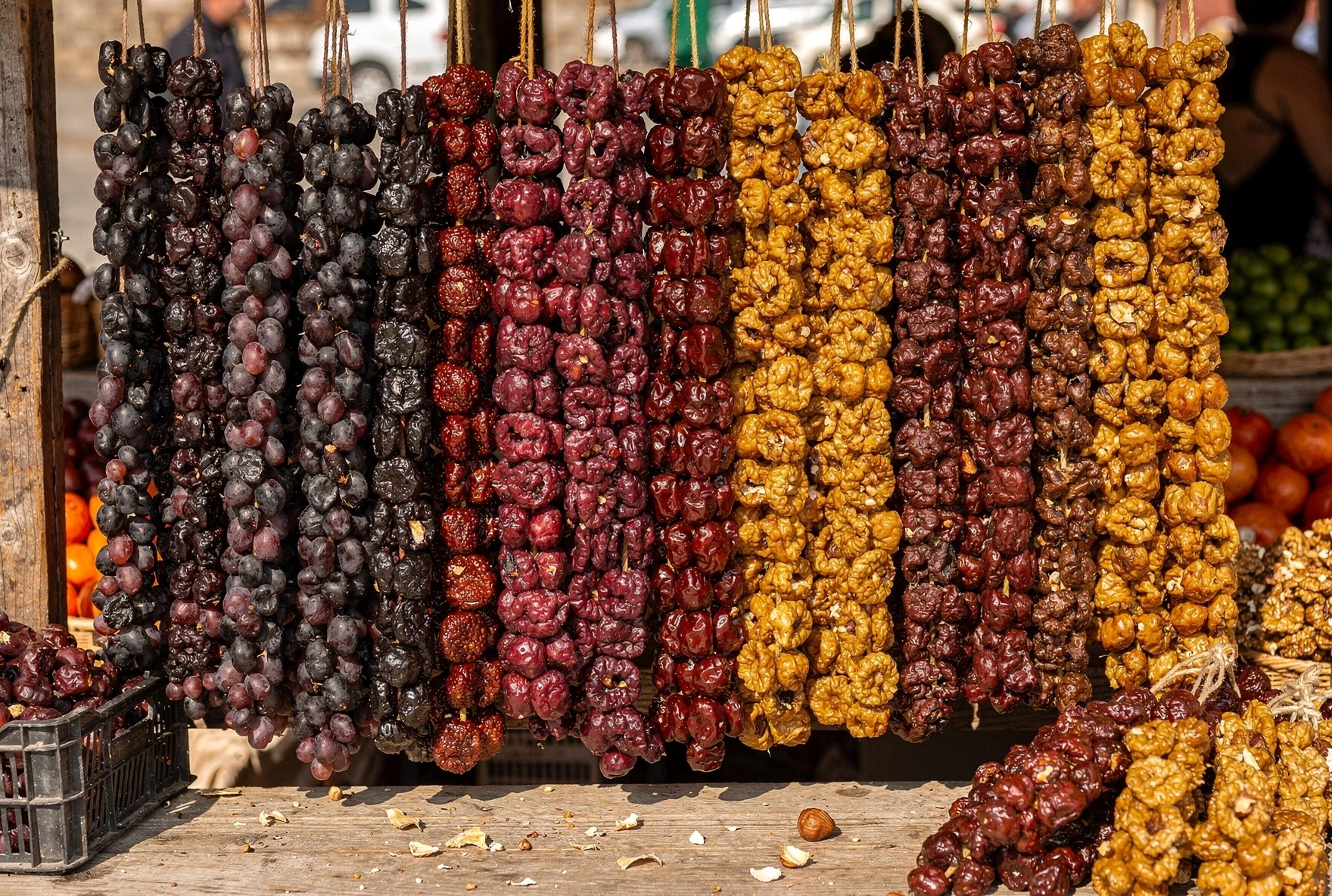
Churchkhela (ჩურჩხელა)
Those candle-shaped things hanging from strings at every market stall and roadside stand? That's churchkhela — Georgia's original energy bar, perfected roughly 2,000 years before anyone thought to put oats in plastic packaging. Walnuts (or hazelnuts) threaded on a string, dipped repeatedly in thickened grape juice (tatara), then dried. The result is a chewy, sweet, nutty snack that keeps for months.
Quality varies enormously. The handmade ones from Kakheti — where they use real grape must and local walnuts — are genuinely excellent. The ones at Tbilisi tourist spots are often mass-produced, too sweet, and rubbery. The difference is obvious once you've tried a good one.
Cost: 3–7 GEL per piece, depending on quality and tourist markup.
Pelamushi / Tatara (ფელამუში / თათარა)
Grape juice pudding — thick, sweet, and deep purple. Made from the same thickened grape juice used for churchkhela, but poured into a dish and cooled until set. It's seasonal (autumn, during the grape harvest), and when it's fresh, it tastes like concentrated grape with a texture between pudding and Turkish delight. Look for it at markets during September and October.
Cost: 2–3 GEL for a portion.
Gozinaki (გოზინაკი)
Walnuts in honey, pressed flat and cut into diamonds. Traditionally a New Year treat, but sold year-round at bakeries and markets. Crunchy, sticky, intensely sweet. A few pieces go a long way. It's basically Georgian brittle — simpler than churchkhela but just as traditional.
Cost: 2–5 GEL for a portion.
Tklapi (ტყლაპი)
Fruit leather — thin sheets of dried, pureed fruit (usually plum or cherry plum). Sold rolled up at markets. It's tangy, chewy, and a surprisingly useful cooking ingredient (it goes into several traditional soups). As a snack, it's the healthy option in the Georgian street food lineup, though calling anything here "healthy" is relative.
Cost: 1–3 GEL per sheet.
Drinks
Lemonade (ლიმონათი)
Georgian lemonade comes in several colors — tarragon (green), cream soda (yellow), pear, and classic lemon. The tarragon version tastes like nothing you've had before. Sweet, herbal, oddly refreshing. Sold everywhere in bottles and on draft. 1–3 GEL.
Fresh Juice
Pomegranate juice freshly squeezed at market stalls is a revelation, especially during pomegranate season (October–December). Orange and grapefruit are available year-round at street juice stands. 3–5 GEL.
Kompot (კომპოტი)
Stewed fruit drink — served at home, in restaurants, and sometimes at street stalls. Usually cherry, peach, or mixed fruit. Mildly sweet, served cold in summer. It's what Georgians drink instead of soda. 1–2 GEL.
Wine from the Tap
Not exactly "street food," but some wine shops and market vendors pour wine from large vessels for absurdly low prices. The quality is hit-or-miss. For serious wine, visit a proper wine bar. 2–5 GEL per glass.
Where to Find the Best Street Food in Tbilisi
| Area | What to Find | Notes |
|---|---|---|
| Dezerter Bazaar | Everything — bread, churchkhela, cheese, grilled meat, fruit | Tbilisi's biggest market. Overwhelming but worth it. Go in the morning. |
| Rustaveli Area | Bakeries, khinkali spots, lemonade | Main avenue — plenty of quick-eat options in side streets. |
| Aghmashenebeli Avenue | Bakeries, khachapuri, cafes | Pedestrian section has the best density of bakeries per block. |
| Old Town (Kala) | Tourist-oriented, higher prices | Convenient but not the best value. Avoid Shardeni prices. |
| Marjanishvili | Tone bakeries, kupati, local favorites | More local, better prices, less English. Bring Google Translate. |
| Didube Area | Lobiani, khachapuri, mtsvadi, chaotic energy | Near the bus station. Not pretty, but the food is authentic and cheap. |
The Tourist Tax
Street food in the Old Town and around Freedom Square costs 30–50% more than the same food in Marjanishvili or Didube. The quality isn't better — sometimes it's worse because the bakeries rely on tourist traffic rather than reputation. Walk 10 minutes from the main sights and your money goes much further.
What a Day of Street Food Costs
Sample Street Food Day Budget
That's three full meals and two snacks for less than the price of a single lunch in most European capitals. And honestly, you'll be uncomfortably full by dinner.
Street Food Outside Tbilisi
Every region has its street food specialties. Some of the best things you'll eat in Georgia are from roadside stands in the middle of nowhere.
Kakheti
The best churchkhela in the country. During autumn rtveli (grape harvest), roadside stands sell fresh ones that haven't dried yet — a completely different experience. Also: fresh walnuts, dried fruit, and homemade wine from the trunk of someone's car.
Svaneti
Kubdari territory. You'll also find tashmijabi (potatoes mashed with sulguni cheese — Svaneti's comfort food king) and fresh mountain trout at riverside spots. The drive to remote mountain regions rewards with unique flavors.
Adjara (Batumi)
The Black Sea coast brings borano (fried cheese and eggs — obscenely rich), sinori (rolled cheese pastry), and the best Adjarian khachapuri you'll ever have. Also fresh fish from the port.
The Highways
Georgian highways are lined with roadside food stops — mtsvadi grills, nazuki stands near Surami, fresh fruit in summer, churchkhela in autumn. Stopping at these is half the point of a Georgian road trip.
Practical Tips for Eating on the Streets
Carry Small Bills
Most street food vendors deal in cash. A 100 GEL note for a 2 GEL bread will get you a look. Keep 1, 2, 5, and 10 GEL notes handy.
Eat Fresh, Always
Georgian street food is best moments after it's made. Lukewarm khachapuri is a shadow of its hot self. If you see something coming out of the oven, jump on it.
Point and Smile
Language barrier? Doesn't matter. Point at what you want, hold up fingers for quantity. Street food vendors deal with this daily. A few Georgian phrases help, but aren't required.
Morning is Best
Bakeries are busiest (and freshest) in the morning. The tone ovens fire up around 7–8 AM, and the first bread of the day is always the best. Markets are most vibrant before noon.
Follow the Locals
If a bakery has a line of Georgian grandmothers, get in that line. Tourist areas are convenient but overpriced. Walk two blocks in any direction from the main streets and quality goes up while prices go down.
Stomach Prep
Georgian food is rich — butter, cheese, pork fat. If you're coming from a lighter diet, ease in. Don't eat Adjarian khachapuri, ten khinkali, and mtsvadi all on day one. Spread the damage across your trip.
Vegetarian Street Food Options
Georgia is actually great for vegetarian street food — probably better than most countries. The Orthodox fasting tradition means meatless options are baked into the culture, not an afterthought.
| Item | Vegetarian | Vegan | Notes |
|---|---|---|---|
| Khachapuri (all types) | ✅ | ❌ | Cheese and often egg/butter |
| Lobiani | ✅ | ✅ (usually) | Bean-filled — check if butter was used in dough |
| Tonis / Shotis Puri | ✅ | ✅ | Just flour, water, salt, yeast |
| Churchkhela | ✅ | ✅ | Grape juice + nuts — naturally vegan |
| Penovani | ✅ | ❌ | Cheese + butter pastry |
| Khinkali (potato/mushroom) | ✅ | ✅ (usually) | Non-meat fillings available at most spots |
| Fruit / Tklapi / Gozinaki | ✅ | ✅ | Sweets and dried fruit are all plant-based |
Food Safety
Georgian street food is generally safe. The turnover is high (most things are made fresh constantly), the oven temperatures are extreme, and the grills are hot enough to sterilize anything. A few common-sense rules:
- Meat should be hot. Don't eat lukewarm mtsvadi or kupati that's been sitting around. If it's sizzling on the grill, you're fine.
- Bread is almost always fine. It comes out of a 300°C oven. Hard to argue with that level of sterilization.
- Dairy-based items: Eat fresh, especially in summer. Khachapuri that's been sitting in a window since morning in 35°C heat is a gamble.
- Fruit: Wash it or peel it. Market fruit is fine, but give it a rinse.
- Tap water: Tbilisi tap water is drinkable. Outside the capital, stick to bottled.
In five years of eating street food across Georgia, the only stomach issues I've had came from restaurant meals, not street food. Make of that what you will.
Frequently Asked Questions
Is Georgian street food safe?
Yes. High turnover and extreme cooking temperatures keep things safe. Use common sense — eat hot food hot, avoid anything that's been sitting in the sun for hours.
Can I pay with card?
Most street food vendors are cash-only. Bakeries with storefronts sometimes accept cards, but don't count on it. Keep small GEL bills on hand. See our money guide.
What's the best street food for breakfast?
Fresh tonis puri with butter and cheese from a tone bakery. Or penovani khachapuri with coffee. Georgians often have khachapuri for breakfast — it's not just a lunch thing.
How much should I budget per day?
If you eat exclusively street food, 40–60 GEL ($14–$21) covers three meals and snacks. You can do it for even less if you skip the khinkali stops and stick to bread and cheese.
Is there gluten-free street food?
Limited, honestly. Georgian street food is bread-centric. Mtsvadi and kupati are gluten-free. Churchkhela is usually GF but check — some commercial ones add flour. Fresh fruit is always safe.
When is the best time to visit for street food?
Autumn (September–October) during the grape harvest. Churchkhela is being made fresh, fruit is at peak, and roadside mtsvadi grills are everywhere. But honestly, Georgian street food is great year-round.
Written by The Georgian Guide Team
Based in Tbilisi for five years and counting. We've eaten our way through every tone bakery, market stall, and roadside grill in this country — and we're not done yet. This guide is based on thousands of street food transactions, several ruined shirts, and zero regrets.
Last updated: March 2026.
Related Articles
What to Eat in Georgia
The complete guide to Georgian cuisine — every dish worth trying.
Best Restaurants in Tbilisi
Where to sit down and eat when you want more than street food.
Tbilisi Markets Guide
Where to shop for ingredients, snacks, and the full market experience.
Georgia Travel Budget Guide
How much everything costs in Georgia — food, transport, accommodation.