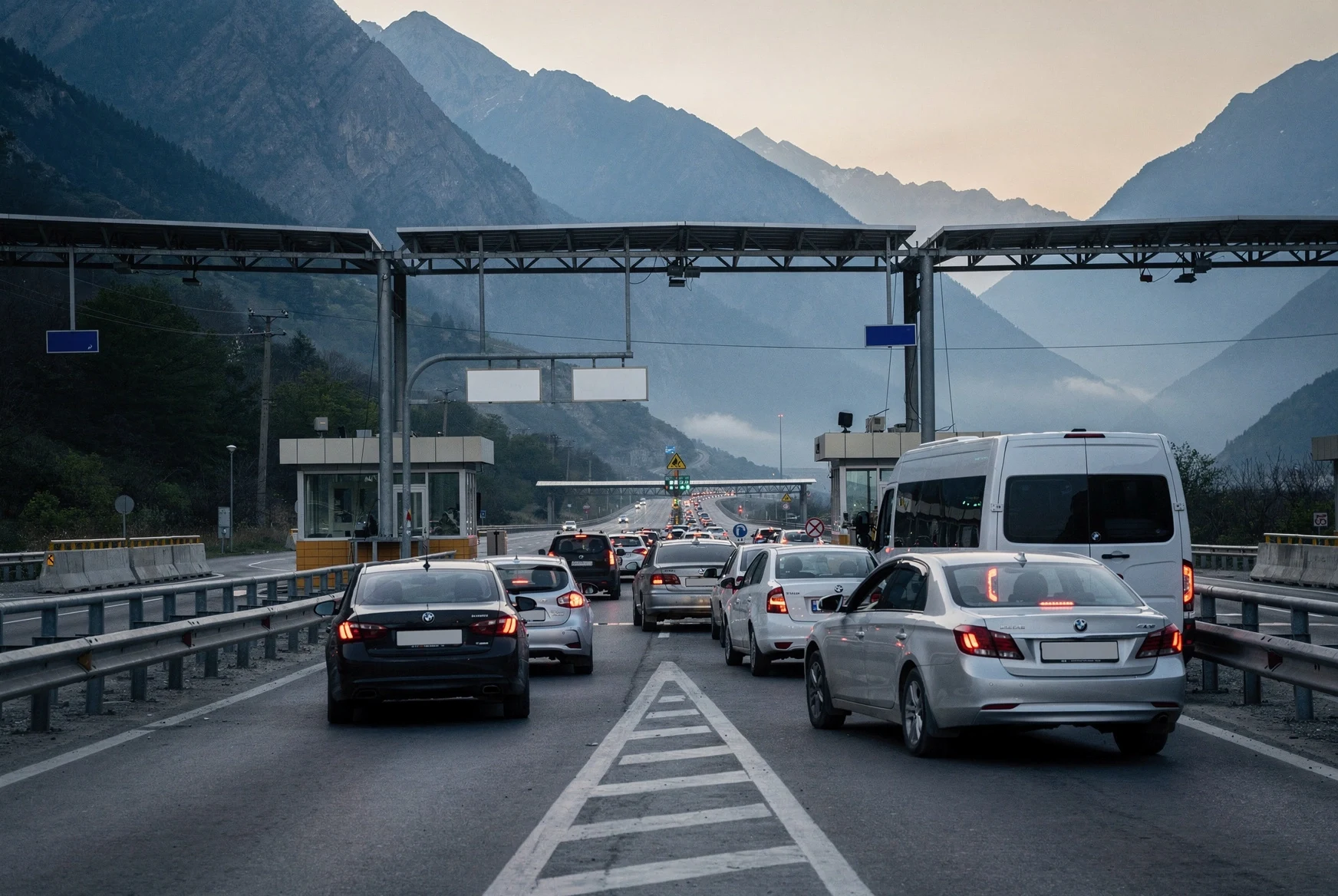
Georgia is one of those countries where land borders still matter. People use them for overland trips to Armenia or Turkey, for visa runs, for complicated Caucasus itineraries, and sometimes because flights are stupidly expensive on the day they need to move. The good news: several of Georgia's land crossings are genuinely straightforward. The bad news: not all of them are, and the internet is full of outdated advice written by someone who crossed in 2019 and never looked back.
The short version is this: Armenia is easy, Turkey is easy but can get busy, Russia is possible but unpredictable, and Azerbaijan is still the awkward one because land entry for ordinary travelers remains shut on the Azerbaijani side. If you understand that sentence, you already know more than half the people asking confused questions in Facebook groups.
This guide is about the practical reality: which crossing to use, what kind of trip each one fits, what waits are actually like, whether you can cross on foot, and when a "quick border run" is smart versus slightly deranged.
The big picture: which Georgia borders are actually useful?
For most travelers, Georgia's useful land borders fall into three buckets.
- Armenia: the sensible one. Good for Yerevan-Tbilisi overland trips, same-day visa runs, and multi-country Caucasus itineraries.
- Turkey: the practical one. Best if you are moving between Batumi and the Turkish coast or crossing in southern Georgia with a car.
- Russia: the conditional one. Technically open and sometimes useful, but far more dependent on weather, paperwork, traffic, and geopolitical common sense.
Then there is Azerbaijan, which deserves its own category: theoretically there are border points, but for normal traveler planning the correct working assumption is do not plan to enter Azerbaijan from Georgia by land. This is the mistake that ruins entire Caucasus itineraries for people who built a neat little Tbilisi-Baku train fantasy in their head after reading something stale.
The fast planning rule
If your trip is Georgia + Armenia, overland is easy. If it is Georgia + Turkey, overland is easy. If it is Georgia + Russia, double-check everything. If it is Georgia + Azerbaijan by land, stop and re-check because that plan is usually dead on arrival.
Quick reference: the main land crossings
| Border | Main crossing | Who should use it | Reality check |
|---|---|---|---|
| Armenia | Sadakhlo-Bagratashen | Most travelers, border runs, Tbilisi-Yerevan overland trips | Usually the easiest and most useful crossing |
| Armenia | Guguti-Gogavan / Ninotsminda-Bavra | Drivers, quieter routes, southern itineraries | Fine, but less relevant for most casual travelers |
| Turkey | Sarpi-Sarp | Batumi travelers, pedestrian crossings, Black Sea route | Very practical, often busy, still the easiest Turkey option |
| Turkey | Vale-Posof / Kartsakhi-Aktaş | Drivers in southern Georgia, overlanders, route nerds | Open and useful, but not the default choice for first-timers |
| Russia | Dariali-Verkhni Lars | People who genuinely need the Russia route and have the right paperwork | Long waits and weather closures are normal, not exceptional |
| Azerbaijan | Red Bridge / Lagodekhi / Gardabani | Mostly nobody planning a normal tourist entry | Azerbaijan's land entry remains closed to ordinary inbound travelers |
Georgia-Armenia: the best overland border for normal people
If you only ever cross one land border in Georgia, it will probably be the Armenia one. This is the classic Tbilisi-Yerevan route, the most common visa-run route, and the border I would recommend to first-time overlanders who do not enjoy bureaucratic improv theatre.
The main crossing is Sadakhlo-Bagratashen. It is the busiest Georgia-Armenia crossing and the one most shared taxis, marshrutkas, and private transfers naturally use. If you are going between the two capitals, this is the obvious default. It is not glamorous. It is just functional, which is exactly what you want from a border.
There are also the Guguti-Gogavan and Ninotsminda-Bavra crossings. These can make sense if you are driving, heading deeper into southern Armenia, or deliberately avoiding the main flow. They are less important for typical backpacker or first-time traveler planning, but it is useful to know they exist.
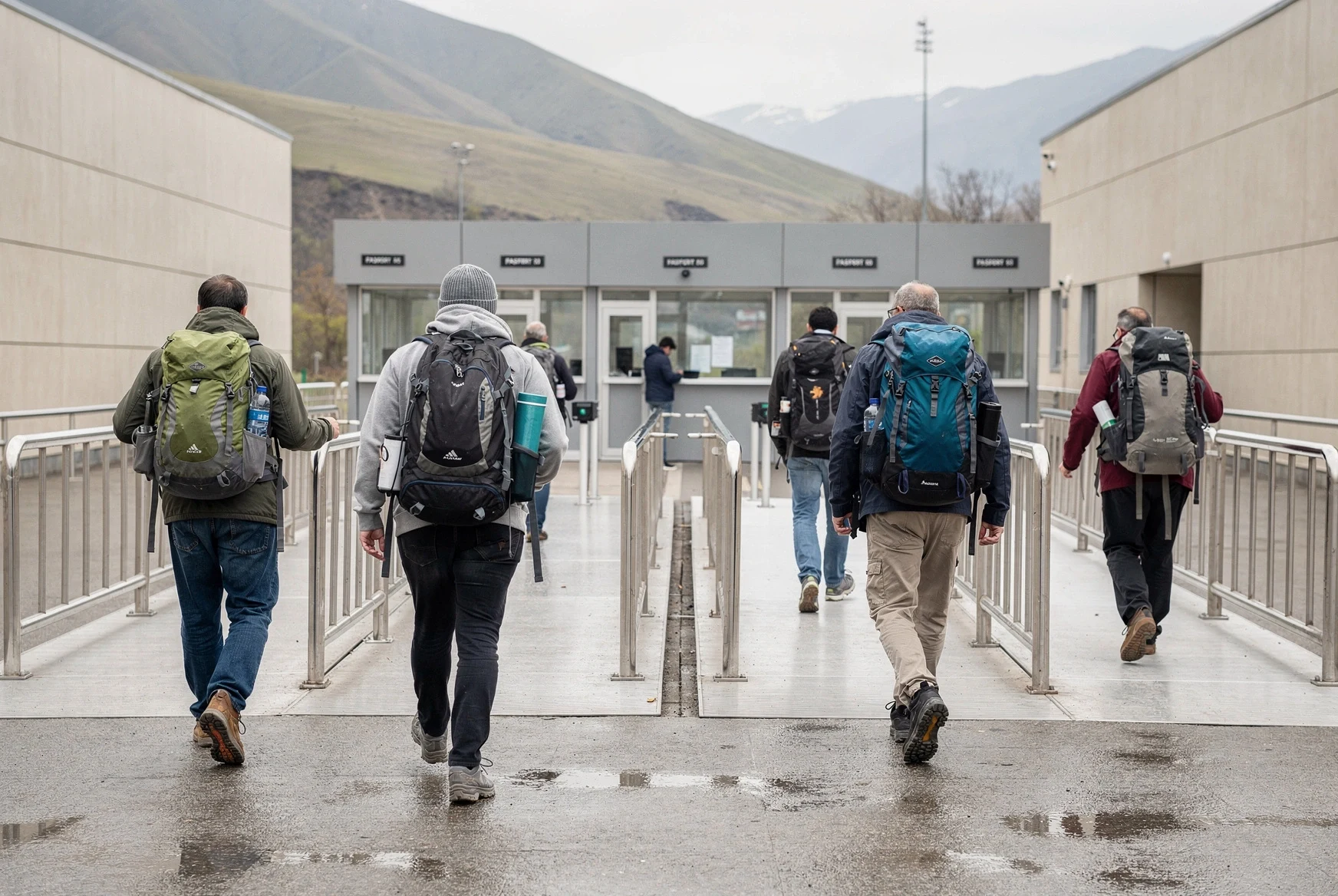
What the Armenia crossing is actually like
- Normally straightforward and routine
- Usually manageable for same-day crossing without needing heroic patience
- Good for shared taxis, marshrutkas, private drivers, and self-drive trips
- Much more realistic for visa-run planning than Russia
If you are doing a same-day visa run from Georgia, Armenia is usually the sane answer because the crossing is close enough to make the logistics workable and common enough that local drivers know the drill. People do this all the time. That does not make it glamorous. It makes it boring, which in border terms is a compliment.
Best border-run option
For most nationalities living in Georgia on a visa-free stay, the Armenia border is the cleanest reset option. It is simpler, closer, and less drama-prone than trying to build your life around the Russia crossing.
Georgia-Turkey: easy in practice, especially near Batumi
The most important Georgia-Turkey crossing is Sarpi-Sarp near Batumi. This is the one that matters for real travelers. If you are on the Black Sea coast, heading into northeastern Turkey, or combining Batumi with Hopa, Rize, or Trabzon, this border is incredibly useful. It is open around the clock and used heavily enough that nobody looks confused by your existence.
Sarpi is also one of the few crossings in this part of the region that makes sense for pedestrians. That is a big reason it is so popular. You do not need to own a car, charm a truck driver, or invent a complicated transfer plan. If you are already in Batumi, this border is right there.
Then there are the southern Georgia crossings: Vale-Posof and Kartsakhi-Aktaş. These are real, open, and useful, especially for drivers or overland travelers heading across Samtskhe-Javakheti. They are just less relevant to the average visitor doing a normal Georgia trip. If you are asking which Turkey border to use and you are not in a car and do not have a very specific route reason, the answer is probably Sarpi.
Where Turkey crossings make the most sense
Use Sarpi if...
You are in Batumi, on the coast, crossing on foot, or want the least complicated route into Turkey.
Use Vale or Kartsakhi if...
You are driving in southern Georgia, heading toward eastern Turkey, or deliberately avoiding the Black Sea route.
The main downside at Sarpi is not confusion. It is volume. In peak summer, holidays, or heavy travel periods, the crossing can feel less like a sleek overland gateway and more like everyone in the region had the same idea at once. Still, it is a very workable border and a far cry from the sort of headache people imagine when they hear “land crossing in the Caucasus.”
Georgia-Russia: legal, useful, and absolutely not casual
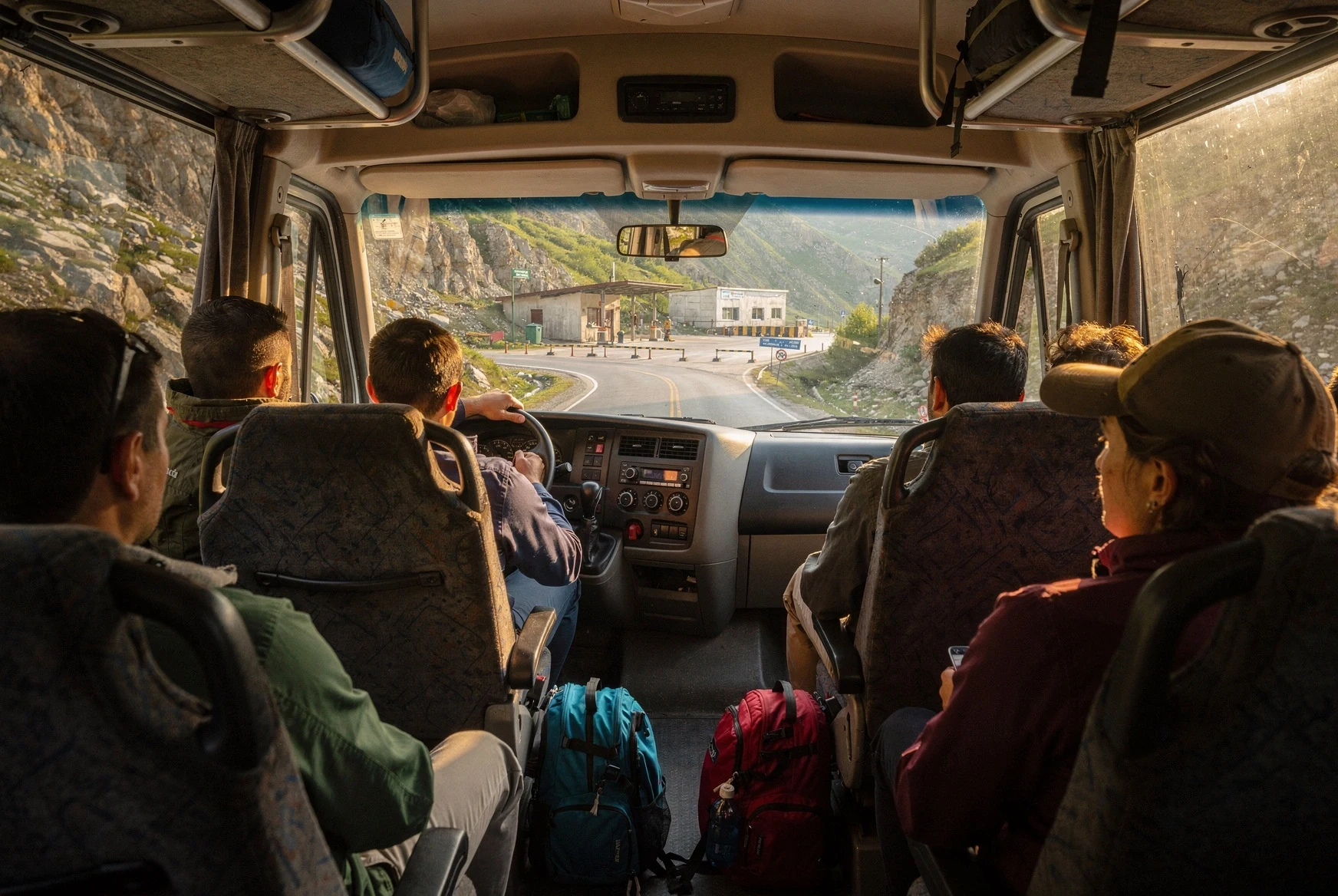
The Georgia-Russia border crossing is Dariali-Verkhni Lars, commonly described by travelers as the Kazbegi or Lars crossing. It is the only practical legal land route between Georgia and Russia. Yes, travelers use it. Yes, it can be safe enough in the ordinary sense. No, it is not the kind of crossing I would describe as cheerful or reliably efficient.
The first thing to understand is that the route is exposed to weather and truck traffic. This is not a minor footnote. It is the whole personality of the crossing. Long freight lines are normal. Seasonal closures or delays due to snow, avalanche risk, or road conditions are normal. If your plan depends on tight timing, this border can punish optimism hard.
The second thing is paperwork. You need to be sure your passport and Russian visa situation are actually valid for what you are trying to do. This is not the place to test vague assumptions, rely on a blog comment from last year, or hope the rules will feel generous because you are tired.
Russia border mindset
Treat the Georgia-Russia crossing as a serious transport route, not a cute day-trip admin errand. If it works smoothly, great. If it does not, you need schedule buffer, decent nerves, and a backup plan.
When the Russia crossing actually makes sense
- You have a valid Russian visa and a reason to go overland
- You are building a broader regional route, not just doing a random visa reset
- You understand that delays of hours are not dramatic exceptions
- You are not treating winter mountain transport as a personality test
For most ordinary Georgia visitors, the Russia border is more something to understand than something to use. It matters. It exists. It can be done. But if you just need a quick in-and-out because your Georgian visa-free year is ending, there are easier ways to spend a day.
Georgia-Azerbaijan: the border exists, the plan usually doesn't
This is where travelers get burned by stale internet advice. Georgia has recognized land crossings with Azerbaijan — Red Bridge, Lagodekhi, and Gardabani are the names that come up most often — but the working reality for normal travelers in 2026 is that Azerbaijan's land border remains closed for ordinary inbound tourist entry.
That means if you are sitting in Tbilisi imagining a casual overland hop to Baku, you should stop right there and rebuild the plan. The problem is not whether the Georgian side exists. The problem is whether Azerbaijan is allowing you in by land in the way your itinerary assumes. For normal tourists, the answer is still effectively no.
Some sources note that exiting Azerbaijan by land can still be possible in certain situations, and cargo movement is a different world entirely. That does not help the average traveler trying to enter Azerbaijan from Georgia overland. If the trip matters, fly.
Do not build a normal tourist itinerary around this
Georgia to Azerbaijan by land is the classic outdated-blog trap. If you need Baku, book a flight and move on with your life.
Border runs from Georgia: what works and what is a bad idea?
Georgia is well known for generous visa-free stays, and it is also well known for the fact that many people do periodic border runs. That part is real. Georgia does not impose some theatrical minimum time-away rule where you must disappear for 72 hours and reflect on your choices. In practice, many people exit and re-enter cleanly.
What matters is choosing the right border for the kind of run you are doing.
| Route | Good for border run? | Why |
|---|---|---|
| Armenia via Sadakhlo | Yes | Closest thing to a normal, repeatable, low-drama visa reset |
| Turkey via Sarpi | Sometimes | Useful if you are in Batumi already, less efficient from Tbilisi |
| Russia via Lars | Usually no | Too much uncertainty, distance, and paperwork for a simple admin errand |
| Azerbaijan by land | No | Because it generally does not work for normal inbound travelers |
A same-day Armenia run is still the classic move. It is not glamorous, but it is practical. A same-day Turkey run can also work, especially from Batumi. Both are better than improvising around the Russia crossing unless you already have a real Russia trip planned.
That said, if your long-term life in Georgia depends on repeating these runs forever, it is worth saying the quiet part out loud: at some point, proper residency is the more adult solution. Border runs are functional. They are not elegant.
What to bring and what travelers forget
Most Georgia land crossings are not document-heavy in the dramatic embassy sense. But travelers still manage to create their own problems with surprising creativity. The basics are boring for a reason.
- Your passport, with enough validity for the country you are entering
- Any visa or e-visa required by the other country
- Proof of insurance if relevant to your route or vehicle
- Cash or cards that actually work once you cross
- Water, snacks, and phone battery if you are using a slow or traffic-heavy crossing
If you are crossing by car, add the obvious vehicle paperwork and insurance questions early. Border guards are not there to admire your optimism. If you are crossing on foot or by shared taxi, keep your bags manageable. A border is not the moment to discover that your luggage system only makes sense in hotel lobbies.
How to actually get to the border from Georgia
This is where a lot of guides get vague. Yes, a border exists. That does not mean the transport logic is elegant.
For Armenia, the common play is a marshrutka, shared taxi, private driver, or full Tbilisi-Yerevan transport that handles the crossing as part of the route. For Sarpi, Batumi makes it easy because you are already close; a taxi or local transport link is usually straightforward. For Russia, you are dealing with the Georgian Military Highway logic and whatever mood the mountain road is in that day.
If you need the wider transport picture beyond the border itself — trains, marshrutkas, intercity transfers, rental-car logic — read the dedicated Getting Around Georgia guide. If your move is specifically about entering or leaving the country, stay here. If your problem is how to reach the border from Tbilisi without hating the day, that transport guide fills in the rest.
Occupied territories: do not get clever
This part is simple. Do not enter Abkhazia or South Ossetia from the Russian side and assume Georgia will shrug. Under Georgian law, that can count as illegal entry into occupied territory. This is not edgy backpacker trivia. It can lead to fines, serious trouble, or future entry problems.
South Ossetia is not a traveler border option. Full stop. Abkhazia is a legally sensitive case and not something casual travelers should treat like an ordinary neighboring-region excursion. If you are not already deep into the legal details and specific route rules, the smart move is to leave it alone.
No backpacker loophole here
If a forum thread makes illegal entry into occupied territory sound like a spicy travel hack, close the tab. Georgia takes this seriously.
Common land-border mistakes
Building a Georgia-Azerbaijan overland plan from old blog posts
This is still the biggest unforced error. Check current land-entry reality, not your memory of pre-2020 travel.
Using Russia for a "quick" visa run
Nothing about that route deserves the word quick unless the gods of weather and logistics feel unusually generous.
Arriving with the wrong visa assumptions
Georgia may be generous. The country on the other side may not be. Check both directions, not just Georgia's rules.
Confusing legal border points with useful traveler routes
A crossing can exist on paper and still be the wrong choice for a normal trip.
Bottom line: which border should you use?
If you want the easy answer, here it is.
- Going to Armenia or doing a border run? Use Sadakhlo unless you have a specific reason not to.
- Going to Turkey from Batumi? Use Sarpi.
- Crossing into Russia? Only if you really mean it, and only after checking the paperwork and road conditions properly.
- Planning Georgia to Azerbaijan by land? Do not plan your trip around it. Fly instead.
That is the practical reality in 2026. Not romantic. Not dramatic. Just useful. Which, frankly, is exactly what a border guide should be.
Written by The Georgian Guide Team
We have lived with the practical side of Georgia travel for years — visa-free entries, border runs, intercity transport, and the small bureaucratic surprises that catch first-timers off guard. This guide is written from that lived reality, with current 2026 cross-border context layered in.
Last updated: March 2026.
Related Articles
Georgia Visa & Entry Guide
Visa-free rules, residency logic, overstays, and what actually matters at immigration.
Getting Around Georgia
Marshrutkas, trains, Bolt, rental cars, and how to move across the country without fantasy.
Tbilisi Airport to City Centre
The first transport decision most travelers make in Georgia — bus, Bolt, or private transfer.
Georgia vs Armenia
If you are deciding whether to cross south or split a trip between both countries, start here.