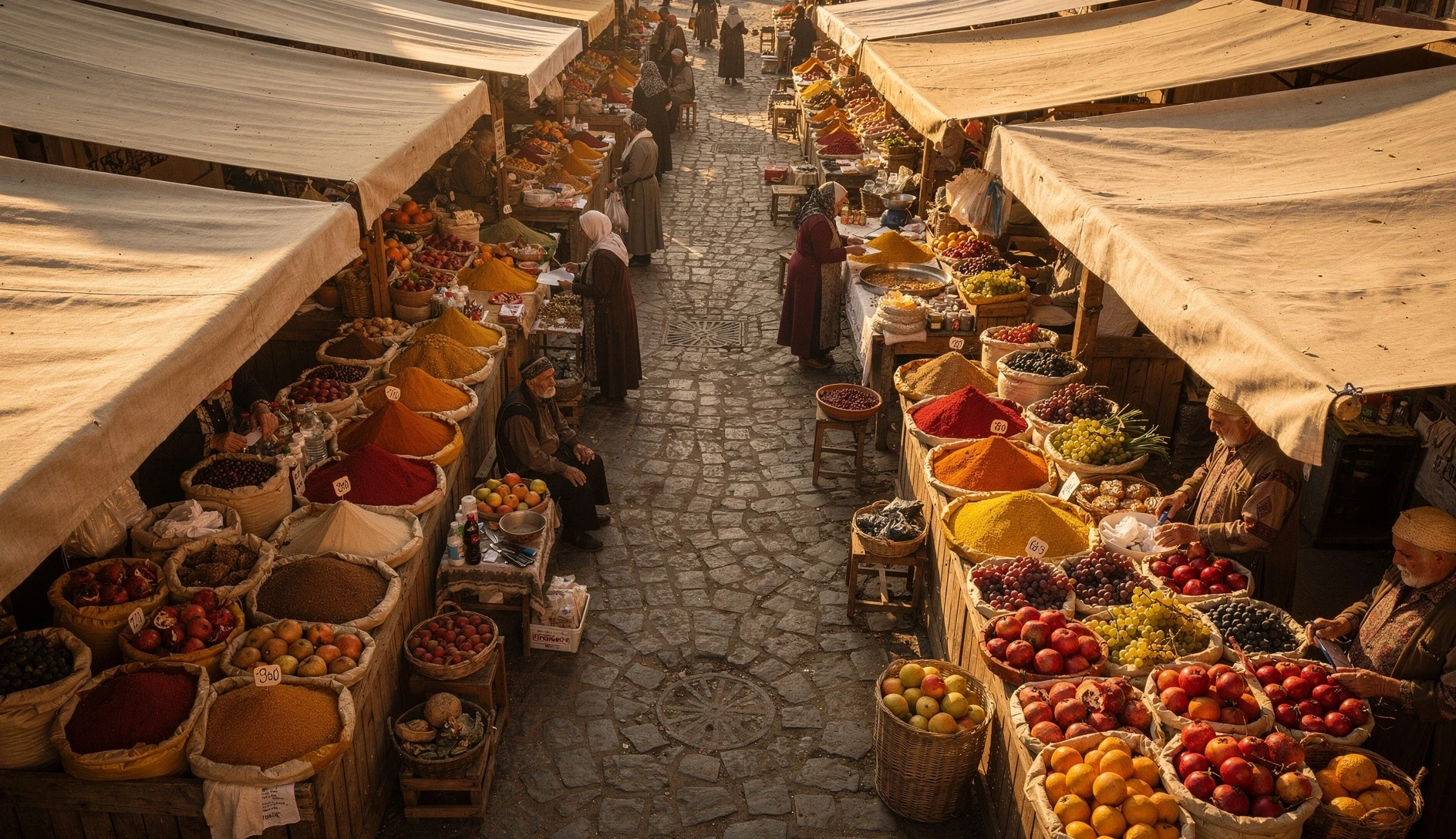
Georgia is a country where the supermarket hasn't yet killed the bazaar. That might sound quaint, but spend an hour at the Dezerter Bazaar on a Saturday morning and you'll understand — this isn't nostalgia tourism. Thousands of Tbilisi residents still buy their weekly groceries here, haggling over the price of walnuts with the same vendor their mother used twenty years ago.
For travelers, Tbilisi's markets are some of the most rewarding places in the city. No Instagram-bait entrance fees. No guides required. Just show up, point at things, taste what's offered, and buy what catches your eye. You'll learn more about Georgian food culture in two hours at a market than in a week of restaurant dinners.
This guide covers every market worth visiting in Tbilisi — from the raw, chaotic produce markets to the polished food halls, from Soviet flea markets to the hidden gems most tourists never find.
Market Overview: Which Market Is For You?
Not all Tbilisi markets are created equal, and which one you visit depends entirely on what you're after. Here's the quick rundown before we go deep on each one.
| Market | Best For | Hours | Vibe |
|---|---|---|---|
| Dezerter Bazaar | Fresh produce, spices, cheese | Daily 7am–5pm | Chaotic, authentic, loud |
| Dry Bridge Market | Antiques, Soviet items, art | Daily 10am–5pm | Browsable, treasure-hunt |
| Bazari Orbeliani | Food hall, artisan goods, wine | Daily 9am–late | Polished, upscale, pretty |
| Navtlugi (Samgori) | Wholesale produce, low prices | Daily 9am–late | Local, sprawling, real |
| Station Square | Cheap clothes, gold jewelry | Daily 9am–late | Cramped, underground, gritty |
| Lilo Mall | Wholesale everything | Daily 8am–7pm | Massive, suburban, car needed |
| Goodwill / Fabrika Area | Vintage clothes, pop-up markets | Weekends, varies | Hipster, curated, seasonal |
The Dezerter Bazaar: Tbilisi's Beating Heart
If you visit only one market in Tbilisi, make it this one. The Dezerter Bazaar (დეზერტირების ბაზარი) is the city's largest and most important food market — a sprawling, semi-organized maze of indoor stalls and outdoor vendors that covers several blocks near Station Square.
The name comes from soldiers who deserted during the 1921 Russo-Georgian War and sold their equipment here. A century later, the market has traded bayonets for bayberry and bullets for butter, but the energy is essentially the same: pure, unfiltered commerce.
What You'll Find
The market divides roughly into zones, though the boundaries are more suggestion than rule. The main covered building — a grey-and-peach structure built in 2012 after the Soviet-era original was demolished under Saakashvili — houses produce vendors, butchers, and cheese sellers. But most of the action happens outside, spilling into surrounding streets and alleyways.
🌶️ Spices & Dried Goods
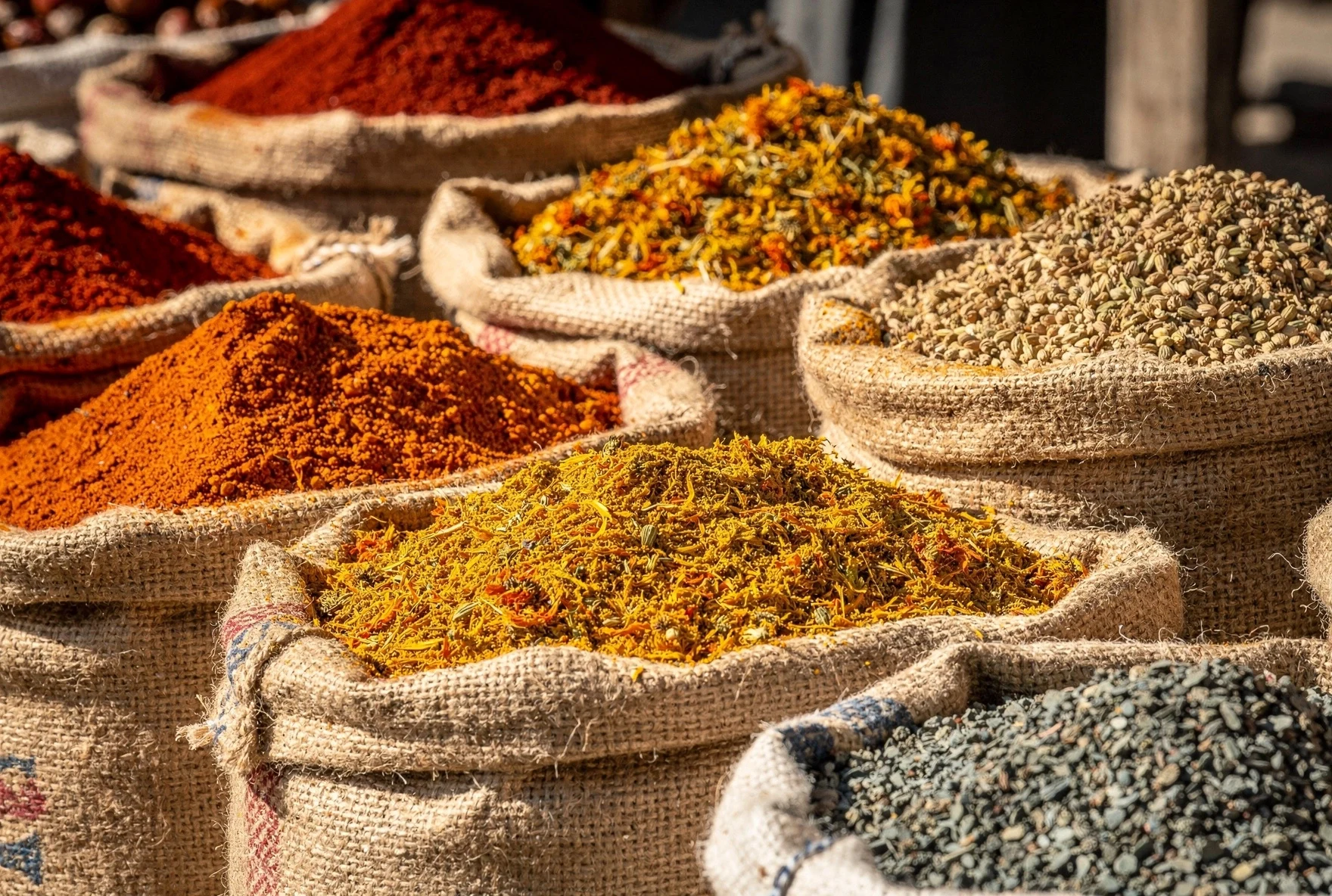
The star attraction. Mountains of svanuri marili (Svan salt), khmeli-suneli, ground marigold, blue fenugreek, adjika paste. Vendors will let you smell and taste everything. Buy in bulk — these are a fraction of tourist shop prices.
🧀 Cheese & Dairy
Fresh sulguni (plain and smoked), imeruli cheese, nadughi (ricotta-like whey cheese). Vendors often sell from their own farms. You can taste before buying — and you should, because quality varies wildly.
🍅 Produce
Seasonal fruits and vegetables, often farm-direct. Georgian tomatoes in summer are revelatory. Persimmons, pomegranates, and feijoa in autumn. Turkish imports fill the gaps in winter.
🥜 Churchkhela & Nuts
Strings of churchkhela hang from every other stall. The market is also the cheapest place to buy walnuts, hazelnuts, and dried fruits. Watch for quality — some churchkhela is made with sugar shortcuts.
The Spice Section: A Detailed Guide
Georgian cuisine runs on spices, and the Dezerter Bazaar is where you get the real deal — ground fresh, sold loose, at prices that make the souvenir shops on Rustaveli look criminal. Here's what to look for:
| Spice | Georgian Name | Price (100g) | Notes |
|---|---|---|---|
| Svan Salt | სვანური მარილი | 2–4 GEL | The essential Georgian spice blend. Goes on everything. |
| Khmeli-Suneli | ხმელი-სუნელი | 2–3 GEL | All-purpose herb blend. Up to 14 dried herbs. |
| Blue Fenugreek | უცხო-სუნელი | 3–5 GEL | Unique to the Caucasus. Earthy, nutty. Hard to find outside Georgia. |
| Ground Marigold | იმერული შაფრანი | 3–4 GEL | Called "Imeretian saffron." Not real saffron but essential for Georgian cooking. |
| Adjika (paste) | აჯიკა | 3–6 GEL | Chili-garlic-herb paste. Red (hot) or green (herby). Abkhazian origin. |
| Dried Barberry | კოწახური | 2–3 GEL | Tart dried berries used in stews and rice dishes. |
Spice Shopping Tip
Ask vendors to mix a custom blend. Many regulars have their own recipes they've perfected over years. Point at what you want, indicate proportions, and they'll grind it fresh. It costs the same as pre-mixed blends but you get exactly what you want.
Practical Tips for the Dezerter Bazaar
- Go early. The freshest produce arrives between 7am and 9am. By afternoon, the best stuff is gone.
- Bring cash. Almost nobody takes cards. Small bills are better — breaking a 100 GEL note at a stall selling 2-GEL herbs is awkward for everyone.
- Don't photograph people without asking. Most vendors are fine with it, but the polite thing is to ask first, buy something, then take your photo.
- Watch your pockets in crowds. Not because it's dangerous — it's just dense. Phone-in-back-pocket is asking for trouble in any market worldwide.
- Taste everything offered. Vendors will hand you pieces of cheese, dried fruit, churchkhela. This isn't a sales trick — it's just how it works. Accept graciously.
- The meat section is intense. Whole carcasses hang in the open air. If that's not your thing, the covered building's upper level is less confrontational.
The Dry Bridge Market: Soviet Treasure Hunt
Tbilisi's famous flea market stretches along both sides of the Dry Bridge (მშრალი ხიდი) and spills into 9 March Park and Dedaena Park. It's easily the most photographed market in the city, and unlike most Instagram-famous spots in Tbilisi, it actually lives up to the hype.
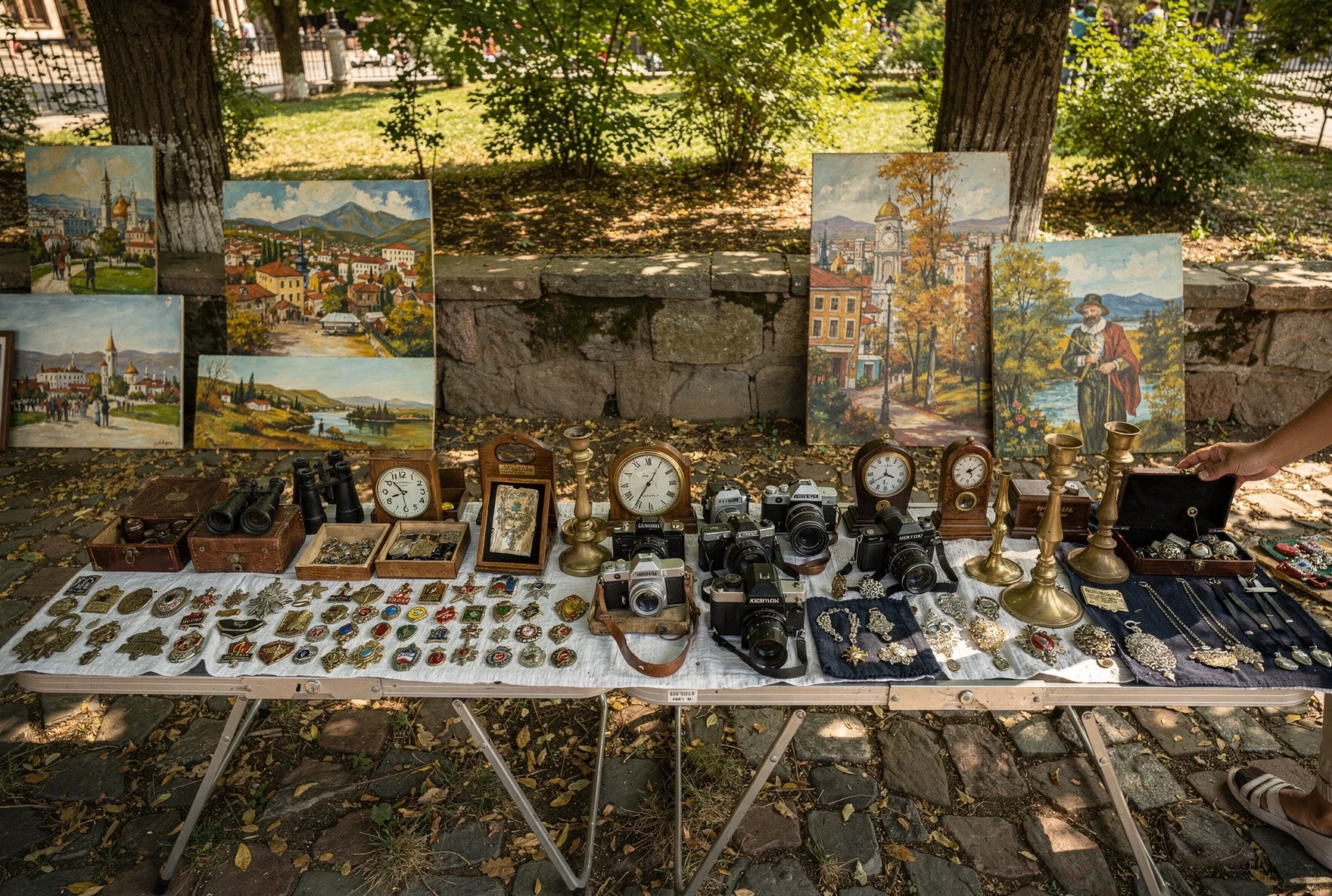
The market is essentially an open-air museum of the 20th century Caucasus — except everything's for sale. Vendors lay their goods on blankets, folding tables, and directly on the cobblestones. The selection changes daily, which is part of the appeal. You never quite know what you'll find.
What to Look For
📷 Soviet Cameras & Optics
Zenit, Zorki, FED — the Soviet Union made surprisingly good cameras. Prices range from 20–200 GEL depending on condition. Most are decorative at this point, but some work.
🎖️ Military Medals & Badges
WWII medals, Soviet-era order badges, military pins. These are genuine — many families sold off heirlooms in the desperate 1990s. Fascinating and sobering in equal measure.
🎨 Art & Paintings
Local artists sell original paintings along 9 March Park. Quality ranges from tourist-bait Tbilisi skylines to genuinely talented work. The handicraft section in the park has handmade enamel, pottery, and textiles.
💎 Minankari Jewelry
Traditional Georgian cloisonné enamel jewelry. The Dry Bridge has both antique pieces and modern reproductions. Learn to tell the difference — old pieces have slight imperfections and deeper colors.
Bargaining at the Dry Bridge
Bargaining is expected here — opening prices for tourists are typically 30–50% above what locals pay. Start at about half the asking price and work toward a middle ground. Don't be aggressive about it. The vendors do this all day, and most of what they're selling isn't worth more than a few lari anyway. The fun is in the conversation.
Layout & Walking Route
The market has three distinct zones, and the best approach is to walk them in order:
- The flea market proper — on and around the bridge itself. This is where the vintage cameras, medals, books, vinyl records, and random household items live. Start from the Right Bank (near Baratashvili Bridge) and walk south.
- The antique market — clustered on the south side of the bridge and along the riverfront. Furniture, rugs, silver, old maps, typewriters. Some vendors have been selling from the same spot for decades.
- 9 March Park (art & handicrafts) — continuing south into the park, you'll find paintings hung on railings, handmade jewelry laid out on tables, and textile artists selling directly. Cross under the bridge to Dedaena Park for more crafts.
The whole circuit takes 1–2 hours at a browsing pace. Weekends are the best time to visit — Saturday afternoon has the most vendors and the best atmosphere.
Bazari Orbeliani: The Beautiful One
If the Dezerter Bazaar is Tbilisi's stomach, Bazari Orbeliani is its Instagram account. This beautifully restored covered market on Orbeliani Square first opened in 1886, and after years of neglect and renovation, it now functions as part produce market, part artisan food shop, part upscale food court.
The ground floor has a small but curated selection of fresh produce, cheese, wine, churchkhela, honey, and artisan food products. It's not where locals do their weekly shop — it's too expensive for that — but the quality is consistently high, and everything is photogenically displayed.
The upper level is a food court with a dozen restaurants and bars. Georgian, Japanese, Italian, and various fusion concepts. It's a good lunch spot if you're in the area, though prices are 2–3x what you'd pay at a regular restaurant.
Don't Miss the Flower Pavilion
Just outside Bazari Orbeliani's main entrance, a small flower market sells fresh-cut flowers. It's been there for years and it's one of the more charming micro-markets in the city. Worth a quick stop even if you're not buying.
What to Buy
| Item | Price Range | Worth It? |
|---|---|---|
| Artisan adjika & spice blends | 8–15 GEL per jar | Yes — great gift quality, nicely packaged |
| Local honey | 15–30 GEL per jar | Yes — alpine and chestnut varieties are excellent |
| Wine & chacha | 15–60 GEL per bottle | Decent selection, but wine shops are better |
| Churchkhela | 3–6 GEL per string | Overpriced — buy at Dezerter instead |
| Fresh produce | 1.5–2x Dezerter prices | Pretty but pricey for daily shopping |
Navtlugi Market: Where Locals Actually Shop
If the Dezerter Bazaar is Tbilisi's main market, Navtlugi (also called Samgori Market) is its bigger, cheaper, more chaotic cousin on the eastern edge of the city. This is where serious cooks and families who buy in bulk come to shop. Tourists are rare enough here that you'll get curious looks and friendly questions.
The produce section is enormous — stall after stall of seasonal fruits, vegetables, and nuts at wholesale-adjacent prices. Many vendors sell directly from their own farms, which is why a kilo of tomatoes here might cost half what it does at the Dezerter Bazaar.
The real hidden gem is the Barakholka — a set of warehouses and covered sheds near Mevele Street that function as an antique and vintage market. Think Dry Bridge but less touristy, less picked-over, and with better prices. Old street signs, Soviet ceramics, pressed-metal plates, vintage electronics. Weekend mornings are best.
Getting to Navtlugi
Take the metro to Samgori station. The market sprawls around Mevele Street and Ketevan Tsamebuli Avenue — you'll see it immediately outside the station. Budget at least an hour to explore properly.
Station Square: Clothes, Gold & Chaos
The markets around Station Square merge with the Dezerter Bazaar's southern edge and extend into the railway station itself. This is not a tourist attraction. It's where working-class Tbilisi buys winter coats, shoes, household goods, and second-hand clothing.
The main clothing market operates in the pedestrian underpass and overhead tunnels — cramped, crowded, and occasionally claustrophobic. If you need a warm jacket for a mountain trip and don't want to spend Northface prices, this is the place. Quality is hit-or-miss, but the prices are absurdly low.
On the bottom level of the railway station, the Tbilisi Gold Market is worth a look even if you're not buying. Rows of jewelers sit behind plexiglass displays selling gold chains, rings, and — most interesting to visitors — traditional minankari (Georgian cloisonné enamel). Prices are significantly better than what you'll find in Old Town souvenir shops.
Seasonal & Pop-Up Markets
Beyond the permanent markets, Tbilisi has a growing scene of seasonal and pop-up markets that cater to a younger, more design-conscious crowd.
🎄 New Year Markets
December through early January. Small Christmas/New Year markets pop up on Rustaveli Avenue and in various parks. Mulled wine, gozinaki, churchkhela, and handmade gifts. More atmospheric than practical.
🍷 Wine Festivals
The New Wine Festival (May) and Tbilisoba (October) both feature market components where winemakers sell directly. Good opportunity to taste natural and qvevri wines from small producers.
👕 Vintage & Craft Fairs
Fabrika and various Vera/Sololaki venues host weekend vintage clothing sales and artisan craft fairs. Follow local Instagram accounts for dates — these pop up with minimal advance notice.
🌿 Farmers' Markets
Small organic and farm-direct markets occasionally appear in Vake Park and near Fabrika. These are more expat-oriented with higher prices, but the quality and variety (including things like kale and avocados) can be worth it.
Best Things to Buy at Tbilisi Markets
Not everything at the market is worth your suitcase space. Here's a curated guide to the best buys — things that are significantly better or cheaper at markets than anywhere else.
| Item | Where to Buy | Price | Souvenir Potential |
|---|---|---|---|
| Svanuri marili (Svan salt) | Dezerter Bazaar | 2–4 GEL / 100g | ⭐⭐⭐⭐⭐ The #1 edible souvenir |
| Churchkhela | Dezerter Bazaar | 2–4 GEL per string | ⭐⭐⭐⭐ Unique, portable, delicious |
| Soviet cameras | Dry Bridge Market | 20–200 GEL | ⭐⭐⭐⭐ Great conversation piece |
| Minankari jewelry | Dry Bridge / Gold Market | 15–150 GEL | ⭐⭐⭐⭐⭐ Uniquely Georgian, beautiful |
| Honey (alpine / chestnut) | Bazari Orbeliani | 15–30 GEL per jar | ⭐⭐⭐ Heavy but exceptional quality |
| Enamel pins & badges | Dry Bridge Market | 2–10 GEL each | ⭐⭐⭐⭐ Cheap, light, unique |
| Fresh walnuts (in shell) | Navtlugi Market | 5–8 GEL per kg | ⭐⭐ Amazing quality if you can carry them |
Market Etiquette: How Not to Be That Tourist
Georgian market culture has its own unwritten rules. You won't get kicked out for breaking them, but you'll get a better experience if you follow them.
✅ Do: Accept What's Offered
When a vendor hands you a piece of cheese or fruit to taste, take it. Refusing is mildly rude. You're not obligated to buy afterward, but sampling is part of the social contract.
❌ Don't: Bargain Over Produce
At food markets, prices are already rock-bottom. Trying to negotiate the price of a kilo of tomatoes down by 50 tetri is insulting. Save your bargaining for the Dry Bridge.
✅ Do: Learn a Few Words
"Ramdeni ghirs?" (How much?) and "madloba" (thank you) go a long way. Most vendors speak zero English, but they'll appreciate the effort and probably give you a better price.
❌ Don't: Block the Flow
Markets are working spaces, not museums. People are trying to buy groceries. Don't plant yourself in the middle of an aisle for a five-minute photo shoot. Step to the side, be quick, move on.
✅ Do: Bring Your Own Bags
Vendors provide thin plastic bags, but bringing your own tote means less fumbling, less waste, and an easier time carrying everything home. Plus it signals you know what you're doing.
❌ Don't: Expect Hygiene Standards
Meat hangs in open air. Cheese sits unrefrigerated. Flies exist. This is how markets work across the developing world and the food is perfectly safe. If it bothers you, that's fine — stick to Bazari Orbeliani.
The Perfect Market Day: A Suggested Route
If you want to hit the major markets in one day, here's a practical walking and metro route that covers the highlights without backtracking:
Morning: Dezerter Bazaar (8:30–10:30am)
Start early when the produce is freshest. Enter from Abastumani Street near Dinamo Stadium. Walk the outdoor sections first, then explore the covered building. Buy your spices here. Budget 1.5–2 hours.
Mid-Morning: Station Square Gold Market (10:30–11:00am)
It's right next to the Dezerter Bazaar — walk south toward the railway station. Pop into the Gold Market on the bottom level. Quick but interesting. 15–30 minutes.
Late Morning: Dry Bridge Market (11:00am–1:00pm)
Take the metro from Station Square to Avlabari or walk 20 minutes along the river. The flea market is in full swing by 11am. Browse the antiques, walk through 9 March Park for art. Budget 1–2 hours.
Lunch: Bazari Orbeliani (1:00–2:00pm)
Walk from the Dry Bridge to Orbeliani Square (15 minutes through Old Town). Grab lunch upstairs at the food court, browse the artisan shops on the ground floor, pick up any gift-quality souvenirs. Stop at the flower pavilion outside.
Common Mistakes
Visiting the Dry Bridge on a Weekday
The market operates daily, but weekday selection is a fraction of what you'll find on weekends. Many vendors only set up Saturday and Sunday. If you only have one shot, make it a weekend.
Buying Spices on Rustaveli Avenue
Tourist shops on Rustaveli charge 3–5x market prices for the same spices, often in prettier packaging. The Dezerter Bazaar spices are fresher and cheaper. Bring your own containers if packaging matters to you.
Not Checking Churchkhela Quality
Not all churchkhela is equal. The best is made with real grape must and walnuts — it should be firm but slightly pliable, not hard or gummy. The cheap stuff uses sugar syrup. Taste before buying.
Skipping Navtlugi
Most tourists never make it past the Dezerter Bazaar and Dry Bridge. Navtlugi's Barakholka antique section has better prices and more authentic finds, plus the produce market is cheaper. Worth the metro ride.
Carrying Only Large Bills
Market vendors deal in small amounts. A 100 GEL note for a 3 GEL purchase creates a headache. Hit an ATM and break your bills at a café before heading to the market. Carry plenty of 5s and 10s.
Going in the Afternoon Heat
Tbilisi summers hit 38°C. An outdoor market with no shade at 2pm is miserable. Morning visits (before 11am) are cooler, less crowded, and have better produce selection. Your future self will thank you.
Frequently Asked Questions
What is the best market in Tbilisi?
It depends on what you're after. The Dezerter Bazaar is the best for food and produce. The Dry Bridge Market is the best for antiques and souvenirs. Bazari Orbeliani is the most polished and tourist-friendly. For the most authentic local experience, head to Navtlugi.
What days are Tbilisi markets open?
Most markets operate daily, but weekends are best for the Dry Bridge (more vendors) and the Dezerter Bazaar (more variety). Saturday morning is the sweet spot — peak selection at both markets and reasonable crowds.
Is the Dezerter Bazaar safe for tourists?
Yes. It's chaotic and crowded, but not dangerous. Keep your valuables in front pockets, be aware of your surroundings in dense areas, and you'll be fine. Most vendors are welcoming and curious about foreign visitors.
Can you bargain at Tbilisi markets?
At the Dry Bridge flea market, absolutely — it's expected. At produce markets, prices are already low and mostly fixed. At Bazari Orbeliani, prices are fixed. The Gold Market allows some negotiation on larger purchases.
What are the best souvenirs to buy at Tbilisi markets?
Svanuri marili (Svan salt) and spice blends from the Dezerter Bazaar are the best value — lightweight, unique, and useful. Churchkhela travels well. Soviet cameras and enamel pins from the Dry Bridge are great conversation pieces. Minankari jewelry is the premium option.
Written by The Georgian Guide Team
Based in Tbilisi, we've been shopping at these markets for years — from weekly spice runs at the Dezerter Bazaar to lazy Saturday mornings browsing Soviet cameras at the Dry Bridge. We know which vendors give honest prices and which churchkhela is actually worth buying.
Last updated: February 2026.
Related Articles
What to Eat in Georgia
The complete guide to every dish worth trying in Georgia.
Best Restaurants in Tbilisi
Where locals actually eat — neighborhood by neighborhood.
Georgian Wine Culture
8,000 years of tradition — qvevri, amber wine, and supra toasts.
Essential Georgian Phrases
Key phrases for navigating markets, restaurants, and daily life.