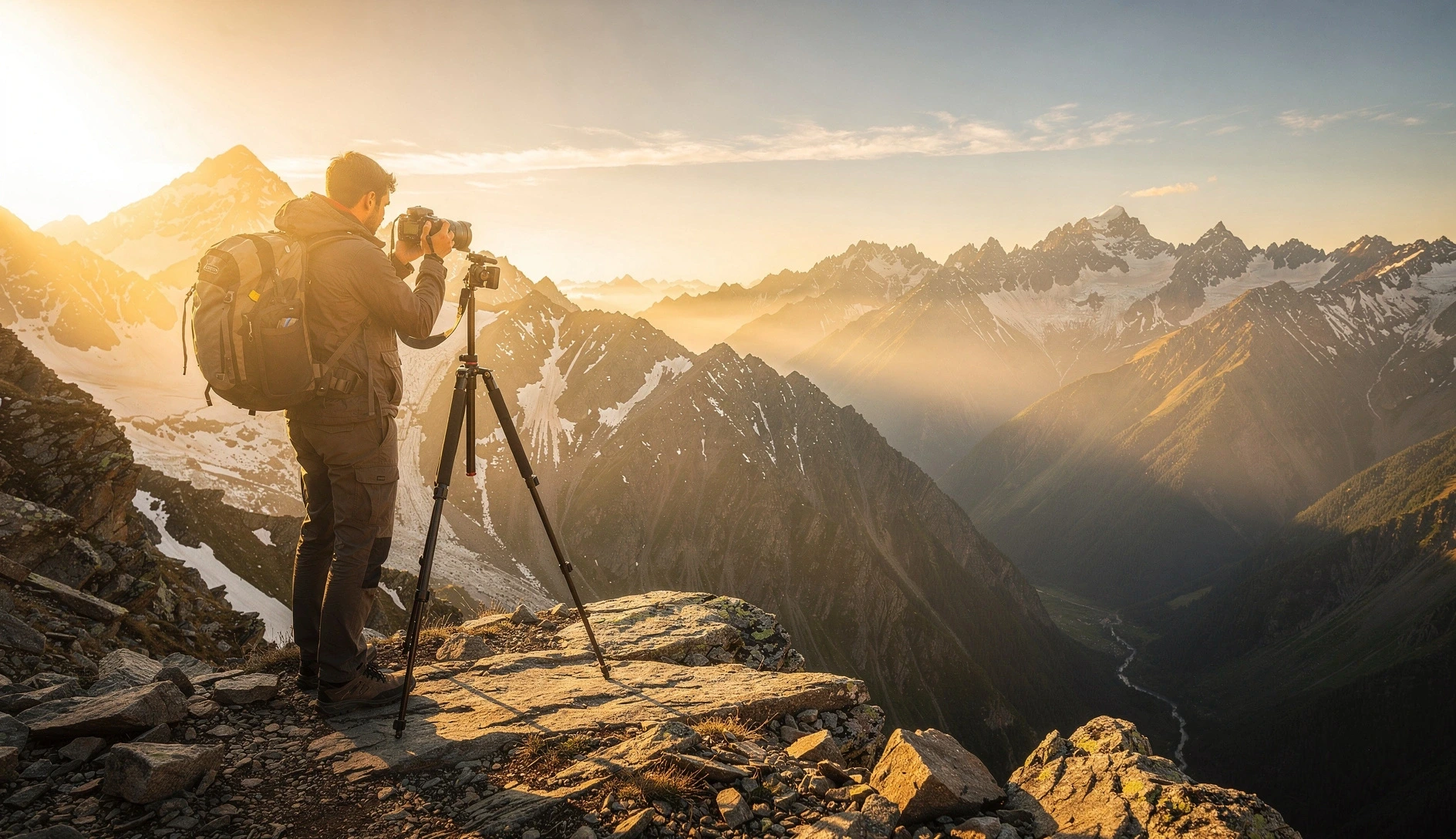
Georgia is one of those countries that makes you look like a better photographer than you actually are. The light, the textures, the landscapes — they do most of the work. But knowing when and where to point your camera separates the memorable shots from the generic postcard stuff.
This isn't a "top 20 Instagram spots" listicle. It's a practical guide covering where to go, when the light is best, what gear actually matters, and — critically — which famous spots are overrated and which hidden ones are worth the detour. After years of shooting across this country in every season, these are the things I wish someone had told me on day one.
Why Georgia Is Exceptional for Photography
Georgia packs an absurd amount of visual variety into a country the size of Ireland. Within a single day's drive, you go from subtropical Black Sea coastline to semi-arid steppe to 5,000-meter glaciated peaks. The architecture ranges from cave cities carved 3,000 years ago to Soviet brutalist apartment blocks to ultra-modern glass-and-steel structures.
The light is the real star. Georgia sits at roughly the same latitude as southern Italy and northern Spain, which means long golden hours, dramatic cloud formations pushed by Caucasus thermals, and winter sunlight that rakes across landscapes at impossibly low angles. The mountains create their own weather systems — you'll regularly get that photographer's dream of storm clouds with shafts of sunlight breaking through.
And unlike Iceland or Patagonia, you won't be jostling for tripod space. Outside of Kazbegi on a summer weekend, most locations in Georgia are blissfully empty.
Tbilisi: The City That Photographs Itself
Tbilisi is arguably the most photogenic city in the Caucasus, and one of the most underrated in the world. The Old Town alone could keep you shooting for a week — crumbling Art Nouveau facades, balconies dripping with vines, narrow lanes with improbable geometry, all set against a dramatic fortress-topped ridge.
| Location | Best Light | What to Shoot | Crowd Level |
|---|---|---|---|
| Narikala Fortress | Sunrise (east-facing views) | City panoramas, Mtkvari River, Old Town rooftops | Low at sunrise, packed by 11am |
| Abanotubani (Bath District) | Blue hour or overcast | Brick domes, steam vents, Leghvtakhevi waterfall | Always busy — go before 8am |
| Betlemi Quarter | Late afternoon (golden hour hits walls) | Stairways, doorways, vine-covered balconies | Always quiet |
| Sololaki Streets | Morning (east-lit facades) | Art Nouveau details, peeling plaster, cats | Empty before 9am |
| Rike Park / Peace Bridge | Blue hour (bridge lights up) | Modern vs ancient contrast, river reflections | Moderate |
| Mtatsminda Ridge Trail | Sunset (west-facing) | Full city panoramas with Caucasus backdrop | Low — most people take the funicular |
| Dry Bridge Market | Midday (open shade under trees) | Soviet memorabilia, portraits, street scenes | Weekends only, busiest 11am–2pm |
| Dezerter Bazaar | Morning (best activity 8–11am) | Produce colors, vendor portraits, market life | Chaotic but welcoming |
Tbilisi Pro Tip
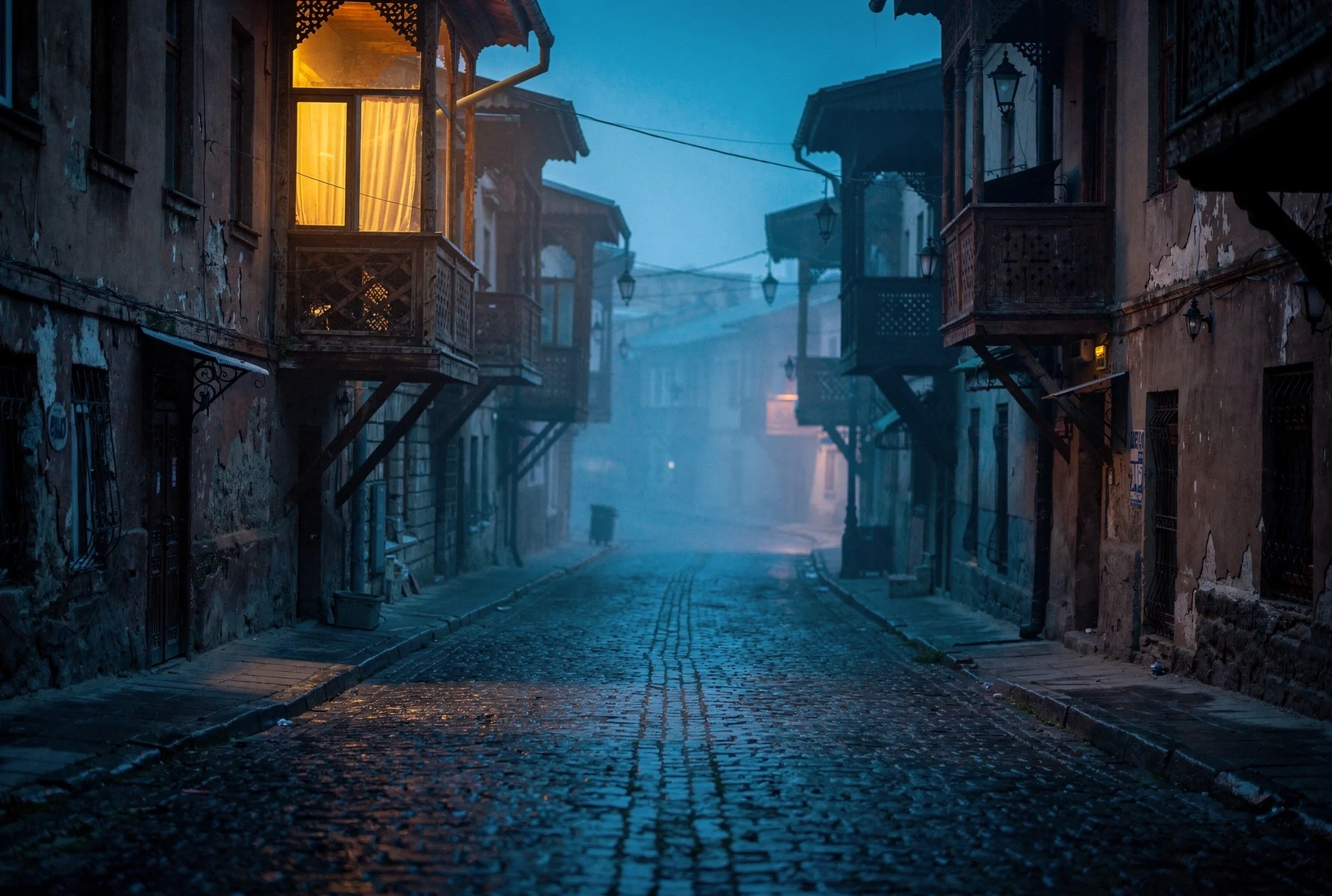
The best Tbilisi photos come from getting lost in Sololaki and the Betlemi Quarter between 7–9am, when light rakes across the east-facing facades and residents are just starting their day. Forget the viewpoints tourists queue for — the magic is in the details: cracked tile patterns, ornate door handles, laundry hanging between balconies, a cat sleeping on a warm car hood.
Overrated vs. Underrated in Tbilisi
⬇️ Overrated
Chronicles of Georgia — the monument itself is impressive, but it's surrounded by an ugly empty lot. Hard to frame well unless you bring a drone. Leghvtakhevi Waterfall is tiny and always crowded. Peace Bridge at midday — the glass structure looks flat without dramatic light.
⬆️ Underrated
Vera neighborhood — leafy European streets, almost no tourists. Marjanishvili area — German colonial architecture, amazing café scene. Fabrika courtyard at night — neon lights, gritty textures. The Ethnographic Museum at golden hour — traditional houses with Tbilisi panoramas.
Mountain Photography: The Caucasus
This is what puts Georgia on every landscape photographer's bucket list. The Greater Caucasus forms the country's northern border — a wall of 4,000–5,000 meter peaks, glacial valleys, and medieval tower villages that looks like it was designed by a fantasy illustrator. The difference from the Alps or Dolomites? Scale, wildness, and the near-total absence of infrastructure that clutters European mountain shots.
| Region | Key Subjects | Best Season | Access |
|---|---|---|---|
| Kazbegi / Stepantsminda | Gergeti Trinity Church, Mt. Kazbek, Truso Valley | Jun–Oct (Sep best) | 3hr drive from Tbilisi, paved road |
| Svaneti (Mestia / Ushguli) | Svan towers, Mt. Ushba, Koruldi Lakes | Jun–Sep (Jul for wildflowers) | 1hr flight or 8hr drive |
| Tusheti | Dartlo towers, Abano Pass, shepherd culture | Jul–Sep only (road closes) | 7hr 4x4 from Tbilisi |
| Juta / Chaukhi | Dolomite-like rock spires, alpine meadows | Jun–Oct | 30min detour from Kazbegi road |
| Racha | Shaori Lake, alpine villages, vineyards | May–Oct | 4hr drive from Tbilisi |
The Gergeti Question
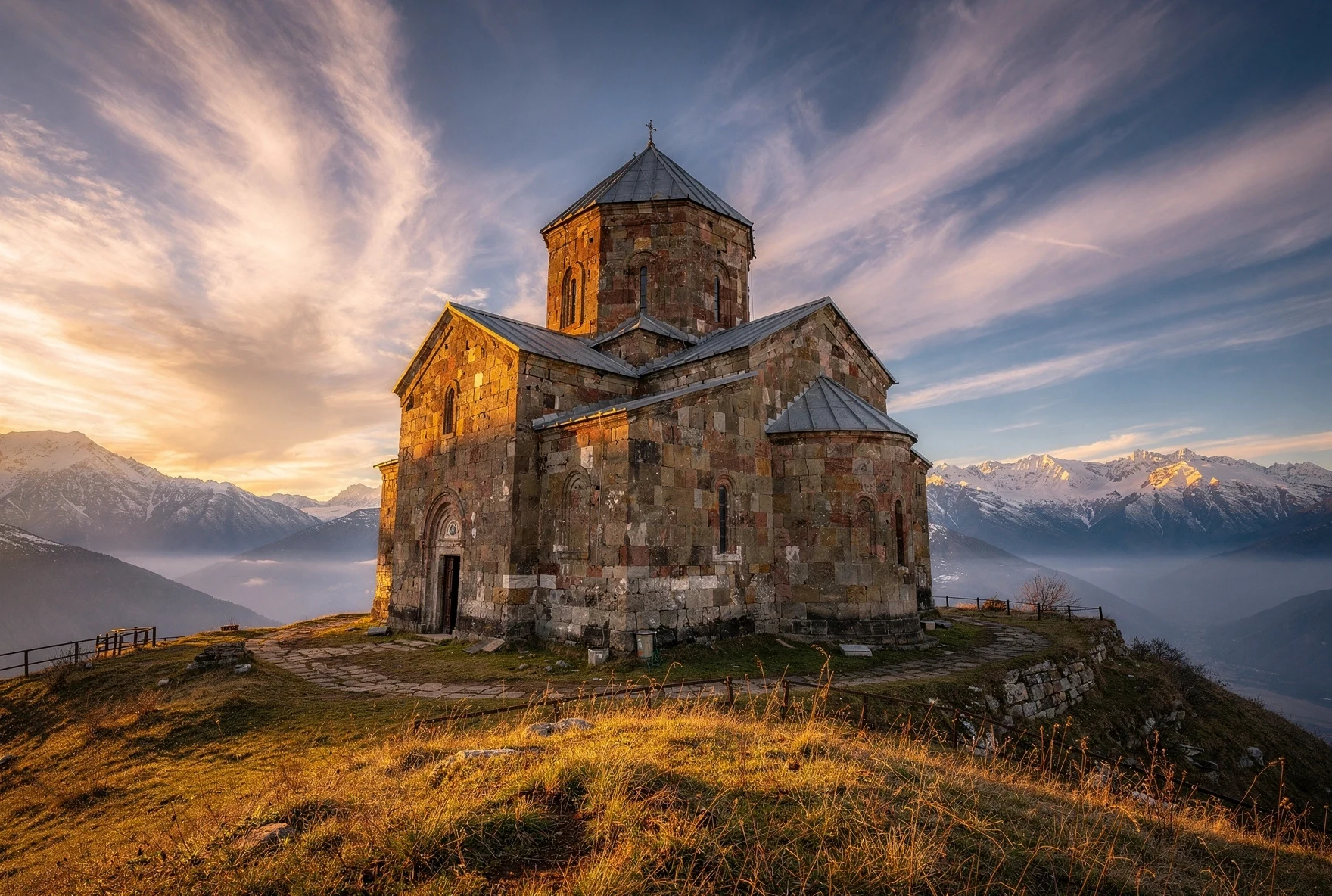
Gergeti Trinity Church below Mt. Kazbek is Georgia's most photographed scene. And yes, it absolutely deserves the hype — when conditions cooperate. Here's the honest truth:
- Clear view of Kazbek: Maybe 30% of days in summer. The mountain hides behind clouds most of the time. Plan at least two nights in Stepantsminda.
- Best conditions: Early morning after a clear night. September is statistically the best month for clear skies.
- The classic shot (church with Kazbek behind) requires hiking up to a ridge east of the church, not from the church itself. The standard tourist spot in front of the church puts the mountain behind you.
- Sunrise vs. sunset: Sunrise lights up the east face of the church with Kazbek behind. Sunset gives dramatic skies but the church is backlit.
- Avoid: Midday in July–August. The church is swarmed with tourists and the light is flat.
Svaneti vs. Kazbegi for Photographers
Kazbegi gives you the single iconic shot. Svaneti gives you a week's worth of varied subjects — medieval towers in every village, the dramatic double peak of Ushba, wildflower meadows at Koruldi Lakes, and a living cultural landscape that hasn't changed much in centuries. If you have to pick one for a photography trip, pick Svaneti. If you have a weekend, Kazbegi is unbeatable for effort-to-reward ratio.
Ancient Sites & Architecture
Georgia has been continuously inhabited for millennia, and the architectural legacy is staggering. The challenge for photographers is that many churches and monasteries look similar from the outside — grey stone, cross-dome design, modest scale. The key is understanding what makes each one special and how to capture that.
Vardzia Cave City
Afternoon light hits the south-facing cliff. The scale is hard to convey without people in the frame for reference. Best shot: from the trail on the opposite ridge, using a telephoto to compress the layers of caves.
Uplistsikhe Cave City
Morning light for the main chambers. The interior "wine press" room has beautiful natural light filtering through rock openings around 10am. Easier to reach than Vardzia and almost as photogenic.
Jvari Monastery
Sunset is the classic — the monastery silhouettes against the western sky with the Mtkvari-Aragvi confluence below. But sunrise from below (looking up from Mtskheta) is equally powerful and far less crowded.
David Gareja Monastery
The painted caves need controlled lighting (bring a headlamp). The view over the semi-desert from the ridge is best at sunrise when long shadows reveal the terrain texture. Go midweek — weekends draw crowds from Tbilisi.
Ananuri Fortress
Everyone shoots from the road. Instead, walk down to the reservoir shore for the reflection shot. Late afternoon when the sun hits the west-facing walls and the water is calm. One of Georgia's most recognizable images when done well.
Gelati Monastery (Kutaisi)
The exterior is fine but the interior mosaics are world-class. You'll need a fast lens — no tripods allowed inside, and the light is dim. Mornings when sun streams through the apse windows create spectacular light shafts in the dusty air.
Seasonal Photography Guide
| Season | Best Subjects | Light Quality | Challenges |
|---|---|---|---|
| Spring (Apr–May) | Wildflowers, green valleys, blooming Tbilisi, dramatic storms | Variable — dramatic cloud-and-sun combos | Mountain roads still closed, unpredictable rain |
| Summer (Jun–Aug) | High mountains, alpine lakes, Svaneti/Tusheti, night sky | Harsh midday, beautiful golden hours | Haze in lowlands, tourists at hotspots, Tbilisi heat |
| Autumn (Sep–Nov) | Foliage, wine harvest, moody valleys, clear mountain views | Best of the year — warm, low-angle, long golden hours | Mountain roads close mid-Oct, shorter days |
| Winter (Dec–Mar) | Snowy Tbilisi, churches in snow, Gudauri, minimal tourists | Low sun = dramatic shadows all day | Short days, mountain access limited, cold hands |
The Photographer's Best Month: September
September combines clear mountain skies, warm golden light, early autumn colors in the valleys, the grape harvest (rtveli) in Kakheti, pleasant temperatures, and far fewer tourists than July–August. Mountain roads are still open, wildflowers are fading but foliage is starting, and sunrise/sunset times are at a comfortable 6:30/7:00 window. If you can only visit once, come in September.
Kakheti: Wine Country & Rolling Landscapes
Kakheti — Georgia's eastern wine region — offers a completely different photographic palette from the dramatic mountains. Think golden fields, crumbling stone wineries, villages where grapevines grow over every courtyard, and the Alazani Valley stretching to the snow-capped Greater Caucasus on the horizon.
Sighnaghi
The "city of love" has a hilltop position with views across the entire Alazani Valley. Dawn from the town walls is extraordinary — mist fills the valley, and on clear days the Caucasus range floats above it like a mirage. Late afternoon light turns the pastel houses golden.
The Rtveli (Grape Harvest)
September–October. The most photogenic cultural event in Georgia. Families crushing grapes by foot, pressing into qvevri, feasting in vineyards. Ask at any small winery and they'll happily let you shoot — and probably invite you to dinner.
Gremi & Nekresi
Gremi's citadel tower against the sky is one of Kakheti's most recognizable subjects. Nekresi monastery — perched on a clifftop above the valley — offers sweeping panoramas. Both are best in late afternoon.
Village Wine Cellars
The most intimate shots come from inside family marani (wine cellars). Dim light, buried qvevri clay vessels, a winemaker tasting from a jug — these are the images that tell a story. Bring a fast prime lens.
Hidden Gems: Spots Most Photographers Miss
Everyone goes to Kazbegi, Svaneti, and Old Tbilisi. These are the places that serious photographers should have on their radar:
| Location | Why It's Special | Getting There | Best Season |
|---|---|---|---|
| Dashbashi Canyon | 240m deep canyon with new glass bridge. Wild, dramatic, almost unknown internationally. | 2hr from Tbilisi | May–Oct |
| Vashlovani National Park | Semi-desert badlands that look like Arizona. Mud volcanoes, strange erosion formations. | 5hr from Tbilisi (4x4 needed) | Apr–May, Sep–Oct |
| Abastumani | Soviet-era astronomical observatory town. Alpine setting, haunting ruins, incredible night skies. | 3.5hr from Tbilisi | Year-round (summer for night sky) |
| Machakhela Gorge | Subtropical valley near Batumi, stone arch bridges, tea plantations, dense forest. | 45min from Batumi | May–Sep |
| Truso Valley | Travertine terraces, mineral springs, abandoned villages. Otherworldly landscape 20km from Kazbegi. | Day hike from Kobi | Jun–Oct |
| Lagodekhi National Park | Primeval forest, waterfalls, pristine alpine lakes. The most biodiverse corner of the Caucasus. | 4hr from Tbilisi | Jun–Sep |
| Chiatura | Soviet mining town with functioning aerial cable cars from the 1950s. Industrial decay meets dramatic gorge setting. | 3hr from Tbilisi | Year-round |
Chiatura: Georgia's Most Unusual Photo Subject
Chiatura's Soviet-era cable cars — still running daily, dangling over a deep gorge — are the kind of subject that stops people scrolling. The town itself is a fascinating study in Soviet industrial architecture, with manganese mine infrastructure fused into the cliff walls. It's not pretty in the conventional sense, but it's utterly unique. Pair it with nearby Katskhi Pillar (a church perched atop a 40m limestone column) for a surreal day trip.
Golden Hour Timing by Season
Georgia sits between latitudes 41°N and 43°N. Golden hour timing varies significantly by season, and the mountainous terrain means the sun can disappear behind ridges well before the official sunset time.
| Month | Sunrise | Sunset | Golden Hour Window | Notes |
|---|---|---|---|---|
| January | 8:15 | 17:50 | ~45 min each | Low sun = dramatic all day in valleys |
| April | 6:50 | 20:05 | ~35 min each | Best spring storm light |
| July | 5:50 | 20:45 | ~30 min each | Early sunrise punishes late sleepers |
| September | 6:40 | 19:30 | ~40 min each | Perfect — warm, long, comfortable timing |
| November | 7:25 | 17:35 | ~50 min each | Longest golden hours, moody atmosphere |
Mountain Golden Hour Warning
In mountain valleys (Kazbegi, Svaneti, Tusheti), the effective sunset can be 45–60 minutes before the official time because the sun drops behind ridges early. Plan accordingly. Conversely, peaks and ridgelines can catch spectacular alpenglow well after the sun has set in the valley below.
Gear Recommendations
You don't need expensive gear to shoot Georgia well. But some specific choices will make your life significantly easier.
🔭 Lenses
24–70mm or equivalent zoom covers 80% of situations. A fast prime (35mm or 50mm f/1.8) is essential for dim church interiors, wine cellars, and markets. A 70–200mm is useful for mountain compression shots but heavy to carry on hikes. If you bring one lens, make it the 24–70.
📱 Phone vs. Camera
Modern phones (iPhone 15/16 Pro, Pixel 8/9) do remarkably well in Georgia's abundant light. Where they fail: dim interiors, telephoto mountain shots, and anything requiring control over depth of field. A dedicated camera is still worth it for serious work, but a phone captures 70% of what you'll want.
🏔️ Hiking Gear
A travel tripod (carbon fiber, under 1.5kg) is worth the weight for sunrise/sunset and star trails. Polarizing filter cuts haze in the valleys and deepens the blue of mountain skies — more useful here than an ND filter. Rain cover for sudden mountain showers.
💾 Backup & Storage
Georgia has excellent mobile internet in cities (cheap SIM cards with generous data), but spotty coverage in mountains. Bring enough SD cards for the trip and a portable SSD or hard drive for backup. Cloud uploading from mountain villages will test your patience.
Photographing People & Culture
Georgians are generally warm and approachable, but there are unwritten rules about photography that will save you from awkward situations — or help you get far better images than the grab-and-go approach.
- Always ask first. A smile and a gesture toward your camera is usually enough. Most Georgians will say yes enthusiastically. Some will strike a pose. Older men at markets are often surprisingly photogenic and happy to be photographed.
- Share the result. Show people the photo on your screen. This single gesture has led to some of my best photo opportunities — people relax, laugh, and sometimes invite you for a glass of wine.
- Churches and monasteries: Photography is generally allowed but flash and tripods are usually not. Be discreet during active services. Some monks and nuns prefer not to be photographed — respect that immediately.
- Wine cellars: Almost every family winemaker will happily let you shoot their marani if you express genuine interest. This isn't a transactional thing — they're proud of their tradition and want to share it.
- Supra (feast) photography: If you're invited to a supra, you'll want to document everything. Go ahead — the host will be delighted. But put the camera down for the toasts. Participation matters more than documentation.
- Religious sensitivity: Women should cover their heads in active churches. Both genders should dress modestly in religious sites. This isn't just for photography — it's basic respect.
Practical Tips for Shooting in Georgia
| Topic | Details |
|---|---|
| Drone rules | Officially you need GCAA permission. In practice, recreational drones under 25kg are widely flown without issues in rural areas. Avoid military zones, airports, and central Tbilisi. Svaneti and Tusheti are incredible from the air. |
| Border areas | Do NOT photograph near the South Ossetia or Abkhazia boundary lines. Military and police checkpoints are also off-limits. David Gareja is near the Azerbaijan border — stay on the Georgian side. |
| Dust and conditions | Mountain roads are incredibly dusty. Keep gear in sealed bags when driving. Humidity near the Black Sea can cause condensation on lenses going from AC to outdoor heat. |
| Hiring guides | For Tusheti and remote Svaneti valleys, a local guide isn't just helpful — they'll get you access to private homes, towers, and cellars that you'd never find alone. Budget 80–150 GEL/day. |
| Night photography | Light pollution is minimal outside Tbilisi and Batumi. Abastumani has one of the darkest skies in the Caucasus. The Milky Way core is visible May–September. Churches make excellent foreground subjects for star compositions. |
| Transport for photographers | Rent a car for maximum flexibility — sunrise/sunset timings don't align with marshrutka schedules. A Suzuki Jimny or similar 4x4 is essential for Tusheti and helpful for Svaneti back roads. Budget 120–180 GEL/day. |
Photography Itineraries
Weekend: Tbilisi + Kazbegi
Day 1: Tbilisi Old Town sunrise, Sololaki streets, Dry Bridge Market, Narikala sunset. Day 2: Drive to Kazbegi at dawn via Georgian Military Highway (stop at Ananuri, Gudauri viewpoints). Gergeti sunset. Day 3: Gergeti sunrise, Truso Valley day hike, drive back.
1 Week: Mountains & Culture
Days 1–2: Tbilisi. Day 3: Mtskheta + Jvari + drive to Kazbegi. Day 4: Kazbegi + Truso. Day 5: Fly to Mestia (or drive via Kutaisi). Days 6–7: Svaneti — Mestia, Koruldi Lakes hike, drive to Ushguli if road is open. Return to Tbilisi.
10 Days: The Full Portfolio
Days 1–2: Tbilisi. Days 3–4: Kakheti wine country + Sighnaghi. Day 5: David Gareja. Days 6–7: Kazbegi + Military Highway. Days 8–9: Svaneti. Day 10: Kutaisi + Gelati Monastery. Covers all major photography genres: urban, wine, desert, mountain, medieval.
2 Weeks: Deep Dive + Hidden Gems
Add Tusheti (3 days — worth every minute), Chiatura + Katskhi Pillar (1 day), Vardzia + Abastumani (2 days), and a couple of Black Sea days (Machakhela Gorge + Batumi at night). This is the trip that produces genuinely unique work most photographers haven't seen.
Common Photography Mistakes in Georgia
- Only shooting the famous spots. Gergeti, Narikala, Ananuri — these are beautiful, but thousands of identical images exist. The images that stand out show the less-documented corners: Chiatura's cable cars, a family rtveli, dawn light on a Svan tower, a grandmother in Tusheti making cheese.
- Rushing through in a car. Georgia rewards patience. The best shots come from spending two or three days in one area, learning the light patterns, meeting locals, finding the angles nobody else sees.
- Ignoring overcast days. Georgia's mountains create dramatic weather. Fog in Svaneti, rain in Tusheti, storm light anywhere — these conditions produce the most atmospheric images. Don't hide in your hotel when the sky looks grey.
- Not looking up. Georgian balconies, ceiling frescoes in churches, twisted vines overhead in a wine cellar — some of the most iconic details of this country are above eye level.
- Treating it like just a landscape destination. The landscapes are spectacular, but Georgia's real photographic richness is the intersection of people, tradition, and place. A portrait of a winemaker in his cellar tells a better story than another mountain panorama.
Frequently Asked Questions
Do I need a photography permit?
No. Georgia has no general photography permit requirement. Some museums charge a small fee for camera use (typically 5–10 GEL). Drone use has grey-area regulations — see the practical tips section.
Is Georgia safe for solo photographers?
Very safe. Georgia has one of the lowest crime rates in Europe. You can walk Tbilisi streets at 3am with a camera around your neck without worry. The main risk is mountain weather and rough roads, not people.
Should I join a photography tour?
Only if you want to reach Tusheti or very remote Svaneti villages without driving yourself. For everything else, self-driving gives you far more flexibility to chase light. Tours follow fixed schedules that rarely align with golden hours.
Where can I get camera gear repaired?
Tbilisi has a few camera shops on and around Aghmashenebeli Avenue, but don't expect professional-grade repair services. Bring backup gear for anything critical. Sensor cleaning kits are essential — dust is everywhere.
Best app for planning sunrise/sunset?
PhotoPills or The Photographer's Ephemeris work perfectly in Georgia. They'll show you exactly where the sun rises/sets relative to landmarks — critical for planning shots at Gergeti, Jvari, and mountain locations.
Is autumn really the best season?
For most photography styles, yes. September specifically offers the best combination of weather, access, light, and events (rtveli). But winter has its own dramatic appeal, and summer is essential for the high mountains. There's no bad season — just different subjects.
Written by The Georgian Guide Team
Based in Tbilisi, we've spent years photographing Georgia in every season — from frozen January mornings on Narikala to sweltering August sunsets in Kakheti vineyards. This guide reflects real shooting experience, not armchair research.
Last updated: March 2026.
Related Articles
Best Time to Visit Georgia
Month-by-month breakdown of weather, crowds, and experiences.
Georgia in Autumn
The photographer's favorite season — foliage, wine harvest, clear skies.
Svaneti Travel Guide
Georgia's most dramatic mountain region — towers, peaks, and alpine lakes.
Kazbegi & Stepantsminda Guide
Everything you need to plan a trip to Georgia's most iconic mountain scene.