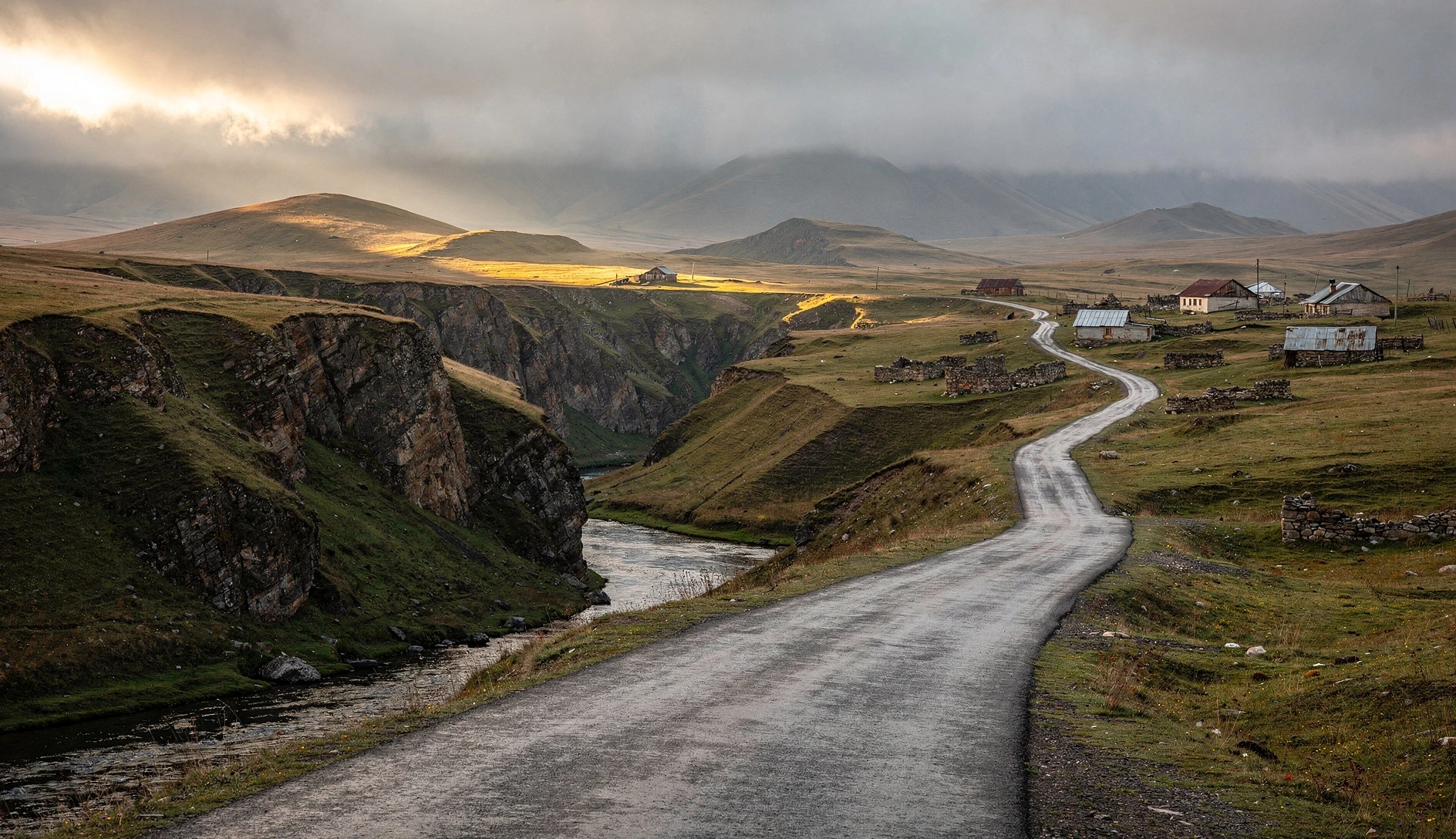
Southern Georgia doesn't get the attention it deserves. While everyone queues up for Kazbegi selfies and Kakheti wine tours, Samtskhe-Javakheti sits quietly two hours south of Tbilisi — home to the country's most spectacular cave monastery, a castle where churches and mosques share the same walls, mineral springs that have been famous since the Romanovs, and a volcanic plateau that feels more like Mongolia than the Caucasus.
This road trip covers the full Samtskhe-Javakheti loop: Tbilisi to Borjomi, through Akhaltsikhe and Rabati Castle, down the Mtkvari gorge to Vardzia, with optional detours to Abastumani's crumbling observatory town and the windswept Javakheti Plateau. It's 400-500 km depending on your route choices, comfortable in 3 days, perfect in 4-5.
Fair warning: this region will mess with your expectations of what Georgia looks like. No vineyards, no subtropical coast, no pine forests. Instead: treeless highlands at 2,000+ meters, deep river canyons, and a cultural mix of Georgian, Armenian, and Turkish influences that you won't find anywhere else in the country.
Quick Facts
Why This Road Trip
Georgia's southern highlands are genuinely different from anything else in the country. Most visitors stick to the east-west corridor — Tbilisi, Kakheti, maybe Svaneti — and miss the entire southern dimension. That's a mistake, because Samtskhe-Javakheti packs an absurd density of world-class sights into a compact area.
🏛️ History That's Hard to Believe
Vardzia alone justifies the trip — 600+ caves carved into a sheer cliff face in the 12th century. Then there's Rabati Castle (9th century, Ottoman additions), Khertvisi Fortress (one of Georgia's oldest), and cave cities older than Rome.
🏔️ Landscapes That Shift Every Hour
Start in lush Borjomi gorge, drive through arid river canyons, and end on a volcanic plateau at 2,000+ meters that looks like central Asia. The visual variety in a single day is staggering.
🍲 Meskhetian Food
Samtskhe-Javakheti has its own cuisine — heavier on spice and heat than the rest of Georgia. The local tatarboragi (walnut dumplings) and cheese variants are worth the drive alone.
👥 Almost No Tourists
Outside of Borjomi and a brief Vardzia rush at midday, you'll have most of this region to yourself. The Javakheti Plateau in particular feels genuinely remote.
Route Overview
| Segment | Distance | Drive Time | Road Quality |
|---|---|---|---|
| Tbilisi → Borjomi | 160 km | 2.5–3 hours | Good highway, last 30 km winding |
| Borjomi → Akhaltsikhe | 52 km | 1 hour | Good two-lane road through gorge |
| Akhaltsikhe → Vardzia | 65 km | 1–1.5 hours | Good road, scenic canyon drive |
| Vardzia → Tbilisi (direct) | ~280 km | 4–5 hours | Same route back via Akhaltsikhe |
| Vardzia → Javakheti → Tbilisi | ~350 km | 6–7 hours | Plateau roads variable, some rough stretches |
Rental Car vs. Marshrutka
This trip is dramatically better with your own car. Marshrutkas connect Tbilisi to Borjomi and Akhaltsikhe, but reaching Vardzia, Khertvisi, and especially the Javakheti Plateau by public transport ranges from inconvenient to impossible. Budget $25–40/day for a rental from Tbilisi. A sedan works for the main route; 4WD is only needed if you plan to explore the Javakheti highland dirt roads.
Day-by-Day Itinerary
Day 1: Tbilisi to Borjomi
Leave Tbilisi in the morning and take the highway west toward Khashuri. The drive is unremarkable for the first hour — flat agricultural land, truckers, the usual highway rhythm. Things get interesting once you turn south at Khashuri onto the Borjomi road. The landscape tightens into a forested gorge, the air temperature drops a few degrees, and suddenly you understand why the Russian aristocracy built their summer estates here.
Borjomi is famous for two things: its mineral water (you've probably seen the green bottles) and its national park. The town itself is small and slightly worn around the edges, but the gorge setting is beautiful and there's enough to fill a solid half-day.
Don't miss:
- Borjomi Central Park — Walk to the mineral water spring at the back and try it fresh. It tastes like warm rust. Locals love it. You'll have opinions.
- The cable car — Takes you up to a viewpoint above the gorge. Worth the 5 GEL.
- Borjomi-Kharagauli National Park — If you have time, the shorter trails (2–4 hours) through old-growth forest are excellent. Register at the visitor center first.
- Romanov Palace — The former summer residence of the Russian royal family. Now a museum, modestly interesting for the building itself more than the exhibits.
Borjomi Timing
If you're doing this trip in 3 days, treat Borjomi as a brief stop (1–2 hours) and push on to Akhaltsikhe for the night. If you have 4+ days, stay overnight in Borjomi and enjoy the park at a relaxed pace. Hotels are cheaper here than in Akhaltsikhe.
Day 2: Akhaltsikhe, Rabati Castle & the Mtkvari Canyon
From Borjomi, the road to Akhaltsikhe winds through increasingly arid landscape. The green gorge gives way to drier, more open terrain — your first hint that you're entering a different Georgia. Akhaltsikhe (literally "new castle") is the regional capital and your base for exploring the area.
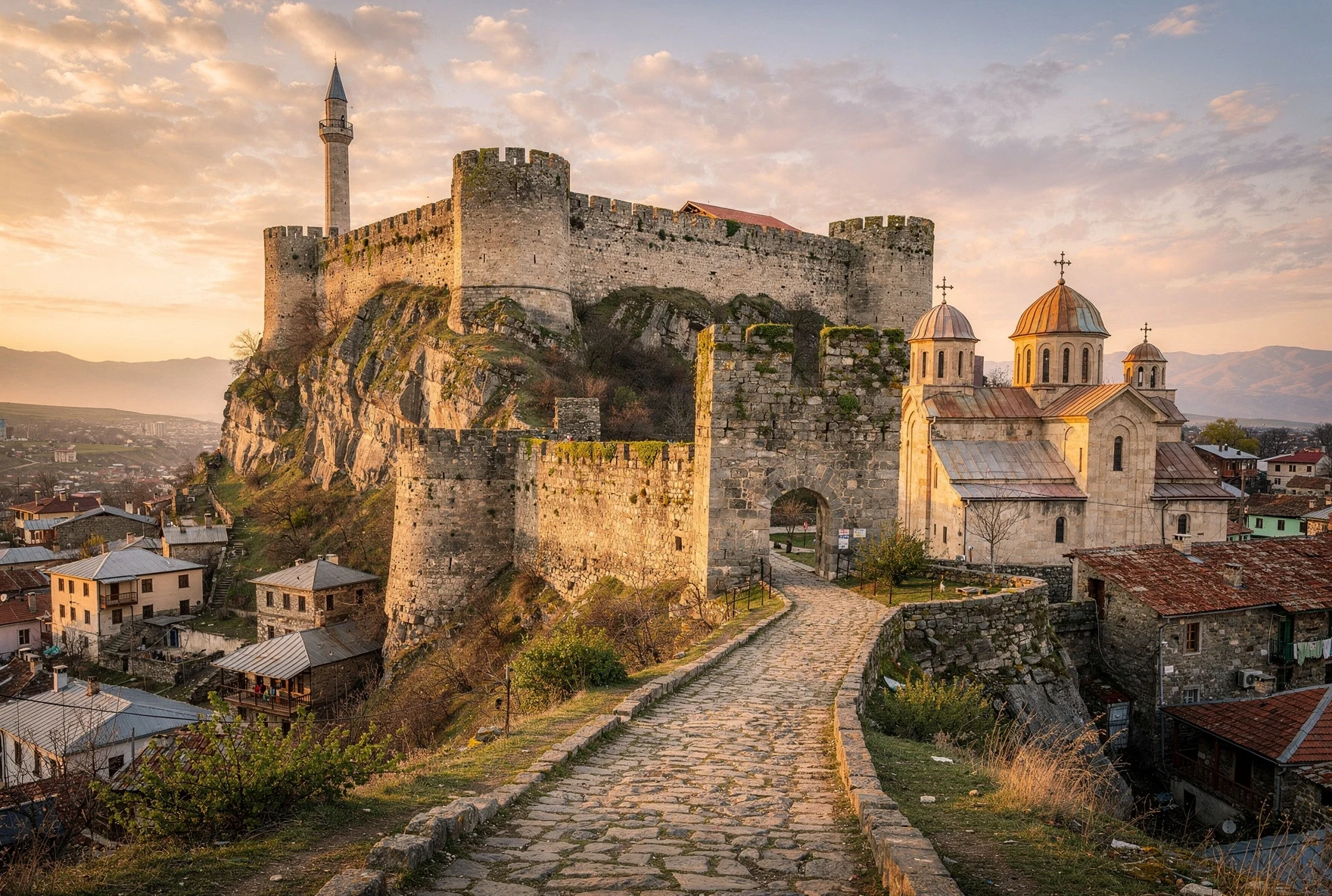
Rabati Castle is the main event. This 9th-century fortress complex sits on a hill above town and tells the story of southern Georgia in stone: Georgian churches, an Ottoman mosque, a synagogue, and a madrasa, all within the same walls. The castle was controversially renovated in 2012 — the restoration was thorough but heavy-handed, and historians are divided on whether it preserved or Disney-fied the original. Either way, it's visually striking and worth a couple of hours.
| Rabati Detail | Info |
|---|---|
| Entry Fee | 7 GEL (lower courtyard free, upper castle area ticketed) |
| Hours | 10:00–18:00 (summer until 19:00) |
| Time Needed | 1.5–2 hours |
| Don't Miss | The mosque's minaret, the ethnographic museum, the panoramic view from the upper walls |
After Rabati, drive south toward Vardzia along the Mtkvari River canyon. This is one of Georgia's most spectacular drives and nobody talks about it. The road hugs the canyon wall, the river runs far below, and ancient fortresses appear on cliff edges without warning. About 30 km south of Akhaltsikhe, you'll pass Khertvisi Fortress — perched at the confluence of the Mtkvari and Paravani rivers, it's one of the oldest fortifications in Georgia (the current structure is mostly 10th–14th century). It's free to enter and takes 20–30 minutes to explore.
Don't Skip Khertvisi
Most people drive past Khertvisi in their rush to reach Vardzia. Stop. The fortress is dramatic, free, and usually empty. The view from the walls — two rivers meeting in a deep canyon — is one of the best in southern Georgia. Park at the small lot just off the main road and walk up (5 minutes).
Day 3: Vardzia
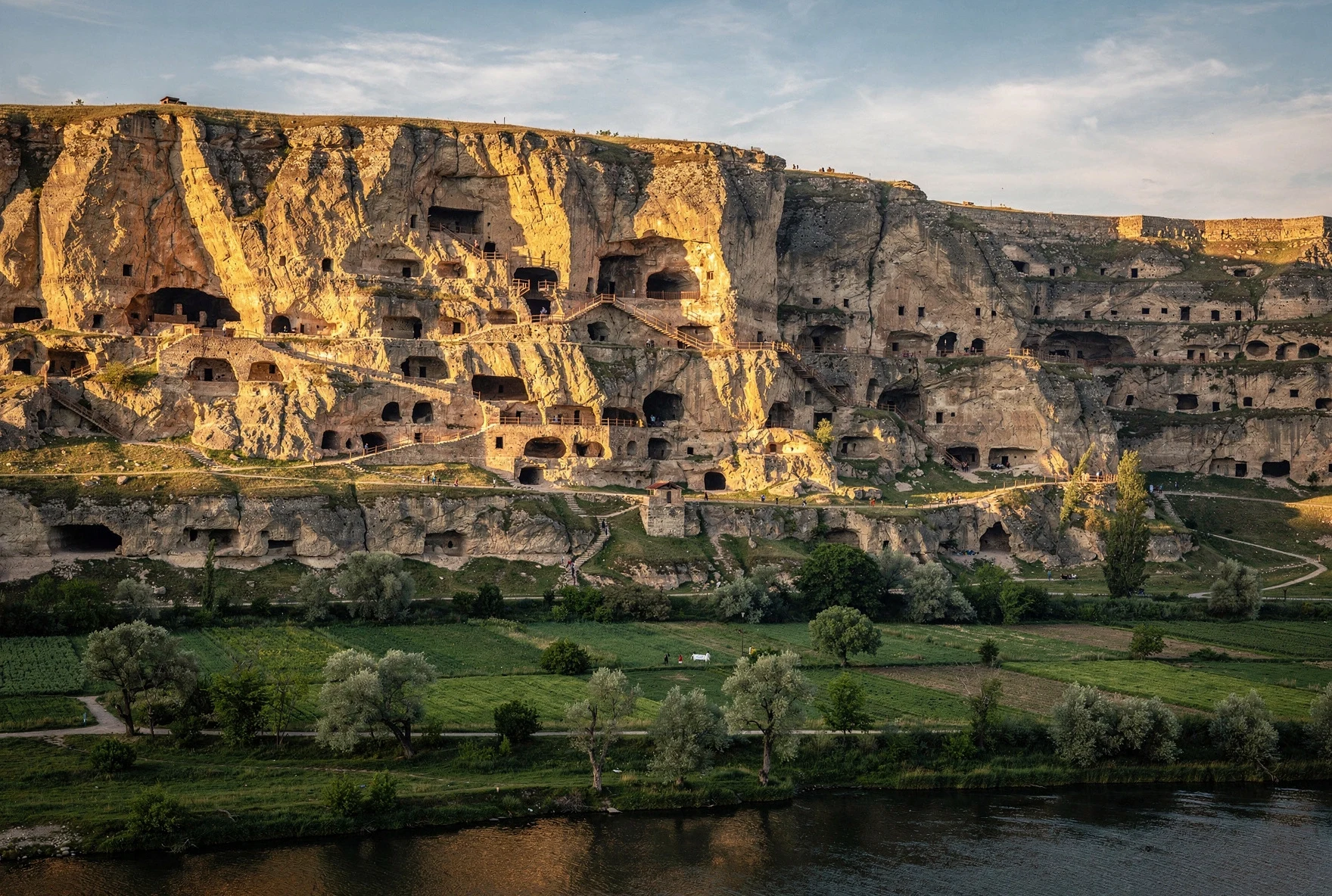
This is the day you came for. Vardzia is extraordinary — a cave monastery carved into a sheer cliff face in the 1180s under Queen Tamar, originally containing 6,000 apartments, 25 wine cellars, a bakery, a pharmacy, and a church with frescoes that survive to this day. A 13th-century earthquake exposed the internal structure (it was originally hidden inside the mountain), and what you see now is a vertical city of 600+ caves spread across 13 tiers.
| Vardzia Detail | Info |
|---|---|
| Entry Fee | 15 GEL (audio guide extra 15 GEL, private guide 60 GEL) |
| Hours | 10:00–18:00 (last entry 17:00, summer until 19:00) |
| Time Needed | 2–3 hours minimum |
| Difficulty | Moderate — steep stairs, narrow tunnels, uneven surfaces |
| Key Sights | Church of the Assumption (12th-century frescoes of Queen Tamar), bell tower, wine cellars, the secret tunnel to the river |
Practical tips for Vardzia:
- Arrive early. Tour buses from Tbilisi typically arrive around 11:00–12:00. If you're staying in Akhaltsikhe or the Vardzia area, being at the gate when it opens means you'll have the caves largely to yourself.
- Take the audio guide. Signage is minimal. Without context, you're just looking at holes in a rock. With the audio guide, every cave becomes a story.
- Wear proper shoes. The paths are steep, often wet, and some tunnels require ducking and climbing. Sandals are a bad idea.
- The Church of the Assumption is the highlight — look for the fresco of Queen Tamar on the north wall. She's depicted with a model of the church, which is a common motif in Georgian royal frescoes.
- The secret tunnel runs from the upper caves down to the river. In the 12th century, it provided water access during sieges. You can walk through it — it's narrow, dark, and unforgettable.
Afternoon at Vardzia
The cliff face is south-facing, so afternoon light is best for photography — the caves glow golden and the shadows create dramatic depth. If you're a photographer, consider visiting twice: morning for exploration, late afternoon for light.
Optional Detours
The core route (Borjomi → Akhaltsikhe → Vardzia) can be done in a focused 2–3 days. But if you have more time, these detours add serious depth to the trip.
🔭 Abastumani
A crumbling former resort town 30 km south of Akhaltsikhe, built around a Soviet-era astronomical observatory at 1,650m. The observatory still operates and offers nighttime stargazing sessions in clear weather. The town itself is a fascinating ghost of its former self — grand buildings slowly returning to nature. Worth a half-day detour.
🕌 Sapara Monastery
Hidden in a forested gorge 12 km southeast of Akhaltsikhe, this 10th-century monastery is one of Georgia's most atmospheric. The road is rough (last 3 km unpaved), but the setting — ancient stone buildings nestled in dense forest — is magical. 13th-century frescoes inside the main church.
🌊 Javakheti Plateau & Lakes
The high volcanic plateau east of Akhaltsikhe is another world entirely — treeless grasslands at 2,000m, scattered Armenian villages, and a string of alpine lakes (Paravani, Sagamo, Khanchali). The landscape feels like Mongolia or Tibet. Roads vary from decent to terrible; best with 4WD June–September.
🏛️ Tmogvi Fortress
The ruins of a once-massive fortress perched on a cliff above the Mtkvari, about 15 km before Vardzia. It's a scramble to reach (no formal path), but the views from the ruins are staggering. Best paired with Vardzia in a single day.
Where to Stay
| Location | Best For | Price Range | Notes |
|---|---|---|---|
| Borjomi | Night 1 (if 4+ day trip) | 60–200 GEL | Wide range of guesthouses and hotels. Book on Booking.com — Borjomi is well-touristed. |
| Akhaltsikhe | Best base for 2+ nights | 80–250 GEL | Central location for Rabati, Vardzia, Sapara, Abastumani. Hotels near the castle are convenient. |
| Vardzia area | Photographers, early-risers | 50–150 GEL | Small guesthouses near the site. Booking options are limited — check Booking.com well in advance. |
| Javakheti Plateau | Adventurous travelers | 40–80 GEL | Basic guesthouses in Ninotsminda and Akhalkalaki. Don't expect luxury — do expect incredible hospitality. |
Budget Guide
Budget Traveler (per person, 3 days)
Comfortable (per person, 4 days)
When to Go
| Season | Weather | Crowds | Notes |
|---|---|---|---|
| May–June | Warm, green, wildflowers | Low–moderate | Best overall. Plateau roads open, landscapes lush. |
| July–August | Hot in valleys, pleasant on plateau | Moderate | Vardzia and Rabati can be very hot. Go early morning. |
| September–October | Cool, golden light, dry | Low | Excellent for photography. Plateau gets cold by October. |
| November–April | Cold, snow on plateau | Almost none | Borjomi–Akhaltsikhe–Vardzia still accessible. Javakheti roads may be closed. |
Food & Drink
Samtskhe-Javakheti has its own culinary identity, distinct from the rest of Georgia. The Meskhetian cuisine of the western part of the region is spicier and more herb-forward than typical Georgian food. The eastern Javakheti side has strong Armenian influences. Either way, you'll eat well and cheaply.
| Dish | What It Is | Where to Try |
|---|---|---|
| Tatarboragi | Walnut-filled dumplings in a tangy sauce — the regional signature dish | Akhaltsikhe restaurants |
| Tenili cheese | Stringy, pulled cheese — mesmerizing to watch being made | Akhaltsikhe market, roadside stalls |
| Meskhetian adjika | Spicy pepper paste — hotter and more complex than the Megrelian version | Everywhere in the region |
| Meskhuri khachapuri | Local khachapuri variant with a thicker, layered dough | Bakeries in Akhaltsikhe and Borjomi |
| Local wine | Meskheti has its own grape varieties and a growing wine scene | Ask guesthouse owners — most make their own |
Driving Tips
⛽ Fuel Up in Borjomi or Akhaltsikhe
Gas stations become scarce south of Akhaltsikhe. Fill up before heading to Vardzia and definitely before any Javakheti detour. The last reliable stations are in Akhaltsikhe.
🐄 Livestock on Roads
Cows on the road are a fact of life in rural Georgia, and Samtskhe-Javakheti is no exception. Drive carefully, especially at dusk. The cows have the right-of-way and they know it.
📱 Cell Service
Coverage is good on the main Borjomi–Akhaltsikhe–Vardzia road. It drops to zero on parts of the Javakheti Plateau and on the Sapara Monastery road. Download offline maps before you leave Tbilisi.
🛣️ Road Quality
The main routes are well-paved and comfortable for any car. Side roads to Sapara, Tmogvi, and especially the Javakheti Plateau range from rough asphalt to dirt tracks. Check conditions locally before committing to unpaved detours.
Common Mistakes
Doing Vardzia as a Day Trip from Tbilisi
It's technically possible (many tour companies offer it), but it's 5+ hours each way. You arrive exhausted, rush through the caves, and drive back in the dark. Spend the night in the region instead.
Skipping Khertvisi
Everyone drives past it because Vardzia is the goal. But Khertvisi is free, dramatic, and takes 20 minutes. Stop.
Not Bringing Layers
Borjomi can be 25°C while the Javakheti Plateau is 10°C. The altitude difference is dramatic and so are the temperatures. Pack layers even in summer.
Arriving at Vardzia at Midday
Tour buses arrive 11:00–13:00 and the caves get crowded and hot. Early morning (10:00 opening) or late afternoon is dramatically better.
Ignoring the Food
Meskhetian cuisine is genuinely different from Tbilisi food. Ask for tatarboragi and tenili at every restaurant — they're not on every menu, but locals know where to find them.
Planning Javakheti Without 4WD
The main road through Akhalkalaki is fine for a sedan. But if you want to reach the lakes, high plateaus, and remote villages, you need ground clearance. Don't risk it in a rented Hyundai Accent.
Sample Itineraries
3 Days: The Essentials
Day 1: Tbilisi → Borjomi (park, mineral spring) → Akhaltsikhe (Rabati Castle). Sleep Akhaltsikhe.
Day 2: Khertvisi Fortress → Vardzia (full morning). Sleep Akhaltsikhe or Vardzia area.
Day 3: Drive back to Tbilisi via Borjomi. Optional stop at Timotesubani medieval church.
5 Days: The Full Loop
Day 1: Tbilisi → Borjomi. Explore park, cable car, mineral springs. Sleep Borjomi.
Day 2: Borjomi → Akhaltsikhe. Rabati Castle, Sapara Monastery. Sleep Akhaltsikhe.
Day 3: Khertvisi → Tmogvi → Vardzia. Sleep Vardzia area.
Day 4: Morning at Vardzia (photography light). Drive to Javakheti Plateau — Lake Paravani, Akhalkalaki. Sleep Ninotsminda or Akhalkalaki.
Day 5: Javakheti Plateau exploration → Tbilisi via Tsalka or direct. Long drive day.
Without a Car
It's harder but not impossible. Here's how the public transport works:
| Route | Transport | Cost | Notes |
|---|---|---|---|
| Tbilisi → Borjomi | Marshrutka or train | 10–15 GEL | Frequent departures from Didube station. Train is slower but scenic. |
| Borjomi → Akhaltsikhe | Marshrutka | 5–7 GEL | Several per day, roughly hourly. |
| Akhaltsikhe → Vardzia | Marshrutka or taxi | 7–10 GEL / 50–70 GEL | One marshrutka per day (morning, returns afternoon). Taxi is far more flexible. |
| Tbilisi → Akhaltsikhe | Direct marshrutka | 15–20 GEL | Skips Borjomi. Several per day from Didube. 3.5–4 hours. |
The Vardzia Problem
The single daily marshrutka from Akhaltsikhe to Vardzia is designed for locals, not tourists — it leaves early and returns mid-afternoon. If you miss it, you're stuck. A shared taxi from Akhaltsikhe (negotiate 50–70 GEL round trip with waiting time) is the pragmatic solution. Better yet, find other travelers at your guesthouse and split the cost.
Frequently Asked Questions
Is this trip suitable for families with kids?
The main route (Borjomi–Akhaltsikhe–Vardzia) is fine for families. Vardzia involves a lot of climbing and some narrow tunnels — manageable for kids over 6 or so, but not great for toddlers. Borjomi's park and cable car are kid-friendly. The Javakheti Plateau is long driving with limited facilities, less ideal for small children.
Can I combine this with the Tbilisi–Batumi road trip?
Yes — from Akhaltsikhe, you can head west toward Kutaisi or southwest toward Batumi via Adigeni and the Goderdzi Pass (open summer only). This extends the trip significantly but creates an excellent loop: Tbilisi → Borjomi → Vardzia → Goderdzi → Batumi → coast back to Tbilisi.
How different is Vardzia from David Gareja?
Very different. David Gareja is semi-desert on the Azerbaijani border — a painted monastery in arid badlands. Vardzia is a cliff-carved city in a green river canyon. Both are extraordinary but they feel nothing alike. If you can only do one, Vardzia is the more dramatic and well-preserved site. Ideally, do both on separate trips.
Is the Javakheti Plateau worth the detour?
If you like wide-open landscapes, remote places, and cultural curiosity (it's predominantly Armenian-populated with a distinct atmosphere), absolutely. If you want sights, activities, and infrastructure, probably not — it's raw and undeveloped. Think of it as the "Iceland of Georgia" minus the Instagram crowds.
Do I need to book accommodation in advance?
In July–August, booking Borjomi and Akhaltsikhe hotels 1–2 weeks ahead is wise. The rest of the year, you can usually show up and find something. Vardzia-area guesthouses have very limited capacity — always book ahead if you want to sleep near the caves.
Written by The Georgian Guide Team
We've driven the Samtskhe-Javakheti loop multiple times in different seasons — from a sweaty July sprint to a October photography trip when the plateau grass had turned gold. The region rewards slow travel and repeat visits. This guide reflects what we actually do when we take friends south.
Last updated: February 2026.
Related Articles
Vardzia Cave City Guide
The complete guide to Georgia's most spectacular cave monastery.
Borjomi Guide
Mineral springs, national park, and the gateway to southern Georgia.
Kakheti Wine Road Trip
Georgia's most popular wine region — vineyards, cellar doors, and Sighnaghi.
Renting a Car in Georgia
Everything you need to know about driving in Georgia.