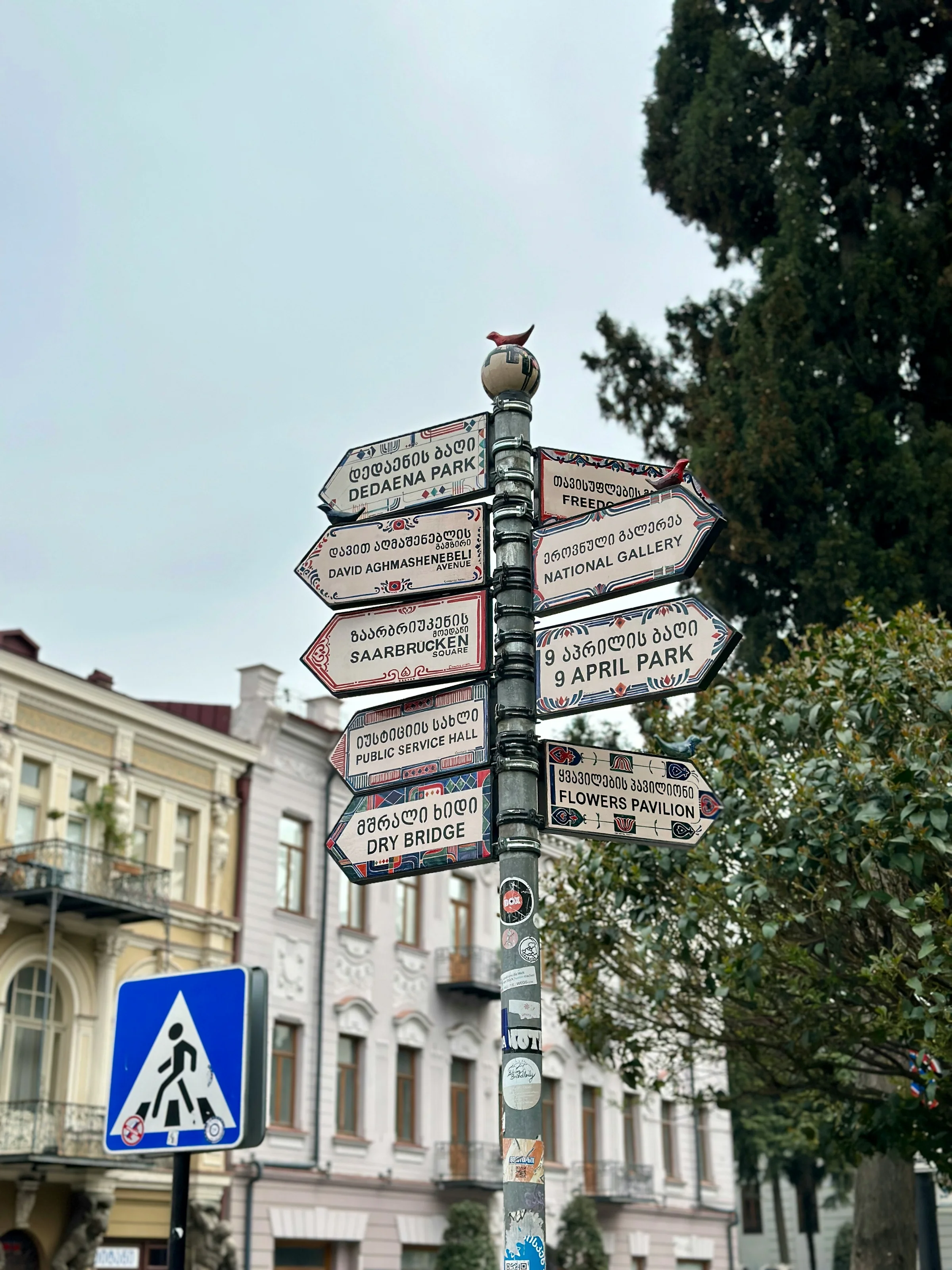
Here's the honest truth: you don't need Georgian to travel here. Most young people in Tbilisi speak decent English, and you can navigate restaurants, hotels, and attractions without a word of ქართული (kartuli — that's "Georgian" in Georgian). But learning even 10 phrases will transform your trip. Georgians light up when foreigners attempt their language. It's not politeness — it's genuine surprise and delight. Georgian is hard, they know it's hard, and the fact that you tried means something.
This guide is organized by real situations you'll actually encounter, not alphabetical word lists you'll never reference. Every phrase includes the Georgian script, a romanized pronunciation, and — crucially — tips on where the emphasis falls, because "gamarjoba" said wrong just sounds like you're gargling.
The Georgian Alphabet in 5 Minutes
Georgian uses its own script — one of only 14 unique alphabets in the world. The modern version (მხედრული, mkhedruli) has 33 letters. The good news: it's completely phonetic. Each letter makes exactly one sound, every time. No silent letters, no weird combinations. Once you learn the sounds, you can read anything — even if you have no idea what it means.
You don't need to memorize the whole alphabet for a trip. But recognizing a few key letters helps enormously for reading street signs, menus, and metro stations.
| Georgian | Sound | Like in English | Why It Helps |
|---|---|---|---|
| ა | a | "a" in father | Most common vowel |
| ბ | b | "b" in boy | Starts ბაზარი (bazaar) |
| გ | g | "g" in go | Starts გამარჯობა (hello) |
| მ | m | "m" in mother | Starts მადლობა (thanks) |
| ს | s | "s" in sun | Starts სად (where) |
| თ | t | "t" in tea | Starts თბილისი (Tbilisi) |
| რ | r | Rolled "r" (like Spanish) | Shows up everywhere |
| ი | i | "ee" in see | Second most common vowel |
No Capitals in Georgian
Georgian has no uppercase or lowercase letters. Everything is the same case. Names, sentence beginnings, titles — all written the same way. It's weirdly refreshing once you notice it.
Pronunciation: The Sounds That Trip People Up
Georgian has several sounds that don't exist in English. The consonant clusters are legendary — the word for "I'm squeezing" is vtsvrtneli, which is eight consonants and one vowel. Don't panic. For travel phrases, you only need to handle a few tricky sounds.
| Sound | Written As | How to Say It | Example |
|---|---|---|---|
| kh | ხ | Like clearing your throat, or the "ch" in Scottish "loch" | ხაჭაპური (khachapuri) |
| gh | ღ | Gargle lightly — like a softer "kh" but voiced | ღვინო (ghvino — wine) |
| ts | ც | Like "ts" in "cats" — but at the start of words too | წყალი (ts'kali — water) |
| dz | ძ | Like "dz" in "adze" | ძველი (dzveli — old) |
| Ejective consonants | ყ, წ, ჭ, ძ, ფ | Made with a "pop" of air from the throat — like a crisp, punchy version of the regular consonant | ყველი (q'veli — cheese) |
Don't Overthink the Ejectives
Ejective consonants are what make Georgian sound so distinctive — those crisp, popping sounds. As a traveler, Georgians will understand you perfectly even if you can't produce them. Focus on getting the general shape of words right rather than perfect pronunciation. They'll be impressed you tried at all.
Greetings & Basics
These are the phrases you'll use every single day. Gamarjoba alone will carry you surprisingly far. Fun fact: it literally means "victory to you" — Georgians don't just say hello, they wish you triumph.
| English | Georgian | Pronunciation | Notes |
|---|---|---|---|
| Hello | გამარჯობა | ga-MAR-jo-ba | Stress the second syllable. Works for everyone. |
| Hello (casual) | გაუმარჯოს | ga-u-MAR-jos | More informal — greeting someone third-person ("victory to them") |
| Good morning | დილა მშვიდობისა | DEE-la mshvi-DO-bi-sa | Literally "morning of peace" |
| Good evening | საღამო მშვიდობისა | sa-GHA-mo mshvi-DO-bi-sa | "Evening of peace" |
| Goodbye | ნახვამდის | nakh-VAM-dis | "Until next time" — perfectly polite |
| Yes | დიახ / კი | dee-AKH / kee | დიახ is formal, კი is casual. Both work everywhere. |
| No | არა | A-ra | Straightforward. Georgians also head-shake like Europeans. |
| Thank you | მადლობა | mad-LO-ba | Your most-used word. Sometimes shortened to "madlob." |
| Thank you very much | დიდი მადლობა | DEE-dee mad-LO-ba | "Big thanks" — for when someone goes above and beyond |
| Please | გთხოვთ | g-TKHOVT | Hard to say — and rarely used. Tone of voice matters more. |
| Excuse me / Sorry | ბოდიში | bo-DEE-shi | For bumping into someone, getting attention, or light apologies |
| How are you? | როგორ ხარ? | RO-gor KHAR? | Informal (singular). For formal/plural: როგორ ხართ? (rogor khart?) |
| I'm fine | კარგად | KAR-gad | Literally "well." Often followed by შენ? (shen? — "you?") |
At Restaurants & Ordering Food
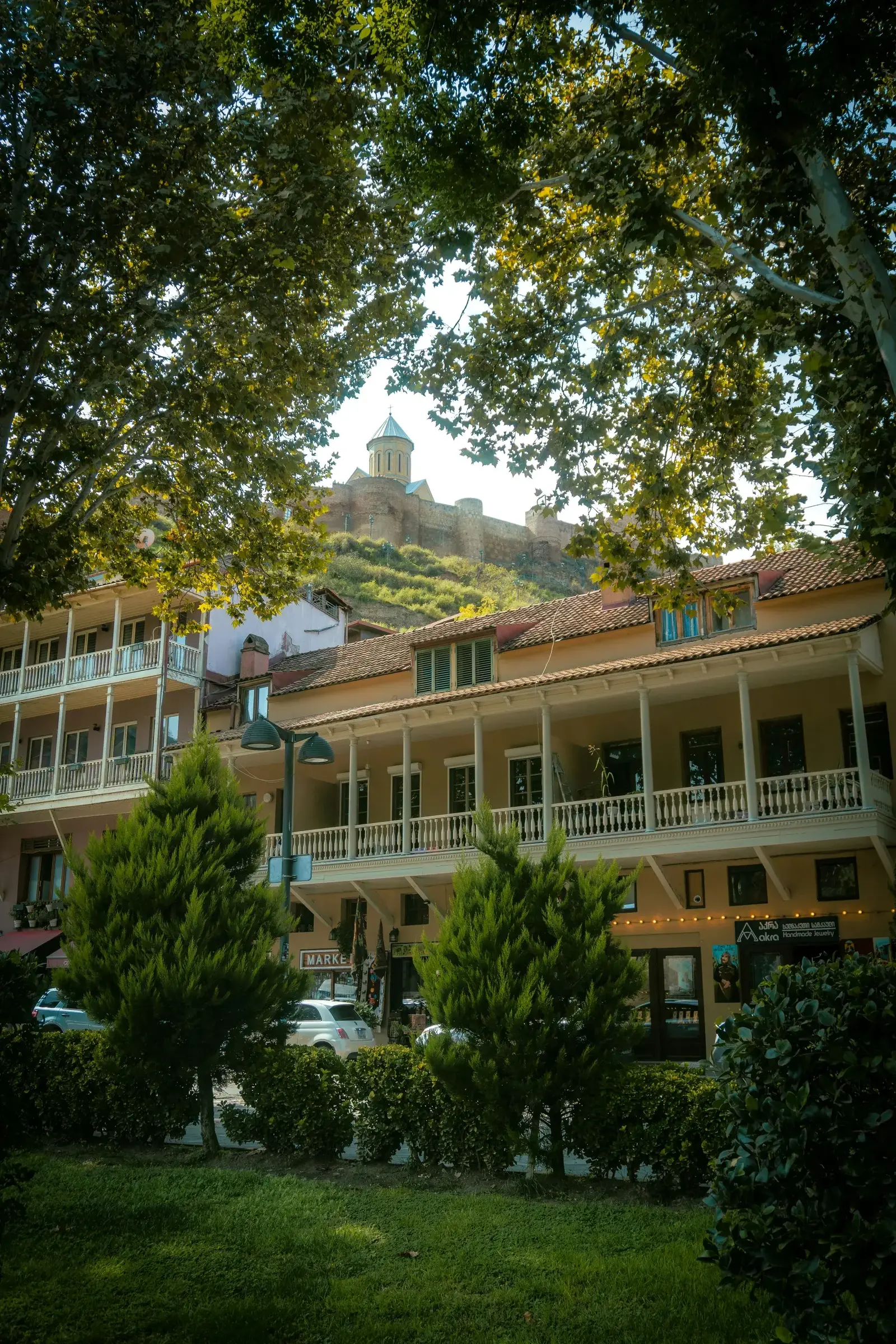
Georgia's food scene is half the reason people visit. At restaurants in Tbilisi, English menus are common and waitstaff usually speak enough to take your order. But venture outside the capital — to a family-run restaurant in Kakheti or a sakhli (home restaurant) in the mountains — and these phrases become essential. Plus, ordering in Georgian at any restaurant earns you instant respect and often better service.
| English | Georgian | Pronunciation |
|---|---|---|
| Menu, please | მენიუ, გთხოვთ | me-ni-U, g-TKHOVT |
| The bill, please | ანგარიში, გთხოვთ | an-ga-REE-shi, g-TKHOVT |
| Water | წყალი | TS-ka-lee |
| Wine | ღვინო | GHVEE-no |
| Beer | ლუდი | LOO-dee |
| Coffee | ყავა | QA-va |
| It's delicious | ძალიან გემრიელია | DZA-lee-an gem-ree-EL-ee-a |
| One more, please | კიდევ ერთი, გთხოვთ | kee-DEV ER-ti, g-TKHOVT |
| I don't eat meat | ხორცს არ ვჭამ | KHORTS ar v-CHAM |
| Without sugar | შაქრის გარეშე | SHAK-ris ga-RE-she |
The Most Powerful Food Phrase
გემრიელია (gem-ree-EL-ee-a) — "it's delicious." Say this to your host, your waiter, or the grandmother running a home restaurant, and watch their face light up. In a country where food is an expression of love, this compliment carries real weight. Use it liberally and mean it — the food usually deserves it.
Getting Around
Navigation phrases matter most outside Tbilisi. Taxi drivers in the capital mostly use apps (Bolt and Maxim), so you won't need to talk much. But marshrutka (minibus) drivers, bus station attendants, and locals giving directions will often speak only Georgian or Russian. These phrases will save you from ending up in the wrong town.
| English | Georgian | Pronunciation |
|---|---|---|
| Where is...? | სად არის...? | SAD A-ris...? |
| How much is this? | რა ღირს? | RA GHIRS? |
| I want to go to... | მინდა წავიდე... | MIN-da tsa-VEE-de... |
| Stop here, please | აქ გაჩერდი, გთხოვთ | AK ga-CHER-dee, g-TKHOVT |
| Left | მარცხნივ | MARTS-khniv |
| Right | მარჯვნივ | MARJ-vniv |
| Straight | პირდაპირ | pir-da-PIR |
| Bus station | ავტოსადგური | av-to-SAD-gu-ri |
| Train station | სადგური | SAD-gu-ri |
| Airport | აეროპორტი | a-e-ro-POR-ti |
The Marshrutka Trick
On marshrutkas, you don't need complex sentences. Just shout your destination — "Mtskheta!" or "Kazbegi!" — and the driver will nod or wave you off. When you want to stop, say "გაჩერდი!" (ga-CHER-dee) loudly enough for the driver to hear over the music. That's it. That's the whole system.
Shopping & Markets
Markets in Georgia — especially Tbilisi's Dezerter Bazaar — are an experience. Vendors are friendly, and bargaining is minimal (prices are mostly fixed at food markets). But asking the price in Georgian instead of English often gets you the local rate without any negotiation.
| English | Georgian | Pronunciation |
|---|---|---|
| How much? | რამდენი? | ram-DE-ni? |
| How much does this cost? | ეს რა ღირს? | ES ra GHIRS? |
| Too expensive | ძვირია | DZVI-ri-a |
| Can I pay by card? | ბარათით შეიძლება? | ba-RA-tit she-IDZ-le-ba? |
| I'll take this one | ამას ავიღებ | A-mas a-vi-GHEB |
| One kilo | ერთი კილო | ER-ti KEE-lo |
Numbers 1–10 (Plus the Ones You'll Actually Need)
Georgian numbers get famously weird above 20 — they use a base-20 (vigesimal) system, so 35 is literally "twenty-and-fifteen." For travel, you only need 1–10 and a few key numbers for prices and quantities.
| Number | Georgian | Pronunciation |
|---|---|---|
| 1 | ერთი | ER-ti |
| 2 | ორი | O-ri |
| 3 | სამი | SA-mi |
| 4 | ოთხი | OT-khi |
| 5 | ხუთი | KHU-ti |
| 6 | ექვსი | EK-vsi |
| 7 | შვიდი | SHVI-di |
| 8 | რვა | RVA |
| 9 | ცხრა | TSKH-ra |
| 10 | ათი | A-ti |
| 20 | ოცი | O-tsi |
| 50 | ორმოცდაათი | or-mots-da-A-ti |
| 100 | ასი | A-si |
The Base-20 System
Georgian counts in twenties, like French does with 80 (quatre-vingts). So 30 is "twenty-and-ten" (ოცდაათი), 50 is "two-twenties-and-ten" (ორმოცდაათი), and 99 is "four-twenties-and-nineteen." For prices, most Georgians will just show you their phone calculator or hold up fingers. Don't stress about the higher numbers.
Social Situations & Making Friends
Georgians are among the most hospitable people you'll ever meet. Get invited to a supra (Georgian feast) and you'll need more than "hello" and "thank you." These phrases help you participate rather than just observe.
| English | Georgian | Pronunciation | When to Use |
|---|---|---|---|
| Cheers! | გაუმარჯოს! | ga-u-MAR-jos! | After every toast (and there will be many) |
| My name is... | მე მქვია... | ME m-KVIA... | Introducing yourself at a supra |
| I'm from... | მე ვარ ... -დან | ME VAR ... -dan | Add country name + -dan (e.g., ამერიკიდან — amerikidan) |
| Georgia is beautiful | საქართველო ლამაზია | sa-KART-ve-lo la-MA-zi-a | Guaranteed smile. Georgians are fiercely proud. |
| I love Georgia | მე მიყვარს საქართველო | ME mi-KVARS sa-KART-ve-lo | Nuclear option for winning hearts. Use sincerely. |
| Do you speak English? | ინგლისურად ლაპარაკობთ? | in-gli-SU-rad la-pa-ra-KOBT? | Useful starting point when you're stuck |
| I don't speak Georgian | ქართულად არ ვლაპარაკობ | kar-TU-lad AR v-la-pa-ra-KOB | Honest disclosure — usually followed by a laugh and someone switching to gestures |
| I'm learning Georgian | ქართულს ვსწავლობ | kar-TULS v-sts-VAV-lob | Magic phrase — instant respect and encouragement |
Emergencies & Urgent Situations
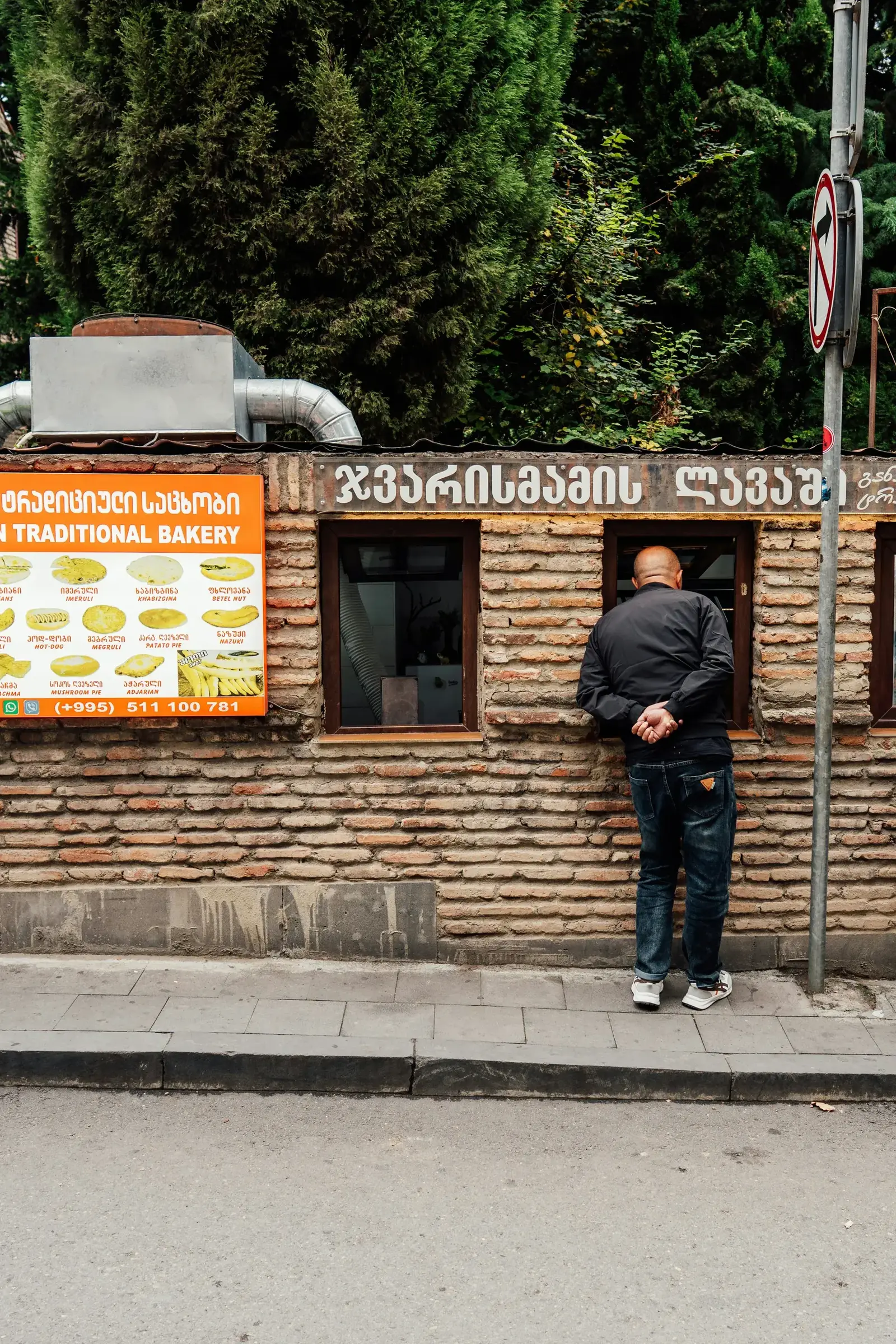
Georgia is very safe, and you're unlikely to need these. But they're worth knowing — especially if you're hiking in remote areas where English speakers are rare.
| English | Georgian | Pronunciation |
|---|---|---|
| Help! | დამეხმარეთ! | da-me-KHM A-ret! |
| I need a doctor | ექიმი მჭირდება | e-KI-mi m-CHIR-de-ba |
| Hospital | საავადმყოფო | sa-a-vad-MKO-po |
| Pharmacy | აფთიაქი | ap-TI-a-ki |
| Police | პოლიცია | po-li-TSI-a |
| I'm lost | დავიკარგე | da-vi-KAR-ge |
Emergency Numbers
112 — Universal emergency number (fire, police, ambulance). Operators often speak English. 022 — Police patrol. The 112 dispatcher will usually connect you faster. Georgia's emergency response in Tbilisi is good; in rural areas, it can take time.
The English Situation: An Honest Assessment
How much English can you expect? It depends entirely on where you go and who you're talking to. Here's the real picture:
| Situation | English Level | Reality |
|---|---|---|
| Hotels/hostels in Tbilisi | Excellent | Staff hired specifically for English ability |
| Tbilisi restaurants (tourist areas) | Good | English menus common, basic communication fine |
| Young people (under 30) in Tbilisi | Good to fluent | English replaced Russian as the aspirational second language |
| Taxi drivers (app-based) | Minimal | Doesn't matter — the app handles navigation |
| Older generations (50+) | Almost none | Russian is their second language, not English |
| Batumi tourist zone | Good | Turkish and Russian more common than English though |
| Small towns | Very limited | Google Translate becomes your best friend |
| Rural villages | None | Georgian only (sometimes Russian). Gestures, smiles, and charades. |
The generational divide is sharp. Under-30s in cities grew up with English in schools, YouTube, and social media. Over-50s grew up in the Soviet Union, where Russian was mandatory. The result: your 25-year-old barista speaks great English, but her grandmother speaks great Russian and no English at all.
The Russian Question
Should you speak Russian in Georgia? It's complicated. Practically, Russian is widely understood — almost everyone over 40 speaks it fluently, and many younger people have some. But Georgia fought a war with Russia in 2008, Russia still occupies 20% of its territory, and the relationship is tense. Using Russian won't get you in trouble — Georgians are too polite for that — but many younger Georgians actively resent when foreigners default to Russian instead of learning any Georgian.
The respectful approach: try Georgian first (even just gamarjoba and madloba), then switch to English, and only fall back to Russian if nothing else works. A Georgian greeting followed by Russian conversation is received very differently than opening in Russian.
Toasting Phrases (You'll Need These)
Georgian toasts are an art form. At a supra, the tamada (toastmaster) will lead elaborate toasts — to family, to the host, to peace, to the ancestors. You won't be expected to deliver a full toast in Georgian, but knowing how to participate shows deep respect for the tradition.
| English | Georgian | Pronunciation |
|---|---|---|
| Cheers! / Victory! | გაუმარჯოს! | ga-u-MAR-jos! |
| To your health! | თქვენს ჯანმრთელობას! | TKVENS jan-mr-te-LO-bas! |
| To peace! | მშვიდობას! | mshvi-DO-bas! |
| To love! | სიყვარულს! | si-kva-RULS! |
| To Georgia! | საქართველოს! | sa-KART-ve-los! |
| To family! | ოჯახს! | o-JAKHS! |
Supra Survival Tip
When the tamada finishes a toast, everyone says გაუმარჯოს! and drinks. With wine from a horn (kantsi), you're expected to drain it. With a glass, you can sip — but expect friendly pressure to finish. The phrase "შენ გენაცვალე" (shen ge-NATS-va-le) means roughly "I'd sacrifice myself for you" and is used constantly as an endearment. Don't be alarmed — it's just extreme Georgian affection.
Useful Words You'll See Everywhere
These aren't conversation phrases — they're words you'll encounter on signs, menus, and storefronts. Recognizing them saves you from walking into the wrong bathroom or ordering something you didn't expect.
Places
სახლი (sakhli) — house
სასტუმრო (sastumro) — hotel
რესტორანი (restorani) — restaurant
მაღაზია (maghazia) — shop
ეკლესია (eklesia) — church
ბაზარი (bazari) — market
Signs
შესასვლელი (shesasvleli) — entrance
გასასვლელი (gasasvleli) — exit
ღია (ghia) — open
დახურული (dakhuruli) — closed
ტუალეტი (tualeti) — toilet
უფასო (upaso) — free
Food Words
პური (puri) — bread
ყველი (q'veli) — cheese
ხორცი (khortsi) — meat
თევზი (tevzi) — fish
ხილი (khili) — fruit
ბოსტნეული (bostneiuli) — vegetables
Time
დღეს (dghes) — today
ხვალ (khval) — tomorrow
გუშინ (gushin) — yesterday
დილა (dila) — morning
საღამო (saghamo) — evening
ღამე (ghame) — night
Body Language & Cultural Notes
Language isn't just words. Georgian communication style has some quirks that catch foreigners off guard:
👃 The Nose Touch
A finger touching the nose means "I swear it's true." You'll see this in animated conversations. It's like putting your hand on your heart.
🤏 The Pinched Fingers
Fingers pinched together, moved up and down — "wait a moment" or "be patient." Used constantly in traffic, in shops, everywhere.
💬 Volume Isn't Anger
Georgians talk loud. Very loud. Animated conversations that sound like arguments are usually just people discussing what to have for lunch. Don't be alarmed.
🤝 Physical Closeness
Men hold hands, walk arm in arm, kiss cheeks in greeting. Women too. It's warmth, not romance. Personal space is smaller than in Northern Europe or the US.
🚫 "No" Means "Keep Asking"
Refusing food, drink, or help on the first offer is polite custom. The host will insist. You should gently refuse once, then accept. This dance is expected.
👴 Age = Authority
Elders are respected deeply. Give up your seat on the bus, let them go first, use formal address. Calling an older person "batono" (sir) or "kalbatono" (madam) goes far.
Best Apps & Tools for Language Help
When your 60 phrases run out, technology fills the gap. Here are the tools that actually work in Georgia:
| Tool | Best For | Verdict |
|---|---|---|
| Google Translate (camera) | Reading menus and signs | Surprisingly decent for Georgian script. Download offline pack. |
| Google Translate (voice) | Live conversations | Hit or miss — Georgian speech recognition still rough. |
| Drops | Learning vocabulary | Visual flashcards with Georgian. Good for pre-trip prep. |
| Ling | Basic courses | One of the few apps with a Georgian course. Decent quality. |
| Forvo | Pronunciation | Real native speakers pronouncing words. Invaluable. |
Want to Actually Learn It, Not Just Survive?
Everything above helps you get by. But if you catch the bug and want to go further — really reading the script, building vocabulary, training your ear — EasyGeorgian is the closest thing the language has to a proper modern course. A good place to start is their 20 Georgian phrases travelers actually use, which covers much the same survival ground as this page but puts a native recording on every line, so you can hear the consonant clusters instead of guessing at them. It won't replace a tutor for deep grammar, but as a self-study backbone it's a serious step up from the survival apps above.
Frequently Asked Questions
Is Georgian really one of the hardest languages?
For English speakers, yes — it's in the "Category IV" difficulty group alongside Japanese, Korean, and Arabic. The grammar is complex (verbs conjugate for subject AND object), the consonant clusters are brutal, and it's unrelated to any familiar language family. But travelers don't need grammar — just a handful of set phrases. And those are very learnable in a few hours.
Can I get by with just English in Tbilisi?
Mostly yes. Restaurants, hotels, tour operators, and younger locals generally speak enough English for practical purposes. You'll occasionally hit a wall — at the post office, government buildings, or neighborhood shops — but pointing, gestures, and Google Translate fill the gaps. Outside Tbilisi, English drops off sharply.
Should I learn the Georgian alphabet before my trip?
It's genuinely useful if you have a few hours to spare. Street signs, metro stations, and menus are often only in Georgian script. The alphabet is phonetic and consistent, so once you learn the 33 letters, you can sound out any word — even if you don't know what it means. It's like having a decryption key for the entire country.
What's the deal with Georgian having three alphabets?
Georgia technically has three scripts: Asomtavruli (ancient, seen in churches), Nuskhuri (medieval ecclesiastical), and Mkhedruli (modern, used everywhere). You only need Mkhedruli. The others are like learning Old English calligraphy — interesting but unnecessary. UNESCO lists all three as Intangible Cultural Heritage.
Will locals correct my pronunciation?
Almost never. Georgians are too polite and too thrilled you're trying. They'll understand you even with mangled pronunciation — context carries most of the meaning. The main exception: if you mispronounce a word so badly it sounds like a different word, they might gently offer the correct version while trying not to laugh.
Written by The Georgian Guide Team
Based in Tbilisi for five years and counting. We butchered Georgian pronunciation for a long time before getting it right — and the locals loved every attempt. This guide comes from years of ordering food, navigating marshrutkas, and surviving supras in a language that has no relatives on Earth.
Last updated: February 2026.
Related Articles
The Georgian Supra
Everything you need to know about Georgia's legendary feast tradition.
Is Georgia Safe?
An honest safety assessment from someone who lives here.
What to Eat in Georgia
The essential guide to Georgian cuisine for first-time visitors.
SIM Cards & Internet
Stay connected with the right SIM card and data plan.