Georgia isn't on most families' radar — yet. While hordes of tourists descend on overcrowded European capitals, this small Caucasus nation offers everything families dream of: safe streets, welcoming culture, incredible food kids actually eat, and landscapes that make adults gasp and children ask "can we stay longer?" Here's everything you need to know about traveling to Georgia with kids.
Why Georgia Is Actually Perfect for Families
Most "family travel" destinations are expensive, crowded, and sanitized to the point of boredom. Georgia is none of these things. It's a real country with real life happening — and somehow, that makes it better for kids, not worse.
Here's what makes Georgia work for families:
Georgians genuinely love children. This isn't polite tolerance — this is strangers at restaurants bringing your toddler extra bread, taxi drivers giving your kids candy (ask first if that's your thing), and hotel staff going out of their way to make children feel special. In Georgian culture, children are treasured. You'll feel it everywhere.
It's remarkably affordable. A family of four can eat incredibly well for $30-40 at a nice restaurant. Spacious two-bedroom Airbnbs in central Tbilisi run $50-80 per night. Compared to Paris or London, you'll feel like you have unlimited budget.
The food is kid-friendly by accident. Georgian cuisine is heavy on cheese, bread, dumplings, and grilled meat — basically everything picky eaters already like. More on this below.
Safety is exceptional. Georgia has lower crime rates than most Western European countries. You can walk anywhere in Tbilisi at night without worry. Street harassment is essentially non-existent.
There's variety without long distances. Beach one day, mountain the next, cave city the day after — and nothing is more than a few hours' drive. You're not committing to one "type" of vacation.
The Best Ages for Georgia (Honest Assessment)
Let me be real about what works and what's challenging at different ages:
| Age Range | Verdict | Key Considerations |
|---|---|---|
| Under 2 | Doable but tiring | Cobblestones vs strollers, limited changing facilities, but everyone helps |
| 2-4 years | Good with planning | Skip mountain roads, stick to Tbilisi + Batumi, bring car seat |
| 5-8 years | Sweet spot ★ | Old enough for caves, cable cars, hikes; still awed by everything |
| 9-12 years | Excellent | Can handle real hikes, interested in history, still wants family time |
| 13+ teens | Great if engaged | Adventure activities, Soviet history, unique photo ops, good Wi-Fi for downtime |
The Sweet Spot
Ages 5-12 are ideal for Georgia. Kids are old enough to remember the trip, handle some walking, and appreciate experiences like cable cars and cave cities — but still young enough to be genuinely excited rather than performatively bored. That said, we've seen families with babies love Georgia too. It's just more logistically demanding.
Family-Friendly Tbilisi: What to Do
Tbilisi is secretly one of Europe's best cities for kids. Not because it has theme parks or children's museums (it doesn't, really), but because the city itself is an adventure playground.
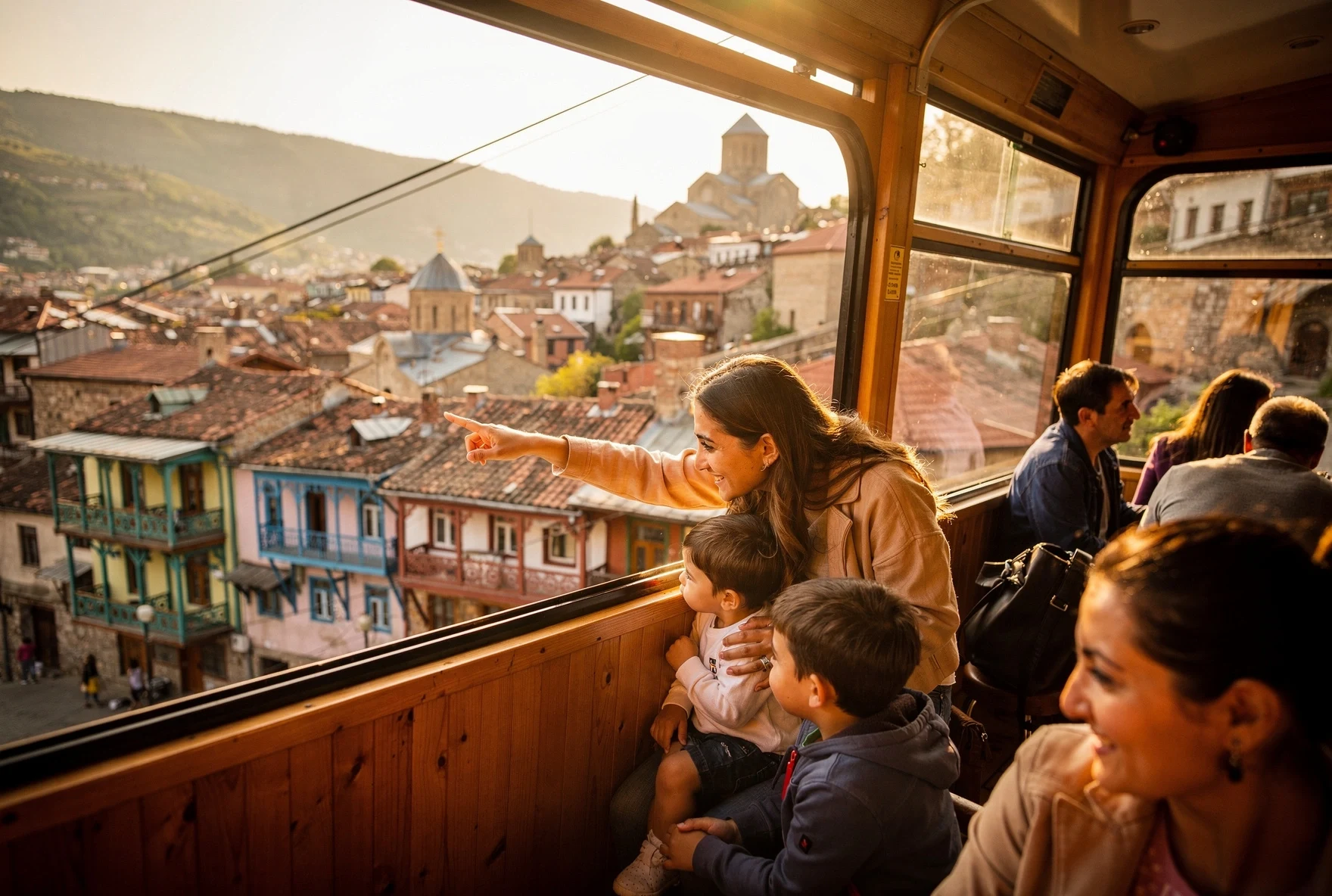
The Cable Cars and Funiculars
Kids are obsessed with Tbilisi's aerial transportation. You have three options:
Rike Park Cable Car
Goes from Rike Park to Narikala Fortress. Glass-enclosed cabins with panoramic views over the old town. 3-minute ride, runs constantly.
Cost: 2.50 GEL (~$1). Hours: 10am-11pm daily.
Funicular to Mtatsminda Park
100-year-old funicular climbing to the amusement park. The ride itself is a highlight — kids love watching the track change gradient.
Cost: 8 GEL round-trip. Hours: 9am-4am (yes, really).
Turtle Lake Cable Car
From Vake Park to Turtle Lake. Longer ride through forest canopy. Quieter, more local feel. Lake has paddleboats.
Cost: 2 GEL. Hours: 9am-9pm, closed Monday.
Narikala to Botanical Garden
Walk across Narikala ridge, take the second cable car down into the Botanical Garden. Makes a complete loop back to old town.
Cost: 2.50 GEL. Included in Botanical Garden entry.
Mtatsminda Park
This Soviet-era amusement park sits atop the mountain overlooking Tbilisi. It's not Six Flags — more like a charming local fairground with Ferris wheel, bumper cars, small roller coaster, and carnival games. What it lacks in polish, it makes up for in character and views.
Best for ages 3-12. Teens might find it underwhelming, but everyone loves the panoramic views. Budget about 50-80 GEL ($20-30) for a couple hours of rides. The restaurants up here are overpriced — eat in the city before or after.
Old Town Exploration
Tbilisi's old town is genuinely fascinating for kids who can walk independently. Winding streets, hidden courtyards, cats everywhere, crumbling balconies, the occasional car trying to squeeze through pedestrian alleys. It feels like a maze, which kids love.
Key spots:
- Leghvtakhevi Waterfall — a literal waterfall in the middle of the city, accessible via wooden boardwalk
- Sulfur Baths area — the beehive domes are visually striking (bathing is more of an adult activity)
- Bridge of Peace — glass pedestrian bridge that lights up at night
- Clock Tower at Rezo Gabriadze Theater — a fairy-tale tower with hourly angel puppet show
Tbilisi Parks and Playgrounds
When kids need to burn energy:
- Rike Park — modern, well-maintained, with a playground and often live music. Next to the cable car.
- Vake Park — huge, forested, with playgrounds scattered throughout. Local families everywhere on weekends.
- Mziuri Park — excellent modern playground, less touristy, near Vake.
- Dedaena Park — central location, food stalls, very local feel.
Museums Kids Actually Like
Most of Tbilisi's museums are better for adults, but a few work for families:
- National Museum Treasury — gold artifacts including the world-famous gold mask. Quick visit, genuinely impressive objects.
- Open Air Museum of Ethnography — outdoor museum with traditional houses from different regions. Kids can run around. Feels like a village.
- Natural History Museum — dinosaur skeletons and taxidermy animals. Very old-school but kids love it.
Batumi: The Beach Option
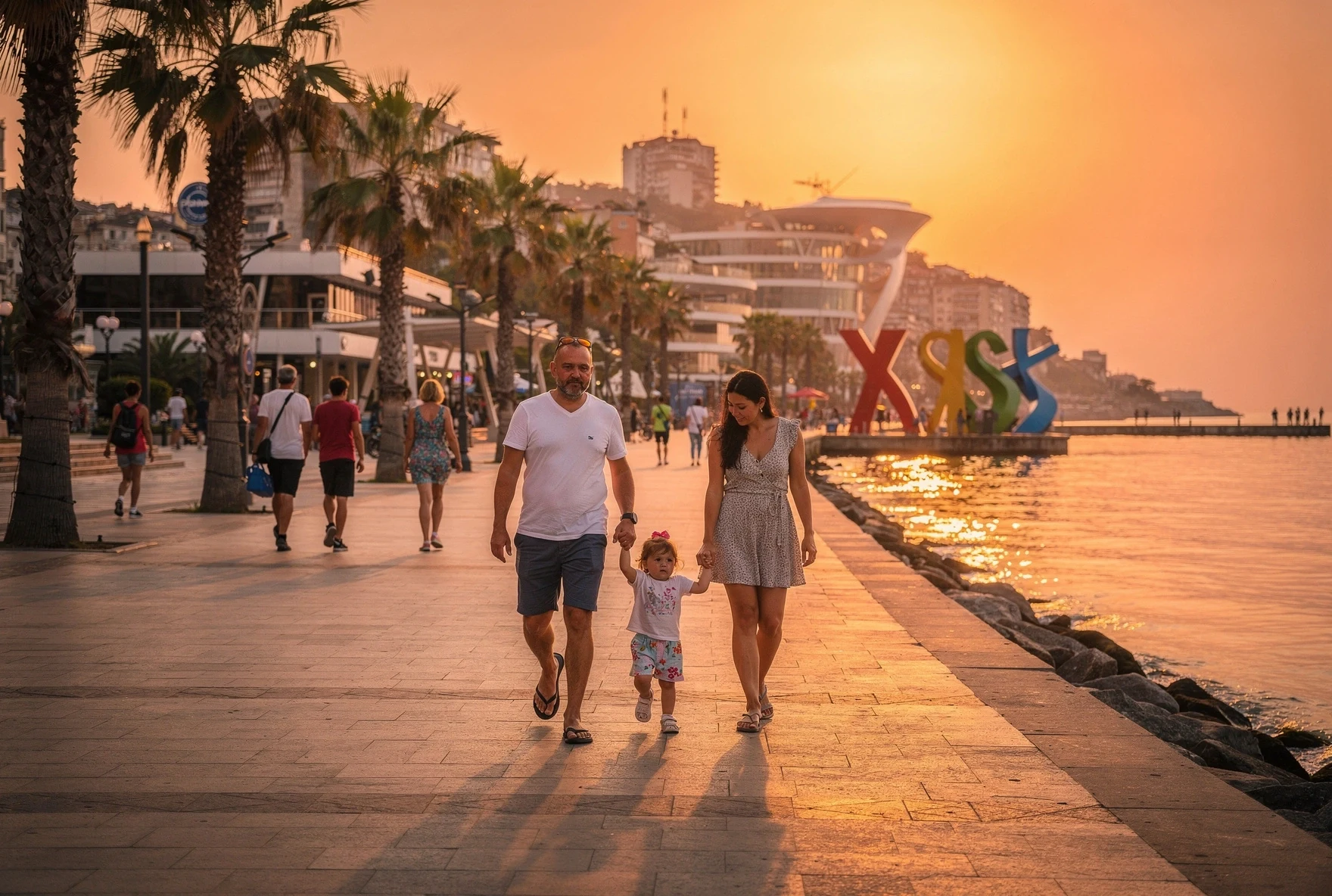
If your kids need beach time, Batumi is where you go. It's Georgia's Black Sea resort city — think Vegas meets Monaco meets Soviet sanatorium, but somehow it works.
What Families Love About Batumi
- Batumi Boulevard — 7km seaside promenade with playgrounds, fountains, sculptures, and bike rentals. Kids can run free while parents walk behind.
- Beaches — pebble beaches (not sand), which some kids love and some hate. Water is clean and swimmable June-September.
- Batumi Dolphinarium — controversial for some families, but kids generally love the dolphin shows.
- Alphabetic Tower — 130m tall structure with a rotating restaurant. The elevator ride alone thrills kids.
- Batumi Piazza — Italian-style square with mosaics, cafes, and street performers in summer.
- Cable car to Argo — long ride up the mountain with sea views.
Pebble Beach Reality
Georgian Black Sea beaches are pebbles, not sand. Bring water shoes for kids (and yourself). Some families find this a dealbreaker; others find the beaches cleaner and more pleasant than sandy alternatives. If your kids absolutely need sandcastles, this isn't the trip.
How Long in Batumi?
Two to three nights is plenty for most families. There's enough for 4-5 days if you really want beach downtime or plan day trips to nearby attractions (Batumi Botanical Garden, Gonio Fortress, Mtirala National Park). Beyond that, kids get restless.
Best Day Trips with Kids
From Tbilisi, several day trips work well for families:
| Destination | Distance | Best Ages | Highlights |
|---|---|---|---|
| Mtskheta | 25 min | All ages | UNESCO churches, small old town, ice cream shops |
| Uplistsikhe Cave City | 1.5 hrs | 5+ | Ancient cave city, climbing around ruins, dramatic landscapes |
| Prometheus Cave | 3.5 hrs | 4+ | Spectacular lit cave, underground boat ride, climate-controlled |
| Borjomi | 2.5 hrs | All ages | Natural mineral spring, forest park with cable car, peaceful atmosphere |
| Chronicle of Georgia | 20 min | 8+ | Massive stone pillars, striking monument, Tbilisi Sea views |
Prometheus Cave — A Standout
If you do one day trip, make it Prometheus Cave (near Kutaisi). It's genuinely spectacular — a 1.4km underground route through illuminated stalactites and stalagmites, ending with an optional boat ride through a flooded section. Temperature is constant 14°C, so bring layers. Kids as young as 3-4 handle it fine.
The drive is long (3.5 hours each way), so consider combining with an overnight in Kutaisi. Alternatively, hire a driver for the day — about 200-250 GEL ($75-95).
What to Skip with Kids
Some of Georgia's best experiences don't work for families:
❌ Tusheti
The road is genuinely dangerous — sheer drops, no guardrails, 4+ hours each way on unpaved mountain road. Not worth the stress with kids.
❌ Vardzia with Toddlers
Lots of climbing on uneven stone, narrow passages, drop-offs. Amazing for older kids (8+), but stressful with little ones.
❌ Wine Tours
Unless you have one wine-loving parent and one designated kid-watcher, traditional wine tours are boring for children. Do a vineyard lunch instead.
❌ Long Mountain Drives
Georgian mountain roads are winding and slow. Kids get carsick; adults get stressed. Keep drives under 2-3 hours when possible.
Food Kids Will Actually Eat
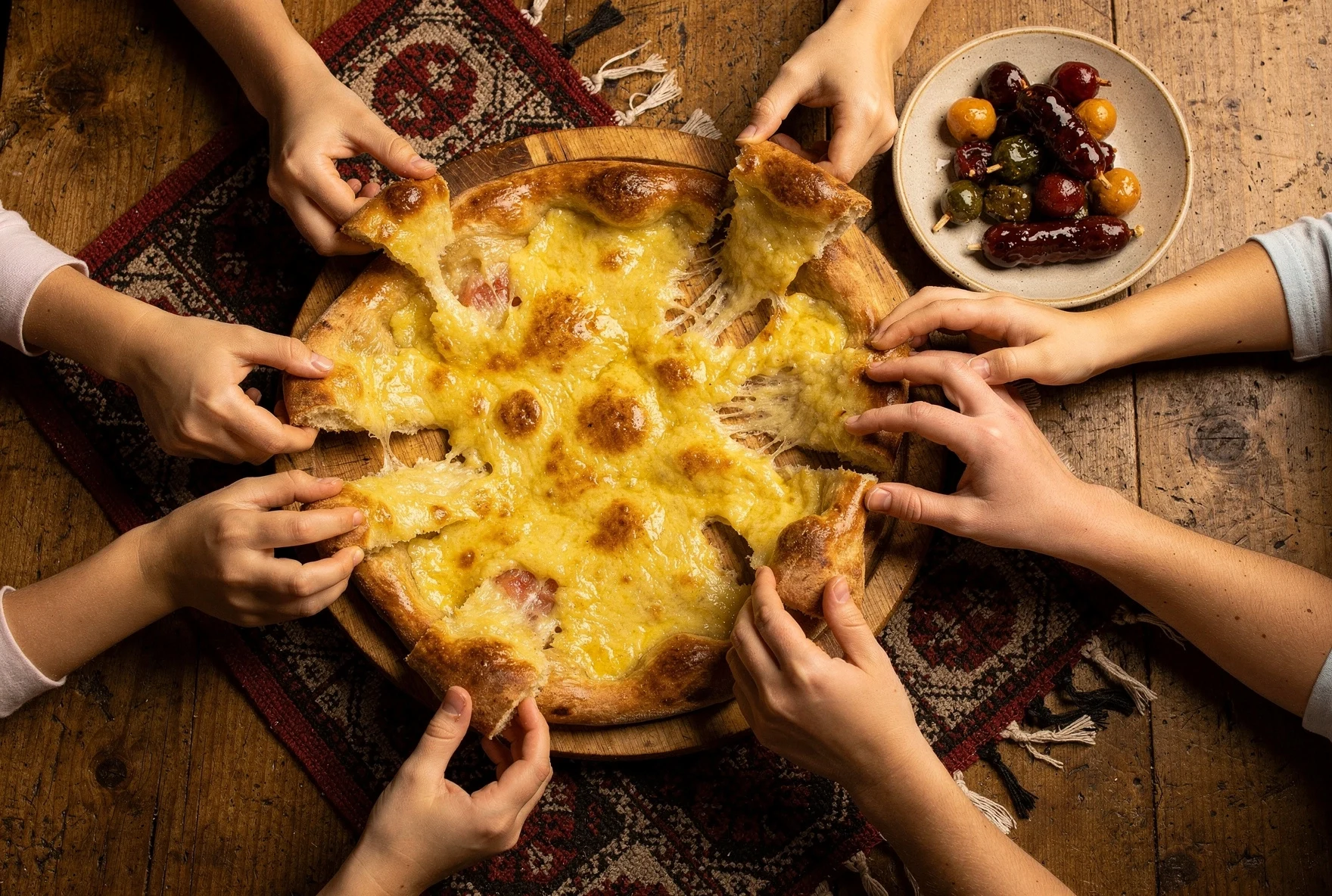
Georgian cuisine is accidentally perfect for picky eaters. Almost every menu has something kids love:
| Dish | What It Is | Kid Appeal |
|---|---|---|
| Khachapuri | Cheese-stuffed bread (many regional varieties) | ★★★★★ — basically pizza's cheesier cousin |
| Khinkali | Soup dumplings (meat, cheese, or mushroom) | ★★★★☆ — fun to eat, might find pepper spicy |
| Mtsvadi | Grilled meat skewers | ★★★★★ — kebabs are universally loved |
| Shotis Puri | Traditional Georgian bread | ★★★★★ — fresh from clay oven, endless supply |
| Churchkhela | Grape juice and walnut "sausages" | ★★★☆☆ — some kids love it, some hate the texture |
| Lobiani | Bean-filled bread | ★★★★☆ — less cheese than khachapuri, still delicious |
| Satsivi (cold) | Chicken in walnut sauce | ★★☆☆☆ — unusual flavor profile for kids |
| Pasta/Pizza | Available everywhere as backup | ★★★★★ — for when all else fails |
Restaurant Tips for Families
Georgian restaurants are generally kid-friendly by default — you don't need to seek out "family restaurants." Portions are huge (share!), there's no pressure to order quickly, and bringing coloring books or iPads is normal. Many restaurants have outdoor terraces where kids can move around. High chairs exist but aren't universal — bring a travel booster if yours still needs one.
Practical Tips for Families
Getting Around
- Taxis are cheap — use Bolt or Yandex Go apps. A cross-city ride is $2-4. No need to rent a car in Tbilisi.
- Renting a car — worth it for day trips and road trips. Book from Tbilisi airport. Manual cars are cheaper; automatic costs more.
- Car seats — bring your own or specify when booking. Georgian rentals sometimes have them, sometimes don't. Quality varies wildly.
- Marshrutkas (minibuses) — cheap but cramped. Not ideal with kids or luggage. Use trains or hired cars instead.
- Tbilisi metro — clean, cheap (0.50 GEL), runs until midnight. Kids under 6 free. The stations are deep and impressive.
Healthcare and Emergencies
- Pharmacies — everywhere, often 24-hour. Most medications available without prescription. Staff usually speak some English.
- Hospital for expats — Aversi Clinic and MediClub Georgia have English-speaking staff and meet international standards.
- Travel insurance — essential. Make sure it covers medical evacuation and children.
- Emergency number — 112 (works for everything).
Accommodation
- Apartments > Hotels — Airbnb/Booking apartments give you kitchen access (essential for snacks), more space, and washing machines. Often cheaper than hotels.
- Best neighborhoods in Tbilisi — Vera (quiet, residential, playground), Old Town (walkable to everything, noisy at night), Vake (upscale, parks, families).
- In Batumi — stay on the Boulevard side, walking distance to beach and promenade.
What to Pack
- Layers — temperature swings, especially in mountains and caves
- Comfortable walking shoes — cobblestones destroy strollers and flimsy sandals
- Water shoes — mandatory for pebble beaches
- Travel car seat — if renting a car
- Sunscreen — local brands are expensive
- Basic medicine — everything's available but familiar brands ease anxiety
- Snacks from home — Georgian snacks are different; pack familiar backups
Sample Itineraries
One Week: The Classic Family Trip
Ten Days: Adding Caves and Mountains
Two Weeks: The Complete Adventure (Ages 8+)
When to Visit with Kids
| Season | Weather | Family Pros | Family Cons |
|---|---|---|---|
| May-June | Warm, green, occasional rain | ★ Best overall. Perfect temps, fewer crowds, green landscapes | Sea still cold for swimming |
| July-August | Hot (35°C+), dry | Beach weather, summer activities | Heat exhausts kids, Tbilisi can be oppressive |
| September | Warm, harvest season | ★ Excellent. Warm sea, grape harvest, wine pressing | Kids might be back in school |
| October | Mild, autumn colors | Beautiful, quiet, still warm enough | Rain increases, sea too cold |
| Winter | Cold, snow in mountains | Skiing in Gudauri, Christmas markets | Grey Tbilisi, limited activities, mountain roads close |
The Verdict: May-June or September
Late May through mid-June is ideal for families — warm but not hot, green everywhere, smaller crowds. September is second-best: warm sea, harvest festivals, comfortable temps. Avoid July-August unless you're specifically going for Batumi beaches and can handle the heat.
Frequently Asked Questions
Is Georgia safe for families?
Yes, exceptionally so. Georgia has very low crime rates, and violent crime against tourists is virtually unheard of. The main "danger" is aggressive drivers — always use crosswalks carefully and hold children's hands near roads.
Do I need a visa for Georgia?
Most nationalities (US, Canada, EU, UK, Australia) can enter visa-free for up to one year. Check your specific country's requirements before booking.
Is English widely spoken?
In Tbilisi tourist areas and hotels, yes. Outside cities, much less so. Younger Georgians often speak English; older generations may speak Russian instead. Google Translate works fine for most situations.
What about vegetarian/vegan kids?
Vegetarian is easy — lots of cheese, bread, bean dishes, and vegetable preparations. Vegan is harder but doable with planning. Georgian cuisine is naturally heavy on vegetables and legumes.
Can I find diapers and baby food?
Yes. Major supermarkets (Carrefour, Goodwill, Spar) carry Pampers, baby formula, and jarred baby food. Selection in smaller towns is limited — stock up in Tbilisi.
Is tap water safe?
In Tbilisi, officially yes, but most locals and expats drink bottled or filtered. In other regions, stick to bottled water. It's cheap and available everywhere.
Final Thoughts
Georgia isn't the obvious family destination — and that's precisely why it works. You won't be shuffling through Disney crowds or paying Paris prices. Instead, you'll discover a country that genuinely welcomes children, feeds them well, and offers real adventure without sanitized experiences.
Your kids will remember riding cable cars over ancient cities, exploring cave monasteries, running along Black Sea promenades, and tearing into fresh khachapuri. They'll learn that the world is bigger than their usual vacation spots — and that some of the best places are the ones you've never heard of.
Georgia doesn't market itself as family-friendly. It doesn't need to. The culture does that work automatically.
Written by The Georgian Guide Team
We've spent years in Georgia and watched families navigate this country — some brilliantly, some with lessons learned. This guide draws from that experience, plus conversations with dozens of expat parents raising kids here.
Last updated: March 2026.
Related Articles
Is Georgia Safe? An Honest Assessment
Crime rates, driving, and what to actually worry about.
Best Time to Visit Georgia
Month-by-month breakdown of weather, crowds, and events.
Things to Do in Tbilisi
The complete guide to Georgia's capital city.
Batumi Complete Guide
Everything about Georgia's Black Sea resort city.